
Featured image for Factors To Consider Before Choosing The Best Car Wrap Color
Image source: elimufeynman.s3.amazonaws.com
Your car wrap color is a powerful expression of personal style and intended message, so selecting a hue that aligns with your identity is paramount. Beyond aesthetics, practical factors like the vehicle’s resale value, your local climate, and long-term maintenance requirements are critical to ensuring your choice remains satisfying for years to come.
In This Article
- 1 Key Factors To Consider Before Choosing The Best Car Wrap Color
- 1.1 Key Takeaways
- 1.2 📑 Table of Contents
- 1.3 1. Start With You: Personal Style and Vehicle Purpose
- 1.4 2. The Canvas Matters: Your Vehicle’s Type and Shape
- 1.5 3. The Message in the Hue: Color Psychology and Perception
- 1.6 4. The Reality Check: Practical Factors and Maintenance
- 1.7 5. Beyond Color: The World of Finishes and Textures
- 1.8 6. The Final Hurdles: Budget and Professional Installation
- 1.9 Wrapping It All Up
- 1.10 Frequently Asked Questions
- 1.10.1 What are the key factors to consider before choosing a car wrap color?
- 1.10.2 How do I choose the best car wrap color for my car?
- 1.10.3 Does the color of a car wrap impact its resale value?
- 1.10.4 Are certain car wrap colors more fade-resistant or durable?
- 1.10.5 How does my local climate influence the best car wrap color choice?
- 1.10.6 Should I choose a car wrap color based on visibility or personal style?
Key Factors To Consider Before Choosing The Best Car Wrap Color
Picture this. You’re walking through a parking lot, and a vehicle catches your eye. It’s not just the make or model. It’s the color. A deep, shimmering midnight blue. Or a fierce, matte olive green. That arresting look is often thanks to a car wrap. It’s like giving your car a whole new personality without the permanent commitment of a paint job.
I remember when my friend wrapped his sedan. He spent weeks agonizing over swatches. He’d hold them up to the car in different lights. “Is this blue too loud?” he’d ask. “Will this gray show every scratch?” It was a process. And it taught me that picking a color is about so much more than just picking a color. It’s a blend of art, science, and personal truth.
That’s why I want to walk you through this. Choosing the best car wrap color is a big decision. Get it right, and you’ll grin every time you walk up to your car. Get it wrong, and it’s an expensive lesson. Let’s dive into the key factors you need to weigh before making your choice. This way, you can drive off with confidence and a car that feels uniquely you.
Key Takeaways
- Define Your Car’s Purpose: Choose colors fitting its daily, commercial, or resale role.
- Your Style is Paramount: Select a color you will enjoy long-term.
- Consider Durability and Cost: Some colors and finishes cost more and show wear differently.
- Factor In Your Climate: Lighter colors resist sun fading; dark colors show scratches.
- Professional Installation is Critical: A quality wrap hinges on the installer’s skill.
- Budget Dictates Your Options: Material quality and color complexity directly affect price.
📑 Table of Contents
- 1. Start With You: Personal Style and Vehicle Purpose
- 2. The Canvas Matters: Your Vehicle’s Type and Shape
- 3. The Message in the Hue: Color Psychology and Perception
- 4. The Reality Check: Practical Factors and Maintenance
- 5. Beyond Color: The World of Finishes and Textures
- 6. The Final Hurdles: Budget and Professional Installation
- Wrapping It All Up
1. Start With You: Personal Style and Vehicle Purpose
Before you even look at a color chart, look in the mirror. Your car is an extension of you. The color you wrap it in should reflect that. This is the first and most fun step in choosing the best car wrap color.
Your Personal Aesthetic is the Compass
Are you bold and outgoing? Or more understated and classic? Your wrap should match. A vibrant metallic orange screams confidence. A sleek matte black whispers sophistication. Think about the colors you wear and the decor in your home. They offer clues. This isn’t about following trends. It’s about what makes you feel good. After all, you’re the one who will see it every day.
What’s the Car’s Job in Your Life?
Now, think about your car’s role. Is it a daily commuter? A show car for weekends? A business vehicle for your company? The purpose guides the palette. For a business van, you might want a professional white or blue with your logo. For a personal sports car, maybe a fiery red or a cool chrome. If it’s a family SUV, a practical, neutral tone might be best. Aligning the color with the car’s purpose is a smart move in choosing the best car wrap color for your needs.
2. The Canvas Matters: Your Vehicle’s Type and Shape
Not all colors look good on all cars. The vehicle itself is your canvas. Its shape, size, and body lines play a huge role in how a color will appear. This is a practical factor many people overlook.
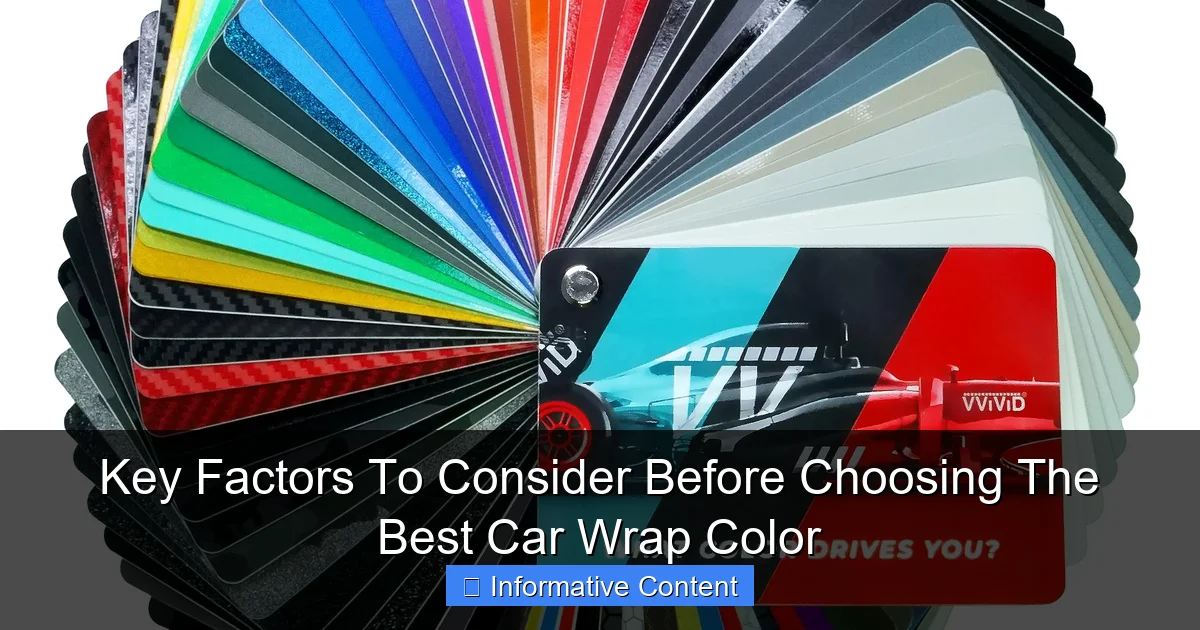
Visual guide about Factors To Consider Before Choosing The Best Car Wrap Color
Image source: m.media-amazon.com
How Body Lines Change Everything
Color can hide or highlight your car’s design. Lighter colors and gloss finishes tend to accentuate curves and contours. They make body lines pop. Darker colors and matte finishes can have the opposite effect. They can soften angles and make the car look more monolithic. A color that looks amazing on a angular, muscular coupe might look out of place on a round, compact hatchback.
Real-World Examples for Different Rides
Let’s make it real. For a rugged truck or SUV, earthy tones like forest green, matte gray, or sand can look incredibly tough. For a sleek sedan or luxury car, deep blues, blacks, or silvers often enhance its elegant lines. A compact city car can pull off bright, fun colors like yellow or teal with playful charm. When choosing the best car wrap color, always visualize it on *your* specific vehicle. Use online tools or ask your installer for digital mock-ups.
3. The Message in the Hue: Color Psychology and Perception
Colors talk. They send silent signals to everyone who sees your car. Understanding this can help you pick a color that says what you want it to say. This is about the vibe you’re putting out into the world.
Visual guide about Factors To Consider Before Choosing The Best Car Wrap Color
Image source: nobaproject.com
What is Your Car Color Saying?
Think about the feelings colors evoke. Red is often associated with energy, speed, and passion. Blue suggests trust, calm, and stability. Black conveys power, luxury, and elegance. White is seen as clean, modern, and simple. Green can connect to nature or money. There’s no right or wrong. But being aware helps. Do you want your car to look approachable? Authoritative? Creative? The color sets that tone before you even step out.
Thinking About Resale and First Impressions
This matters more than you think. If you plan to sell the car later, some colors are safer bets. Neutral colors like white, black, gray, and silver typically have broader appeal. They might help with resale. A neon pink wrap, while awesome to you, might limit your future buyer pool. Also, consider public perception if you use the car for work. A bright, wild color might not fit a corporate image. Balancing personal love with practical perception is key in choosing the best car wrap color for the long haul.
4. The Reality Check: Practical Factors and Maintenance
Now, let’s get down to earth. A car wrap isn’t a painting you hang on a wall. It lives outside. It faces sun, rain, dirt, and bird droppings. Some colors and finishes are just easier to live with than others. This is the no-nonsense part of choosing the best car wrap color.
Visual guide about Factors To Consider Before Choosing The Best Car Wrap Color
Image source: wikidoc.org
Cleaning and Upkeep: Not All Colors Are Equal
Here’s a simple truth. Dark colors, especially black and navy, show dust, water spots, and light scratches more easily. They need more frequent washing to look pristine. Light colors, like white or silver, are better at hiding dust but can show dirt and mud stains more. Then there’s matte finish. It’s gorgeous but requires special, non-abrasive cleaners. Gloss finishes are generally easier to wipe down. Think about how much time you want to spend washing your car.
Sun, Heat, and the Elements
Where you live plays a part. In very sunny, hot climates, dark colors absorb more heat. This can theoretically stress the wrap material and the car’s interior over time. Lighter colors reflect heat. Also, some pigment colors may be more prone to fading than others, though quality vinyl films have UV inhibitors. Ask your installer about the fade resistance of specific colors. It’s a crucial question.
To help you compare, here’s a quick look at how different color families stack up in terms of practical care.
| Color Family | Shows Dust/Dirt | Shows Scratches/Swirls | Heat Absorption | General Maintenance Level |
|---|---|---|---|---|
| Black & Dark Blues | High | High | High | High |
| White & Light Grays | Medium (shows mud) | Low | Low | Medium |
| Metallic Silvers | Low | Medium | Medium | Low |
| Bright Reds/Yellows | Medium | Medium | Medium | Medium |
| Matte Finishes (Any Color) | Varies by shade | Medium (shows oils) | Depends on base color | High (needs specific care) |
5. Beyond Color: The World of Finishes and Textures
This is where it gets exciting. The color is one thing, but the finish is what gives it character. Gloss, matte, satin, chrome, metallic—each creates a totally different effect. Understanding finishes is a major part of choosing the best car wrap color.
A Tour of Popular Finish Options
Gloss: This is the classic, shiny finish. It looks like fresh paint. It’s reflective, vibrant, and easiest to clean. It makes colors look deep and rich.
Matte: A flat, non-reflective finish. It looks modern and stealthy. It hides minor imperfections well but requires gentle, dedicated cleaning products.
Satin (or Satin Matte): A perfect middle ground. It has a slight sheen but isn’t fully glossy. It offers a sophisticated, brushed-metal look.
Metallic: Contains tiny flecks that sparkle in the light. It adds depth and dimension to colors like blue, gray, or red.
Chrome & Special Effects: These are high-impact finishes like mirror chrome, color-shift (chameleon), or carbon fiber textures. They are stunning but often come with a higher price and more attention.
Matching the Finish to Your Daily Life
Your lifestyle should guide your finish choice. Do you love a showroom shine and don’t mind regular washing? Gloss is for you. Do you prefer a low-key, sophisticated look and are committed to specific care? Matte could be your match. Is your car a daily driver that sees all weather? A durable satin or gloss might be more practical. The finish dramatically changes the final look, so see samples in person, in different lighting, before deciding.
6. The Final Hurdles: Budget and Professional Installation
Let’s talk numbers and expertise. Your dream color and finish need to fit your reality. And the person applying the wrap is just as important as the vinyl itself. This final step seals the deal in choosing the best car wrap color.
How Color and Finish Affect Your Budget
Not all wraps cost the same. Basic solid colors in gloss or matte are typically the most affordable. Specialty finishes like chrome, color-shift, or textured films cost more. The brand of vinyl also matters. Premium brands offer better durability and color consistency but at a higher price. Get multiple quotes. Remember, this is an investment. Sometimes, spending a bit more on quality materials saves money on premature replacement or repairs.
Why the Installer is Your Secret Weapon
You can buy the most expensive vinyl in the world, but a poor installation will ruin it. A professional installer is worth every penny. They handle complex curves, remove air bubbles, and ensure seamless edges. They also have the experience to advise you. They might say, “That color is beautiful, but it’s very thin and might show imperfections in your underlying paint.” Listen to them. A good installer ensures the color you chose looks flawless on your car. This partnership is critical for choosing the best car wrap color and having it look its absolute best.
Wrapping It All Up
Choosing the best car wrap color is a journey. It’s a mix of heart and head. Your personal style, your car’s shape, the message you want to send, the practical chores you’re willing to do, the texture you love, and the budget you have—all these pieces come together.
Take your time. Look at real cars, not just pictures on a screen. Touch the samples. Talk to a professional installer you trust. Imagine living with this color for the next three to five years. Will it still make you happy?
When you find the right balance, you’ll know. Your car will transform from a simple mode of transport into a moving piece of self-expression. And every time you unlock it, you’ll feel that little spark of joy. That’s the true sign of choosing the best car wrap color for you. Now, go make that canvas yours.
Frequently Asked Questions
What are the key factors to consider before choosing a car wrap color?
Consider factors like your vehicle’s style, intended use, and personal preference. Also, think about durability, maintenance, and how the color complements your car’s lines and features.
How do I choose the best car wrap color for my car?
Start by evaluating your car’s body shape and existing trim. Then, consider colors that enhance its aesthetics while aligning with your lifestyle and budget for upkeep.
Does the color of a car wrap impact its resale value?
Yes, neutral and popular colors like white, black, or gray often have broader appeal and can maintain resale value better. Bold or unusual colors might limit your buyer pool but can stand out if done tastefully.
Are certain car wrap colors more fade-resistant or durable?
Lighter colors, especially whites and silvers, tend to show less fading and dirt over time. However, high-quality vinyl wraps in any color can be durable if properly maintained and protected from UV exposure.
How does my local climate influence the best car wrap color choice?
In hot, sunny climates, lighter colors reflect heat and may reduce interior temperature, while darker colors absorb heat. In areas with frequent rain or snow, consider colors that hide water spots and road grime easily.
Should I choose a car wrap color based on visibility or personal style?
Balance both; high-visibility colors like yellow or orange can enhance safety, but personal style ensures you enjoy your vehicle. Think about how often you drive and where you park to make a practical yet pleasing choice.

At CarLegit, we believe information should be clear, factual, and genuinely helpful. That’s why every guide, review, and update on our website is created with care, research, and a strong focus on user experience.