
Featured image for Who Gets The Insurance Check When A Car Is Totaled
Image source: epee-education.com
The insurance check for a totaled car is issued to the legal owner and any lienholder, meaning if you have a loan, the lender gets paid first. Any remaining funds after the loan is satisfied are then sent to you, the policyholder. If the vehicle is owned outright, you receive the full settlement directly to cover your loss.
You’re driving home, maybe thinking about dinner, when suddenly—crunch. The sound no driver ever wants to hear. In those chaotic moments after a car accident, a million thoughts race through your mind. Is everyone okay? What just happened? And then, as the dust settles, the practical worries set in. “What about my car?”
If the damage is bad enough, the adjuster will utter those fateful words: “It’s a total loss.” Your stomach drops. That car was more than just metal; it was your commute, your freedom, your road trip companion. Now it’s gone, and you’re left navigating the confusing world of insurance claims.
The biggest question looming in your mind is likely, who gets the insurance check when a car is totaled? It sounds simple, but the answer is a tangled web of ownership, loans, and legal agreements. Will a big check come to you? Or will it vanish straight to the bank? Let’s untangle this mystery together, in plain English, so you know exactly what to expect and how to protect your interests.
In This Article
- 1 Key Takeaways
- 2 📑 Table of Contents
- 3 What Does “Totaled” Really Mean?
- 4 The Golden Rule: Who Owns The Car And Who Owns The Loan?
- 5 The Payment Process: Step-by-Step
- 6 How To Negotiate The Actual Cash Value (ACV) Of Your Car
- 7 State Regulations and Variations
- 8 What To Do After You Get The Insurance Check
- 9 Conclusion: Knowledge Is Your Best Coverage
- 10 Frequently Asked Questions
- 10.1 Who gets the insurance check when a car is totaled?
- 10.2 What happens if my car is totaled and I still owe money on it?
- 10.3 Does the insurance check go to me or the leasing company for a totaled leased car?
- 10.4 Who receives the insurance check if the car owner is deceased?
- 10.5 When a car is totaled, does the insurance company pay me or the bank?
- 10.6 Can the body shop get the insurance check when a car is totaled?
Key Takeaways
- Lienholder receives check if car is financed: Loan must be paid before you get any funds.
- Owner gets check if car is paid off: You receive the full settlement amount directly.
- Settlement based on actual cash value: Minus your deductible for the final payout.
- Agree on total loss valuation: Negotiate with insurer for fair market value.
- Dispute settlement by negotiating or appealing: Use comparable listings to support your case.
- Check split if equity exists: You receive excess after loan payoff.
- Review your insurance policy details: Terms vary for total loss claims.
📑 Table of Contents
- What Does “Totaled” Really Mean?
- The Golden Rule: Who Owns The Car And Who Owns The Loan?
- The Payment Process: Step-by-Step
- How To Negotiate The Actual Cash Value (ACV) Of Your Car
- State Regulations and Variations
- What To Do After You Get The Insurance Check
- Conclusion: Knowledge Is Your Best Coverage
What Does “Totaled” Really Mean?
Before we dive into checks and payouts, let’s get clear on what it means for a car to be “totaled.” Most people think it’s only when a car is crushed into a cube. But insurance companies use a more financial definition.
The Total Loss Threshold: A Numbers Game
An insurance company declares a car a total loss when the cost to repair it exceeds a certain percentage of its value. This percentage is called the “total loss threshold.” It’s not the same everywhere.
- Actual Cash Value (ACV): This is the starting point. The ACV is what your car was worth the second before the accident, considering its age, mileage, condition, and market value.
- Repair Cost vs. ACV: The insurer estimates the repair cost. If that cost is, say, 75% or 80% (or even 100% in some states) of the ACV, they’ll “total” it. Why? Because after major repairs, a car’s resale value often plummets, and it might have hidden damage.
Different Types of Total Loss
Not all totals are created equal.
- Economic Total Loss: The most common. The repairs are simply not economically sensible compared to the car’s value.
- Salvage Title: Once a car is totaled, the insurance company takes ownership (after paying you). If they sell it for scrap or parts, it gets a branded “salvage” title. This brand follows the car forever, making it hard and risky to insure or resell.
Understanding this helps you see the insurer’s logic. They aren’t being cruel; they’re running a calculation. But where does the money from that calculation go?
The Golden Rule: Who Owns The Car And Who Owns The Loan?
This is the single most important factor in answering who gets the insurance check when a car is totaled. The money follows the financial interest. Let’s break it down by scenario.
Visual guide about Who Gets The Insurance Check When A Car Is Totaled
Image source: media.9news.com
Scenario 1: You Own The Car Outright (No Loan)
This is the most straightforward situation. If you have the title free and clear, you are the sole legal and financial owner. The insurance company will issue the settlement check for the car’s Actual Cash Value directly to you.
What you can do: You can use this money as you see fit—put it toward a new car, buy used, or even take the bus for a while. The choice is yours. This is the full benefit of owning your vehicle outright.
Scenario 2: You Have A Loan Or Lease (You Don’t Fully Own It)
This is where it gets tricky. If you’re financing or leasing, you are not the only party with an interest in the car.
- The Lender’s Interest: The bank or finance company holds a “lien” on your car. This is their legal right to the property until you pay off the debt. They have a vested interest in making sure their asset (your car) is protected.
- The Lease Holder’s Interest: With a lease, you’re essentially renting long-term. The leasing company (like Honda Financial or Toyota Credit) owns the car. You have no equity.
In both cases, the insurance check will be made out to BOTH you and the lienholder or leasing company. Why? Because the money needs to settle the debt on the asset that was lost.
The Payment Process: Step-by-Step
Let’s walk through what actually happens from the “total loss” declaration to money changing hands. Knowing this process can ease a lot of anxiety.
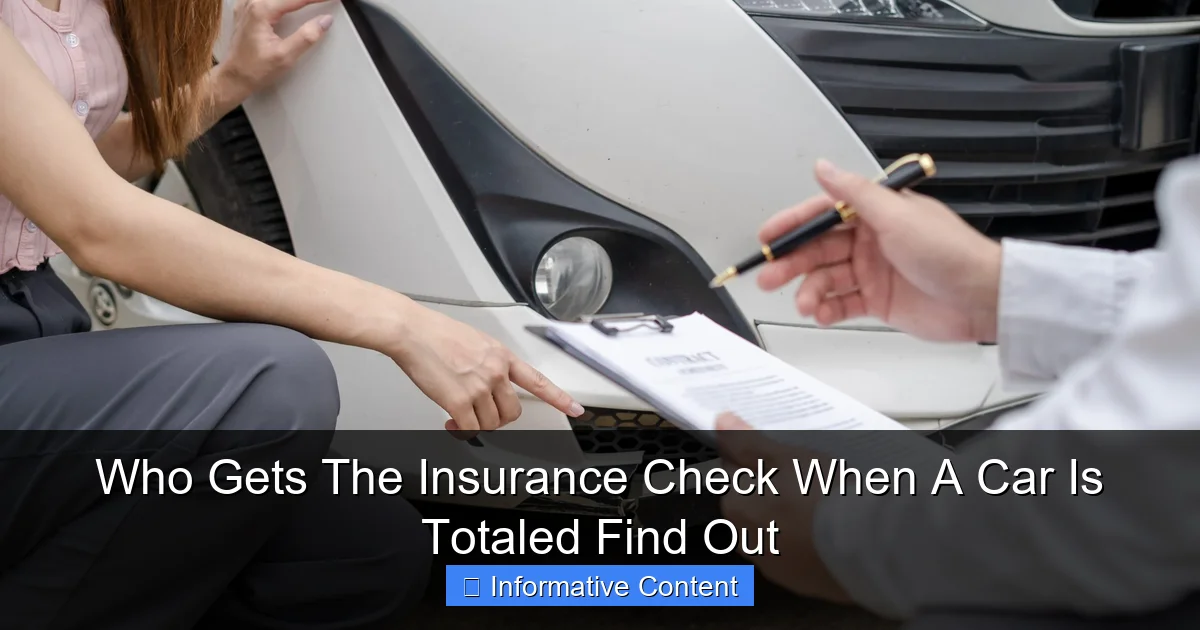
Visual guide about Who Gets The Insurance Check When A Car Is Totaled
Image source: injurity.com
Step 1: The Settlement Offer
The insurer’s adjuster will present you with a settlement offer. This is their calculation of your car’s Actual Cash Value (ACV). It should include a detailed breakdown showing how they arrived at that number, often comparing similar cars for sale in your area.
Important Tip: Do not accept the first offer immediately. It’s a starting point for negotiation.
Step 2: Check Issuance And Endorsement
Once you agree on a value, the insurance company cuts the check.
- No Loan: Check comes to you. You endorse it and deposit it.
- With a Loan: Check comes made out to “You AND Big Bank Auto.” You must send it to your lender. They will endorse it, take what you owe them (the loan payoff amount), and send you the remainder, if any.
- With a Lease: The check goes to the leasing company. They calculate what you owe, which may include your remaining lease payments and possibly a “disposition fee.” You typically get nothing back unless your lease agreement has equity clauses (rare).
Step 3: The Gap (And What Happens If You Owe More Than The Car Is Worth)
This is a critical moment. What if your loan balance is $18,000, but the ACV settlement is only $15,000? You have a $3,000 “gap.” This is called being “upside-down” on your loan.
Without Gap Insurance: You are personally responsible for that $3,000 difference. Your lender will expect you to pay it after they take the $15,000 insurance check.
With Gap Insurance: If you purchased this optional coverage (highly recommended for new cars or long loans), the gap policy would cover that $3,000 shortfall. This is a lifesaver and a perfect example of why understanding your coverage matters.
How To Negotiate The Actual Cash Value (ACV) Of Your Car
Remember, the ACV is not a fixed number. It’s an estimate. And estimates can be challenged. Here’s how to fight for a fairer settlement.
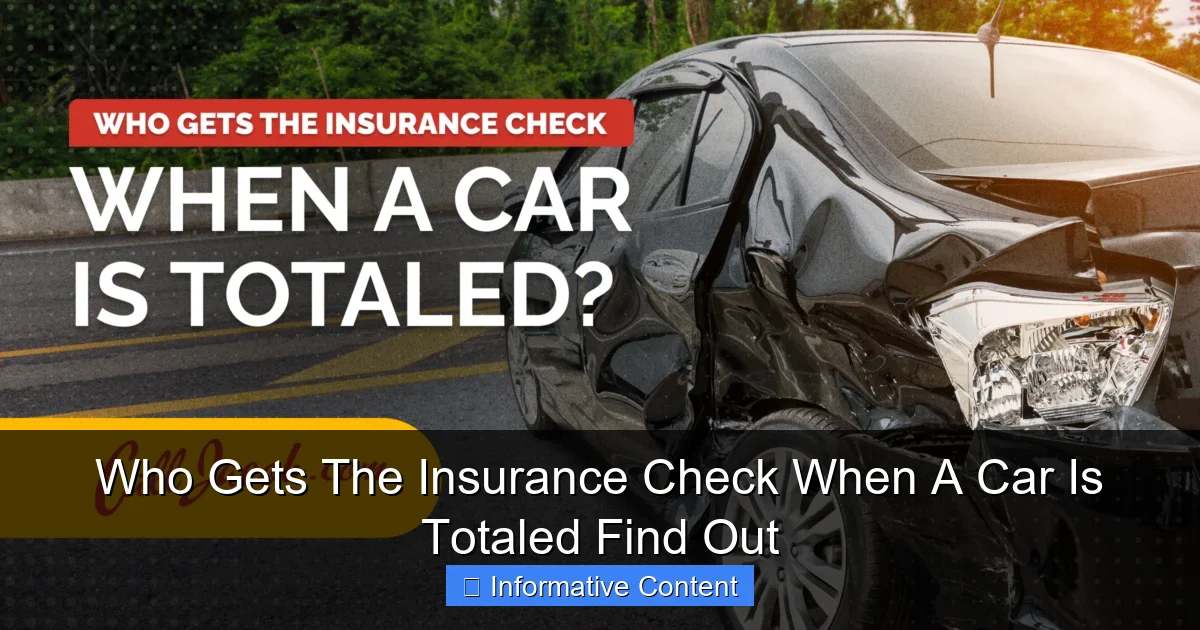
Visual guide about Who Gets The Insurance Check When A Car Is Totaled
Image source: calljacob.com
Do Your Own Research
Go to sites like Kelley Blue Book (KBB), Edmunds, and Autotrader. Look for listings of cars identical or very similar to yours (same year, make, model, trim, mileage, and condition) in your geographic area. Print these out or save the links. They are your evidence.
Prepare Your “Evidence Of Value”
Create a simple document or folder that includes:
- The comparable vehicle listings you found.
- Receipts for recent major maintenance or upgrades (new tires, a new transmission, a high-end stereo system). These can add value.
- Photos of your car’s excellent pre-accident condition.
Present Your Case Calmly And Professionally
Contact the adjuster. Don’t be angry; be prepared. Say something like, “I’ve reviewed your offer. However, based on my research of the local market for comparable vehicles, I believe a more accurate ACV is $X. Here is my supporting documentation.”
Often, a well-researched, polite negotiation can result in a higher settlement. You have the right to advocate for your property’s true worth.
State Regulations and Variations
Insurance is regulated at the state level, so the rules can differ depending on where you live. Two key areas vary: the total loss threshold and the title branding process.
Here is a simplified data table showing how different states approach the total loss threshold. Always verify with your state’s Department of Insurance for the most current rules.
| Regulation Type | Description | Example States |
|---|---|---|
| Total Loss Formula (TLF) | Car is totaled if Repair Cost + Salvage Value ≥ Actual Cash Value. | Florida, Iowa, Michigan |
| Percentage Threshold | Car is totaled if Repair Cost is a set % of ACV (e.g., 75%, 80%, 100%). | Texas (100%), California (TLF or 75%), Colorado (100%) |
| Owner Retention Rules | Some states allow you to keep the totaled car (“owner retain”) for a reduced payout, but you must deal with the salvage title. | Varies widely; often has specific application processes. |
What To Do After You Get The Insurance Check
The check has cleared. Now what? Your next steps are crucial.
If You Had A Loan And Have Money Left Over
That leftover money is yours. Use it as a down payment on your next vehicle. Be sure to close your old loan account officially with the lender.
If You Had A Loan And Owe A Gap
Contact your lender immediately to discuss a payment plan for the remaining balance. Ignoring it will damage your credit.
Shop For Your Next Car
You’re back in the market. Use this as an opportunity to reassess your needs and budget. Remember to consider Gap Insurance for your next purchase if you’re financing.
Cancel Your Registration And Insurance
Don’t forget to formally cancel the registration for your totaled car with your state’s DMV. Also, contact your insurance agent to remove the vehicle from your policy to avoid being charged for it.
Conclusion: Knowledge Is Your Best Coverage
Finding out who gets the insurance check when a car is totaled boils down to one core principle: follow the money trail of ownership. If you own the car, the money is yours. If a bank or leasing company still has a claim to it, they get paid first. The process can feel overwhelming, but by understanding the steps—from the total loss declaration to negotiating the ACV and handling the final payment—you transform from a passive claimant into an informed participant.
Take this knowledge and use it. Review your auto policy today. Do you have rental reimbursement? Do you have Gap Insurance? Knowing what you have before an accident is the most powerful tool of all. A totaled car is the end of a chapter, but with the right information, you can confidently turn the page and start the next one on solid ground.
Frequently Asked Questions
Who gets the insurance check when a car is totaled?
The check is typically made out to the vehicle’s legal owner and any lienholder listed on the title. If you own the car outright, you will receive the payment directly. If you have an auto loan, your lender is usually a co-payee on the check.
What happens if my car is totaled and I still owe money on it?
The insurance settlement first goes to pay off your loan balance with the lender. You will receive any remaining funds if the settlement exceeds what you owe. If the settlement is less than the loan balance, you are responsible for paying the difference, known as being “upside-down.”
Does the insurance check go to me or the leasing company for a totaled leased car?
The check will go directly to the leasing company, as they hold the title. They will calculate the car’s actual cash value and any early termination fees outlined in your lease agreement. Any potential surplus is rarely passed to the lessee.
Who receives the insurance check if the car owner is deceased?
The check is typically issued to the deceased owner’s estate. The executor or administrator of the estate would handle the funds, distributing them according to the will or state law. The insurance company will require documentation, like a death certificate and letters testamentary, to process the claim.
When a car is totaled, does the insurance company pay me or the bank?
The insurance company pays the bank or lender first to satisfy the loan. They are a secured party on the vehicle’s title. You only receive payment directly if you are the sole owner with no outstanding loan.
Can the body shop get the insurance check when a car is totaled?
No, a repair shop does not receive the settlement check for a total loss. A total loss means repairs are not economically feasible, so the insurer settles the claim by paying the vehicle’s actual cash value. The payment goes to the owner and lienholder, not a repair facility.

At CarLegit, we believe information should be clear, factual, and genuinely helpful. That’s why every guide, review, and update on our website is created with care, research, and a strong focus on user experience.