
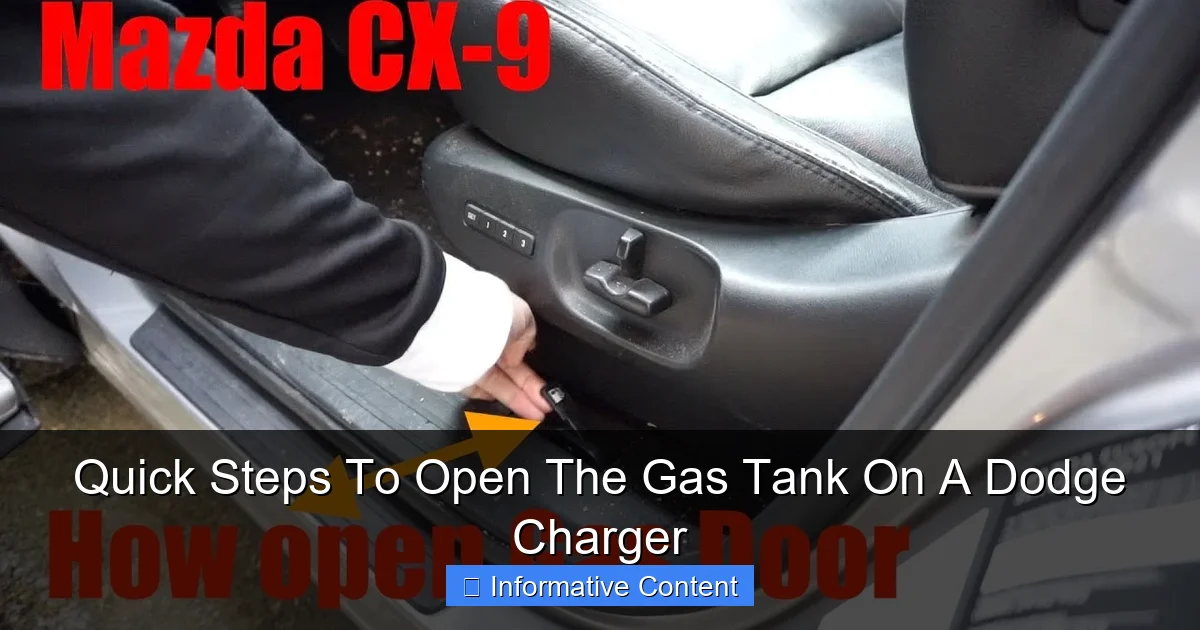
Featured image for how-to-open-the-gas-tank-on-a-dodge-charger
Image source: i.ytimg.com
To open the gas tank on a Dodge Charger, press the fuel door release button on the driver’s door panel after ensuring the vehicle is unlocked. If your model lacks a button, look for a manual release lever near the driver’s seat floor for quick access.
In This Article
- 1 Key Takeaways
- 2 📑 Table of Contents
- 3 Quick Steps To Open The Gas Tank On A Dodge Charger: Your No-Stress Guide
- 4 Understanding Your Charger’s Fuel Door System
- 5 The Standard Step-by-Step Guide to Open the Gas Tank
- 6 Troubleshooting a Stuck or Non-Opening Fuel Door
- 7 Model-Specific Variations and Key Differences
- 8 Essential Safety and Etiquette Tips at the Pump
- 9 Maintaining Your Fuel Door and Release Mechanism
- 10 Conclusion: Master Your Machine
- 11 Frequently Asked Questions
- 11.1 Where is the gas tank release on a Dodge Charger?
- 11.2 How do I open the gas tank on a Dodge Charger?
- 11.3 Is there a manual override if the electric release fails?
- 11.4 Why won’t my Dodge Charger gas tank door open?
- 11.5 Does the gas tank door lock automatically?
- 11.6 Can I open the gas tank without the key fob?
Key Takeaways
- Locate the interior release lever: Find it on the driver’s side floorboard or door panel.
- Use the key fob if equipped: Press the fuel door button on your remote.
- Ensure the vehicle is unlocked: The gas tank may not open if locked.
- Press the gas door after release: It should pop open slightly for easy access.
- Check for manual release: In emergencies, look for a cable in the trunk.
- Know your model year differences: Release mechanisms vary by Charger generation.
📑 Table of Contents
- Quick Steps To Open The Gas Tank On A Dodge Charger: Your No-Stress Guide
- Understanding Your Charger’s Fuel Door System
- The Standard Step-by-Step Guide to Open the Gas Tank
- Troubleshooting a Stuck or Non-Opening Fuel Door
- Model-Specific Variations and Key Differences
- Essential Safety and Etiquette Tips at the Pump
- Maintaining Your Fuel Door and Release Mechanism
- Conclusion: Master Your Machine
Quick Steps To Open The Gas Tank On A Dodge Charger: Your No-Stress Guide
We’ve all been there. You pull up to the gas station after a long day, finally ready to fuel up and get home. You get out, unscrew the gas cap… and nothing happens. The little door covering the fuel filler neck is still firmly shut, mocking you. A quick wave of panic sets in. “How do I open the gas tank on this thing?!” If you’re a new Dodge Charger owner, or even a seasoned one driving a newer model, this moment can be surprisingly common.
The truth is, opening the gas tank on a Dodge Charger is one of the simplest tasks you’ll do with the car—once you know how. Unlike older cars where you just pull a lever near your foot, modern Chargers use a clever, electronic release system. It’s designed for security and a clean exterior look, but without the proper knowledge, it can leave you fumbling. I remember my first week with my Charger; I must have pressed every button on the dashboard before I found the right one. Let’s make sure that doesn’t happen to you.
This guide is your friendly, comprehensive walkthrough. We’ll go beyond just “push the button” and dive into every detail, from the standard procedure to troubleshooting a stuck fuel door. Whether you have a classic 2006 model or a brand-new 2023 widebody, you’ll leave here confident. No more awkward moments at the pump. Let’s get that gas tank open.
Understanding Your Charger’s Fuel Door System
Before we jump to the steps, it helps to know what you’re working with. Think of it like knowing where the light switches are in your house—it makes moving around in the dark much easier.
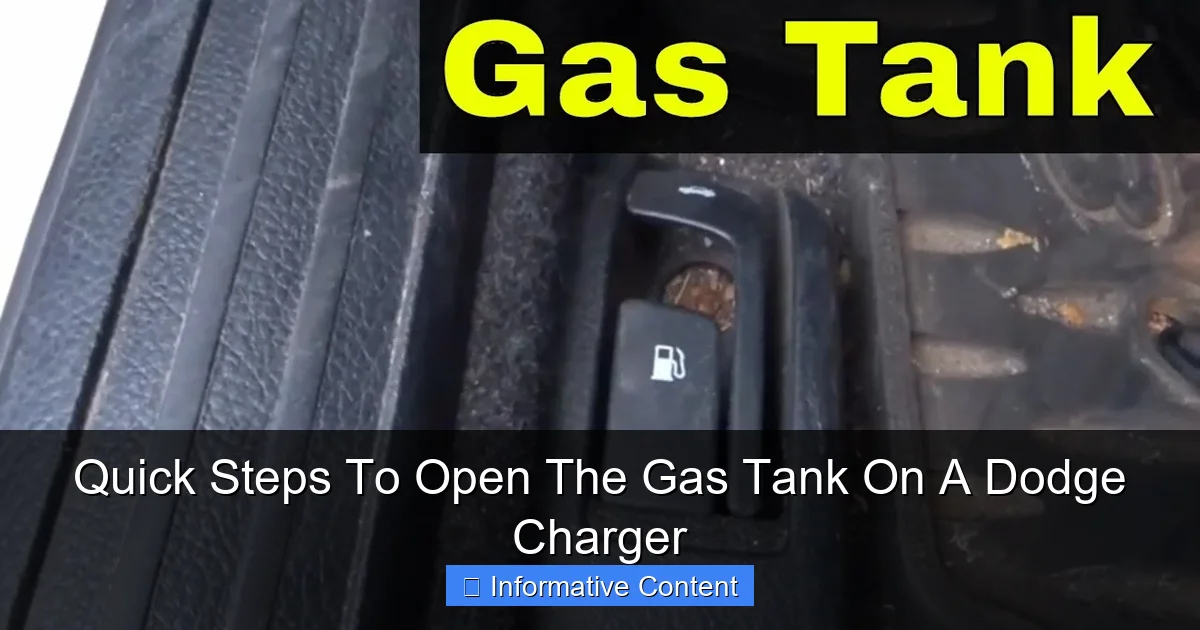
Visual guide about how-to-open-the-gas-tank-on-a-dodge-charger
Image source: i.ytimg.com
The Evolution from Manual to Electric Releases
Older cars, including some early Charger models, often had a simple manual cable release. You’d find a lever or a pull-knob on the floor near the driver’s seat, and a firm tug would mechanically pop the fuel door open. It was straightforward but left a cable that could potentially freeze or snap.
Modern Dodge Chargers, from approximately the 2011 model year onward, use an electric solenoid release. This means a small electric motor (the solenoid) locks and unlocks the fuel door. You activate it with a button or switch inside the car, sending a signal to pop it open. This design gives the car’s exterior a smoother, cleaner look and adds a layer of security.
Key Components You Should Know
- The Fuel Door/Filler Door: The actual flap on the rear quarter panel you see from the outside.
- The Electric Release Actuator/Solenoid: The small motor that physically unlocks the door.
- The Interior Release Button/Switch: Your command center, usually on the dashboard or driver’s door.
- The Fuel Cap: Behind the door, this is either a traditional screw-on cap or, on newer models, a convenient capless fuel filler system.
The Standard Step-by-Step Guide to Open the Gas Tank
This is the process for the vast majority of Dodge Chargers on the road today, especially models from 2011 to the present. Follow these quick steps to open the gas tank on a Dodge Charger, and you’ll be a pro in no time.
Visual guide about how-to-open-the-gas-tank-on-a-dodge-charger
Image source: i.ytimg.com
Step 1: Park and Turn Off the Engine
Safety first! Always park your Charger and turn the ignition to the “OFF” position. While some models may allow the fuel door to be opened while the car is “on” or in “accessory” mode, it’s a universal best practice to turn the engine off. This eliminates any remote risk of ignition from fuel vapors.
Step 2: Locate the Interior Fuel Door Release
Here’s where people often get tripped up. Do not look for a lever on the floor. Instead, direct your attention to the lower left portion of your dashboard. Look near the driver’s side door, just below and to the left of the steering wheel. You are searching for a button or switch with an icon that looks like a gas pump. It’s often black or gray and might be nestled among other controls for the trunk or hood.
Step 3: Press the Release Button
Once you’ve found it, simply press the button. You don’t need to hold it—a firm, quick press will do. Listen closely. You should hear a distinct, sharp *thunk* or *click* sound from the rear of the car. That’s the sound of the electric solenoid releasing the lock.
Step 4: Open the Fuel Door and Refuel
Exit the vehicle and walk to the fuel door on the driver’s side rear quarter panel. You should now be able to gently press on the rear edge of the fuel door. It will pop open slightly. You can then fully open it to access the fuel cap. If your Charger has a capless system, you can insert the fuel nozzle directly. If it has a traditional cap, unscrew it counter-clockwise and place it in the dedicated holder on the fuel door (if equipped).
Step 5: Closing Everything Up
After refueling, securely screw the gas cap back on until you hear at least three clicks—this ensures a proper seal for the evaporative emissions system. Then, simply push the fuel door closed until it clicks and locks. The door will automatically re-latch. You do not need to press the interior button again to lock it.
Troubleshooting a Stuck or Non-Opening Fuel Door
What if you press the button and nothing happens? Don’t panic. Here are some common fixes, ordered from simplest to more involved.
Visual guide about how-to-open-the-gas-tank-on-a-dodge-charger
Image source: i.ytimg.com
The Quick Manual Override Trick
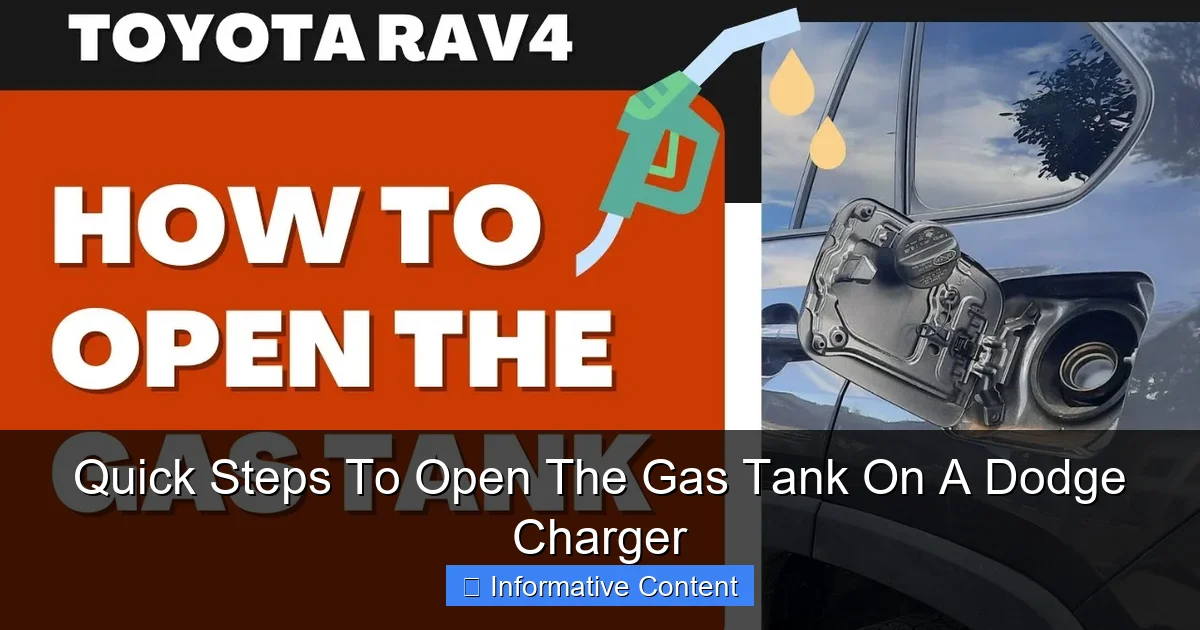
Every modern Charger with an electric release has a manual override for exactly this situation. Open your trunk. On the interior trim, on the side where the fuel door is located (driver’s side), you’ll find a small access panel or a section of carpeting that can be pulled back. Behind it, you’ll see a slender, usually colored, pull cord or a T-handle. Giving this a firm pull will manually release the fuel door lock. It’s a brilliant fail-safe designed by Dodge.
Common Issues and DIY Solutions
- Dead Car Battery: If your battery is completely dead, the electric solenoid won’t work. Use the manual override in the trunk.
- Blown Fuse: The release mechanism is on a fuse circuit. Check your owner’s manual for the fuse diagram (often Fuse 26 in the interior fuse panel) and inspect/replace it if needed.
- Frozen or Sticky Lock: In winter, the mechanism can freeze shut. Gently tapping the fuel door (with your hand, not an object!) while someone presses the interior button can help. A de-icer spray around the seam can also work wonders.
- Faulty Solenoid: If the fuse is good and you hear no click, the solenoid itself may have failed. This requires a repair, but the manual override will get you gas in the meantime.
Model-Specific Variations and Key Differences
Not all Chargers are identical. While the core process is the same, here are some nuances based on the model year and trim.
Early Models (2006-2010)
The first modern Chargers (LX platform) could have a mix. Some very early 2006 models might have had a manual cable release on the floor. However, most in this generation use the same electric button on the dashboard as later models. When in doubt, look for that dashboard button first.
Later Models (2011-Present) and the Capless Filler
With the 2011 refresh (LD platform), the quick steps to open the gas tank on a Dodge Charger became fully standardized around the dashboard button. A bigger change was the introduction of the capless fuel filler system (often called Easy Fuel) on many trims. This eliminates the need to unscrew a gas cap, making refueling even faster. Just open the door and insert the nozzle.
High-Performance and Special Editions
Whether it’s an SXT, R/T, Scat Pack, or Hellcat, the fuel door operation remains consistent. The system is a standard feature across all trims. The only visual difference might be a “392” or “Hellcat” badge near the filler on those specific models.
| Model Years | Release Type | Release Location | Fuel Cap Type | Manual Override Location |
|---|---|---|---|---|
| 2006-2010 (Early LX) | Primarily Electric (some early manual) | Dashboard, lower left | Traditional Screw-On Cap | Inside Trunk, Driver’s Side |
| 2011-2023 (LD) | Electric Solenoid | Dashboard, lower left | Capless System or Traditional Cap* | Inside Trunk, Driver’s Side |
| 2024+ (New Generation) | Electric Solenoid (Assumed) | Dashboard (Assumed) | Capless System (Likely) | Inside Trunk (Assumed) |
*The capless system became increasingly common on higher trims as the generation progressed.
Essential Safety and Etiquette Tips at the Pump
Opening the tank is one thing; fueling safely and considerately is another.
Non-Negotiable Safety Practices
- Always Turn Off the Engine: We said it before, but it’s critical. No exceptions.
- No Smoking or Flames: This should go without saying, but gasoline vapors are extremely flammable.
- Don’t Overfill: Once the pump automatically clicks off, stop. Topping off can damage your car’s evaporative emissions system.
- Secure the Cap: If you have a traditional cap, make sure it’s clicked on tightly. A loose cap will trigger the “Check Engine” light.
Gas Station Etiquette for Charger Owners
We Charger drivers represent a community! A little courtesy goes a long way. Pull up so your fuel door is closest to the pump. If you need to use the manual override in the trunk, try to do it quickly to avoid blocking the pump area. And finally, if you see another Charger owner looking confused at their fuel door, pay it forward—give them a friendly wave and point to your dashboard. You might just save their day.
Maintaining Your Fuel Door and Release Mechanism
A little preventative care ensures you never get stuck. It takes just a few minutes a year.
Simple Annual Maintenance Checklist
Twice a year, perhaps when you change your clocks or check your tire pressure, do this:
- Lubricate the Hinge and Latch: Use a small amount of white lithium grease or silicone spray on the fuel door hinge and the metal latch. This prevents sticking and corrosion.
- Test the Manual Override: Open your trunk, find the pull cord, and give it a gentle tug to ensure it moves freely. It’s better to discover a snag in your garage than at a gas station in the rain.
- Clean the Area: Wipe down the fuel door and filler neck area to prevent dirt and grime from building up in the seal or mechanism.
When to Seek Professional Help
If you consistently hear the solenoid click but the door doesn’t release, the mechanical latch inside the door assembly may be broken. If the interior button feels loose or unresponsive and the fuse is good, the switch or wiring may be faulty. These are relatively simple and inexpensive repairs for a qualified mechanic.
Conclusion: Master Your Machine
So, there you have it. What seemed like a mysterious feature is now just another simple part of owning your fantastic Dodge Charger. Remember the core mantra: park, find the dashboard button, press it, listen for the click. File away the knowledge of the trunk’s manual override for a rainy day, and perform that quick annual maintenance.
Understanding these small details is what transforms you from just a driver into a true car owner. It’s about confidence. The next time you roll up to the pump, you’ll do so without a second thought, leaving you free to appreciate the rumble of your Hemi or the sleek lines of your sedan. Now go forth, fuel up, and enjoy the drive. Your Charger—and your peace of mind—will thank you for it.
Frequently Asked Questions
Where is the gas tank release on a Dodge Charger?
The gas tank release is typically located on the driver’s side door panel or the lower dashboard near the floor. Look for a lever or button marked with a fuel pump icon. Pulling or pressing it will unlock the gas tank door.
How do I open the gas tank on a Dodge Charger?
To open the gas tank on a Dodge Charger, first ensure the vehicle is unlocked or in accessory mode. Then, locate the release lever near the driver’s seat and pull it to pop open the gas tank door. Finally, twist off the cap to access the fuel filler.
Is there a manual override if the electric release fails?
Yes, most Dodge Chargers have a manual release cable as a backup. This cable is usually found in the trunk, behind the liner on the side closest to the gas tank. Pulling it will mechanically release the gas tank door.
Why won’t my Dodge Charger gas tank door open?
This issue can stem from a faulty release mechanism, a dead battery, or a stuck door. Double-check that the car is unlocked and try the interior lever again. If problems persist, consult the owner’s manual or a professional for assistance.
Does the gas tank door lock automatically?
On many Dodge Charger models, the gas tank door locks when the vehicle is locked for added security. To open it, simply unlock the car using the key fob or door controls. This feature helps prevent unauthorized access to your fuel.
Can I open the gas tank without the key fob?
Yes, you can open the gas tank without the key fob if the car is already unlocked. Use the interior release lever as normal. If the car is locked, you may need to unlock it first using the physical key or by accessing the interior.

At CarLegit, we believe information should be clear, factual, and genuinely helpful. That’s why every guide, review, and update on our website is created with care, research, and a strong focus on user experience.