
Featured image for how-many-gallons-of-gas-does-a-dodge-charger-hold
Image source: p16-ehi-va.gauthmath.com
The Dodge Charger typically holds 18.5 gallons of gasoline, providing an extended driving range that complements its powerful performance. This capacity can vary slightly by model year and trim, but it consistently ensures fewer stops at the pump for an efficient and engaging drive.
In This Article
- 1 How Many Gallons Of Gas Does A Dodge Charger Hold Answered
- 1.1 Key Takeaways
- 1.2 📑 Table of Contents
- 1.3 Understanding the Dodge Charger’s Fuel Tank Capacity
- 1.4 Factors That Influence Gas Tank Size in Dodge Chargers
- 1.5 How Fuel Tank Size Affects Driving Range and Efficiency
- 1.6 Practical Tips for Maximizing Your Charger’s Fuel Efficiency
- 1.7 Comparing Charger Models: A Look at Different Generations
- 1.8 Beyond the Tank: Other Fuel-Related Considerations
- 1.9 Conclusion: The Full Picture on Your Charger’s Fuel Tank
- 1.10 Frequently Asked Questions
- 1.10.1 How many gallons of gas does a Dodge Charger hold?
- 1.10.2 What is the fuel tank capacity of a Dodge Charger?
- 1.10.3 Does the gas tank size vary by Dodge Charger model year?
- 1.10.4 How far can I drive a Dodge Charger on a full tank of gas?
- 1.10.5 Is the Dodge Charger’s gas tank capacity competitive with other sports sedans?
- 1.10.6 How much will it cost to fill the Dodge Charger’s gas tank?
How Many Gallons Of Gas Does A Dodge Charger Hold Answered
Picture this. You’re behind the wheel of your Dodge Charger, cruising down the open highway. The engine purrs, the scenery blurs, and you’re in that perfect road trip zone. Then, a thought hits you. Your fuel gauge is dipping towards that big “E.” You start wondering, “How many gallons of gas does a Dodge Charger hold, anyway?” Knowing this isn’t just trivia. It’s the key to planning your stops, managing your budget, and understanding your car’s true range.
I remember my first long drive in a Charger. I was so focused on the power and the sound that I completely spaced on checking the tank size. Let’s just say I had a very tense moment looking for a gas station in the middle of nowhere. That experience taught me a valuable lesson. Knowing your car’s fuel capacity is as important as knowing its horsepower. It puts you in control.
So, let’s get straight to the heart of it. If you’re looking for a quick answer, most modern Dodge Chargers have a fuel tank that holds 18.5 gallons. But hold on. That’s not the whole story. The real answer to “how many gallons of gas does a Dodge Charger hold” depends on a few things. The model year, the trim, and even the drivetrain can change the number. In this guide, we’ll dive deep into the details. We’ll look at what affects the tank size, how it changes your driving experience, and what you can do to get the most out of every drop. Buckle up.
Key Takeaways
- Standard tank is 18.5 gallons: This applies to most recent V6 and V8 models.
- High-performance models vary: SRT Hellcat versions hold a larger 19.1-gallon tank.
- Check your owner’s manual: Confirm your specific model year and trim’s exact capacity.
- Larger tank increases driving range: Provides over 500 miles per fill-up on highways.
- Don’t rely on the low fuel light: It triggers with several gallons still in reserve.
- Plan long trips using capacity: Multiply tank size by your real-world MPG for range.
📑 Table of Contents
- Understanding the Dodge Charger’s Fuel Tank Capacity
- Factors That Influence Gas Tank Size in Dodge Chargers
- How Fuel Tank Size Affects Driving Range and Efficiency
- Practical Tips for Maximizing Your Charger’s Fuel Efficiency
- Comparing Charger Models: A Look at Different Generations
- Beyond the Tank: Other Fuel-Related Considerations
- Conclusion: The Full Picture on Your Charger’s Fuel Tank
Understanding the Dodge Charger’s Fuel Tank Capacity
When you ask, “how many gallons of gas does a Dodge Charger hold,” you’re asking about its fuel tank capacity. This is the maximum amount of fuel your car can carry. It’s measured in gallons here in the U.S. For the Dodge Charger, this number is a balance of engineering, design, and practical needs.
Think of the fuel tank as your car’s personal pantry. The bigger it is, the longer you can go between grocery runs—or in this case, gas station visits. For a car like the Charger, which is built for both performance and presence, having a sizable tank makes sense. It means fewer interruptions on those long, powerful drives.
The Standard Answer: What Dodge Says
If you walk into a dealership today, the salesperson will likely tell you the 2023 or 2024 Dodge Charger has an 18.5-gallon fuel tank. This has been the standard for many recent model years. It’s a good size. It gives you a solid driving range, especially when paired with the car’s highway fuel economy.
But here’s a pro tip. The owner’s manual is your best friend. It will have the exact specification for your specific vehicle. I always make a note of it in my phone. It comes in handy more often than you’d think.
Real-World Variations: Why Your Charger Might Be Different
Now, the 18.5-gallon figure isn’t a universal law. In the real world, you might never put exactly 18.5 gallons in your tank. Why? First, there’s usually a “reserve” amount of fuel left even when the gauge hits empty. This is by design, to prevent you from running completely dry.
Second, the fuel pump nozzle might click off early. This can happen if you’re pumping fast or on a hill. So, while the capacity is 18.5 gallons, the usable amount you fill up with might be closer to 17.5 or 18 gallons when the light comes on. It’s a small difference, but it matters for your calculations.
Factors That Influence Gas Tank Size in Dodge Chargers
You might be thinking, “It’s just a tank, how complicated can it be?” Well, car design is a puzzle. The size of the fuel tank is influenced by several factors. Understanding these helps explain why the answer to “how many gallons of gas does a Dodge Charger hold” can vary.
Visual guide about how-many-gallons-of-gas-does-a-dodge-charger-hold
Image source: cleanfleetreport.com
Model Year and Generation
The Dodge Charger has evolved over the years. Different generations have different underpinnings and designs. For example, the iconic Chargers from the late 2000s might have slightly different tank sizes compared to the current models. Always check the specs for your specific model year. A 2015 Charger might not have the exact same capacity as a 2022.
Trim Level and Engine Options
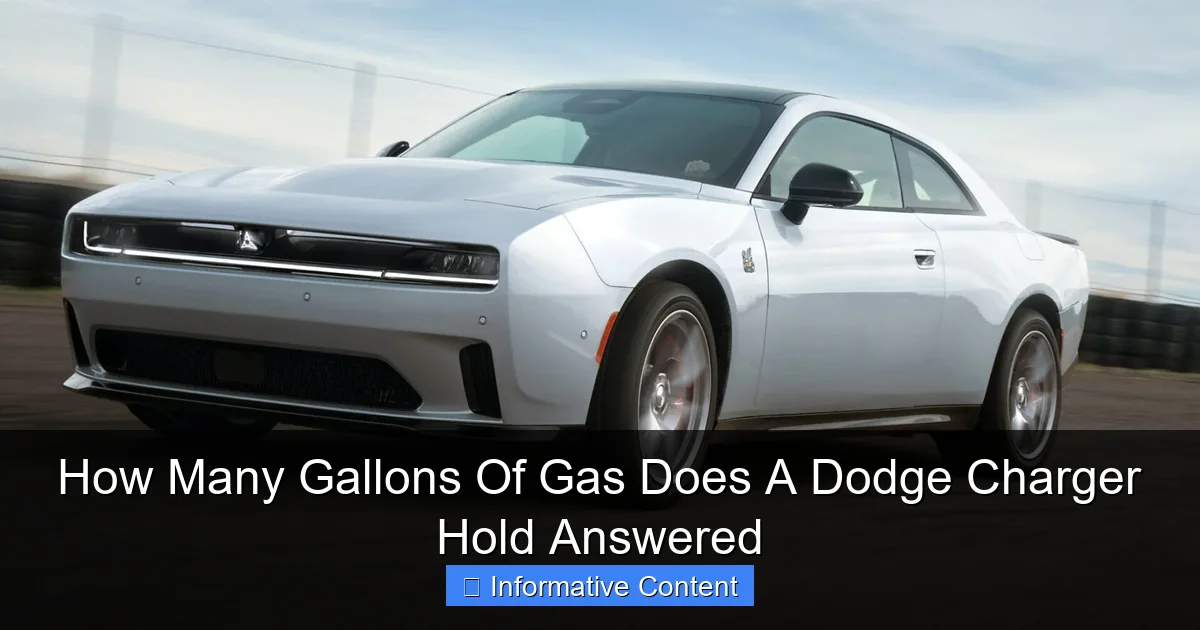
This is a big one. The mighty Charger SRT Hellcat, with its supercharged V8, has the same 18.5-gallon tank as a V6 Charger SXT. But here’s the catch. That Hellcat drinks fuel much faster. So, while the tank size is constant across many trims, the experience of that tank size is totally different. The performance models answer “how many gallons of gas does a Dodge Charger hold” with the same number, but they ask you to visit the pump more often to fill it.
Drivetrain: RWD vs AWD
Most Dodge Chargers are rear-wheel drive (RWD). However, all-wheel drive (AWD) is an option on many trims. The AWD system adds components. These components need space. Sometimes, this can slightly affect the fuel tank’s shape or placement. In practice, for the Charger, the tank capacity typically remains the same at 18.5 gallons for both RWD and AWD versions. It’s a testament to clever packaging by the engineers.
How Fuel Tank Size Affects Driving Range and Efficiency
Knowing how many gallons of gas a Dodge Charger hold is just step one. The magic happens when you combine that number with your car’s fuel economy. This gives you your driving range. Range is how far you can go on a full tank. It’s the number that actually matters when you’re planning a trip.
Visual guide about how-many-gallons-of-gas-does-a-dodge-charger-hold
Image source: cdn.lemonsforlulu.com
Calculating Your Charger’s Potential Range
Let’s do some simple math. It’s easy, I promise. Take your fuel tank capacity. Let’s use 18.5 gallons. Then, look at your car’s miles-per-gallon (MPG) estimate. For a V6 Charger, you might average around 25 MPG on the highway.
- Range = Tank Size x MPG
- Range = 18.5 gallons x 25 MPG = 462.5 miles
That means on a full highway tank, you could theoretically drive over 460 miles! Now, for a V8 Hemi model, the highway MPG might be closer to 19.
- Range = 18.5 gallons x 19 MPG = 351.5 miles
See the difference? The same tank size gives you over 100 miles less range with the bigger engine. This is why understanding both numbers is crucial.
The Trade-Off: Tank Size vs. Fuel Economy
A bigger tank is great for range, but it adds weight. Extra weight can slightly reduce fuel economy. Car makers like Dodge find a sweet spot. The 18.5-gallon tank in the Charger is a compromise. It offers good range without becoming a heavy burden. If you’re curious about how many gallons of gas a Dodge Charger hold, also ask how efficient it is. They are two sides of the same coin.
Practical Tips for Maximizing Your Charger’s Fuel Efficiency
So, you know how many gallons your tank holds. Now, let’s talk about making those gallons last longer. Whether you have a fuel-sipping V6 or a thirsty V8, these tips can help you stretch your range and save money.
Visual guide about how-many-gallons-of-gas-does-a-dodge-charger-hold
Image source: us-static.z-dn.net
Driving Habits That Save Gas
Your right foot is the biggest factor. Jackrabbit starts and hard braking waste fuel. Try to accelerate smoothly and anticipate stops. On the highway, use cruise control. It maintains a steady speed, which is more efficient than constant speeding up and slowing down. I’ve found that just by calming my driving style a bit, I can add an extra 20-30 miles to a tank in my Charger.
Maintenance Tips for Better Mileage
A well-maintained car is a more efficient car. Here are the basics:
- Tire Pressure: Check it monthly. Under-inflated tires create drag and kill your MPG.
- Air Filter: A clean air filter helps your engine breathe easier and run efficiently.
- Oil Changes: Use the recommended grade of oil. Fresh oil reduces engine friction.
- Spark Plugs: Worn plugs can cause misfires, wasting fuel.
It’s simple stuff, but it makes a real difference in how far you can go on those 18.5 gallons.
Planning Stops on Long Drives
With a known tank size, you can be a road trip ninja. Use apps or your car’s trip computer to track your average MPG. If you know you get 22 MPG overall, and you have an 18.5-gallon tank, plan your first fuel stop around the 350-mile mark to be safe. This takes the stress out of the journey. You’ll never have that “gas light panic” again.
Comparing Charger Models: A Look at Different Generations
The Dodge Charger has a rich history. The answer to “how many gallons of gas does a Dodge Charger hold” has changed a bit over time. Let’s take a quick tour through some key models. This will give you context, especially if you’re looking at a used Charger.
Classic vs. Modern: Tank Sizes Over the Years
The classic Chargers from the 60s and 70s had larger engines and, often, larger fuel tanks—sometimes over 20 gallons. They needed it! Modern Chargers (from the 2006 revival onward) are more standardized. The focus shifted to balancing performance, safety, and efficiency. The 18.5-gallon tank became the norm for the LX and LD platform cars (roughly 2006-2023).
Data Table: Dodge Charger Fuel Tank Capacities by Model Year
This table gives you a clear snapshot. Remember, always verify with your vehicle’s manual, as special editions or mid-year changes can occur.
| Model Year Range | Platform/Generation | Typical Fuel Tank Capacity | Notes |
|---|---|---|---|
| 2006-2010 | LX Platform | 18.5 gallons | Early revival models set the standard. |
| 2011-2014 | LX Platform (Refreshed) | 18.5 gallons | Consistency continued through updates. |
| 2015-2023 | LD Platform | 18.5 gallons | The current generation maintained the 18.5-gallon size across trims. |
| 2024+ | All-Electric | N/A (Battery) | The future Charger EV changes the game completely, using a battery pack instead of a gas tank. |
As you can see, for nearly two decades, Dodge has kept the fuel tank capacity remarkably consistent. This makes it easier to remember how many gallons of gas a Dodge Charger hold, whether it’s a 2012 or a 2022.
Beyond the Tank: Other Fuel-Related Considerations
We’ve focused a lot on capacity. But there’s more to the fuel story. When you understand these aspects, you become a smarter Charger owner.
Fuel Type: Regular vs. Premium Gas
This is critical. Your owner’s manual specifies the required fuel. Most V6 Chargers run perfectly on regular 87-octane gasoline. However, the high-performance V8 models, especially the SRT Hellcat and Scat Pack, require 91-octane premium fuel or higher. Using regular gas in these engines can cause knocking and damage. Yes, premium costs more. But it’s non-negotiable for protecting that expensive engine. It’s a key part of the ownership cost.
Cost of Filling Up: Budgeting for Fuel
Let’s talk money. If your tank is empty and gas costs $3.50 per gallon, filling an 18.5-gallon tank costs about $64.75. That’s a reality of driving a full-size sedan. For the performance models, you’re paying that more often due to lower MPG and potentially for premium fuel. It’s not a weakness, just a characteristic. Budgeting for it means no surprises.
Environmental Impact and Efficiency
The Charger is a powerful car. With great power comes greater fuel consumption compared to a compact car. That’s the trade-off. If you’re environmentally conscious, your driving habits and proper maintenance are the best tools to minimize your impact. The upcoming electric Charger is Dodge’s answer to this very concern, moving the question from “how many gallons of gas” to “how many kilowatt-hours.”
Conclusion: The Full Picture on Your Charger’s Fuel Tank
So, how many gallons of gas does a Dodge Charger hold? For most drivers of modern models, the answer is a reliable 18.5 gallons. But as we’ve explored, that number is just the starting point. It’s woven into a bigger picture of your car’s performance, your driving habits, and your lifestyle.
Knowing this detail empowers you. It lets you plan road trips with confidence. It helps you budget for fuel costs realistically. And it deepens your connection with your car. Whether you’re cruising in a day-to-day SXT or unleashing a Hellcat, that 18.5-gallon tank is your partner in every journey. It’s a fixed point in the variables of MPG and gas prices.
The next time you pull up to the pump, you’ll know exactly what your Charger needs. You can fill up with the knowledge of how far those gallons will take you. Drive smart, maintain your car, and enjoy every mile. That’s what owning a Charger is all about.
Frequently Asked Questions
How many gallons of gas does a Dodge Charger hold?
The Dodge Charger typically holds 18.5 gallons of gas in its fuel tank. This capacity is standard for most modern trims and model years, providing a solid balance for daily driving and longer trips.
What is the fuel tank capacity of a Dodge Charger?
The fuel tank capacity of a Dodge Charger is generally 18.5 gallons. This allows for a reliable driving range, though it’s wise to confirm with your specific vehicle’s manual for any variations.
Does the gas tank size vary by Dodge Charger model year?
The gas tank size has remained consistent at 18.5 gallons for many recent Dodge Charger model years. However, older models or special editions might differ, so reviewing year-specific details is recommended.
How far can I drive a Dodge Charger on a full tank of gas?
With an 18.5-gallon tank and an average fuel economy of around 23 MPG, a Dodge Charger can drive approximately 425 miles on a full tank. Your actual range may vary based on driving style, conditions, and engine choice.
Is the Dodge Charger’s gas tank capacity competitive with other sports sedans?
Yes, the Dodge Charger’s gas tank capacity of 18.5 gallons is competitive with other sports sedans, such as the Chevrolet SS or BMW 5 Series. This ensures a comparable driving range without frequent refueling stops.
How much will it cost to fill the Dodge Charger’s gas tank?
Filling the Dodge Charger’s 18.5-gallon tank costs around $65 to $70, assuming average gas prices of $3.50 to $3.80 per gallon. Costs fluctuate based on location, fuel grade, and current market rates.

At CarLegit, we believe information should be clear, factual, and genuinely helpful. That’s why every guide, review, and update on our website is created with care, research, and a strong focus on user experience.