
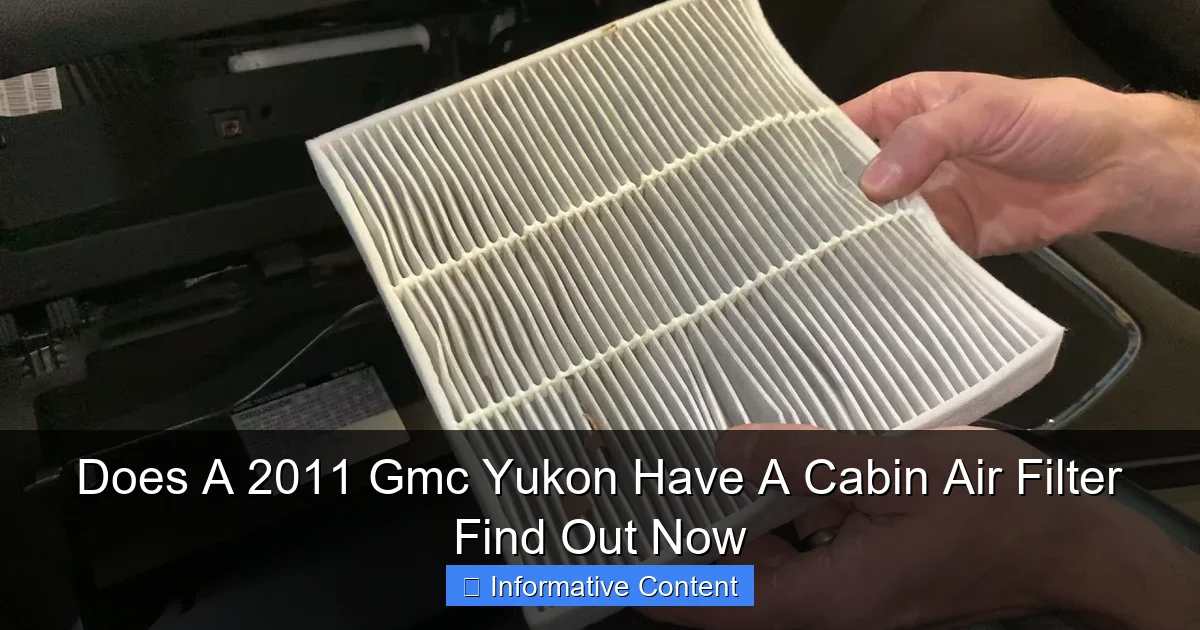
Featured image for does-a-2011-gmc-yukon-have-a-cabin-air-filter
Image source: i.ytimg.com
Yes, the 2011 GMC Yukon does have a cabin air filter. This crucial component, typically found behind the glove box, filters out dust, pollen, and pollutants to ensure clean cabin air. For peak HVAC performance and interior air quality, inspecting and replacing this filter regularly is essential.
In This Article
- 1 Key Takeaways
- 2 📑 Table of Contents
- 3 Does A 2011 GMC Yukon Have A Cabin Air Filter? Find Out Now
- 4 What Exactly Is a Cabin Air Filter and Why Should You Care?
- 5 The Hunt: Where Is The Cabin Air Filter Located?
- 6 Step-by-Step: How to Replace Your 2011 Yukon’s Cabin Air Filter
- 7 Signs Your 2011 Yukon’s Cabin Air Filter Needs Changing
- 8 Cabin Air Filter Maintenance Schedule and Data
- 9 The Real Cost of Ignoring Your Cabin Air Filter
- 10 Final Thoughts: Breathe Easy in Your Yukon
- 11 Frequently Asked Questions
- 11.1 Does a 2011 GMC Yukon have a cabin air filter?
- 11.2 Where is the cabin air filter located in a 2011 GMC Yukon?
- 11.3 How do I replace the cabin air filter in a 2011 GMC Yukon?
- 11.4 What are the signs that the cabin air filter needs replacement in a 2011 GMC Yukon?
- 11.5 What type of cabin air filter does a 2011 GMC Yukon use?
- 11.6 Why is maintaining the cabin air filter important for a 2011 GMC Yukon?
Key Takeaways
- Yes, it has one: The 2011 GMC Yukon is equipped with a cabin air filter.
- Find it behind the glovebox: The filter housing is located there for access.
- Replace it regularly for health: A clean filter improves cabin air quality.
- It’s a common DIY project: Many owners can replace it themselves easily.
- Neglect reduces HVAC performance: A clogged filter strains the blower motor.
📑 Table of Contents
- Does A 2011 GMC Yukon Have A Cabin Air Filter? Find Out Now
- What Exactly Is a Cabin Air Filter and Why Should You Care?
- The Hunt: Where Is The Cabin Air Filter Located?
- Step-by-Step: How to Replace Your 2011 Yukon’s Cabin Air Filter
- Signs Your 2011 Yukon’s Cabin Air Filter Needs Changing
- Cabin Air Filter Maintenance Schedule and Data
- The Real Cost of Ignoring Your Cabin Air Filter
- Final Thoughts: Breathe Easy in Your Yukon
Does A 2011 GMC Yukon Have A Cabin Air Filter? Find Out Now
Picture this. You’re cruising down the highway in your trusty 2011 GMC Yukon. The sun is shining, your favorite tunes are on, but something feels off. There’s a faint, musty smell creeping from the vents. Or maybe, the airflow from your climate control system just doesn’t seem as strong as it used to be. You start wondering, “Is it just me, or is the air in here not so fresh?”
If this sounds familiar, you’re not alone. Many Yukon owners hit this point. Your first thought might be about a cabin air filter. But then the doubt creeps in. Does a big, brawny SUV like the 2011 Yukon even have one of those? You might assume it’s only for smaller cars. I had the same question myself a few years back. The answer is a resounding yes, and knowing this simple fact can make a world of difference for your comfort and health.
Let’s clear the air right now. Not only does the 2011 GMC Yukon have a cabin air filter, but ignoring it is one of the most common oversights in vehicle maintenance. This little rectangular piece of pleated material is your first line of defense against the outside world. In this guide, we’ll dive deep into everything you need to know. We’ll cover where it hides, why it’s so crucial, and how you can replace it yourself in less time than it takes to watch a sitcom. By the end, you’ll be breathing easier, both literally and figuratively.
What Exactly Is a Cabin Air Filter and Why Should You Care?
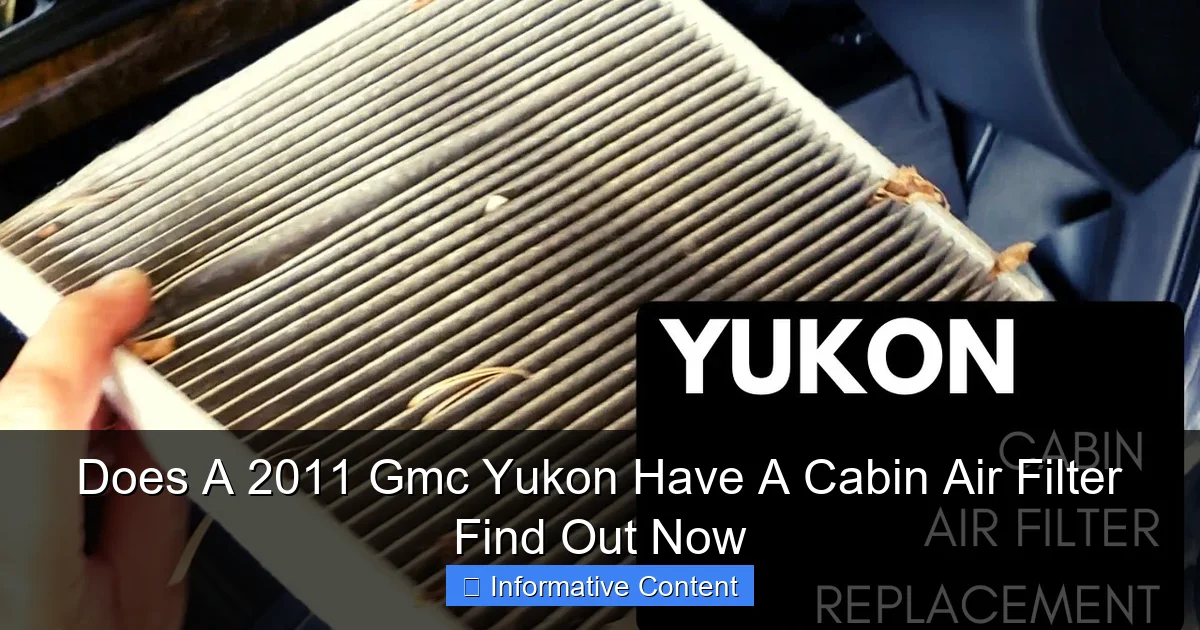
Think of your Yukon’s cabin air filter as the lungs for your vehicle’s interior. Every time you turn on the fan, air conditioner, or heater, outside air is sucked into your cabin. This air isn’t just pure oxygen. It’s loaded with dust, pollen, smog, soot, and even exhaust fumes. The cabin air filter’s job is to trap all those contaminants before they can circulate inside the space where you and your family sit.
Visual guide about does-a-2011-gmc-yukon-have-a-cabin-air-filter
Image source: i.ytimg.com
It’s a simple concept with a huge impact. Without a clean filter, all that gunk goes straight into your breathing zone. For anyone with allergies or asthma, a dirty filter can turn a pleasant drive into a miserable one. But even if you don’t have allergies, you’re still breathing in particulates that are better left outside.
The Two Main Types of Filters: Standard vs. Activated Carbon
When you go to buy a replacement, you’ll typically have two choices. The standard particulate filter is like a fine mesh screen. It’s great at catching dust, pollen, and mold spores. The upgrade is the activated carbon cabin air filter. This one has a layer of charcoal embedded in it. This charcoal is fantastic at absorbing odors and trapping smaller gaseous pollutants. If you drive in heavy city traffic or past farms, the carbon filter is a worthwhile upgrade for a fresher cabin smell.
So, does a 2011 GMC Yukon have a cabin air filter? Absolutely. And caring for it means caring for the air you breathe for hundreds of hours each year.
The Hunt: Where Is The Cabin Air Filter Located?
This is where many people get tripped up. In some cars, the filter is behind the glove box. In others, it’s under the hood. For the 2011 GMC Yukon (and its siblings, the Chevy Tahoe and Suburban), the location is thankfully driver-friendly. You won’t need any fancy tools to access it.
Visual guide about does-a-2011-gmc-yukon-have-a-cabin-air-filter
Image source: i.ytimg.com
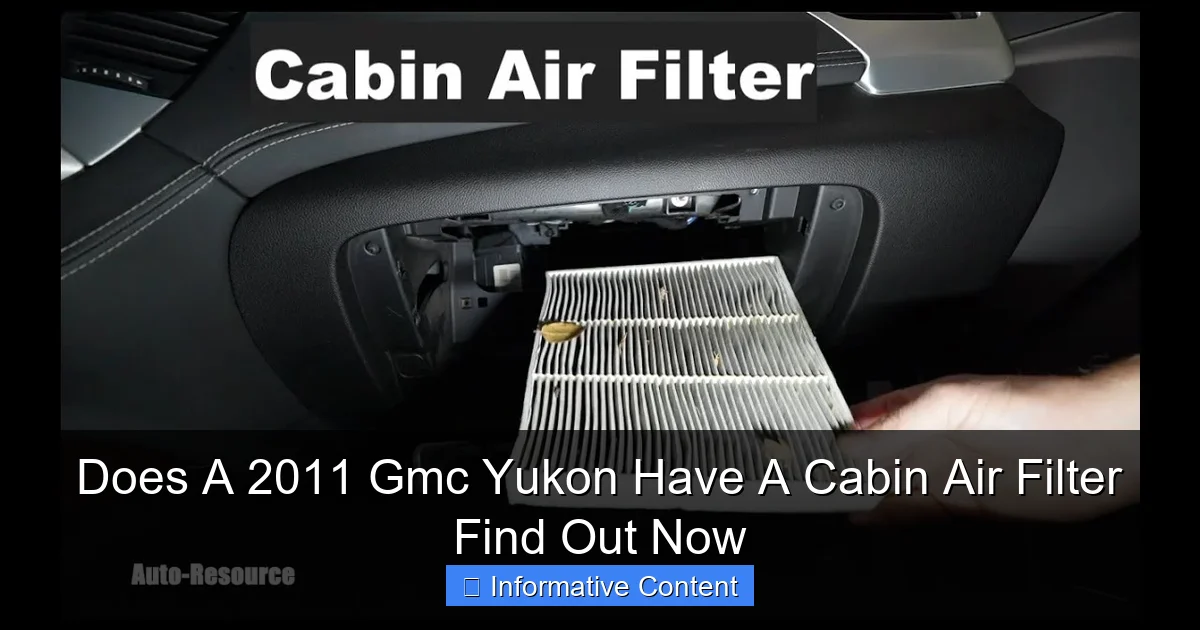
Your cabin air filter lives behind the glove compartment. Yes, it’s tucked away in the dashboard on the passenger side. GMC designed it for relatively easy service, though the first time you do it, you might fumble a bit. That’s perfectly normal. The key is knowing the simple steps to “drop” the glove box down to reveal the filter housing.
A Quick Access Guide
Here’s a peek at what you’re looking for. Open the passenger door and empty the glove box of all its contents—manuals, napkins, sunglasses, everything. Look inside the glove box. You’ll see stops on either side that prevent it from swinging down too far. You need to gently squeeze or manipulate these to allow the glove box to lower further. Once it’s down, you’ll see a long, rectangular plastic cover. That’s the filter housing. A few clips or tabs hold it shut. Open it up, and the old filter is right there.
Step-by-Step: How to Replace Your 2011 Yukon’s Cabin Air Filter
Replacing the filter is a fantastic DIY project. It builds confidence and saves you a significant markup at the repair shop. Let’s walk through it together.
Visual guide about does-a-2011-gmc-yukon-have-a-cabin-air-filter
Image source: i.ytimg.com
What You’ll Need:
- A new cabin air filter (check your owner’s manual for the correct part number, or ask at the auto parts store)
- A small flashlight (it can be dark behind the dash)
- Maybe a vacuum cleaner (for cleaning up any loose debris)
The Replacement Process:
- Prepare the Area: Open the passenger door and completely empty the glove box.
- Lower the Glove Box: Look for the stops on the sides. Gently push them inward or flex the glove box sides to allow it to hinge down all the way. Don’t force it! It should swing down smoothly.
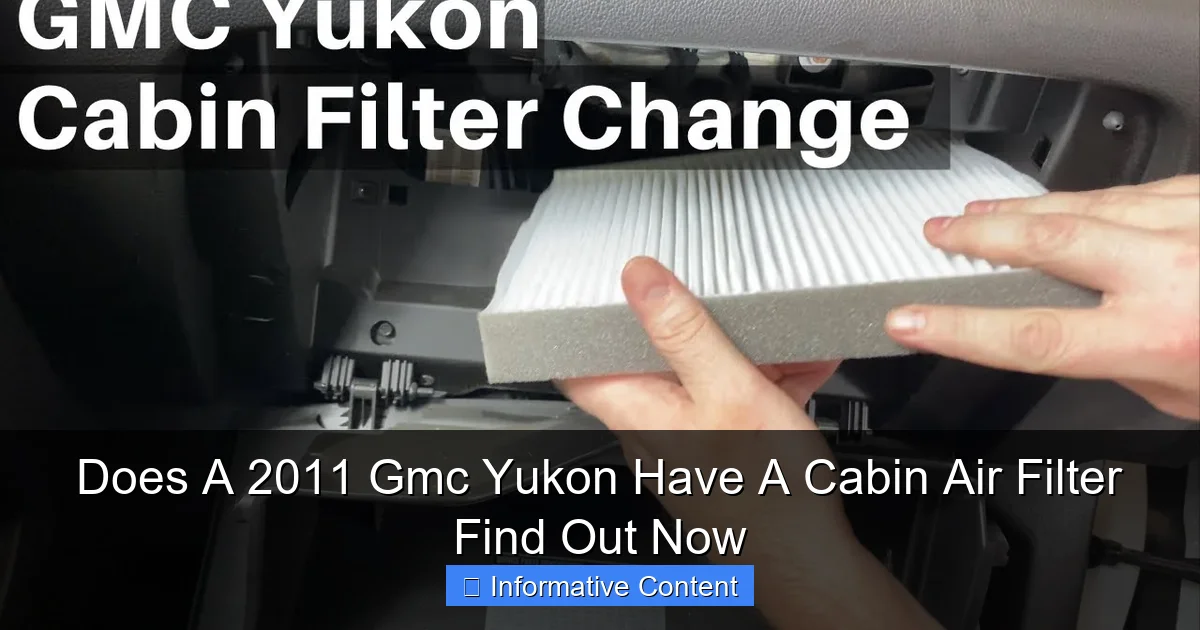
- Locate and Open the Housing: Shine your flashlight. You’ll see the filter housing cover. It’s usually held by simple plastic clips. Pinch or press these clips to release the cover and swing it open.
- Remove the Old Filter: Carefully pull the old filter straight out. Take note of the airflow direction arrows printed on its frame. This is crucial for installing the new one correctly.
- Insert the New Filter: Before putting the new one in, quickly vacuum out the empty chamber if there’s a lot of debris. Then, slide the new filter in, making sure the airflow arrows point the same way as the old one. Typically, the arrows should point toward the floor of the vehicle or downward.
- Close Up: Snap the housing cover back into place. Lift the glove box back up into position until the stops click. Reload your glove box items. You’re done!
The whole job takes 10-15 minutes once you know how. The feeling of accomplishment and the immediate improvement in air quality are instant rewards.
Signs Your 2011 Yukon’s Cabin Air Filter Needs Changing
You don’t have to wait for a scheduled maintenance interval to change the filter. Your Yukon will tell you when it’s time. Here are the most common red flags.
Reduced Airflow from the Vents
This is the biggest clue. When you crank the fan to high, but the air just trickles out, the filter is likely clogged. It’s so packed with dirt that air can’t pass through efficiently. Your blower motor is working overtime, but getting nowhere.
Persistent Unpleasant Odors
A musty, moldy, or dusty smell when you first turn on the AC or heat is a classic symptom. Mold and bacteria can actually grow on a damp, dirty filter. Every time you turn on the system, you get a blast of that stale air.
Increased Window Fogging
A clogged filter restricts airflow, which can hamper the defroster’s ability to clear your windshield. If your windows seem to fog up more easily and take longer to clear, the filter could be the culprit.
If you notice any of these, check the filter. Even if it’s not “time,” conditions like driving on dirt roads or in high-pollen areas can drastically shorten its life.
Cabin Air Filter Maintenance Schedule and Data
General Motors recommends inspecting the cabin air filter at each oil change and replacing it as needed. But “as needed” is vague. Most mechanics and filter manufacturers suggest a replacement every 15,000 to 30,000 miles. However, your driving environment dictates the real schedule.
To make it clearer, here’s a simple data table showing how different conditions affect your filter’s lifespan:
| Driving Environment | Recommended Replacement Interval | Primary Contaminants |
|---|---|---|
| City / Urban Driving | Every 12,000 – 15,000 miles | Exhaust soot, dust, smog |
| Suburban / Normal Mixed Use | Every 15,000 – 20,000 miles | Pollen, dust, some pollutants |
| Rural / Dirt Road Driving | Every 10,000 – 12,000 miles | Dust, dirt, agricultural particles |
| High-Pollen or Sandy Areas | Every 10,000 miles or annually | Pollen, fine sand, spores |
This table isn’t a strict rule, but a helpful guide. The best practice is to physically check it once a year. Pull it out and hold it up to the light. If you can’t see light passing through the material, it’s time for a new one.
The Real Cost of Ignoring Your Cabin Air Filter
Putting off this small task can lead to bigger, more expensive problems. Let’s talk about what’s at stake beyond just stale air.
First, a clogged filter makes your HVAC system work harder. The blower motor has to strain to pull air through the clog. This can, over a long period, lead to premature motor failure. Replacing a blower motor is a much more involved and costly repair than swapping a $20-$40 filter.
Second, all that moisture and debris trapped in the filter can create a perfect environment for mold and mildew. This isn’t just a smell issue. It can lead to microbial growth in the evaporator core (the part that cools the air for your AC). Cleaning that out often requires complete disassembly of the dashboard, a job that runs into the thousands of dollars.
It’s About Health and Comfort
Finally, remember the human element. You bought a Yukon for comfort, space, and capability. A clean cabin air filter ensures the comfort part remains intact. It provides cleaner air for your kids in the back seat, your spouse in the passenger seat, and you, the driver. In a world full of things we can’t control, the air quality in your own vehicle is one thing you can easily manage.
Final Thoughts: Breathe Easy in Your Yukon
So, does a 2011 GMC Yukon have a cabin air filter? We’ve answered that with a definitive yes. It’s a small, often-forgotten part that plays a massive role in your driving experience. Knowing it exists, knowing where it is, and knowing how to change it empowers you as an owner.
This isn’t about complex mechanics. It’s about simple, proactive care. Taking 15 minutes once a year to pop in a new filter is one of the highest-return investments you can make in your vehicle. The immediate payoff is fresher, cleaner air and stronger airflow from your vents. The long-term benefit is protecting more expensive components and ensuring your Yukon’s cabin remains the comfortable sanctuary it was designed to be.
Don’t let a dirty filter cloud your drive. Grab a filter, pop open that glove box, and give your Yukon—and your lungs—a fresh breath of life. You’ll be glad you did every time you turn the key.
Frequently Asked Questions
Does a 2011 GMC Yukon have a cabin air filter?
Yes, the 2011 GMC Yukon does come equipped with a cabin air filter. This filter is designed to trap dust, pollen, and other contaminants before they enter the vehicle’s interior through the HVAC system.
Where is the cabin air filter located in a 2011 GMC Yukon?
The cabin air filter in a 2011 GMC Yukon is typically found behind the glove box. To access it, you’ll need to remove the glove box assembly and open the filter housing compartment.
How do I replace the cabin air filter in a 2011 GMC Yukon?
First, empty and detach the glove box to reach the filter housing. Then, carefully remove the old cabin air filter and insert a new one, making sure it is oriented correctly according to the airflow arrows.
What are the signs that the cabin air filter needs replacement in a 2011 GMC Yukon?
Common indicators include weak airflow from the vents, musty odors when using the air conditioning or heat, and excessive dust accumulating inside the cabin. Regularly changing the filter helps maintain air quality and HVAC efficiency.
What type of cabin air filter does a 2011 GMC Yukon use?
The 2011 GMC Yukon generally uses a standard particulate filter, but activated carbon options are available for better odor reduction. Always verify the exact part number in your owner’s manual or with a reliable auto parts retailer.
Why is maintaining the cabin air filter important for a 2011 GMC Yukon?
A clean cabin air filter ensures healthier air for passengers by reducing allergens and pollutants. It also supports the HVAC system’s performance, preventing unnecessary wear on components like the blower motor.

At CarLegit, we believe information should be clear, factual, and genuinely helpful. That’s why every guide, review, and update on our website is created with care, research, and a strong focus on user experience.