

Always use premium unleaded gasoline with an octane rating of 91 or higher in your Maserati Quattroporte. This is a non-negotiable requirement to protect its high-performance engine from knocking and ensure optimal power, efficiency, and longevity. Using lower-octane fuel can cause engine damage and void your warranty, so never compromise at the pump.
In This Article
- 1 Key Takeaways
- 2 📑 Table of Contents
- 3 Choosing the Right Gas for Your Maserati Quattroporte
- 4 Understanding Your Quattroporte’s Engine: The Heart of the Matter
- 5 The Official Answer: What Maserati Recommends
- 6 Decoding the Pump: Octane, Additives, and Ethanol
- 7 The Real-World Impact: What Happens If You Use the Wrong Gas?
- 8 Pro Tips for Fueling and Maintaining Your Quattroporte
- 9 Fuel Specifications at a Glance
- 10 Conclusion: Fueling Your Passion the Right Way
- 11 Frequently Asked Questions
- 11.1 What type of gas does a Maserati Quattroporte use?
- 11.2 Can I use regular 87 octane gas in my Quattroporte?
- 11.3 Why does the Maserati Quattroporte require premium gas?
- 11.4 What happens if I accidentally put the wrong gas in my Maserati?
- 11.5 Does using premium gas improve Maserati Quattroporte performance?
- 11.6 Is premium gas required for all Maserati Quattroporte model years?
Key Takeaways
- Use Premium Unleaded: Always select 91+ octane (93 recommended).
- Protect Engine Performance: Lower octane can cause damaging knock.
- Consult Your Owner’s Manual: It is the definitive source for requirements.
- Prioritize Top-Tier Gasoline: These brands offer superior detergent additives.
- Avoid Ethanol Blends Over 10%: Higher concentrations risk fuel system damage.
- Fuel Choice is an Investment: Correct gas preserves engine health and value.
📑 Table of Contents
- Choosing the Right Gas for Your Maserati Quattroporte
- Understanding Your Quattroporte’s Engine: The Heart of the Matter
- The Official Answer: What Maserati Recommends
- Decoding the Pump: Octane, Additives, and Ethanol
- The Real-World Impact: What Happens If You Use the Wrong Gas?
- Pro Tips for Fueling and Maintaining Your Quattroporte
- Fuel Specifications at a Glance
- Conclusion: Fueling Your Passion the Right Way
Choosing the Right Gas for Your Maserati Quattroporte
So, you’ve done it. You’re behind the wheel of a Maserati Quattroporte. That glorious Italian V6 or V8 rumbles to life, the cabin wraps around you in leather and luxury, and you feel… a tiny pang of anxiety. You pull up to the gas station, a sea of nozzles before you, and the question hits: What type of gas do I use in a Maserati Quattroporte?
It’s a moment every new owner faces. This isn’t just any sedan; it’s a symphony of engineering from Modena. You want to treat it right. Using the wrong fuel feels like serving cheap wine at a fine dinner—it just doesn’t sit well. I remember my first fill-up. I stood there, manual mentally flipping through pages, wanting to get this simple act absolutely perfect.
Let’s clear the air right now. This isn’t about being snobby. It’s about understanding what your high-performance engine needs to run smoothly, powerfully, and reliably for years to come. Think of premium fuel as the right kind of nutrition for an athlete. We’re going to walk through everything you need to know, from octane numbers to ethanol content, and why this choice matters more for your Quattroporte than for your average commuter car. By the end, you’ll fuel up with confidence, knowing you’re giving your Italian masterpiece exactly what it deserves.
Understanding Your Quattroporte’s Engine: The Heart of the Matter
Before we talk about gas, we need to talk about what that gas is going into. The Maserati Quattroporte, across its recent generations, has been powered by some truly magnificent engines. Knowing which one you have is step one.
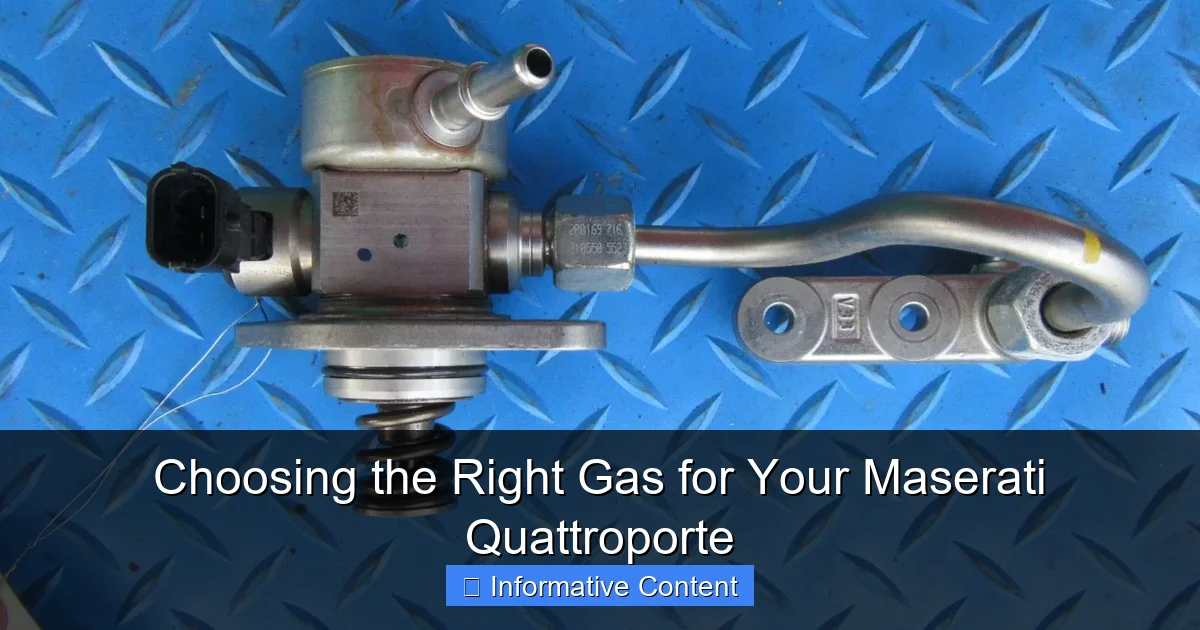
Visual guide about Maserati Quattroporte fuel type
Image source: alpineperformance.com
The Powerplants: V6 and V8 Marvels
For the better part of the last decade, the Quattroporte has primarily featured two engine families. The 3.0-liter twin-turbo V6 is a common and brilliant powerplant, offering a blend of performance and efficiency. Then there’s the glorious 3.8-liter twin-turbo V8, a beast derived from Ferrari expertise, reserved for the top-tier GTS and Trofeo models. While specific horsepower figures have evolved, the engineering philosophy remains constant: high compression, forced induction (turbocharging), and a relentless pursuit of power.
Why Engine Design Dictates Fuel Needs
These aren’t simple engines. They are built to produce immense power from a relatively small displacement. To do this, they run high compression ratios and use turbochargers to force more air into the cylinders. This creates a hot, high-pressure environment inside the engine. Lower-octane fuel, in these conditions, can ignite too early—before the spark plug fires—in an uncontrolled explosion called “knocking” or “pinging.” This sounds like a rapid rattling or pinging noise and, over time, can cause serious damage to pistons and rods. High-octane fuel is more resistant to this premature ignition, allowing the engine to run as designed: smoothly and powerfully.
Using the recommended fuel isn’t a suggestion for peak performance; it’s a requirement for the engine’s basic health and operation. The car’s sophisticated computer can detect knock and will pull back timing to protect the engine if you use lower-grade fuel, but you’ll feel it as a loss of power and responsiveness. Why buy a Maserati to drive it in a diminished state?
The Official Answer: What Maserati Recommends
Let’s get straight to the source. Maserati is unequivocal in its recommendation for the Quattroporte. This isn’t a murky area open for debate.

Visual guide about Maserati Quattroporte fuel type
Image source: maseratinet.com
The Golden Rule: Premium Unleaded Only
Open your owner’s manual—it’s that elegant book in the glovebox. You will find, for all contemporary Quattroporte models (roughly 2013 and onward with the turbocharged engines), the clear directive: use premium unleaded gasoline with an octane rating of 91 or higher. In much of the United States, this is the 91, 92, or 93 AKI (Anti-Knock Index) fuel sold at the pump. In countries using the RON rating system, this typically translates to 95 RON or higher.
The manual doesn’t mince words. This requirement is tied directly to the engine’s performance output and longevity. The engine management system is calibrated for this fuel. It’s the baseline.
What About the “Minimum” Octane Rating?
You might also see a note about a “minimum” octane, often 89. This is a safety net, not a recommendation. Think of it this way: if you’re traveling in a remote area and the only station for miles only has 89 octane, you can use it to get to the next town. But you should not make a habit of it. The engine will reduce power to protect itself, and prolonged use could lead to carbon buildup and increased wear. Fill up with premium again at the very first opportunity.
Decoding the Pump: Octane, Additives, and Ethanol
Okay, so we need premium. But not all premium fuels are created equal. Standing at the pump, you’ll see more than just numbers. Let’s break down what matters.

Visual guide about Maserati Quattroporte fuel type
Image source: maseratinet.com
Octane Explained: The Knock Resistance Number
Octane is a measure of a fuel’s stability. A higher octane number means the fuel is more resistant to detonating under pressure. For your Quattroporte’s high-compression, turbocharged engine, this resistance is non-negotiable. It allows the spark plug to ignite the fuel at the precise millisecond for optimal power and efficiency. Using 93 over 91 can sometimes yield a slight edge in performance, as the computer can advance timing even further, but 91 is the approved threshold.
The Top-Tier Detergent Gasoline Standard
This is a crucial tip. Look for the small “Top Tier” logo on the pump or station signage. This is an independent standard that certifies the fuel contains a higher concentration of effective detergent additives. These additives help keep critical engine parts—like fuel injectors and intake valves—clean from carbon deposits.
For a performance engine that may not accumulate miles as quickly as a daily driver, fuel can sit a bit longer, and deposits can form. Using a Top Tier premium gas helps maintain engine cleanliness, ensuring consistent fuel flow and combustion. Major brands like Shell (V-Power), Chevron (Techron), BP, and ExxonMobil typically participate in this program.
Almost all gasoline in the U.S. is E10, meaning it contains up to 10% ethanol. Your Quattroporte’s fuel system is designed to handle this blend without issue. However, you should avoid ethanol blends higher than E10, such as E15 (15% ethanol) or E85 (up to 85% ethanol). These are not approved for your vehicle. Ethanol has different combustion properties and can be corrosive to fuel system components not designed for it. It can also hold moisture, which is bad news in a low-use performance car. Stick with standard premium unleaded or E10 at most.
The Real-World Impact: What Happens If You Use the Wrong Gas?
Let’s talk about consequences. Maybe you’re tempted to save a few dollars per tank, or a friend says, “My SUV runs fine on regular.” Here’s what you’re actually risking with your Maserati Quattroporte.
Immediate Effects: Performance Loss and Engine Knock
The moment you put in lower-octane fuel, the car’s knock sensors will detect the abnormal combustion. The ECU (Engine Control Unit) will instantly retard the ignition timing. You’ll feel this as:
- A noticeable drop in throttle response. The car feels lethargic.
- Reduced power, especially in the mid-to-high RPM range where the turbos are spooled up.
- You might hear a faint pinging or rattling sound under acceleration—that’s the knock you’re trying to avoid.
- Potentially lower fuel economy, as the engine is no longer operating at its optimal efficiency.
You paid for 500+ horsepower in a GTS. Why settle for 450?
Long-Term Risks: Damage and Depreciation
Consistently using the wrong gas is a slow-motion problem. The constant knocking, even if controlled by the ECU, increases stress on internal components like pistons, rings, and connecting rods. Over tens of thousands of miles, this can lead to premature wear. Furthermore, using fuels without good detergents can lead to carbon buildup on valves and injectors, which can be expensive to clean and further hurt performance.
There’s also the resale factor. A savvy buyer or dealership technician can sometimes detect a history of improper fueling through data logs or inspection. It can affect the value of your car. Protecting your investment starts at the pump.
Pro Tips for Fueling and Maintaining Your Quattroporte
Beyond just choosing the right octane, here are some hands-on, practical habits I’ve learned that will keep your Quattroporte running in top form.
Making the Fill-Up Routine Foolproof
- Stick to Name Brands: Frequent reputable stations that have high fuel turnover. Busy stations have fresher fuel, which is better for any car, especially one that might sit occasionally.
- Follow the “Top Tier” Lead: Actively look for that logo. The extra cleaning agents are worth it.
- Cap Care: That fuel cap is on a tether for a reason. Don’t let it dangle and scratch your paint. Hold it or rest it in the fuel door.
Managing Fuel in a Low-Mileage Car
Many Quattroportes are weekend cars or see seasonal use. If your car sits for weeks, fuel can begin to degrade. Here’s what to do:
- Before Storage: Add a quality fuel stabilizer (like STA-BIL) to a full tank of fresh premium gas and run the engine for a few minutes to circulate it. This prevents varnish and gum formation.
- Keep the Tank Full: A full tank leaves less room for moisture-laden air to condense, reducing the risk of water contamination.
- For Long Storage: Consider a battery tender and over-inflate the tires slightly to prevent flat spots.
Fuel Specifications at a Glance
Here’s a quick-reference table to summarize the key fueling data for your Maserati Quattroporte. This covers the primary models from approximately 2013 onward.
| Model/Variant | Engine | Recommended Fuel (AKI) | Minimum Octane (if stated) | Ethanol Warning |
|---|---|---|---|---|
| Quattroporte S, SQ4 | 3.0L Twin-Turbo V6 | Premium Unleaded (91+ AKI) | 89 AKI (for emergency use) | Do not use >E10 |
| Quattroporte GTS, Trofeo | 3.8L Twin-Turbo V8 | Premium Unleaded (91+ AKI) | 89 AKI (for emergency use) | Do not use >E10 |
Note: Always consult your specific year’s owner’s manual for the definitive specification. This table is a general guide.
Conclusion: Fueling Your Passion the Right Way
Choosing the right gas for your Maserati Quattroporte boils down to a simple act of respect. Respect for the engineers in Modena who tuned that engine to sing a specific song on premium fuel. Respect for the investment you’ve made in a piece of automotive art. And respect for your own driving pleasure—because that surge of power, that smooth, knock-free acceleration, is what you bought the car for.
So, the next time you pull up to the pump, don’t feel anxiety. Feel confidence. Reach for the premium unleaded, preferably from a Top Tier supplier. Fill it up, screw the cap on tight, and get ready for the drive. That’s the true cost of ownership for a Maserati: not just the price of the fuel, but the commitment to treating it right. Your Quattroporte will thank you with every mile of thrilling, reliable performance. Now, go enjoy that masterpiece on the road.
Frequently Asked Questions
What type of gas does a Maserati Quattroporte use?
Maserati explicitly recommends using premium unleaded gasoline with an octane rating of 91 or higher for the Quattroporte. Using this high-octane fuel is crucial for optimal performance, engine longevity, and fuel efficiency, as it prevents damaging pre-ignition or knocking in the high-performance engine.
Can I use regular 87 octane gas in my Quattroporte?
While the engine may run on regular 87 octane gasoline, it is strongly discouraged. Using lower octane fuel can cause engine knocking, reduce power and efficiency, and potentially lead to costly long-term damage to the engine’s internal components, as the engine’s computer will detune performance to compensate.
The Maserati Quattroporte’s high-compression, performance-oriented engines are engineered to extract maximum power and responsiveness from high-octane fuel. Premium gasoline burns more controllably under pressure, preventing premature detonation and allowing the engine management system to operate at its designed, optimal settings.
What happens if I accidentally put the wrong gas in my Maserati?
If you accidentally fill your Quattroporte with a lower octane fuel, avoid aggressive driving and top off the tank with premium gasoline as soon as possible to dilute it. For a full tank of regular gas, driving gently until you can refuel with premium is advised to minimize risk of engine knock.
Yes, using the recommended premium gasoline ensures the twin-turbocharged engine delivers its advertised horsepower, torque, and throttle response. The engine control unit can advance timing appropriately only with high-octane fuel, allowing you to experience the car’s full performance potential.
Yes, all generations of the modern Maserati Quattroporte, from the 2004 model onward with their high-performance engines, require premium unleaded fuel. Always consult your specific owner’s manual for the definitive recommendation, but the requirement for 91 octane or higher is consistent.

At CarLegit, we believe information should be clear, factual, and genuinely helpful. That’s why every guide, review, and update on our website is created with care, research, and a strong focus on user experience.