

The clutch in a Maserati Quattroporte is not a routine maintenance item and typically lasts between 60,000 to 100,000 miles. Its lifespan is heavily influenced by driving style, with aggressive city driving accelerating wear, while gentle highway cruising can extend it. Ultimately, the clutch is changed when symptoms like slipping, a high bite point, or difficulty shifting appear, not on a fixed schedule.
So, you’re driving your Maserati Quattroporte. That glorious V8 rumble is your soundtrack. The sleek Italian lines turn heads at every corner. It’s a machine built for passion and performance. But then, you feel it. A slight shudder when you shift. The pedal feels a bit higher, or maybe the bite point is in a different spot. A quiet, nagging thought enters your mind: “Is it time for a new clutch?”
If you’re asking this question, you’re not alone. The clutch in a performance sedan like the Quattroporte is a topic of much discussion, and frankly, a bit of anxiety. Unlike changing your oil, there’s no fixed mileage sticker on the windshield. It’s a wear item that depends entirely on you, your driving habits, and how you treat this magnificent piece of engineering. Let’s demystify this together.
In this guide, we’ll walk through everything you need to know about Maserati Quattroporte clutch change frequency. We’ll talk about what’s normal, what’s not, and how you can maximize the life of this critical component. Think of it as a chat between fellow enthusiasts who want to keep their Italian stallions running strong for years to come.
In This Article
- 1 Key Takeaways
- 2 📑 Table of Contents
- 3 Understanding the Quattroporte’s Clutch: It’s Not a Toyota Camry
- 4 So, How Often Do You Change the Clutch? The Mileage Myth
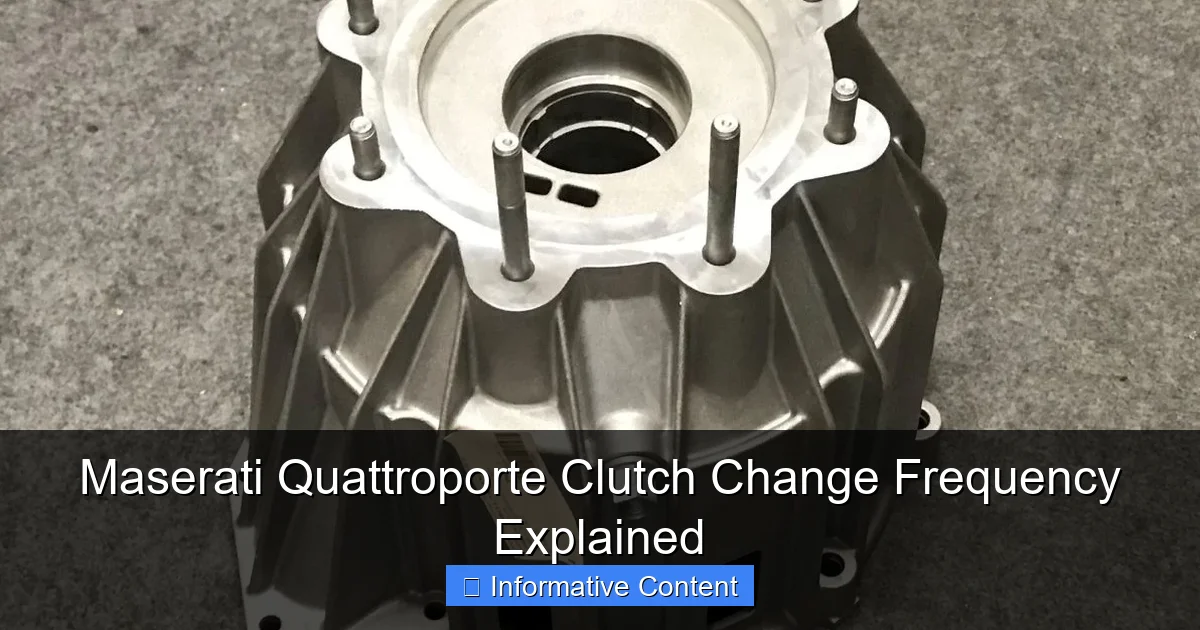
- 5 The Tell-Tale Signs: Is Your Quattroporte Clutch Wearing Out?
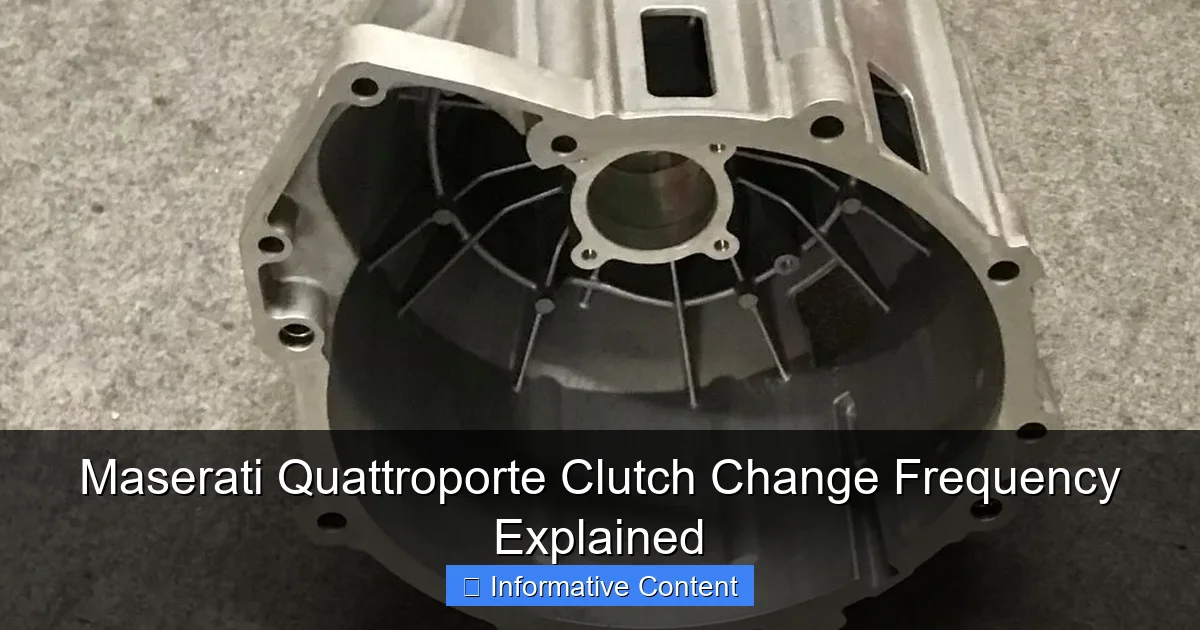
- 6 What Drives Clutch Wear? You’re in Control
- 7 The Data: Real-World Clutch Lifespan Insights
- 8 The Clutch Change Process: What to Expect and Budget For
- 9 Practical Tips to Maximize Your Clutch’s Life
- 10 Conclusion: It’s a Relationship, Not a Schedule
- 11 Frequently Asked Questions
- 11.1 How often does a Maserati Quattroporte clutch need to be changed?
- 11.2 What are the signs my Quattroporte needs a new clutch?
- 11.3 Is a Maserati Quattroporte clutch change expensive?
- 11.4 How can I extend the clutch life on my Maserati?
- 11.5 Does the clutch change frequency differ between automatic and manual transmissions?
- 11.6 Can I check the clutch wear myself on a Quattroporte?
Key Takeaways
- Driving style is the primary factor: Aggressive use drastically shortens clutch lifespan.
- Expect 30,000 to 60,000 miles: This is the typical range for a clutch replacement.
- Recognize early warning signs: Listen for slipping, shuddering, or a high bite point.
- City driving accelerates wear: Frequent stop-and-go traffic consumes clutch material faster.
- Use OEM or high-quality parts: This ensures durability and proper performance post-replacement.
- Budget for a significant service cost: Labor intensity makes this a major maintenance expense.
📑 Table of Contents
- Understanding the Quattroporte’s Clutch: It’s Not a Toyota Camry
- So, How Often Do You Change the Clutch? The Mileage Myth
- The Tell-Tale Signs: Is Your Quattroporte Clutch Wearing Out?
- What Drives Clutch Wear? You’re in Control
- The Data: Real-World Clutch Lifespan Insights
- The Clutch Change Process: What to Expect and Budget For
- Practical Tips to Maximize Your Clutch’s Life
- Conclusion: It’s a Relationship, Not a Schedule
Understanding the Quattroporte’s Clutch: It’s Not a Toyota Camry
First things first, we need to set the right expectations. The Maserati Quattroporte, especially models with the manual or the automated manual transmission (DuoSelect on older models, or the conventional manual), uses a high-performance clutch system. It’s designed to handle the substantial torque from a Ferrari-derived engine, not for smooth, lazy commutes in stop-and-go traffic (though it can do it).
This is a key point. The clutch materials and design are optimized for spirited driving and power transfer, not necessarily for maximizing longevity in the traditional sense. Comparing its lifespan to that of an economy car is like comparing tire wear on a track day to driving to the grocery store. They’re different worlds.
The Role of Transmission Type
Your Maserati Quattroporte clutch change frequency is heavily influenced by which transmission your car has.
- DuoSelect (Early 2000s Models): This electro-hydraulic automated manual gearbox is known to be particularly demanding on the clutch. Its automated shifting can sometimes be abrupt, leading to faster wear. Owners of these models often report more frequent clutch service intervals.
- 6-Speed Manual (GT Sport, etc.): The pure manual puts the clutch life directly in the driver’s hands. A skilled, smooth driver can make it last significantly longer than an aggressive one.
- ZF 8-Speed Automatic (Modern Models): Here’s the good news. If your Quattroporte has the superb ZF 8-speed torque-converter automatic, you don’t have a traditional clutch pedal or a single, large clutch plate to worry about. Wear concerns shift to the transmission fluid and the internal clutch packs, which have a much longer service life under normal conditions.
So, How Often Do You Change the Clutch? The Mileage Myth
This is the million-dollar question, and the answer is frustratingly vague: it depends. There is no factory-recommended interval like “change every 60,000 miles.” However, based on vast owner community experiences and specialist technician reports, we can establish realistic ranges.

Visual guide about Maserati Quattroporte clutch interval
Image source: ricambiamerica.com
For manual and DuoSelect Quattroporte models, a clutch can last anywhere from 20,000 to 60,000 miles. Yes, that range is huge. On the very low end, you might find aggressive city driving in a DuoSelect car needing attention by 20-30k miles. A meticulously driven manual car on open roads might see 50-60k miles or even a bit more.
The average often cited by specialists tends to hover around 30,000 to 40,000 miles. This is a good benchmark to keep in mind, but never treat it as a guarantee. Your car will tell you when it’s time.
The Tell-Tale Signs: Is Your Quattroporte Clutch Wearing Out?
Instead of watching the odometer, listen to and feel your car. These symptoms are your best guide for determining Maserati Quattroporte clutch change frequency for your specific vehicle.
Visual guide about Maserati Quattroporte clutch interval
Image source: ital-spares.com
The Unmistakable Feeling of Slip
This is the classic sign. You’re in a higher gear (3rd, 4th, 5th), you apply throttle, and the engine RPMs jump up but the car doesn’t accelerate proportionally. It feels like the engine is revving freely for a moment before catching. This means the clutch friction material is worn too thin to properly grip the flywheel.
A Changing Bite Point
You know exactly where the clutch pedal engages when you drive your car every day. If that “bite point” suddenly moves higher up in the pedal travel (closer to the top), it’s a strong indicator of wear. The clutch is taking up later because the material is thinner.
Chattering or Juddering
When you engage the clutch from a stop, especially on an incline, does the whole car shudder or chatter? This can be caused by a contaminated clutch disc (oil or grease), a damaged disc, or a problem with the flywheel surface.
Strange Noises and Stiff Pedals
A squealing noise when the pedal is pressed often points to a worn release bearing. A grinding sound could be more serious. A pedal that feels abnormally stiff or soft can also indicate issues with the hydraulic system or the pressure plate.
What Drives Clutch Wear? You’re in Control
Understanding what shortens clutch life is the first step to extending it. Here are the biggest factors under your control.
Visual guide about Maserati Quattroporte clutch interval
Image source: ital-spares.com
- City vs. Highway Driving: Constant stop-and-go traffic, where you’re riding the clutch in 1st and 2nd gear, is the ultimate clutch killer. Long, steady highway miles are very easy on it.
- Driving Style: Aggressive launches, “riding” the clutch pedal (keeping it partially depressed), and resting your foot on the pedal all contribute to premature wear. Smooth, deliberate shifts are your friend.
- Hill Starts: Frequent use of the handbrake for hill starts, rather than relying on the clutch to hold the car, can save significant wear.
- Modifications: Tuning the engine for significantly more torque without upgrading the clutch will lead to faster slippage and wear.
The Data: Real-World Clutch Lifespan Insights
While anecdotes are helpful, a bit of structured data can paint a clearer picture. Below is a simplified table summarizing common scenarios and their typical impact on Maserati Quattroporte clutch change frequency. Remember, these are generalizations based on community consensus.
| Driving Scenario / Factor | Impact on Clutch Life | Estimated Lifespan Range |
|---|---|---|
| Primarily Urban, Stop-and-Go Traffic | High Wear | 20,000 – 30,000 miles |
| Mixed City & Highway Driving | Moderate Wear | 30,000 – 45,000 miles |
| Primarily Highway / Open Road | Low Wear | 45,000 – 60,000+ miles |
| DuoSelect Transmission Usage | Higher Inherent Wear | Often on the lower end of the above ranges |
| 6-Speed Manual with Smooth Driver | Driver-Dependent (Best Case) | Can reach or exceed the higher end of ranges |
The Clutch Change Process: What to Expect and Budget For
When the signs are clear, it’s time for action. Changing the clutch on a rear-wheel-drive, longitudinal V8 sedan like the Quattroporte is a major job. It’s not a quick afternoon in your home garage for most people.
Labor Intensity and Cost
The entire rear subframe, exhaust, and driveline often need to be lowered or removed to access the clutch and flywheel. This translates to 12 to 18 hours of labor at a specialist shop. Parts are also not cheap. A full kit—including clutch disc, pressure plate, release bearing, and a new or resurfaced dual-mass flywheel (which is highly recommended)—can cost several thousand dollars in parts alone.
Total out-the-door costs can easily range from $4,000 to $8,000+ depending on the model year, shop rates, and whether you opt for OEM or high-performance aftermarket parts. It’s a significant investment, which is why extending clutch life is so valuable.
Choosing the Right Parts and Specialist
Never, ever cheap out on this repair. This is the heart of your drivetrain. Use a reputable clutch kit from manufacturers like Valeo (often the OEM supplier), Sachs, or a trusted performance brand. Insist on replacing the release bearing and having the flywheel inspected or replaced. A worn flywheel will destroy a new clutch in short order.
Most importantly, find a specialist who knows Maseratis. A generic mechanic might get the job done, but a Maserati or Italian exotic specialist will have the specific tools, knowledge, and experience to do it right the first time. They’ll also know any common quirks for your specific model.
Practical Tips to Maximize Your Clutch’s Life
Let’s end on a proactive note. Here are actionable things you can do to push that Maserati Quattroporte clutch change frequency as far into the future as possible.
- Master the Handbrake Hill Start: On inclines, use the handbrake to hold the car. Apply a little throttle, bring the clutch to the bite point, feel the car strain, then release the handbrake. This eliminates the need to hold the car on the clutch’s friction point.
- Be Decisive with the Pedal: When shifting, move the pedal smoothly but firmly. Avoid hovering at the bite point in traffic; it’s better to be fully in or fully out.
- Anticipate Traffic Flow: In slow-moving traffic, instead of constantly creeping with the clutch, allow more space to open up and then move decisively. Coasting in neutral is better than partial clutch engagement.
- Warm It Up Gently: Like all mechanical components, a gentle warm-up cycle is beneficial. Avoid aggressive shifts and high load until the drivetrain is at operating temperature.
- Listen and Feel: Pay attention to the symptoms listed earlier. Addressing a minor issue early can sometimes prevent a more catastrophic (and expensive) failure.
Conclusion: It’s a Relationship, Not a Schedule
Owning a Maserati Quattroporte is about embracing a certain kind of driving experience—one that is engaging, visceral, and connected. The clutch is a central part of that connection in manual-transmission cars. There’s no simple mileage number for a Maserati Quattroporte clutch change because it’s not a scheduled maintenance item; it’s a wear item whose life is a direct reflection of your dialogue with the machine.
By understanding the factors at play, heeding the warning signs your car gives you, and adopting driving habits that reduce wear, you can enjoy thousands of extra miles of that perfect, crisp shift. When the time does come, view it not just as a costly repair, but as an opportunity to refresh a key part of your Quattroporte’s soul. Choose quality parts, invest in a master technician, and you’ll be back on the road, that deep exhaust note burbling, with a connection to the car that feels brand new. Drive smart, drive smooth, and enjoy every mile.
Frequently Asked Questions
How often does a Maserati Quattroporte clutch need to be changed?
There is no fixed mileage interval; clutch lifespan depends heavily on driving style and conditions. Under normal use, many owners report getting 60,000 to 100,000 miles from the original clutch, but aggressive driving or frequent city traffic can drastically reduce this.
What are the signs my Quattroporte needs a new clutch?
Key symptoms include the clutch pedal feeling spongy or vibrating, a burning smell, difficulty shifting gears, or the engine revving without a corresponding increase in speed (clutch slippage). If you notice any of these, have your clutch inspected promptly.
Is a Maserati Quattroporte clutch change expensive?
Yes, it is a significant service due to the labor-intensive process and high-quality parts required. A clutch replacement for a Maserati Quattroporte typically costs between $3,000 and $5,000 or more, depending on the model year and labor rates.
How can I extend the clutch life on my Maserati?
Avoid riding the clutch pedal and “launching” the car aggressively from stops. Practice smooth gear changes and try to minimize stop-and-go traffic driving when possible. Proper maintenance and gentle operation are the best ways to maximize its lifespan.
Does the clutch change frequency differ between automatic and manual transmissions?
This FAQ primarily concerns manual transmissions, as traditional automatics use a torque converter. However, the Maserati Quattroporte with an automated manual transmission (DuoSelect or MC Shift) does have a clutch pack that will eventually require replacement, often sooner than a manual due to its complex operation.
Can I check the clutch wear myself on a Quattroporte?
While a precise measurement requires specialized tools, you can perform a simple slippage test. On a safe, open road in a high gear (like 4th or 5th), sharply press the accelerator. If the RPMs spike but your speed doesn’t increase proportionately, the clutch is likely slipping and needs attention.

At CarLegit, we believe information should be clear, factual, and genuinely helpful. That’s why every guide, review, and update on our website is created with care, research, and a strong focus on user experience.