
Winning a Maserati SUV triggers a significant federal income tax liability, as the prize’s fair market value is considered taxable income. Depending on your location, you will also likely owe state income tax and potentially a substantial local sales or use tax. Properly budgeting for this large, immediate tax bill is the critical first step to claiming and keeping your luxury prize.
In This Article
- 1 Key Takeaways
- 2 📑 Table of Contents
- 3 Taxes on a Won Maserati SUV Explained
- 4 Understanding the Big Picture: It’s Considered Income
- 5 Breaking Down the Potential Taxes You’ll Owe
- 6 What If You Don’t Want to Keep the Maserati?
- 7 Essential Steps to Take After Your Big Win
- 8 A Practical Look at the Numbers
- 9 Final Thoughts: From Windfall to Wise Ownership
- 10 Frequently Asked Questions
- 10.1 What taxes do I pay if I win a Maserati SUV?
- 10.2 How much are the taxes on a won Maserati?
- 10.3 Do I have to pay sales tax on a prize car?
- 10.4 Can I refuse a won Maserati SUV because of the taxes?
- 10.5 What is the first thing I should do after winning?
- 10.6 Are there strategies to reduce the tax hit on a won car?
Key Takeaways
- You owe taxes on the SUV’s fair market value: This is considered taxable income.
- This income is added to your annual earnings: It could push you into a higher tax bracket.
- Plan for a significant lump-sum tax payment: The tax bill can be tens of thousands of dollars.
- Consult a tax professional immediately: They can help with valuation and filing strategies.
- State and local taxes will also apply: These vary greatly by your location.
- Consider the ongoing ownership costs: Insurance, registration, and maintenance are also expensive.
📑 Table of Contents
- Taxes on a Won Maserati SUV Explained
- Understanding the Big Picture: It’s Considered Income
- Breaking Down the Potential Taxes You’ll Owe
- What If You Don’t Want to Keep the Maserati?
- Essential Steps to Take After Your Big Win
- A Practical Look at the Numbers
- Final Thoughts: From Windfall to Wise Ownership
Taxes on a Won Maserati SUV Explained
Picture this: you’re at a swanky charity gala, a company awards night, or maybe you entered a contest on a whim. The host draws the winning ticket, reads your name, and suddenly, you’re the proud new owner of a Maserati SUV. The roar of the crowd, the flash of cameras, the sheer, unbelievable joy. You’re handed a giant, symbolic key, and visions of cruising down coastal highways flood your mind.
But then, a little voice in the back of your head whispers a question that sobers up the celebration faster than a splash of cold water: “Wait… what about the taxes?” It’s a universal moment of pause. Winning a luxury vehicle, especially a brand as iconic as Maserati, isn’t quite like winning a toaster. The taxman, as they say, always gets his share. And his share of a six-figure Italian masterpiece can be… substantial.
Don’t let that initial worry dim your excitement. This guide is here to walk you through it, step-by-step, like a friend explaining the rules of a complicated but very rewarding game. We’ll break down exactly what “taxes on a won Maserati SUV” mean, what you’ll likely owe, and—most importantly—how to navigate the process without any nasty surprises. Consider this your roadmap from that thrilling moment of victory to the even sweeter moment when you’re legally and financially clear to hit the open road.
Understanding the Big Picture: It’s Considered Income
The single most important concept to grasp is this: in the eyes of tax authorities like the IRS in the United States, winning a Maserati SUV is not a tax-free gift. It is considered ordinary income. The government treats the fair market value of that SUV as if it were cash paid directly to you. So, before you even think about license plates or insurance, you need to think about your tax return.
Visual guide about Maserati SUV taxes
Image source: argentauquotidien.com
The 1099 Form Is Your Starting Point
If the prize value exceeds a certain threshold (typically $600 in the U.S.), the organization awarding the Maserati is legally required to send you and the IRS a Form 1099-MISC or 1099-NEC. This form will state the “prizes and awards” value, which is the SUV’s Fair Market Value (FMV) at the time you won it. This number is what gets added to your total annual income. It’s crucial to keep this form safe; it’s your official record of the transaction for tax purposes.
Fair Market Value vs. MSRP
Here’s a key detail: the taxable amount is usually the Fair Market Value, not necessarily the Manufacturer’s Suggested Retail Price (MSRP). FMV is what the vehicle could sell for on the open market. For a brand-new, current-year Maserati won from a dealership, the FMV and MSRP are often very close. But if it’s a demo model, last year’s edition, or part of a promotion, the FMV might be slightly lower. The prize giver determines this value, and it will be listed on your 1099.
Breaking Down the Potential Taxes You’ll Owe
You won’t pay one single “car prize tax.” Instead, the value of the Maserati flows through your financial situation and can be touched by several different types of tax. Which ones apply to you depends on your location and overall finances.
Visual guide about Maserati SUV taxes
Image source: images.bfmtv.com
Federal Income Tax
This is the big one. The FMV of the Maserati will be added to your other income (like your salary, investments, etc.). This could potentially push you into a higher tax bracket for that year. For example, if you earn $80,000 a year and win a Maserati Levante valued at $90,000, your total reported income for tax purposes becomes $170,000. You would pay federal income tax on that total amount at the corresponding marginal rates.
- Practical Tip: Use an online tax calculator to get a rough estimate. Plug in your expected annual income plus the SUV’s value to see the potential federal tax impact.
State Income Tax
Most U.S. states also have an income tax. You will likely need to report the prize value on your state tax return as well, following similar rules as the federal return. Rates vary widely, from over 10% in states like California to 0% in states like Texas, Florida, or Nevada (which have no state income tax). Your state tax obligation could be significant or nothing at all.
Local Taxes
Some cities or municipalities impose a local income tax. These are less common but worth checking, especially if you live in a major metropolitan area.
Sales Tax (Yes, Really)
This one often surprises winners. Many states require you to pay sales tax, use tax, or a similar excise tax to legally title and register the vehicle in your name. Even though you didn’t buy it, the state views the transfer of ownership as a taxable event. The tax is typically calculated on the SUV’s FMV. This is a separate, upfront cost you must pay at your local Department of Motor Vehicles (DMV) or equivalent agency.
- Relatable Anecdote: I have a friend who won a boat. He budgeted for the income tax but was completely blindsided by the five-figure sales tax bill he had to pay at the DMV before he could even get the title. Don’t let that be you!
What If You Don’t Want to Keep the Maserati?
Let’s be real. The ongoing costs of a Maserati—insurance, maintenance, premium fuel—are steep. Sometimes, the smartest financial decision is not to keep the vehicle. You have options, but each has tax implications.
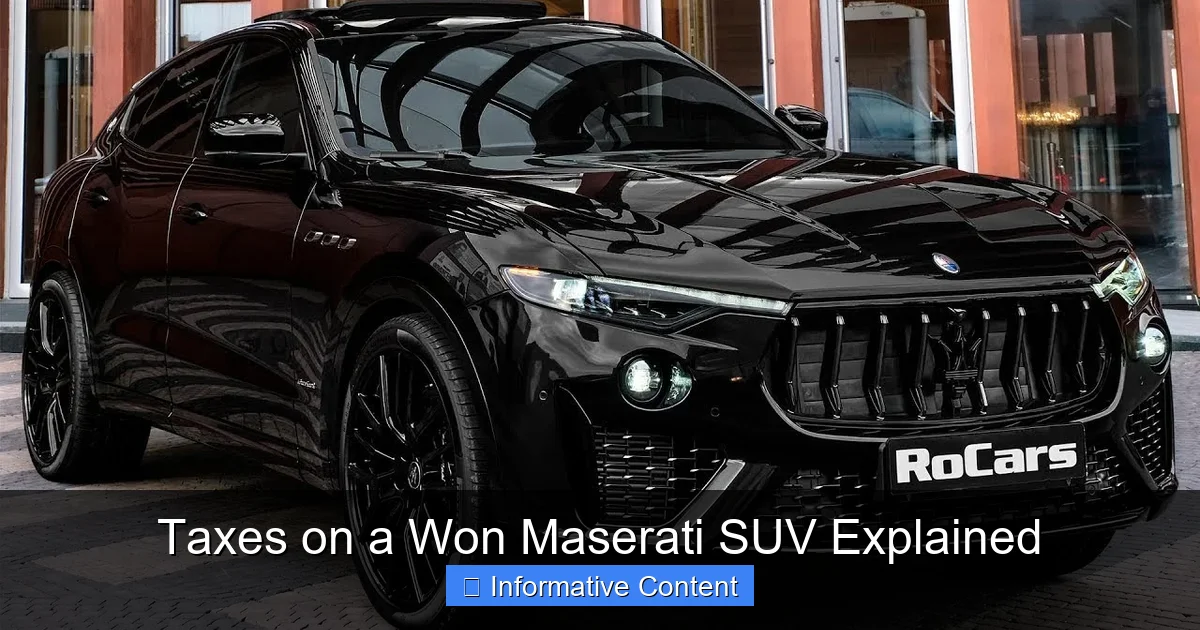
Visual guide about Maserati SUV taxes
Image source: i.ytimg.com
Selling the SUV
You can sell the Maserati. However, remember you’ve already paid income tax on its FMV at the time you won it. If you sell it for more than that FMV, you may owe capital gains tax on the profit. If you sell it for less, you might be able to claim a capital loss. It’s critical to keep meticulous records of your 1099 value and the final sale price.
Refusing the Prize (Disclaiming It)
You can legally refuse the prize before taking possession. This is called “disclaiming.” If done correctly and irrevocably, you would not receive a 1099 and would owe no tax. This is a nuclear option, but it exists if the tax burden is simply too great. You must follow specific legal procedures, so consulting a tax professional is essential if you consider this path.
Donating the Vehicle
You could donate the Maserati to a qualified charitable organization. You would still owe income tax on the FMV from the prize (you received the income, then chose to donate it). However, if you itemize your deductions, you might be able to claim a charitable deduction for the donation value, which could offset some of the tax burden. The rules here are complex, and deduction limits apply, so professional advice is a must.
Essential Steps to Take After Your Big Win
Take a deep breath. Winning is good! Now, get organized with this checklist.
Step 1: Get the Official Paperwork
Ensure you get a written statement from the prize provider detailing the exact Fair Market Value they will report to the IRS. Secure the vehicle’s title and all manufacturer’s documents.
Step 2: Consult a Tax Professional Immediately
Do not try to navigate this alone. Hire a certified public accountant (CPA) or a tax attorney with experience in prize winnings or windfalls. They can:
- Accurately project your total tax liability.
- Advise on potential state-to-state issues if you won in a different state than you live in.
- Help you plan for estimated tax payments to avoid penalties.
- Guide you on the implications of selling or donating.
Step 3: Plan for Estimated Tax Payments
Since taxes aren’t being withheld from this “income,” you may be required to make estimated quarterly tax payments to both the IRS and your state to cover what you owe. Failure to do so can result in underpayment penalties. Your tax pro will help you calculate these.
Step 4: Budget for the “Hidden” Costs
Start researching now:
- Sales/Use Tax: Contact your local DMV to determine the rate and process.
- Insurance: Get a quote for insuring a high-value luxury SUV. It will be considerably higher than for an average car.
- Registration & Title Fees: These are often based on vehicle value and can be hefty.
A Practical Look at the Numbers
Let’s put this into a clearer perspective with a hypothetical scenario. While every situation is unique, this table illustrates how the numbers might break down for a fictional winner. Remember, this is an example, not a calculator.
| Item | Example Value & Notes |
|---|---|
| Won Maserati Model | Maserati Levante Modena |
| Fair Market Value (FMV) on 1099 | $95,000 |
| Winner’s Annual Salary | $110,000 |
| Total Reported Income | $205,000 ($110k + $95k) |
| Estimated Federal Income Tax on Prize* | ~$22,000 – $28,000 (Varies with bracket) |
| State Income Tax (e.g., 5% rate) | $4,750 (On the $95k prize value) |
| State Sales/Use Tax (e.g., 6% rate) | $5,700 (Paid at DMV for title/registration) |
| Potential Total Tax & Upfront Cost | $32,450 – $38,450+ |
*Federal tax is marginal. This example simplifies the calculation for illustration. A CPA will provide the exact figure.
Final Thoughts: From Windfall to Wise Ownership
Winning a Maserati SUV is a life-changing event, a story you’ll tell for years. The key to ensuring it’s a happy story with a smooth ending is to respect the financial reality that comes with it. The phrase “taxes on a won Maserati SUV” isn’t a single scary number; it’s a series of understandable steps and obligations.
By understanding that it’s taxable income, anticipating the federal, state, and sales tax components, and seeking expert help, you transform a potential burden into a manageable process. Whether you decide to keep the Maserati and enjoy every luxurious mile, or you make the pragmatic choice to sell it and use the proceeds for other goals, you’ll be making an informed decision. The thrill of winning doesn’t have to be followed by a panic. With the right knowledge and preparation, you can handle the taxes, get behind the wheel (or your bank account) with confidence, and truly enjoy your incredible fortune.
Frequently Asked Questions
What taxes do I pay if I win a Maserati SUV?
Winning a Maserati SUV triggers two main tax liabilities: income tax and potential state sales tax. The prize’s fair market value is added to your taxable income, potentially pushing you into a higher federal tax bracket, and you may owe state taxes depending on your residency.
How much are the taxes on a won Maserati?
The amount of taxes on a won Maserati SUV depends heavily on the vehicle’s value and your personal income bracket. For a high-value luxury SUV, the federal income tax alone could easily amount to tens of thousands of dollars, with additional state-level taxes further increasing the total.
Do I have to pay sales tax on a prize car?
Yes, in most states you are required to pay sales tax on a prize car like a Maserati SUV to legally register and title it in your name. The tax is calculated on the vehicle’s retail value at the time you take ownership, and you must typically pay this out of pocket to your state’s DMV.
Can I refuse a won Maserati SUV because of the taxes?
Absolutely. You have the right to refuse or disclaim a prize, including a Maserati SUV, to avoid the substantial tax burden. It’s a common choice for winners who determine that the cash required to cover the taxes on a won Maserati SUV is not feasible for their financial situation.
What is the first thing I should do after winning?
Your first step should be to consult with a tax advisor or CPA to understand the full financial impact. They can help you estimate your tax liability, explore payment options, and advise on whether accepting the Maserati SUV is financially prudent given the significant taxes involved.
Are there strategies to reduce the tax hit on a won car?
Potential strategies include donating the vehicle to a qualified charity for a tax deduction or, if possible, selling the Maserati SUV immediately to cover the tax bill. However, these options have complex rules, so professional guidance is essential to ensure compliance.

At CarLegit, we believe information should be clear, factual, and genuinely helpful. That’s why every guide, review, and update on our website is created with care, research, and a strong focus on user experience.