
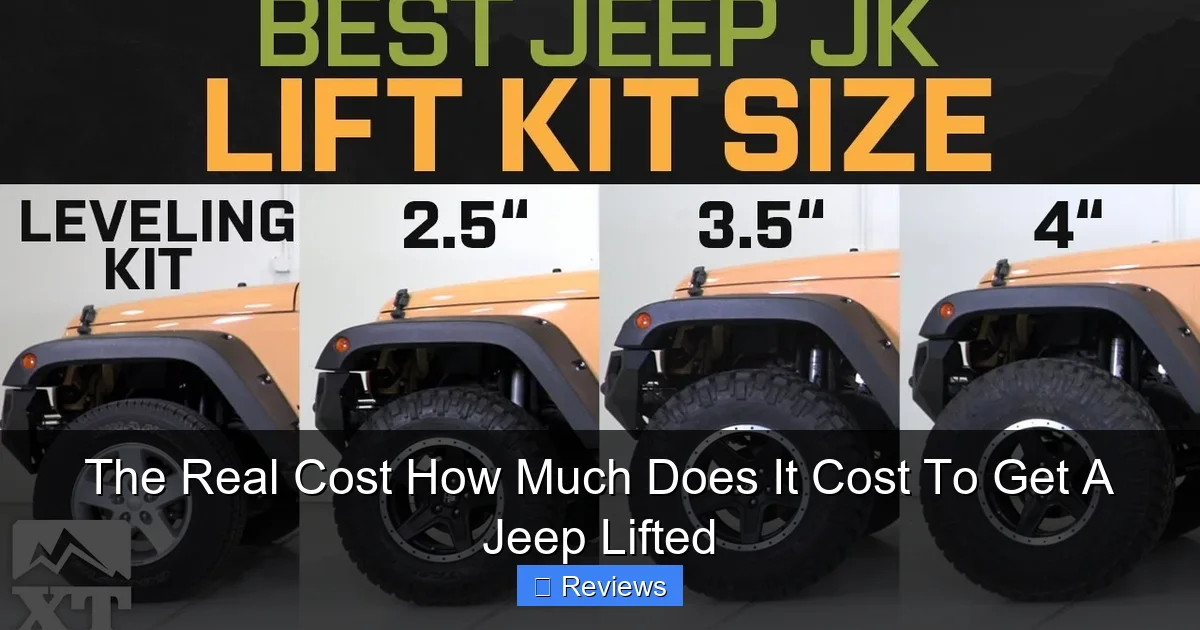
Featured image for how much does it cost to get a jeep lifted
Image source: i.ytimg.com
Lifting a Jeep comes with a highly variable price tag, typically ranging from a few hundred dollars for basic spacer kits to well over $10,000 for comprehensive, high-performance systems. The total cost hinges on the lift kit type, height, brand quality, and crucial additional modifications like new tires, wheels, and driveline adjustments that often become necessary. Always factor in professional installation labor and potential hidden costs to ensure your lifted Jeep performs safely and effectively without budget surprises.
The iconic silhouette of a lifted Jeep, conquering rugged terrain or simply cruising urban streets with an undeniable presence, is a dream for countless enthusiasts. This pursuit of enhanced off-road capability, improved aesthetics, and a commanding view of the road often begins with a single, burning question: How much does it cost to get a Jeep lifted? It’s a question that, unfortunately, doesn’t have a simple answer. Much like asking how much a house costs, the specifics can vary wildly depending on your goals, the type of lift, the quality of components, and whether you opt for a DIY installation or professional expertise.
Embarking on the journey to lift your Jeep is an exciting prospect, but it’s also an investment that requires careful planning and a thorough understanding of the associated expenses. From the moment you start researching, you’ll encounter a vast array of options, each promising different levels of performance and aesthetics. The complexity can be daunting, leading many to wonder if their budget aligns with their aspirations. This comprehensive guide aims to demystify the process, providing a detailed breakdown of the various costs involved so you can confidently answer the question, “How much does it cost to get a Jeep lifted?” for your specific situation.
Whether you’re aiming for a subtle boost or a dramatic transformation, understanding the real financial commitment is crucial. We’ll delve into everything from the basic kit prices to the often-overlooked ancillary components and professional installation fees. By the end of this post, you’ll have a clear picture of what to expect when you decide it’s time to elevate your Jeep’s stance and capabilities, giving you the knowledge to make informed decisions about how much does it cost to get a Jeep lifted.
In This Article
- 1 Key Takeaways
- 2 Understanding Jeep Lifts: Types and Their Purpose
- 3 Factors Influencing the Total Cost
- 4 Breaking Down the Costs: Kit vs. Installation vs. Extras
- 5 Practical Examples & Cost Scenarios
- 6 DIY vs. Professional Installation: What to Consider
- 7 Data Table: Estimated Cost Ranges for Jeep Lift Kits and Installation
- 8 Conclusion: The Real Investment in Lifting Your Jeep
- 9 Frequently Asked Questions
- 9.1 How much does it typically cost to get a Jeep lifted?
- 9.2 What factors significantly influence the overall cost of getting my Jeep lifted?
- 9.3 Can I save money by lifting my Jeep myself, or should I get a professional installation?
- 9.4 Are there any hidden or additional costs I should budget for when getting a Jeep lifted?
- 9.5 Why do some Jeep lift kits cost significantly more than others?
- 9.6 How long does it typically take to get a Jeep lifted, and how does that affect the overall cost?
Key Takeaways
- Understand cost variability: Jeep lift prices range from $500 to $10,000+.
- Factor in labor: Professional installation often doubles kit costs.
- Choose kit quality wisely: Cheap kits lead to future repairs and issues.
- Budget for hidden costs: Include alignment, tires, and potential driveline adjustments.
- DIY saves labor: Requires skill; professional installation ensures safety.
- Research extensively: Compare kits, installers, and read reviews for best value.
- Consider long-term impact: Lifts affect ride, handling, and fuel economy.
Understanding Jeep Lifts: Types and Their Purpose
Before we can truly answer how much does it cost to get a Jeep lifted, it’s essential to understand the different types of lift kits available and what each one accomplishes. The choice of lift significantly impacts the overall cost, performance, and required modifications. Each type has its own set of pros, cons, and price points, catering to various needs from purely aesthetic enhancements to extreme off-road prowess.
Body Lift Kits
A body lift kit involves raising the body of the Jeep off its frame using spacers. The suspension components remain untouched, meaning it doesn’t improve suspension travel or ground clearance under the axles. Its primary purpose is to allow for slightly larger tires by creating more space between the tires and the fender wells. This is generally the most budget-friendly option when you’re considering how much does it cost to get a Jeep lifted for a minimal increase in tire size.
- Pros: Inexpensive, relatively easy to install (DIY friendly), maintains factory ride quality, doesn’t significantly alter suspension geometry.
- Cons: No actual increase in ground clearance for vital drivetrain components, can expose frame gaps, may require steering shaft extensions or modifications to shifter linkages.
- Typical Cost (Kit Only): $100 – $400
Spacer Lifts / Budget Boosts
A spacer lift, also known as a budget boost, uses coil spacers or extended shackles (for leaf-sprung Jeeps like the XJ Cherokee) to add height to the existing suspension. These are popular for achieving a mild lift (typically 1 to 2.5 inches) without replacing the entire suspension system. They are a good entry point if you’re exploring how much does it cost to get a Jeep lifted for a modest aesthetic change and the ability to fit slightly larger tires.
- Pros: Affordable, maintains factory ride quality (though it can stiffen slightly), relatively straightforward installation, often doesn’t require extensive additional modifications.
- Cons: Limited suspension articulation improvement, doesn’t replace worn out factory components, can put more stress on existing suspension parts.
- Typical Cost (Kit Only): $150 – $600
Short Arm Suspension Lifts
Short arm suspension lifts are the most common type of true suspension lift. These kits replace the factory coil springs and shocks with taller, performance-oriented components. They often include new control arms (or drop brackets for existing ones), track bars, sway bar links, and brake line extensions. Short arm lifts typically offer 2.5 to 3.5 inches of lift, providing a significant improvement in ground clearance and off-road capability. This is where the discussion of how much does it cost to get a Jeep lifted starts to get more serious, as you’re investing in performance.
- Pros: Substantial improvement in off-road articulation and ground clearance, better ride quality than stock (depending on component quality), allows for larger tires (33-35 inches).
- Cons: More complex installation, may require additional components like driveshafts or exhaust modifications for lifts over 3 inches, higher initial cost.
- Typical Cost (Kit Only): $500 – $2,500
Long Arm Suspension Lifts
Long arm suspension lifts are designed for serious off-road enthusiasts seeking maximum articulation and stability, typically for lifts of 4 inches or more. These kits replace the short factory control arms with much longer ones, relocating their mounting points closer to the center of the frame. This design creates a flatter control arm angle, which significantly improves ride quality, handling, and suspension articulation, especially at taller lift heights. When considering how much does it cost to get a Jeep lifted to an extreme level, long arm kits are at the top end of the spectrum.
- Pros: Superior off-road performance, improved on-road ride quality and handling at extreme heights, maximum articulation, allows for very large tires (37 inches and up).
- Cons: Very expensive, extremely complex and time-consuming installation (often requiring welding and cutting), requires numerous additional modifications (driveshafts, gearing, steering, etc.), potential for reduced ground clearance at control arm mounting points.
- Typical Cost (Kit Only): $2,000 – $6,000+
Factors Influencing the Total Cost
Understanding the different types of lifts is just the beginning when you’re trying to figure out how much does it cost to get a Jeep lifted. Several key factors can dramatically influence the final price tag, transforming a seemingly simple project into a significant investment. Being aware of these variables will help you budget more accurately and avoid unexpected expenses.
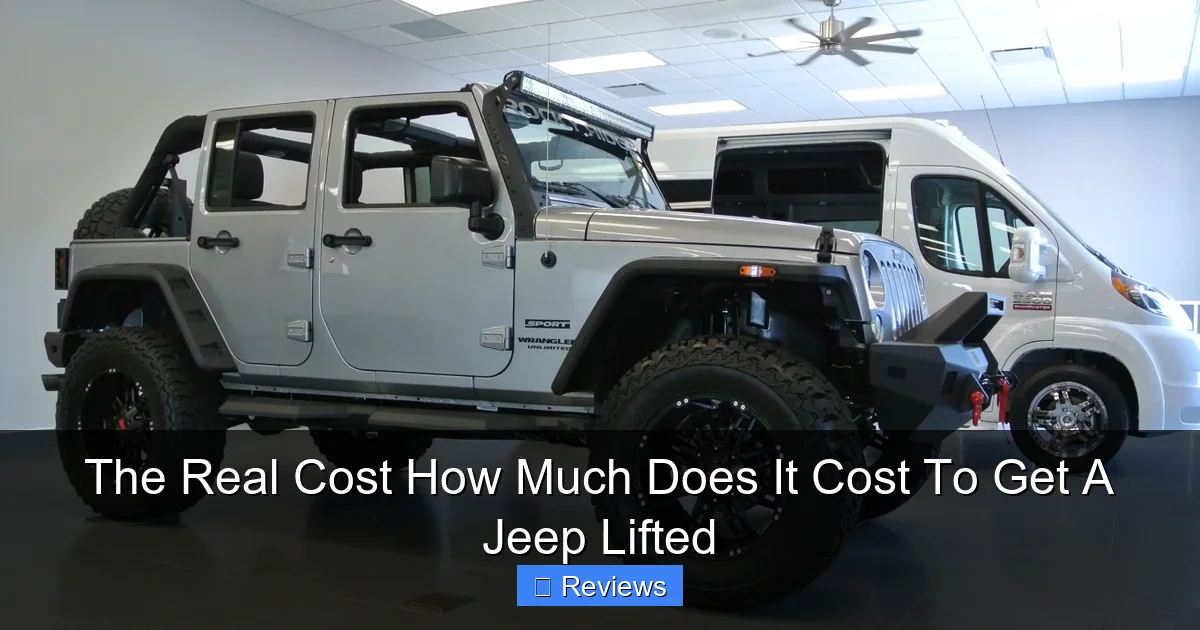
Visual guide about how much does it cost to get a jeep lifted
Image source: sherry4x4.com
Type and Height of the Lift Kit
As discussed, the fundamental choice between a body lift, spacer lift, short arm, or long arm suspension lift dictates a large portion of the cost. The height of the lift also plays a crucial role. A 2-inch lift will almost always be cheaper than a 4-inch lift of the same type, primarily because taller lifts necessitate more extensive modifications to maintain proper geometry and safety.
- 1-2 Inch Lifts: Often achieved with spacers or mild spring replacements. Less likely to require significant ancillary modifications.
- 2.5-3.5 Inch Lifts: Typically short arm suspension kits. May start to require extended brake lines, track bar adjustments, or exhaust modifications.
- 4+ Inch Lifts: Usually long arm kits or highly comprehensive short arm kits. Almost always require new driveshafts, brake lines, steering components, and potentially gearing changes for optimal performance.
Quality of Components and Brands
Just like any automotive part, lift kits come in a wide range of qualities, which directly impacts their price. Budget-friendly brands might offer basic functionality, while premium brands like Rubicon Express, Teraflex, Rough Country, JKS Manufacturing, or MetalCloak invest heavily in R&D, material quality, and advanced engineering for improved durability, ride quality, and articulation. When asking how much does it cost to get a Jeep lifted, remember that cheaper components might save money upfront but could lead to quicker wear, poorer performance, or an uncomfortable ride down the line. Investing in quality usually pays off in the long run.
Professional Installation Labor vs. DIY
The cost of labor can be one of the most significant expenses when lifting a Jeep. Professional shops typically charge an hourly rate (ranging from $80 to $150+ per hour), and the complexity of a lift can mean many hours of work. A simple body lift might take 4-6 hours, while a complex long arm suspension lift could easily exceed 20-30 hours, or even more if unforeseen issues arise.
- DIY: If you have the tools, space, mechanical aptitude, and time, doing it yourself can save hundreds or even thousands in labor costs. However, it also carries the risk of mistakes, potential damage, and the need for specialized tools you might not own.
- Professional: Ensures proper installation, often comes with a warranty on labor, and saves you time and effort. However, this convenience comes at a premium.
Required Ancillary Modifications
This is often where the “hidden” costs lurk and significantly inflate the answer to “how much does it cost to get a Jeep lifted.” As you increase lift height, you alter the factory geometry, requiring adjustments or replacements of various components to maintain safety, reliability, and proper function.
- Tires and Wheels: Larger tires are almost always the primary reason for lifting. These are a separate, significant expense.
- Driveshafts: Lifts over 2.5-3 inches often change the pinion angle, leading to driveline vibrations or accelerated wear. Upgraded or extended driveshafts (e.g., CV-style) become necessary.
- Brake Lines: Taller lifts require longer brake lines to prevent stretching or breaking during full suspension droop.
- Track Bars: Both front and rear track bars center the axle under the vehicle. A lift will pull the axle off-center, requiring adjustable track bars or relocation brackets.
- Steering Components: Lifts can affect steering geometry. Adjustable drag links, tie rods, or a heavy-duty steering stabilizer may be needed to prevent bump steer or improve handling.
- Gearing Changes: Larger tires effectively raise your gear ratio, leading to a loss of power and fuel economy. Re-gearing the differentials is a costly but often necessary modification for optimal performance with significantly larger tires.
- Exhaust Modifications: For some Jeep models (like the JK/JL Wrangler), taller lifts can cause the driveshaft to contact the exhaust system, requiring exhaust spacers or a new crossover pipe.
- Alignment: Essential after any suspension modification to ensure proper tire wear and handling.
Jeep Model and Year
The specific model and year of your Jeep (e.g., Wrangler JK, JL, TJ, YJ, Gladiator JT, Cherokee XJ, Grand Cherokee WJ, WK, etc.) also influence the cost. Newer models often have more complex electronic systems or different suspension designs, which can make kits more expensive or installation more involved. For instance, the new JL Wrangler and Gladiator models might have higher costs due to their advanced systems and limited aftermarket options compared to a venerable XJ Cherokee.
Breaking Down the Costs: Kit vs. Installation vs. Extras
To accurately answer how much does it cost to get a Jeep lifted, we need to dissect the total into its core components: the lift kit itself, the cost of professional installation (if applicable), and the often-overlooked but crucial additional modifications. These three pillars form the bulk of your investment.
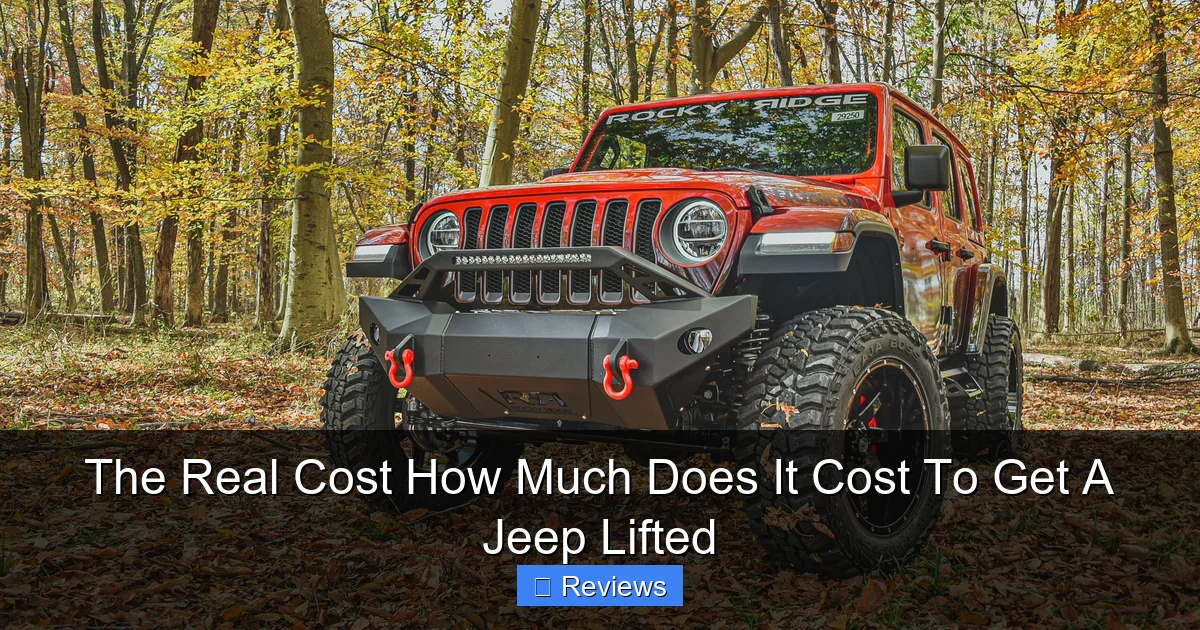
Visual guide about how much does it cost to get a jeep lifted
Image source: sherry4x4.com
Lift Kit Costs
The price of the lift kit varies dramatically based on its type, height, and the quality of its components. Here’s a general breakdown:
- Body Lift Kits (1-3 inches):
- Entry-Level: $100 – $250. Basic spacers for minor tire clearance.
- Mid-Range: $250 – $400. May include slightly more refined components or better hardware.
- Spacer Lifts / Budget Boosts (1-2.5 inches):
- Entry-Level: $150 – $300. Simple coil spacers or strut spacers.
- Mid-Range: $300 – $600. May include shock extensions, sway bar links, or bump stop extensions.
- Short Arm Suspension Lifts (2.5-3.5 inches):
- Basic Kits (without shocks): $500 – $800. Often requires you to purchase shocks separately.
- Complete Kits (with shocks/springs, basic control arms): $800 – $1,500. Good entry point for off-roading.
- Premium Kits (high-quality shocks, adjustable control arms, track bars, etc.): $1,500 – $2,500+. Offer better ride quality, durability, and articulation.
- Long Arm Suspension Lifts (4+ inches):
- Entry-Level Long Arm: $2,000 – $3,500. Provides the fundamental long arm geometry.
- High-End Performance Long Arm: $3,500 – $6,000+. Includes heavy-duty, adjustable components, premium joints, and engineered for extreme conditions.
Professional Installation Costs
If you’re not tackling the job yourself, labor costs will be a significant factor in how much does it cost to get a Jeep lifted. Shop rates typically range from $80 to $150 per hour, depending on your location and the shop’s reputation.
- Body Lift (4-6 hours): $320 – $900
- Spacer Lift (4-8 hours): $320 – $1,200
- Short Arm Suspension Lift (8-16 hours): $640 – $2,400 (More complex kits or older, seized bolts can increase this significantly.)
- Long Arm Suspension Lift (20-40+ hours): $1,600 – $6,000+ (This type of installation often involves welding, cutting, and extensive adjustments, making it very labor-intensive.)
These are general estimates. Always get a detailed quote from a reputable shop that specializes in Jeeps or off-road modifications.
Hidden & Ancillary Costs
These are the expenses that often surprise first-time Jeep modifiers, substantially raising the answer to how much does it cost to get a Jeep lifted.
- Tires and Wheels: This is arguably the biggest additional expense. Larger tires often necessitate new wheels with different backspacing.
- Tires (5 including spare): $1,000 – $3,500+ (depending on size, brand, and type).
- Wheels (5): $500 – $2,000+ (depending on material, brand, and design).
- Driveshafts: For lifts over 2.5-3 inches, especially on Wranglers, new driveshafts are critical.
- Front Driveshaft: $400 – $800
- Rear Driveshaft (often required with 3.5″+ lifts): $400 – $800
- Brake Line Extensions:
- Kit or Individual Lines: $50 – $200
- Track Bar Relocation Brackets / Adjustable Track Bars:
- Brackets: $50 – $200 (for minor lifts)
- Adjustable Track Bars (front/rear): $150 – $400 each
- Steering Correction (Drag Link, Tie Rod, Stabilizer):
- Adjustable Drag Link: $150 – $300
- Heavy-Duty Tie Rod: $150 – $400
- Steering Stabilizer: $80 – $250 (optional, but recommended for larger tires)
- Gearing Changes (for larger tires, 35″+):
- Ring & Pinion Kits (front & rear): $500 – $1,000+ (parts only)
- Labor for Re-gearing: $800 – $1,500+ (highly specialized work)
- Total Re-gear Cost: $1,500 – $2,500+
- Exhaust Modifications (spacers or crossover pipe):
- Exhaust Spacers: $50 – $150
- Aftermarket Crossover/Y-Pipe: $200 – $500
- Alignment: Essential post-lift.
- Shop Alignment: $80 – $150
- Fender Flares: If your new tires stick out too much or you need more clearance during articulation.
- Aftermarket Flares: $200 – $1,000+
When you add up these potential extras, it quickly becomes clear that the lift kit price is often just a fraction of the total investment required when you ask how much does it cost to get a Jeep lifted properly and safely.
Practical Examples & Cost Scenarios
To give you a clearer picture of how much does it cost to get a Jeep lifted, let’s look at a few common scenarios, from a budget-friendly boost to a high-performance long arm system. These examples are for a modern Wrangler (e.g., JK/JL), as they represent a common target for lifting.
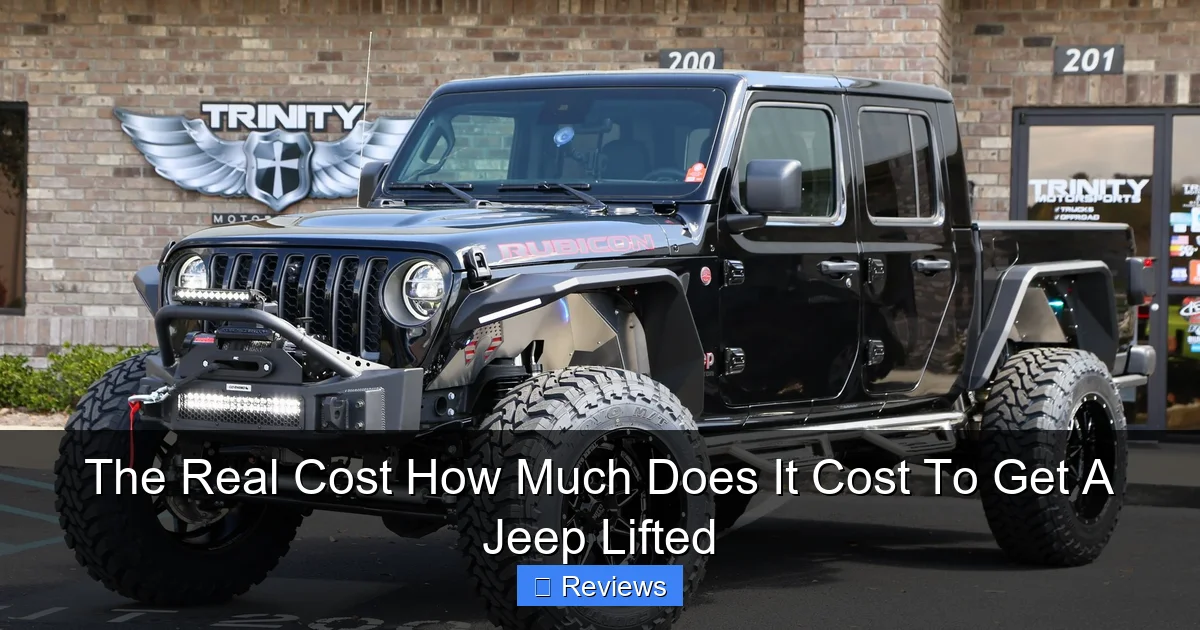
Visual guide about how much does it cost to get a jeep lifted
Image source: trinity-motorsports.com
Scenario 1: The Budget-Friendly Boost (1.5-2.5 inches)
This scenario is for someone looking for a subtle increase in ride height, mainly for aesthetics and the ability to fit slightly larger tires (e.g., 33-inch on a JK/JL) without heavy off-roading. The focus is on keeping costs down while achieving a noticeable change.
- Lift Type: Spacer Lift / Budget Boost
- Kit Cost: $250 (for a reputable 2-inch spacer lift with shock extensions and bump stops)
- Installation (DIY or light professional):
- DIY: $0 (assuming you have basic tools)
- Professional (approx. 6 hours): $600
- Ancillary Modifications:
- Alignment: $100
- Larger Tires (33-inch, mild AT, set of 5): $1,200
- New Wheels (set of 5, if needed for backspacing): $600
- Total Estimated Cost:
- DIY Install: $250 (kit) + $100 (alignment) + $1,200 (tires) + $600 (wheels) = $2,150
- Professional Install: $250 (kit) + $600 (install) + $100 (alignment) + $1,200 (tires) + $600 (wheels) = $2,750
Takeaway: Even a “budget” lift quickly becomes a multi-thousand dollar project once tires and installation are factored in. This gives a realistic idea of how much does it cost to get a Jeep lifted for basic needs.
Scenario 2: The Mid-Range Suspension Lift (2.5-3.5 inches)
This is a popular option for enthusiasts seeking improved off-road capability, better ride quality, and the ability to run 35-inch tires. This requires a full short arm suspension lift with new springs and shocks.
- Lift Type: Short Arm Suspension Lift (e.g., Teraflex ST3, JKS J-Spec)
- Kit Cost: $1,500 (for a complete kit including springs, shocks, adjustable front track bar, brake line extensions, sway bar links, bump stops)
- Installation (Professional Recommended):
- DIY: Potentially $0, but much more involved (10-15+ hours)
- Professional (approx. 12 hours): $1,200 – $1,800
- Ancillary Modifications:
- Exhaust Spacers (for JK/JL): $80
- Alignment: $120
- Larger Tires (35-inch, AT/MT, set of 5): $1,800
- New Wheels (set of 5, required for proper backspacing): $800
- Front Driveshaft (if 3.5″+ lift, can be optional for 2.5″): $600
- Total Estimated Cost (Professional Install): $1,500 (kit) + $1,500 (install) + $80 (exhaust) + $120 (alignment) + $1,800 (tires) + $800 (wheels) + $600 (driveshaft) = $6,400
Takeaway: This level of lift provides a significant performance upgrade but escalates the costs dramatically due to more complex parts and often necessary additional components. This answers how much does it cost to get a Jeep lifted for a serious enthusiast.
Scenario 3: The High-Performance Long Arm Lift (4+ inches)
This is for the dedicated off-roader seeking maximum articulation, ground clearance, and the ability to run 37-inch or larger tires. This is the pinnacle of performance and comes with the highest price tag.
- Lift Type: Long Arm Suspension Lift (e.g., MetalCloak Game-Changer, Rubicon Express Long Arm)
- Kit Cost: $4,000 (for a comprehensive kit including long arms, springs, high-quality shocks, adjustable track bars, extended brake lines, etc.)
- Installation (Professional Required, high complexity):
- Professional (approx. 25-40+ hours, including welding/cutting): $2,500 – $6,000
- Ancillary Modifications (all typically required):
- Front and Rear Driveshafts: $1,200
- Heavy-Duty Steering Components (drag link, tie rod): $500
- Alignment: $150
- Gearing Change (for 37-inch tires, 4.88 or 5.13 ratio, parts & labor): $2,000
- Larger Tires (37-inch MT, set of 5): $2,500
- Beadlock or High-Quality Wheels (set of 5): $1,500
- Flat Fenders / Fenders Liners (for tire clearance): $500
- Total Estimated Cost (Professional Install): $4,000 (kit) + $4,000 (install) + $1,200 (driveshafts) + $500 (steering) + $150 (alignment) + $2,000 (gearing) + $2,500 (tires) + $1,500 (wheels) + $500 (fenders) = $16,350
Takeaway: A high-performance long arm lift is a substantial investment, often costing more than a used car. The question of how much does it cost to get a Jeep lifted at this level truly highlights the exponential increase in costs as you push for extreme performance and height.
These scenarios illustrate that the answer to how much does it cost to get a Jeep lifted isn’t just about the lift kit. It’s about a holistic modification plan that ensures safety, reliability, and optimal performance.
DIY vs. Professional Installation: What to Consider
One of the most significant variables in the total cost of lifting your Jeep is whether you decide to tackle the installation yourself or pay a professional shop. Both options have distinct advantages and disadvantages, and your choice will heavily impact how much does it cost to get a Jeep lifted.
Do-It-Yourself (DIY) Installation
For many Jeep enthusiasts, the appeal of a DIY installation is strong. It’s an opportunity to save money, learn about your vehicle, and gain a deep satisfaction from completing the job yourself.
- Potential Savings: The most obvious benefit is avoiding labor costs, which can range from hundreds to thousands of dollars. This is a huge factor when considering how much does it cost to get a Jeep lifted on a budget.
- Learning Experience: You’ll gain invaluable knowledge about your Jeep’s suspension system, making future maintenance and modifications easier.
- Tools Required: You’ll need a comprehensive set of metric and standard wrenches, sockets, ratchets, a torque wrench, jack stands, a floor jack, pry bars, and potentially a spring compressor (though many modern kits are designed to avoid this). For more complex lifts (long arm), a cutting tool (grinder), welder, and specialized presses might be needed. Factor in the cost of buying or renting any necessary tools.
- Time Commitment: Even a simple spacer lift can take a full day for a novice. A full suspension lift can easily consume a weekend or more, especially if you encounter seized bolts or unexpected issues.
- Risks: Improper installation can lead to dangerous driving conditions, premature component wear, poor ride quality, and even damage to your Jeep. Safety is paramount; ensure you follow all instructions and use proper safety equipment.
- Difficulty: Varies greatly by lift type and your mechanical skill. A body lift or spacer lift is generally beginner-friendly, while a long arm kit is advanced and often requires professional expertise.
Tips for DIY:
- Research Extensively: Watch YouTube videos, read forums, and consult installation guides specific to your Jeep model and lift kit.
- Have a HelpeR: An extra set of hands can be invaluable, especially when wrestling with heavy components.
- Organize Parts: Lay out all components and hardware before you start.
- Don’t Rush: Take your time. Double-check everything. Torque all fasteners to spec.
- Be Prepared for Challenges: Rust, seized bolts, and unexpected fitment issues are common. Have penetrating oil, a grinder, and a good dose of patience ready.
Professional Installation
Opting for a professional installation brings peace of mind, expertise, and speed, but it significantly increases how much does it cost to get a Jeep lifted.
- Expertise and Experience: A reputable shop specializing in off-road modifications will have experienced technicians who know the intricacies of different Jeep models and lift kits. They can anticipate and address potential issues efficiently.
- Warranty: Most professional installations come with a labor warranty, providing recourse if any problems arise due to the installation.
- Specialized Tools: Shops have access to all the necessary specialized tools, including lifts, alignment racks, welders, and presses, which most DIYers don’t own.
- Time-Saving: A professional installation will be completed much faster than a DIY job, getting you back on the road (or trail) sooner.
- Higher Cost: As detailed in the previous section, labor costs can be a substantial portion of the total expense. This is the primary trade-off.
Tips for Choosing a Professional Shop:
- Seek Recommendations: Ask other Jeep owners, check local off-road clubs, and read online reviews.
- Get Multiple Quotes: Compare prices and the scope of work from at least two or three reputable shops. Ensure the quotes are detailed and itemize all parts and labor.
- Check for Specialization: Choose a shop that specifically works on Jeeps and off-road vehicles. They’ll have a better understanding of the unique challenges.
- Ask About Experience: Inquire about their experience with your specific Jeep model and the type of lift you’re considering.
- Discuss Ancillary Costs: Make sure the shop discusses all potential additional modifications needed (driveshafts, brake lines, etc.) and includes them in the estimate if you want them done. This ensures you get a complete picture of how much does it cost to get a Jeep lifted by their team.
- Warranty and Insurance: Confirm they offer a warranty on their labor and are properly insured.
Ultimately, the choice between DIY and professional installation depends on your mechanical skill, available tools, time, and budget. For simpler lifts, DIY can be a rewarding way to save money. For more complex lifts or if you’re uncomfortable with extensive automotive work, a professional installation is generally the safer and more reliable option, even if it adds significantly to how much does it cost to get a Jeep lifted.
Data Table: Estimated Cost Ranges for Jeep Lift Kits and Installation
To provide a quick summary of how much does it cost to get a Jeep lifted, the following table consolidates estimated cost ranges for different lift types, including parts and professional installation. These are general ranges for a modern Jeep Wrangler (JK/JL) and assume quality mid-range components, but exclude tires, wheels, and major re-gearing unless specified.
*Note: All costs are approximate and can vary based on Jeep model, brand chosen, location, and specific shop rates. “Ancillary Mods” include items like driveshafts, track bars, brake lines, exhaust mods, but EXCLUDE Tires/Wheels/Gearing for core lift comparison.
| Lift Type & Height | Kit Cost Range (Parts Only) | Professional Installation Cost Range | Common Ancillary Mods Needed (Typical Cost Range, Excluding T/W/G) | Estimated Total Cost (Professional Install, Excluding T/W/G) |
|---|---|---|---|---|
| Body Lift (1-3 inches) | $100 – $400 | $300 – $900 | Minor (Steering shaft extension, etc.): $50 – $200 | $450 – $1,500 |
| Spacer Lift / Budget Boost (1-2.5 inches) | $150 – $600 | $300 – $1,200 | Minor (Alignment, shock extensions): $100 – $300 | $550 – $2,100 |
| Short Arm Suspension Lift (2.5-3.5 inches) | $800 – $2,500 | $1,000 – $2,500 | Moderate (Adjustable track bar, brake lines, exhaust mods, driveshaft possible): $500 – $1,500 | $2,300 – $6,500 |
| Long Arm Suspension Lift (4+ inches) | $2,500 – $6,000 | $2,500 – $6,000+ | Extensive (Driveshafts, adjustable everything, steering, geometry correction): $1,500 – $4,000+ | $6,500 – $16,000+ |
Additional Major Costs (Often Required for Taller Lifts):
- New Tires (Set of 5): $1,000 – $3,500+
- New Wheels (Set of 5): $500 – $2,000+
- Re-gearing Differentials (Parts & Labor): $1,500 – $2,500+
As you can see, the core lift kit and installation are just part of the equation when you’re calculating how much does it cost to get a Jeep lifted for your desired outcome. The associated costs for proper setup can often equal or exceed the lift kit’s price.
Conclusion: The Real Investment in Lifting Your Jeep
The journey to lift your Jeep is an exciting one, opening up new possibilities for off-road adventures and giving your vehicle that distinctive, commanding presence. However, as we’ve thoroughly explored, the question of how much does it cost to get a Jeep lifted is far more complex than a simple price tag for a lift kit. It’s a multifaceted investment that involves careful consideration of the lift type, component quality, professional installation fees, and a host of essential ancillary modifications.
From a modest budget boost to a comprehensive long arm suspension system, the total cost can range from a few hundred dollars for a basic DIY spacer lift with existing tires, all the way up to $15,000 or more for a high-performance system with new wheels, tires, gearing, and professional installation. The “hidden” costs of items like driveshafts, brake lines, track bars, and especially larger tires and wheels, often surprise enthusiasts and can easily double or triple the initial estimate based on just the lift kit price.
Our goal in breaking down these elements was to provide you with a realistic and comprehensive understanding of the financial commitment involved. By planning meticulously, budgeting for not just the lift kit but all necessary supporting modifications, and deciding between DIY or professional installation based on your skills and resources, you can avoid costly surprises. Remember, investing in quality components and proper installation ensures not only the performance you desire but also the safety and reliability of your modified Jeep.
So, as you dream of your elevated Jeep, now armed with this detailed knowledge, you can approach the project with confidence. You now have a solid framework to determine precisely how much does it cost to get a Jeep lifted to meet your specific goals and budget, turning your vision into a trail-ready reality.
Frequently Asked Questions
How much does it typically cost to get a Jeep lifted?
The cost to get a Jeep lifted varies widely, typically ranging from $500 for a basic budget boost up to $5,000 or more for a high-performance, complete suspension system. This price often includes the lift kit itself and professional installation, though extreme setups can exceed these figures.
What factors significantly influence the overall cost of getting my Jeep lifted?
Several key factors influence the cost, including the type and brand of lift kit, the desired lift height, and whether you opt for professional installation or choose a DIY approach. Additional parts like new shocks, adjustable control arms, or even driveline modifications can also significantly increase the total.
Can I save money by lifting my Jeep myself, or should I get a professional installation?
While a DIY installation can save you hundreds in labor costs, it requires specialized tools, mechanical expertise, and a significant amount of time to properly get a Jeep lifted. For safety and optimal performance, professional installation is generally recommended, especially for more complex suspension systems, to ensure everything is correctly aligned and functioning.
Yes, beyond the lift kit and installation, you should budget for several potential additional costs. These often include a mandatory wheel alignment, larger tires to complement the new height, and possibly driveline modifications or upgraded steering components for optimal performance and safety, especially with higher lifts.
Why do some Jeep lift kits cost significantly more than others?
The price difference in Jeep lift kits often reflects the quality of components, the complexity of the system, and the brand reputation. More expensive kits typically feature higher-grade materials, advanced shock absorbers, and better engineering designed for superior ride quality and off-road performance, compared to basic spacer kits.
How long does it typically take to get a Jeep lifted, and how does that affect the overall cost?
The time it takes to get a Jeep lifted can range from 4-8 hours for a simpler kit to 10-20 hours or more for complex suspension systems. Labor is a significant portion of the overall cost, so a longer installation time directly translates to higher labor charges, especially if professional mechanics are charging by the hour.

At CarLegit, we believe information should be clear, factual, and genuinely helpful. That’s why every guide, review, and update on our website is created with care, research, and a strong focus on user experience.