

Using two 6 volt batteries in series is often better for RVs than a single 12 volt battery. This setup provides deeper cycles, longer lifespan, and more stable power—ideal for boondocking and extended trips. With proper maintenance, dual 6V batteries can save money and boost performance over time.
In This Article
- 1 Key Takeaways
- 2 📑 Table of Contents
- 3 Are Two 6 Volt Batteries Better for RV? A Complete Guide
- 4 Understanding RV Battery Basics
- 5 Why Choose Two 6 Volt Batteries?
- 6 How to Wire Two 6 Volt Batteries in an RV
- 7 Maintenance Tips for 6 Volt RV Batteries
- 8 Comparing 6V vs. 12V Batteries: A Side-by-Side Look
- 9 When Two 6V Batteries Might Not Be the Best Choice
- 10 Real-World Examples: RVers Who Made the Switch
- 11 Final Thoughts: Is It Worth It?
- 12 Frequently Asked Questions
- 12.1 Can I use two different 6 volt batteries in my RV?
- 12.2 Do I need a special charger for two 6 volt batteries?
- 12.3 How often should I check the water in my 6V batteries?
- 12.4 Can I replace one 6V battery if it fails?
- 12.5 Are 6V batteries safe for RV use?
- 12.6 Will two 6V batteries power my RV’s 12V appliances?
Key Takeaways
- Longer Battery Life: 6 volt golf cart batteries are designed for deep cycling, meaning they last longer when regularly discharged and recharged—perfect for RV use.
- Higher Usable Capacity: Two 6V batteries in series offer more amp-hour (Ah) capacity than most standard 12V RV batteries, giving you more power between charges.
- Better Performance in Series: When wired correctly in series, two 6V batteries create a 12V system with improved efficiency and reduced strain on each battery.
- Cost-Effective Over Time: Though the upfront cost may be higher, dual 6V batteries often outlast cheaper 12V options, reducing long-term replacement costs.
- Ideal for Off-Grid Camping: If you love boondocking or dry camping, the extra power and durability of two 6V batteries make them a smart investment.
- Requires Proper Maintenance: To get the most out of your 6V batteries, regular checks on water levels, charging habits, and connections are essential.
- Not Always Plug-and-Play: You may need to adjust your RV’s battery box or wiring setup to accommodate two 6V batteries, but the effort pays off.
📑 Table of Contents
- Are Two 6 Volt Batteries Better for RV? A Complete Guide
- Understanding RV Battery Basics
- Why Choose Two 6 Volt Batteries?
- How to Wire Two 6 Volt Batteries in an RV
- Maintenance Tips for 6 Volt RV Batteries
- Comparing 6V vs. 12V Batteries: A Side-by-Side Look
- When Two 6V Batteries Might Not Be the Best Choice
- Real-World Examples: RVers Who Made the Switch
- Final Thoughts: Is It Worth It?
Are Two 6 Volt Batteries Better for RV? A Complete Guide
So, you’re hitting the open road in your RV, chasing sunsets and mountain views. But behind the scenes, your adventure runs on one critical component: your battery system. Whether you’re powering lights, a fridge, or your favorite coffee maker at a remote campsite, reliable power makes all the difference. That’s why many RV owners are asking: Are two 6 volt batteries better for RV use?
The short answer? Often, yes. While a single 12 volt battery might seem simpler, pairing two 6 volt batteries—especially deep-cycle golf cart types—can deliver superior performance, longer life, and more usable energy. This setup has become a favorite among full-time RVers, boondockers, and weekend warriors alike. But it’s not just about slapping two batteries together. There’s science, strategy, and a bit of know-how involved.
In this guide, we’ll break down everything you need to know about using two 6 volt batteries in your RV. From how they work and why they’re better, to installation tips and maintenance tricks, we’ve got you covered. Whether you’re a newbie or a seasoned road traveler, understanding your battery options can save you money, frustration, and unexpected power outages.
Understanding RV Battery Basics
Visual guide about Are Two 6 Volt Batteries Better for Rv
Image source: energy-x.org
Before diving into the 6V vs. 12V debate, let’s get grounded in the basics. RVs typically use deep-cycle batteries, which are designed to provide steady power over long periods and handle repeated charging and discharging. This is different from car batteries, which deliver short bursts of high power to start engines.
Most RVs run on a 12 volt electrical system. That means your lights, water pump, furnace, and other 12V appliances need a 12V power source. But here’s the twist: you don’t need a single 12V battery to get 12 volts. You can combine lower-voltage batteries to reach the same result.
That’s where 6 volt batteries come in. When you connect two 6V batteries in series (positive to negative), their voltages add up: 6V + 6V = 12V. But unlike a single 12V battery, this setup often gives you more amp-hour (Ah) capacity—the measure of how much energy a battery can store.
For example, a typical 12V RV battery might offer 100Ah. But two 6V golf cart batteries can provide 220Ah or more when wired correctly. That’s more than double the usable power, which means longer runs between charges—especially important if you’re off-grid.
Types of RV Batteries
Not all batteries are created equal. Here are the main types you’ll encounter:
- Flooded Lead-Acid (FLA): The most common and affordable option. These require regular maintenance, like checking water levels, but are reliable and widely available. Most 6V golf cart batteries fall into this category.
- Absorbent Glass Mat (AGM): Sealed and maintenance-free, AGM batteries resist vibration and can be mounted in any position. They charge faster and last longer than FLA, but cost more.
- Lithium-Ion (LiFePO4): The premium choice. Lightweight, long-lasting, and capable of deeper discharges without damage. However, they come with a high upfront cost and may require a battery management system (BMS).
While lithium batteries are gaining popularity, many RVers still prefer traditional 6V flooded lead-acid batteries for their balance of cost, performance, and availability.
Why Choose Two 6 Volt Batteries?
Visual guide about Are Two 6 Volt Batteries Better for Rv
Image source: bucarsrv.com
Now, let’s get to the heart of the matter: why are two 6 volt batteries often better for RV use?
Designed for Deep Cycling
One of the biggest advantages of 6V golf cart batteries is their design. They’re built to be deeply discharged—sometimes down to 20% capacity—and then recharged repeatedly. This is called “deep cycling,” and it’s exactly what your RV does when you’re camping without hookups.
In contrast, many standard 12V RV batteries aren’t meant to be drained below 50%. Going lower can shorten their lifespan dramatically. So, if you’re using a single 12V battery and draining it to 40% every night, you’re stressing it unnecessarily.
With two 6V batteries, you can safely use more of their capacity without damaging them. This means more power for your needs and fewer replacements over time.
Higher Amp-Hour Capacity
Amp-hours (Ah) measure how much energy a battery can deliver over time. The higher the Ah, the longer your battery will last.
Let’s look at a real-world example. A common 12V RV battery might be rated at 100Ah. But two 6V Trojan T-105 golf cart batteries (a popular choice) each offer 225Ah. When wired in series, they still deliver 225Ah at 12V—more than double the capacity of the single 12V battery.
That extra capacity translates to real benefits. You can run your fridge longer, keep lights on overnight, or power a fan while sleeping—all without worrying about draining your battery too fast.
Longer Lifespan
Because 6V batteries are built for deep cycling, they tend to last longer than standard 12V batteries when used in RV applications. A well-maintained pair of 6V batteries can last 4 to 6 years, sometimes even longer.
Compare that to a typical 12V RV battery, which might only last 2 to 3 years under similar conditions. Over time, the savings add up—not just in replacement costs, but in peace of mind.
Better Performance in Series
When you wire two 6V batteries in series, the voltage adds up (6V + 6V = 12V), but the amp-hour capacity stays the same as one battery. So two 225Ah 6V batteries in series give you 12V at 225Ah.
This is more efficient than using two 12V batteries in parallel (which would give you 12V at 200Ah, for example). Series wiring reduces the risk of imbalanced charging and ensures both batteries wear evenly.
Plus, series connections are simpler and require less wiring, which means fewer points of failure.
How to Wire Two 6 Volt Batteries in an RV
Visual guide about Are Two 6 Volt Batteries Better for Rv
Image source: thecampingnerd.com
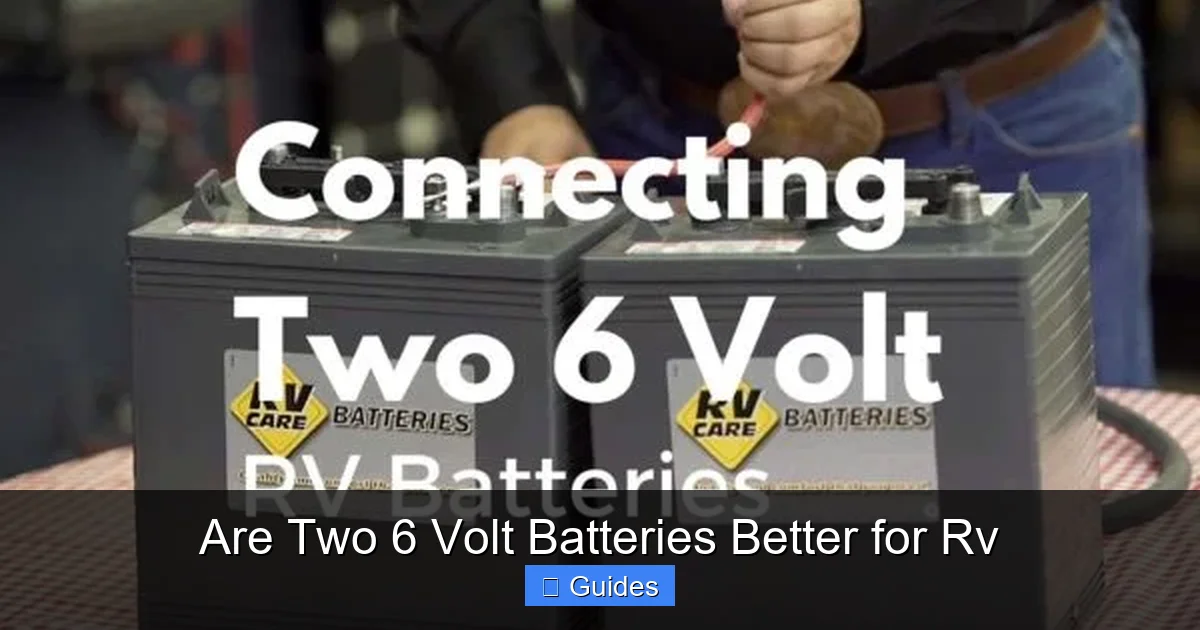
Switching to two 6V batteries isn’t just about buying them and dropping them in. You’ll need to wire them correctly to get the right voltage and performance.
Series Wiring: The Right Way
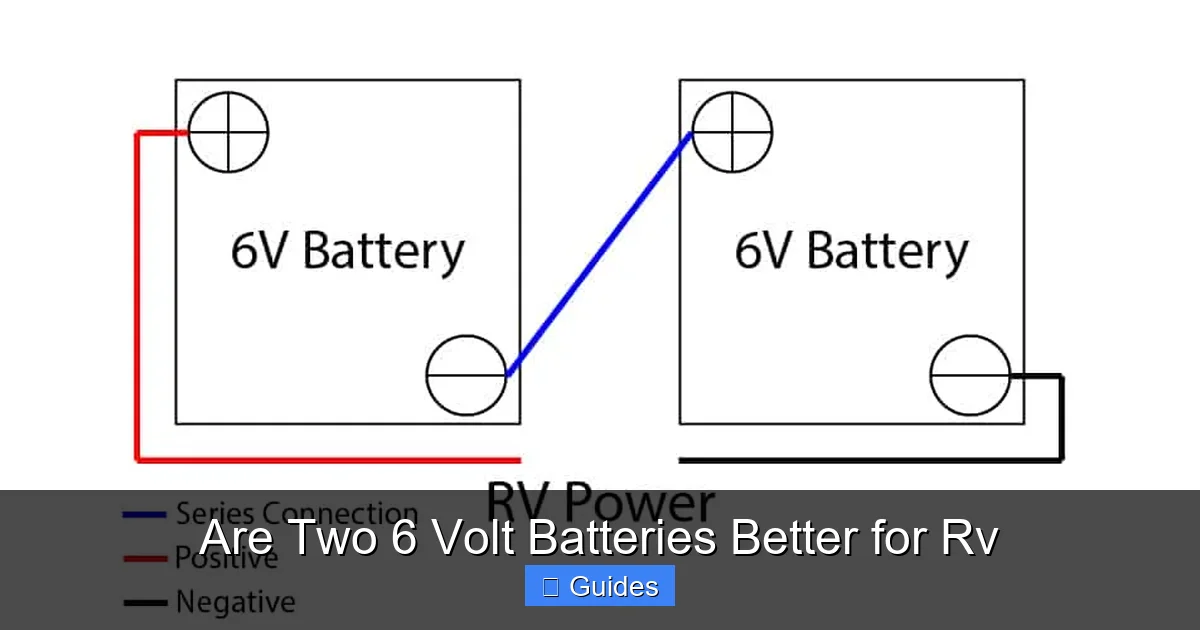
To create a 12V system from two 6V batteries, you must connect them in series. Here’s how:
- Place the two batteries side by side in your battery box.
- Connect the positive terminal of the first battery to the negative terminal of the second battery. Use a heavy-duty battery cable (typically 4 or 6 AWG).
- Connect your RV’s positive cable to the positive terminal of the first battery.
- Connect your RV’s negative cable to the negative terminal of the second battery.
This setup gives you 12 volts across the outer terminals, with the middle connection acting as the “bridge” between the two batteries.
Avoiding Common Wiring Mistakes
It’s easy to mess up battery wiring if you’re not careful. Here are a few pitfalls to avoid:
- Don’t wire in parallel: Connecting positive to positive and negative to negative keeps the voltage at 6V but doubles the amp-hours. That won’t power your 12V RV system.
- Use proper cables: Thin wires can overheat and cause voltage drop. Use thick, high-quality cables designed for battery connections.
- Secure connections: Loose terminals can spark, corrode, or fail. Use terminal protectors and tighten connections with a wrench.
- Check polarity: Reversing polarity can damage your RV’s electrical system. Double-check before connecting.
If you’re unsure, consult a professional or use a wiring diagram specific to your RV model.
Upgrading Your Battery Box
Most RV battery boxes are designed for one or two 12V batteries. But 6V golf cart batteries are often larger and heavier. You may need to modify your battery box or install a custom tray to hold them securely.
Some RVers build wooden or metal trays, while others use battery boxes designed for golf cart batteries. Make sure the setup is ventilated (especially for flooded batteries) and protected from shifting during travel.
Maintenance Tips for 6 Volt RV Batteries
Great performance starts with good care. Even the best batteries won’t last if they’re neglected.
Check Water Levels Regularly
Flooded lead-acid batteries (the most common 6V type) require distilled water to function. Over time, water evaporates during charging, exposing the plates and reducing performance.
Check water levels every 1–2 months, especially in hot climates or during heavy use. Only add distilled water—never tap water, which contains minerals that can damage the battery.
Fill just to the bottom of the fill tube or until the plates are covered. Overfilling can cause acid spillage.
Keep Terminals Clean
Corrosion on battery terminals can block current flow and reduce efficiency. Clean terminals with a mixture of baking soda and water, then rinse and dry. Apply a thin layer of petroleum jelly or terminal protector to prevent future buildup.
Charge Properly
Use a smart charger designed for deep-cycle batteries. These chargers adjust voltage and current based on the battery’s state, preventing overcharging or undercharging.
Avoid using your RV’s built-in converter as the sole charging method. It may not fully recharge deeply discharged batteries. Consider adding a solar panel system or portable generator for off-grid charging.
Equalize When Needed
Flooded batteries benefit from occasional “equalization”—a controlled overcharge that balances the cells and removes sulfation. Most smart chargers have an equalization mode. Do this every 1–3 months, depending on usage.
Monitor State of Charge
Use a battery monitor or hydrometer to check the state of charge. A hydrometer measures the specific gravity of the electrolyte, giving you a precise reading of each cell’s health.
A fully charged 6V battery should read around 1.265 specific gravity. If one battery is consistently lower, it may be failing.
Comparing 6V vs. 12V Batteries: A Side-by-Side Look
Still on the fence? Let’s compare two common setups:
Option 1: One 12V RV Battery
- Capacity: ~100Ah
- Usable capacity (50% discharge): ~50Ah
- Lifespan: 2–3 years
- Cost: $100–$200
- Maintenance: Low (if AGM) to moderate (if flooded)
- Best for: Short trips, occasional use, RVs with limited space
Option 2: Two 6V Golf Cart Batteries
- Capacity: ~225Ah (each)
- Usable capacity (80% discharge): ~180Ah
- Lifespan: 4–6 years
- Cost: $200–$400 for a pair
- Maintenance: Moderate (water checks, cleaning)
- Best for: Boondocking, full-time RVing, high power demand
As you can see, the dual 6V setup offers significantly more usable power and longevity. The higher upfront cost is offset by longer life and better performance.
When Two 6V Batteries Might Not Be the Best Choice
While two 6V batteries are great for many RVers, they’re not perfect for everyone.
Limited Space
If your RV has a small battery compartment, fitting two large 6V batteries might be a challenge. Measure your space carefully before buying.
Minimal Power Needs
If you mostly camp at RV parks with full hookups and rarely use battery power, a single 12V battery may be sufficient. Upgrading to two 6V batteries would be overkill.
Budget Constraints
While 6V batteries save money long-term, the initial investment is higher. If you’re on a tight budget, a quality 12V AGM battery might be a better short-term solution.
Lithium Alternative
For those willing to invest more, lithium batteries offer even greater advantages: lighter weight, longer life, and deeper discharges. A single 12V lithium battery can outperform two 6V lead-acid batteries in many ways—but at 2–3 times the cost.
Real-World Examples: RVers Who Made the Switch
Let’s hear from real people who’ve upgraded to two 6V batteries.
Sarah and Mike, Full-Time RVers
“We boondock 80% of the time,” says Sarah. “We switched from one 12V battery to two Trojan T-105s last year. The difference is night and day. We can run our fridge, lights, and water pump for two full days without charging. Before, we were worried by noon.”
Tom, Weekend Camper
“I only use my RV on weekends, but I hate being tied to hookups,” Tom explains. “I added two 6V batteries and a small solar panel. Now I can camp anywhere and still have power for my coffee maker and phone charger. It was worth every penny.”
These stories show that whether you’re a full-timer or a weekend explorer, the right battery setup can transform your experience.
Final Thoughts: Is It Worth It?
So, are two 6 volt batteries better for RV use? For most RVers—especially those who value independence, longer trips, and reliable power—the answer is a resounding yes.
They offer deeper cycles, higher capacity, and longer life than standard 12V batteries. While they require a bit more maintenance and setup, the benefits far outweigh the effort.
If you’re ready to upgrade, start by assessing your power needs, measuring your battery space, and choosing quality 6V batteries like Trojan, Duracell, or US Battery. Pair them with a smart charger and consider adding solar for even greater freedom.
Your RV adventures deserve reliable power. And with two 6V batteries, you’ll have just that—mile after mile, charge after charge.
Frequently Asked Questions
Can I use two different 6 volt batteries in my RV?
It’s not recommended. Mixing batteries with different ages, brands, or capacities can lead to uneven charging and reduced performance. Always use two identical 6V batteries for the best results.
Do I need a special charger for two 6 volt batteries?
Not necessarily. Most 12V smart chargers work fine with two 6V batteries wired in series. Just make sure the charger is rated for deep-cycle batteries and has the right voltage output.
How often should I check the water in my 6V batteries?
Check water levels every 1–2 months, especially during hot weather or heavy use. Only add distilled water, and never overfill.
Can I replace one 6V battery if it fails?
Technically yes, but it’s better to replace both at the same time. An old and new battery paired together will wear unevenly, reducing overall performance and lifespan.
Are 6V batteries safe for RV use?
Yes, as long as they’re properly installed, vented, and maintained. Flooded batteries should be in a ventilated compartment to prevent gas buildup.
Will two 6V batteries power my RV’s 12V appliances?
Absolutely. When wired in series, two 6V batteries create a 12V system that powers all standard RV appliances, from lights to water pumps.

At CarLegit, we believe information should be clear, factual, and genuinely helpful. That’s why every guide, review, and update on our website is created with care, research, and a strong focus on user experience.