
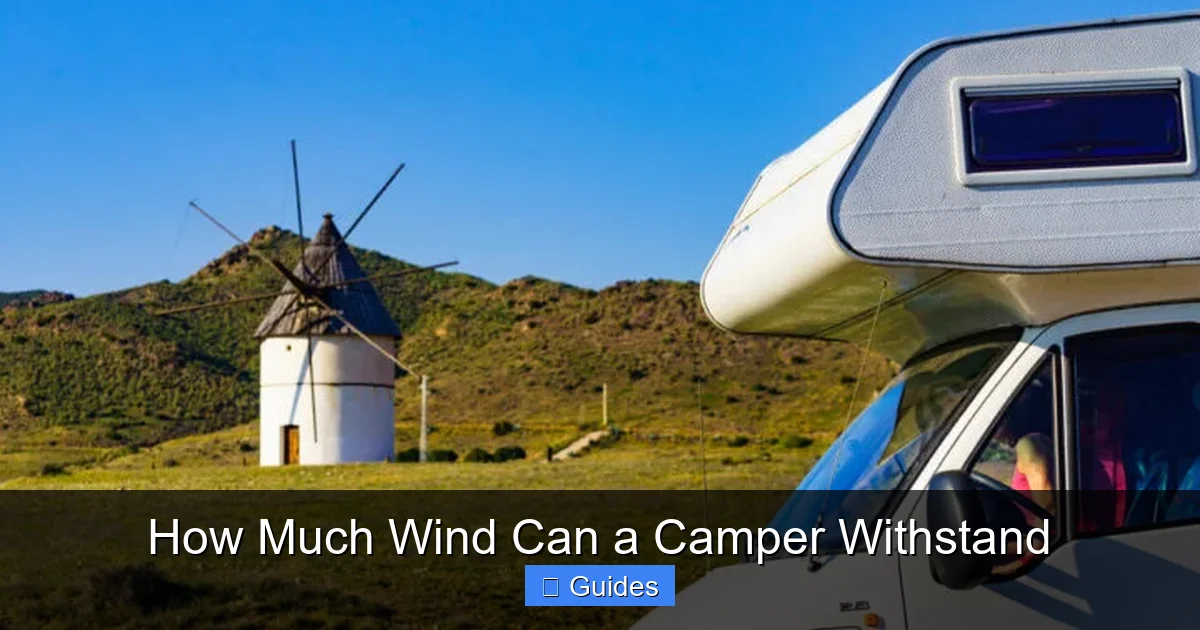
Understanding how much wind a camper can withstand is crucial for safe travel and setup. Most campers are designed to handle winds up to 50–60 mph, but factors like design, anchoring, and weather conditions play a big role. With proper preparation, you can protect your camper and enjoy peace of mind on the road.
In This Article
- 1 Key Takeaways
- 2 📑 Table of Contents
- 3 How Much Wind Can a Camper Withstand?
- 4 Understanding Wind Forces and Camper Design
- 5 Wind Speed Guidelines for Campers
- 6 How to Secure Your Camper in High Winds
- 7 Monitoring Weather and Making Smart Decisions
- 8 Special Considerations for Different Camper Types
- 9 Maintenance Tips to Improve Wind Resistance
- 10 Conclusion
- 11 Frequently Asked Questions
- 11.1 Can a camper tip over in high winds?
- 11.2 Should I leave my camper if winds are over 50 mph?
- 11.3 Do I need special equipment to secure my camper in wind?
- 11.4 Can I leave my awning out in windy weather?
- 11.5 How do I know if my camper is damaged by wind?
- 11.6 Are fifth wheels safer in wind than travel trailers?
Key Takeaways
- Most campers can safely withstand winds up to 50–60 mph: This is the general threshold before structural damage or tipping becomes a real risk, especially for lighter or taller models.
- Design and weight matter: Heavier fifth wheels and Class A motorhomes are more stable in wind than lightweight travel trailers or pop-up campers.
- Proper anchoring is essential: Using high-quality wheel chocks, stabilizing jacks, and tie-downs can significantly improve wind resistance.
- Wind direction and terrain play a role: Positioning your camper with the narrowest side facing the wind and using natural windbreaks can reduce stress.
- Monitor weather forecasts closely: Knowing when high winds are coming gives you time to secure your camper or relocate if needed.
- Never ignore severe weather warnings: Winds over 70 mph can cause catastrophic damage—evacuate or seek shelter if a storm is approaching.
- Regular maintenance improves safety: Check seals, roof vents, and awnings before each trip to ensure everything is secure.
📑 Table of Contents
- How Much Wind Can a Camper Withstand?
- Understanding Wind Forces and Camper Design
- Wind Speed Guidelines for Campers
- How to Secure Your Camper in High Winds
- Monitoring Weather and Making Smart Decisions
- Special Considerations for Different Camper Types
- Maintenance Tips to Improve Wind Resistance
- Conclusion
How Much Wind Can a Camper Withstand?
When you’re parked at a scenic campsite with the sun setting behind the mountains, the last thing you want to worry about is the wind picking up. But as any experienced RVer knows, wind is one of the most underestimated forces that can affect your camper. Whether you’re in a travel trailer, fifth wheel, or motorhome, understanding how much wind a camper can withstand is essential for safety, comfort, and peace of mind.
Wind might seem harmless—after all, it’s just air moving, right? But when it reaches certain speeds, it can exert tremendous pressure on your camper’s structure. This pressure can lead to everything from minor annoyances like rattling windows to serious dangers like roof damage, broken awnings, or even tipping over. The good news? Most modern campers are built to handle moderate winds, and with the right preparation, you can significantly reduce the risks.
In this guide, we’ll break down everything you need to know about wind resistance in campers—from the science behind wind forces to practical tips for securing your rig. Whether you’re a weekend warrior or a full-time RVer, this information will help you make smart decisions when the forecast calls for gusty conditions.
Understanding Wind Forces and Camper Design
Visual guide about How Much Wind Can a Camper Withstand
Image source: randisadventures.com
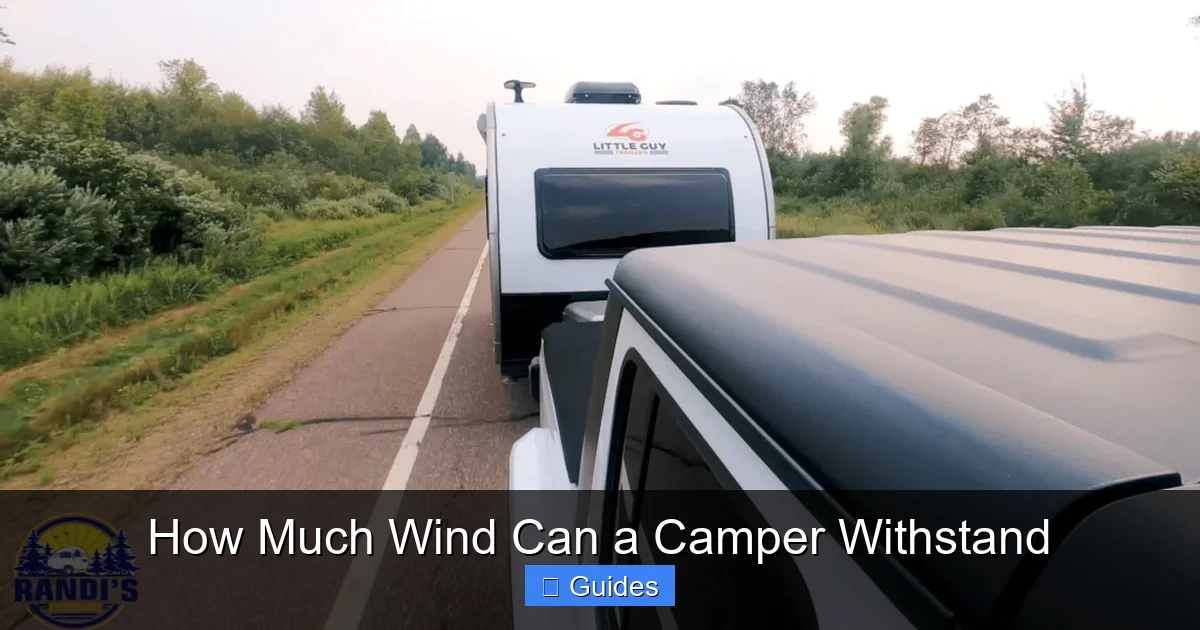
To understand how much wind a camper can withstand, it helps to know a little about how wind interacts with your RV. Wind doesn’t just push—it creates pressure, turbulence, and uplift, especially on large, flat surfaces like the side of a camper. The taller and lighter your camper, the more vulnerable it is to these forces.
Most manufacturers design campers to withstand winds up to 50–60 miles per hour (mph). This is based on standard engineering practices and real-world testing. However, this number isn’t a hard limit—it’s more of a guideline. Factors like the age of your camper, its construction materials, and how well it’s maintained can all influence its actual wind tolerance.
For example, a brand-new, well-sealed travel trailer with reinforced walls and a low profile might handle 60 mph winds better than an older, taller pop-up camper with worn seals and loose fittings. Similarly, a heavy fifth wheel with a wide wheelbase will be far more stable than a lightweight teardrop trailer perched on small tires.
The Role of Aerodynamics
Aerodynamics plays a surprising role in how your camper handles wind. Campers with rounded edges and sloped roofs are better at deflecting wind than boxy models with flat sides and roofs. Think of it like a car—streamlined vehicles cut through air more efficiently. The same principle applies to RVs.
If your camper has a lot of protruding features—like large awnings, roof racks, or satellite dishes—these can act like sails, catching the wind and increasing the force on your rig. That’s why it’s so important to retract awnings and remove or secure external accessories when high winds are expected.
Weight and Stability
Heavier campers are generally more stable in wind because they have more mass to resist movement. A Class A motorhome weighing 15,000 pounds will be far less affected by 50 mph winds than a 3,000-pound pop-up camper. This doesn’t mean lighter campers are unsafe—just that they require more attention and preparation.
The center of gravity also matters. Campers with lower centers of gravity—like many fifth wheels—are less likely to tip or sway in strong winds. Taller models, especially those with slide-outs extended, are more prone to rocking and stress on the frame.
Wind Speed Guidelines for Campers
Visual guide about How Much Wind Can a Camper Withstand
Image source: shunauto.com
So, how much wind is too much? While there’s no one-size-fits-all answer, here’s a general breakdown of wind speeds and what they mean for your camper:
– **Under 25 mph:** Generally safe. You might feel a little sway, especially if your camper is tall or lightweight. This is a good time to double-check that everything is secured.
– **25–40 mph:** Moderate winds. You’ll likely notice more movement, and loose items outside (like chairs or grills) could blow away. Retract awnings and close windows.
– **40–50 mph:** Strong winds. This is where things start to get risky. If your camper isn’t well-anchored, you could see significant swaying or stress on the frame. Avoid extending slide-outs.
– **50–60 mph:** High winds. Most campers are designed to handle this range, but only if properly secured. This is the upper limit for safe operation without additional precautions.
– **Over 60 mph:** Severe winds. At this point, the risk of damage increases dramatically. Roof vents can tear off, windows can crack, and in extreme cases, campers can tip—especially if they’re not level or anchored.
– **Over 70 mph:** Dangerous conditions. This is hurricane or tornado-level wind. You should not be in your camper. Seek shelter immediately.
Keep in mind that these are general guidelines. Local terrain, wind direction, and your camper’s specific design can all influence how it performs.
Real-World Examples
Let’s say you’re camping in West Texas, where sudden windstorms are common. One afternoon, the forecast calls for sustained winds of 55 mph with gusts up to 70 mph. If you’re in a well-anchored fifth wheel with the awning retracted and all vents closed, you’ll probably be fine—though it might be a bumpy night. But if you’re in a lightweight travel trailer with the awning out and no tie-downs, you’re asking for trouble.
Another example: You’re parked in a forested area in the Pacific Northwest. The trees act as a natural windbreak, reducing the effective wind speed by 10–15 mph. That means a 50 mph wind might feel like 35–40 mph to your camper. But if you’re on an open plain with no shelter, the same wind could be far more damaging.
How to Secure Your Camper in High Winds
Visual guide about How Much Wind Can a Camper Withstand
Image source: shunauto.com
Preparation is your best defense against wind damage. The good news is that most wind-related issues can be prevented with a few simple steps. Here’s how to keep your camper safe when the forecast turns gusty.
Use Proper Anchoring and Stabilization
Anchoring your camper is the single most important step you can take. Even the sturdiest camper can become unstable if it’s not properly secured to the ground.
Start with **wheel chocks**. These prevent your tires from rolling, even on slight inclines. Use high-quality rubber or plastic chocks on both sides of the tires.
Next, deploy your **stabilizing jacks**. Most campers come with built-in scissor jacks or hydraulic leveling systems. Make sure all four corners are firmly on the ground and adjusted so the camper is level. This reduces stress on the frame and improves stability.
For extra security, use **tie-downs** or **ground anchors**. These are heavy-duty straps or chains that attach to your camper’s frame and are screwed or driven into the ground. They’re especially important for travel trailers and pop-ups. Look for anchors rated for at least 1,000 pounds of pull force.
Retract Awnings and Secure Exterior Items
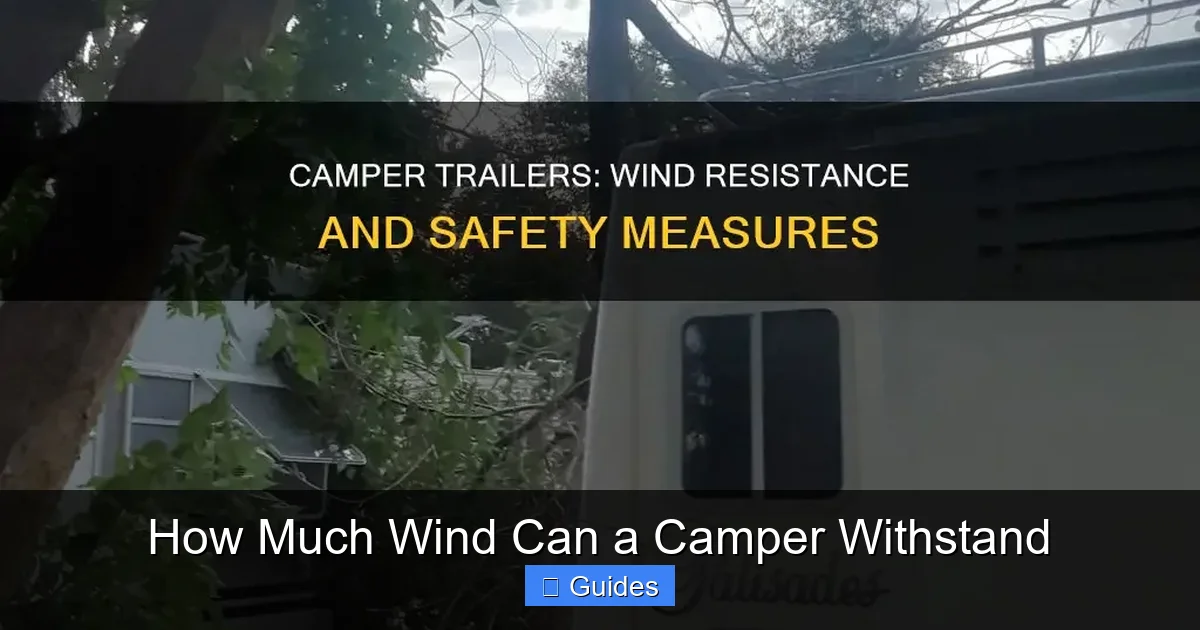
Awnings are one of the biggest wind hazards. Even a small awning can act like a sail in strong winds, putting immense pressure on your camper’s side wall. Always retract your awning when winds exceed 20–25 mph, or if a storm is approaching.
Don’t forget other exterior items. Store or secure chairs, tables, grills, and outdoor rugs. Loose objects can become projectiles in high winds, damaging your camper or others nearby.
If you have a satellite dish or roof rack, make sure it’s folded down or removed. These can catch wind and cause roof damage.
Close Windows and Vents
Open windows and roof vents can allow wind to enter your camper, increasing internal pressure and potentially causing windows to blow out. Close all windows, roof vents, and skylights before high winds arrive.
If your camper has powered vents, turn them off and close the covers. Some models have automatic wind sensors, but it’s best not to rely on them—manual closure is more reliable.
Position Your Camper Strategically
Where you park matters. If possible, position your camper so the **narrowest side faces the wind**. This reduces the surface area exposed to wind pressure.
Use **natural windbreaks** like trees, hills, or other RVs to shield your camper. Just be careful—falling branches during a storm can cause damage. Avoid parking under dead trees or large limbs.
If you’re in a campground, ask staff about the best sites for wind protection. Some parks have designated “wind-safe” areas with better shelter.
Monitoring Weather and Making Smart Decisions
No amount of preparation can completely eliminate risk in extreme weather. That’s why staying informed and making smart decisions is just as important as securing your camper.
Use Reliable Weather Apps and Alerts
Download weather apps like Weather Underground, AccuWeather, or the National Weather Service app. Set up alerts for high wind warnings, severe thunderstorms, and tornado watches.
Pay attention to **wind gusts**, not just sustained winds. Gusts can be 20–30 mph stronger than the average wind speed and are often more damaging.
If a high wind warning is issued for your area, take action immediately. Don’t wait until the wind starts howling.
Know When to Relocate or Evacuate
Sometimes, the safest choice is to leave. If winds are expected to exceed 60–70 mph, or if a tornado or hurricane is approaching, don’t try to ride it out in your camper.
Move to a sturdy building, storm shelter, or low-ground area if flooding is also a risk. Your safety is more important than your campsite.
If you’re boondocking or in a remote area, have an evacuation plan. Know the nearest town or shelter and how to get there quickly.
Check Your Camper After High Winds
Once the storm passes, inspect your camper for damage. Look for:
– Loose or missing roof vents
– Cracked windows or seals
– Damaged awnings or exterior panels
– Loose siding or trim
– Water leaks (wind can drive rain into seams)
Address any issues before continuing your trip. Even small cracks can lead to bigger problems down the road.
Special Considerations for Different Camper Types
Not all campers are created equal when it comes to wind resistance. Here’s how different types stack up:
Travel Trailers
Lightweight and often tall, travel trailers are the most vulnerable to wind. They have a high center of gravity and are usually towed by smaller vehicles, which can make them harder to stabilize. Use heavy-duty tie-downs and avoid parking in open areas during windy weather.
Fifth Wheels
Fifth wheels are heavier and sit lower to the ground, making them more stable. Their design also allows for better anchoring through the hitch and rear jacks. Still, always secure them properly and retract awnings in high winds.
Pop-Up Campers
Pop-ups are the most fragile. Their canvas walls and lightweight frames offer little resistance to wind. In winds over 40 mph, consider lowering the roof and securing it with extra straps. Avoid using them in storm-prone areas.
Class A Motorhomes
Large and heavy, Class A motorhomes are among the most wind-resistant. However, their size means they catch more wind when driving. When parked, use leveling jacks and wheel chocks, and avoid extending slide-outs in high winds.
Teardrop and Small Campers
These compact models have low profiles and small surface areas, which helps in wind. But their light weight means they can still be tossed around. Anchor them well and avoid parking on slopes.
Maintenance Tips to Improve Wind Resistance
A well-maintained camper is a safer camper. Regular upkeep not only extends the life of your RV but also improves its ability to withstand wind.
Inspect Seals and Weatherstripping
Check door, window, and roof seals for cracks or wear. Damaged seals can allow wind-driven rain to enter and weaken the structure over time. Replace worn weatherstripping before each camping season.
Reinforce Roof Vents and Skylights
Roof vents are common failure points in high winds. Make sure the covers are secure and the hinges are tight. Consider installing vent covers or wind deflectors to reduce uplift.
Tighten Exterior Hardware
Loose screws, bolts, or brackets can become hazards in wind. Regularly check and tighten all exterior hardware, including awning arms, ladder mounts, and antenna bases.
Upgrade to Wind-Resistant Accessories
Invest in heavy-duty wheel chocks, ratchet-style tie-downs, and wind-rated awnings. These small upgrades can make a big difference in extreme conditions.
Conclusion
So, how much wind can a camper withstand? The answer depends on your camper’s design, weight, anchoring, and the conditions you’re in. Most campers can handle winds up to 50–60 mph with proper preparation, but anything over that requires caution—and often, evacuation.
The key is to be proactive. Monitor the weather, secure your camper, and know your limits. With the right knowledge and tools, you can enjoy your adventures without worrying about the wind.
Remember: It’s not about avoiding wind altogether—it’s about being ready for it. Whether you’re parked in the desert, the mountains, or by the coast, a little preparation goes a long way. Stay safe, stay smart, and keep rolling.
Frequently Asked Questions
Can a camper tip over in high winds?
Yes, especially if it’s lightweight, tall, or not properly anchored. Travel trailers and pop-up campers are most at risk. Proper anchoring and avoiding winds over 60 mph can prevent tipping.
Should I leave my camper if winds are over 50 mph?
Not necessarily—many campers can handle 50 mph winds if secured. But if winds exceed 60–70 mph or a storm is severe, it’s safer to seek shelter in a sturdy building.
Do I need special equipment to secure my camper in wind?
Yes. Use wheel chocks, stabilizing jacks, and ground anchors or tie-downs. Heavy-duty straps and wind-rated awnings also help improve safety.
Can I leave my awning out in windy weather?
No. Awnings should be retracted when winds exceed 20–25 mph. Even a light breeze can turn into a dangerous force in gusty conditions.
How do I know if my camper is damaged by wind?
Inspect for loose vents, cracked windows, water leaks, or bent awning arms. Listen for unusual noises or movement inside. Address any issues immediately.
Are fifth wheels safer in wind than travel trailers?
Generally, yes. Fifth wheels are heavier, lower to the ground, and have better anchoring points, making them more stable in high winds.

At CarLegit, we believe information should be clear, factual, and genuinely helpful. That’s why every guide, review, and update on our website is created with care, research, and a strong focus on user experience.