
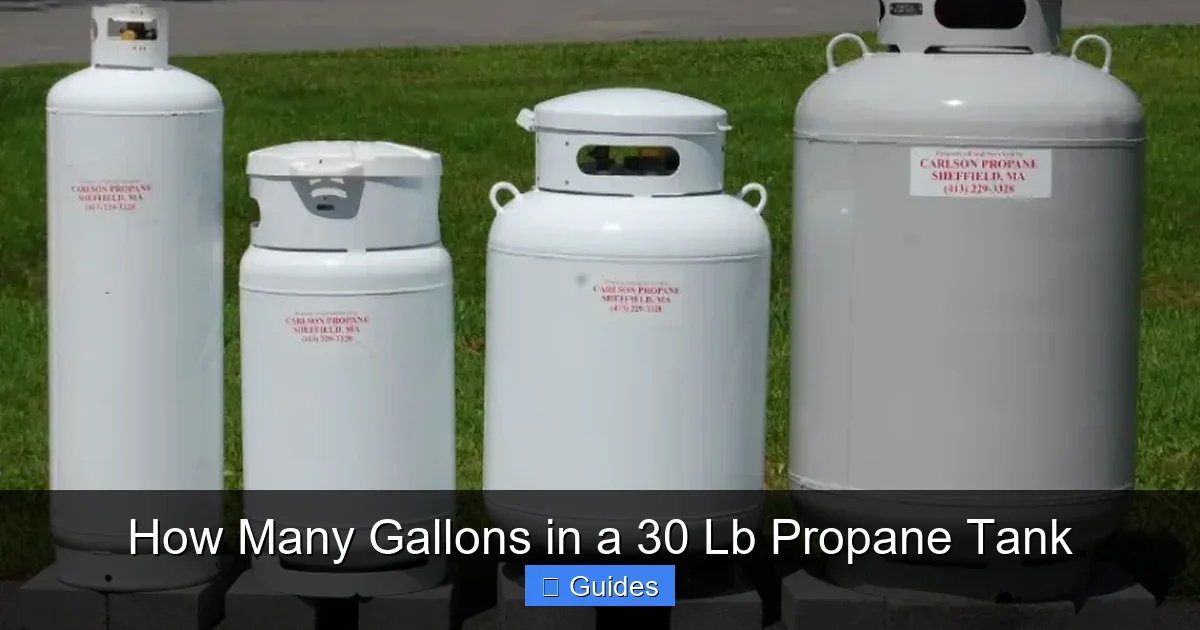
A 30 lb propane tank holds approximately 7 gallons of propane when filled to the standard 80% capacity. This size is ideal for medium-duty tasks like grilling, patio heating, or powering small appliances. Knowing the gallon equivalent helps you plan fuel needs and avoid unexpected runouts.
In This Article
- 1 Key Takeaways
- 2 📑 Table of Contents
- 3 Understanding Propane Tank Sizes and Measurements
- 4 How Long Will a 30 lb Propane Tank Last?
- 5 Refilling vs. Exchanging: What’s the Best Option?
- 6 Safety Tips for Handling and Storing Propane Tanks
- 7 Environmental and Cost Considerations
- 8 Conclusion
- 9 Frequently Asked Questions
Key Takeaways
- A 30 lb propane tank holds about 7 gallons of propane when filled to the safe 80% level, which is standard for all propane tanks.
- Propane is sold by weight, not volume, so the “30 lb” label refers to the weight of the gas inside, not the tank’s total weight.
- Always fill tanks to 80% capacity to allow for thermal expansion and prevent dangerous pressure buildup.
- Usage depends on appliance BTU rating—higher BTU appliances consume propane faster, so runtime varies widely.
- Refill vs. exchange: refilling is cheaper and greener than swapping tanks at retail exchange programs.
- Proper storage and handling are critical—keep tanks upright, outdoors, and away from heat or ignition sources.
- Check your tank regularly for leaks, rust, or damage, and never overfill or use a damaged tank.
📑 Table of Contents
Understanding Propane Tank Sizes and Measurements
When you’re standing in front of a propane tank at the hardware store or gas station, it’s easy to feel a little confused. You see labels like “30 lb,” but what does that really mean? Is it the weight of the tank? The gas inside? And how does that translate into gallons—especially when you’re trying to figure out how long your grill will run or whether you have enough fuel for your camping trip?
Let’s clear up the confusion. The “30 lb” in a 30 lb propane tank refers to the weight of the propane gas it can hold—not the total weight of the tank itself. This is a crucial distinction. Propane is sold by weight because it’s a liquefied gas, and its volume changes with temperature. That’s why you’ll never see propane sold by the gallon at the pump like gasoline. Instead, retailers measure it in pounds, and understanding this helps you make smarter decisions about fuel usage, refills, and safety.
Now, here’s where gallons come into play. While propane isn’t sold by the gallon, knowing how many gallons are in a 30 lb tank is still useful—especially if you’re comparing fuel efficiency, estimating run times, or planning for long-term use. The conversion isn’t 1:1, but it’s close. On average, one gallon of propane weighs about 4.2 pounds at 60°F. So, if you do the math, a 30 lb tank holds roughly 7.14 gallons of propane (30 ÷ 4.2 ≈ 7.14). But there’s a catch: safety regulations require that propane tanks are never filled to 100% capacity.
Why Tanks Are Only Filled to 80%
You might be wondering, “If a 30 lb tank can hold 30 pounds of propane, why don’t we fill it all the way?” The answer lies in physics and safety. Propane expands when heated. If a tank were completely full and then exposed to high temperatures—say, sitting in the sun on a hot summer day—the liquid propane would expand with nowhere to go. This could cause the pressure inside the tank to rise dangerously, potentially leading to a rupture or explosion.
To prevent this, the National Fire Protection Association (NFPA) and other safety organizations mandate that propane tanks be filled to no more than 80% of their water capacity. This 20% “ullage space” allows the liquid to expand safely without building up excessive pressure. So, while a 30 lb tank is rated to hold 30 pounds of propane, it’s only filled to about 24 pounds (80% of 30) under normal conditions. That means the actual usable propane is around 24 pounds, which translates to roughly 5.7 gallons (24 ÷ 4.2 ≈ 5.7).
Wait—that seems lower than the 7 gallons we mentioned earlier. What’s going on?
Clarifying the Gallon Calculation
Here’s the key: the “30 lb” rating is based on the tank’s *water capacity*, not the actual amount of propane it holds when filled safely. A 30 lb propane tank can hold 30 pounds of water, but propane is less dense than water. Because of this, the same tank can hold more than 30 pounds of propane if filled completely—but again, that’s unsafe and illegal.
In practice, a properly filled 30 lb propane tank contains about 24 pounds of propane, which equals approximately 5.7 gallons. However, many sources—including manufacturers and retailers—round up and say a 30 lb tank holds “about 7 gallons” because they’re referencing the theoretical maximum if the tank were filled to 100%. This can be misleading, but it’s a common simplification.
To avoid confusion, always remember: **a 30 lb propane tank holds about 5.7 to 6 gallons of usable propane when filled to the safe 80% level.** The “7 gallons” figure is a rough estimate based on total capacity, not real-world usage.
How Long Will a 30 lb Propane Tank Last?
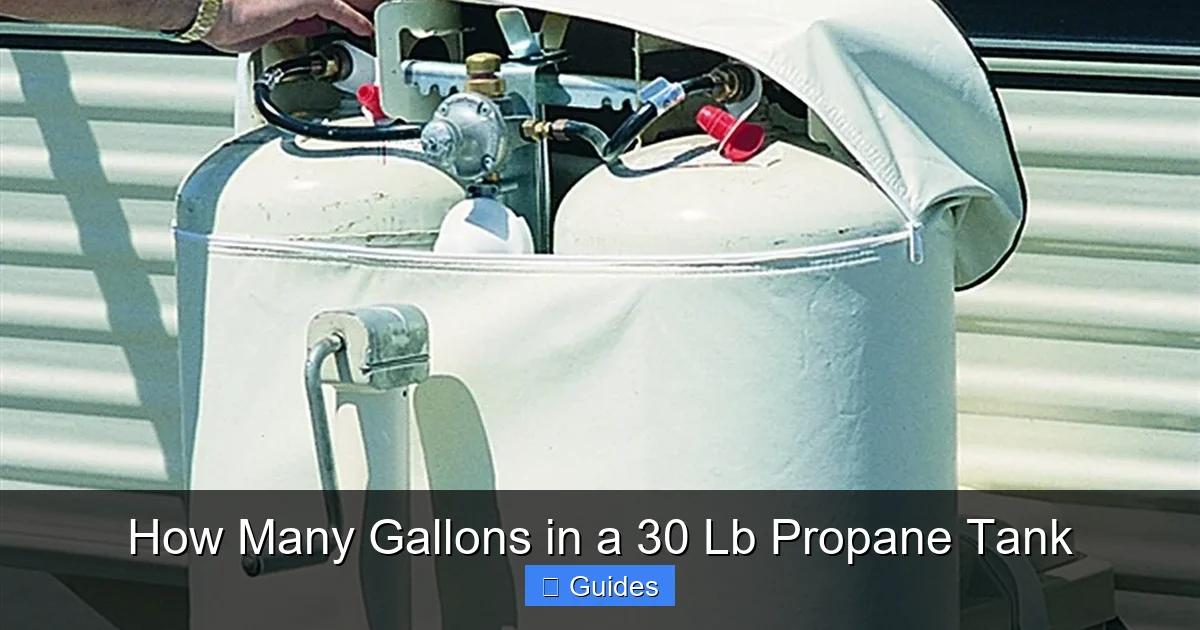
Visual guide about How Many Gallons in a 30 Lb Propane Tank
Image source: propaneva.com
Now that we know how many gallons are in a 30 lb propane tank, the next big question is: how long will it last? The answer depends entirely on what you’re using it for. A propane tank doesn’t have a built-in timer—it’s all about how much energy your appliances are drawing.
Propane usage is measured in BTUs (British Thermal Units), which is a unit of energy. The higher the BTU rating of your appliance, the more propane it burns per hour. For example, a small portable heater might use 10,000 BTUs per hour, while a large gas grill can use 30,000 to 50,000 BTUs or more.
Let’s break it down with some real-world examples.
Grilling with a 30 lb Tank
If you’re using a standard gas grill that burns about 30,000 BTUs per hour, a full 30 lb tank (with ~5.7 gallons of propane) will last roughly 18 to 20 hours of continuous use. That sounds like a lot—but remember, most people don’t grill for hours at a time. If you grill for 1.5 hours per week, that same tank could last you nearly three months.
But if you’re hosting a big barbecue and grilling for 4 hours straight, you’ll burn through about 120,000 BTUs. Since one gallon of propane contains about 91,500 BTUs, you’ll use roughly 1.3 gallons in that session. That means a 30 lb tank could support about four such grilling sessions before needing a refill.
Heating with a Patio Heater or Space Heater
Patio heaters are popular for extending the outdoor season, but they can be fuel-hungry. A typical outdoor patio heater uses between 40,000 and 50,000 BTUs per hour. At that rate, a 30 lb tank will last about 10 to 12 hours. So if you use your heater for 2 hours each evening, you’ll go through a tank every 5 to 6 nights.
Indoor space heaters vary widely. A small 10,000 BTU heater used for spot heating might run for 50+ hours on a single tank, while a larger 30,000 BTU model could drain it in under 20 hours. Always check your appliance’s BTU rating and calculate accordingly.
Powering a Generator or RV Appliances
If you’re using a 30 lb tank to power a backup generator during a power outage, runtime depends on the generator’s size and load. A 5,000-watt generator might use about 2 gallons of propane per hour under full load. That means a 30 lb tank (5.7 gallons) would last just under 3 hours—enough for short outages, but not long-term backup.
For RVers, a 30 lb tank can power a refrigerator, water heater, and stove for several days, depending on usage. A typical RV fridge uses about 1,500 BTUs per hour, so it’s very efficient. Combined with occasional stove use, a 30 lb tank might last a weekend trip or longer.
Refilling vs. Exchanging: What’s the Best Option?
Visual guide about How Many Gallons in a 30 Lb Propane Tank
Image source: gocarlife.com
When your 30 lb propane tank runs low, you have two main options: refill it or exchange it. Both have pros and cons, and the best choice depends on your needs, budget, and environmental concerns.
The Case for Refilling
Refilling your tank at a propane refill station is almost always cheaper than exchanging. Exchange programs—like those at Walmart, Home Depot, or U-Haul—charge a flat rate (usually $20–$25) for a “full” tank, but you don’t actually know how much propane is in it. Studies have shown that exchanged tanks are often underfilled, sometimes containing only 15–17 pounds of propane instead of the full 20–24 pounds.
When you refill, you pay only for the propane you receive, and you can top off your tank to the proper 80% level. This means you get more fuel for your money. Plus, refilling is better for the environment—you’re reusing the same tank instead of contributing to the cycle of manufacturing, transporting, and disposing of exchange tanks.
Refill stations are widely available at gas stations, hardware stores, and dedicated propane suppliers. Many offer discounts for regular customers or bulk purchases. Some even have loyalty programs or mobile apps to track your usage.
The Convenience of Exchange Programs
Exchange programs are undeniably convenient. You drive up, swap your empty tank for a “full” one, and go. There’s no waiting, no mess, and no need to handle the refill process yourself. This is ideal for people who are short on time, don’t have access to a refill station, or simply prefer the hassle-free option.
However, the convenience comes at a cost—both financially and environmentally. You’re paying a premium for the service, and you have no control over how much propane you’re actually getting. Additionally, exchange programs often discard or recycle tanks that could still be safely reused, contributing to waste.
If you do choose to exchange, try to go with reputable providers and check the tank’s manufacture date. Tanks older than 12 years may need recertification, and some exchange programs won’t accept them.
Safety Tips for Handling and Storing Propane Tanks
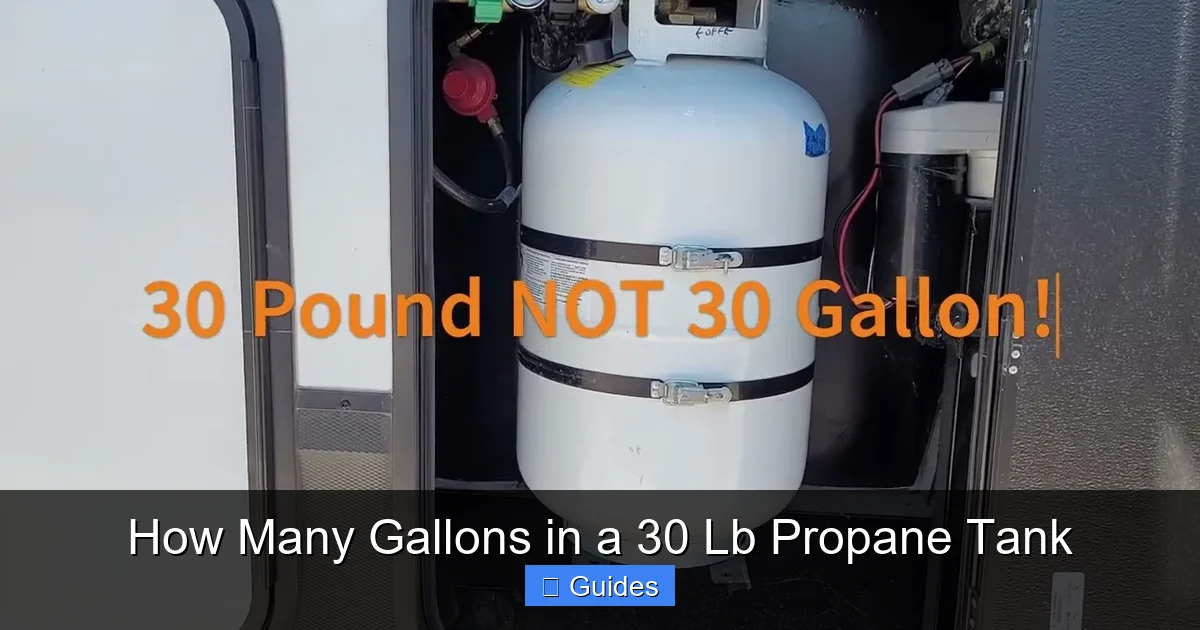
Visual guide about How Many Gallons in a 30 Lb Propane Tank
Image source: i.ytimg.com
Propane is a safe and reliable fuel when handled properly, but it’s also highly flammable and requires careful attention. Whether you’re using a 30 lb tank for grilling, heating, or camping, following safety guidelines is essential.
Proper Storage
Always store propane tanks outdoors, in a well-ventilated area away from direct sunlight, heat sources, or ignition points like pilot lights, electrical panels, or open flames. Never store tanks in a garage, basement, or enclosed space—propane is heavier than air and can accumulate in low areas, creating a fire or explosion hazard.
Keep tanks upright at all times. Laying a tank on its side can cause the liquid propane to reach the pressure relief valve, which is designed to release gas only in emergencies. If liquid escapes, it can vaporize quickly and create a dangerous cloud of flammable gas.
Transporting Tanks Safely
When transporting a 30 lb propane tank in your vehicle, secure it upright in the trunk or bed of a truck. Use a strap or bungee cord to prevent it from tipping over. Never leave a tank in a hot car—temperatures inside a vehicle can exceed 120°F on a sunny day, increasing pressure inside the tank.
Open windows slightly to allow ventilation, and never transport a tank inside a passenger cabin. If you must carry it inside (e.g., in an SUV), ensure the area is well-ventilated and the tank is secured.
Checking for Leaks
Before connecting your tank to an appliance, always check for leaks. A simple soap-and-water solution works well: mix dish soap with water, apply it to the valve and connections, and watch for bubbles. If bubbles form, there’s a leak. Tighten the connection or replace the hose or regulator as needed.
Never use a flame or match to check for leaks—this is extremely dangerous. If you smell gas (propane has a strong “rotten egg” odor added for safety), turn off the tank, ventilate the area, and move away from the source. Do not use electrical devices or create sparks.
Handling and Maintenance
Inspect your tank regularly for rust, dents, or damage. A compromised tank can fail under pressure. If you notice any issues, don’t use it—take it to a certified propane technician for evaluation.
Never paint or modify a propane tank. The manufacturer’s labels and color coding (usually white or silver) are there for safety and identification. Painting it can hide damage or make it harder for emergency responders to identify the contents.
Finally, always use the correct regulator and hose for your appliance. Using the wrong equipment can lead to leaks, poor performance, or dangerous pressure buildup.
Environmental and Cost Considerations
Propane is often praised as a “clean” fuel because it burns more efficiently than gasoline or diesel and produces fewer greenhouse gases. But like any fossil fuel, it has an environmental footprint—especially when it comes to production, transportation, and waste.
Reducing Your Propane Footprint
One of the best ways to reduce your environmental impact is to refill your tanks instead of exchanging them. Reusing tanks cuts down on manufacturing emissions and reduces the number of tanks that end up in landfills. Plus, refilling ensures you’re getting the full amount of fuel you pay for, which means less waste overall.
You can also improve efficiency by maintaining your appliances. A clean grill burner or well-tuned heater uses less propane and performs better. Regular maintenance extends the life of your equipment and reduces fuel consumption.
Cost Comparison: Propane vs. Other Fuels
Propane is generally more expensive per BTU than natural gas but cheaper than electricity for heating and cooking. For example, heating a home with propane might cost $1.50 per gallon, while electric heat pumps can be more efficient in moderate climates. However, propane offers portability and reliability that electricity can’t match—especially in rural areas or during power outages.
When comparing costs, consider not just the price per gallon, but also efficiency, convenience, and availability. For occasional use—like weekend grilling or camping—propane is hard to beat.
Conclusion
So, how many gallons are in a 30 lb propane tank? The short answer is about 5.7 to 6 gallons of usable propane when filled to the safe 80% level. While some sources round up to 7 gallons, that figure reflects total capacity, not real-world usage.
Understanding this conversion helps you make informed decisions about fuel needs, appliance usage, and safety. Whether you’re firing up the grill, heating your patio, or prepping for a camping trip, knowing your tank’s capacity ensures you won’t run out unexpectedly.
Remember: always prioritize safety—store tanks properly, check for leaks, and never overfill. Choose refilling over exchanging when possible to save money and reduce waste. And when in doubt, consult a certified propane professional.
With the right knowledge and habits, a 30 lb propane tank can be a reliable, efficient, and safe energy source for all your outdoor and emergency needs.
Frequently Asked Questions
How many gallons are in a 30 lb propane tank?
A 30 lb propane tank holds approximately 5.7 to 6 gallons of usable propane when filled to the standard 80% capacity. This accounts for safety regulations that prevent overfilling.
Can I fill a 30 lb propane tank to 100%?
No, it’s unsafe and illegal to fill a propane tank to 100%. Tanks must be filled to only 80% to allow for thermal expansion of the liquid propane.
How long does a 30 lb propane tank last on a grill?
A 30 lb tank can power a standard 30,000 BTU grill for about 18 to 20 hours of continuous use. For typical weekend grilling (1–2 hours per week), it may last several months.
Is it cheaper to refill or exchange a propane tank?
Refilling is almost always cheaper than exchanging. Exchange programs often charge a flat fee for underfilled tanks, while refilling lets you pay only for the propane you receive.
Can I store a 30 lb propane tank indoors?
No, propane tanks should never be stored indoors. They must be kept outdoors in a well-ventilated area, away from heat, sparks, or ignition sources.
How do I check if my propane tank is leaking?
Use a soap-and-water solution on the valve and connections. Bubbles indicate a leak. Never use an open flame to check for leaks—this is extremely dangerous.

At CarLegit, we believe information should be clear, factual, and genuinely helpful. That’s why every guide, review, and update on our website is created with care, research, and a strong focus on user experience.