
Leasing a car offers lower monthly payments, warranty coverage, and the chance to drive a new vehicle every few years—but it comes with mileage limits, no ownership, and long-term costs. This guide breaks down everything you need to know to decide if leasing is right for you.
[FEATURED_IMAGE_PLACEOLDER]
In This Article
Key Takeaways
- Lower Monthly Payments: Lease payments are typically 30–50% lower than loan payments for the same vehicle, freeing up cash for other expenses.
- Drive a New Car More Often: Most leases last 2–4 years, so you can upgrade to the latest models with updated tech and safety features.
- Warranty Coverage Included: New leased cars are usually under manufacturer warranty, reducing repair costs during the lease term.
- Mileage and Wear Restrictions: Exceeding mileage limits or returning a car with excessive wear can result in hefty fees at lease end.
- No Ownership Equity: You don’t build equity like with a purchase, and you’ll always have a car payment unless you buy the vehicle.
- Early Termination Fees: Ending a lease early can cost thousands, making it less flexible than owning.
- Customization Limits: Most leases prohibit modifications, so you can’t personalize your car with aftermarket parts or paint.
📑 Table of Contents
Introduction: Is Leasing a Car Right for You?
So, you’re in the market for a new car. You’ve done your research, test-driven a few models, and now you’re faced with a big decision: should you buy or lease? It’s a question millions of drivers ask every year—and for good reason. Both options have their perks, but leasing has become an increasingly popular choice, especially for people who value flexibility, lower monthly payments, and the thrill of driving a new car every few years.
Leasing a car is essentially renting it for a fixed period—usually 24 to 36 months—with the option to return it at the end of the term. Unlike buying, where you own the vehicle outright (or pay off a loan to own it), leasing means you’re paying for the car’s depreciation during your time with it, plus fees and interest. Sounds simple, right? But like any financial decision, it comes with trade-offs. Understanding the pros and cons of leasing a car can help you make a smart, informed choice that fits your lifestyle, budget, and long-term goals.
What Is Car Leasing? A Quick Overview
Before diving into the advantages and disadvantages, let’s clarify what car leasing actually means. When you lease a vehicle, you’re entering into a contract with a dealership or leasing company to use the car for a set period. You make monthly payments based on the car’s expected depreciation over that time, plus a finance charge (similar to interest), taxes, and fees.
Visual guide about Pros and Cons of Leasing a Car
Image source: autoloansforall.ca
At the end of the lease, you typically have three options: return the car and walk away, lease a new model, or purchase the vehicle at its residual value (the estimated worth at the end of the lease). Most people choose to return the car and start a new lease, which is why leasing is often called “perpetual car payments.” But for some, that’s exactly the appeal—no long-term commitment, no hassle selling a used car, and always driving something fresh.
How Leasing Differs from Buying
The biggest difference between leasing and buying is ownership. When you buy a car—whether with cash or a loan—you own it once the payments are done. You can drive it as long as you want, modify it, sell it, or trade it in. With leasing, you never own the car. You’re essentially paying to use it, much like renting an apartment.
Another key difference is cost structure. Lease payments are lower because you’re only paying for the car’s depreciation during the lease term, not the full value. For example, if a $40,000 car depreciates $15,000 over three years, your lease payments will cover that $15,000 plus fees and interest—not the entire $40,000. That’s why leasing often feels more affordable month-to-month.
Common Lease Terms to Know
Understanding lease terminology can help you avoid surprises. Here are a few key terms:
- Capitalized Cost: The negotiated price of the car, similar to the purchase price when buying.
- Residual Value: The car’s estimated worth at the end of the lease, set by the leasing company.
- Money Factor: The lease’s interest rate, expressed as a decimal (multiply by 2,400 to get an approximate APR).
- Lease Term: The length of the lease, usually 24, 36, or 48 months.
- Mileage Allowance: The number of miles you’re allowed to drive per year (typically 10,000 to 15,000).
- Disposition Fee: A charge (often $300–$500) for processing the return of the car at lease end.
Pros of Leasing a Car
Now that you understand how leasing works, let’s explore the benefits. For many drivers, leasing offers a compelling alternative to buying—especially in today’s fast-changing automotive landscape.
Visual guide about Pros and Cons of Leasing a Car
Image source: autotransport123.com
1. Lower Monthly Payments
One of the biggest draws of leasing is the lower monthly cost. Because you’re only paying for the car’s depreciation (plus fees and interest), your payments are significantly less than if you were financing the full purchase price. For example, leasing a $35,000 SUV might cost $350 per month, while buying it with a loan could run $600 or more.
This lower payment can free up cash for other priorities—like saving for a home, paying off debt, or investing. It also makes luxury and high-end vehicles more accessible. Want to drive a BMW or Mercedes without the six-figure price tag? Leasing can make that possible.
2. Drive a New Car Every Few Years
Technology in cars evolves quickly. New safety features, infotainment systems, and fuel-efficient engines hit the market every year. Leasing lets you stay current without the hassle of selling or trading in a used car. Most leases last 2–4 years, so you can upgrade to the latest model with minimal effort.
For example, if you lease a 2024 Honda Accord today, you could return it in 2027 and drive off in a 2027 model with updated hybrid tech, better crash ratings, and a redesigned interior. That’s a big win for tech lovers and safety-conscious drivers.
3. Warranty Coverage and Fewer Repairs
New cars come with comprehensive manufacturer warranties—often covering 3 years/36,000 miles or more. Since most leases fall within this period, you’re likely to have most repairs covered at no extra cost. That means peace of mind and lower out-of-pocket expenses.
Even better, many leases include maintenance packages or allow you to add them for a small monthly fee. Some luxury brands, like Lexus and Genesis, offer complimentary scheduled maintenance for the duration of the lease. That’s a huge perk if you hate dealing with oil changes and tire rotations.
4. No Resale Hassle
Selling a used car can be stressful. You have to clean it, fix dings, list it online, meet with buyers, and negotiate price. And if the market shifts, you might lose money. With leasing, you simply return the car at the end of the term (assuming it’s in good condition) and walk away.
This is especially helpful if you’re not great at predicting car values or don’t want the responsibility of ownership. No need to worry about depreciation—someone else handles that risk.
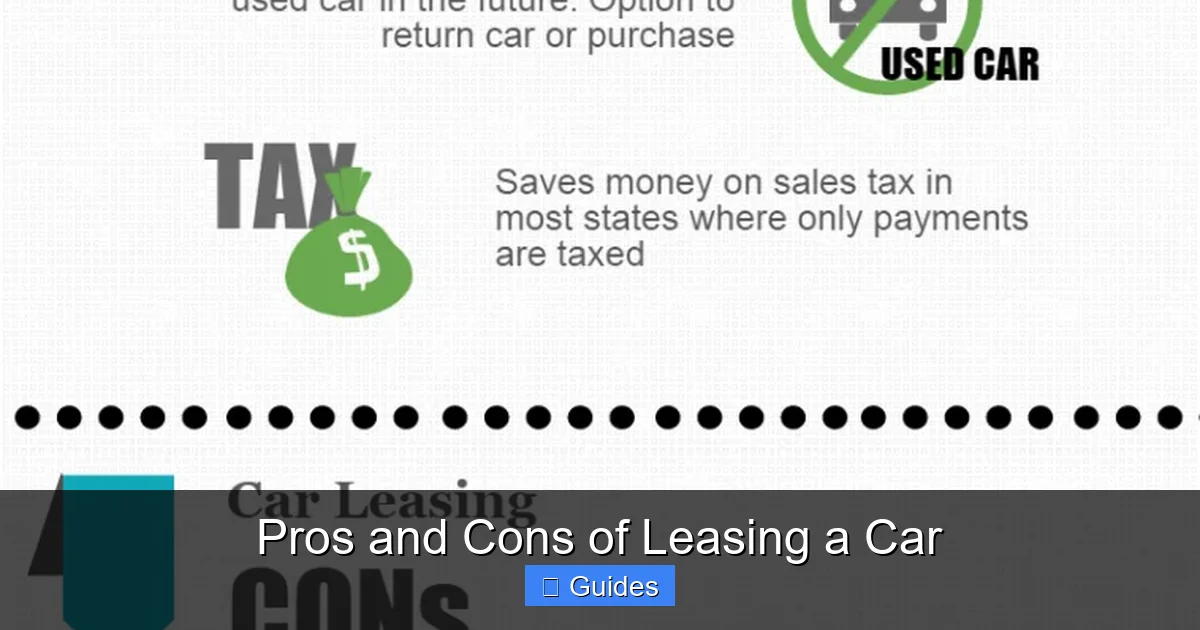
5. Tax Advantages for Business Use
If you use your car for business, leasing can offer tax benefits. In the U.S., you may be able to deduct a portion of your lease payments as a business expense, depending on how much you use the vehicle for work. This can significantly reduce your taxable income.
For example, if you’re a freelance consultant who drives 12,000 miles a year and 8,000 are for client meetings, you could deduct about 67% of your lease payments. Always consult a tax professional, but this is a real advantage for self-employed individuals.
Cons of Leasing a Car
While leasing has clear benefits, it’s not for everyone. There are several downsides to consider—especially if you drive a lot, want to customize your car, or prefer long-term ownership.

Visual guide about Pros and Cons of Leasing a Car
Image source: etags.com
1. No Ownership Equity
The biggest downside of leasing is that you don’t build equity. Every monthly payment goes toward using the car, not owning it. Once the lease ends, you have nothing to show for your payments—no asset, no trade-in value, no car to sell.
Compare that to buying: even if your car depreciates, you still own it. After five years of payments, you might have a paid-off vehicle worth $10,000. With leasing, you’re back to square one—unless you buy the car at the end of the lease, which brings its own costs.
2. Mileage Restrictions and Fees
Leases come with strict mileage limits—usually 10,000 to 15,000 miles per year. If you exceed that, you’ll pay a per-mile fee, often $0.10 to $0.25. That can add up fast. Drive 20,000 miles in a year on a 12,000-mile lease? That’s 8,000 extra miles at $0.15 each—$1,200 in penalties.
This makes leasing a poor choice for long-distance commuters, road-trippers, or families with multiple drivers. If you’re unsure about your mileage, consider a higher-mileage lease (available for a slightly higher monthly payment) or look into buying.
3. Wear and Tear Charges
At the end of your lease, the car will be inspected for excessive wear and tear. Minor scratches and dings are usually okay, but things like large dents, stained upholstery, or damaged tires can result in charges. These fees can range from $100 to over $1,000, depending on the damage.
For example, if you have a dog that scratched the back seat or a kid who spilled juice on the carpet, you might be charged for cleaning or repairs. Some leases offer “wear-and-tear protection” for an extra fee, but it’s not always worth it.
4. Early Termination Fees
Life changes—jobs, moves, financial setbacks—and sometimes you need to end a lease early. But breaking a lease can be expensive. Most contracts charge an early termination fee, which can be thousands of dollars. You might also be responsible for the remaining payments or a penalty based on the car’s depreciation.
For instance, ending a 36-month lease after 12 months could cost $5,000 or more. That’s a major downside if you value flexibility. Buying a car gives you more options—you can sell it or trade it in if needed.
5. Customization Is Limited
Want to tint your windows, add a spoiler, or upgrade the sound system? Think again. Most leases prohibit modifications because the car must be returned in near-original condition. Any aftermarket parts must be removed, and the car restored to factory specs—otherwise, you’ll face charges.
This can be frustrating for car enthusiasts or people who want to personalize their ride. If you love customizing your vehicle, buying is a better long-term option.
6. Long-Term Cost Can Be Higher
While monthly payments are lower, leasing can cost more over time. If you lease every 3–4 years for 15 years, you’ll always have a car payment. In contrast, buying a car and keeping it for 10+ years means you’ll have years of payment-free driving.
For example, leasing a $300/month car for 15 years costs $54,000. Buying the same car for $450/month and keeping it for 10 years costs $54,000 too—but then you own it and can drive it for free. Over 15 years, the buyer comes out ahead.
Who Should Lease a Car?
Leasing isn’t for everyone, but it can be a smart choice for certain drivers. Here’s who benefits most:
People Who Want Lower Monthly Payments
If you’re on a tight budget or want to drive a more expensive car without a huge payment, leasing can help. It’s ideal for professionals, young families, or anyone who prioritizes cash flow.
Those Who Drive Moderate Mileage
If you drive under 12,000 miles a year, leasing makes sense. Commuters with short drives, city dwellers, or remote workers are good candidates.
Tech and Safety Enthusiasts
If you love having the latest features—like adaptive cruise control, wireless Apple CarPlay, or advanced driver-assist systems—leasing lets you upgrade regularly without the hassle of selling.
Business Owners and Self-Employed Individuals
As mentioned earlier, leasing can offer tax deductions for business use. If you’re self-employed and use your car for work, this can be a major advantage.
People Who Don’t Want Maintenance Hassles
If you hate dealing with car repairs or don’t want to worry about unexpected breakdowns, leasing a new car under warranty is a stress-free option.
Tips for Getting the Best Lease Deal
If you decide leasing is right for you, here are some tips to get the best deal:
Negotiate the Capitalized Cost
Just like buying, you can negotiate the price of the car. A lower capitalized cost means lower monthly payments. Research the invoice price and aim to pay close to it.
Check the Money Factor
The money factor is the lease’s interest rate. Ask for it in writing and convert it to an APR (multiply by 2,400). Compare it to current auto loan rates—if it’s high, consider financing instead.
Choose the Right Mileage Limit
Estimate your annual mileage honestly. If you’re close to the limit, pay a little more upfront for a higher allowance to avoid overage fees.
Watch Out for Excess Fees
Some leases include unnecessary add-ons like gap insurance, maintenance packages, or tire protection. Only pay for what you need.
Consider a Lease Buyout
If you love your leased car, you can buy it at the end of the term for the residual value. This can be a good deal if the car has held its value well.
Conclusion: Is Leasing Right for You?
Leasing a car has clear advantages—lower payments, new technology, warranty coverage, and no resale hassle. But it also comes with downsides: no equity, mileage limits, wear-and-tear fees, and long-term costs. The key is to weigh these pros and cons against your personal situation.
If you drive moderately, want to stay current with tech, and prefer lower monthly payments, leasing could be a great fit. But if you drive a lot, want to customize your car, or prefer owning outright, buying might be the better choice. Take time to evaluate your needs, read the fine print, and talk to a financial advisor if needed. With the right approach, you can make a decision that keeps you happy—and your wallet healthy—for years to come.
Frequently Asked Questions
Can you negotiate a car lease?
Yes, you can negotiate several aspects of a lease, including the capitalized cost (price of the car), money factor (interest rate), and fees. Just like buying, getting a lower price reduces your monthly payments.
What happens at the end of a car lease?
At the end of the lease, you can return the car, lease a new one, or buy the vehicle at its residual value. Returning the car usually involves an inspection and potential fees for excess wear or mileage.
Is it better to lease or buy a car?
It depends on your priorities. Leasing offers lower payments and new cars more often, while buying builds equity and avoids mileage limits. Consider your budget, driving habits, and long-term goals.
Can you lease a used car?
Yes, some dealerships offer certified pre-owned leases. These can be cheaper than new car leases but may have higher interest rates and fewer warranty benefits.
Do you need good credit to lease a car?
Generally, yes. Most leasing companies require a credit score of 660 or higher. Lower scores may result in higher money factors or require a larger down payment.
Can you transfer a car lease to someone else?
Some leases allow lease transfers through third-party services, but the original lessee may still be liable if the new person defaults. Check your contract and contact the leasing company first.

At CarLegit, we believe information should be clear, factual, and genuinely helpful. That’s why every guide, review, and update on our website is created with care, research, and a strong focus on user experience.