
Leasing a car means paying to use a vehicle for a set period, typically 2-4 years, without owning it outright. It often comes with lower monthly payments than buying, but includes mileage limits and wear guidelines.
In This Article
- 1 Key Takeaways
- 2 📑 Table of Contents
- 3 What Does It Mean to Lease a Car?
- 4 How Car Leasing Works
- 5 Pros and Cons of Leasing a Car
- 6 Leasing vs. Buying: Which Is Right for You?
- 7 Tips for Leasing a Car Successfully
- 8 What Happens at the End of a Lease?
- 9 Common Misconceptions About Leasing
- 10 Conclusion
- 11 Frequently Asked Questions
Key Takeaways
- Leasing is like a long-term rental: You pay to use the car for a fixed term, usually 24 to 36 months, and return it at the end.
- Lower monthly payments: Lease payments are typically lower than loan payments because you’re only paying for the car’s depreciation during the lease term.
- Mileage restrictions apply: Most leases limit how many miles you can drive per year (e.g., 10,000–15,000), with fees for going over.
- Wear and tear guidelines: You must maintain the car and return it in good condition, or face additional charges.
- No equity buildup: Unlike buying, you don’t build ownership or resale value—you walk away at the end of the lease.
- Early termination fees: Ending a lease early can be expensive, so it’s best to commit for the full term.
- Great for new car lovers: Leasing lets you drive a new vehicle every few years with the latest tech and safety features.
📑 Table of Contents
What Does It Mean to Lease a Car?
So, you’re thinking about getting a new car—but instead of buying, you’ve heard people talk about leasing. Maybe you’ve seen ads with low monthly payments or heard friends say they “lease” their vehicles. But what does it actually mean to lease a car?
At its core, leasing a car is like renting it for an extended period, usually two to four years. Instead of purchasing the vehicle and owning it outright, you pay to use it during the lease term. Think of it as a long-term rental agreement with specific rules and conditions. When the lease ends, you return the car to the dealership—no strings attached, as long as you’ve followed the terms.
Leasing has become increasingly popular, especially among people who want to drive newer models with the latest technology, safety features, and fuel efficiency—without the long-term commitment of ownership. It’s also appealing if you prefer lower monthly payments and don’t mind not building equity in a vehicle. But like any financial decision, leasing comes with trade-offs. It’s not the right choice for everyone, and understanding the ins and outs can save you money and headaches down the road.
How Car Leasing Works
Visual guide about What Does It Mean to Lease a Car
Image source: leaseguide.com
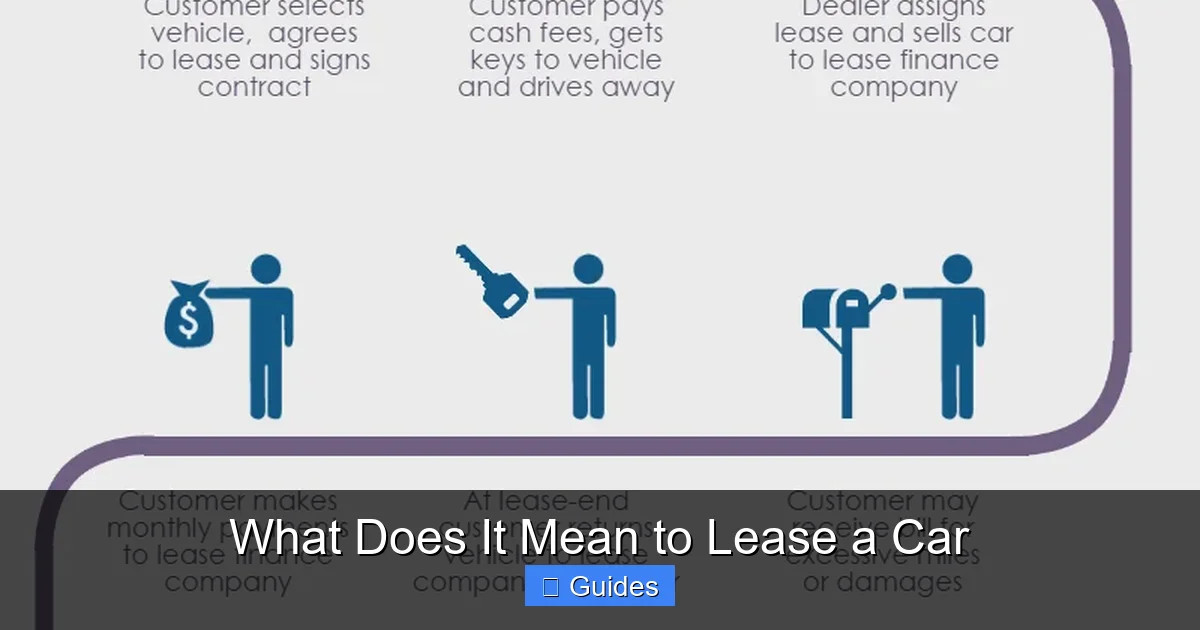
To truly grasp what it means to lease a car, let’s break down how the process actually works. It’s not as simple as just signing a paper and driving off—there are several key steps and financial components involved.
The Lease Agreement
When you lease a car, you sign a contract with the leasing company (often the car manufacturer’s finance arm, like Toyota Financial Services or Ford Credit). This agreement outlines everything: the length of the lease, monthly payment amount, mileage allowance, and what happens at the end of the term.
The lease term is usually between 24 and 36 months, though 48-month leases are also available. Shorter leases mean you can upgrade to a newer model more often, but they may come with slightly higher monthly payments. Longer leases spread out the cost but may not offer the same flexibility.
Key Financial Terms
Several financial terms determine your monthly payment and overall cost:
– **Capitalized Cost:** This is the negotiated price of the car, similar to the purchase price when buying. The lower this number, the lower your monthly payments.
– **Residual Value:** This is the estimated value of the car at the end of the lease. Leasing companies predict how much the car will be worth after depreciation. The higher the residual value, the lower your payments, because you’re only paying for the difference between the current price and the future value.
– **Money Factor:** This is the lease’s interest rate, expressed as a decimal (e.g., 0.0025). To compare it to an APR, multiply by 2,400. So 0.0025 × 2,400 = 6% APR.
– **Depreciation:** This is the biggest part of your lease payment. Cars lose value quickly—often 20% in the first year. Your monthly payment covers this loss in value over the lease term.
For example, let’s say you lease a car with a capitalized cost of $30,000 and a residual value of $18,000 after three years. You’re essentially paying for the $12,000 in depreciation, plus interest and fees, spread over 36 months.
Down Payment and Fees
Many leases require an upfront payment, often called a “down payment” or “cap cost reduction.” This reduces your monthly payments but is not required. Some people choose to put nothing down and roll all costs into the monthly payment.
Other common fees include:
– Acquisition fee (charged by the leasing company, usually $500–$1,000)
– Security deposit (sometimes required, refundable)
– Disposition fee (charged when you return the car, unless you buy it)
– Title and registration fees
Be sure to ask for a full breakdown of all costs before signing.
Pros and Cons of Leasing a Car

Visual guide about What Does It Mean to Lease a Car
Image source: leasesacar.com
Like any financial choice, leasing has its advantages and disadvantages. Whether it’s right for you depends on your lifestyle, driving habits, and financial goals.
Advantages of Leasing
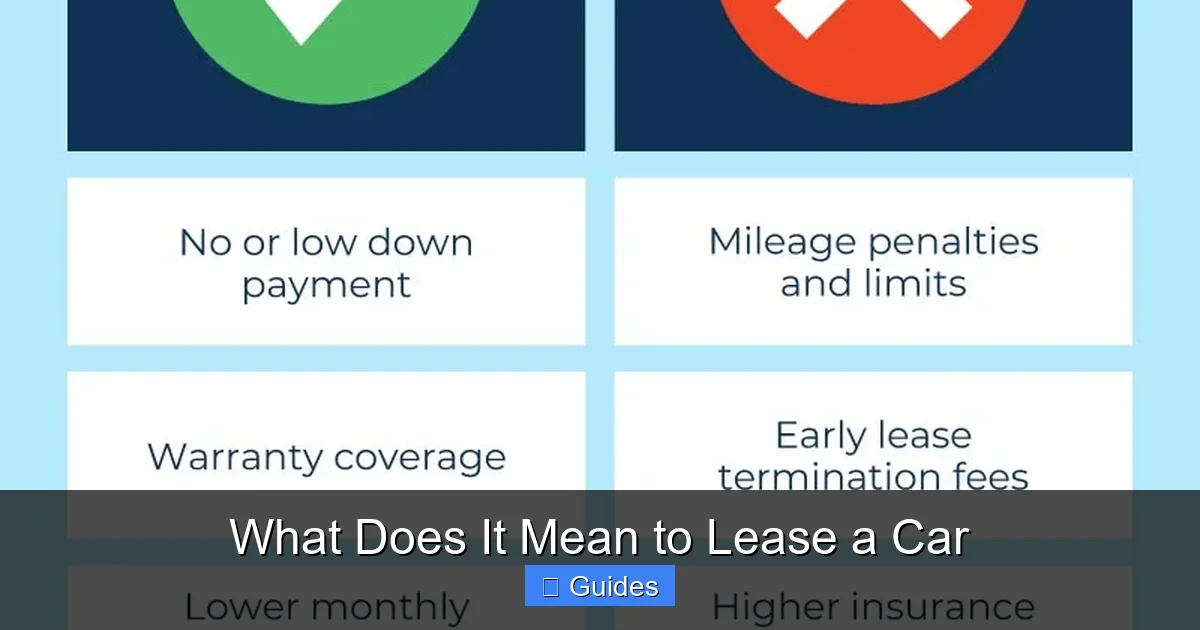
Lower Monthly Payments: One of the biggest draws of leasing is affordability. Since you’re only paying for the car’s depreciation (not the full value), monthly payments are typically 20–30% lower than loan payments for the same vehicle.
Drive a New Car More Often: Leasing lets you enjoy the latest models every two to four years. You’ll always have access to updated technology, improved safety features, and better fuel economy—without the hassle of selling an old car.
Lower Repair Costs: Most leased vehicles are under the manufacturer’s warranty for the entire lease term. That means if something breaks, it’s usually covered. You won’t have to worry about unexpected repair bills.
No Resale Hassle: When you buy a car, you eventually have to sell it—which can be time-consuming and stressful. With leasing, you simply return the car at the end of the term and walk away (as long as you meet the conditions).
Tax Benefits for Business Use: If you use the car for work, you may be able to deduct a portion of the lease payments as a business expense. This can be a significant advantage for freelancers or small business owners.
Disadvantages of Leasing
No Ownership: This is the biggest downside. You don’t own the car, so you don’t build equity. At the end of the lease, you have nothing to show for your payments—no asset, no trade-in value.
Mileage Limits: Most leases cap your annual mileage at 10,000, 12,000, or 15,000 miles. If you exceed this limit, you’ll pay a per-mile fee—often $0.10 to $0.25. For example, driving 18,000 miles in a year on a 12,000-mile lease could cost you $1,500 extra.
Wear and Tear Charges: You must return the car in good condition. Excessive wear—like deep scratches, dents, or stained upholstery—can result in hefty fees. Even normal wear might be questioned, so it’s important to document the car’s condition at the start.
Early Termination Fees: Ending a lease early is possible, but it’s expensive. You’ll likely have to pay the remaining payments or a large penalty. This makes leasing a poor choice if your life situation might change (e.g., job relocation, family growth).
Customization Restrictions: Since you don’t own the car, you can’t make major modifications. Adding aftermarket parts like spoilers, tinted windows, or performance upgrades may violate the lease terms.
Leasing vs. Buying: Which Is Right for You?
Visual guide about What Does It Mean to Lease a Car
Image source: images.ctfassets.net
One of the most common questions people ask is: Should I lease or buy? There’s no one-size-fits-all answer—it depends on your priorities.
When Leasing Makes Sense
Leasing is ideal if:
– You want lower monthly payments and can afford to not own the car.
– You drive a predictable, moderate number of miles each year (under 15,000).
– You like driving a new car every few years and enjoy having the latest features.
– You don’t want to deal with long-term maintenance or selling a used car.
– You’re using the car for business and can benefit from tax deductions.
For example, Sarah, a marketing consultant, leases a new sedan every three years. She drives about 12,000 miles annually, loves having the latest infotainment system, and deducts her lease payments as a business expense. For her, leasing is a smart financial move.
When Buying Is Better
Buying (with a loan or cash) is better if:
– You drive a lot—over 15,000 miles per year.
– You plan to keep the car for many years (5+).
– You want to build equity and eventually own a paid-off vehicle.
– You like customizing your car or using it for rideshare or delivery services.
– You want to avoid mileage and wear restrictions.
Take Mike, for instance. He drives 20,000 miles a year for his delivery job and plans to keep his truck for at least seven years. Buying makes more sense for him—he’ll save money in the long run and won’t worry about mileage penalties.
Cost Comparison Example
Let’s compare a 36-month lease vs. a 60-month loan on a $35,000 car:
– **Lease:** $350/month, $2,000 down, 12,000 miles/year, return car at end.
– **Loan:** $650/month, $5,000 down, own car after 5 years, can drive unlimited miles.
Over three years, the lease costs about $14,600 ($350 × 36 + $2,000). The loan costs $28,400 ($650 × 36 + $5,000), but you still own the car, which may be worth $18,000. So your net cost is $10,400.
In this case, leasing costs more over three years, but the monthly burden is lower. If you plan to upgrade in three years, leasing might still be worth it.
Tips for Leasing a Car Successfully
If you decide leasing is right for you, follow these tips to get the best deal and avoid common pitfalls.
Negotiate the Capitalized Cost
Just like when buying, you can—and should—negotiate the price of the car. A lower capitalized cost means lower monthly payments. Research the invoice price (what the dealer paid) and aim to lease at or below that number.
Choose the Right Mileage Limit
Estimate your annual mileage honestly. If you’re close to a limit (e.g., 12,000 vs. 15,000), consider paying a little more upfront for the higher allowance. It’s often cheaper than paying overage fees later.
Watch the Money Factor
Ask for the money factor and convert it to an APR to compare financing offers. A lower money factor means lower interest costs. If your credit isn’t great, consider improving it before leasing to qualify for better rates.
Consider a Closed-End Lease
Most consumer leases are “closed-end,” meaning you’re only responsible for the agreed-upon terms. Even if the car is worth less than the residual value at the end, you don’t owe the difference. This protects you from market fluctuations.
Document the Car’s Condition
Before driving off, take photos and notes of any existing damage. This creates a record and helps avoid disputes when returning the car.
Read the Fine Print
Understand all fees, penalties, and return conditions. Ask questions if anything is unclear. Don’t sign until you’re confident you know what you’re agreeing to.
What Happens at the End of a Lease?
The end of a lease can be straightforward—or complicated—depending on your choices and the car’s condition.
Return the Car
This is the most common option. You schedule an inspection, return the vehicle, and pay any applicable fees (like excess wear or mileage). As long as everything is in order, you walk away with no further obligations.
Buy the Car
You have the option to purchase the vehicle at its residual value. This can be a good deal if the car has held its value well or if you’ve grown attached to it. You can pay cash, finance the purchase, or trade it in for a new lease or loan.
Lease a New Car
Many people use the end of one lease to start another. Dealerships often offer incentives (like waived fees or low money factors) to keep you in their brand. This is convenient if you like upgrading regularly.
Extend the Lease
Some leasing companies allow you to extend the lease month-to-month or for a few extra months. This can be helpful if you’re between cars or waiting for a new model to arrive.
Common Misconceptions About Leasing
Despite its popularity, leasing is often misunderstood. Let’s clear up a few myths.
“Leasing Is Always Cheaper Than Buying”
Not necessarily. While monthly payments are lower, you’re not building equity. Over time, continuous leasing can cost more than buying and keeping a car for 8–10 years.
“You Can’t Lease with Bad Credit”
It’s harder, but not impossible. Some leasing companies work with lower credit scores, though you’ll likely face higher money factors and larger down payments.
“Leasing Means You’re Stuck with the Car”
You’re not. You can return the car at the end of the term, buy it, or even transfer the lease to someone else (with approval). Flexibility is one of leasing’s strengths.
“All Leases Are the Same”
Leases vary widely. Terms, fees, mileage allowances, and included services (like maintenance) differ by brand and dealer. Always compare offers.
Conclusion
So, what does it mean to lease a car? It means entering a structured, time-limited agreement to use a vehicle without owning it. You benefit from lower payments, newer models, and fewer repair worries—but you give up ownership, face mileage limits, and must return the car in good condition.
Leasing isn’t for everyone, but for the right person, it’s a smart, flexible way to enjoy driving without the long-term commitment of ownership. Whether you’re a tech lover who wants the latest features, a business owner looking for tax advantages, or someone who just prefers lower monthly costs, leasing could be a great fit.
Before you sign, do your homework. Compare offers, understand the terms, and think about your driving habits and financial goals. With the right approach, leasing a car can be a smooth, satisfying experience that keeps you behind the wheel of a great vehicle—year after year.
Frequently Asked Questions
Can I lease a car with bad credit?
Yes, but it may be more difficult. You might face higher interest rates (money factor) and be required to make a larger down payment. Some leasing companies specialize in working with lower credit scores.
What happens if I go over my mileage limit?
You’ll be charged a per-mile fee, typically $0.10 to $0.25. For example, driving 3,000 extra miles on a 12,000-mile lease could cost $300–$750. To avoid this, choose a higher mileage allowance upfront.
Can I terminate a lease early?
Yes, but it’s usually expensive. You may have to pay the remaining payments or a large penalty. Some leases allow lease transfers, where another person takes over your payments.
Do I need full coverage insurance when leasing?
Yes. Leasing companies require comprehensive and collision insurance with low deductibles to protect their asset. This is typically more extensive than state minimum requirements.
Can I modify a leased car?
Minor modifications may be allowed, but major changes (like performance upgrades or body kits) usually violate lease terms. Always check with the leasing company first.
Is leasing better than buying?
It depends on your needs. Leasing offers lower payments and newer cars but no ownership. Buying builds equity and allows unlimited use, but costs more monthly. Choose based on your lifestyle and financial goals.

At CarLegit, we believe information should be clear, factual, and genuinely helpful. That’s why every guide, review, and update on our website is created with care, research, and a strong focus on user experience.