

Leasing a car with bad credit is challenging but far from impossible. With the right preparation, knowledge, and lender choices, you can secure a lease that fits your budget and helps rebuild your credit. This guide walks you through every step—from improving your odds to finalizing the deal—so you can drive off in confidence.
In This Article
- 1 Key Takeaways
- 2 📑 Table of Contents
- 3 Can You Really Lease a Car with Bad Credit?
- 4 Understanding How Credit Affects Car Leasing
- 5 Steps to Take Before Applying for a Lease
- 6 Finding the Right Lender or Dealership
- 7 Choosing the Right Car to Lease
- 8 Making the Most of Your Lease to Rebuild Credit
- 9 Final Tips for Success
- 10 Conclusion
- 11 Frequently Asked Questions
Key Takeaways
- Bad credit doesn’t automatically disqualify you from leasing: Many dealerships and lenders work with subprime borrowers, though terms may be stricter.
- Improve your chances with a larger down payment: Putting more money down reduces the lender’s risk and can lead to better approval odds.
- Shop around for subprime or specialized leasing programs: Not all lenders treat credit scores the same—some focus on income and job stability instead.
- Consider a co-signer to boost approval odds: A trusted person with good credit can co-sign your lease, increasing your chances of approval.
- Check your credit report for errors before applying: Fixing mistakes can quickly improve your score and open up better lease options.
- Choose a more affordable vehicle: Lower-priced cars mean lower monthly payments, making approval easier even with poor credit.
- Make on-time payments to rebuild credit over time: A successful lease can actually help improve your credit score if you pay consistently.
📑 Table of Contents
Can You Really Lease a Car with Bad Credit?
So, you need a car—but your credit score isn’t exactly shining. Maybe you’ve missed a few payments, had a loan default, or just haven’t built much credit history yet. You’re wondering: *Can I even lease a car with bad credit?* The short answer? Yes—but it’s not as simple as walking into a dealership and driving off in a shiny new sedan.
Leasing a car with bad credit is definitely possible, but it requires more planning, patience, and strategy than someone with excellent credit might need. Lenders see lower credit scores as a higher risk. That means they’re less likely to approve your application—or they’ll offer you a lease with higher interest rates, bigger down payments, or stricter terms. But don’t let that scare you off. Thousands of people with less-than-perfect credit successfully lease cars every year. The key is knowing your options, preparing in advance, and making smart financial moves.
Think of it this way: leasing with bad credit is like applying for a job when you’re switching careers. You might not have the exact experience they’re looking for, but you can still land the role if you show initiative, highlight transferable skills, and prove you’re reliable. In the same way, you can prove to a lender that you’re a responsible borrower—even if your credit report tells a different story. With the right approach, you can not only get approved but also use the lease as a stepping stone to rebuild your credit and set yourself up for better financial opportunities down the road.
Understanding How Credit Affects Car Leasing

Visual guide about Lease a Car with Bad Credit
Image source: assets-global.website-files.com
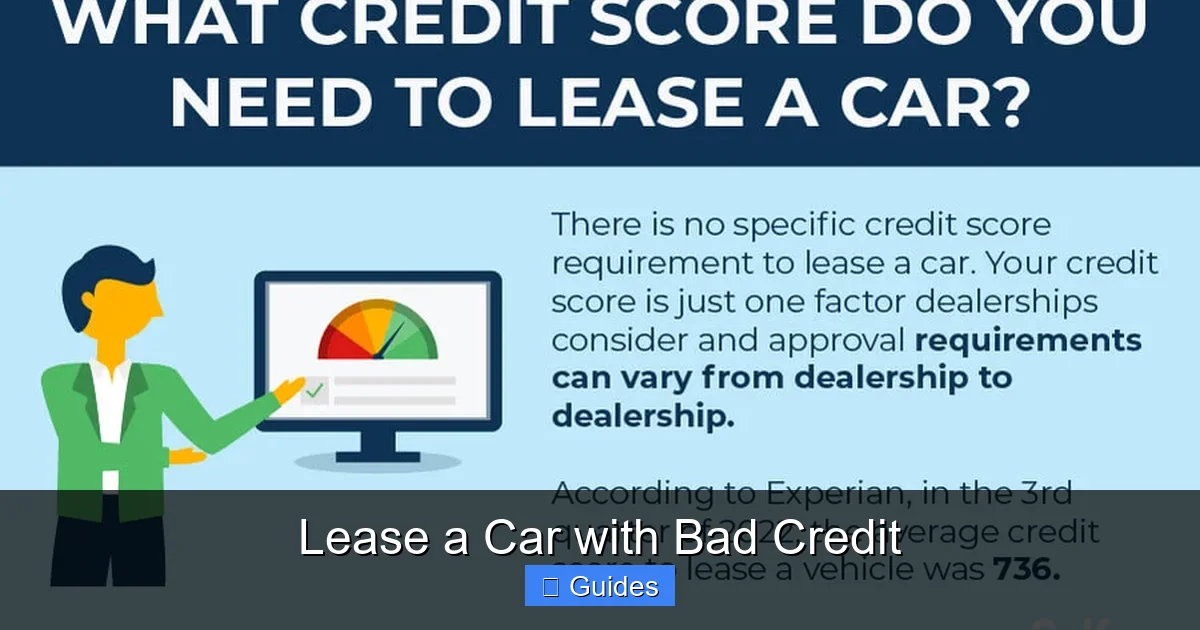
Before diving into strategies, it’s important to understand how credit actually impacts your ability to lease a car. When you apply for a lease, the dealership or leasing company runs a credit check to assess your risk level. They’re looking at your credit score, payment history, debt-to-income ratio, and overall financial behavior. Based on this, they assign you a credit tier—typically ranging from “super prime” (excellent credit) to “subprime” (poor credit).
If you have bad credit—usually defined as a FICO score below 600—you’ll likely fall into the subprime or deep subprime category. This doesn’t mean you’re unqualified, but it does mean lenders will be more cautious. They may require a larger security deposit, higher monthly payments, or a co-signer. Some may even decline your application outright unless you meet certain conditions.
But here’s the good news: leasing companies care about more than just your credit score. They also look at your income, employment history, and ability to make consistent payments. If you have a stable job, a decent income, and a history of paying rent or utilities on time, that can work in your favor—even with a low credit score. In fact, some lenders specialize in working with people who have bad credit, focusing on real-world financial behavior rather than just numbers on a report.
What Counts as “Bad Credit”?
Credit scores typically range from 300 to 850. Here’s a quick breakdown:
- Excellent: 750–850
- Good: 700–749
- Fair: 650–699
- Poor: 600–649
- Bad: Below 600
If your score is below 600, you’re in the “bad credit” zone. But even within that range, there’s a big difference between a 550 and a 590. Every point matters when you’re trying to lease a car. That’s why it’s worth taking steps to improve your score—even slightly—before applying.
How Lenders Evaluate Lease Applications
When you apply to lease a car, lenders don’t just look at your credit score. They evaluate your entire financial picture. Here’s what they typically consider:
- Credit score and history: How many accounts do you have? Have you missed payments? Do you have any collections or bankruptcies?
- Debt-to-income ratio (DTI): This compares your monthly debt payments to your gross monthly income. A lower DTI shows you can handle more payments.
- Employment stability: Lenders prefer borrowers who’ve been at their job for at least six months to a year.
- Down payment amount: A larger down payment reduces the lender’s risk and can offset a low credit score.
- Residence stability: Staying at the same address for a while signals reliability.
Even with bad credit, strong performance in these other areas can tip the scales in your favor. For example, someone with a 580 credit score but a steady job, low debt, and a 20% down payment might get approved more easily than someone with a 620 score but irregular income and high debt.
Steps to Take Before Applying for a Lease
Visual guide about Lease a Car with Bad Credit
Image source: images.ctfassets.net
If you’re serious about leasing a car with bad credit, don’t just walk into a dealership and hope for the best. Preparation is everything. Taking a few smart steps before you apply can dramatically improve your chances of approval—and help you get better terms.
Check and Fix Your Credit Report
Before you do anything else, pull your free credit reports from all three major bureaus—Equifax, Experian, and TransUnion—at AnnualCreditReport.com. You’re entitled to one free report from each bureau every year. Review them carefully for errors: incorrect account balances, accounts that aren’t yours, late payments that were actually on time, or outdated negative items.
If you find mistakes, dispute them immediately. The credit bureaus are required to investigate and correct errors within 30 to 45 days. Even a small correction—like removing a wrongly reported late payment—can boost your score by 20 or 30 points. That could be the difference between being denied and approved.
Improve Your Credit Score (Even a Little)
You don’t need perfect credit to lease a car, but improving your score—even slightly—can open up better options. Here are a few quick wins:
- Pay down credit card balances: High credit utilization (the percentage of your credit limit you’re using) hurts your score. Aim to keep it below 30%, ideally under 10%.
- Make all payments on time: Payment history is the biggest factor in your credit score. Set up autopay or reminders to avoid missing due dates.
- Avoid new credit applications: Each hard inquiry can knock a few points off your score. Only apply for credit when absolutely necessary.
- Become an authorized user: If a family member or close friend has a credit card with a long history of on-time payments and low balance, ask to be added as an authorized user. Their good behavior can help boost your score.
Even if you can’t raise your score dramatically, showing recent positive behavior—like paying off a collection or reducing debt—can reassure lenders that you’re turning things around.
Gather Proof of Income and Stability
Since bad credit raises red flags, you’ll want to prove you’re financially stable in other ways. Gather documents like:
- Recent pay stubs (last 2–3 months)
- Bank statements showing consistent deposits
- Employment verification letter from your employer
- Rental history or utility bills showing on-time payments
Having these ready shows lenders you have the income and responsibility to handle lease payments. It also makes the application process smoother and faster.
Save for a Larger Down Payment
One of the most effective ways to offset bad credit is to put more money down. A larger down payment—sometimes called a “cap cost reduction”—lowers the amount you’re financing, which reduces the lender’s risk. It can also lower your monthly payments and improve your chances of approval.
While many leases advertise “$0 down,” that’s usually reserved for borrowers with excellent credit. With bad credit, expect to pay at least $1,000–$3,000 upfront, or even more for higher-end vehicles. The more you can put down, the better your odds.
For example, let’s say you’re leasing a $25,000 car. With good credit, you might put $500 down and pay $250/month. With bad credit, you might need to put $2,500 down and pay $300/month. But that extra down payment could be the key to getting approved.
Finding the Right Lender or Dealership
Visual guide about Lease a Car with Bad Credit
Image source: wiseloan.com
Not all lenders treat bad credit the same way. Some specialize in subprime auto financing, while others are more rigid. Your goal is to find a lender or dealership that works with borrowers in your credit range—and offers fair terms.
Look for Subprime or Special Finance Dealerships
Many dealerships have “special finance” departments that handle customers with bad credit. These departments partner with lenders who are more flexible and willing to work with subprime borrowers. They may charge higher interest rates, but they’re often more willing to approve applications based on income and stability rather than just credit score.
When shopping, ask: “Do you work with people who have bad credit?” or “Do you have a special finance department?” If the answer is yes, you’re in the right place. These dealerships often have relationships with lenders like Credit Acceptance, Capital One Auto Finance, or Westlake Financial—companies known for working with lower-credit borrowers.
Get Pre-Approved Before Visiting the Dealership
Instead of applying at the dealership (which can lead to multiple hard inquiries), consider getting pre-approved online from a subprime lender. This gives you a clear idea of your budget and shows dealers you’re serious. It also prevents you from falling in love with a car you can’t afford.
When you get pre-approved, you’ll receive a conditional approval letter stating the maximum lease amount, interest rate, and required down payment. You can then shop with confidence, knowing exactly what you qualify for.
Consider a Co-Signer
If you’re struggling to get approved on your own, a co-signer can make a big difference. A co-signer is someone with good credit who agrees to take responsibility for the lease if you fail to make payments. This reduces the lender’s risk and significantly boosts your approval odds.
The co-signer should be someone you trust—and who trusts you—like a parent, spouse, or close friend. Keep in mind: if you miss payments, it affects both your credit and theirs. So only choose a co-signer if you’re confident you can make every payment on time.
Watch Out for Predatory Lenders
Unfortunately, some lenders prey on people with bad credit by offering “guaranteed approval” or “no credit check” leases. These deals often come with extremely high interest rates, hidden fees, or unfair terms. Avoid lenders who:
- Don’t check your credit at all (this is a red flag)
- Pressure you to sign quickly
- Charge excessive fees or require large upfront payments
- Refuse to show you the full contract before signing
Always read the fine print, ask questions, and never sign anything you don’t fully understand. If something feels off, walk away.
Choosing the Right Car to Lease
When you have bad credit, the car you choose matters—not just for your budget, but for your approval odds. Leasing a luxury vehicle or high-end SUV with a low credit score is much harder than leasing a modest, affordable car.
Opt for Lower-Priced, Reliable Vehicles
Stick to cars with lower MSRPs (manufacturer’s suggested retail price). The lower the price, the lower your monthly payments—and the easier it is to get approved. Consider reliable, fuel-efficient models like:
- Honda Civic
- Toyota Corolla
- Hyundai Elantra
- Kia Forte
- Nissan Sentra
These cars are affordable to lease, have good resale value, and are less risky for lenders. Avoid high-end brands like BMW, Mercedes, or Audi unless you have a co-signer or a very large down payment.
Consider Certified Pre-Owned (CPO) Leases
Some manufacturers offer lease programs for certified pre-owned vehicles. These are used cars that have been inspected, refurbished, and come with a warranty. CPO leases often have lower monthly payments than new car leases and may be easier to qualify for—even with bad credit.
For example, a CPO Honda Accord might lease for $200/month with $2,000 down, while a new one could cost $300/month with $3,500 down. Plus, you still get the peace of mind of a warranty and roadside assistance.
Negotiate the Lease Terms
Even with bad credit, you still have negotiating power—especially on the down payment, mileage allowance, and lease-end fees. Here’s how to negotiate effectively:
- Focus on the total cost, not just the monthly payment: Dealers may try to lower your monthly payment by extending the lease term, but that can cost you more in the long run.
- Ask for a higher mileage limit: Standard leases often include 10,000–12,000 miles per year. If you drive more, negotiate a higher limit to avoid excess mileage fees.
- Request a waiver of acquisition fees: Some dealers may waive or reduce the $500–$1,000 acquisition fee if you’re a serious buyer.
- Get everything in writing: Make sure all agreed-upon terms are included in the lease contract before you sign.
Remember: the goal is to get a fair deal that fits your budget and lifestyle—not just to drive away in any car.
Making the Most of Your Lease to Rebuild Credit
Here’s a silver lining: leasing a car with bad credit isn’t just about getting from point A to point B. It’s also an opportunity to rebuild your credit and set yourself up for better financial opportunities in the future.
Make On-Time Payments Every Month
Your lease payments will be reported to the credit bureaus—just like a loan. That means every on-time payment helps improve your credit score over time. Set up automatic payments to ensure you never miss a due date. Even one late payment can hurt your score and lead to fees.
Monitor Your Credit Progress
After a few months of on-time payments, check your credit report again. You should start to see improvements in your score and payment history. Use free tools like Credit Karma, Experian, or your bank’s credit monitoring service to track your progress.
Plan for the Future
Once your lease ends, you’ll have options: return the car, buy it outright, or lease a new one. If you’ve made all your payments on time, you may qualify for better terms next time—even with the same lender. Some people use a lease as a “credit rebuild” strategy, then move on to financing a car with better rates.
Final Tips for Success
Leasing a car with bad credit takes effort, but it’s absolutely doable. Here are a few final tips to keep in mind:
- Be honest about your budget: Don’t stretch yourself too thin just to get a nicer car. Stick to what you can comfortably afford.
- Read the contract carefully: Understand all fees, penalties, and end-of-lease options before signing.
- Keep your insurance active: Leased cars require full coverage insurance. Letting it lapse can result in penalties or repossession.
- Take care of the car: Excessive wear and tear can lead to costly charges at the end of the lease. Follow the maintenance schedule and drive responsibly.
- Stay patient and persistent: You might get denied the first time. That’s okay. Learn from the experience, improve your situation, and try again.
Conclusion
Leasing a car with bad credit isn’t easy—but it’s far from impossible. With the right preparation, the right lender, and the right mindset, you can get behind the wheel of a reliable vehicle and start rebuilding your financial future. Focus on improving your credit, saving for a down payment, and choosing a car that fits your budget. And remember: every on-time payment is a step toward better credit and better opportunities down the road. You’ve got this.
Frequently Asked Questions
Can I lease a car with a credit score below 500?
Yes, it’s possible, but very challenging. Most traditional lenders won’t approve scores below 500, but some subprime lenders or buy-here-pay-here dealerships may work with you—often requiring a large down payment or a co-signer.
Will leasing a car hurt my credit?
Leasing itself won’t hurt your credit. In fact, making on-time payments can help improve it. However, applying for multiple leases in a short time can lead to hard inquiries, which may slightly lower your score temporarily.
Do I need a down payment to lease with bad credit?
Almost always. Lenders typically require a larger down payment—often $1,000 to $3,000 or more—to offset the risk of leasing to someone with bad credit.
Can I get out of a lease early if my credit improves?
Most leases are fixed-term contracts, so ending early usually involves fees. However, if your credit improves significantly, you may be able to refinance or transfer the lease to a better lender—though this isn’t guaranteed.
What happens if I miss a lease payment?
Missing a payment can result in late fees, damage to your credit, and potentially repossession of the vehicle. Contact your lender immediately if you’re struggling to make a payment—they may offer a hardship plan.
Is it better to lease or buy with bad credit?
Leasing often requires lower monthly payments and a smaller down payment than buying, making it more accessible with bad credit. However, you don’t build equity, so buying (with a co-signer or larger down payment) may be better long-term if you plan to keep the car.

At CarLegit, we believe information should be clear, factual, and genuinely helpful. That’s why every guide, review, and update on our website is created with care, research, and a strong focus on user experience.