
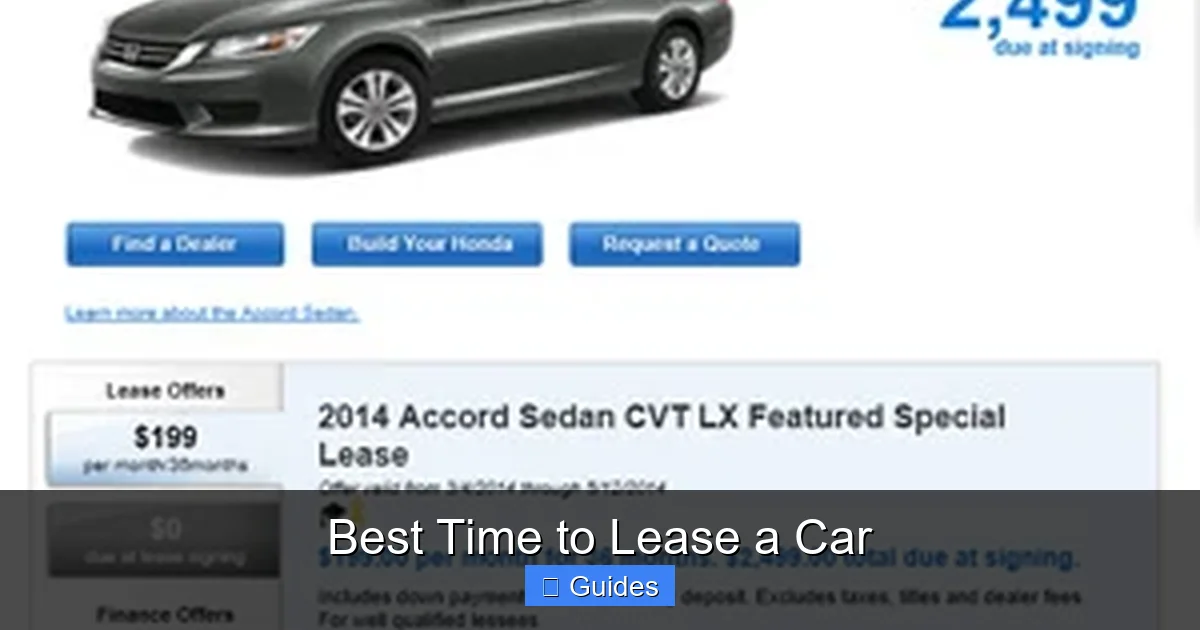
Timing is everything when leasing a car. Knowing the best time to lease a car can save you hundreds—or even thousands—of dollars over the life of your contract. From end-of-year sales to new model rollouts, strategic timing helps you lock in lower payments and better terms.
Leasing a car can be a smart financial move—especially if you enjoy driving a new vehicle every few years without the long-term commitment of ownership. But like any major financial decision, timing plays a crucial role in how much you’ll pay and what kind of deal you’ll get. Whether you’re eyeing a sleek sedan, a rugged SUV, or a fuel-efficient hybrid, knowing the best time to lease a car can make a big difference in your monthly payments, upfront costs, and overall satisfaction.
Many people assume that leasing is just about picking a car and signing a contract. But the reality is far more nuanced. Car dealerships operate on sales cycles, manufacturer incentives, and inventory goals—all of which affect pricing and availability. If you walk into a dealership at the wrong time, you might miss out on thousands in savings. On the other hand, lease during a peak discount period, and you could drive off in a brand-new car with lower payments, fewer fees, and better perks.
So, when exactly is the best time to lease a car? The answer isn’t one-size-fits-all, but there are clear patterns and strategic windows that savvy lessees use to their advantage. In this guide, we’ll break down the key timing factors—from seasonal trends to dealer psychology—so you can lease with confidence and get the most value for your money.
In This Article
- 1 Key Takeaways
- 2 📑 Table of Contents
- 3 Why Timing Matters When Leasing a Car
- 4 Best Time to Lease a Car: End of the Year (November–December)
- 5 Best Time to Lease a Car: End of the Month and Quarter
- 6 Best Time to Lease a Car: When New Models Arrive (Late Summer to Early Fall)
- 7 Best Time to Lease a Car: Holiday Weekends
- 8 Avoid These Times: When Not to Lease a Car
- 9 How to Prepare for the Best Lease Deal
- 10 Conclusion
- 11 Frequently Asked Questions
Key Takeaways
- End of the year (November–December): Dealers push to meet annual sales goals, offering generous incentives and discounts.
- End of the month and quarter: Sales teams are often under pressure to hit targets, increasing your negotiating power.
- When new models arrive (late summer to early fall): Dealerships discount outgoing models to clear inventory.
- Holiday weekends (Memorial Day, Labor Day, Fourth of July): Special promotions and lease deals are common during major holidays.
- Avoid peak buying seasons (spring and early summer): Demand is high, so incentives and flexibility are lower.
- Consider your personal financial timing: Leasing when your credit score is strong and you have a stable income improves approval odds and terms.
- Watch for manufacturer lease specials: Automakers often run limited-time lease deals with low money factors and waived fees.
📑 Table of Contents
- Why Timing Matters When Leasing a Car
- Best Time to Lease a Car: End of the Year (November–December)
- Best Time to Lease a Car: End of the Month and Quarter
- Best Time to Lease a Car: When New Models Arrive (Late Summer to Early Fall)
- Best Time to Lease a Car: Holiday Weekends
- Avoid These Times: When Not to Lease a Car
- How to Prepare for the Best Lease Deal
- Conclusion
Why Timing Matters When Leasing a Car
Leasing a car isn’t just about choosing the right model or trim. It’s also about understanding the broader market dynamics that influence pricing. Unlike buying, where you might hold onto a car for a decade, leasing typically lasts 24 to 36 months. That means you’re committing to a shorter-term financial obligation, but one that’s highly sensitive to market conditions.
One of the biggest reasons timing matters is dealer inventory goals. Most dealerships operate on monthly, quarterly, and annual sales targets. When these deadlines approach, sales managers become more motivated to move vehicles—especially those that have been sitting on the lot for a while. This creates opportunities for lessees to negotiate better terms, lower money factors (the lease equivalent of an interest rate), and reduced acquisition fees.
Another factor is manufacturer incentives. Automakers often run special lease programs to boost sales, clear out old inventory, or promote new models. These promotions can include waived security deposits, cash allowances, or even $0 down offers. But these deals are rarely advertised widely and often have strict expiration dates. If you’re not paying attention, you could miss them entirely.
Additionally, consumer demand fluctuates throughout the year. For example, convertibles and sports cars are in higher demand in the spring and summer, which can drive up lease prices. Conversely, SUVs and trucks may see more aggressive leasing deals in the winter when demand dips. Understanding these seasonal trends helps you avoid overpaying during peak times.
Finally, your personal financial situation plays a role. Leasing when your credit score is strong, your income is stable, and you have a clear understanding of your driving habits increases your chances of qualifying for the best rates. Lenders and leasing companies evaluate risk just like they would for a loan, so being in a strong financial position gives you leverage.
Best Time to Lease a Car: End of the Year (November–December)
Visual guide about Best Time to Lease a Car
Image source: mvpns.ca
If you’re looking for the best time to lease a car, the end of the year—particularly November and December—is hard to beat. This period is widely regarded as one of the most favorable times to lease due to a combination of dealer incentives, manufacturer promotions, and sales quotas.
Dealer Sales Goals and Year-End Push
Most car dealerships operate on annual sales targets set by manufacturers. These goals often include not just total units sold, but also specific quotas for leasing versus buying. As the year winds down, sales managers become increasingly aggressive in moving inventory to meet or exceed these benchmarks. This pressure translates into better deals for consumers.
For example, a dealership that’s 10% short of its annual lease target in mid-December may offer special lease incentives—such as reduced money factors, waived acquisition fees, or even gift cards—to close more deals. These offers are rarely available during slower months, making December a prime window for negotiation.
Holiday Promotions and Manufacturer Incentives
The holiday season also brings a wave of manufacturer-sponsored lease specials. Automakers like Honda, Toyota, Ford, and BMW often launch year-end lease deals in November and December to boost sales and clear out current-model-year vehicles. These promotions can include:
– $0 down leases
– Low or $0 security deposits
– Reduced monthly payments
– Cash allowances applied to the lease
For instance, in December 2023, several major brands offered lease deals on popular models like the Honda CR-V and Toyota RAV4 with monthly payments under $300 and minimal upfront costs. These deals were heavily promoted in local ads and online, but only available for a limited time.
Inventory Clearance for New Models
Another reason December is ideal is the arrival of next year’s models. As 2025 vehicles begin to roll into dealerships in late fall, 2024 models are often discounted to make room. This creates a surplus of outgoing models that dealers are eager to lease out quickly.
For example, if a 2024 Ford Explorer has been on the lot since spring, the dealer may offer a lease with a higher residual value (the car’s estimated worth at the end of the lease) to make the monthly payment more attractive. This benefits you because a higher residual means lower depreciation charges—your biggest cost in a lease.
Real-World Example: December Lease Savings
Let’s say you’re interested in leasing a 2024 Hyundai Tucson. In October, the advertised lease is $349/month with $2,999 due at signing. But in December, the same model might be available for $299/month with only $1,500 down—thanks to a year-end promotion and dealer incentives. That’s a savings of $50 per month and $1,499 upfront, totaling over $3,000 in value over a 36-month lease.
Best Time to Lease a Car: End of the Month and Quarter

Visual guide about Best Time to Lease a Car
Image source: entrepreneurshipinabox.com
While the end of the year offers the biggest savings, don’t overlook the power of timing your lease to the end of the month or quarter. These shorter cycles can also yield significant benefits, especially if you’re flexible with your schedule.
Monthly Sales Quotas
Salespeople and dealership managers are often evaluated on monthly performance. If a salesperson is close to hitting their quota at the end of the month, they may be more willing to negotiate to close a deal. This is especially true on the last few days of the month, when pressure is highest.
For example, a salesperson who needs just two more leases to earn a bonus might offer to reduce the money factor or throw in free maintenance to seal the deal. These perks aren’t always advertised, so it pays to ask.
Quarterly and Fiscal Year-End Goals
In addition to monthly targets, many dealerships have quarterly goals tied to manufacturer incentives and regional performance bonuses. The end of March, June, September, and December are particularly active periods for lease deals.
During these times, dealerships may offer special financing rates, lease cash, or loyalty bonuses to move inventory. For instance, a dealership might offer a $1,000 lease cash incentive in late June to meet a quarterly target, effectively reducing your capitalized cost (the amount you’re leasing).
How to Use This to Your Advantage
To take advantage of end-of-month or end-of-quarter timing, consider visiting dealerships in the last week of the month. Call ahead and ask if there are any current promotions or if the sales team is working toward a goal. Be polite but direct—mention that you’re ready to lease now if the terms are right.
Also, avoid Mondays and Tuesdays, when dealerships are typically slower. Fridays and Saturdays, especially near the end of the month, are often the best days to negotiate.
Best Time to Lease a Car: When New Models Arrive (Late Summer to Early Fall)
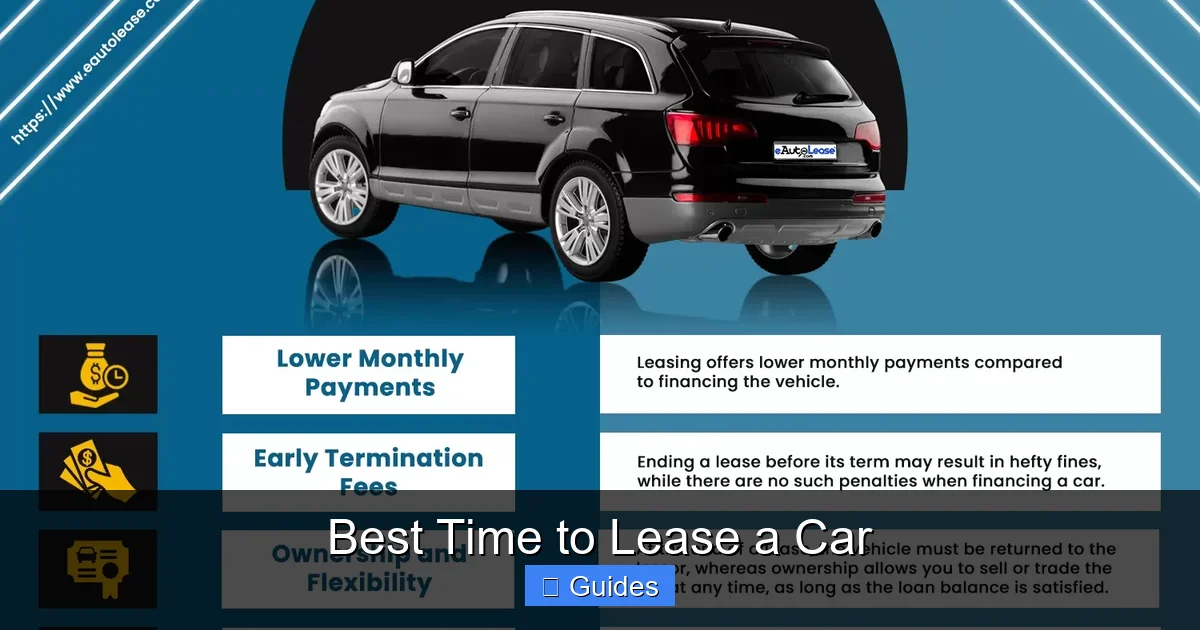
Visual guide about Best Time to Lease a Car
Image source: eautolease.com
Another prime window for leasing is when new model-year vehicles begin arriving at dealerships—typically from late summer through early fall (August to October). This period is ideal for leasing outgoing models at discounted rates.
Clearing Out Old Inventory
When 2025 models start arriving in August, 2024 models are often marked down to clear space. Dealerships want to avoid having too much overlap between old and new inventory, so they push to lease or sell the previous year’s cars quickly.
This creates a buyer’s (or lessee’s) market. For example, a 2024 Chevrolet Equinox that was originally priced at $35,000 might be available for lease with a significantly lower capitalized cost—say $32,000—because the dealer wants it gone.
Higher Residual Values and Lower Depreciation
Outgoing models often come with higher residual values in lease contracts. Since the car is already a year old, its depreciation curve is less steep. This means the leasing company estimates it will retain more of its value over the lease term, resulting in lower monthly payments.
For instance, a 2024 model leased in September might have a residual value of 60% after 36 months, compared to 55% for a 2025 model. That 5% difference can save you $20–$30 per month on a typical SUV lease.
Example: Leasing a 2024 Model in September
Imagine you’re interested in a 2024 Subaru Outback. In July, the lease is $379/month with $3,000 due at signing. But in September, after the 2025 models arrive, the same car might be available for $319/month with $2,000 down. That’s a $60 monthly savings and $1,000 less upfront—over $2,160 in total savings over three years.
Best Time to Lease a Car: Holiday Weekends
Major holiday weekends—such as Memorial Day, the Fourth of July, Labor Day, and Presidents’ Day—are also excellent times to lease a car. These periods are traditionally associated with sales events, and dealerships often roll out special lease promotions to attract shoppers.
Holiday Sales Events
During holiday weekends, dealerships frequently advertise “lease blowout” events with limited-time offers. These may include:
– $0 down leases
– Reduced money factors (sometimes as low as 0.00100, equivalent to 2.4% APR)
– Free maintenance for the lease term
– Gift cards or cash bonuses
For example, during the 2023 Labor Day weekend, several dealerships in the Midwest offered $0 down leases on compact cars like the Nissan Sentra and Hyundai Elantra, with monthly payments under $250.
Increased Competition and Advertising
Holiday weekends also see a surge in advertising from both dealerships and manufacturers. This increased competition can drive down prices as dealers try to outdo each other. You might see TV ads, radio spots, and online banners promoting lease deals that are only available for a few days.
Tips for Holiday Leasing
To make the most of holiday lease deals:
– Start researching in advance. Many promotions are announced weeks before the holiday.
– Compare offers from multiple dealerships. Use online tools to get lease quotes.
– Be ready to act quickly. These deals often have limited quantities or expiration dates.
– Ask about hidden fees. Some “$0 down” leases require a security deposit or acquisition fee.
Avoid These Times: When Not to Lease a Car
While there are ideal times to lease, there are also periods when you should think twice. Avoid leasing during peak demand seasons or when incentives are scarce.
Spring and Early Summer (April–June)
This is traditionally one of the busiest times for car sales. With warmer weather and tax refunds, many consumers are in the market for new vehicles. As a result, demand is high, and dealers have less motivation to offer deep discounts.
For example, convertibles, sports cars, and outdoor-friendly SUVs often see higher lease prices in May and June. Dealers know shoppers are eager to drive with the top down or head to the mountains, so they don’t need to sweeten the deal.
Right After Major Model Updates
If a car has just received a major redesign or refresh, leasing it immediately may not be the best idea. New models often come with higher prices and fewer incentives, as demand is strong and inventory is limited.
For instance, when the 2024 Ford F-150 was redesigned in early 2023, lease deals were scarce for the first few months. It wasn’t until late summer that incentives began to appear.
Personal Financial Instability
Even if it’s a great time in the market, leasing isn’t advisable if your personal finances aren’t in order. Avoid leasing if you’re between jobs, have a low credit score, or are dealing with high debt. Lenders may charge higher money factors or require a larger down payment, negating any seasonal savings.
How to Prepare for the Best Lease Deal
Timing is important, but so is preparation. To get the best lease deal, follow these steps:
Check Your Credit Score
Your credit score directly affects your lease terms. Aim for a score of 700 or higher to qualify for the best money factors. Check your credit report for errors and pay down debts before applying.
Research Lease Deals Online
Use websites like Edmunds, Kelley Blue Book, and Leasehackr to find current lease specials. These sites often list manufacturer incentives, dealer cash, and real-world lease quotes.
Get Pre-Approved
Some lenders offer pre-approval for leases, which gives you negotiating power. It also helps you understand your budget and avoid overspending.
Negotiate the Capitalized Cost
Just like with a purchase, you can negotiate the price of the car in a lease. Aim to get the capitalized cost as low as possible—this reduces your monthly payment.
Understand Lease Terms
Pay attention to mileage limits, wear-and-tear policies, and early termination fees. Choose a lease that fits your driving habits and lifestyle.
Conclusion
Leasing a car doesn’t have to be a guessing game. By understanding the best time to lease a car—whether it’s the end of the year, a holiday weekend, or when new models arrive—you can save thousands and drive away in a vehicle that fits your needs and budget.
The key is to stay informed, be flexible, and act when the market is in your favor. Combine strategic timing with solid preparation—like checking your credit and researching deals—and you’ll be in the driver’s seat of a great lease agreement.
Remember, the best lease deal isn’t just about the lowest monthly payment. It’s about the total cost, the terms, and the value you get over the life of the contract. With the right timing and a little effort, you can lease a car that feels like a win—every month.
Frequently Asked Questions
Is it better to lease a car at the end of the year?
Yes, the end of the year (November–December) is often the best time to lease a car. Dealers are pushing to meet annual sales goals, and manufacturers offer special lease promotions to clear out current models.
Can I negotiate a lease deal?
Absolutely. You can negotiate the capitalized cost, money factor, and fees just like with a purchase. Being prepared and shopping around gives you the upper hand.
Are lease deals available during holidays?
Yes, holiday weekends like Memorial Day, Fourth of July, and Labor Day often feature special lease promotions, including $0 down offers and reduced payments.
Should I lease a car when new models come out?
Yes, but focus on leasing the outgoing model. When new models arrive, dealers discount previous-year vehicles to clear inventory, resulting in better lease terms.
What credit score do I need to lease a car?
A credit score of 700 or higher is ideal for the best lease rates. Scores below 650 may result in higher money factors or require a larger down payment.
Can I lease a car with no money down?
Yes, many lease deals offer $0 down options, especially during promotions. However, you may still need to pay taxes, registration, and acquisition fees upfront.

At CarLegit, we believe information should be clear, factual, and genuinely helpful. That’s why every guide, review, and update on our website is created with care, research, and a strong focus on user experience.