
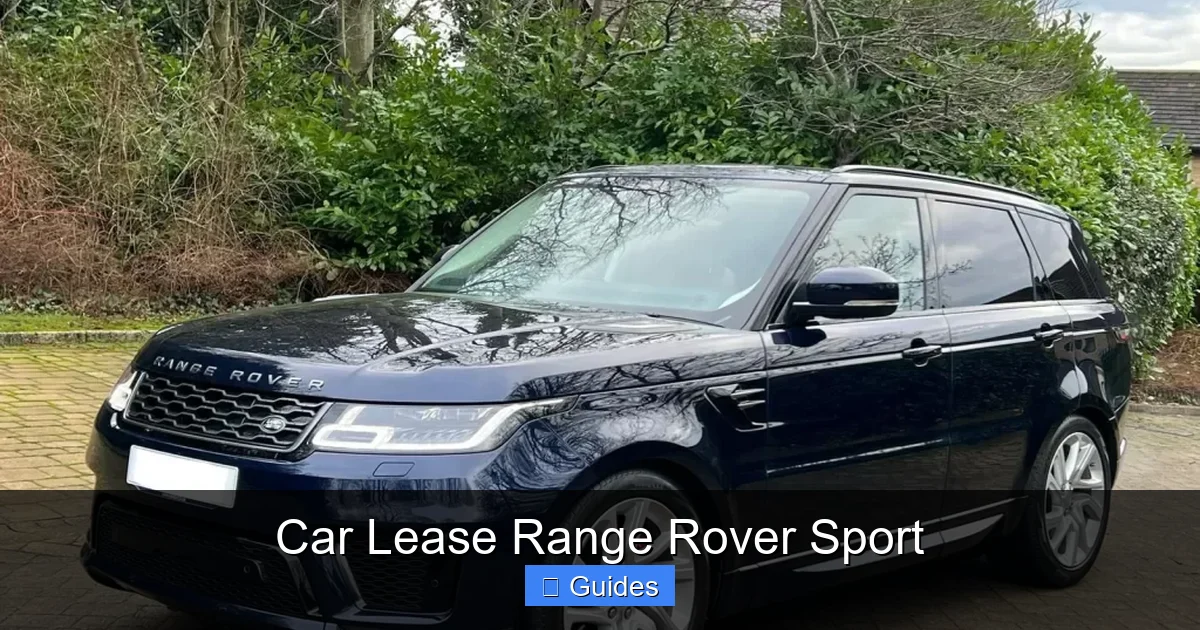
Leasing a Range Rover Sport offers a smart way to enjoy luxury, performance, and advanced tech without the long-term commitment of ownership. With lower monthly payments, warranty coverage, and the ability to upgrade every few years, it’s a popular choice for drivers who want premium driving experiences. This guide covers everything you need to know about a car lease Range Rover Sport—from costs and models to tips for getting the best deal.
In This Article
- 1 Key Takeaways
- 2 📑 Table of Contents
- 3 Why Lease a Range Rover Sport?
- 4 Understanding How Car Leasing Works
- 5 Range Rover Sport Lease Options and Models
- 6 Cost of Leasing a Range Rover Sport
- 7 Tips for Getting the Best Range Rover Sport Lease Deal
- 8 What Happens at the End of Your Lease?
- 9 Is Leasing a Range Rover Sport Right for You?
- 10 Final Thoughts
- 11 Frequently Asked Questions
Key Takeaways
- Lower Monthly Payments: Leasing a Range Rover Sport typically costs less per month than buying, freeing up your budget for other expenses.
- Access to Latest Features: Lease terms usually last 2-4 years, letting you drive the newest models with updated tech, safety, and design.
- Warranty Coverage Included: Most leases fall within the manufacturer’s warranty period, so repairs and maintenance are often covered.
- Mileage and Wear Limits Apply: Leases come with annual mileage caps (usually 10,000–15,000 miles) and rules about vehicle condition—exceeding them can result in fees.
- No Equity at End of Lease: Unlike buying, you don’t build ownership value, but you also avoid depreciation risk and resale hassle.
- Flexible Upgrade Options: At the end of your lease, you can return the vehicle, lease a new one, or sometimes purchase it at a predetermined price.
- Credit and Down Payment Matter: Strong credit can secure better lease rates, and a larger down payment (cap cost reduction) lowers monthly costs.
📑 Table of Contents
- Why Lease a Range Rover Sport?
- Understanding How Car Leasing Works
- Range Rover Sport Lease Options and Models
- Cost of Leasing a Range Rover Sport
- Tips for Getting the Best Range Rover Sport Lease Deal
- What Happens at the End of Your Lease?
- Is Leasing a Range Rover Sport Right for You?
- Final Thoughts
Why Lease a Range Rover Sport?
So, you’re thinking about a Range Rover Sport. Maybe you’ve admired its bold design, powerful performance, or the way it glides down the highway like it owns the road. But instead of buying outright, you’re considering a lease. That’s a smart move—especially if you want luxury without the long-term financial burden.
Leasing a Range Rover Sport gives you access to one of the most prestigious SUVs on the market, with lower monthly payments than financing a purchase. You’ll enjoy cutting-edge technology, plush interiors, and off-road capability—all while staying under warranty and avoiding major repair costs. Plus, when your lease ends, you can simply return the vehicle and upgrade to the latest model. No stress about selling, no depreciation worries.
But leasing isn’t for everyone. It works best if you like driving new cars every few years, don’t exceed average mileage, and prefer predictable monthly expenses. If you’re someone who puts 20,000 miles a year on your vehicle or loves customizing your ride, buying might be better. But for many, a car lease Range Rover Sport is the perfect blend of luxury, flexibility, and value.
Understanding How Car Leasing Works
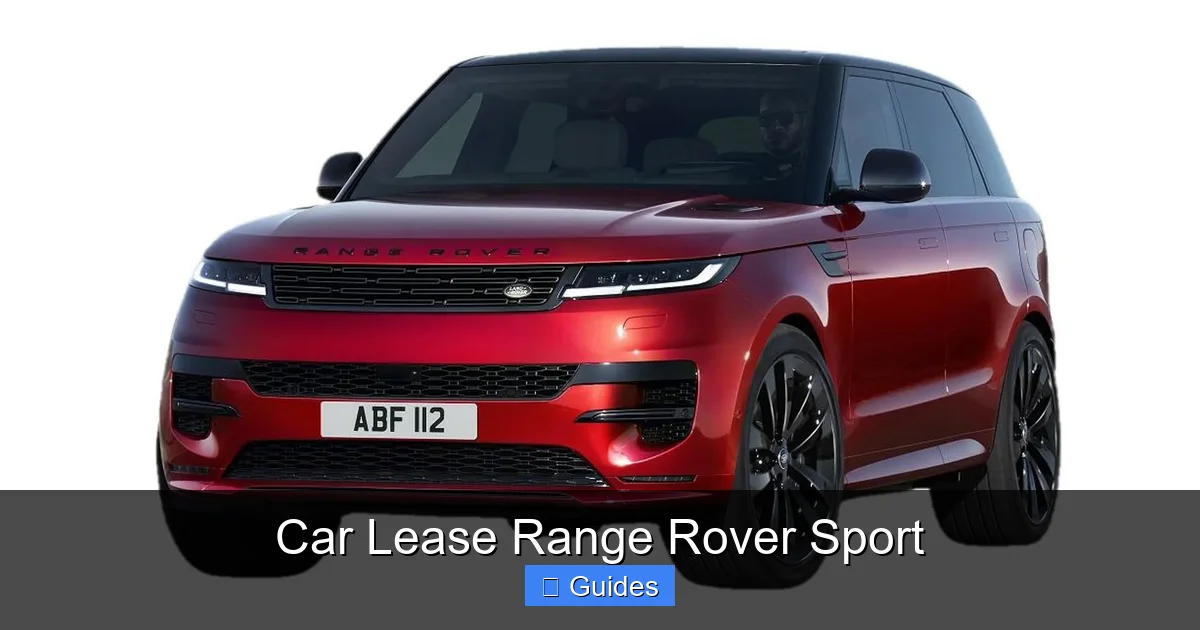
Visual guide about Car Lease Range Rover Sport
Image source: leasecar.uk
Before diving into the specifics of a Range Rover Sport lease, let’s break down how leasing actually works. Think of it like renting a high-end apartment. You pay to use it for a set time, but you don’t own it. At the end of the lease, you return it—unless you choose to buy it.
A lease agreement typically lasts 24 to 48 months. During that time, you make monthly payments based on the vehicle’s depreciation—the difference between its current value and its estimated value at the end of the lease (called the “residual value”). For example, if a Range Rover Sport costs $80,000 new and is expected to be worth $50,000 after three years, your payments cover that $30,000 drop in value, plus interest and fees.
Your monthly payment also depends on the “money factor,” which is the lease equivalent of an interest rate. A lower money factor means lower payments. Your credit score plays a big role here—better credit usually gets you better terms.
You’ll also pay an upfront cost, often called a “drive-off fee,” which includes the first month’s payment, a security deposit, taxes, and other fees. Some dealers offer “sign-and-drive” deals where you pay little or nothing at signing—great for cash flow, but watch for higher monthly payments.
Lease vs. Buy: What’s the Difference?
The biggest difference between leasing and buying is ownership. When you buy, you own the car (once the loan is paid off) and can drive it as long as you want, modify it, or sell it. When you lease, you’re essentially paying for the car’s use during the lease term.
Buying makes sense if you:
– Plan to keep the car for 5+ years
– Drive more than 15,000 miles annually
– Want to customize or modify the vehicle
– Prefer building equity
Leasing makes sense if you:
– Want lower monthly payments
– Enjoy driving new cars every few years
– Prefer warranty-covered maintenance
– Don’t want to deal with resale
For many Range Rover Sport fans, leasing offers the best of both worlds: luxury and performance without the long-term commitment.
Range Rover Sport Lease Options and Models
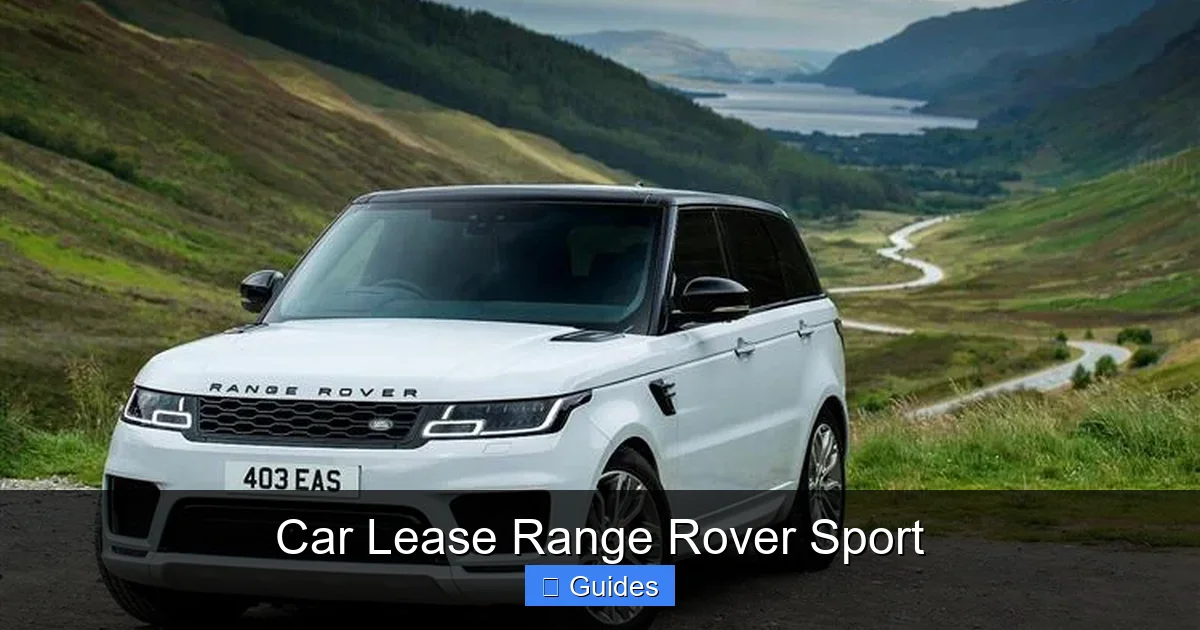
Visual guide about Car Lease Range Rover Sport
Image source: ssl.caranddriving.com
The Range Rover Sport comes in several trims and powertrains, giving you plenty of options when leasing. Whether you want a fuel-efficient hybrid, a high-performance V8, or the latest electric tech, there’s a model for you.
Popular Trims Available for Lease
As of 2024, the Range Rover Sport lineup includes:
– **Range Rover Sport SE:** The entry-level trim, offering luxury essentials like leather seats, a 13-inch touchscreen, and all-wheel drive. It’s powered by a 3.0L inline-6 mild hybrid engine with around 395 horsepower.
– **Range Rover Sport HSE:** Adds premium features like upgraded audio, ambient lighting, and enhanced driver assistance. Still uses the 3.0L engine but with more comfort and tech.
– **Range Rover Sport Autobiography:** The top-tier luxury experience. Think massaging seats, premium Meridian sound, and exclusive design details. Available with the 3.0L or a 4.4L V8.
– **Range Rover Sport P530 V8:** For performance lovers. This model packs a 4.4L twin-turbo V8 with 523 horsepower, launching from 0 to 60 mph in under 5 seconds. It’s a beast on the road—and off.
– **Range Rover Sport PHEV (Plug-in Hybrid):** Combines a 3.0L engine with an electric motor for up to 48 miles of electric-only range. Great for city driving and reducing fuel costs.
Most leases are available on the SE, HSE, and Autobiography trims. The V8 and PHEV models may have higher monthly payments due to their performance and tech, but they offer a thrilling drive.
Electric and Hybrid Options
Land Rover is pushing toward electrification, and the Range Rover Sport PHEV is a great example. With its plug-in hybrid system, you can drive short distances on electric power alone—perfect for commuting or school runs. When the battery runs low, the gas engine kicks in seamlessly.
While a fully electric Range Rover Sport isn’t available yet (as of 2024), rumors suggest one is coming soon. If you’re leasing now, you might consider the PHEV as a bridge to full electric driving. It qualifies for federal and state tax incentives in some regions, which can reduce your effective lease cost.
Cost of Leasing a Range Rover Sport
Visual guide about Car Lease Range Rover Sport
Image source: autoleasecentrale.nl
Now, let’s talk numbers. How much does it actually cost to lease a Range Rover Sport? The answer depends on the model, lease term, down payment, and your credit.
Average Monthly Lease Payments
As of 2024, here’s what you can expect:
– **Range Rover Sport SE:** $899–$1,199 per month for 36 months with $5,000 down
– **Range Rover Sport HSE:** $1,099–$1,399 per month with $5,000 down
– **Range Rover Sport Autobiography:** $1,399–$1,799 per month with $5,000 down
– **Range Rover Sport P530 V8:** $1,599–$2,099 per month with $5,000 down
These are estimates and can vary by region, dealer incentives, and current promotions. Some dealers offer “lease specials” with lower payments or reduced down payments—especially at the end of the model year.
Factors That Affect Lease Cost
Several things influence your monthly payment:
– **Residual Value:** Higher residual values (the car’s expected worth at lease end) mean lower payments. The Range Rover Sport holds its value well, which helps.
– **Money Factor:** This is the lease interest rate. A money factor of 0.00125 is roughly equivalent to a 3% APR. Lower is better.
– **Down Payment (Cap Cost Reduction):** Putting more money down lowers your monthly payment. But be cautious—if the car is totaled, you don’t get that money back.
– **Lease Term:** Shorter leases (24 months) often have higher monthly payments but lower total cost. Longer leases (48 months) spread out the cost but may have higher interest.
– **Mileage Allowance:** Most leases include 10,000–15,000 miles per year. Going over incurs fees (e.g., $0.25 per mile). Choose a mileage limit that matches your driving habits.
Hidden Fees to Watch For
Leasing isn’t always as simple as the advertised monthly payment. Watch out for:
– **Acquisition Fee:** A one-time fee (usually $895–$1,095) charged by the leasing company.
– **Disposition Fee:** Charged at lease end if you don’t buy the car (typically $300–$500).
– **Excess Wear and Tear:** Scratches, dents, or upholstery damage beyond “normal” use can lead to charges.
– **Taxes and Registration:** These are often rolled into the lease or paid upfront.
Always read the fine print and ask for a full breakdown of costs before signing.
Tips for Getting the Best Range Rover Sport Lease Deal
Want to lease a Range Rover Sport without overpaying? Here’s how to get the best deal.
Time Your Lease Right
Dealers often offer the best lease deals at the end of the model year (August–October) or during holiday sales events. That’s when they want to clear out inventory for the new year. You might find lower payments, waived fees, or even free maintenance packages.
Negotiate the Cap Cost
The “capitalized cost” is the price of the car you’re leasing. Just like when buying, you can negotiate this down. Research the invoice price (what the dealer paid) and aim to lease at or below that. Use online tools like Edmunds or Kelley Blue Book to find fair market values.
Improve Your Credit Score
Your credit score affects your money factor. A score above 720 usually qualifies for the best rates. If your score is lower, consider paying down debt or fixing errors on your credit report before applying.
Consider a Higher Down Payment (But Not Too High)
Putting more money down lowers your monthly payment. But don’t put down more than you’re comfortable losing. If the car is totaled in an accident, your insurance pays the lease company—not you. Gap insurance can help, but it’s an extra cost.
Choose the Right Mileage Limit
Estimate your annual mileage honestly. If you drive 12,000 miles a year, don’t lease with a 10,000-mile limit. The overage fees will add up. Some leases offer prepaid mileage packages—pay a bit more upfront to avoid per-mile charges later.
Read the Lease Agreement Carefully
Don’t just sign because the monthly payment looks good. Check for:
– Early termination fees
– Wear and tear guidelines
– Maintenance requirements (some leases require you to follow the service schedule)
– Option to purchase at lease end
If anything is unclear, ask questions. A good dealer will explain everything.
What Happens at the End of Your Lease?
After 2–4 years, your lease term ends. Now what? You have three main options.
Return the Vehicle
The most common choice. You bring the Range Rover Sport back to the dealer, have it inspected for excess wear and mileage, and walk away. If everything’s in order, you’re done. This is ideal if you want to lease a new model or switch brands.
Lease a New Range Rover Sport
Many drivers love the Range Rover Sport so much they lease another one. Dealers often offer loyalty incentives—like reduced fees or lower payments—for returning customers. You can upgrade to a newer model with updated tech and design.
Buy the Vehicle
At the end of the lease, you can purchase the car at its residual value (the pre-set price). This is a good option if:
– The car has held its value well
– You’ve grown attached to it
– Market prices for used Range Rover Sports are high
To buy, you’ll pay the residual value plus any fees. You can finance it through the dealer or your bank.
Inspection and Fees
Before returning the car, schedule a pre-inspection. The dealer will check for damage, mileage, and maintenance records. Address minor issues (like a small dent) yourself to avoid fees. Keep all service records—they prove you maintained the vehicle properly.
Is Leasing a Range Rover Sport Right for You?
Leasing a Range Rover Sport isn’t just about luxury—it’s about lifestyle. It’s for people who value performance, comfort, and the latest tech. But it’s not for everyone.
Ask yourself:
– Do I drive less than 15,000 miles a year?
– Do I prefer lower monthly payments?
– Am I okay with not owning the car?
– Do I like driving a new vehicle every few years?
If you answered yes, a car lease Range Rover Sport could be a great fit. You’ll enjoy a premium SUV with minimal hassle and maximum style.
But if you’re a high-mileage driver, love modifying your car, or plan to keep it for a decade, buying might be better. Do the math, compare total costs, and choose what fits your life.
Final Thoughts
Leasing a Range Rover Sport offers a compelling mix of luxury, performance, and financial flexibility. With lower monthly payments, warranty coverage, and the chance to drive the latest models, it’s a smart choice for many drivers. Just be sure to understand the terms, choose the right model, and negotiate wisely.
Whether you’re commuting in the city, taking weekend road trips, or impressing clients, a Range Rover Sport delivers. And with a lease, you can enjoy it all—without the long-term commitment.
So, if you’ve been dreaming of a Range Rover Sport, now might be the perfect time to lease one. Do your research, shop around, and drive away in style.
Frequently Asked Questions
How much does it cost to lease a Range Rover Sport?
Monthly lease payments for a Range Rover Sport typically range from $899 to $2,099, depending on the trim, lease term, down payment, and your credit. Most leases require $3,000–$7,000 due at signing.
Can I lease a Range Rover Sport with bad credit?
Yes, but you may face higher money factors (interest rates) and larger down payments. Some dealers work with subprime lenders, but expect less favorable terms. Improving your credit before applying can save you money.
What happens if I go over my mileage limit?
Exceeding your annual mileage limit (usually 10,000–15,000 miles) results in per-mile fees, often $0.20–$0.25. For example, driving 5,000 extra miles could cost $1,000–$1,250 at lease end.
Can I modify a leased Range Rover Sport?
Most lease agreements prohibit modifications. Adding aftermarket parts like spoilers, wheels, or performance chips can lead to fees or require you to restore the car to original condition before return.
Is maintenance included in a Range Rover Sport lease?
Not usually, but the vehicle is covered under warranty during the lease term. Some dealers offer prepaid maintenance packages. You’re responsible for routine service like oil changes and tire rotations.
Can I end my lease early?
Yes, but early termination usually involves fees equivalent to remaining payments. Some leases allow transfer to another person (lease assumption), which can reduce or eliminate penalties.

At CarLegit, we believe information should be clear, factual, and genuinely helpful. That’s why every guide, review, and update on our website is created with care, research, and a strong focus on user experience.