

Leasing a car with a low credit score is possible, but your options may be limited. Most lenders prefer a minimum credit score of 660, though some accept scores as low as 580—especially with a larger down payment or co-signer.
So, you’re thinking about leasing a car—but you’re not sure if your credit score is good enough. Maybe you’ve heard conflicting advice: “You need perfect credit!” or “Anyone can lease a car!” The truth? It’s somewhere in between. While you don’t need a flawless credit history to lease a vehicle, your credit score does play a major role in whether you’ll be approved—and what kind of deal you’ll get.
Leasing a car is different from buying. Instead of owning the vehicle, you’re essentially renting it for a set period (usually 24 to 36 months), paying for its depreciation during that time plus fees and interest. Because you’re not building equity, lenders are extra cautious about who they lease to. That’s where your credit score comes in. It’s one of the first things a leasing company checks to assess your reliability as a borrower. A higher score signals lower risk, which translates to better lease terms—lower monthly payments, smaller down payments, and fewer restrictions.
But don’t panic if your score isn’t perfect. Many people successfully lease cars with average or even below-average credit. The key is understanding what lenders are looking for, knowing your options, and taking steps to strengthen your application. In this guide, we’ll break down everything you need to know about the minimum credit score to lease a car, including real-world examples, insider tips, and actionable strategies to improve your chances—no matter where you stand on the credit spectrum.
In This Article
- 1 Key Takeaways
- 2 📑 Table of Contents
- 3 What Is the Minimum Credit Score to Lease a Car?
- 4 How Lenders Evaluate Your Credit for a Car Lease
- 5 Can You Lease a Car with Bad Credit?
- 6 Tips to Improve Your Chances of Leasing with a Low Credit Score
- 7 What to Expect When Leasing with a Low Credit Score
- 8 Alternatives to Leasing with Bad Credit
- 9 Final Thoughts: Is Leasing Right for You?
- 10 Frequently Asked Questions
- 10.1 What is the lowest credit score to lease a car?
- 10.2 Can I lease a car with a 550 credit score?
- 10.3 Will leasing a car help improve my credit score?
- 10.4 Do all dealerships check your credit before leasing?
- 10.5 Can I negotiate lease terms with bad credit?
- 10.6 Is it better to lease or buy with bad credit?
Key Takeaways
- Typical minimum credit score to lease a car is 660: This is considered “good” credit by most lenders and increases your chances of approval with favorable terms.
- Some dealers accept scores as low as 580: Subprime lenders may work with borrowers in the “fair” credit range, but expect higher interest rates and stricter terms.
- Down payments can offset lower credit scores: Putting more money down reduces the lender’s risk and may help you qualify even with a lower score.
- A co-signer improves approval odds: Having someone with strong credit co-sign your lease can boost your application, especially if your score is below 600.
- Credit history matters as much as the number: Lenders look at payment history, debt-to-income ratio, and recent credit inquiries—not just your FICO or VantageScore.
- Shop around for the best lease deal: Different dealerships and lenders have varying credit requirements—compare offers before signing.
- Improving your credit takes time—but it pays off: Even small improvements (e.g., paying down balances or fixing errors) can unlock better lease terms within months.
📑 Table of Contents
- What Is the Minimum Credit Score to Lease a Car?
- How Lenders Evaluate Your Credit for a Car Lease
- Can You Lease a Car with Bad Credit?
- Tips to Improve Your Chances of Leasing with a Low Credit Score
- What to Expect When Leasing with a Low Credit Score
- Alternatives to Leasing with Bad Credit
- Final Thoughts: Is Leasing Right for You?
What Is the Minimum Credit Score to Lease a Car?
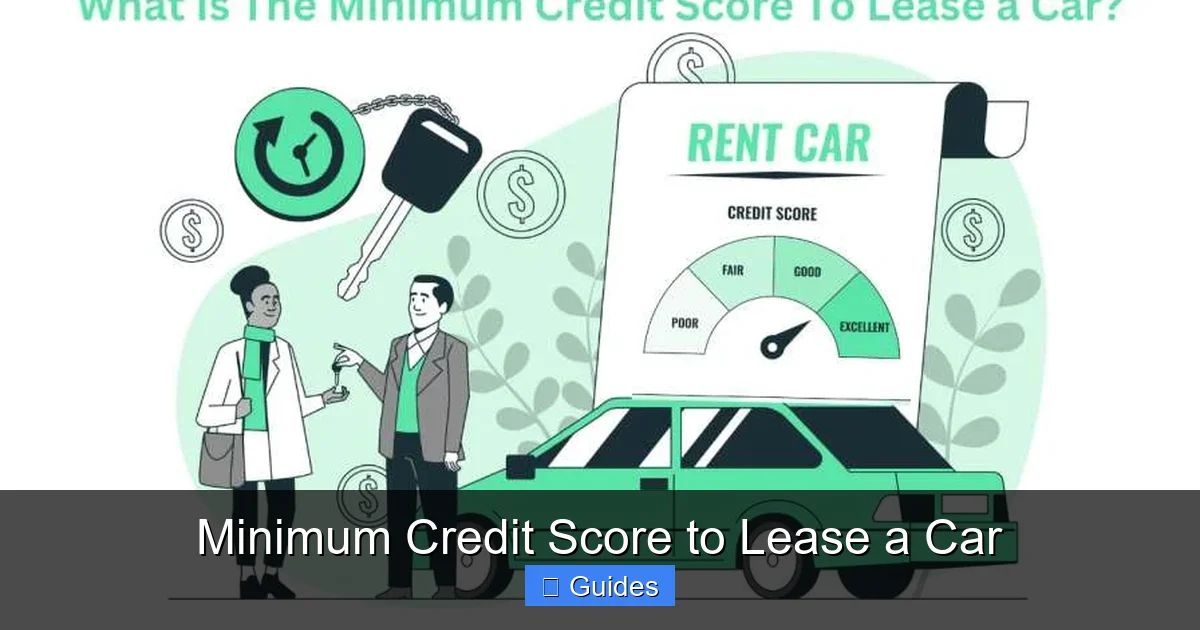
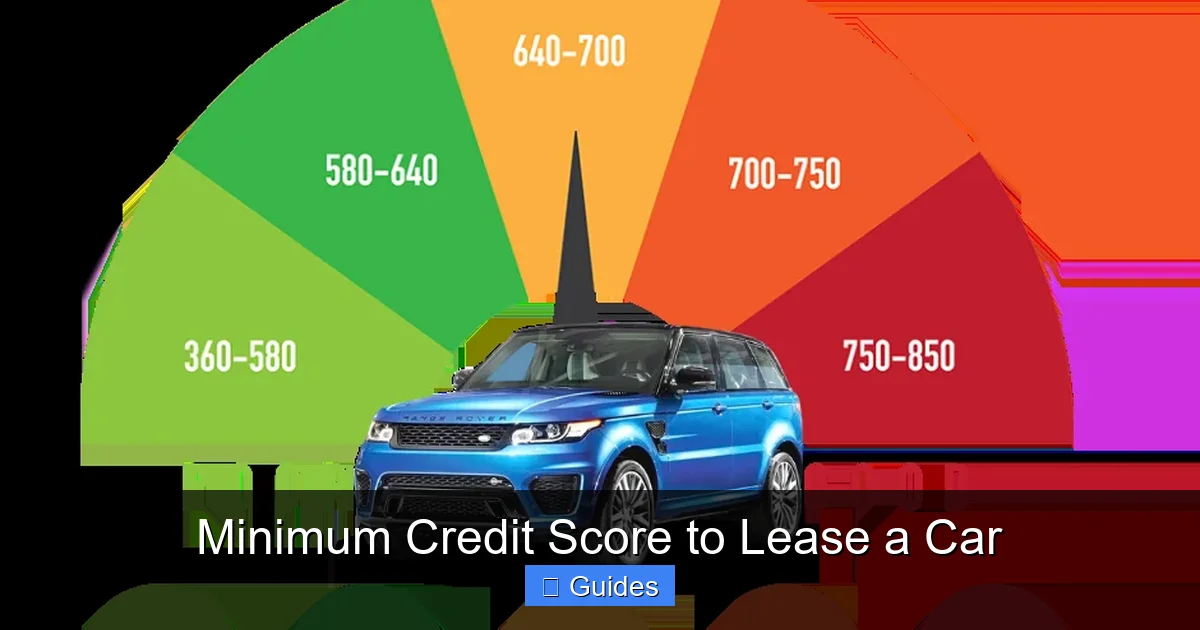
When it comes to leasing a car, there’s no single “magic number” that applies to every dealership or lender. However, most experts agree that a credit score of **660 or higher** is the sweet spot for getting approved with reasonable terms. This falls into the “good” credit range according to FICO, which is used by about 90% of top lenders.
But here’s the good news: you don’t necessarily need a 660 to lease a car. Some dealerships and subprime lenders work with borrowers who have scores as low as **580**, which is considered “fair” credit. However, the lower your score, the more you’ll likely pay in interest and fees—and the fewer vehicle options you’ll have.
Let’s break it down by credit tier:
– **Excellent (720–850):** You’ll qualify for the best lease deals, lowest interest rates, and minimal down payments. You may even get incentives like waived acquisition fees.
– **Good (660–719):** Still solid approval odds with competitive terms. You might need a small down payment, but monthly payments will be manageable.
– **Fair (580–659):** You can lease, but expect higher interest rates, larger down payments, and possibly restrictions on vehicle type or mileage.
– **Poor (Below 580):** Leasing becomes much harder. You may need a co-signer, a large down payment, or to work with specialized subprime lenders.
For example, Sarah has a credit score of 645. She walks into a dealership wanting to lease a mid-size SUV. The salesperson runs her credit and tells her she qualifies—but her money factor (the lease equivalent of an interest rate) is 0.0035, which translates to about 8.4% APR. That’s significantly higher than the 0.0015 (3.6% APR) offered to someone with a 720 score. Over a 36-month lease, that difference could cost her an extra $1,200 in interest.
On the other hand, Mike has a score of 590. He’s approved at a different dealership, but he’s required to put down $3,000—twice the usual amount—and his monthly payment is $75 higher than average. Still, he gets the car he needs, and he uses the lease period to rebuild his credit.
So while 660 is the general benchmark, your actual experience will depend on the lender, the dealership, and how you present your financial profile.
How Lenders Evaluate Your Credit for a Car Lease
Visual guide about Minimum Credit Score to Lease a Car
Image source: getgovgrants.com
Your credit score is just one piece of the puzzle. Lenders don’t just look at the number—they analyze your entire credit profile to assess risk. Here’s what they’re really checking:
Payment History (35% of Your Score)
This is the biggest factor in your credit score. Lenders want to see that you’ve paid past debts on time. Even one late payment (30+ days late) can hurt your score and raise red flags. If you’ve had recent delinquencies, especially on auto loans or leases, that could be a dealbreaker.
Credit Utilization (30% of Your Score)
This measures how much of your available credit you’re using. Ideally, you want to keep this below 30%. For example, if you have a $10,000 credit limit across all cards, try not to carry a balance over $3,000. High utilization suggests financial stress and makes lenders nervous.
Length of Credit History (15% of Your Score)
Lenders prefer borrowers with a longer track record of managing credit. If you’re new to credit or have only opened accounts recently, you may be seen as higher risk—even if your score is decent.
Credit Mix and New Credit (10% Each)
Having a mix of credit types (credit cards, loans, mortgages) can help, but it’s not essential. More importantly, avoid opening new credit accounts right before applying for a lease. Multiple hard inquiries in a short time can lower your score and signal financial instability.
Debt-to-Income Ratio (DTI)
While not part of your credit score, DTI is crucial for leasing. It compares your monthly debt payments to your gross monthly income. Most lenders prefer a DTI below 35–40%. For example, if you earn $4,000 a month and pay $1,200 in debts (including rent, loans, and credit cards), your DTI is 30%—acceptable. But if it’s 50%, you may struggle to get approved.
Let’s say Jessica has a credit score of 670—technically “good”—but she’s maxed out her credit cards and just opened a new store card last month. Her DTI is 45%. Even though her score looks okay, the lender sees high risk and may reject her application or offer less favorable terms.
Can You Lease a Car with Bad Credit?

Visual guide about Minimum Credit Score to Lease a Car
Image source: creditstrong.com
Yes—but it’s not easy, and it won’t be cheap. If your credit score is below 600, you’re in the “subprime” category, and most traditional lenders will hesitate to approve you. However, there are still paths to leasing a car, even with bad credit.
Work with Subprime Lenders
Some dealerships partner with specialized finance companies that cater to borrowers with poor credit. These lenders are more willing to take on risk, but they charge higher interest rates and fees. For example, a lease with a 0.0045 money factor (about 10.8% APR) is common for subprime borrowers.
Make a Larger Down Payment
Putting more money down reduces the amount you’re financing, which lowers the lender’s risk. A larger down payment—sometimes called a “cap cost reduction”—can help offset a low credit score. For instance, instead of the typical $2,000 down, you might put $4,000 or more. This shows commitment and improves your approval odds.
Get a Co-Signer
A co-signer is someone with good credit who agrees to take responsibility for the lease if you default. This can dramatically increase your chances of approval. Just remember: if you miss payments, it hurts both your credit and your co-signer’s. Choose someone you trust—and who trusts you.
Consider a Cosigner or Guarantor
Some lenders allow a guarantor instead of a co-signer. A guarantor doesn’t sign the lease but promises to pay if you can’t. This can be a good middle ground if you don’t want to involve someone fully in the contract.
Lease a Less Expensive Vehicle
Luxury cars and high-end SUVs are harder to lease with bad credit because they’re more expensive and riskier for lenders. Opting for a compact car, sedan, or used vehicle can improve your chances. For example, leasing a Toyota Corolla is far easier than leasing a BMW X5—even with the same credit score.
Rebuild Your Credit First
If you’re not in a rush, consider waiting a few months to improve your credit before applying. Pay down balances, dispute errors on your credit report, and avoid new credit applications. Even a 30–50 point increase can move you into a better tier and open up more options.
Tips to Improve Your Chances of Leasing with a Low Credit Score
Visual guide about Minimum Credit Score to Lease a Car
Image source: images.squarespace-cdn.com
You don’t have to accept the first offer you get—or give up entirely. With the right strategy, you can boost your approval odds and get a fairer deal, even with less-than-perfect credit.
Check Your Credit Report Early
Before you start shopping, pull your free credit reports from AnnualCreditReport.com. Look for errors—like accounts you didn’t open or payments marked late when they were on time. Dispute any inaccuracies. Fixing even one error can raise your score by 20–50 points.
Pay Down Credit Card Balances
Lowering your credit utilization is one of the fastest ways to improve your score. If you can pay off a chunk of your credit card debt before applying, do it. For example, reducing a $5,000 balance to $2,000 on a $10,000 limit drops your utilization from 50% to 20%—a big improvement.
Avoid New Credit Applications
Each hard inquiry can knock 3–5 points off your score. If you’re planning to lease a car, hold off on applying for new credit cards, personal loans, or store financing. Wait until after you’ve secured your lease.
Save for a Bigger Down Payment
The more you put down, the less you need to finance. Aim for at least 10–20% of the vehicle’s value. This reduces the lease’s capitalized cost and shows lenders you’re serious.
Shop Around—Don’t Settle for the First Offer
Different dealerships work with different lenders. One might reject you, while another approves you with better terms. Get pre-approved by multiple lenders or use online leasing platforms to compare offers.
Negotiate the Money Factor
The money factor is like the interest rate on a lease. It’s often hidden in the fine print. Ask for it directly and compare it to the average for your credit tier. If it’s too high, negotiate or walk away.
Consider a Shorter Lease Term
A 24-month lease has lower monthly payments than a 36-month lease, but it also means higher depreciation costs. However, shorter terms can be easier to qualify for because the lender’s risk is lower.
What to Expect When Leasing with a Low Credit Score
If you do get approved with a low credit score, be prepared for some trade-offs. Here’s what you might face:
– **Higher Monthly Payments:** Due to higher interest rates, your payments could be $50–$150 more per month than someone with good credit.
– **Larger Down Payment:** You may need to put down $2,000–$5,000 or more, depending on the vehicle and lender.
– **Mileage Restrictions:** Some subprime leases cap your annual mileage at 10,000 miles instead of the standard 12,000–15,000.
– **Wear-and-Tear Fees:** You might be charged more for excess wear, so keep the car in good condition.
– **Gap Insurance Required:** This covers the difference if the car is totaled and the insurance payout is less than what you owe. It’s often mandatory for low-credit leases.
– **Limited Vehicle Selection:** You may be restricted to certain makes, models, or trim levels.
For example, David has a 590 credit score and wants to lease a Honda Accord. He’s approved, but his monthly payment is $420—$90 more than the average. He puts down $3,500 and agrees to a 10,000-mile annual limit. He also pays $25 extra per month for gap insurance. It’s not ideal, but it gets him into a reliable car while he works on rebuilding his credit.
Alternatives to Leasing with Bad Credit
If leasing proves too difficult or expensive, consider these alternatives:
Buy a Used Car with Cash or a Small Loan
Used cars depreciate slower than new ones, and you can often find reliable models for under $15,000. Paying cash avoids interest entirely. If you need a loan, a shorter-term auto loan (36–48 months) with a co-signer might be easier to get than a lease.
Rent-to-Own or Lease-to-Own Programs
Some dealerships offer rent-to-own options where a portion of your payments goes toward ownership. These are rare and often come with high fees, but they can be a path to ownership if traditional financing isn’t an option.
Use a Credit Union
Credit unions are often more flexible than banks or captive lenders (like Toyota Financial or Ford Credit). They may offer lower rates and consider your overall financial picture, not just your credit score.
Wait and Rebuild Your Credit
Sometimes, the best move is to wait. Use the next 6–12 months to pay bills on time, reduce debt, and build a stronger credit profile. When you return to lease, you’ll qualify for much better terms.
Final Thoughts: Is Leasing Right for You?
Leasing a car can be a smart financial move—if you understand the terms and your credit situation. While the minimum credit score to lease a car is often around 660, it’s not a strict cutoff. With preparation, negotiation, and the right strategy, you can lease even with fair or poor credit.
But remember: leasing isn’t for everyone. It works best if you:
– Prefer driving a new car every few years
– Don’t drive excessive miles
– Want lower monthly payments than buying
– Are okay with not owning the vehicle
If you’re unsure, run the numbers. Compare the total cost of leasing versus buying over the same period. Factor in down payments, monthly costs, fees, and potential penalties.
And no matter your credit score, always read the fine print. Ask about the money factor, residual value, acquisition fee, disposition fee, and early termination penalties. A good lease deal should be transparent and fair.
Ultimately, your credit score is just one part of your financial story. With patience and smart planning, you can get behind the wheel—even if your score isn’t perfect.
Frequently Asked Questions
What is the lowest credit score to lease a car?
Some lenders accept scores as low as 580, but approval is not guaranteed. You’ll likely face higher interest rates, larger down payments, and stricter terms.
Can I lease a car with a 550 credit score?
It’s possible, but difficult. You’ll need a large down payment, a co-signer, or to work with a subprime lender. Expect higher monthly payments and limited vehicle options.
Will leasing a car help improve my credit score?
Yes, if you make all payments on time. Lease payments are reported to credit bureaus, so consistent payments can gradually boost your score over time.
Do all dealerships check your credit before leasing?
Yes, almost all dealerships run a credit check as part of the leasing process. This is a hard inquiry, which may temporarily lower your score by a few points.
Can I negotiate lease terms with bad credit?
Yes, but your negotiating power is limited. Focus on the down payment, money factor, and fees. A larger down payment can help offset a low credit score.
Is it better to lease or buy with bad credit?
It depends. Leasing may offer lower monthly payments, but buying (especially a used car) can build equity. Compare total costs and consider your long-term goals.

At CarLegit, we believe information should be clear, factual, and genuinely helpful. That’s why every guide, review, and update on our website is created with care, research, and a strong focus on user experience.