

Looking for the best car leases right now? We’ve rounded up the hottest deals on popular sedans, SUVs, and EVs with low monthly payments and minimal down costs. Whether you’re a first-time lessee or upgrading your ride, this guide breaks down everything you need to know to lock in a great deal.
In This Article
- 1 Key Takeaways
- 2 📑 Table of Contents
- 3 Why Leasing a Car Might Be the Smart Move in 2024
- 4 Top Car Lease Deals Available This Month
- 5 How to Find the Best Car Lease Deals in Your Area
- 6 Understanding Lease Terms: What You Need to Know
- 7 Tips to Save Money on Your Next Car Lease
- 8 The Future of Car Leasing: Trends to Watch
- 9 Final Thoughts: Is Now the Time to Lease?
- 10 Frequently Asked Questions
Key Takeaways
- Lease deals vary by region and credit score: Your location and credit history can significantly impact the monthly payment and eligibility for special offers.
- Electric and hybrid vehicles offer strong lease incentives: Many automakers are pushing EVs with low money factors and high residual values to boost adoption.
- Shorter lease terms often mean lower overall costs: Opting for a 24- or 36-month lease can reduce depreciation risk and keep you in newer models.
- Negotiate the capitalized cost: Just like buying, you can and should negotiate the vehicle’s price before leasing to lower your monthly payment.
- Watch out for mileage limits and wear-and-tear fees: Exceeding your annual mileage or returning a damaged vehicle can result in hefty end-of-lease charges.
- Manufacturer lease specials change monthly: Check automaker websites and dealer incentives regularly to catch limited-time offers.
- Consider lease transfer programs: Some leases allow you to transfer the contract to another person, offering flexibility if your needs change.
📑 Table of Contents
- Why Leasing a Car Might Be the Smart Move in 2024
- Top Car Lease Deals Available This Month
- How to Find the Best Car Lease Deals in Your Area
- Understanding Lease Terms: What You Need to Know
- Tips to Save Money on Your Next Car Lease
- The Future of Car Leasing: Trends to Watch
- Final Thoughts: Is Now the Time to Lease?
Why Leasing a Car Might Be the Smart Move in 2024
Let’s be honest—buying a new car isn’t for everyone. With rising interest rates and high sticker prices, many drivers are turning to leasing as a more affordable and flexible alternative. Leasing lets you drive a brand-new vehicle with lower monthly payments, minimal down costs, and the latest tech and safety features—all without the long-term commitment of ownership.
Right now, the automotive market is offering some of the most competitive lease deals we’ve seen in years. Automakers are eager to move inventory, especially with the shift toward electric vehicles (EVs) and hybrid models. That means you can snag a luxury SUV, a fuel-efficient sedan, or even a cutting-edge EV for less than you might expect. Whether you’re looking to upgrade your daily commute or impress clients with a sleek ride, the best car leases right now offer incredible value.
But here’s the catch: not all lease deals are created equal. Some look great on the surface but come with hidden fees, strict mileage limits, or unfavorable terms. That’s why it’s crucial to do your homework, compare offers, and understand what you’re signing up for. In this guide, we’ll walk you through everything you need to know to find the best car leases right now—and how to avoid common pitfalls along the way.
Top Car Lease Deals Available This Month
If you’re ready to hit the road in a new ride without breaking the bank, these current lease offers stand out for their affordability, features, and overall value. We’ve scoured manufacturer websites, dealer incentives, and industry reports to bring you the most up-to-date and compelling deals across multiple categories.
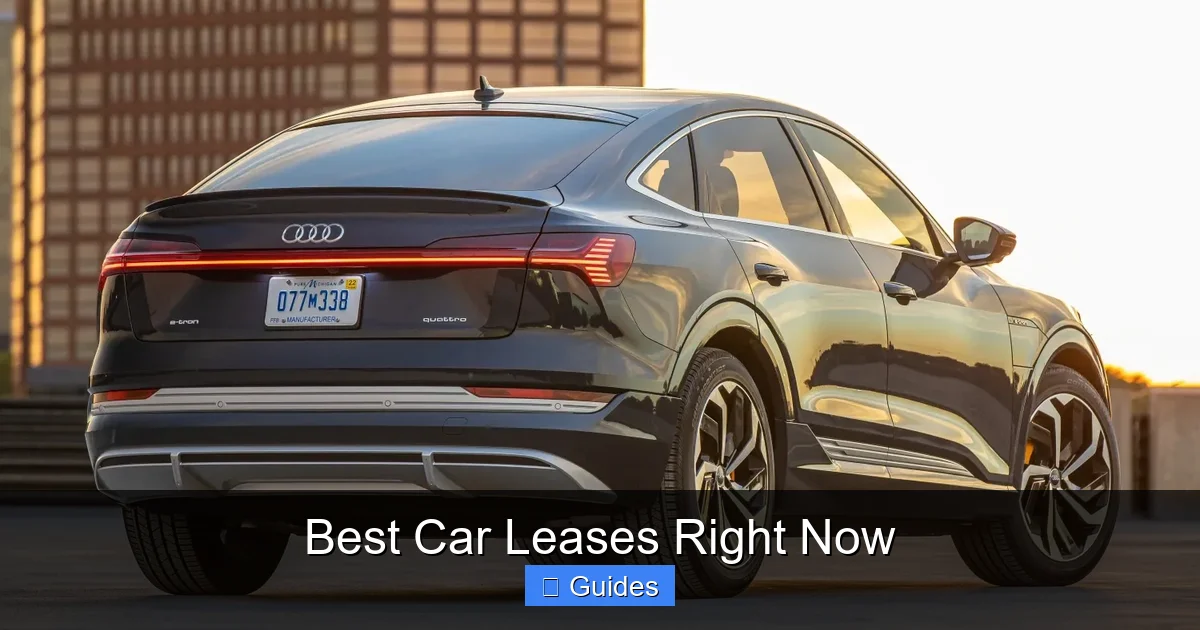
Visual guide about Best Car Leases Right Now
Image source: electrek.co
Luxury Sedans: Premium Performance at a Bargain
Who says you need to spend a fortune to drive a luxury car? Brands like BMW, Mercedes-Benz, and Audi are offering aggressive lease deals on their entry-level sedans to attract new customers. For example, the 2024 BMW 3 Series is currently available for around $399 per month with $3,999 due at signing—a steal for a vehicle with advanced driver-assistance systems, a premium interior, and sporty handling.
Similarly, the Mercedes-Benz C-Class is leasing for approximately $429/month with $4,500 down. That includes features like ambient lighting, a 12.3-inch digital display, and the brand’s intuitive MBUX infotainment system. These deals are especially attractive because luxury brands often have higher residual values, meaning the car retains more of its worth over the lease term—resulting in lower monthly payments.
Family-Friendly SUVs: Space, Safety, and Savings
For families or anyone who needs extra cargo space and seating, SUVs remain one of the most popular vehicle types—and right now, they’re also among the best lease values. The 2024 Honda CR-V, for instance, is available for just $299 per month with $2,999 due at signing. That’s an excellent deal for a reliable, fuel-efficient crossover with top safety ratings and a spacious interior.
Another standout is the Toyota RAV4 Hybrid, leasing for about $329/month with $3,500 down. With an EPA-estimated 40 mpg combined, this SUV saves you money at the pump while offering Toyota’s legendary reliability. And don’t overlook the Hyundai Tucson—currently leasing for $279/month with $2,999 due. It comes packed with standard features like wireless Apple CarPlay, Android Auto, and a 10.25-inch touchscreen.
Electric Vehicles: Go Green Without Going Broke
The EV market is booming, and automakers are using lease incentives to accelerate adoption. Tesla, Nissan, and Chevrolet are all offering competitive deals on their electric models. The Tesla Model 3, for example, is available for $349/month with $4,500 due at signing. That includes access to Tesla’s Supercharger network, over-the-air software updates, and impressive acceleration.
For a more budget-friendly option, consider the Nissan Leaf, leasing for just $249/month with $2,999 down. It’s not as flashy as a Tesla, but it offers a solid 149-mile range, zero emissions, and low maintenance costs. Meanwhile, the Chevrolet Bolt EV is back with a vengeance—leasing for $229/month with $2,999 due. With a 259-mile range and a starting MSRP under $30,000, it’s one of the best values in the EV segment.
Pickup Trucks: Power and Practicality on a Lease
Even pickup trucks are getting in on the lease action. The Ford F-150, America’s best-selling vehicle, is currently available for $379/month with $4,999 due at signing. That’s a great deal for a full-size truck with available hybrid powertrains, advanced towing tech, and a high-strength aluminum body.
The Ram 1500 is another strong contender, leasing for $399/month with $4,500 down. It offers a smooth ride, a luxurious interior, and best-in-class towing capacity. And if you’re looking for something smaller, the Toyota Tacoma is available for $319/month with $3,999 due—perfect for off-road adventures or weekend projects.
How to Find the Best Car Lease Deals in Your Area
Great lease deals don’t just appear—they require a bit of strategy. Here’s how to find the best car leases right now, no matter where you live.
Visual guide about Best Car Leases Right Now
Image source: getgovgrants.com
Check Manufacturer Websites First
Automakers often promote their best lease offers directly on their official websites. These “national” deals are usually standardized across the country, but they may include regional bonuses or dealer-specific incentives. Start by visiting the “Special Offers” or “Lease Deals” section of brands you’re interested in. For example, Hyundai frequently runs “Lease for Less” campaigns with reduced money factors and waived acquisition fees.
Use Online Lease Comparison Tools
Websites like Edmunds, Kelley Blue Book (KBB), and Leasehackr allow you to compare lease deals side by side. You can filter by make, model, price range, and location to find offers that match your needs. These tools also show you the “lease hack” details—like money factor, residual value, and dealer incentives—so you can spot a truly great deal versus one that looks good on paper.
Talk to Multiple Dealers
Don’t settle for the first offer you receive. Contact at least three dealerships in your area and ask for their best lease quote on the same vehicle. Dealers often have flexibility to adjust the capitalized cost or include additional incentives to win your business. Be sure to mention any competing offers—they may be willing to match or beat them.
Time Your Lease Right
Lease deals tend to be strongest at the end of the month, quarter, or model year. Dealers are often trying to meet sales targets or clear out old inventory to make room for new models. If you can wait until late December or early January, you might find even better offers as 2025 models arrive.
Understanding Lease Terms: What You Need to Know
Before you sign on the dotted line, it’s essential to understand the key components of a lease agreement. Knowing these terms will help you evaluate offers and avoid surprises down the road.
Capitalized Cost
This is the negotiated price of the vehicle—essentially the “sticker price” after any discounts or negotiations. The lower the capitalized cost, the lower your monthly payment. Always aim to negotiate this number, just as you would when buying a car.
Residual Value
The residual value is the estimated worth of the car at the end of the lease term, expressed as a percentage of the MSRP. A higher residual value means lower depreciation and, therefore, lower monthly payments. For example, a car with a 60% residual after 36 months will cost less to lease than one with a 50% residual.
Money Factor
The money factor is the lease equivalent of an interest rate. It’s usually a small decimal (like 0.00125), but it has a big impact on your payment. To convert it to an approximate APR, multiply by 2,400. So a money factor of 0.00125 equals about 3% APR. Lower is better.
Lease Term and Mileage Limits
Most leases last 24, 36, or 48 months. Shorter terms often have lower monthly payments but higher wear-and-tear scrutiny. Mileage limits typically range from 10,000 to 15,000 miles per year. Exceeding this limit can cost $0.10 to $0.25 per mile—so choose a limit that matches your driving habits.
Acquisition and Disposition Fees
The acquisition fee (or “bank fee”) is charged at the start of the lease and can range from $500 to $1,000. The disposition fee is charged when you return the car, usually around $300–$400. Some dealers waive these fees as part of a promotion, so ask about them upfront.
Tips to Save Money on Your Next Car Lease
Even with great deals available, there are ways to stretch your budget further and get even more value from your lease.
Improve Your Credit Score
Your credit score directly affects the money factor you’re offered. A higher score can save you hundreds over the life of the lease. Check your credit report for errors and pay down debts before applying.
Put Down a Larger Down Payment (But Not Too Large)
A larger down payment reduces your monthly cost, but it also increases your risk if the car is totaled or stolen. Consider a “cap cost reduction” of $2,000–$3,000 instead of putting down the full due-at-signing amount.
Lease a Car with High Residual Value
Vehicles that hold their value well—like Toyota, Honda, and Subaru models—typically have lower lease payments. Research residual values using tools like ALG (a division of J.D. Power) to find the best bets.
Avoid Excessive Customization
Adding aftermarket parts or expensive upgrades can increase the capitalized cost and may not be covered by warranty. Stick to factory options if you want to keep costs down.
Consider a Lease Buyout
If you fall in love with your leased car, you can often buy it at the end of the term for the residual value. This can be a smart move if the car has held its value well and you want to keep driving it.
The Future of Car Leasing: Trends to Watch
The car leasing landscape is evolving rapidly, driven by technology, environmental concerns, and changing consumer preferences. Here are a few trends shaping the future of leasing.
Subscription-Based Leasing
Some automakers, like Volvo and Porsche, are experimenting with subscription models that bundle leasing, insurance, maintenance, and even vehicle swapping into a single monthly fee. While not yet mainstream, these services offer ultimate flexibility for drivers who want variety without ownership.
Increased EV Lease Incentives
As governments push for cleaner transportation, expect more federal and state incentives for leasing EVs. Some states even offer tax credits or rebates specifically for leased electric vehicles, further reducing the cost of entry.
Digital Leasing Platforms
Online car buying has paved the way for digital leasing. Companies like Carvana, Vroom, and Tesla now allow you to complete the entire lease process online—from selecting your car to signing the contract. This convenience is likely to become the norm.
Final Thoughts: Is Now the Time to Lease?
With low monthly payments, cutting-edge technology, and a wide range of available models, the best car leases right now offer exceptional value for drivers who want a new vehicle without the long-term commitment of ownership. Whether you’re eyeing a luxury sedan, a rugged SUV, or a zero-emission EV, there’s likely a deal out there that fits your lifestyle and budget.
But remember: a great lease deal isn’t just about the monthly payment. It’s about understanding the full terms, negotiating wisely, and choosing a vehicle that meets your needs. Take your time, do your research, and don’t be afraid to walk away if the numbers don’t add up. With the right approach, you can drive away in your dream car—without driving your finances into the ground.
Frequently Asked Questions
What is the average monthly payment for a car lease?
The average monthly lease payment in 2024 ranges from $300 to $500, depending on the vehicle type, lease term, and down payment. Luxury and electric vehicles may fall on the higher end, while compact cars and SUVs often offer lower rates.
Can I negotiate a car lease?
Yes, you can and should negotiate a car lease. Focus on the capitalized cost (the vehicle’s price), money factor, and any fees. Dealers often have flexibility to adjust these terms to close a deal.
What happens at the end of a car lease?
At the end of a lease, you can return the car (subject to mileage and condition limits), buy it at the residual value, or lease a new vehicle. Be prepared for potential charges if the car has excess wear or mileage.
Are lease deals better than financing?
Leasing often has lower monthly payments than financing, but you don’t build equity. Financing is better if you plan to keep the car long-term. Leasing suits those who want a new car every few years with minimal upfront cost.
Do I need gap insurance on a lease?
Most lease agreements require gap insurance, which covers the difference between the car’s value and what you owe if it’s totaled. Some leases include it automatically, but check your contract to be sure.
Can I lease a used car?
Yes, some dealers and manufacturers offer certified pre-owned (CPO) lease programs. These typically have slightly higher rates than new car leases but can be a great way to drive a reliable vehicle at a lower cost.

At CarLegit, we believe information should be clear, factual, and genuinely helpful. That’s why every guide, review, and update on our website is created with care, research, and a strong focus on user experience.