

Exiting a car lease early isn’t impossible—but it requires planning and understanding your options. Whether you’re facing financial hardship, life changes, or simply want a different vehicle, knowing the right steps can save you money and stress.
In This Article
- 1 Key Takeaways
- 2 📑 Table of Contents
- 3 Understanding Your Car Lease Agreement
- 4 Why People Want to Exit a Car Lease Early
- 5 Option 1: Lease Transfer (Lease Assumption)
- 6 Option 2: Negotiate a Buyout with Your Lessor
- 7 Option 3: Purchase the Vehicle and Sell It
- 8 Option 4: Return the Car and Pay Early Termination Fees
- 9 Avoiding Common Pitfalls When Exiting a Lease
- 10 Final Thoughts: Making the Smart Choice
- 11 Frequently Asked Questions
- 11.1 Can I get out of a car lease early without paying fees?
- 11.2 Will ending my lease early hurt my credit score?
- 11.3 How long does a lease transfer take?
- 11.4 Can I transfer my lease to a family member?
- 11.5 What happens if I return the car early and still owe money?
- 11.6 Is it better to buy the car or pay early termination fees?
Key Takeaways
- Review your lease agreement first: Check for early termination clauses, fees, and required notice periods to avoid surprises.
- Lease transfer (assumption) is often the best option: Let someone take over your payments legally, usually with lender approval and a small fee.
- Negotiate with your leasing company: Some lenders may offer buyouts or reduced penalties if you explain your situation honestly.
- Avoid defaulting at all costs: Simply stopping payments damages your credit and leads to repossession and legal action.
- Consider purchasing the vehicle: Buying out your lease might make sense if the car’s value exceeds the residual amount.
- Use third-party services wisely: Companies that help transfer leases can simplify the process but may charge fees—research them carefully.
- Document everything: Keep records of all communications, agreements, and payments to protect yourself legally.
📑 Table of Contents
- Understanding Your Car Lease Agreement
- Why People Want to Exit a Car Lease Early
- Option 1: Lease Transfer (Lease Assumption)
- Option 2: Negotiate a Buyout with Your Lessor
- Option 3: Purchase the Vehicle and Sell It
- Option 4: Return the Car and Pay Early Termination Fees
- Avoiding Common Pitfalls When Exiting a Lease
- Final Thoughts: Making the Smart Choice
Understanding Your Car Lease Agreement
Before you even think about ending your car lease early, you need to know exactly what you’re dealing with. Your lease agreement isn’t just a piece of paper—it’s a legally binding contract that outlines your rights, responsibilities, and the consequences of breaking it.
Most car leases last between 24 and 48 months, and they come with strict terms about mileage, wear and tear, and early termination. The first thing you should do is pull out your lease contract (or log into your leasing company’s online portal) and read it carefully. Look specifically for sections labeled “Early Termination,” “Buyout Options,” or “End-of-Lease Terms.” These will tell you whether early exit is allowed, what fees apply, and how much notice you must give.
For example, many leases include an “early termination fee” that can range from a few hundred to several thousand dollars. This fee often covers the leasing company’s lost revenue from the remaining payments. Some contracts also require you to pay all remaining monthly payments upfront—even if you return the car immediately. That’s why rushing into an early exit without reading the fine print can be costly.
Another key detail is the “residual value”—the estimated worth of the car at the end of the lease. If you decide to buy the car instead of returning it, you’ll pay this amount plus any applicable taxes and fees. In some cases, especially if the car has held its value well, buying it might actually be cheaper than paying early termination fees.
Don’t forget to check for mileage limits. Most leases allow 10,000 to 15,000 miles per year. If you’ve already exceeded your limit, you could face additional charges—on top of early termination fees—when you return the vehicle. So if you’re close to or over your mileage cap, factor that into your decision.
Finally, note whether your lease is through a bank, credit union, or manufacturer’s finance arm (like Toyota Financial Services or Ford Credit). Each may have slightly different policies, so it’s worth calling their customer service line to clarify your options.
Why People Want to Exit a Car Lease Early
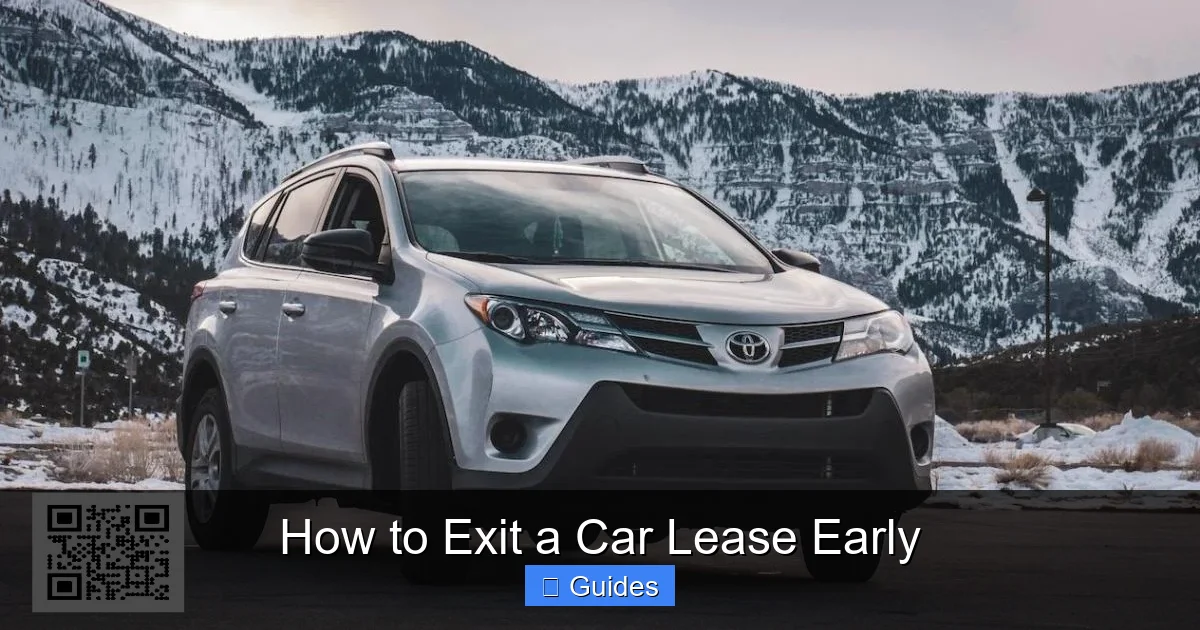
Visual guide about How to Exit a Car Lease Early
Image source: carleasecanada.ca
There are many valid reasons why someone might want to get out of a car lease before the term ends. Life happens—and sometimes, your vehicle needs change faster than your lease does.
One of the most common reasons is financial hardship. Maybe you’ve lost your job, faced unexpected medical bills, or had a major life expense pop up. Car payments—even lease payments—can become a heavy burden when your income drops. In these situations, exiting the lease early might free up cash for more pressing needs.
Another frequent reason is lifestyle changes. You might have started a family and now need a larger vehicle, moved to a city with great public transit and no longer need a car, or switched to remote work and no longer commute. In these cases, continuing to pay for a car you barely use feels wasteful.
Some people also realize they simply don’t like the car they leased. Maybe it’s uncomfortable on long drives, has poor fuel economy, or lacks features they now consider essential. While you can’t return a leased car just because you changed your mind, dissatisfaction can be a strong motivator to explore early exit options.
Job relocation is another big one. If you’re moving to another state or country, keeping your leased vehicle might not make sense—especially if you’d have to pay to ship it or find someone to take over the lease locally.
Lastly, some drivers discover they’ve exceeded their mileage limit much sooner than expected. Rather than rack up thousands in excess mileage fees, they prefer to end the lease early and switch to a vehicle that better fits their driving habits.
Whatever your reason, it’s important to act thoughtfully. Rushing to abandon your lease can lead to serious financial and credit consequences. But with the right strategy, you can exit cleanly and responsibly.
Option 1: Lease Transfer (Lease Assumption)

Visual guide about How to Exit a Car Lease Early
Image source: carleasecanada.ca
One of the most popular and cost-effective ways to exit a car lease early is through a lease transfer—also known as lease assumption. This means finding someone else to take over your lease payments, mileage allowance, and responsibility for the vehicle.
Here’s how it works: You locate a qualified buyer (often through online marketplaces like Swapalease, LeaseTrader, or even Facebook groups), and they agree to assume your lease. The new lessee then makes all future payments directly to the leasing company. Once the leasing company approves the transfer (which they almost always do, as long as the new person meets their credit requirements), you’re officially off the hook.
Most major leasing companies allow transfers, though they typically charge a processing fee—usually between $200 and $600. You may also need to pay a small transfer fee yourself, depending on your contract. But compared to paying thousands in early termination fees, this is often a bargain.
The biggest advantage of a lease transfer is that it protects your credit score. Since you’re not defaulting on the lease, there’s no negative mark on your report. Plus, you avoid the hassle of selling the car privately or dealing with repossession.
To increase your chances of finding a taker, be transparent about the vehicle’s condition, mileage, and remaining term. Take high-quality photos, write a clear description, and respond quickly to inquiries. Some people even offer a small incentive—like paying the first month’s payment—to sweeten the deal.
Keep in mind that the new lessee will need to pass a credit check with your leasing company. If they have poor credit, the transfer might be denied. In that case, you could ask a co-signer to help, or look for another candidate.
Also, remember that you’re still technically responsible until the transfer is fully approved and documented. Don’t hand over the keys until you receive written confirmation from the leasing company that the transfer is complete.
Option 2: Negotiate a Buyout with Your Lessor
Visual guide about How to Exit a Car Lease Early
Image source: m.media-amazon.com
If you can’t find someone to take over your lease, your next best bet might be to negotiate directly with your leasing company. Many lessors are willing to work with customers who are upfront about their situation—especially if it means avoiding the costs of repossession or legal action.
Start by calling your leasing company’s customer service department and explaining why you need to exit the lease early. Be honest: whether it’s job loss, relocation, or mechanical issues with the vehicle, most companies appreciate transparency. Ask if they offer any early termination programs or buyout options.
In some cases, the leasing company may offer to buy back the vehicle from you—or allow you to purchase it yourself—at a discounted rate. This is more likely if the car’s current market value is higher than the residual value stated in your lease. For example, if your lease says the car will be worth $15,000 at the end, but similar models are selling for $18,000 today, the leasing company might let you buy it for $16,000 and then resell it for a profit.
Alternatively, they might agree to waive or reduce early termination fees if you’ve been a loyal customer or if you’re willing to return the car in excellent condition. Some manufacturers even have hardship programs for customers affected by natural disasters, military deployment, or medical emergencies.
If you’re negotiating, come prepared. Have your lease agreement handy, know the current Kelley Blue Book value of your car, and be ready to explain your circumstances clearly and calmly. Avoid making threats or demands—most leasing companies respond better to respectful, solution-oriented conversations.
One tip: Ask if they’d consider a “lease extension” instead. If you only need a few more months, extending the lease slightly might be cheaper than terminating early. Or, if you’re upside-down on the lease (owing more than the car is worth), they might offer a trade-in credit toward a new lease or purchase.
Remember, every leasing company has different policies, so what works for one person might not work for another. But it never hurts to ask—many customers are surprised by how flexible their lessor can be when approached respectfully.
Option 3: Purchase the Vehicle and Sell It
Another way to exit your lease early is to buy the car outright and then sell it yourself. This option makes the most sense if the car’s market value is higher than the residual value in your lease agreement.
Here’s how it works: You pay the residual value (plus taxes and fees) to purchase the vehicle from the leasing company. Once you own it, you can sell it privately, trade it in at a dealership, or even keep it if you’ve grown attached.
Why would this be beneficial? Because if the car is worth more than the residual amount, you can potentially make a profit—or at least break even—after selling it. For example, if your lease says the car is worth $12,000 at the end, but similar models are selling for $14,500, you could buy it for $12,000 and sell it for $13,500, netting $1,500 after fees.
This strategy is especially common with popular, reliable vehicles like Toyota RAV4s, Honda CR-Vs, or Subaru Outbacks—models that hold their value well. It’s also useful if you’ve already put significant wear on the car (beyond normal use), since you won’t have to pay excess wear-and-tear fees when you sell it yourself.
However, this option requires upfront cash or financing. You’ll need to cover the buyout amount, which could be several thousand dollars. If you don’t have the funds, you might need to take out a personal loan or auto loan—which adds interest costs.
Also, selling a car privately takes time and effort. You’ll need to clean it, take photos, write a listing, respond to inquiries, and handle test drives. If you’re in a rush, trading it in at a dealership is faster—but you’ll likely get less money.
Before going this route, run the numbers carefully. Use tools like Kelley Blue Book, Edmunds, or Autotrader to estimate the car’s current value. Subtract the buyout cost, taxes, and any selling expenses (like advertising or detailing). If the result is positive—or close to zero—it might be worth considering.
And don’t forget: once you buy the car, you’re responsible for registration, insurance, and maintenance until it’s sold. So factor in a few weeks of ownership costs.
Option 4: Return the Car and Pay Early Termination Fees
If none of the above options work, you may have to return the car and pay the early termination fees outlined in your lease. While this is usually the most expensive route, it’s sometimes the only choice—especially if you can’t find a transfer candidate or afford to buy the vehicle.
When you return the car early, you’ll typically owe:
– All remaining monthly payments (or a discounted portion of them)
– An early termination fee (often $200–$1,000)
– Excess mileage charges (if applicable)
– Wear-and-tear fees (for damage beyond normal use)
For example, if you have 18 months left on a $400/month lease, you might owe $7,200 in remaining payments plus a $500 termination fee—totaling $7,700. That’s a significant hit, but it’s still better than defaulting, which could lead to repossession, lawsuits, and lasting credit damage.
To minimize costs, return the car in the best possible condition. Clean it inside and out, fix minor dents or scratches, and make sure all accessories (like floor mats and spare keys) are included. Take photos before handing it over as proof of condition.
Also, return the car to an authorized location—usually a dealership that handles the brand. Don’t just leave it in a parking lot or abandon it. Follow your lease’s return instructions exactly to avoid additional penalties.
Some leasing companies offer a “lease-end buyout quote” that includes all fees upfront. Ask for this in writing so you know exactly what you’ll owe. If the amount seems unfairly high, you can try negotiating—but be prepared for pushback.
Finally, get a receipt confirming the return and that all obligations are fulfilled. This protects you in case the leasing company later claims you still owe money.
Avoiding Common Pitfalls When Exiting a Lease
Exiting a car lease early can be tricky, and it’s easy to make mistakes that cost you time, money, or your credit score. Here are some common pitfalls to avoid:
First, never stop making payments without formally ending the lease. Defaulting—even for one month—can trigger repossession, collection calls, and a negative mark on your credit report that stays for seven years. Always communicate with your leasing company before missing a payment.
Second, don’t assume you can just return the car and walk away. Unless your lease explicitly allows early return without penalty (which is rare), you’ll still owe money. Ignoring this can lead to lawsuits or wage garnishment.
Third, be wary of “lease cancellation” scams. Some companies promise to get you out of your lease for a flat fee but deliver nothing. Only work with reputable services or directly with your leasing company.
Fourth, don’t forget about taxes and fees. Even if you transfer the lease, you may still owe sales tax, registration transfer fees, or documentation charges. Budget for these extras.
Fifth, avoid emotional decisions. It’s tempting to ditch a car you hate, but weigh the financial impact carefully. Sometimes, it’s better to tough it out for a few more months than pay thousands to exit early.
Finally, always get agreements in writing. Verbal promises from customer service reps aren’t legally binding. If your leasing company agrees to waive fees or approve a transfer, ask for confirmation via email or letter.
By staying informed and cautious, you can navigate the early exit process smoothly and protect your financial future.
Final Thoughts: Making the Smart Choice
Exiting a car lease early isn’t something to take lightly—but it’s not impossible either. With the right approach, you can end your lease responsibly, minimize costs, and protect your credit.
Start by reviewing your lease agreement and understanding your options. Then, explore alternatives like lease transfers, negotiations, or purchasing the vehicle. Each path has pros and cons, so choose the one that best fits your financial situation and timeline.
Remember, communication is key. Whether you’re talking to your leasing company or a potential lease-taker, be honest, polite, and prepared. Most people—and companies—respond better to transparency than to silence or demands.
And if you’re unsure, consider consulting a financial advisor or attorney. While most lease exits don’t require legal help, complex situations (like bankruptcy or military deployment) might benefit from professional guidance.
At the end of the day, your goal is to exit cleanly and move forward—not to win a battle with your leasing company. By planning ahead and acting thoughtfully, you can turn a stressful situation into a manageable one.
So take a deep breath, gather your documents, and start exploring your options today. Your future self will thank you.
Frequently Asked Questions
Can I get out of a car lease early without paying fees?
It’s rare to exit a lease early without any cost, but possible in special cases like military deployment or manufacturer hardship programs. Most leases require fees, but you may reduce them through negotiation or transfer.
Will ending my lease early hurt my credit score?
Only if you default on payments or abandon the vehicle. If you use a合法 method like lease transfer or negotiated buyout, your credit score should remain unaffected.
How long does a lease transfer take?
Typically 1–3 weeks, depending on the leasing company’s approval process and how quickly the new lessee completes paperwork and passes the credit check.
Can I transfer my lease to a family member?
Yes, as long as they meet the leasing company’s credit and income requirements. Many people successfully transfer leases to spouses, adult children, or parents.
What happens if I return the car early and still owe money?
The leasing company will send you an invoice for the remaining balance, including fees. If you don’t pay, they may send the debt to collections, which can damage your credit.
Is it better to buy the car or pay early termination fees?
It depends on the car’s current value versus the residual amount. If the market value is higher, buying and selling may save money. Run the numbers carefully before deciding.

At CarLegit, we believe information should be clear, factual, and genuinely helpful. That’s why every guide, review, and update on our website is created with care, research, and a strong focus on user experience.