
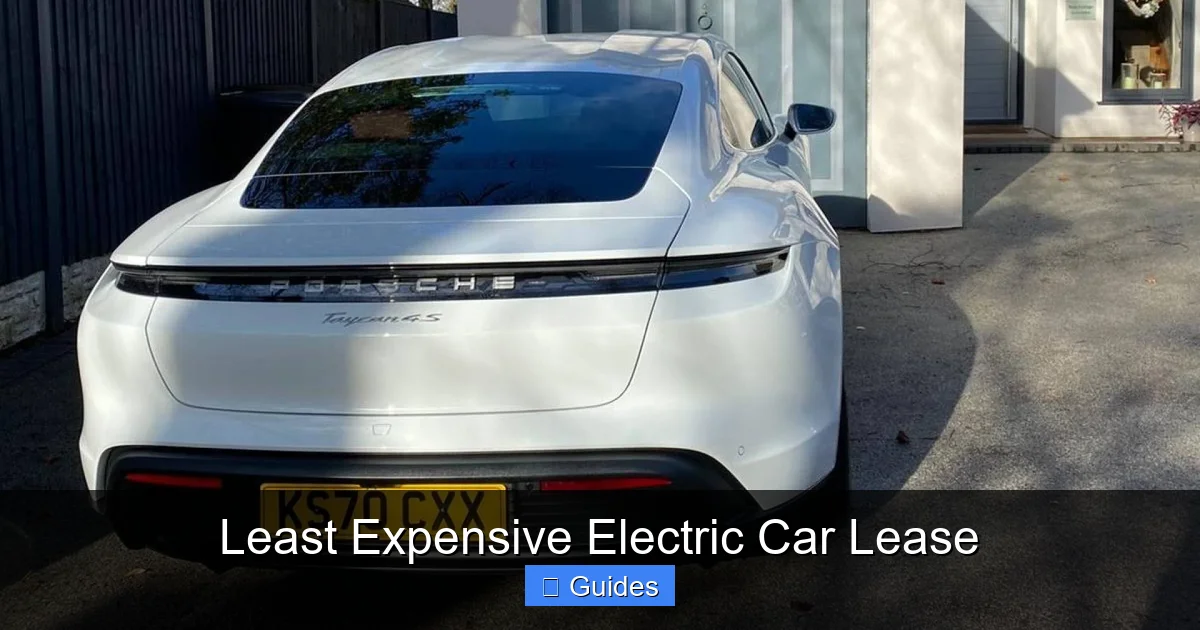
Looking for the least expensive electric car lease? You’re in the right place. This guide breaks down the most budget-friendly EV leases available today, including real pricing, tax credits, and insider tips to help you drive electric without breaking the bank.
[FEATURED_IMAGE_PLACEHOSTER]
In This Article
- 1 Key Takeaways
- 2 📑 Table of Contents
- 3 Why Leasing an Electric Car Makes Financial Sense
- 4 Top 5 Least Expensive Electric Car Leases in 2024
- 5 How Federal and State Incentives Slash Your Lease Cost
- 6 Tips to Get the Best Deal on an Electric Car Lease
- 7 Common Mistakes to Avoid When Leasing an EV
- 8 Is Leasing the Right Choice for You?
- 9 Final Thoughts: Drive Electric, Save Big
- 10 Frequently Asked Questions
Key Takeaways
- Lease prices start under $200/month: Several EVs now offer lease deals below $200 per month, especially with federal and state incentives applied.
- Federal tax credits can reduce lease costs: The $7,500 federal EV tax credit is often passed on to lessees as a “cap cost reduction,” lowering monthly payments.
- Compact EVs dominate the low-cost market: Models like the Nissan Leaf, Chevrolet Bolt EV, and Hyundai Kona Electric offer the most affordable leasing options.
- Leasing avoids battery degradation concerns: Since you return the car after 2–3 years, you avoid long-term battery wear issues.
- Shop during end-of-quarter sales: Dealerships often offer extra incentives to meet sales targets, making it the best time to lease.
- Check for state and local rebates: Many states add extra savings on top of federal credits, further reducing your out-of-pocket cost.
- Read the fine print: Mileage limits, wear-and-tear fees, and early termination penalties can add up—know what you’re signing.
📑 Table of Contents
- Why Leasing an Electric Car Makes Financial Sense
- Top 5 Least Expensive Electric Car Leases in 2024
- How Federal and State Incentives Slash Your Lease Cost
- Tips to Get the Best Deal on an Electric Car Lease
- Common Mistakes to Avoid When Leasing an EV
- Is Leasing the Right Choice for You?
- Final Thoughts: Drive Electric, Save Big
Why Leasing an Electric Car Makes Financial Sense
Electric vehicles (EVs) are no longer just for early adopters or luxury buyers. Thanks to falling battery costs, government incentives, and competitive leasing programs, driving an EV is now more affordable than ever—especially if you choose the right lease deal. In fact, some of the least expensive electric car leases can cost less per month than a premium coffee habit.
Leasing an EV isn’t just about saving money upfront. It’s also a smart way to stay current with rapidly evolving technology. Battery efficiency, charging speed, and driving range improve with each new model year. By leasing, you can upgrade to a newer, better EV every two to three years without the hassle of selling or trading in a used car. Plus, you avoid the long-term risks of battery degradation, which can affect resale value if you buy outright.
Another major advantage? Predictable costs. With a lease, you know exactly what you’ll pay each month, and many programs include maintenance packages or roadside assistance. Combine that with lower fuel and maintenance expenses—no oil changes, fewer moving parts, and regenerative braking—and the total cost of ownership often beats gas-powered cars, even before incentives.
Top 5 Least Expensive Electric Car Leases in 2024
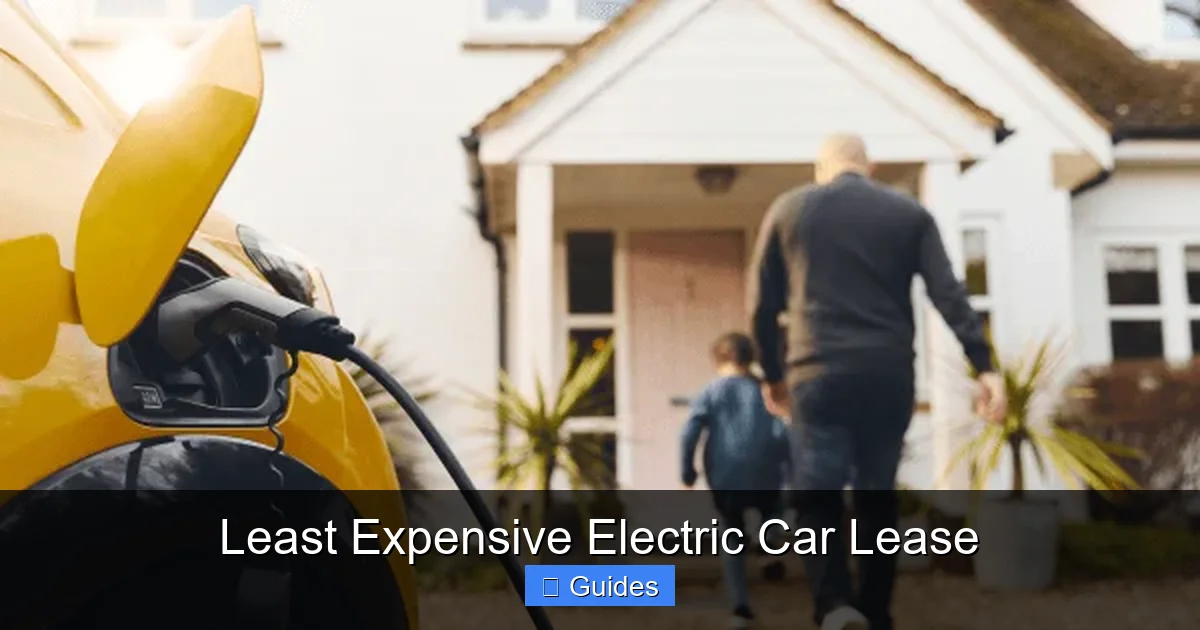
Visual guide about Least Expensive Electric Car Lease
Image source: coltura.org
If you’re ready to go electric on a budget, these five models consistently offer the most affordable lease deals. We’ve analyzed current offers from major dealerships and manufacturer websites to bring you the best options available right now.
1. Nissan Leaf – Starting at $199/month
The Nissan Leaf has long been a pioneer in the affordable EV space, and it remains one of the cheapest electric cars to lease. As of mid-2024, several dealerships are offering the base Leaf S model for as little as $199 per month with $2,999 due at signing. That’s a 36-month lease with 10,000 miles per year.
What makes the Leaf so affordable? Nissan has streamlined production and passed on federal tax credits directly to lessees. The $7,500 federal EV tax credit is applied as a capitalized cost reduction, which significantly lowers your monthly payment. Some states, like Colorado and California, offer additional rebates of up to $5,000, making the effective monthly cost even lower.
The Leaf isn’t the most powerful or longest-range EV on the market—its 149-mile range (for the base model) is best suited for city driving and short commutes. But for drivers who primarily travel under 100 miles a day, it’s a reliable, no-frills option that gets the job done.
2. Chevrolet Bolt EV – Starting at $189/month
The Chevrolet Bolt EV is a standout in the budget EV category, offering more range and interior space than the Leaf at a similar price point. Current lease deals start at $189 per month with $2,499 due at signing for 36 months and 10,000 annual miles.
With a 259-mile EPA-estimated range, the Bolt EV is ideal for suburban drivers who want flexibility without range anxiety. It also comes with a standard 11.3-inch infotainment screen, wireless Apple CarPlay and Android Auto, and a surprisingly roomy interior for a compact hatchback.
Chevrolet has been aggressive with leasing incentives, especially as they prepare to discontinue the Bolt EV in favor of newer Ultium-based models. This means dealers are eager to move inventory, leading to some of the best lease deals in years. Plus, the full $7,500 federal tax credit applies, and many lessees report that dealers are applying it upfront to reduce the cap cost.
3. Hyundai Kona Electric – Starting at $209/month
The Hyundai Kona Electric offers a great balance of style, range, and affordability. Lease deals currently start at $209 per month with $2,999 due at signing for 36 months and 10,000 miles per year.
With a 258-mile range and a modern, SUV-like design, the Kona Electric appeals to drivers who want a bit more space and versatility than a compact hatchback. It also comes well-equipped with features like heated seats, a sunroof, and advanced safety tech—even on lower trims.
Hyundai often includes maintenance packages in their lease deals, which can save you hundreds over the life of the contract. And like other EVs, the Kona Electric qualifies for the full federal tax credit, which is typically passed on to the lessee.
One thing to note: Hyundai’s lease terms can vary significantly by region. Shop around and use online tools like Hyundai’s lease calculator to compare offers in your area.
4. Kia Niro EV – Starting at $219/month
The Kia Niro EV is a close sibling to the Hyundai Kona Electric, sharing the same platform and battery technology. Lease deals start at $219 per month with $2,999 due at signing for 36 months and 10,000 miles.
What sets the Niro EV apart is its crossover design, which offers more cargo space and a higher driving position than the Kona. It also has a slightly more refined interior and a smoother ride, making it a great choice for families or weekend adventurers.
Kia frequently offers loyalty bonuses and conquest incentives, meaning you could save even more if you’re leasing from another brand or have a Kia vehicle currently. And yes—the Niro EV qualifies for the full $7,500 federal tax credit, which helps keep monthly payments low.
5. Tesla Model 3 – Starting at $249/month (with incentives)
Yes, you read that right—Tesla now offers some of the most competitive lease deals on the market, especially when you factor in incentives. The base Tesla Model 3 Rear-Wheel Drive is currently available for $249 per month with $4,500 due at signing for 36 months and 10,000 miles.
While the upfront cost is higher than other EVs on this list, the Model 3’s lower monthly payment (thanks to Tesla passing on the full $7,500 federal tax credit) and superior range (272 miles) make it a compelling option. Plus, Tesla’s Supercharger network eliminates range anxiety for long trips.
Tesla leases also include free Supercharging for the first year in some regions, adding even more value. And because Tesla controls its own sales and service, there’s no dealer markup—what you see online is what you get.
How Federal and State Incentives Slash Your Lease Cost
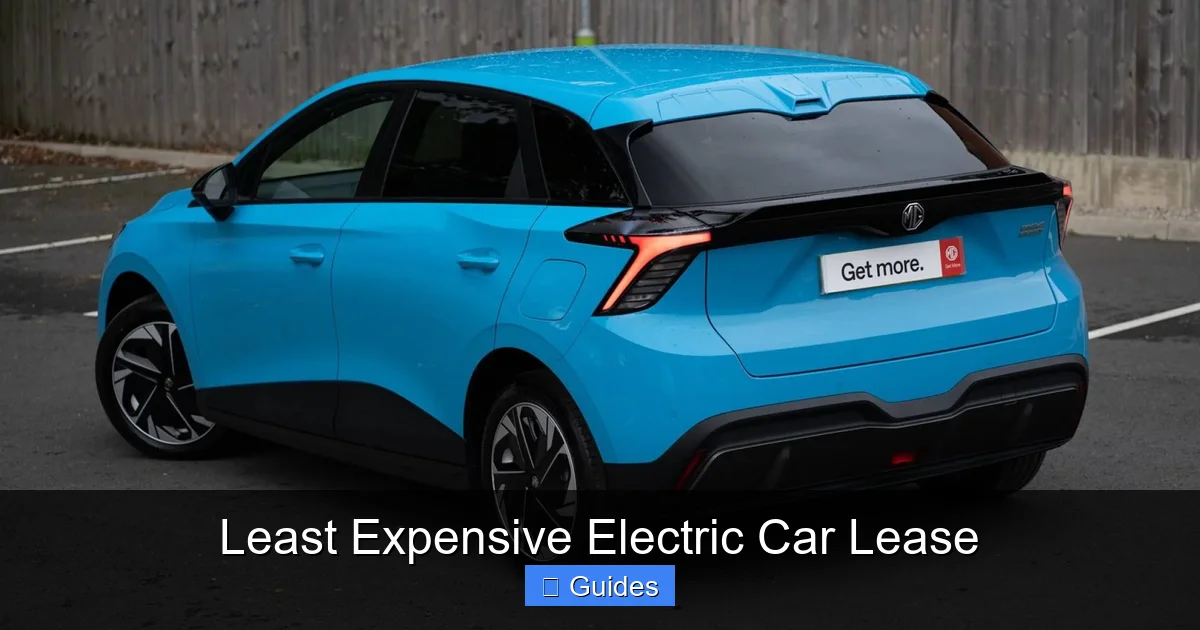
Visual guide about Least Expensive Electric Car Lease
Image source: electriccarlease.co.uk
One of the biggest reasons electric car leases are so affordable right now is government support. The federal government offers a tax credit of up to $7,500 for new EV purchases, and most automakers pass this savings directly to lessees.
How the Federal EV Tax Credit Works for Leases
When you lease an EV, the leasing company (often the manufacturer’s financial arm) claims the $7,500 federal tax credit. Instead of pocketing it, they usually apply it as a “cap cost reduction”—essentially a down payment on your behalf. This lowers the car’s capitalized cost, which directly reduces your monthly payment.
For example, if a car’s negotiated price is $35,000 and the leasing company applies the $7,500 credit, your lease is calculated as if the car cost $27,500. That can drop your monthly payment by $100 or more.
Not all EVs qualify for the full credit. To be eligible, the vehicle must be assembled in North America, meet battery component requirements, and be purchased new. As of 2024, most popular models—including the Leaf, Bolt, Kona, Niro, and Model 3—qualify.
State and Local Incentives Add Even More Savings
On top of the federal credit, many states offer additional rebates, tax credits, or exemptions. Here are a few standout programs:
– **California:** The Clean Vehicle Rebate Project (CVRP) offers up to $7,000 for low- and moderate-income residents leasing new EVs. Combined with the federal credit, this can reduce your effective lease cost to under $100/month.
– **Colorado:** Residents can get a $5,000 state tax credit on EV leases, plus the federal $7,500. Some counties add even more.
– **New York:** The Drive Clean Rebate offers up to $2,000 for new EV leases, with higher amounts for income-qualified buyers.
– **Massachusetts:** The MOR-EV program provides up to $3,500 for new EV leases.
Even if your state doesn’t offer a direct rebate, you may qualify for exemptions on sales tax, registration fees, or tolls. Some utilities also offer discounts on home charging equipment or special EV rate plans.
Always check with your state’s Department of Motor Vehicles or energy office for the latest programs. Incentives change frequently, and new ones are added regularly.
Tips to Get the Best Deal on an Electric Car Lease
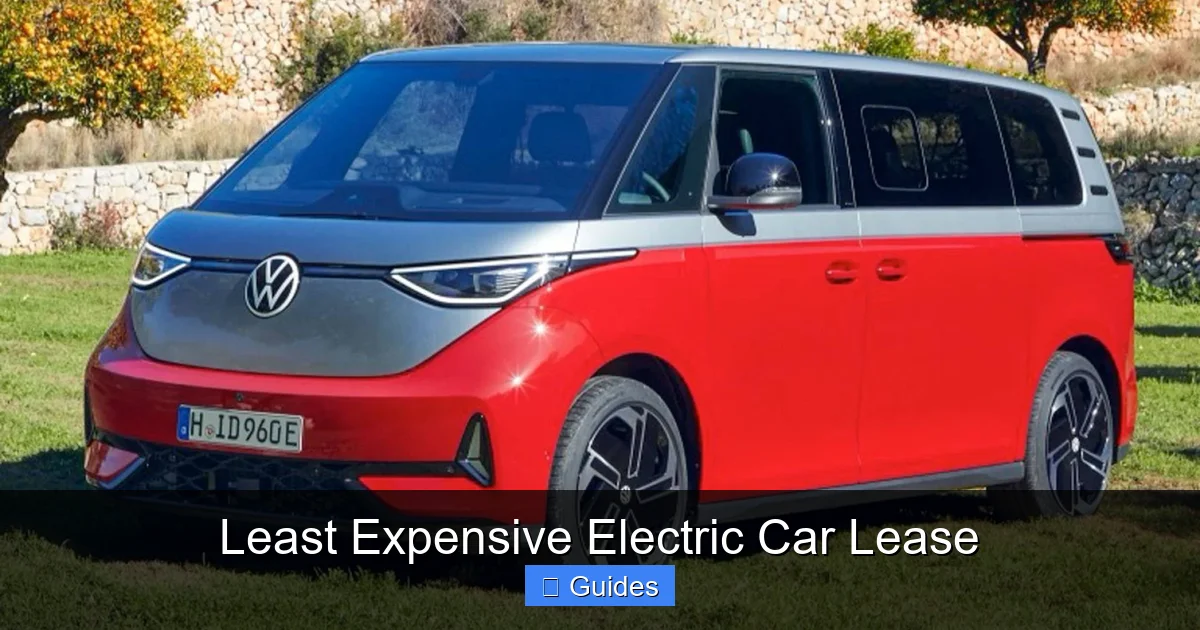
Visual guide about Least Expensive Electric Car Lease
Image source: electriccarlease.co.uk
Finding the least expensive electric car lease isn’t just about picking the cheapest model. With a few smart strategies, you can save hundreds—or even thousands—over the life of your lease.
1. Time Your Lease During Sales Promotions
Automakers often run special lease deals at the end of quarters or model years to clear inventory. For example, Chevy slashed Bolt EV lease prices in early 2024 to make room for new Ultium-based models. Similarly, Nissan frequently offers bonus cash or reduced money factors in March, June, September, and December.
Sign up for email alerts from manufacturers and dealerships, and follow EV deal forums like Edmunds or CarsDirect to stay informed.
2. Negotiate the Capitalized Cost
Even though many EV leases are advertised with “no negotiation,” you can often still haggle on the capitalized cost—the price the lease is based on. A lower cap cost means lower monthly payments.
Use online pricing tools like Kelley Blue Book or TrueCar to see what others in your area are paying. Then, call or visit multiple dealerships and ask for their best offer. Mention competing quotes to leverage better terms.
3. Watch Out for Excess Mileage and Wear Fees
Most leases include a mileage limit—typically 10,000, 12,000, or 15,000 miles per year. If you exceed this, you’ll pay 15 to 25 cents per extra mile. If you drive more than average, consider paying a little more upfront for a higher mileage allowance.
Also, be mindful of wear and tear. Leasing companies charge for dents, scratches, tire wear, and interior damage beyond “normal use.” Take photos before and after your lease, and consider purchasing a wear-and-tear protection plan if offered.
4. Consider a Shorter Lease Term
While 36-month leases are standard, some manufacturers offer 24-month terms with lower monthly payments. This can be a great option if you want to upgrade sooner or aren’t sure about long-term EV ownership.
Just remember: shorter leases often have higher monthly payments because you’re paying off the depreciation faster. Run the numbers to see what works best for your budget.
5. Use a Lease Comparison Tool
Websites like Leasehackr, Edmunds, and Cars.com allow you to compare lease deals side by side. You can filter by price, model, location, and incentives to find the best offer in your area.
These tools also show “lease factor” or “money factor,” which is the interest rate on your lease. A lower number means a better deal. Aim for a money factor below 0.0015 (equivalent to about 3.6% APR).
Common Mistakes to Avoid When Leasing an EV
Even with great deals available, it’s easy to make costly mistakes if you’re not careful. Here are the most common pitfalls—and how to avoid them.
1. Ignoring the Total Cost of Ownership
While the monthly payment is important, it’s not the whole story. Factor in insurance, charging costs, maintenance, and potential fees. EVs can be cheaper to maintain, but insurance is often higher due to repair costs.
Use a total cost of ownership calculator to compare leases over 36 months, including all expenses.
2. Not Checking Charging Compatibility
Make sure your home or workplace can support EV charging. Level 2 chargers (240V) are ideal for overnight charging, but not all apartments or older homes have the electrical capacity.
If you rely on public charging, check the availability of stations near your home and workplace. Apps like PlugShare can help you map out charging options.
3. Overlooking Residual Value
The residual value is the car’s estimated worth at the end of the lease. A higher residual means lower depreciation and lower monthly payments. EVs with strong resale value—like Teslas—often have better lease terms.
Ask the dealer for the residual percentage before signing. A good residual is typically 50% or higher for a 36-month lease.
4. Skipping the Test Drive
Even if a car looks great on paper, it might not suit your lifestyle. Take the time to test drive any EV you’re considering. Pay attention to comfort, visibility, cargo space, and how the car handles.
Also, test the infotainment system and charging port placement. Small details can make a big difference in daily use.
Is Leasing the Right Choice for You?
Leasing an electric car isn’t for everyone—but for many drivers, it’s the smartest financial move. If you like driving a new car every few years, want lower monthly payments, and don’t plan to modify or drive excessively, leasing could be perfect.
However, if you drive more than 15,000 miles a year, prefer to build equity in a vehicle, or want to customize your car, buying might be better. Also, if you live in an area with poor charging infrastructure, an EV—leased or owned—might not be practical.
Take a honest look at your driving habits, budget, and long-term goals. And remember: the least expensive electric car lease isn’t just about the lowest monthly payment. It’s about finding the right balance of cost, convenience, and value.
Final Thoughts: Drive Electric, Save Big
The era of affordable electric mobility is here. With lease deals starting under $200 per month, generous government incentives, and rapidly improving technology, there’s never been a better time to go electric.
Whether you choose the no-frills Nissan Leaf, the versatile Hyundai Kona Electric, or the high-tech Tesla Model 3, you can enjoy the benefits of EV ownership without the long-term commitment. Just remember to shop around, read the fine print, and take advantage of every incentive available.
By following the tips in this guide, you’ll be well on your way to securing the least expensive electric car lease that fits your lifestyle and budget. So why wait? Plug in, save money, and drive into the future—today.
Frequently Asked Questions
What is the cheapest electric car to lease right now?
The Chevrolet Bolt EV currently offers the lowest lease payments, starting at $189 per month with $2,499 due at signing. The Nissan Leaf is a close second at $199/month. Both qualify for the full $7,500 federal tax credit, which helps keep costs down.
Do I still get the $7,500 tax credit if I lease an EV?
Yes, but the leasing company claims the credit and usually passes it on to you as a cap cost reduction. This lowers your monthly payment. You don’t receive the credit directly, but you benefit from it.
Can I lease an EV with bad credit?
It’s possible, but your options may be limited. Some manufacturers offer special financing programs for subprime borrowers, but interest rates will be higher. Consider a co-signer or saving for a larger down payment to improve your terms.
What happens at the end of an EV lease?
You return the car to the dealership, provided it’s in good condition and within the mileage limit. You can also choose to buy the car at its residual value or lease a new model. Some programs offer lease-end upgrades with no hassle.
Are EV leases available in all states?
Most are, but availability and incentives vary by location. Some states have more aggressive EV adoption programs, so deals may be better in places like California, Colorado, or New York. Check with local dealerships for current offers.
Is it better to lease or buy an electric car?
Leasing is better if you want lower payments, enjoy new technology, and don’t drive excessively. Buying makes sense if you plan to keep the car long-term, drive high mileage, or want to customize it. Run a cost comparison based on your usage.

At CarLegit, we believe information should be clear, factual, and genuinely helpful. That’s why every guide, review, and update on our website is created with care, research, and a strong focus on user experience.