
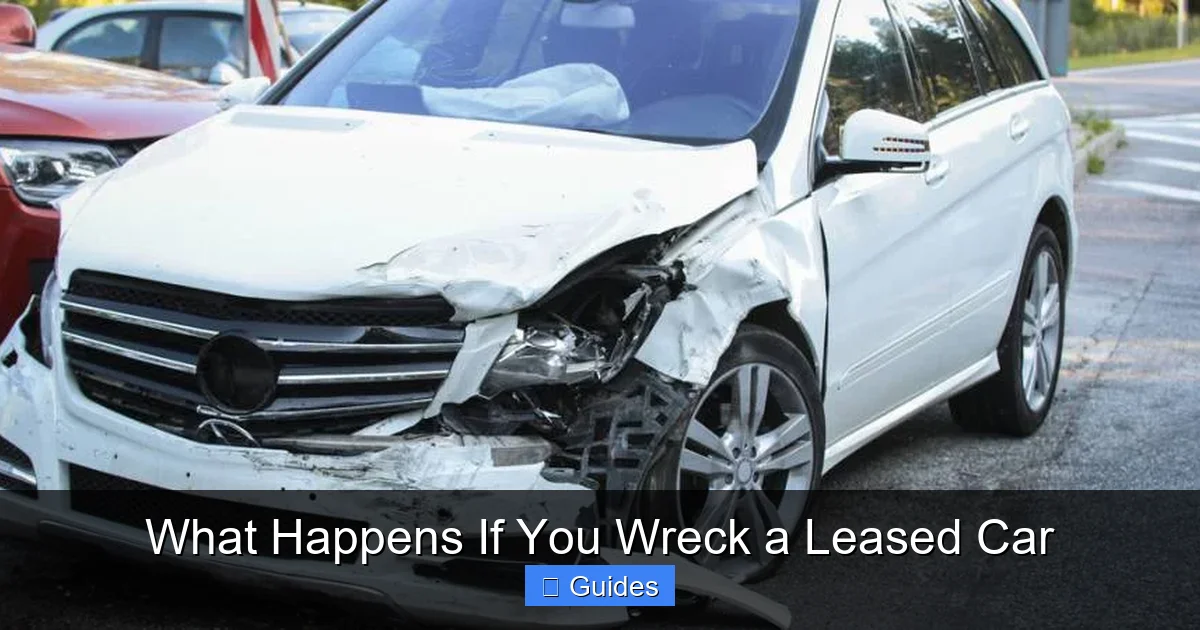
Wrecking a leased car can feel overwhelming, but knowing your rights and responsibilities helps. You’re still on the hook financially, but insurance and gap coverage can protect you from massive out-of-pocket costs.
In This Article
- 1 Key Takeaways
- 2 📑 Table of Contents
- 3 Understanding Your Lease Agreement Before an Accident
- 4 How Insurance Works When You Wreck a Leased Car
- 5 What Happens If Your Leased Car Is Totaled
- 6 Repairing a Damaged Leased Car
- 7 Your Options After a Total Loss
- 8 Tips to Protect Yourself When Leasing a Car
- 9 Conclusion
- 10 Frequently Asked Questions
- 10.1 Do I still have to pay my lease if my car is totaled?
- 10.2 Will my insurance pay off my lease if the car is wrecked?
- 10.3 Can I keep driving my leased car after an accident?
- 10.4 What happens if I don’t have gap insurance and my leased car is totaled?
- 10.5 Can I buy my leased car after it’s been in an accident?
- 10.6 Does the leasing company get the insurance money if my car is totaled?
Key Takeaways
- You’re responsible for the lease payments even after a wreck: The leasing company still expects full payment until the contract ends or the car is replaced.
- Insurance is your first line of defense: Comprehensive and collision coverage will pay for repairs or total loss, but only up to the car’s actual cash value.
- Gap insurance covers the difference: If the car is totaled, gap insurance pays the gap between what insurance pays and what you still owe on the lease.
- Total loss means you may still owe money: Even with insurance, you might owe the leasing company if the payout doesn’t cover the remaining lease balance.
- Repairing vs. totaling depends on damage and value: Insurance companies decide if a car is repairable or a total loss based on repair costs versus the car’s value.
- Notify your leasing company and insurer immediately: Failing to report the accident can void coverage or lead to penalties.
- You may need to lease or buy a new car: After a total loss, you’ll need transportation, and your leasing company may require you to return the vehicle or settle the account.
📑 Table of Contents
Understanding Your Lease Agreement Before an Accident
Leasing a car isn’t the same as owning one. When you sign a lease, you’re essentially renting the vehicle for a set period—usually 24 to 36 months—with strict terms about mileage, wear and tear, and what happens if the car is damaged. Most people don’t think about what happens if they wreck a leased car until it’s too late. But understanding your lease agreement beforehand can save you from financial headaches down the road.
Your lease contract outlines your responsibilities, including maintaining the car, keeping it insured, and returning it in acceptable condition at the end of the term. It also specifies what happens in the event of an accident. For example, many leases require you to carry full coverage insurance—including comprehensive and collision—and may even mandate gap insurance. These aren’t just suggestions; they’re legally binding parts of your agreement.
One key thing to know is that you’re still financially responsible for the car even if it’s damaged or totaled. The leasing company doesn’t care who was at fault—you signed the contract, so you’re on the hook. That means if your car is wrecked, you still owe the remaining lease payments unless your insurance and gap coverage step in to cover the balance.
Let’s say you’re leasing a $40,000 SUV with 24 months left on your lease. If you total the car in an accident, the insurance company will pay the car’s current market value—say, $28,000. But you might still owe $32,000 on the lease. Without gap insurance, you’d be responsible for that $4,000 difference. That’s why knowing your lease terms and insurance coverage is critical before anything happens.
What Your Lease Says About Damage and Accidents
Most lease agreements include a section on “damage and loss.” This part explains what happens if the car is damaged, stolen, or totaled. It typically states that you must return the vehicle in good condition, minus normal wear and tear. But “normal wear and tear” doesn’t include major damage from an accident.
If you’re in a wreck, the leasing company may require you to have the car repaired at an approved shop. They might also charge you for diminished value—the idea that even after repairs, the car is worth less because it was in an accident. Some leases even allow the leasing company to inspect the vehicle after repairs to ensure quality.
In the case of a total loss, the lease usually ends. But you’re still responsible for any remaining payments unless your insurance covers the full amount. The leasing company will work with your insurer to settle the claim, but you may need to pay any shortfall out of pocket.
It’s also worth noting that some leases have early termination clauses. If your car is totaled, you might be able to end the lease early, but you could still face fees or owe money depending on the terms.
Why Leasing Companies Care About Accidents
Leasing companies are in the business of managing risk. They buy cars in bulk, lease them out, and expect to sell them at the end of the lease term for a predictable price. When a leased car is wrecked, it disrupts that process. Even if the car is repaired, it may have a lower resale value due to its accident history.
That’s why leasing companies often require detailed documentation after an accident. They may ask for repair estimates, police reports, and photos. They want to ensure the car is fixed properly and that you’re not trying to hide damage.
In some cases, the leasing company may take possession of the vehicle after a total loss and handle the insurance claim directly. This can simplify things for you, but it also means you have less control over the process.
Ultimately, the leasing company’s goal is to protect its investment. And that means holding you accountable—even after a wreck.
How Insurance Works When You Wreck a Leased Car
Visual guide about What Happens If You Wreck a Leased Car
Image source: d1h86g9h1jpeic.cloudfront.net
When you wreck a leased car, your first call should be to your insurance company. But not all insurance policies are created equal. If you only have liability coverage, you’re in trouble—because liability only covers damage you cause to others, not your own vehicle.
To protect yourself, you need full coverage insurance, which includes:
– Collision coverage: Pays for damage to your car from a crash, regardless of fault.
– Comprehensive coverage: Covers non-collision events like theft, vandalism, fire, or weather damage.
Most leasing companies require you to carry both. If you don’t, they can charge you a fee or even repossess the car.
When you file a claim, the insurance company will assess the damage. If the car is repairable, they’ll pay the repair shop directly (minus your deductible). If the car is totaled, they’ll pay the car’s actual cash value (ACV)—what it was worth just before the accident.
But here’s the catch: ACV is based on the car’s market value, not what you owe on the lease. And since leased cars depreciate quickly, there’s often a gap between the two.
For example, let’s say your leased car is worth $25,000 but you still owe $30,000 on the lease. If it’s totaled, your insurer pays $25,000. You’re left with a $5,000 bill. That’s where gap insurance comes in.
What Is Gap Insurance and Why You Need It
Gap insurance—short for “guaranteed asset protection”—covers the difference between what your car is worth and what you owe on your lease or loan. It’s especially important for leased vehicles because they lose value fast.
Most leasing companies require gap insurance, but it’s not always included in your regular policy. You may need to buy it separately or add it as a rider.
Let’s go back to our example: You owe $30,000, the car is worth $25,000, and it’s totaled. Your regular insurance pays $25,000. Gap insurance kicks in and covers the remaining $5,000. You walk away with no debt.
Without gap insurance, you’d have to pay that $5,000 out of pocket—even though you no longer have the car. That’s a tough pill to swallow, especially when you’re already dealing with the stress of an accident.
Some leasing companies offer gap coverage as part of the lease agreement. Others let you buy it from a third party. Either way, it’s a small price to pay for peace of mind.
Filing a Claim: Step-by-Step
Filing an insurance claim after wrecking a leased car isn’t much different from filing one for an owned vehicle. But there are a few extra steps because of the lease.
Here’s what to do:
1. Call the police: Even for minor accidents, a police report helps document what happened.
2. Notify your insurer: Do this as soon as possible. Most companies have 24/7 claims lines.
3. Contact your leasing company: They need to know about the accident, especially if the car is totaled.
4. Get a repair estimate: Your insurer will send an adjuster to assess the damage.
5. Decide on repairs or total loss: If repair costs exceed a certain percentage of the car’s value (usually 70–80%), it’s declared a total loss.
6. Coordinate with the leasing company: They may want to inspect the car or handle the title transfer.
Throughout the process, keep all receipts, reports, and communication records. You may need them later if there’s a dispute.
What Happens If Your Leased Car Is Totaled
Visual guide about What Happens If You Wreck a Leased Car
Image source: youramazingcar.com
A total loss means the cost to repair the car exceeds its value. When this happens, the insurance company takes ownership of the vehicle and pays you (or the leasing company) its actual cash value.
But remember: you still owe money on the lease. So even if the car is gone, your financial obligations don’t disappear.
Here’s how it typically plays out:
– The insurer pays the ACV to the leasing company.
– The leasing company applies that payment to your lease balance.
– If there’s a gap, you pay the difference.
– If gap insurance covers the gap, you owe nothing.
– The lease is terminated, and you’re free to move on.
But what if the ACV is higher than what you owe? In rare cases, you might get a small refund. For example, if you owe $20,000 and the car is worth $22,000, the leasing company might send you a check for $2,000. However, this is uncommon because leased cars depreciate quickly.
Who Gets the Insurance Payout?
When a leased car is totaled, the insurance payout usually goes directly to the leasing company—not to you. That’s because the leasing company holds the title and has a financial interest in the vehicle.
You’ll receive a copy of the check or confirmation that the payment was made. If there’s a surplus after the lease balance is paid, the leasing company should refund it to you. If there’s a shortfall, you’re responsible for paying it.
It’s important to stay in touch with both your insurer and leasing company during this process. Don’t assume everything will be handled automatically. Follow up to make sure the claim is processed correctly and that you’re not left with unexpected bills.
What If You Don’t Have Gap Insurance?
If you wreck a leased car and don’t have gap insurance, you could be on the hook for thousands of dollars.
Let’s say you’re leasing a luxury sedan. You owe $35,000, but the car is only worth $28,000 when it’s totaled. Without gap coverage, you owe that $7,000 difference—plus any deductible and fees.
Some people think they can avoid this by trading in the car or rolling the negative equity into a new lease. But that just kicks the problem down the road. You’ll end up paying more in the long run.
The best defense is prevention: always carry gap insurance when leasing a car. It’s usually inexpensive—often less than $10 per month—and can save you from financial disaster.
Repairing a Damaged Leased Car
Visual guide about What Happens If You Wreck a Leased Car
Image source: motorbiscuit.com
Not every accident results in a total loss. If your leased car is repairable, the process is similar to fixing an owned vehicle—but with a few extra considerations.
First, your insurer will determine if the car can be safely and properly repaired. If so, they’ll approve the repairs and pay the shop (minus your deductible).
But here’s where things get tricky: the leasing company may have specific requirements for repairs. They might insist on using OEM (original equipment manufacturer) parts instead of aftermarket ones. They may also require repairs to be done at a certified facility.
Why? Because they want the car to retain its value and meet safety standards. Using cheap parts or subpar repairs could reduce the car’s resale value and violate the lease terms.
Who Chooses the Repair Shop?
In most cases, you can choose where to get your car repaired—even if it’s leased. However, your insurer may recommend certain shops, and the leasing company might have a list of approved facilities.
If you go with a non-approved shop, make sure they’re reputable and use quality parts. The leasing company may inspect the repairs later and charge you for any issues.
Some insurers offer “direct repair programs” where they guarantee the work. These can be convenient, but you’re not required to use them.
What About Diminished Value?
Even after repairs, a car that’s been in an accident may be worth less than a similar car with no damage history. This is called diminished value.
Some states allow you to claim diminished value from the at-fault driver’s insurance. But if you were at fault, or if you’re dealing with your own insurer, you usually can’t recover this loss.
Leasing companies are aware of diminished value and may charge you for it at the end of the lease—especially if the car was in a major accident. That’s another reason to document everything and ensure repairs are done correctly.
Can You Drive a Repaired Leased Car?
Yes—once the repairs are complete and approved, you can continue driving the car for the remainder of the lease term. Just make sure you keep all repair records. You may need them when returning the vehicle.
If the repairs were extensive, the leasing company might want to inspect the car before you return it. They’ll check for proper workmanship and ensure the vehicle meets their standards.
Your Options After a Total Loss
If your leased car is totaled, you have a few options—depending on your situation and the lease terms.
Option 1: Pay the Gap and Walk Away
If you don’t have gap insurance and there’s a shortfall, you can pay the difference and end the lease. This frees you from future payments, but it’s a financial hit.
For example, if you owe $5,000 after the insurance payout, you pay that amount and the lease is over. You’re then free to buy or lease a new car.
Option 2: Use Gap Insurance to Cover the Gap
If you have gap insurance, it will pay the difference between the insurance payout and your lease balance. You owe nothing, and the lease ends.
This is the ideal scenario—especially if you were already planning to get a new car.
Option 3: Buy the Car from the Insurer
In some cases, you can buy back the totaled car from the insurance company. This is called a “salvage buyback.”
The car will have a salvage title, which means it’s been declared a total loss. You can repair it and drive it, but it may be harder to insure and resell.
This option only makes sense if the repairs are minor and you’re comfortable driving a salvage-titled vehicle. It’s not common with leased cars, but it’s possible.
Option 4: Lease or Buy a New Car
After a total loss, you’ll need transportation. Many people use the insurance payout (or gap insurance refund) as a down payment on a new lease or purchase.
Some leasing companies offer “lease loyalty” programs that give you incentives to lease another car from them. You might get a discount or waived fees.
Just be careful not to roll negative equity into a new lease. That can lead to a cycle of debt.
Tips to Protect Yourself When Leasing a Car
No one plans to wreck a car—but accidents happen. Here are some practical tips to protect yourself when leasing:
– Always carry full coverage insurance: This includes collision and comprehensive. Don’t skimp on coverage.
– Buy gap insurance: It’s cheap and can save you thousands.
– Read your lease agreement carefully: Know what’s required and what happens in case of damage.
– Document everything: Take photos, keep receipts, and save all communication.
– Report accidents immediately: Delaying can void your coverage or lead to penalties.
– Consider lease protection plans: Some companies offer add-ons that cover excess wear and tear or early termination.
By being proactive, you can avoid surprises and protect your finances—even if the unexpected happens.
Conclusion
Wrecking a leased car is stressful, but it doesn’t have to be a financial disaster. Understanding your lease terms, carrying the right insurance, and knowing your options can make all the difference.
Remember: you’re responsible for the car until the lease ends—even if it’s damaged or totaled. But with full coverage and gap insurance, you can minimize your out-of-pocket costs and move on with confidence.
Don’t wait until it’s too late. Review your lease and insurance policy today. Make sure you’re protected, so if the worst happens, you’re prepared.
Frequently Asked Questions
Do I still have to pay my lease if my car is totaled?
Yes, you’re still responsible for the lease payments until the insurance claim is settled and any remaining balance is paid. The leasing company expects full payment regardless of the car’s condition.
Will my insurance pay off my lease if the car is wrecked?
Your insurance will pay the car’s actual cash value, not the full lease balance. If there’s a gap between what you owe and what the car is worth, you’ll need gap insurance to cover the difference.
Can I keep driving my leased car after an accident?
Yes, if the car is repairable and the repairs are approved by your insurer and leasing company. You can continue using it for the remainder of the lease term.
What happens if I don’t have gap insurance and my leased car is totaled?
You’ll be responsible for paying the difference between the insurance payout and your remaining lease balance. This could amount to thousands of dollars out of pocket.
Can I buy my leased car after it’s been in an accident?
Yes, in some cases you can buy the car from the insurer as a salvage vehicle. However, it will have a salvage title and may be harder to insure or resell.
Does the leasing company get the insurance money if my car is totaled?
Yes, the insurance payout typically goes directly to the leasing company to cover the lease balance. Any surplus may be refunded to you, and any shortfall is your responsibility.

At CarLegit, we believe information should be clear, factual, and genuinely helpful. That’s why every guide, review, and update on our website is created with care, research, and a strong focus on user experience.