
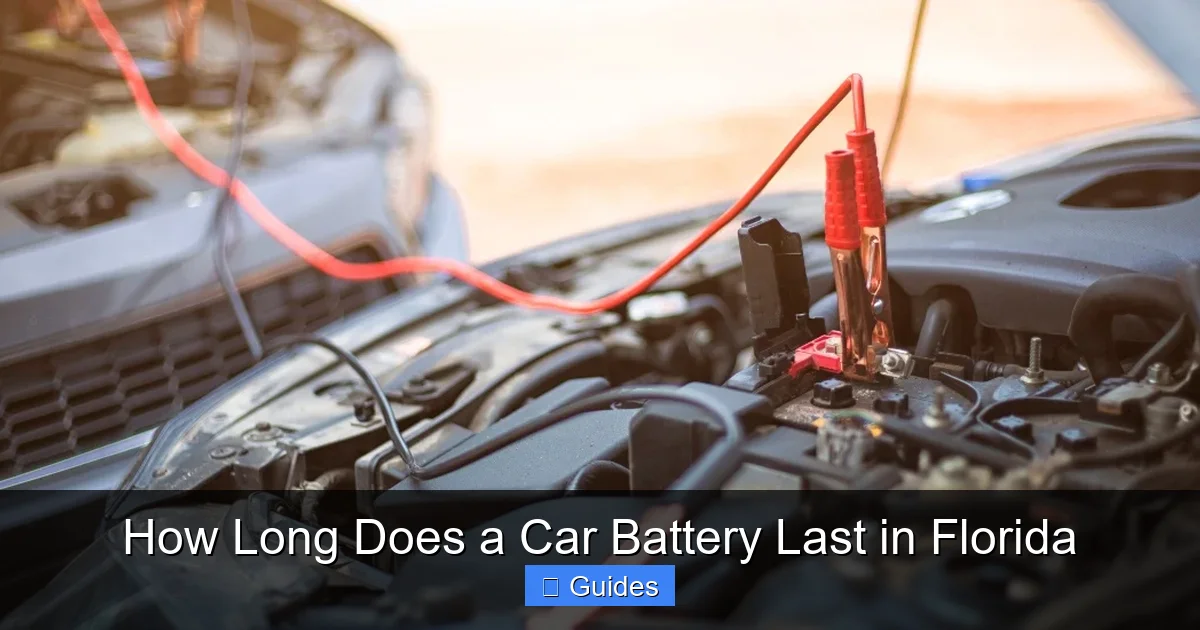
Car batteries in Florida typically last 2.5 to 4 years due to extreme heat and humidity. High temperatures accelerate chemical reactions inside the battery, shortening its life—but regular maintenance and smart driving habits can help you get the most out of your battery.
In This Article
- 1 Key Takeaways
- 2 📑 Table of Contents
- 3 How Long Does a Car Battery Last in Florida?
- 4 Why Florida’s Climate Shortens Battery Life
- 5 Signs Your Florida Car Battery Is Failing
- 6 How to Extend Your Car Battery’s Life in Florida
- 7 When to Replace Your Car Battery in Florida
- 8 Conclusion: Beat the Heat and Keep Your Battery Healthy
- 9 Frequently Asked Questions
Key Takeaways
- Heat is the #1 enemy of car batteries: Florida’s hot climate speeds up internal corrosion and evaporation, reducing battery life.
- Average lifespan is shorter than national average: While most car batteries last 3–5 years, Florida drivers often see 2.5–4 years.
- Regular maintenance extends life: Cleaning terminals, checking fluid levels (if applicable), and testing voltage can add months or even years.
- Short trips hurt battery health: Frequent short drives don’t allow the alternator to fully recharge the battery, leading to gradual power loss.
- Parking in shade or garages helps: Keeping your car cool reduces heat stress on the battery and slows degradation.
- Signs of a failing battery include slow cranking, dim lights, and warning lights: Don’t wait for a dead battery—get it tested early.
- Consider a high-performance or AGM battery: These are better suited for hot climates and offer longer life and reliability.
📑 Table of Contents
How Long Does a Car Battery Last in Florida?
If you live in Florida, you know the heat is no joke. From May through October, temperatures regularly soar into the 90s—and that’s just the air temperature. Under the hood of your car, it can easily hit 140°F or more. This intense heat doesn’t just make driving uncomfortable—it also takes a serious toll on one of your vehicle’s most critical components: the car battery.
So, how long does a car battery last in Florida? On average, **2.5 to 4 years**—shorter than the typical 3 to 5 years seen in cooler climates. While that might sound surprising, it’s the reality for drivers in the Sunshine State. The combination of relentless heat, high humidity, and frequent short trips creates a perfect storm for battery degradation.
But don’t panic. Just because your battery may not last as long doesn’t mean you’re doomed to constant replacements. With a little knowledge and proactive care, you can maximize your battery’s lifespan and avoid being stranded on the side of I-95 with a dead engine.
In this guide, we’ll break down why Florida’s climate affects battery life, what signs to watch for, and how you can protect your investment. Whether you’re a lifelong Floridian or just moved down from the North, this information will help you stay ahead of battery trouble.
Why Florida’s Climate Shortens Battery Life
Visual guide about How Long Does a Car Battery Last in Florida
Image source: flo.com
Let’s get one thing straight: **heat is the number one killer of car batteries**. It might seem counterintuitive—after all, batteries need to generate electricity, and electricity involves heat, right? But in this case, too much heat is a bad thing.
Car batteries are essentially chemical reactors. They use a mix of lead plates and sulfuric acid (called electrolyte) to produce electrical energy. This chemical reaction works best at moderate temperatures—around 70°F to 80°F. But in Florida, under-hood temperatures can climb well above 140°F during summer months. That extreme heat speeds up the chemical reactions inside the battery, which might sound good at first—but it actually causes faster wear and tear.
Accelerated Corrosion
One of the biggest issues caused by heat is **corrosion**. The lead plates inside your battery slowly corrode over time, and heat makes this process happen much faster. Corrosion reduces the battery’s ability to hold a charge and deliver power when you need it most—like when you’re trying to start your car on a hot morning.
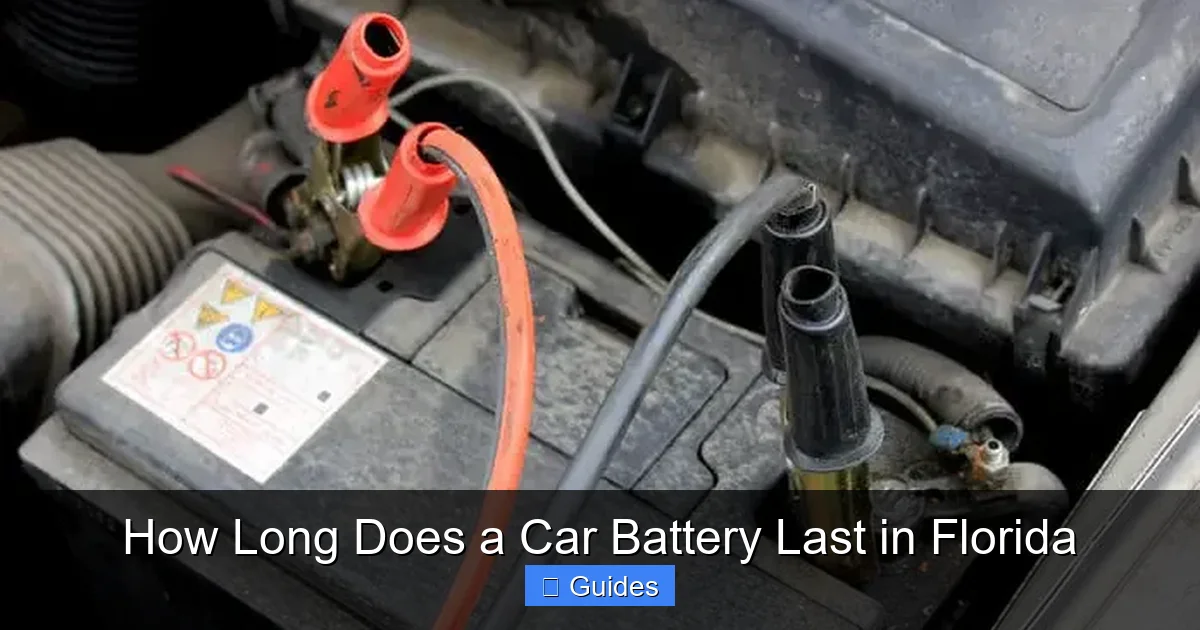
You might notice a powdery, blue or white buildup around the battery terminals. That’s corrosion, and while it can be cleaned, it’s a sign that the internal components are also deteriorating. Over time, this buildup can interfere with electrical connections, leading to starting problems.
Electrolyte Evaporation
Another heat-related problem is **electrolyte evaporation**. In traditional flooded lead-acid batteries (the most common type), the liquid electrolyte can evaporate when exposed to high temperatures. As the fluid level drops, the lead plates become exposed to air, which causes them to sulfate and degrade.
Sulfation is when lead sulfate crystals form on the battery plates. A small amount is normal during discharge, but when the battery isn’t recharged fully—or when it’s exposed to heat—these crystals harden and become permanent. This reduces the battery’s capacity and can eventually render it useless.
Increased Self-Discharge
All batteries lose charge over time, even when not in use. This is called **self-discharge**. In cooler climates, self-discharge is slow—maybe 1–2% per month. But in Florida’s heat, that rate can double or even triple. A battery left in a parked car for a week in July might lose 10–15% of its charge, especially if it’s already aging.
This is especially problematic for drivers who don’t use their cars daily—like retirees, seasonal residents, or people with multiple vehicles. A battery that sits idle in the heat can go from healthy to dead in just a few weeks.
Humidity and Moisture Damage
While heat is the main culprit, Florida’s high humidity also plays a role. Moisture can seep into battery compartments, especially in older vehicles with worn seals. This can lead to short circuits, corrosion, and even internal damage.
Additionally, humidity contributes to the growth of mold and mildew in the engine bay, which can indirectly affect battery performance by clogging vents or damaging wiring.
Signs Your Florida Car Battery Is Failing
Visual guide about How Long Does a Car Battery Last in Florida
Image source: batterymanguide.com
Knowing how long a car battery lasts in Florida is helpful, but it’s even more important to recognize the warning signs of a dying battery. Catching problems early can save you from a frustrating—and potentially dangerous—breakdown.
Here are the most common symptoms to watch for:
Slow Engine Crank
When you turn the key (or push the start button), does the engine turn over slowly? Like it’s struggling to start? This is one of the earliest and most obvious signs of a weak battery. The starter motor needs a strong burst of power to get the engine going, and if the battery can’t deliver, you’ll notice a sluggish response.
In Florida, this often happens on hot mornings when the battery has been sitting in a hot engine bay all night. The heat has drained its power, and now it doesn’t have enough juice to start the car.
Dim Headlights and Electrical Issues
Turn on your headlights—do they seem dimmer than usual? What about your dashboard lights, radio, or power windows? If electrical components are underperforming, especially when the engine is off, it could mean the battery isn’t holding a charge.
This is because the battery powers all electrical systems when the engine isn’t running. If it’s weak, everything from your AC fan to your phone charger may not work properly.
Check Engine or Battery Warning Light
Modern cars have a battery or charging system warning light on the dashboard—usually shaped like a battery or labeled “ALT” or “CHG.” If this light comes on, it means the alternator isn’t charging the battery properly, or the battery itself is failing.
Don’t ignore this light. It’s your car’s way of saying, “Hey, something’s wrong with the electrical system.” In Florida, this often happens when the battery is already weakened by heat and can’t accept a full charge.
Swollen or Bloated Battery Case
Take a look at your battery. Is the case bulging or swollen? This is a clear sign of overheating. When a battery gets too hot, gases build up inside and cause the casing to expand. A swollen battery is dangerous—it can leak acid, short-circuit, or even explode in extreme cases.
If you see this, replace the battery immediately. Don’t wait.
Old Age
Finally, consider the age of your battery. Most manufacturers recommend replacing a car battery every 3–5 years. But in Florida, that timeline shortens. If your battery is more than 3 years old, it’s wise to have it tested regularly—even if it seems to be working fine.
Batteries don’t always give obvious warning signs before they fail. Sometimes, they just die overnight. That’s why preventive testing is so important.
How to Extend Your Car Battery’s Life in Florida
Visual guide about How Long Does a Car Battery Last in Florida
Image source: techbuzzer.org
Now that you know why Florida is tough on batteries and how to spot trouble, let’s talk about solutions. The good news? There are several practical steps you can take to **extend your car battery’s life** and avoid unexpected failures.
Park in the Shade or Garage
This one’s simple but powerful: **keep your car cool**. Whenever possible, park in a shaded area, under a tree, or in a garage. Even a few degrees of temperature difference can make a big impact on battery health.
If you don’t have a garage, consider using a car cover or windshield sunshade. These reflect sunlight and reduce interior and under-hood temperatures. Some drivers even use reflective window films to keep heat out.
Take Longer Drives Regularly
Short trips are convenient, but they’re hard on your battery. When you drive for just a few minutes, the alternator doesn’t have enough time to fully recharge the battery after starting the engine. Over time, this leads to a gradual loss of charge—known as a “deep discharge cycle.”
To combat this, try to take longer drives at least once a week—20 minutes or more. This gives the alternator time to restore the battery’s charge and helps prevent sulfation.
If you mostly drive short distances, consider using a **battery maintainer** (also called a trickle charger). These devices plug into an outlet and slowly recharge the battery when the car is parked. They’re especially useful for classic cars, RVs, or vehicles that sit for long periods.
Clean Battery Terminals Regularly
Corrosion on the battery terminals is common in Florida’s humid climate. This buildup can interfere with electrical connections and reduce performance.
To clean the terminals:
- Turn off the engine and disconnect the negative (black) cable first, then the positive (red).
- Mix a tablespoon of baking soda with a cup of water.
- Use an old toothbrush or wire brush to scrub the terminals and cable ends.
- Rinse with clean water and dry thoroughly.
- Reconnect the positive cable first, then the negative.
- Apply a thin layer of petroleum jelly or terminal protector spray to prevent future corrosion.
Do this every 6–12 months, or whenever you notice buildup.
Get Regular Battery Tests
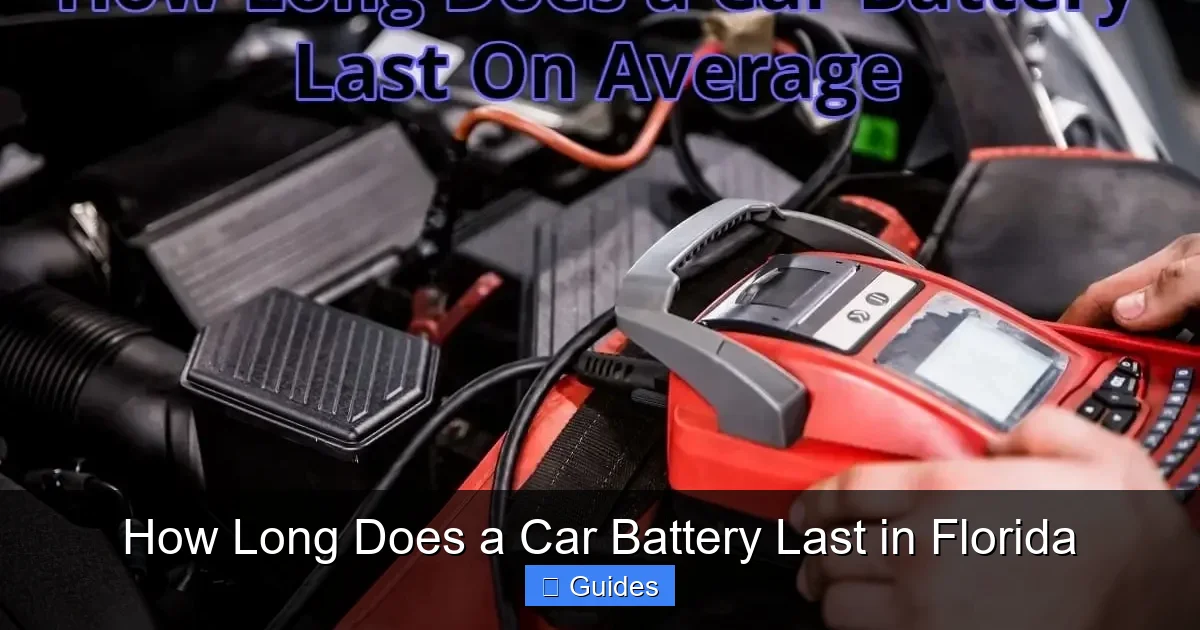
Most auto parts stores (like AutoZone, O’Reilly, or Advance Auto Parts) offer **free battery testing**. They’ll check the voltage, cold cranking amps (CCA), and overall health of your battery.
In Florida, it’s a good idea to get your battery tested:
- Once a year, especially before summer.
- Whenever you notice performance issues.
- If the battery is more than 3 years old.
A simple test can tell you if your battery is still strong or if it’s time to replace it. Don’t wait until it dies—proactive testing saves time, money, and stress.
Upgrade to a High-Performance Battery
Not all car batteries are created equal—especially when it comes to heat resistance. If you live in Florida, consider upgrading to a **high-performance or AGM (Absorbent Glass Mat) battery**.
AGM batteries are sealed, maintenance-free, and more resistant to heat, vibration, and deep discharges. They’re commonly used in luxury vehicles, hybrids, and performance cars, but they’re also ideal for hot climates.
While they cost more upfront (typically $150–$300), they often last 4–6 years—even in Florida—and provide more reliable performance.
Check the Charging System
A weak battery isn’t always the battery’s fault. Sometimes, the problem is the **alternator**—the part that recharges the battery while you drive.
If your alternator isn’t working properly, it won’t recharge the battery, leading to repeated drain and failure. Signs of alternator trouble include:
- Battery warning light on the dashboard.
- Frequent need to jump-start the car.
- Electrical components acting erratically.
Have your charging system checked during routine maintenance. A healthy alternator is just as important as a healthy battery.
When to Replace Your Car Battery in Florida
Even with the best care, car batteries don’t last forever. So how do you know when it’s time to replace yours?
Here are some guidelines:
Age
If your battery is **3 years or older**, start paying close attention. In Florida, most batteries reach the end of their useful life between 2.5 and 4 years. Even if it’s still working, consider replacing it proactively—especially before summer.
Performance Issues
If you’ve noticed slow cranking, dim lights, or frequent jumps, it’s time to replace the battery. Don’t wait for a complete failure.
Test Results
If a professional test shows your battery’s voltage is below 12.4 volts (when the engine is off), or its CCA rating has dropped significantly, it’s time for a new one.
Physical Damage
Swelling, leaks, or severe corrosion are red flags. Replace the battery immediately.
When replacing your battery, choose one with a strong warranty (at least 3 years) and a high CCA rating—especially if you drive in stop-and-go traffic or use a lot of electronics.
Conclusion: Beat the Heat and Keep Your Battery Healthy
So, how long does a car battery last in Florida? On average, **2.5 to 4 years**—but that number can vary based on how you drive, where you park, and how well you maintain your vehicle.
The key takeaway? **Heat is your battery’s worst enemy**, but you’re not powerless. By parking in the shade, taking longer drives, cleaning terminals, and getting regular tests, you can significantly extend your battery’s life.
Don’t wait for a dead battery to remind you of Florida’s harsh climate. Be proactive. Stay cool. And keep your car starting strong—no matter how hot it gets outside.
Frequently Asked Questions
Why do car batteries die faster in Florida?
Florida’s extreme heat accelerates chemical reactions inside the battery, causing faster corrosion, electrolyte evaporation, and self-discharge. These factors shorten the battery’s lifespan compared to cooler regions.
Can I drive with a weak battery in Florida?
It’s not recommended. A weak battery may fail unexpectedly, especially in hot weather. Get it tested and replaced if needed to avoid being stranded.
How often should I test my car battery in Florida?
Test your battery at least once a year, preferably before summer. If it’s over 3 years old or you notice performance issues, test it more frequently.
Is it worth upgrading to an AGM battery in Florida?
Yes. AGM batteries are more heat-resistant, maintenance-free, and longer-lasting—making them an excellent choice for Florida’s climate.
Can I jump-start my car in the heat?
Yes, but be cautious. Heat can make batteries more volatile. Use proper jumper cables, follow safety steps, and avoid sparks near the battery.
Does humidity affect car batteries?
Yes. High humidity can lead to corrosion and moisture damage, especially around terminals and seals. Regular cleaning and inspection help prevent these issues.

At CarLegit, we believe information should be clear, factual, and genuinely helpful. That’s why every guide, review, and update on our website is created with care, research, and a strong focus on user experience.