

Knowing your car’s trim level helps with maintenance, resale value, and part replacements. This guide shows you simple ways to identify your trim using VINs, badges, features, and online tools—no mechanic needed.
In This Article
- 1 Key Takeaways
- 2 📑 Table of Contents
- 3 Why Knowing Your Car’s Trim Level Matters
- 4 What Is a Car Trim Level?
- 5 Method 1: Check Your Vehicle Identification Number (VIN)
- 6 Method 2: Look for Exterior Badges and Emblems
- 7 Method 3: Examine Interior Features and Technology
- 8 Method 4: Use Your Owner’s Manual and Documentation
- 9 Method 5: Use Online Tools and Manufacturer Resources
- 10 Method 6: Contact the Dealership or Manufacturer
- 11 Common Mistakes to Avoid
- 12 Conclusion
- 13 Frequently Asked Questions
Key Takeaways
- Check your VIN: The Vehicle Identification Number contains trim details and can be decoded online or via your dealer.
- Look for exterior badges: Most cars display trim names (like “Sport,” “Limited,” or “EX”) on the rear or side panels.
- Review interior features: Higher trims often include leather seats, sunroofs, premium audio, and advanced tech.
- Use your owner’s manual: It usually lists the trim level and included equipment when the car was new.
- Access build sheets via VIN: Free or paid online tools decode your VIN to show factory specs and trim.
- Contact the dealership: Provide your VIN and they can confirm your trim and original configuration.
- Compare with model year guides: Websites like Edmunds or Kelley Blue Book list trim options by year and model.
📑 Table of Contents
- Why Knowing Your Car’s Trim Level Matters
- What Is a Car Trim Level?
- Method 1: Check Your Vehicle Identification Number (VIN)
- Method 2: Look for Exterior Badges and Emblems
- Method 3: Examine Interior Features and Technology
- Method 4: Use Your Owner’s Manual and Documentation
- Method 5: Use Online Tools and Manufacturer Resources
- Method 6: Contact the Dealership or Manufacturer
- Common Mistakes to Avoid
- Conclusion
Why Knowing Your Car’s Trim Level Matters
Imagine you’re shopping for a replacement headlight or trying to sell your car online. You list it as a “2018 Honda Accord”—but is it the base LX, the mid-tier EX, or the top-of-the-line Touring? That detail changes everything. The trim level of your car determines its features, performance options, interior materials, and even safety tech. Getting it wrong could mean buying the wrong part, underpricing your sale, or missing out on warranty coverage.
Trim levels are like tiers of a subscription service—each one adds more perks. A base model might have cloth seats and basic audio, while a higher trim could include heated leather seats, a panoramic sunroof, adaptive cruise control, and a premium sound system. These differences aren’t just cosmetic; they affect how your car performs, feels, and holds its value. Whether you’re maintaining, upgrading, or selling your vehicle, knowing your trim is essential. And the good news? It’s easier than you think to find out.
What Is a Car Trim Level?
Before we dive into how to identify your trim, let’s clarify what it actually means. A trim level is a manufacturer-defined package that bundles specific features, materials, and performance options for a given model. Think of it as different versions of the same car. For example, a Toyota Camry comes in L, LE, SE, XLE, and XSE trims—each with increasing levels of comfort, tech, and style.
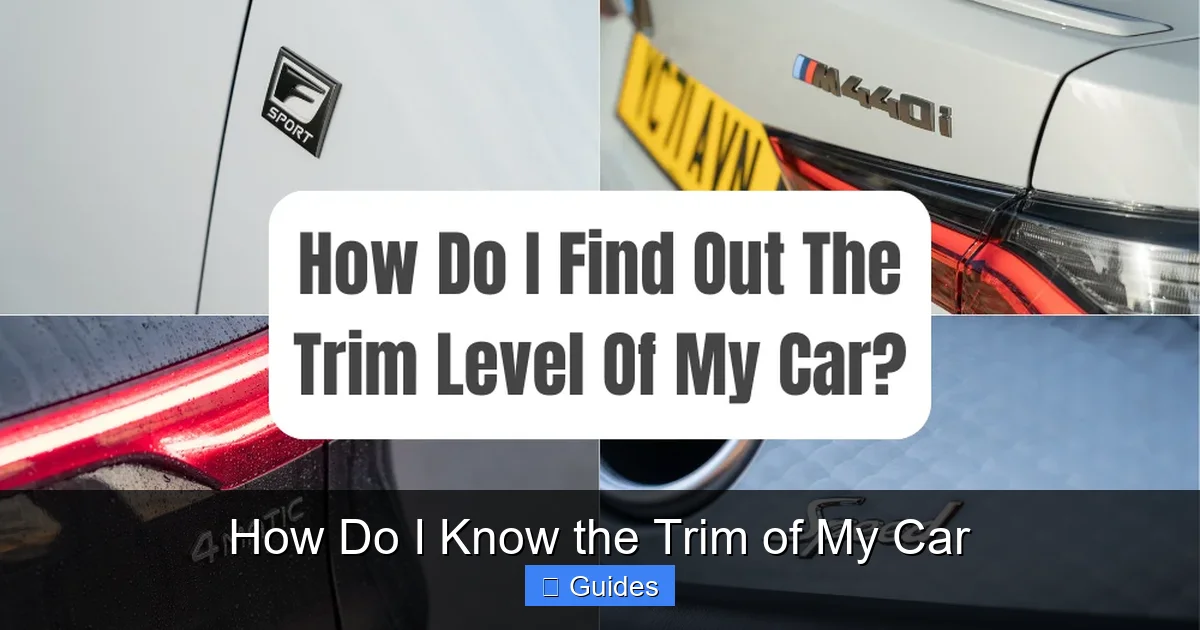
Visual guide about How Do I Know the Trim of My Car
Image source: motorverso.com
How Trims Differ Across Models
Trim levels vary widely between brands and even within the same model over different years. A Ford F-150 might offer XL, XLT, Lariat, King Ranch, Platinum, and Limited trims—each targeting different buyers, from work trucks to luxury haulers. Similarly, a Hyundai Elantra could have SE, SEL, and Limited trims, with the Limited including features like wireless charging and a larger touchscreen.
Why Trims Aren’t Always Obvious
Some trims look nearly identical from the outside. A Honda Civic LX and EX might share the same body style, but the EX adds a sunroof, better audio, and smartphone integration. Without checking the badges or interior, you might not notice the difference. That’s why relying on visual cues alone isn’t enough—especially if badges have been removed or the car has been modified.
Trim vs. Optional Packages
It’s also important to distinguish trim levels from optional packages. A trim is the base configuration, while packages (like “Technology Package” or “Sport Appearance Package”) add extra features on top. For instance, a Mazda CX-5 Touring might come with a standard sunroof, but adding the “Premium Package” could include leather seats and a heads-up display. Knowing your trim helps you understand what’s standard versus what was added later.
Method 1: Check Your Vehicle Identification Number (VIN)
The VIN is your car’s unique fingerprint—a 17-character code that tells you everything from the factory it was built in to the engine type and trim level. It’s the most reliable way to identify your trim, especially if badges are missing or the car has been repainted.
Where to Find Your VIN
You can find your VIN in several places:
- On the driver’s side dashboard, visible through the windshield
- On the driver’s side door jamb (look for a sticker when you open the door)
- In your owner’s manual or registration documents
- On insurance cards or policy documents
Once you have the VIN, you can decode it using free or paid online tools. Websites like NICB.org (National Insurance Crime Bureau) offer free VIN decoding, while services like AutoCheck or Carfax provide detailed build sheets for a fee.
How VIN Decoding Works
VINs follow a standardized format. For most vehicles, the 4th to 8th characters (called the Vehicle Descriptor Section) include information about the engine, body style, and trim. For example, in a 2020 Subaru Outback, the 6th character might indicate whether it’s a Base, Premium, Limited, or Touring trim. Some manufacturers also embed trim codes in the 8th character (the engine code) or the 10th character (the model year).
Example: Decoding a Toyota VIN
Let’s say your VIN is JTMBFREV0JJ123456. Using a Toyota-specific decoder, you’d find that the “F” in the 5th position indicates a front-wheel-drive RAV4, and the “R” in the 6th position points to the LE trim. The “E” in the 8th position confirms it’s a 2.5L 4-cylinder engine. This method is accurate and doesn’t require any guesswork.
Limitations of VIN Decoding
While VIN decoding is powerful, it’s not perfect. Some older vehicles or imported models may not follow standard formats. Also, if your car has been heavily modified or rebuilt, the VIN might not reflect current features. Still, for most drivers, it’s the gold standard for identifying trim.
Method 2: Look for Exterior Badges and Emblems
If you’re in a hurry, the quickest way to identify your trim is to walk around your car and look for badges. Most manufacturers proudly display trim names on the rear trunk lid, near the license plate, or on the side fenders.
Common Badge Locations
- Rear trunk or liftgate: This is the most common spot. Look for labels like “Sport,” “Limited,” “EX,” or “Premium.”
- Side fenders or C-pillars: Some cars, like BMWs or Audis, place trim badges near the front wheels or rear windows.
- Grille or hood: Performance trims (like “GT” or “SS”) often feature bold badges on the front.
For example, a Ford Mustang GT has a prominent “GT” badge on the rear, while a Chevrolet Malibu Premier displays “Premier” near the trunk handle. Even subtle differences matter—a Honda Accord “Sport” has a black grille and dual exhaust, while the “Touring” adds chrome accents and LED headlights.
When Badges Aren’t Helpful
Badges can be misleading. Some owners remove them for a cleaner look, or aftermarket parts might mimic higher trims. A base model with a spoiler and alloy wheels might look like a Sport trim, but without the badge, you can’t be sure. Also, some trims share the same exterior design. A Toyota Camry LE and SE might look identical except for the SE’s sportier wheels and rear spoiler.
How to Verify Badge Accuracy
If you’re unsure, cross-check the badge with other methods. For instance, if your car says “Limited” but lacks leather seats or a sunroof, it might be a lower trim with added accessories. Always confirm with the VIN or owner’s manual.
Method 3: Examine Interior Features and Technology
The inside of your car often reveals more about its trim than the outside. Higher trims typically include premium materials, advanced tech, and comfort features that base models lack.
Seat Materials and Comfort
Start with the seats. Base trims usually have cloth upholstery, while mid-level trims might offer upgraded fabric or synthetic leather. Top trims almost always feature genuine leather, often with heating, ventilation, and power adjustments. For example, a Hyundai Sonata SEL has cloth seats, but the Limited trim includes heated and cooled Nappa leather.
Infotainment and Audio Systems
Check the size and functionality of your touchscreen. A 7-inch display with basic Bluetooth might indicate a lower trim, while an 8- or 10-inch screen with navigation, Apple CarPlay, and Android Auto suggests a higher trim. Premium audio systems—like Bose, Harman Kardon, or Bang & Olufsen—are almost always reserved for top trims. A Ford Explorer XLT might have a standard stereo, but the Platinum trim includes a 12-speaker B&O sound system.
Climate Control and Convenience Features
Dual-zone or tri-zone automatic climate control is a common upgrade in higher trims. So are features like wireless phone charging, ambient lighting, and hands-free power liftgates. A Kia Sorento LX might have manual climate control, while the SX Prestige trim adds a panoramic sunroof, ventilated seats, and a 12.3-inch digital gauge cluster.
Safety and Driver Assistance Tech
Advanced safety features like adaptive cruise control, lane-keeping assist, blind-spot monitoring, and automatic emergency braking are often limited to higher trims. A base Toyota RAV4 might only have basic airbags, but the Limited trim includes Toyota Safety Sense 2.0 with full-speed radar cruise control.
Performance Upgrades
Some trims offer more powerful engines or all-wheel drive. A Subaru Outback Base comes with a 2.5L engine, but the Touring trim includes a 2.4L turbocharged engine. Similarly, a Ford F-150 XL might have rear-wheel drive, while the Lariat offers optional 4×4 and a V8 engine.
Method 4: Use Your Owner’s Manual and Documentation
Your owner’s manual is a treasure trove of information—including your car’s original trim level. When you bought the vehicle, the manual was tailored to your specific configuration, listing standard and optional features.
Finding Trim Info in the Manual
Look for sections like “Vehicle Specifications,” “Equipment,” or “Model Identification.” These often include a chart or table showing trim levels and their features. For example, a 2019 Nissan Altima manual might list the S, SR, SV, and SL trims, with details on engine size, transmission, and included tech.
Registration and Title Documents
Your car’s registration or title might list the trim under “Model” or “Body Type.” While not always detailed, it can give you a starting point. Some states include the VIN and basic trim info, which you can cross-reference online.
Window Sticker (Monroney Label)
If you still have the original window sticker from when you bought the car, it’s the most accurate source. It lists the trim, MSRP, standard features, and optional packages. Even if you don’t have the physical sticker, you can often find a digital copy by entering your VIN on the manufacturer’s website or sites like MonroneyLabels.com.
Method 5: Use Online Tools and Manufacturer Resources
Thanks to the internet, identifying your trim has never been easier. Several free and paid tools can decode your VIN or let you look up your car’s specs by year, make, and model.
Free VIN Decoders
Websites like NICB VINCheck, DecodeThisVIN.com, and AutoDetective.com offer free VIN decoding. Simply enter your 17-character VIN, and they’ll return details like trim, engine, transmission, and factory options. These tools are great for quick checks, though they may not include every detail.
Paid Services for Detailed Reports
For a deeper dive, consider paid services like Carfax, AutoCheck, or Window Sticker by VIN. These provide full build sheets, showing exactly how your car left the factory. They’re especially useful for used car buyers or sellers who want to verify trim and options.
Manufacturer Websites
Many automakers let you look up your car’s specs using your VIN. For example, Toyota’s “Build & Price” tool allows you to enter your VIN and see the original configuration. Similarly, Ford’s “Owner” portal shows your vehicle’s trim, service history, and recall information.
Third-Party Car Research Sites
Websites like Edmunds.com, Kelley Blue Book (KBB), and Cars.com have detailed model guides that list trim levels by year. You can compare features side by side and see what each trim includes. For example, searching “2021 Honda CR-V trims” will show you the LX, EX, EX-L, and Touring options with pricing and specs.
Method 6: Contact the Dealership or Manufacturer
When all else fails, the people who built your car can tell you exactly what it is. Dealerships and manufacturer customer service centers have access to detailed records using your VIN.
How to Reach Out
Call or visit your local dealership’s service department. Provide your VIN, and they can pull up your car’s original build sheet. Most dealerships are happy to help, especially if you’re a current or past customer. You can also contact the manufacturer directly through their customer support line or online portal.
What to Ask For
Be specific: “Can you confirm the trim level and standard features for my 2017 Ford Escape using VIN JTMBFREV0JJ123456?” They’ll usually email or print a report showing the trim, engine, transmission, and optional packages.
Why This Method Works
Dealerships have direct access to factory databases, so their information is as accurate as it gets. This is especially helpful for older vehicles or rare trims that aren’t well-documented online.
Common Mistakes to Avoid
Even with all these tools, it’s easy to make mistakes when identifying your trim. Here are a few pitfalls to watch out for:
Assuming All Models Follow the Same Rules
Trim naming conventions vary by brand. A “Premium” trim on a Kia might be equivalent to a “Luxury” trim on a Lexus. Don’t assume that similar names mean similar features.
Ignoring Model Year Changes
Trim levels can change from year to year. A 2018 Honda Civic EX might have different features than a 2022 EX. Always check the specific year when researching.
Overlooking Regional Differences
Some trims are only available in certain markets. A “Sport” trim in the U.S. might not exist in Europe, or it could have different specs. Make sure you’re looking at the right region.
Relying Solely on Visual Cues
As mentioned earlier, badges and body styles can be misleading. Always verify with the VIN or documentation.
Conclusion
Knowing the trim of your car isn’t just a fun fact—it’s a practical necessity. Whether you’re buying parts, selling your vehicle, or just curious about what you’re driving, identifying your trim level helps you make informed decisions. From decoding your VIN to checking badges and features, there are multiple reliable methods to get the answer.
The best approach is to use a combination of techniques. Start with the VIN for accuracy, then confirm with badges, interior features, and your owner’s manual. Online tools and dealership support can fill in any gaps. With this knowledge, you’ll never have to guess about your car’s trim again—and you’ll get the most out of your driving experience.
Frequently Asked Questions
Can I find my car’s trim level for free?
Yes! You can use free VIN decoders like NICB VINCheck or DecodeThisVIN.com to identify your trim level at no cost. These tools provide basic information about your vehicle’s configuration.
What if my car doesn’t have trim badges?
If badges are missing, use your VIN to decode the trim level. You can also check interior features, consult your owner’s manual, or contact the dealership for confirmation.
Do all cars have different trim levels?
Most mainstream vehicles offer multiple trim levels, but some economy or base models may only come in one version. Check your manufacturer’s website or owner’s manual to confirm.
Can I upgrade my car to a higher trim?
You can add some features through aftermarket parts, but you can’t officially change your trim level. The factory trim is tied to your VIN and original build sheet.
Why does my VIN not show the trim?
Some older or imported vehicles may not encode trim in the VIN. In these cases, use badges, features, or contact the manufacturer for help.
Is the trim level the same as the model year?
No. The model year refers to when the car was made (e.g., 2020), while the trim level (e.g., “Limited”) describes the feature package. A 2020 Honda Accord can come in LX, EX, or Touring trims.

At CarLegit, we believe information should be clear, factual, and genuinely helpful. That’s why every guide, review, and update on our website is created with care, research, and a strong focus on user experience.