
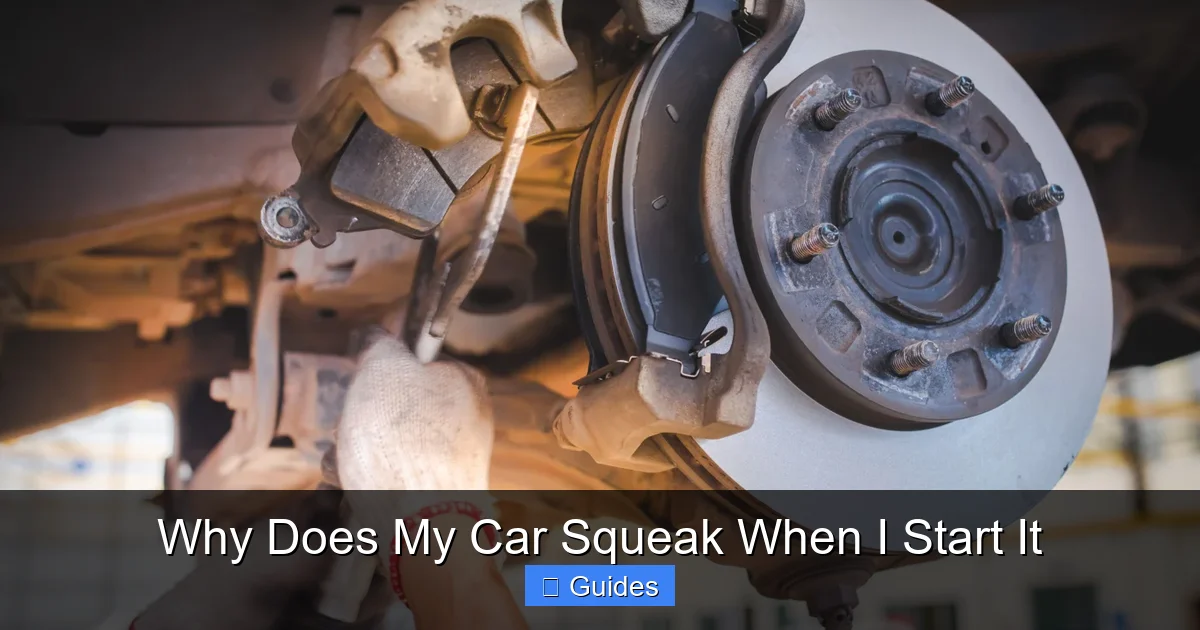
If your car squeaks when you start it, don’t panic—but don’t ignore it either. This common issue is often caused by worn belts, low fluids, or cold weather, and while some causes are harmless, others may signal serious problems. Understanding the source helps you act fast and avoid costly repairs down the road.
In This Article
- 1 Key Takeaways
- 2 📑 Table of Contents
- 3 Why Does My Car Squeak When I Start It? A Complete Guide
- 4 Common Causes of Startup Squeaks
- 5 How to Diagnose the Squeak
- 6 DIY Fixes You Can Try at Home
- 7 When to See a Mechanic
- 8 Prevention: How to Avoid Future Squeaks
- 9 Conclusion
- 10 Frequently Asked Questions
- 10.1 Is it safe to drive if my car squeaks when I start it?
- 10.2 How much does it cost to fix a squeaky serpentine belt?
- 10.3 Can I spray WD-40 on my car belt to stop the squeak?
- 10.4 Why does my car only squeak in the winter?
- 10.5 How often should I replace my serpentine belt?
- 10.6 Can a bad battery cause a squeaking noise at startup?
Key Takeaways
- Serpentine or drive belts are the most common culprits: Over time, these rubber belts wear out, crack, or slip, causing a high-pitched squeak—especially on cold mornings.
- Cold weather tightens belts and thickens fluids: Squeaks are more common in winter because rubber contracts and engine oil flows slower, increasing friction.
- Low power steering or alternator fluid can cause noise: Check fluid levels regularly; low levels may lead to belt slippage and squeaking during startup.
- A failing tensioner or pulley can mimic belt issues: Even with a good belt, worn pulleys or a weak tensioner can cause misalignment and noise.
- Battery and electrical issues may contribute indirectly: A weak battery can cause slow cranking, increasing strain on belts and accessories at startup.
- Regular maintenance prevents most squeaks: Replacing belts every 60,000–100,000 miles and checking pulleys annually can save you from unexpected noise.
- When in doubt, see a mechanic: Persistent or worsening squeaks—especially with warning lights—should be inspected promptly to avoid breakdowns.
📑 Table of Contents
Why Does My Car Squeak When I Start It? A Complete Guide
You turn the key—or push the start button—and instead of a smooth rumble, your car greets you with a sharp, high-pitched squeak. It’s annoying, sure, but is it dangerous? Should you panic? The truth is, a squeaking noise at startup is one of the most common car complaints, and while it’s rarely an emergency, it’s definitely a sign that something needs attention.
The good news? Most startup squeaks are caused by simple, fixable issues—especially related to belts, fluids, or temperature. The bad news? Ignoring them can lead to bigger problems down the road, like a broken serpentine belt or a seized alternator. That’s why understanding what’s causing the noise is the first step toward keeping your car running smoothly and safely.
In this guide, we’ll walk you through the most common reasons your car squeaks when you start it, how to identify the root cause, and what you can do about it—whether you’re a DIY enthusiast or prefer to leave it to the pros. We’ll also cover when it’s time to visit a mechanic and how regular maintenance can prevent the squeak from ever happening in the first place.
Common Causes of Startup Squeaks
Visual guide about Why Does My Car Squeak When I Start It
Image source: crescentmotoringservices.com
When your car squeaks at startup, the sound usually comes from under the hood—specifically, from the engine’s accessory drive system. This system includes belts, pulleys, and components like the alternator, power steering pump, and air conditioning compressor. At startup, these parts spin up quickly, and if something is worn, misaligned, or dry, friction increases—and so does the noise.
Let’s break down the most frequent culprits behind that annoying squeak.
1. Worn or Glazed Serpentine Belt
The serpentine belt—also called the drive belt—is a long, continuous loop that powers multiple engine accessories. It runs the alternator, power steering pump, water pump, and air conditioning compressor. Because it’s made of rubber, it wears out over time.
As the belt ages, it can develop cracks, fraying edges, or a shiny, glazed surface. This glazing reduces grip, causing the belt to slip on the pulleys—especially when the engine first starts and everything is cold and stiff. The result? A loud, high-pitched squeak that often fades after a minute or two as the belt warms up.
Example: Imagine turning your car on on a chilly morning. The rubber belt is stiff and tight, and the alternator demands power immediately. If the belt is glazed, it slips for a few seconds, creating that familiar squeal. Once the engine warms and the belt expands slightly, the noise stops.
2. Loose or Misaligned Belt Tension
Even a new belt can squeak if it’s not properly tensioned. The belt needs just the right amount of tightness—too loose, and it slips; too tight, and it strains the pulleys and bearings.
Over time, the belt tensioner—a spring-loaded pulley that maintains pressure—can weaken or fail. This allows the belt to move slightly, causing it to chirp or squeal at startup. Misaligned pulleys (due to worn bearings or improper installation) can also cause the belt to ride unevenly, creating noise.
Tip: If you’re handy, you can check belt tension by pressing down on the longest span of the belt. It should deflect about ½ inch. If it moves more, the belt may be too loose.
3. Cold Weather Effects
Winter brings more than snow and ice—it also brings squeaky cars. Cold temperatures cause rubber to contract and harden, making belts stiffer and less flexible. At the same time, engine oil and other fluids thicken, increasing resistance in moving parts.
When you start a cold engine, the stiff belt has to grip pulleys that are also cold and less forgiving. This combination often leads to a loud squeak that disappears once everything warms up.
Real-life scenario: You park your car outside overnight in 20°F weather. In the morning, the first start is accompanied by a sharp squeal that lasts 30 seconds. By the time you reach the highway, the noise is gone. This is classic cold-weather belt behavior—and usually harmless if it only happens in winter.
4. Low or Contaminated Fluids
Belts don’t operate in a vacuum. They rely on smooth-functioning accessories, many of which depend on proper fluid levels.
For example, the power steering pump uses hydraulic fluid to assist steering. If the fluid is low or dirty, the pump works harder, increasing the load on the belt. This extra strain can cause the belt to slip and squeak at startup.
Similarly, a failing alternator may draw more current when cold, increasing resistance. While this doesn’t directly cause a squeak, it adds stress to the belt system, making existing issues worse.
Pro tip: Check your power steering, brake, and coolant levels monthly. Low fluid = more strain = more noise.
5. Worn Pulleys or Bearings
Even with a perfect belt, worn pulleys or bad bearings can cause squeaking. Over time, the bearings in idler pulleys or accessory components can wear out, causing them to wobble or seize slightly. This misalignment creates uneven tension and friction, leading to noise.
A failing alternator or water pump bearing can also produce a high-pitched whine or squeak that’s most noticeable at startup when everything is cold and stiff.
How to tell: If the squeak sounds more like a grinding or whining noise, or if it persists even after the engine warms up, it’s likely a bearing issue—not just a belt problem.
How to Diagnose the Squeak

Visual guide about Why Does My Car Squeak When I Start It
Image source: shiftthrill.com
Now that you know the common causes, how do you figure out which one is affecting your car? Diagnosing a startup squeak doesn’t require a mechanic—just a little patience and observation.
Step 1: Listen Carefully
The first step is to pay attention to the sound. Where is it coming from? Is it a high-pitched squeal, a chirp, or a grinding noise? Does it happen only on cold starts, or does it occur every time?
– A short, high-pitched squeal that fades after 30–60 seconds is usually belt-related.
– A continuous squeak or whine that gets louder with engine speed may point to a bearing or pulley issue.
– A grinding noise could indicate a seized component or serious mechanical failure.
Step 2: Check the Belt Condition
Pop the hood and inspect the serpentine belt. Look for:
– Cracks or splits along the ribs
– Glossy or shiny patches (glazing)
– Fraying or missing chunks
– Oil or coolant contamination (which degrades rubber)
If the belt looks worn or damaged, it’s time for a replacement.
Step 3: Test Belt Tension
Use your fingers to press down on the longest span of the belt (usually between two pulleys). It should move about ½ inch. If it moves more, the belt is too loose. If it barely moves, it may be over-tightened.
Some cars have an automatic tensioner with a gauge or indicator. Check your owner’s manual for details.
Step 4: Inspect Pulleys and Accessories
Spin each pulley by hand (with the engine off and the belt removed, if possible). It should turn smoothly with no grinding, wobbling, or resistance. If a pulley feels rough or makes noise, the bearing may be failing.
Also, check for signs of fluid leaks near the power steering pump or alternator, as leaks can contaminate the belt.
Step 5: Try the “Spray Test” (Use with Caution)
This is a quick DIY trick: on a cold start, lightly spray a small amount of water on the belt while the engine is running. If the squeak stops immediately, it confirms the noise is belt-related.
Warning: Only do this if you can safely reach the belt and avoid moving parts. Never spray electronics or hot surfaces. This test is best done by someone with mechanical experience.
DIY Fixes You Can Try at Home

Visual guide about Why Does My Car Squeak When I Start It
Image source: tagvault.org
If you’re comfortable working under the hood, many startup squeaks can be resolved with basic tools and a little know-how.
Replace the Serpentine Belt
Replacing a worn serpentine belt is one of the most effective fixes. Most belts last 60,000 to 100,000 miles, but driving conditions, climate, and vehicle age can shorten that lifespan.
Steps:
1. Locate the belt routing diagram (usually on a sticker under the hood).
2. Use a wrench or tensioner tool to release tension and remove the old belt.
3. Install the new belt following the diagram.
4. Reapply tension and double-check alignment.
Tip: Take a photo of the belt routing before removing it, in case the sticker is missing.
Tighten or Replace the Tensioner
If the belt is loose, the tensioner may be worn. Some tensioners are adjustable; others are automatic and must be replaced as a unit.
Check your vehicle’s service manual for specifications. Replacing a tensioner is more involved but ensures long-term reliability.
Clean the Belt and Pulleys
Sometimes, oil, grease, or dirt on the belt or pulleys causes slipping. Use a clean rag and belt cleaner (or isopropyl alcohol) to gently wipe the belt and pulley surfaces.
Never use WD-40 or silicone sprays on belts—they can cause more slipping.
Top Off Fluids
Check and refill power steering fluid, coolant, and engine oil as needed. Use the correct type specified in your owner’s manual.
Low fluid levels increase strain on accessories, which can worsen belt noise.
Lubricate Accessory Pulleys (If Applicable)
Some older vehicles have serviceable pulleys with grease fittings. If yours does, add a small amount of high-temperature grease. Most modern pulleys are sealed and don’t require lubrication.
When to See a Mechanic
While many squeaks are minor, some signs mean it’s time to call in a professional.
Persistent or Worsening Noise
If the squeak doesn’t go away after warming up, or if it’s getting louder over time, don’t ignore it. This could indicate a failing component that could break down unexpectedly.
Warning Lights on the Dashboard
If the squeak is accompanied by the battery, check engine, or oil pressure light, stop driving and get your car inspected immediately. These lights signal serious issues that could leave you stranded.
Belt Damage or Missing Pieces
If you see chunks missing from the belt or it’s visibly frayed, replace it right away. A broken serpentine belt can disable your alternator, power steering, and water pump—leading to overheating or loss of control.
Grinding or Metal-on-Metal Sounds
These noises suggest internal bearing failure or component seizure. Continuing to drive could cause catastrophic damage.
You’re Not Comfortable DIYing It
If you’re unsure about any step, it’s always safer to let a certified mechanic handle it. They have the tools and experience to diagnose and fix the issue correctly.
Prevention: How to Avoid Future Squeaks
The best way to deal with a squeaky car is to never let it happen in the first place. Regular maintenance goes a long way in preventing startup noise.
Follow the Maintenance Schedule
Your owner’s manual outlines when to replace belts, fluids, and other components. Stick to it. Most manufacturers recommend inspecting the serpentine belt every 30,000 miles and replacing it every 60,000–100,000 miles.
Check Belts and Pulleys Annually
Even if the belt looks fine, inspect it once a year for cracks, glazing, or wear. Also, spin the pulleys to check for smooth operation.
Keep Fluids at Proper Levels
Check engine oil, coolant, power steering fluid, and brake fluid monthly. Top off as needed and change them according to the schedule.
Park in a Garage When Possible
Cold weather is a major contributor to belt squeaks. Parking in a garage or using a block heater in winter can reduce cold-start stress on belts and fluids.
Use Quality Parts
When replacing belts or tensioners, choose OEM (original equipment manufacturer) or high-quality aftermarket parts. Cheap belts may save money upfront but wear out faster and cause more noise.
Listen to Your Car
Get familiar with how your car normally sounds. If you notice a new noise—especially at startup—investigate it early. Catching problems early saves time, money, and stress.
Conclusion
So, why does your car squeak when you start it? In most cases, it’s a harmless but annoying result of worn belts, cold weather, or low fluids. While the sound can be startling, it’s rarely a sign of immediate danger—especially if it fades after a minute or two.
However, that doesn’t mean you should ignore it. A squeaking startup can be an early warning sign of belt wear, tensioner failure, or fluid issues that, if left unchecked, could lead to breakdowns or expensive repairs.
The key is to stay proactive. Listen to your car, inspect belts and fluids regularly, and don’t hesitate to visit a mechanic if the noise persists or worsens. With a little attention and routine care, you can keep your car running smoothly—and quietly—for years to come.
Remember: a quiet car is a happy car. And a happy car means fewer surprises, lower repair bills, and more peace of mind every time you turn the key.
Frequently Asked Questions
Is it safe to drive if my car squeaks when I start it?
In most cases, yes—especially if the squeak is short and only happens on cold starts. However, if the noise is loud, persistent, or accompanied by warning lights, have your car inspected immediately to avoid potential breakdowns.
How much does it cost to fix a squeaky serpentine belt?
A serpentine belt replacement typically costs between $100 and $200, including parts and labor. If the tensioner or pulleys also need replacement, the cost may rise to $300–$500.
Can I spray WD-40 on my car belt to stop the squeak?
No. WD-40 and similar lubricants can cause the belt to slip more, worsening the noise and potentially damaging components. Use only belt-specific cleaners or water for temporary testing.
Why does my car only squeak in the winter?
Cold temperatures harden rubber belts and thicken engine fluids, increasing friction at startup. This is normal and usually resolves once the engine warms up. Parking in a garage can help reduce the issue.
How often should I replace my serpentine belt?
Most manufacturers recommend replacing the serpentine belt every 60,000 to 100,000 miles. Check your owner’s manual for specific guidelines and inspect the belt annually for wear.
Can a bad battery cause a squeaking noise at startup?
Indirectly, yes. A weak battery can cause slow cranking, increasing strain on the starter and belts. While the battery itself doesn’t squeak, it can worsen existing belt or pulley issues.

At CarLegit, we believe information should be clear, factual, and genuinely helpful. That’s why every guide, review, and update on our website is created with care, research, and a strong focus on user experience.