
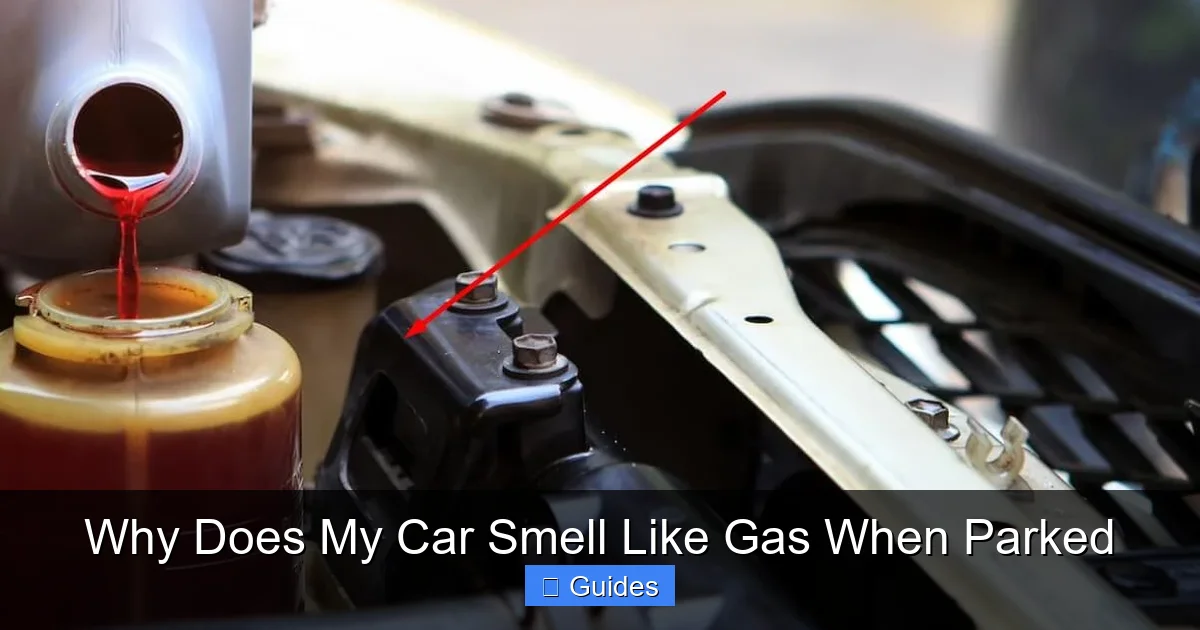
If your car smells like gas when parked, it’s a warning sign that shouldn’t be ignored. This odor can stem from fuel leaks, faulty evaporative systems, or poor ventilation—each posing safety and performance risks. Addressing the issue quickly ensures your safety, protects your vehicle, and saves money on fuel and repairs.
In This Article
- 1 Key Takeaways
- 2 📑 Table of Contents
- 3 Why Does My Car Smell Like Gas When Parked?
- 4 Common Causes of Gas Smell When Parked
- 5 Safety Risks of Ignoring a Gas Smell
- 6 How to Diagnose the Source of the Smell
- 7 DIY Fixes and Preventive Maintenance
- 8 When to See a Mechanic
- 9 Conclusion
- 10 Frequently Asked Questions
- 10.1 Is it normal for my car to smell like gas after driving?
- 10.2 Can a bad oxygen sensor cause a gas smell?
- 10.3 Why does my car smell like gas only in the garage?
- 10.4 How much does it cost to fix a gas smell in a car?
- 10.5 Can a gas smell damage my car’s paint?
- 10.6 Will a gas smell go away on its own?
Key Takeaways
- Fuel leaks are a top cause: Even small drips from fuel lines, injectors, or the tank can create a strong gas smell, especially when the engine is off.
- The evaporative emission system may be faulty: A clogged or damaged charcoal canister or purge valve can allow fuel vapors to escape into the cabin or under the hood.
- Old or damaged gas caps matter: A loose, cracked, or missing gas cap fails to seal the fuel system, letting vapors leak out when parked.
- Engine bay heat can intensify odors: Residual fuel on hot engine parts evaporates after driving, creating a noticeable smell that lingers.
- Ventilation and airflow play a role: Poor air circulation in the cabin or under the hood traps fuel vapors, making the scent more noticeable.
- Immediate action is crucial: Ignoring a gas smell increases fire risk and may lead to costly repairs or environmental damage.
- Professional diagnosis is recommended: Many causes require specialized tools and expertise to pinpoint and fix safely.
📑 Table of Contents
Why Does My Car Smell Like Gas When Parked?
You pull into your driveway, turn off the engine, and step out—only to be hit by a strong smell of gasoline. It’s not just unpleasant; it’s concerning. Why does your car smell like gas when parked? You haven’t spilled fuel, and you filled up days ago. Yet, the scent lingers, especially after the engine cools down.
This isn’t just a minor annoyance. A gas smell when your car is parked can signal a real mechanical issue—one that could affect your safety, your wallet, and your vehicle’s performance. While modern cars are designed to contain fuel vapors tightly, several factors can cause those vapors to escape. From simple fixes like a loose gas cap to more serious problems like fuel line leaks, the causes vary widely.
Understanding why this happens is the first step toward solving it. In this guide, we’ll walk you through the most common reasons your parked car might smell like gas, how to identify the source, and what you can do about it. Whether you’re a seasoned DIYer or someone who prefers to leave repairs to the pros, this article will give you the knowledge you need to act quickly and confidently.
Common Causes of Gas Smell When Parked
Visual guide about Why Does My Car Smell Like Gas When Parked
Image source: koala.sh
There’s no single reason your car might smell like gas when it’s not running. Instead, several components in the fuel system can contribute to the odor. Let’s break down the most frequent culprits.
Fuel Leaks in the Fuel System
One of the most serious—and dangerous—causes of a gas smell is an actual fuel leak. Even a tiny drip from a fuel line, injector, or fuel rail can release enough gasoline to create a strong odor, especially in a closed space like a garage.
Fuel lines can degrade over time due to heat, vibration, and exposure to chemicals. Rubber hoses may crack or harden, while metal lines can corrode or develop pinholes. If you notice a puddle under your car or a sticky residue near the engine, you might have a leak.
Fuel injectors, which spray gasoline into the engine, can also develop leaks if their seals wear out. This often happens in older vehicles or those with high mileage. A leaking injector might drip fuel onto hot engine parts, causing it to evaporate and produce a noticeable smell.
The fuel tank itself is another potential source. While rare, damage from road debris or corrosion can cause small holes or cracks. This is more common in older cars or those driven in harsh conditions.
If you suspect a fuel leak, stop driving immediately. Gasoline is highly flammable, and even a small spark could ignite it. Have your vehicle towed to a trusted mechanic for inspection.
Faulty or Clogged Evaporative Emission System (EVAP)
Modern cars are equipped with an evaporative emission control system (EVAP) designed to capture fuel vapors before they escape into the atmosphere. This system includes a charcoal canister, purge valve, vent valve, and various hoses.
When the EVAP system works properly, fuel vapors from the gas tank are stored in the charcoal canister and later burned in the engine during operation. But if any part of this system fails, vapors can leak out—especially when the car is parked.
A common issue is a clogged or saturated charcoal canister. Over time, the charcoal inside can become clogged with dirt or fuel, preventing it from absorbing vapors. This causes pressure to build in the fuel tank, forcing vapors out through the vent line or gas cap.
Another frequent problem is a stuck-open purge valve. This valve allows vapors to flow from the canister to the engine. If it remains open when the engine is off, it can create a vacuum or pressure imbalance, leading to vapor leaks.
A damaged or disconnected EVAP hose can also allow fumes to escape. These hoses are often made of rubber and can crack or come loose over time.
If your check engine light is on and you smell gas, the EVAP system is a likely suspect. A mechanic can perform a smoke test to locate leaks in the system.
Loose, Damaged, or Missing Gas Cap
It might sound too simple, but a faulty gas cap is one of the most common reasons for a gas smell when parked. The gas cap seals the fuel tank, preventing vapors from escaping. If it’s loose, cracked, or missing entirely, fuel vapors can leak out—especially as the fuel heats up and expands.
After filling up, many drivers don’t tighten the gas cap properly. Others may forget to replace it at all. Over time, the rubber seal on the cap can wear out, allowing vapors to seep through even when the cap appears secure.
Modern cars often have a “check fuel cap” warning light on the dashboard if the cap isn’t sealed correctly. If you see this light, check the cap immediately.
Replacing a gas cap is inexpensive and easy. Most cost between $10 and $30 and can be done in minutes. Always make sure it clicks when tightened—this indicates a proper seal.
Fuel Spillage During Refueling
Sometimes, the gas smell isn’t from a mechanical issue—it’s from a simple spill. If you overfill your gas tank or splash fuel on the car’s exterior during refueling, the liquid can seep into crevices or onto hot engine parts.
Even a small amount of spilled gasoline can create a strong odor, especially if it gets on the exhaust manifold or other hot components. As the engine cools, the fuel evaporates slowly, releasing fumes that linger in the cabin or under the hood.
To prevent this, avoid topping off your tank after the pump clicks off. Modern fuel systems are designed to handle expansion, and overfilling can force liquid fuel into the EVAP system, damaging the charcoal canister.
If you do spill fuel, clean it up immediately with a rag and soapy water. Avoid using harsh chemicals, as they can damage paint or rubber components.
Engine Bay Heat and Residual Fuel Evaporation
After driving, your engine and exhaust system are extremely hot. Any residual fuel on these surfaces—whether from a minor leak, injector drip, or spill—can evaporate as the engine cools.
This process is normal to some extent, but if there’s more fuel than usual, the smell can be strong and persistent. The odor may be more noticeable in enclosed spaces like garages, where air circulation is limited.
This is especially common in older vehicles or those with worn fuel system components. As parts degrade, they may allow small amounts of fuel to drip onto hot surfaces.
While this isn’t always a sign of a major problem, it’s worth investigating. A mechanic can inspect the engine bay for signs of leaks or wear.
Safety Risks of Ignoring a Gas Smell

Visual guide about Why Does My Car Smell Like Gas When Parked
Image source: carnewscast.com
A gas smell when your car is parked isn’t just unpleasant—it’s a potential safety hazard. Ignoring it can lead to serious consequences, from fire risks to environmental damage.
Fire and Explosion Hazards
Gasoline vapors are highly flammable. Even a small spark—from a static discharge, electrical component, or nearby flame—can ignite them. This risk is especially high in enclosed spaces like garages, where vapors can accumulate.
If you smell gas, avoid turning on lights, using electronic devices, or smoking near the vehicle. These actions can create sparks. Instead, open windows and doors to ventilate the area and move the car outside if possible.
Health Risks from Inhaling Fuel Vapors
Breathing in gasoline fumes can cause dizziness, headaches, nausea, and respiratory irritation. Prolonged exposure may lead to more serious health issues, including damage to the nervous system.
Children, pets, and individuals with respiratory conditions are especially vulnerable. If you or anyone in your household experiences symptoms after being near the car, seek fresh air immediately and consult a doctor if needed.
Environmental Impact
Fuel leaks don’t just affect your car—they harm the environment. Gasoline contains toxic chemicals that can contaminate soil and groundwater. Even small leaks can contribute to air pollution by releasing volatile organic compounds (VOCs).
Repairing leaks promptly helps protect the environment and complies with emissions regulations.
How to Diagnose the Source of the Smell
Visual guide about Why Does My Car Smell Like Gas When Parked
Image source: carrepro.org
Figuring out why your car smells like gas when parked requires a systematic approach. Here’s how to narrow down the cause.
Visual Inspection Under the Hood
Start by opening the hood and looking for signs of fuel leaks. Check the fuel lines, injectors, fuel rail, and connections for wetness, stains, or cracks. Use a flashlight to inspect hard-to-see areas.
Look for a shiny or sticky residue—this could indicate a slow leak. Also, check the charcoal canister (usually near the firewall or under the car) and its hoses for damage or disconnection.
Check the Gas Cap
Remove the gas cap and inspect it for cracks, warping, or a damaged seal. Reinstall it and make sure it clicks three to five times when tightened. If it doesn’t click or feels loose, replace it.
Smell Test and Location Tracking
Try to pinpoint where the smell is strongest. Is it near the fuel tank, under the hood, or inside the cabin? This can help identify the source.
For example, a smell near the rear of the car may point to a fuel tank or EVAP issue. A smell near the engine could indicate a leak or spill.
Use a Fuel Pressure Gauge (Advanced)
If you’re comfortable with basic car maintenance, you can use a fuel pressure gauge to check for leaks in the fuel system. A drop in pressure when the engine is off may indicate a leak.
However, this requires some mechanical knowledge and should be done carefully to avoid fuel spills.
Professional Diagnostic Tools
For a definitive diagnosis, visit a mechanic. They can use tools like a smoke machine to pressurize the EVAP system and locate leaks. They can also scan for trouble codes related to the fuel system.
DIY Fixes and Preventive Maintenance
Some gas smell issues can be resolved at home with simple steps. Others require professional help. Here’s what you can do.
Tighten or Replace the Gas Cap
This is the easiest and most common fix. Buy a new gas cap from an auto parts store or dealership. Make sure it’s compatible with your vehicle’s make and model.
Clean Up Fuel Spills
If you spilled gas during refueling, clean the area thoroughly. Use a degreaser and water to remove residue from the exterior and under the hood.
Inspect and Replace Damaged Hoses
Check all fuel and EVAP hoses for cracks, brittleness, or looseness. Replace any that show signs of wear. Use hose clamps to secure connections.
Replace the Charcoal Canister (If Needed)
If the charcoal canister is saturated or clogged, it may need replacement. This is a more advanced repair and may require removing parts of the undercarriage.
Regular Maintenance Tips
To prevent future issues:
– Avoid overfilling the gas tank.
– Replace the gas cap if it shows wear.
– Have the EVAP system inspected during routine maintenance.
– Address check engine lights promptly.
When to See a Mechanic
While some fixes are DIY-friendly, others require professional expertise. Seek help if:
– You suspect a fuel leak.
– The check engine light is on.
– The smell persists after tightening the gas cap.
– You’re unsure of the source.
A mechanic can perform a full inspection, including a smoke test, to locate leaks and recommend repairs. Ignoring the problem could lead to costly damage or safety risks.
Conclusion
A gas smell when your car is parked is more than just an oddity—it’s a signal that something in your fuel system needs attention. Whether it’s a loose gas cap, a leaking fuel line, or a faulty EVAP component, the cause can usually be identified and fixed with the right approach.
Don’t ignore the smell. Take action quickly to protect your safety, your health, and your vehicle. Start with simple checks like the gas cap and visual inspection, but don’t hesitate to consult a professional if the issue persists.
By staying proactive and informed, you can keep your car running safely and odor-free. Remember: a little vigilance today can prevent a big problem tomorrow.
Frequently Asked Questions
Is it normal for my car to smell like gas after driving?
A faint odor immediately after driving can be normal, especially in hot weather or if you spilled fuel. However, a strong or persistent smell when parked is not normal and should be investigated.
Can a bad oxygen sensor cause a gas smell?
No, a faulty oxygen sensor affects fuel mixture and emissions but doesn’t directly cause a gas smell. However, it may trigger a check engine light, which could coincide with other fuel system issues.
Why does my car smell like gas only in the garage?
Enclosed spaces like garages trap fuel vapors, making the smell more noticeable. Poor ventilation allows fumes to accumulate, especially if there’s a small leak or EVAP issue.
How much does it cost to fix a gas smell in a car?
Costs vary widely. Replacing a gas cap costs $10–$30, while fixing a fuel leak or EVAP issue can range from $100 to $500 or more, depending on the repair.
Can a gas smell damage my car’s paint?
Yes, spilled gasoline can damage paint and rubber trim over time. Clean any spills immediately with soap and water to prevent long-term damage.
Will a gas smell go away on its own?
No, a persistent gas smell won’t disappear without addressing the underlying cause. Ignoring it increases safety risks and may lead to more serious problems.

At CarLegit, we believe information should be clear, factual, and genuinely helpful. That’s why every guide, review, and update on our website is created with care, research, and a strong focus on user experience.