
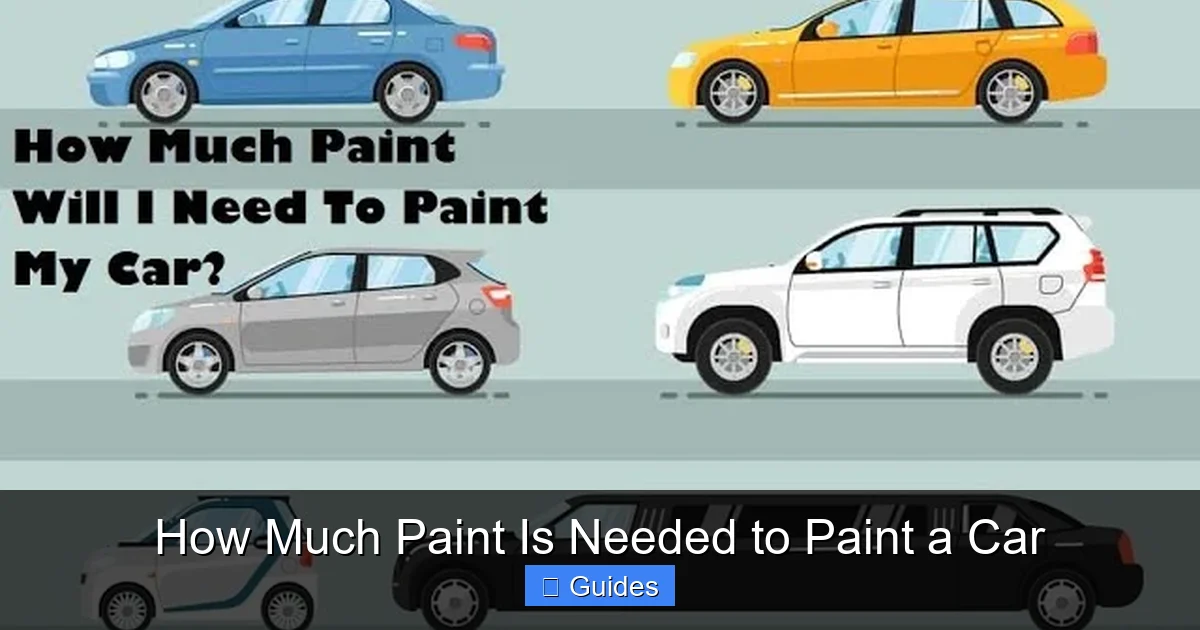
Knowing how much paint is needed to paint a car saves time, money, and frustration. This guide breaks down everything from surface area calculations to paint types, number of coats, and real-world examples so you can estimate accurately and avoid running out mid-project.
So, you’ve decided to give your car a fresh new look—maybe it’s got some scratches, fading, or you just want a bold color change. Painting a car yourself can be incredibly rewarding, but one of the biggest questions people ask is: How much paint is needed to paint a car?
It’s not as simple as slapping on a couple of cans and calling it a day. The amount of paint required depends on several factors—your car’s size, the type of paint system you’re using, how many coats you plan to apply, and even your skill level. Getting this wrong can lead to frustrating mid-project shortages or wasted money on excess paint. But don’t worry—we’re here to walk you through it step by step.
In this guide, we’ll break down everything you need to know to calculate the right amount of paint for your car. Whether you’re working on a tiny hatchback or a full-size pickup truck, we’ll cover surface area estimates, paint types, application techniques, and real-world examples. By the end, you’ll have a clear, practical understanding of how much paint to buy—and how to use it efficiently.
In This Article
Key Takeaways
- Car size matters: Compact cars need 1–2 quarts, while SUVs and trucks may require 3–4 quarts of paint.
- Multiple coats are essential: Most car paint jobs need 2–3 base coats and 2–3 clear coats for a durable, glossy finish.
- Paint type affects coverage: Basecoat/clearcoat systems use more paint than single-stage paints due to separate layers.
- Surface prep increases usage: Sanding, priming, and repairing dents can add 10–20% to your total paint requirement.
- Spray technique impacts waste: Poor spray patterns or overspray can waste up to 30% of your paint if not managed properly.
- Always buy extra: Experts recommend purchasing 10–15% more paint than calculated to account for touch-ups and errors.
- Professional vs. DIY: DIYers often use more paint due to inexperience; pros optimize usage with precision tools and techniques.
📑 Table of Contents
Understanding Car Paint Basics
Before diving into calculations, it helps to understand what car paint actually is and how it’s applied. Modern automotive paint isn’t just one layer—it’s a multi-step system designed for durability, shine, and protection.
Most cars today use a basecoat/clearcoat system. This means you first apply a colored basecoat (the actual color you see), followed by a transparent clearcoat that adds gloss and protects the color from UV rays, scratches, and environmental damage. This system gives a deep, professional finish but requires more paint than older single-stage paints, which combine color and gloss in one layer.
Single-stage paints are simpler and use less material, but they’re less common on newer vehicles and don’t offer the same level of protection or shine. They’re mostly used for touch-ups or classic car restorations.
Another key factor is the paint formulation. Automotive paints come in different types—acrylic enamel, urethane, and water-based formulas. Urethane paints are the most popular for full car repaints because they’re durable, flexible, and provide excellent coverage. Water-based paints are eco-friendlier and increasingly used by professionals, but they may require special equipment and ventilation.
Understanding these basics helps you choose the right paint and anticipate how much you’ll need. For example, a basecoat/clearcoat job will naturally use more paint than a single-stage application, simply because you’re applying two separate layers.
Factors That Affect Paint Quantity
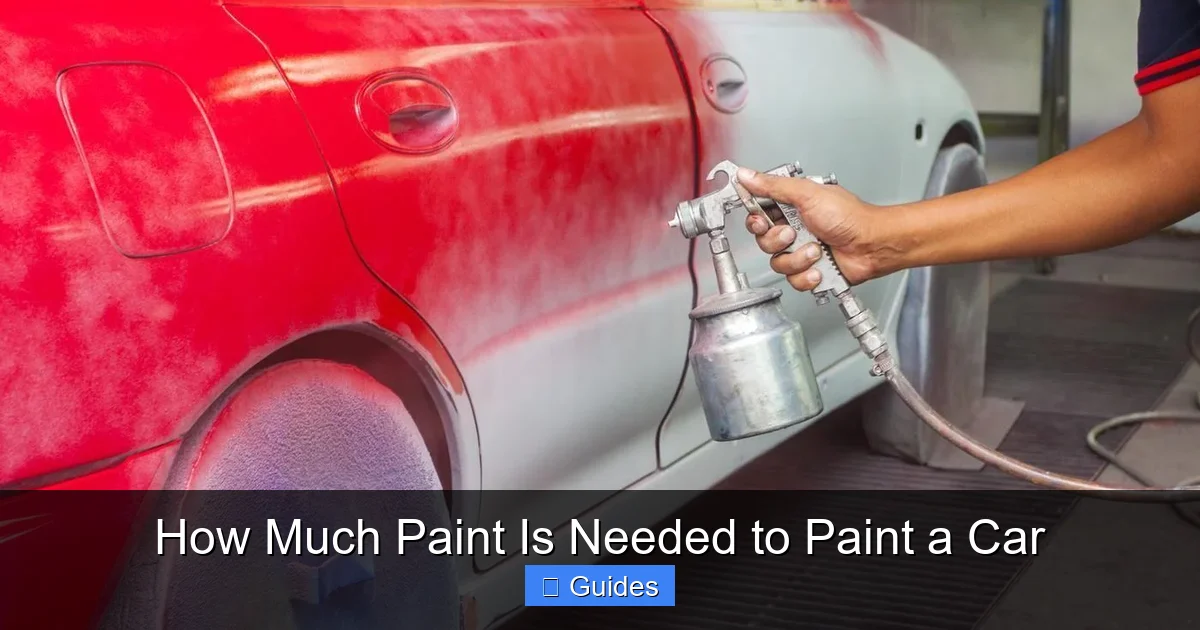
Visual guide about How Much Paint Is Needed to Paint a Car
Image source: carfromjapan.com
Now that you know the basics, let’s look at the main factors that determine how much paint is needed to paint a car. These aren’t just technical details—they directly impact your budget and project success.
Vehicle Size and Surface Area
The biggest factor is, of course, the size of your car. A compact car like a Honda Civic has far less surface area than a Ford F-150 or a Chevy Suburban. Here’s a rough breakdown:
– Compact cars (e.g., Toyota Corolla, Honda Fit): ~30–40 square feet of paintable surface
– Midsize sedans (e.g., Honda Accord, Toyota Camry): ~45–55 square feet
– Full-size sedans and SUVs (e.g., Chevrolet Tahoe, Ford Explorer): ~60–80 square feet
– Trucks and large SUVs (e.g., Ford F-150, GMC Yukon XL): ~80–100+ square feet
These numbers include the roof, hood, doors, fenders, and trunk—but not the undercarriage or interior. Keep in mind that complex body styles with more curves, spoilers, or trim pieces may require slightly more paint due to increased surface area and detail work.
Number of Coats
Most quality car paint jobs involve multiple coats. Here’s what a typical application looks like:
– Primer: 1–2 coats (not always counted in final paint volume, but uses material)
– Basecoat: 2–3 coats (the colored layer)
– Clearcoat: 2–3 coats (for protection and shine)
Each coat adds to the total paint used. For example, if one coat of basecoat covers 100 square feet per quart, three coats on a 50-square-foot car would use about 1.5 quarts—just for the basecoat. Add clearcoat, and you’re looking at another 1–1.5 quarts.
Paint Type and Coverage Rate
Different paints have different coverage rates, usually measured in square feet per gallon (or per quart). Most automotive basecoats cover about 80–120 square feet per gallon when applied properly. Clearcoats are thinner and cover more—around 150–200 square feet per gallon.
But these are ideal numbers. In real-world conditions, coverage can drop due to surface texture, spray technique, and paint viscosity. Thicker paints or those with metallic flakes may require more material to achieve even coverage.
Surface Condition and Preparation
A car in poor condition—full of dents, rust, or old paint—will need more prep work. Sanding, filling, and priming all add layers that consume paint. For example, if you’re repairing large dents with body filler, you’ll need extra primer to seal and smooth the surface before painting. This can increase total paint usage by 10–20%.
Even on a relatively clean car, proper prep includes washing, degreasing, sanding, and masking. Masking tape and paper don’t use paint, but they do define edges and prevent overspray—so poor masking can lead to wasted paint on unintended areas.
Application Method and Skill Level
Are you using a spray gun, aerosol cans, or a professional HVLP (High Volume Low Pressure) system? Each method has different efficiency rates.
– Aerosol cans: Great for touch-ups, but inefficient for full cars. Expect high overspray and waste—up to 50% in some cases.
– HVLP spray guns: More efficient, with less overspray. Professionals can achieve 70–80% transfer efficiency (meaning most paint hits the car).
– DIY spray guns: Vary widely in quality. Cheap guns may waste 30–40% of paint due to poor atomization.
Your skill level also matters. A beginner might apply coats too thick or too thin, leading to uneven coverage and the need for extra paint to fix mistakes. Practice on a test panel first!
Estimating Paint Needs by Car Size
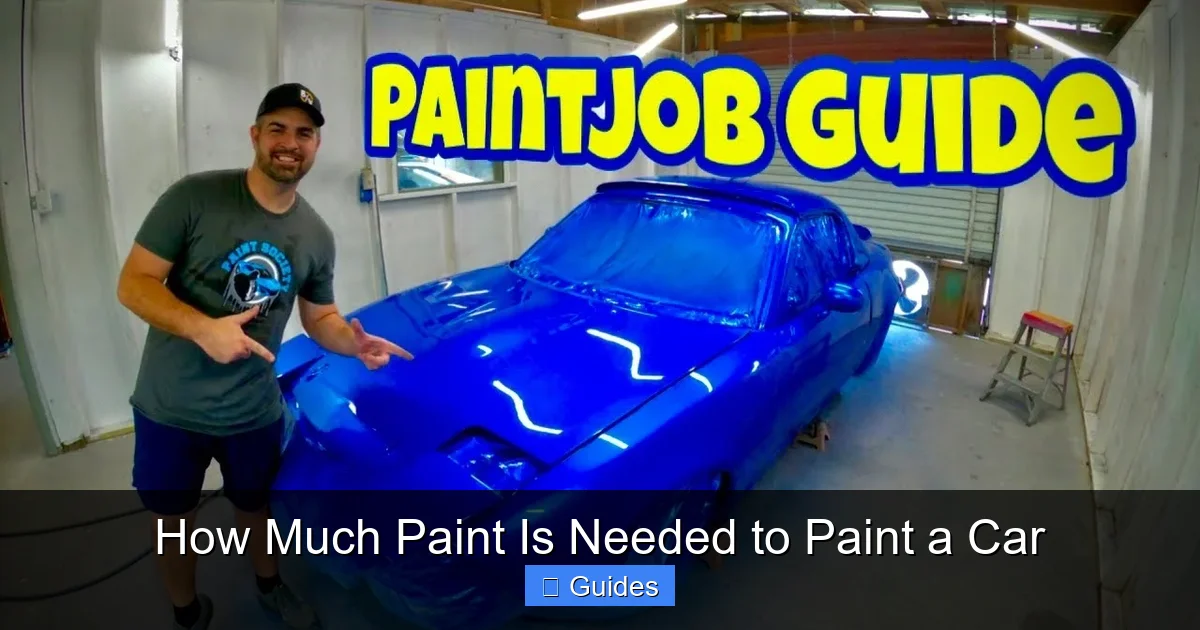
Visual guide about How Much Paint Is Needed to Paint a Car
Image source: i.ytimg.com
Let’s put this all together with real-world estimates. These are general guidelines based on average coverage and standard coating systems (basecoat + clearcoat). Always round up and buy a little extra.
Compact Cars (e.g., Honda Civic, Toyota Yaris)
– Surface area: ~35 sq ft
– Basecoat: 2–3 coats → ~0.75–1 quart
– Clearcoat: 2–3 coats → ~0.5–0.75 quart
– Total paint needed: 1.25–1.75 quarts
– Recommended purchase: 2 quarts (to account for waste and touch-ups)
Midsize Sedans (e.g., Toyota Camry, Honda Accord)
– Surface area: ~50 sq ft
– Basecoat: 2–3 coats → ~1–1.25 quarts
– Clearcoat: 2–3 coats → ~0.75–1 quart
– Total paint needed: 1.75–2.25 quarts
– Recommended purchase: 2.5–3 quarts
Full-Size Sedans and SUVs (e.g., Chevrolet Impala, Ford Explorer)
– Surface area: ~70 sq ft
– Basecoat: 2–3 coats → ~1.5–1.75 quarts
– Clearcoat: 2–3 coats → ~1–1.25 quarts
– Total paint needed: 2.5–3 quarts
– Recommended purchase: 3.5–4 quarts
Trucks and Large SUVs (e.g., Ford F-150, Chevrolet Suburban)
– Surface area: ~90–100 sq ft
– Basecoat: 2–3 coats → ~2–2.5 quarts
– Clearcoat: 2–3 coats → ~1.25–1.5 quarts
– Total paint needed: 3.25–4 quarts
– Recommended purchase: 4.5–5 quarts
These estimates assume a full repaint with proper prep. If you’re only painting certain panels (like just the hood and roof), scale down accordingly. For example, painting just the hood (~8–10 sq ft) might need 0.25–0.5 quarts total.
Paint Calculation Tips and Best Practices
Visual guide about How Much Paint Is Needed to Paint a Car
Image source: i.ytimg.com
Now that you have a rough idea of how much paint is needed to paint a car, let’s talk about how to get a more accurate estimate and avoid common pitfalls.
Use the Manufacturer’s Coverage Data
Always check the paint manufacturer’s technical data sheet. They provide coverage rates (usually in square feet per gallon) under ideal conditions. For example, PPG, DuPont, and Sherwin-Williams all publish this info online. Use these numbers as a baseline, then adjust for real-world factors.
Measure Your Car’s Surface Area
You don’t need to be a mathematician, but a rough measurement helps. Here’s a simple method:
1. Break the car into sections: roof, hood, trunk, doors (front and rear), fenders, bumpers.
2. Estimate each section’s area (length × width).
3. Add them up.
For example:
– Roof: 6 ft × 4 ft = 24 sq ft
– Hood: 5 ft × 4 ft = 20 sq ft
– Trunk: 4 ft × 3 ft = 12 sq ft
– 4 doors: 4 × (3 ft × 2 ft) = 24 sq ft
– 2 fenders: 2 × (3 ft × 2 ft) = 12 sq ft
– Bumpers: ~10 sq ft total
Total: ~102 sq ft (sounds like a large SUV or truck)
This method isn’t perfect, but it’s better than guessing.
Account for Waste and Overspray
Even the best painters waste some paint. Overspray, gun cleaning, and test sprays all add up. A good rule of thumb is to add 10–15% extra to your calculated amount. So if you need 3 quarts, buy 3.5.
If you’re using aerosol cans, add even more—up to 25%—because they’re inherently inefficient.
Test Spray First
Before painting the whole car, do a test spray on a piece of cardboard or an old panel. This helps you:
– Check color match
– Adjust spray pattern and distance
– Estimate how much paint one coat uses
You can even measure how much paint you used by weighing the can before and after (1 fluid ounce ≈ 1.04 ounces by weight).
Work in Sections
Paint one panel at a time, especially if you’re new. This helps you manage paint usage and avoid running out mid-panel. It also reduces the risk of lap marks (visible seams between coats).
Common Mistakes and How to Avoid Them
Even with good planning, mistakes happen. Here are some common ones and how to avoid them.
Underestimating Paint Needs
This is the #1 mistake. People see “1 quart covers 100 sq ft” and assume a 50 sq ft car needs half a quart. But that’s per coat—and you need multiple coats. Always calculate total coats, not just surface area.
Skipping Primer
Primer isn’t optional if you want a professional finish. It seals the surface, improves adhesion, and helps the color pop. But it uses paint too—usually 1–2 quarts for a full car. Don’t forget to include it in your total.
Applying Coats Too Thick or Too Thin
Too thick, and you waste paint and risk runs. Too thin, and you’ll need more coats to cover properly. Aim for even, medium coats—about the thickness of a wet piece of paper.
Not Masking Properly
Poor masking leads to paint on windows, trim, or wheels—wasted paint and extra cleanup. Use high-quality masking tape and paper, and take your time.
Ignoring Environmental Conditions
Paint behaves differently in heat, cold, or humidity. High temps can cause paint to dry too fast, leading to poor flow and extra coats. Cold temps thicken paint, reducing coverage. Work in a controlled environment if possible.
Professional vs. DIY Paint Jobs
Finally, let’s compare how much paint professionals use versus DIYers.
Professionals have several advantages:
– High-efficiency spray guns (70–80% transfer efficiency)
– Experience with consistent, thin coats
– Better masking and prep techniques
– Access to mixing systems that reduce waste
As a result, a pro might use 3 quarts on a midsize car, while a DIYer could use 4–5 quarts due to overspray, rework, and thicker coats.
That doesn’t mean DIY is a waste—just be prepared to use more paint. And remember: practice makes perfect. Your first car paint job might use extra paint, but your second will be more efficient.
Conclusion
So, how much paint is needed to paint a car? The answer depends—but now you have the tools to figure it out.
For most cars, you’ll need between 1.5 and 4 quarts of paint, depending on size, paint system, and number of coats. Compact cars lean toward the lower end, while trucks and SUVs need more. Always factor in primer, clearcoat, and a 10–15% buffer for waste.
The key is planning: measure your car, check paint coverage rates, and account for real-world variables like overspray and surface condition. And don’t forget the importance of proper prep—good prep reduces the need for extra paint down the line.
Whether you’re restoring a classic or just refreshing your daily driver, knowing how much paint to buy saves time, money, and frustration. So grab your spray gun, mask up, and get ready to give your car a finish that turns heads.
Frequently Asked Questions
How much paint do I need for a small car?
For a compact car like a Honda Civic or Toyota Yaris, you’ll typically need 1.25–1.75 quarts of paint for a full repaint. It’s wise to buy 2 quarts to account for waste and touch-ups.
Can I paint a car with spray cans?
Yes, but it’s inefficient and not recommended for full cars. Aerosol cans waste a lot of paint due to overspray and require many coats. They’re best for small touch-ups or accents.
Do I need to prime before painting?
Yes, priming is essential for adhesion, smoothness, and color accuracy. Plan on using 1–2 quarts of primer for a full car, depending on surface condition.
How many coats of clearcoat should I apply?
Most professionals apply 2–3 coats of clearcoat. This provides durability, depth, and protection. Fewer coats may look dull or wear quickly.
Can I mix different brands of paint?
No—mixing brands can cause compatibility issues like poor adhesion, color mismatch, or curing problems. Stick to one manufacturer’s system for best results.
How do I reduce paint waste when spraying?
Use an HVLP spray gun, maintain proper distance (6–8 inches), and practice even, overlapping strokes. Test spray first and work in sections to minimize overspray.

At CarLegit, we believe information should be clear, factual, and genuinely helpful. That’s why every guide, review, and update on our website is created with care, research, and a strong focus on user experience.