

Most car batteries last 2–5 weeks when a vehicle sits unused, but this varies based on battery health, temperature, and electrical drains. Taking simple steps like disconnecting the battery or using a trickle charger can extend this time significantly and prevent unexpected dead batteries.
In This Article
- 1 Key Takeaways
- 2 📑 Table of Contents
- 3 How Long Can a Car Sit Before Battery Dies
- 4 What Happens to a Car Battery When the Car Sits?
- 5 Factors That Affect How Long a Battery Lasts When Idle
- 6 How to Test If Your Battery Is Still Good
- 7 How to Prevent Your Battery from Dying When the Car Sits
- 8 What to Do If Your Battery Dies
- 9 Conclusion
- 10 Frequently Asked Questions
- 10.1 How long can a car sit without being driven before the battery dies?
- 10.2 Can a car battery die after just one week of sitting?
- 10.3 Will starting the car for 5 minutes recharge the battery?
- 10.4 Is it safe to leave a trickle charger on all the time?
- 10.5 Should I disconnect the battery if I’m storing my car for months?
- 10.6 Can extreme heat kill a car battery when the car is parked?
Key Takeaways
- Battery lifespan when idle: A typical car battery can last 2–5 weeks without use, depending on age and condition.
- Parasitic drain matters: Small electrical loads like clocks, alarms, and computers slowly drain the battery even when the car is off.
- Temperature plays a role: Extreme cold or heat can shorten battery life and reduce its ability to hold a charge.
- Older batteries die faster: Batteries over 3 years old lose charge more quickly and are more prone to failure.
- Use a trickle charger: Maintaining a charge with a smart charger can keep your battery healthy for months.
- Start the car regularly: Running the engine for 15–20 minutes every week helps recharge the battery.
- Disconnect if storing long-term: Removing the negative terminal prevents drain and extends battery life during storage.
📑 Table of Contents
How Long Can a Car Sit Before Battery Dies
You’ve probably been there—walking out to your car after a few days, turning the key, and hearing nothing but a sad clicking sound. The battery’s dead. It’s frustrating, especially if the car was fine just a few days ago. So, how long can a car actually sit before the battery dies?
The short answer? It depends. Most car batteries can last anywhere from 2 to 5 weeks without being driven, but that window shrinks quickly if the battery is old, the weather is extreme, or there are hidden electrical drains. Think of your car battery like a phone battery—it slowly loses power over time, even when not in use. And just like your phone, certain habits and conditions can speed up that drain.
Understanding what affects your battery’s lifespan when your car is parked can save you from surprise breakdowns, towing fees, and the cost of a new battery. Whether you’re storing a classic car for the winter, leaving a second vehicle unused, or just taking a long vacation, knowing how to protect your battery is key. In this guide, we’ll break down the factors that influence battery life, how to test your battery’s health, and practical tips to keep your car ready to start—no matter how long it sits.
What Happens to a Car Battery When the Car Sits?
Visual guide about How Long Can a Car Sit Before Battery Dies
Image source: carxplorer.com
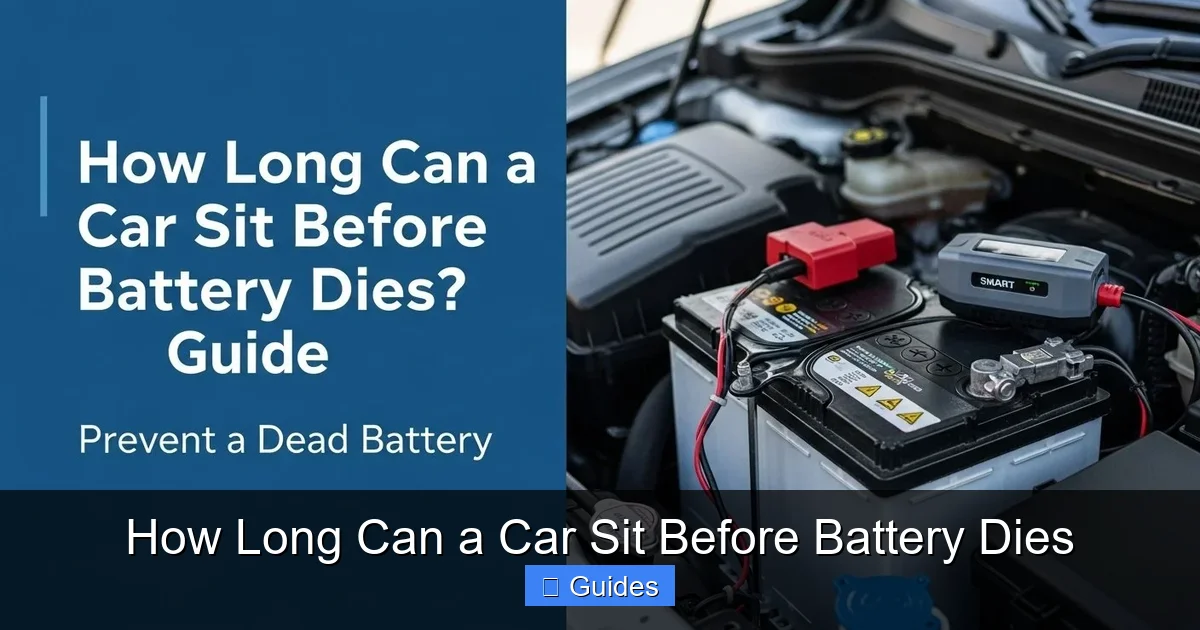
When your car is turned off, you might think everything inside is completely powered down. But that’s not quite true. Even when the engine isn’t running, small electrical systems continue to draw power from the battery. This is called parasitic drain—a slow, constant pull on the battery that happens even when the car is “off.”
Common culprits include the clock, radio memory, alarm system, onboard computers, and even some sensors. These systems need a small amount of power to stay active. Over time, that tiny drain adds up. For example, a typical parasitic drain might be around 25–50 milliamps. That might not sound like much, but over days or weeks, it can deplete a battery significantly.
Let’s say your battery has a capacity of 48 amp-hours (a common size). If there’s a 50-milliamp drain, the battery could theoretically last about 40 days before hitting zero. But in reality, batteries don’t like being fully drained. Most car batteries start to degrade when they drop below 50% charge, and starting the car becomes difficult once the charge falls below 75%. So, in practice, you’ll likely face a dead battery long before that 40-day mark.
Another factor is the battery’s natural self-discharge rate. Even without any electrical load, batteries lose charge over time. A healthy battery might lose 1–3% of its charge per month due to internal chemical reactions. But if the battery is older or damaged, that rate can double or triple.
So, when a car sits, two things are happening: the battery is slowly losing charge on its own, and small systems are pulling power. Together, these forces can kill a battery in just a few weeks—especially if the battery wasn’t fully charged to begin with.
Real-World Example: The Weekend Warrior
Imagine you have a second car you only drive on weekends. You park it Friday night after a quick errand. You don’t drive it again until the following Saturday—seven days later. You expect it to start, but it doesn’t. Why?
Even though the car was only sitting for a week, the combination of parasitic drain and self-discharge may have dropped the battery below the threshold needed to start the engine. If the battery was already a few years old or hadn’t been fully charged before parking, the problem gets worse.
This is especially common in older vehicles or cars with aftermarket electronics like alarms, GPS trackers, or dash cams that stay on even when the car is off. These devices can increase parasitic drain and shorten the time before the battery dies.
Factors That Affect How Long a Battery Lasts When Idle

Visual guide about How Long Can a Car Sit Before Battery Dies
Image source: m.media-amazon.com
Not all cars are created equal when it comes to battery life during downtime. Several key factors determine how long your battery will last before it gives up the ghost. Let’s look at the biggest ones.
Battery Age and Condition
This is probably the most important factor. A brand-new, fully charged battery will last much longer than an older one. Most car batteries are designed to last 3–5 years under normal conditions. But as they age, their ability to hold a charge decreases.
An older battery might lose 5–10% of its charge per week when sitting, compared to 1–3% for a new one. If your battery is more than 3 years old, it’s wise to test it regularly—especially if you plan to leave the car unused for a while.
Signs of a weak battery include slow engine cranking, dim headlights, or warning lights on the dashboard. If you notice any of these, don’t wait—get it checked. A simple load test at an auto parts store can tell you if your battery is still in good shape.
Temperature and Climate
Weather plays a huge role in battery performance. Both extreme cold and extreme heat can shorten battery life.
In cold weather, the chemical reactions inside the battery slow down, reducing its ability to deliver power. A battery that works fine in summer might struggle to start the car in winter—even if it hasn’t been sitting long. Cold also increases the risk of a battery freezing if it’s already low on charge.
On the flip side, heat accelerates chemical reactions, which might sound good—but it also speeds up self-discharge and can cause the battery to degrade faster. High temperatures can evaporate the electrolyte fluid inside the battery, leading to internal damage.
So, if you live in a place with harsh winters or scorching summers, your battery will likely die faster when the car sits. Garage parking helps, but even then, temperature swings can take a toll.
Parasitic Electrical Loads
As mentioned earlier, modern cars have more electronics than ever. Even when “off,” systems like the ECU (engine control unit), infotainment system, security system, and tire pressure monitors draw small amounts of power.
Some cars have higher parasitic drain than others. For example, luxury vehicles with advanced features like keyless entry, remote start, or built-in Wi-Fi may drain the battery faster when parked.
Aftermarket accessories can make this worse. Dash cams that record in parking mode, GPS trackers, or upgraded sound systems with always-on amplifiers can significantly increase the drain. If you’ve added any electronics to your car, consider whether they’re drawing power when the car is off.
State of Charge When Parked
Did you park the car with a full charge or a half-empty battery? This makes a big difference. A fully charged battery has more reserve power and can withstand parasitic drain and self-discharge longer.
If you park the car after a short trip—say, a 10-minute drive—the alternator may not have had time to fully recharge the battery. In that case, the battery starts its downtime already partially drained, which shortens how long it can last.
Ideally, you should park the car after a longer drive (20–30 minutes) to ensure the battery is fully charged. This gives it the best chance of surviving weeks of inactivity.
Type of Battery
Not all car batteries are the same. The most common types are lead-acid (flooded), AGM (absorbent glass mat), and lithium-ion (mostly in hybrids and EVs).
AGM batteries, often used in modern cars with start-stop technology, are more resistant to deep discharge and can last longer when idle. They also have lower self-discharge rates.
Lithium-ion batteries, found in electric and hybrid vehicles, behave differently. They can often sit for months without dying, thanks to sophisticated battery management systems that prevent over-discharge.
But traditional lead-acid batteries—the kind in most gasoline cars—are more vulnerable to drain and degradation when not used regularly.
How to Test If Your Battery Is Still Good
Visual guide about How Long Can a Car Sit Before Battery Dies
Image source: batterymanguide.com
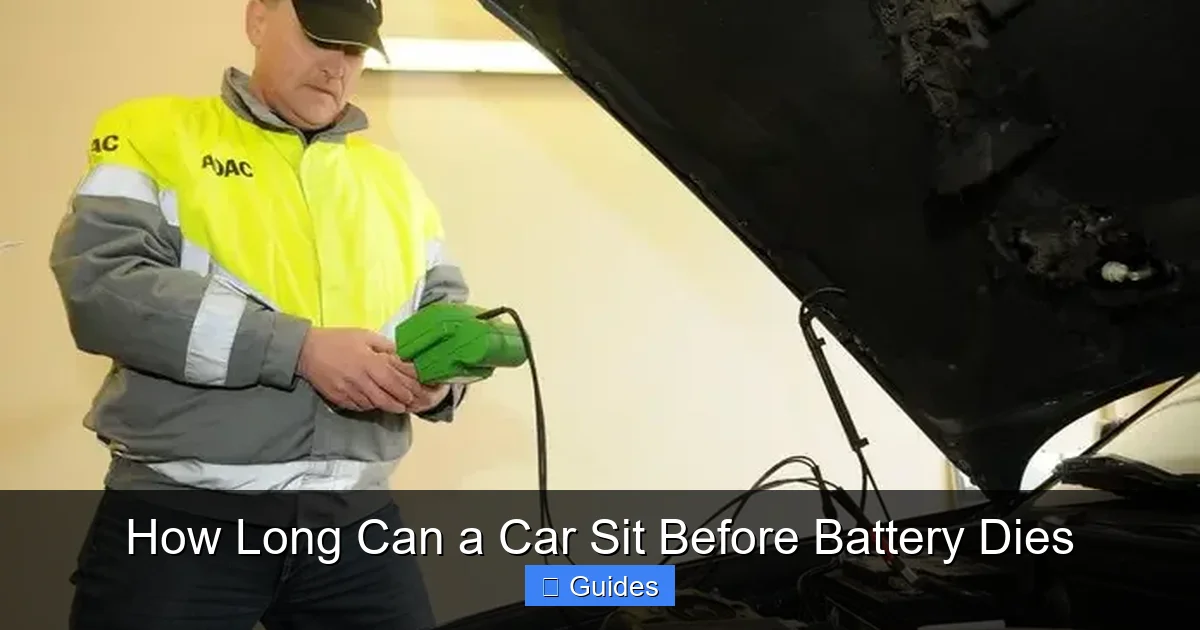
Before you assume your battery is dead, it’s worth testing it. A simple check can save you time, money, and frustration.
Use a Multimeter
A multimeter is a handy tool that measures voltage. Here’s how to use it:
1. Turn off the car and all electrical accessories (lights, radio, etc.).
2. Set the multimeter to DC voltage (usually marked as “V–” or “20V”).
3. Touch the red probe to the positive terminal (+) and the black probe to the negative terminal (–).
4. Read the voltage.
A healthy, fully charged battery should read around 12.6 to 12.8 volts. If it’s below 12.4 volts, the battery is partially discharged. Below 12.0 volts means it’s likely too weak to start the car.
Keep in mind: voltage alone doesn’t tell the whole story. A battery might show 12.4 volts but still fail under load. That’s why a load test is better.
Get a Professional Load Test
Most auto parts stores (like AutoZone, Advance Auto Parts, or O’Reilly) offer free battery testing. They’ll connect your battery to a machine that simulates the load of starting the engine. This test checks both voltage and the battery’s ability to deliver power under stress.
If the test shows your battery is weak or failing, it’s time for a replacement—even if it still starts the car. A weak battery is more likely to die when the car sits.
Check for Corrosion and Loose Connections
Sometimes, the problem isn’t the battery itself—it’s the connections. Corrosion (a white or green powdery substance) on the terminals can prevent proper charging and starting.
Clean the terminals with a wire brush and a mixture of baking soda and water. Make sure the cables are tight and secure. Loose connections can cause intermittent power loss, making it seem like the battery died when it’s actually just a bad connection.
How to Prevent Your Battery from Dying When the Car Sits
The good news? You don’t have to live in fear of a dead battery every time you park your car. With a few smart habits and tools, you can keep your battery healthy—even during long periods of inactivity.
Use a Trickle Charger or Battery Maintainer
A trickle charger (also called a battery maintainer or smart charger) is one of the best investments you can make if your car will be sitting for weeks or months. These devices plug into a wall outlet and connect to your battery, delivering a slow, steady charge to keep it topped off.
Unlike old-style trickle chargers that could overcharge the battery, modern smart chargers monitor the battery’s state and adjust the charge automatically. They’re safe to leave connected for long periods.
Popular brands include Battery Tender, NOCO, and CTEK. Prices range from $30 to $100, depending on features. Look for one with overcharge protection, reverse polarity protection, and a maintenance mode.
Start the Car Regularly
If you don’t have a charger, the next best thing is to start the car every few days. But here’s the catch: just turning the key and letting it idle for 5 minutes won’t help much. The alternator needs time to recharge the battery.
To properly recharge the battery, drive the car for at least 15–20 minutes at highway speeds. This gives the alternator enough time to restore the charge lost during downtime.
If you can’t drive it, at least let it run for 20–30 minutes with the headlights and radio off to reduce load on the battery.
Disconnect the Battery
For long-term storage (a month or more), disconnecting the battery is a simple and effective solution. Remove the negative terminal (the black cable) using a wrench. This breaks the circuit and stops parasitic drain.
Just remember: disconnecting the battery may reset your radio presets, clock, and onboard computer settings. Some cars may also require a code to reactivate the radio.
If you’re storing a classic car or a vehicle you won’t use for months, this is a great option. Just make sure the battery is fully charged before disconnecting, and store it in a cool, dry place.
Park in a Garage or Shaded Area
Temperature control helps. Parking in a garage protects the battery from extreme heat and cold. If you don’t have a garage, try to park in the shade during summer and away from snow and ice in winter.
Even a few degrees can make a difference. A battery stored at 70°F (21°C) will last longer than one exposed to 90°F (32°C) or 20°F (–7°C).
Upgrade to a Higher-Quality Battery
If you frequently leave your car unused, consider upgrading to a higher-capacity or AGM battery. These are designed to handle deeper discharges and have longer lifespans.
While they cost more upfront, they can save you money in the long run by reducing the need for replacements and jump-starts.
What to Do If Your Battery Dies
So your battery’s dead. Now what?
First, don’t panic. A dead battery is one of the most common car problems—and it’s usually fixable.
Jump-Start the Car
If you have jumper cables and another vehicle, you can jump-start your car. Here’s how:
1. Park the working car close (but not touching) the dead one.
2. Connect the red clamp to the dead battery’s positive terminal.
3. Connect the other red clamp to the good battery’s positive terminal.
4. Connect the black clamp to the good battery’s negative terminal.
5. Connect the other black clamp to an unpainted metal surface on the dead car (like a bolt or bracket)—not the battery terminal.
6. Start the working car and let it run for a few minutes.
7. Try starting the dead car.
8. Once it starts, disconnect the cables in reverse order.
After jump-starting, drive the car for at least 20–30 minutes to recharge the battery.
Call for Help
If you don’t have jumper cables or another car, call roadside assistance. Most auto insurance plans and services like AAA offer jump-start help.
Some newer cars also have built-in jump-start terminals under the hood, which can be used with portable jump starters.
Replace the Battery
If the battery is old or keeps dying, it’s time for a new one. Most auto parts stores will install it for free. When choosing a new battery, check your owner’s manual for the correct size and type.
Look for a battery with a good warranty (at least 3 years) and high cold cranking amps (CCA) if you live in a cold climate.
Conclusion
So, how long can a car sit before the battery dies? The answer isn’t one-size-fits-all. A healthy battery in a moderate climate with minimal electrical drain might last 4–5 weeks. But an older battery in extreme temperatures with high parasitic load could die in just 10–14 days.
The key is preparation. Test your battery regularly, minimize electrical drains, and use tools like trickle chargers or regular driving to keep it charged. Whether you’re storing a car for the season or just taking a long trip, a little planning goes a long way.
Remember: a dead battery is more than an inconvenience—it can leave you stranded, damage your car’s electrical system, and cost you money. But with the right knowledge and habits, you can keep your car ready to go, no matter how long it sits.
Frequently Asked Questions
How long can a car sit without being driven before the battery dies?
A typical car battery can last 2–5 weeks without being driven, depending on its age, condition, and environmental factors. Older batteries or those in extreme temperatures may die in as little as 10–14 days.
Can a car battery die after just one week of sitting?
Yes, especially if the battery is old, partially charged, or has high parasitic drain from electronics like alarms or dash cams. Even a week of inactivity can be enough to kill a weak battery.
Will starting the car for 5 minutes recharge the battery?
No, 5 minutes of idling is not enough to recharge a battery. The alternator needs at least 15–20 minutes of driving at highway speeds to restore a meaningful charge.
Is it safe to leave a trickle charger on all the time?
Yes, if it’s a smart charger with automatic shutoff and maintenance mode. These devices monitor the battery and stop charging when full, preventing overcharging and damage.
Should I disconnect the battery if I’m storing my car for months?
Yes, disconnecting the negative terminal prevents parasitic drain and helps preserve battery life. Just make sure the battery is fully charged before disconnecting.
Can extreme heat kill a car battery when the car is parked?
Yes, high temperatures accelerate chemical reactions inside the battery, increasing self-discharge and shortening its lifespan. Heat can also cause internal damage over time.

At CarLegit, we believe information should be clear, factual, and genuinely helpful. That’s why every guide, review, and update on our website is created with care, research, and a strong focus on user experience.