
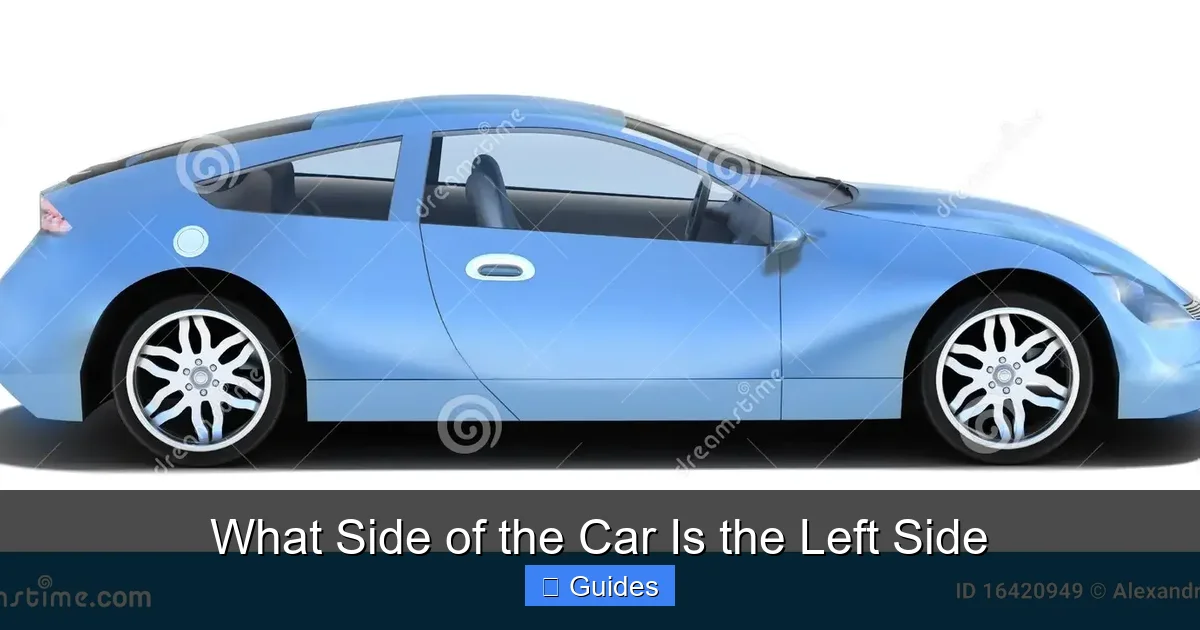
Knowing which side of the car is the left side is essential for safe driving, especially when traveling abroad or renting vehicles. This guide explains how left and right sides are defined, how global driving rules impact car layout, and why understanding this can prevent accidents and confusion.
This is a comprehensive guide about What Side Of The Car Is The Left Side.
In This Article
- 1 Key Takeaways
- 2 What Side of the Car Is the Left Side?
- 3 Understanding Left and Right in the Context of Driving
- 4 How Driving Direction Affects Vehicle Design
- 5 Why Some Countries Drive on the Left
- 6 Practical Tips for Identifying the Left Side in Any Car
- 7 Safety Implications of Misidentifying the Left Side
- 8 How to Adapt When Driving Abroad
- 9 Conclusion
- 10 Frequently Asked Questions
- 10.1 How do I know which side of the car is the left side?
- 10.2 Why do some countries drive on the left?
- 10.3 Can I drive a right-hand drive car if I’m used to left-hand drive?
- 10.4 What happens if I confuse the left and right sides while driving?
- 10.5 Do all cars have the same left and right side design?
- 10.6 How can I quickly adapt to driving on the opposite side of the road?
Key Takeaways
- The left side of the car is the side closest to the centerline when driving on the right-hand side of the road. In countries like the U.S., this is the passenger side for most vehicles.
- In left-hand traffic countries, the driver sits on the right side, making the left side the driver’s side. Examples include the UK, Japan, and Australia.
- Vehicle controls and design differ based on driving side. Steering wheels, pedals, and even turn signals are positioned to suit local traffic flow.
- Misidentifying the left side can lead to dangerous mistakes. Confusing left and right when turning, merging, or parking increases accident risk.
- Modern cars often include safety features to assist drivers in unfamiliar layouts. Blind-spot monitoring and lane-keeping aids help reduce errors.
- Knowing the left side helps when renting cars internationally. It ensures you can operate the vehicle confidently and follow local traffic laws.
- The concept of “left” is relative to the driver’s perspective and road direction. Always orient yourself based on traffic flow, not just the car’s interior.
[FEATURED_IMAGE_PLACEHOLDER]
What Side of the Car Is the Left Side?
Have you ever hopped into a rental car in a foreign country and suddenly felt disoriented? Maybe the steering wheel was on the opposite side, or the turn signal was on the “wrong” lever. It’s a common experience—and it all starts with a simple but crucial question: What side of the car is the left side?
At first glance, this seems obvious. But when you consider that over 70 countries drive on the left side of the road, and vehicle designs vary accordingly, the answer isn’t always straightforward. The left side of the car depends on where you are in the world, how traffic flows, and even how the vehicle was manufactured.
Understanding which side is the left side isn’t just about geography or trivia—it’s about safety, awareness, and confidence behind the wheel. Whether you’re a frequent traveler, a new driver, or someone planning a road trip abroad, knowing how to identify the left side of any car can prevent confusion and potentially dangerous mistakes.
In this guide, we’ll break down everything you need to know about the left side of the car. We’ll explore how driving direction affects vehicle layout, why some countries drive on the left, and how to quickly adapt when you’re behind the wheel in a different country. By the end, you’ll have a clear mental map of left and right—no matter where you are.
Understanding Left and Right in the Context of Driving
To answer “What side of the car is the left side?” we first need to define what “left” means in the context of driving. Unlike fixed directions like north or south, left and right are relative terms that depend on your perspective and the direction you’re facing.
When you’re sitting in a car, your left side is the side to your left as you face forward—toward the windshield. But here’s the twist: that “left” side changes meaning depending on which side of the road you’re driving on.
In countries that drive on the right—like the United States, Canada, Germany, and most of Europe—the driver sits on the left side of the car. This means the left side of the vehicle is the driver’s side. The passenger sits on the right. So, when someone says “the left side of the car,” they’re typically referring to the driver’s side in these regions.
But in left-hand traffic countries—such as the United Kingdom, Japan, Australia, and India—the driver sits on the right side of the car. Here, the left side of the vehicle is the passenger side. This reversal can be confusing for visitors, especially when trying to merge, turn, or park.
So, the key takeaway is this: the left side of the car is always the side that faces the centerline of the road when driving in the correct direction. If you’re driving on the right, the left side is closest to oncoming traffic. If you’re driving on the left, the left side is closest to the curb or shoulder.
This concept is critical for safe driving. For example, when making a left turn in a right-hand traffic country, you cross oncoming lanes—so you need to be extra cautious. In a left-hand traffic country, a left turn keeps you in your lane, but a right turn requires crossing traffic. Confusing these can lead to head-on collisions.
Let’s look at a practical example. Imagine you’re driving in London for the first time. You rent a car and sit in the driver’s seat—on the right side. You look to your left and see the passenger door. That’s the left side of the car. But because you’re driving on the left, that side is now closest to the center of the road. If you’re not used to this, you might instinctively drift toward the curb when turning, which could put you in the path of oncoming traffic.
Understanding this spatial relationship helps you adapt quickly. It’s not just about where the steering wheel is—it’s about how the entire vehicle interacts with the road.
How Driving Direction Affects Vehicle Design
The side of the road you drive on has a huge impact on how cars are designed. From the placement of the steering wheel to the layout of controls, every detail is optimized for safety and efficiency based on local traffic patterns.
In right-hand traffic countries (driving on the right), the driver sits on the left side of the car. This design allows the driver to have a better view of oncoming traffic, especially when passing slower vehicles or making left turns. The left-side position also makes it easier to judge the distance between your car and the centerline.
Conversely, in left-hand traffic countries, the driver sits on the right side. This gives the driver a clearer view of the centerline and oncoming vehicles when driving on the left. The logic is the same—just mirrored.
But it’s not just about the steering wheel. Other controls are also positioned with driving direction in mind. For example, the gear shifter and handbrake are usually placed between the driver and the center console. In left-hand drive cars, this means the shifter is to the right of the driver. In right-hand drive cars, it’s to the left.
Even the placement of turn signals and windshield wipers can vary. In most modern cars, the turn signal stalk is on the left side of the steering wheel in left-hand drive vehicles and on the right in right-hand drive vehicles. This is because the driver’s hand naturally reaches for the stalk without taking eyes off the road.
Another important design feature is the placement of side mirrors. In right-hand traffic countries, the passenger-side mirror is often convex to reduce blind spots when changing lanes to the right. In left-hand traffic countries, the driver’s side mirror (on the right) may have a similar convex shape.
These design choices aren’t arbitrary—they’re the result of decades of safety research and real-world driving experience. When manufacturers build cars for different markets, they adjust the entire cockpit layout to match local driving habits.
For example, Toyota produces different versions of the same model for Japan (right-hand drive) and the U.S. (left-hand drive). The dashboard, pedal placement, and even the location of the fuel door can differ. This ensures that drivers have the best possible visibility and control, no matter where they are.
Understanding these differences helps you adapt when driving abroad. If you’re used to a left-hand drive car and suddenly find yourself in a right-hand drive vehicle, knowing where the controls are can prevent fumbling and frustration.
Why Some Countries Drive on the Left
You might be wondering: Why do some countries drive on the left while others drive on the right? The answer lies in history, culture, and even ancient traditions.
The practice of driving on the left dates back centuries. In medieval Europe, most people were right-handed. When traveling on horseback, it was safer to keep to the left so that your sword—usually worn on the left side—wouldn’t collide with oncoming travelers. This also allowed riders to use their dominant hand to greet or defend themselves.
This tradition carried over into early road travel. In the 18th century, many countries formalized left-hand traffic. Britain, for example, passed laws requiring traffic to keep to the left. As the British Empire expanded, it brought this practice to its colonies, including India, Australia, and parts of Africa.
Meanwhile, other countries moved toward right-hand traffic. Napoleon Bonaparte is often credited with popularizing driving on the right in Europe. As a left-handed man, he preferred to have his sword arm free when passing others—so he mandated right-hand travel in the territories he conquered. This influenced much of continental Europe, including France, Germany, and Spain.
Over time, most of the world shifted to right-hand traffic for consistency and safety. Today, about 65% of the world’s population drives on the right. But several countries—mostly former British colonies—still drive on the left.
This historical divide explains why you’ll find right-hand drive cars in Japan, South Africa, and New Zealand, even though these countries are not in Europe. It’s a legacy of colonial influence and long-standing tradition.
Interestingly, some countries have switched sides. Sweden, for instance, drove on the left until 1967, when it switched to the right in a massive public campaign called “Dagen H” (H-Day). The transition was carefully planned, with traffic lights turned off and police directing vehicles for the first day. It was a huge success—and a fascinating example of how societies can adapt to change.
Understanding this history helps explain why the left side of the car means different things in different places. It’s not just about geography—it’s about culture, history, and human behavior.
Practical Tips for Identifying the Left Side in Any Car
Now that you know the theory, let’s talk about practice. How can you quickly and confidently identify the left side of any car—especially when you’re in a foreign country or driving a rental?
Here are some simple, real-world tips:
1. Look at the steering wheel. The most obvious clue is the position of the steering wheel. If it’s on the left, you’re in a left-hand drive car (common in the U.S., Canada, and most of Europe). If it’s on the right, you’re in a right-hand drive car (common in the UK, Japan, and Australia). The side with the steering wheel is the driver’s side—and in right-hand traffic countries, that’s the left side of the car.
2. Check the turn signal stalk. In most modern cars, the turn signal lever is on the left side of the steering wheel in left-hand drive vehicles and on the right in right-hand drive vehicles. If you’re unsure, this is a quick way to confirm.
3. Observe the side mirrors. The side mirrors are often labeled “L” for left and “R” for right. These labels are usually on the mirror housing or in the vehicle’s settings menu. This can help you confirm which side is which, especially in unfamiliar cars.
4. Use the gear shifter as a guide. In manual transmission cars, the gear shifter is typically between the driver and the center console. In left-hand drive cars, it’s to the right of the driver. In right-hand drive cars, it’s to the left. This can help you orient yourself.
5. Pay attention to the dashboard layout. In many cars, the speedometer and tachometer are centered or slightly tilted toward the driver. This can help you identify which side the driver is on—and therefore which side is the left.
6. Listen to the door locks. When you lock or unlock the car remotely, the driver’s side door often makes a distinct sound or flashes a light first. This can be a subtle but helpful clue.
7. Use your phone’s compass or GPS. If you’re really unsure, you can use your phone to determine which direction you’re facing. Combine that with knowledge of local traffic rules, and you can figure out which side is the left.
Let’s walk through an example. You’re in Tokyo, Japan, and you’ve just rented a car. You sit in the driver’s seat—on the right side. You look to your left and see the passenger door. That’s the left side of the car. But because Japan drives on the left, that side is closest to the centerline. When you make a left turn, you’ll stay in your lane. A right turn will require crossing oncoming traffic. Knowing this helps you drive safely and confidently.
Another example: You’re in New York City, driving a standard American car. The steering wheel is on the left. The left side of the car is the driver’s side. When you make a left turn, you cross oncoming lanes. This is the opposite of what you’d do in London.
These small differences matter. By using these tips, you can quickly adapt to any vehicle, anywhere in the world.
Safety Implications of Misidentifying the Left Side
Confusing the left and right sides of a car might seem like a minor mistake—but it can have serious consequences. Misidentifying the left side can lead to dangerous driving errors, especially in high-pressure situations.
One of the most common risks is incorrect lane positioning. If you think the left side of the car is the curb side when it’s actually the centerline side, you might drift into oncoming traffic. This is especially dangerous on highways or narrow roads.
Another risk is making wrong turns. In a right-hand traffic country, a left turn requires crossing oncoming lanes. If you’re used to driving on the left and mistakenly treat a left turn as a simple lane change, you could cause a head-on collision.
Parking is another area where confusion can occur. Parallel parking requires precise judgment of distances. If you’re not sure which side is the left, you might misjudge how close you are to the curb or other vehicles.
Even simple actions like using turn signals can go wrong. If you reach for the wrong stalk, you might activate the windshield wipers instead of signaling—leading to confusion for other drivers.
To reduce these risks, always take a moment to orient yourself before driving. Sit in the driver’s seat, check the steering wheel position, and confirm the location of key controls. If you’re renting a car abroad, ask the rental agent for a quick orientation.
Modern cars also include safety features that can help. Blind-spot monitoring, lane departure warnings, and rearview cameras can alert you to potential hazards. But these tools are no substitute for awareness and understanding.
Ultimately, knowing which side of the car is the left side is about more than just convenience—it’s about safety. A small moment of confusion can lead to a life-changing accident. By taking the time to learn and adapt, you protect yourself and others on the road.
How to Adapt When Driving Abroad
Driving in a foreign country can be intimidating—especially if the traffic rules and vehicle layout are different from what you’re used to. But with the right preparation, you can adapt quickly and drive confidently.
Start by researching the local driving customs before you go. Find out whether the country drives on the left or right, and whether cars are right-hand or left-hand drive. Websites like the U.S. Department of State or travel forums can provide helpful insights.
When you arrive, take time to familiarize yourself with the rental car. Sit in the driver’s seat and locate the steering wheel, pedals, turn signals, and gear shifter. Practice starting the car and adjusting the mirrors.
If you’re driving on the opposite side of the road, give yourself extra time to adjust. Start with short, familiar routes before attempting highways or busy city streets. Use GPS with voice guidance to help you navigate.
Remember that other drivers may behave differently. In some countries, traffic rules are loosely followed, and drivers may change lanes without signaling. Stay alert and defensive.
Finally, don’t be afraid to ask for help. Rental agencies often provide brief orientations, and locals are usually happy to assist. A little preparation goes a long way.
Conclusion
So, what side of the car is the left side? The answer depends on where you are and how traffic flows. In right-hand traffic countries, the left side is the driver’s side. In left-hand traffic countries, it’s the passenger side. But no matter where you are, the left side is always the side that faces the centerline when driving in the correct direction.
Understanding this simple concept can make a big difference in your driving confidence and safety. It helps you adapt to new vehicles, avoid dangerous mistakes, and navigate unfamiliar roads with ease.
Whether you’re a seasoned traveler or a new driver, taking the time to learn about left and right in the context of driving is a smart move. It’s not just about knowing where the steering wheel is—it’s about understanding how your car interacts with the world around you.
So next time you hop into a car—whether it’s your own or a rental halfway across the globe—take a moment to identify the left side. It’s a small step that can lead to safer, smoother, and more enjoyable journeys.
Frequently Asked Questions
How do I know which side of the car is the left side?
Look at the steering wheel. If it’s on the left, the left side of the car is the driver’s side (common in the U.S. and Europe). If it’s on the right, the left side is the passenger side (common in the UK and Japan).
Why do some countries drive on the left?
Many countries drive on the left due to historical traditions, such as medieval horseback riding customs and British colonial influence. Countries like the UK, Japan, and Australia still follow this practice.
Can I drive a right-hand drive car if I’m used to left-hand drive?
Yes, but it takes practice. Take time to adjust to the new layout, especially the position of the steering wheel, turn signals, and gear shifter. Start with quiet roads and use safety features like blind-spot monitoring.
What happens if I confuse the left and right sides while driving?
Confusing left and right can lead to dangerous mistakes, such as drifting into oncoming traffic or making incorrect turns. Always orient yourself before driving, especially in foreign countries.
Do all cars have the same left and right side design?
No. Cars are designed differently based on the country’s driving direction. Right-hand drive cars (for left-hand traffic) have the steering wheel on the right, while left-hand drive cars have it on the left.
How can I quickly adapt to driving on the opposite side of the road?
Research local traffic rules, practice in a safe area, use GPS with voice guidance, and take your time. Familiarize yourself with the car’s controls before hitting busy roads.

At CarLegit, we believe information should be clear, factual, and genuinely helpful. That’s why every guide, review, and update on our website is created with care, research, and a strong focus on user experience.