
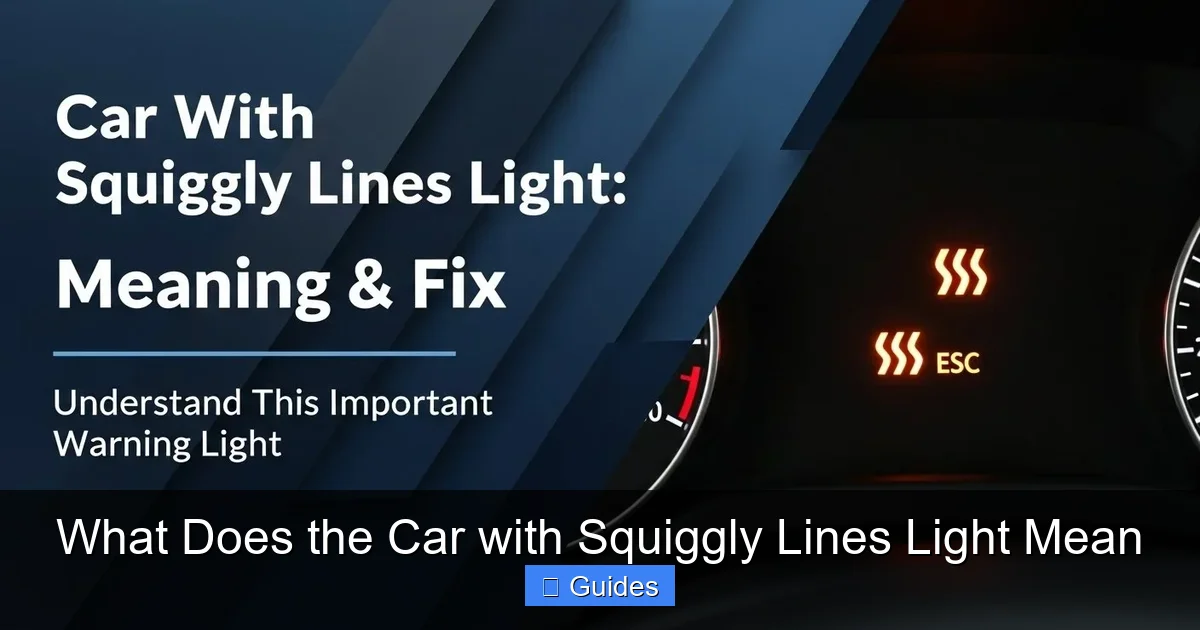
The car with squiggly lines light on your dashboard signals a traction control or stability system issue. This warning means your vehicle may have reduced grip, especially in slippery conditions, and requires prompt attention to ensure safe driving.
In This Article
- 1 Key Takeaways
- 2 📑 Table of Contents
- 3 Understanding the Car with Squiggly Lines Light: What It Really Means
- 4 What Is Traction Control and Why Does It Matter?
- 5 Common Causes of the Car with Squiggly Lines Light
- 6 What to Do When the Light Comes On
- 7 Can You Drive with the Light On?
- 8 Preventing Future Issues
- 9 Final Thoughts
- 10 Frequently Asked Questions
- 10.1 What does the car with squiggly lines light mean?
- 10.2 Is it safe to drive with the traction control light on?
- 10.3 Can low tire pressure cause the squiggly lines light to come on?
- 10.4 How do I turn traction control back on?
- 10.5 Why does the traction control light come on and then go off?
- 10.6 Can a bad wheel speed sensor cause the light to come on?
Key Takeaways
- Warning Sign: The car with squiggly lines light indicates a problem with the traction control or electronic stability control system.
- Safety Risk: This light means your vehicle’s ability to maintain grip on the road—especially during turns or wet/snowy conditions—may be compromised.
- Common Causes: Faulty wheel speed sensors, damaged wiring, low tire pressure, or a malfunctioning ABS module can trigger the light.
- Don’t Ignore It: Even if the car drives normally, continuing to drive with this light on can increase the risk of skidding or losing control.
- Check Tires First: Start troubleshooting by inspecting tire pressure and tread depth, as uneven wear or low pressure can mimic traction issues.
- Use OBD2 Scanner: A diagnostic tool can help identify the specific fault code related to the traction control system.
- Seek Professional Help: If the light stays on, have a certified mechanic inspect the vehicle to prevent further damage or safety hazards.
📑 Table of Contents
Understanding the Car with Squiggly Lines Light: What It Really Means
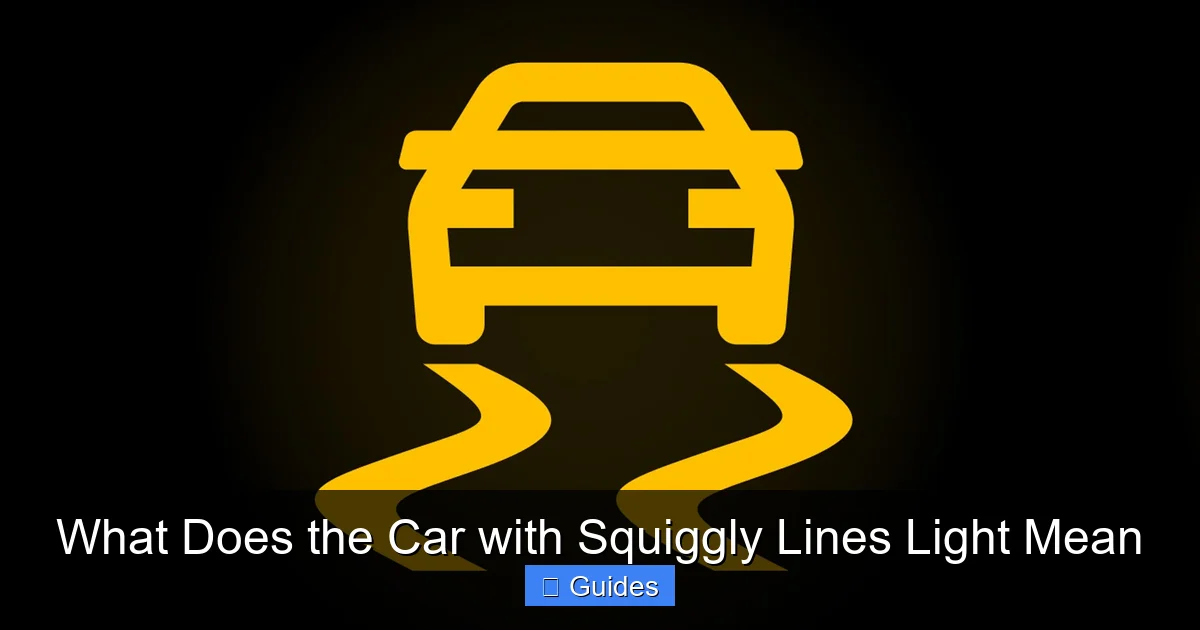
You’re driving along, enjoying your commute or weekend road trip, when suddenly a light pops up on your dashboard. It looks like a small car with squiggly lines underneath it—maybe even with the word “OFF” next to it. Your first thought might be, “Is my car broken?” or “Did I forget to turn something off?” Don’t panic. This light is actually one of the most common dashboard warnings, and while it’s not always an emergency, it’s definitely something you should pay attention to.
The car with squiggly lines light is your vehicle’s way of telling you that the traction control system (TCS) or electronic stability control (ESC) is either active, disabled, or malfunctioning. These systems are designed to help you maintain control when road conditions get tricky—like rain, snow, ice, or gravel. They work by monitoring wheel speed and applying brakes to individual wheels or reducing engine power when they detect slippage. When the light appears, it means the system isn’t working as it should, which could affect your safety, especially in adverse weather.
It’s important to understand that this light doesn’t always mean your car is unsafe to drive—but it does mean you should drive more cautiously and get the issue checked out soon. Ignoring it could lead to reduced handling, longer stopping distances, or even loss of control in extreme situations. Think of it like wearing a seatbelt: it’s there to protect you when things go wrong. If the system that helps prevent those “things” is offline, you’re driving with less protection.
What Is Traction Control and Why Does It Matter?
Visual guide about What Does the Car with Squiggly Lines Light Mean
Image source: mediacloud.carbuyer.co.uk
Before diving deeper into what the squiggly lines mean, let’s break down what traction control actually does. Traction control is a safety feature found in most modern vehicles, especially those made after the early 2000s. Its main job is to prevent your wheels from spinning when you accelerate, particularly on slippery surfaces. For example, if you’re driving on a wet road and you press the gas too hard, your tires might lose grip and start to spin. Traction control detects this and automatically reduces engine power or applies the brakes to the spinning wheel to help you regain traction.
Electronic stability control (ESC), sometimes called electronic stability program (ESP), goes a step further. It not only manages wheel spin but also helps keep your car stable during sudden maneuvers—like swerving to avoid an obstacle or taking a sharp turn too quickly. ESC uses sensors to monitor the direction your car is moving versus the direction the steering wheel is turned. If it detects a mismatch (like understeer or oversteer), it can apply brakes to specific wheels and adjust engine power to help bring the vehicle back in line.
Both systems rely on a network of sensors, including wheel speed sensors, a steering angle sensor, and a yaw rate sensor. These components work together to give your car real-time feedback about how it’s moving. When one of these sensors fails or sends incorrect data, the system can’t function properly—and that’s when the car with squiggly lines light may appear.
How Traction Control Works in Real Life
Let’s say you’re driving up a snowy hill. Without traction control, your front wheels might spin as you try to accelerate, and you could get stuck. With traction control active, the system detects the spin and reduces engine power or applies the brakes to the slipping wheel, allowing the other wheels to gain traction and move the car forward. It’s like having a co-pilot that gently steps in when things start to go sideways.
Another common scenario is hydroplaning. If your tires lose contact with the road due to a layer of water, traction control can help by modulating power and braking to help you regain control. While it can’t prevent hydroplaning entirely, it can reduce the severity and help you recover faster.
Why You Shouldn’t Disable Traction Control (Unless Necessary)
Some drivers intentionally turn off traction control, especially in off-road or performance driving situations. For example, if you’re stuck in mud or snow, turning off traction control can allow your wheels to spin more freely, which might help you get unstuck. Similarly, track drivers may disable it to allow for more aggressive driving and wheel slip during cornering.
However, for everyday driving, it’s best to keep traction control on. Disabling it means you’re relying solely on your own reflexes and skill to maintain control—something that even experienced drivers can struggle with in sudden or unexpected conditions. If the light is on because the system is disabled, you can usually turn it back on by pressing the traction control button (often labeled “TCS,” “ESC,” or with the same squiggly car symbol). But if the light stays on even after you press the button, there’s likely a mechanical or electrical issue.
Common Causes of the Car with Squiggly Lines Light
Visual guide about What Does the Car with Squiggly Lines Light Mean
Image source: collectionsplugin.com
Now that you know what the light means, let’s look at why it might be appearing. There are several potential causes, ranging from simple fixes to more complex repairs. The good news is that many of these issues can be resolved quickly—especially if you catch them early.
1. Faulty Wheel Speed Sensors
One of the most common reasons for the traction control light to come on is a malfunctioning wheel speed sensor. These sensors are located at each wheel and monitor how fast each tire is rotating. If one sensor fails or sends incorrect data, the traction control system can’t accurately determine if a wheel is slipping. This often triggers the warning light.
For example, if the sensor on your front left wheel is dirty, damaged, or disconnected, the system might think that wheel is spinning faster than the others—even if it’s not. This can cause the system to activate unnecessarily or fail to respond when it should. In some cases, the sensor may need to be cleaned, repaired, or replaced.
2. Damaged or Corroded Wiring
The sensors and control modules in your traction control system are connected by a network of wires. Over time, these wires can become damaged due to road debris, moisture, or wear and tear. Corrosion is especially common in areas with harsh winters and road salt. If a wire is frayed or corroded, it can interrupt the signal between the sensor and the control unit, causing the light to come on.
This type of issue can be tricky to diagnose because the problem isn’t always visible. A mechanic may need to use a multimeter to test the continuity of the wiring or perform a visual inspection under the vehicle.
3. Low or Uneven Tire Pressure
Believe it or not, your tire pressure can affect the traction control system. If one tire is significantly underinflated compared to the others, it will rotate at a different speed. The wheel speed sensors detect this difference and may interpret it as wheel slip, triggering the warning light.
For instance, if your front right tire is at 28 PSI while the others are at 35 PSI, the system might think that tire is slipping. This is why it’s important to check your tire pressure regularly—not just for fuel efficiency and tire wear, but also for proper system function.
4. Worn or Damaged Tires
Tires with uneven wear or low tread depth can also cause the traction control light to activate. If one tire has significantly less tread than the others, it may rotate faster or slower depending on the road surface. This can confuse the sensors and lead to false readings.
For example, if you’ve recently replaced only one tire and the new one has deeper tread, it might rotate slightly faster than the worn ones. Over time, this can trigger the warning light. It’s always best to replace tires in sets of four or at least match the tread depth as closely as possible.
5. Malfunctioning ABS Module
The anti-lock braking system (ABS) and traction control system are closely linked. In fact, many vehicles use the same control module for both systems. If the ABS module fails, it can affect traction control as well. Symptoms may include the traction control light, ABS light, or even a brake warning light coming on.
A failing ABS module might also cause the brakes to feel spongy or unresponsive. In some cases, the module can be repaired or reprogrammed, but in others, it may need to be replaced—which can be costly.
6. Software or Calibration Issues
Modern vehicles rely heavily on software to manage safety systems. Sometimes, a software glitch or outdated calibration can cause the traction control system to behave incorrectly. This might happen after a battery replacement, software update, or even a power surge.
In these cases, a simple reset or software update from a dealership or qualified technician may resolve the issue. Some vehicles also have a “relearn” procedure for the wheel speed sensors that needs to be performed after tire rotation or replacement.
What to Do When the Light Comes On
Visual guide about What Does the Car with Squiggly Lines Light Mean
Image source: collectionsplugin.com
So, you’ve seen the car with squiggly lines light on your dashboard. What should you do next? The first step is to stay calm. This light doesn’t necessarily mean your car is unsafe to drive—but it does mean you should take action.
Step 1: Check the Basics
Start with the simplest checks. Are your tires properly inflated? Do they have adequate tread? Is there any visible damage to the wheels or suspension? Sometimes, a quick visual inspection can reveal the problem.
Use a tire pressure gauge to check all four tires, including the spare if you have one. Compare the readings to the recommended pressure listed on the driver’s side door jamb or in your owner’s manual. If one tire is significantly lower, inflate it and see if the light goes off after a short drive.
Step 2: Try Turning Traction Control On or Off
If the light is on because the system is disabled, you may be able to turn it back on. Look for a button on your dashboard or center console labeled “TCS,” “ESC,” or with the squiggly car symbol. Press it once to toggle the system on or off.
If the light goes off after pressing the button, the system was simply turned off—maybe accidentally. But if the light comes back on after a few seconds or after driving, there’s likely an underlying issue.
Step 3: Use an OBD2 Scanner
An OBD2 (On-Board Diagnostics) scanner is a small device that plugs into your car’s diagnostic port (usually under the dashboard near the steering wheel). It can read fault codes from your vehicle’s computer and tell you exactly what’s causing the warning light.
For example, a code like “C0035 – Right Front Wheel Speed Sensor Circuit” would point directly to a problem with that sensor. Many auto parts stores offer free code reading, or you can buy an inexpensive scanner for home use.
Step 4: Drive Cautiously
Until you can get the issue diagnosed, drive more carefully—especially in wet, icy, or slippery conditions. Avoid sudden acceleration, hard braking, or sharp turns. Remember, your car’s ability to maintain grip is reduced, so give yourself more space and time to react.
Step 5: Visit a Mechanic
If the light stays on or comes back after you’ve tried the above steps, it’s time to see a professional. A certified mechanic can perform a thorough inspection, test the sensors and wiring, and determine the root cause. They may also use specialized diagnostic tools that go beyond what a basic OBD2 scanner can do.
Can You Drive with the Light On?
This is one of the most common questions drivers ask. The short answer is: yes, you can usually drive with the car with squiggly lines light on—but it’s not recommended for long.
If the light is on because the system is disabled (and there’s no malfunction), your car will still operate normally. However, you’ll lose the safety benefits of traction and stability control. This means you’re more likely to lose control in slippery conditions or during emergency maneuvers.
If the light is on due to a malfunction, driving could be riskier. For example, if a wheel speed sensor is faulty, the system might not activate when it should—or it might activate at the wrong time. In extreme cases, this could lead to unpredictable braking or loss of control.
As a general rule, if the light comes on and stays on, get it checked within a few days. If it’s flashing or accompanied by other warning lights (like the ABS or check engine light), have your vehicle inspected immediately.
Preventing Future Issues
The best way to avoid seeing the car with squiggly lines light is through regular maintenance and awareness. Here are a few tips to keep your traction control system in good working order:
– Check tire pressure monthly and before long trips.
– Rotate your tires every 5,000 to 7,000 miles to ensure even wear.
– Replace tires when tread depth falls below 4/32 of an inch.
– Keep wheel speed sensors clean—avoid driving through deep mud or water when possible.
– Have your vehicle inspected annually, especially if you live in an area with harsh weather.
By staying proactive, you can reduce the chances of a surprise warning light and keep your car safe and reliable.
Final Thoughts
The car with squiggly lines light might look confusing at first, but it’s actually a helpful warning that your vehicle’s traction or stability system needs attention. Whether it’s a simple fix like low tire pressure or a more complex issue like a faulty sensor, addressing it promptly can prevent bigger problems down the road.
Remember, this system is there to help you stay safe—especially when road conditions aren’t ideal. Ignoring the light might save you a trip to the mechanic today, but it could cost you in safety, repairs, or even an accident tomorrow.
So the next time you see that little car with wavy lines, don’t panic. Take a deep breath, check the basics, and get it checked out. Your car—and your peace of mind—will thank you.
Frequently Asked Questions
What does the car with squiggly lines light mean?
The car with squiggly lines light indicates a problem with your vehicle’s traction control or electronic stability control system. It means the system is either disabled, active due to slippage, or malfunctioning and needs attention.
Is it safe to drive with the traction control light on?
You can usually drive short distances with the light on, but it’s not safe for long. Your vehicle may have reduced grip in slippery conditions, increasing the risk of skidding or losing control.
Can low tire pressure cause the squiggly lines light to come on?
Yes, low or uneven tire pressure can cause the light to activate. If one tire rotates at a different speed due to low pressure, the system may interpret it as wheel slip and trigger the warning.
How do I turn traction control back on?
Look for a button on your dashboard or center console labeled “TCS,” “ESC,” or with the squiggly car symbol. Press it once to toggle the system on. If the light stays on, there may be a malfunction.
Why does the traction control light come on and then go off?
This can happen if the system detects temporary slippage, like driving on gravel or wet roads. If it turns off after a few seconds, it’s likely normal. If it keeps coming back, have it checked.
Can a bad wheel speed sensor cause the light to come on?
Yes, a faulty wheel speed sensor is one of the most common causes. It can send incorrect data to the traction control system, triggering the warning light even when there’s no actual slippage.

At CarLegit, we believe information should be clear, factual, and genuinely helpful. That’s why every guide, review, and update on our website is created with care, research, and a strong focus on user experience.