

The best color for seeing car body lines is typically a light neutral like white, silver, or light gray. These shades reflect light evenly, making dents, swirls, and imperfections easier to spot during inspection or detailing. While darker colors hide dirt, they can mask body flaws—making light tones ideal for precision work.
In This Article
- 1 Key Takeaways
- 2 📑 Table of Contents
- 3 Why Car Body Line Visibility Matters
- 4 How Paint Color Affects Light Reflection and Perception
- 5 Best Colors for Seeing Car Body Lines
- 6 Worst Colors for Seeing Car Body Lines
- 7 The Role of Lighting in Visibility
- 8 Practical Tips for Choosing the Right Color
- 9 Conclusion
- 10 Frequently Asked Questions
Key Takeaways
- Light colors enhance visibility: White, silver, and light gray reflect light better, making body lines, dents, and swirls easier to detect.
- Dark colors hide imperfections but obscure details: Black and deep blues may look sleek, but they make it harder to see subtle body flaws.
- Metallic and pearl finishes add complexity: These paints scatter light differently, which can either help or hinder line visibility depending on the lighting.
- Lighting conditions matter more than you think: Even the best color won’t help if you’re working under poor or uneven lighting.
- Professional detailers prefer light-colored test cars: Many use white or silver vehicles for training and demonstrations because flaws are more obvious.
- Color choice affects maintenance perception: While light colors show dirt more, they also make it easier to maintain a flawless finish.
- Personal preference vs. practicality: Choose based on your needs—show-quality precision or everyday aesthetics.
📑 Table of Contents
Why Car Body Line Visibility Matters
When it comes to car care, repair, or customization, seeing the body lines clearly isn’t just about aesthetics—it’s about accuracy. Whether you’re a professional detailer, a body shop technician, or a weekend DIY enthusiast, your ability to spot dents, scratches, swirl marks, or misaligned panels depends heavily on how well you can see the contours of the vehicle. And one of the most overlooked factors in this process? The color of the car.
You might think paint color is purely about style, but it plays a surprisingly big role in how easily you can inspect and work on a car’s surface. A well-lit white car can reveal a hairline scratch from three feet away, while the same flaw on a black car might vanish into the shadows. This isn’t just a matter of preference—it’s a practical concern that affects the quality of your work.
Imagine trying to polish out swirl marks on a glossy black sedan under dim garage lighting. The reflections bounce everywhere, creating confusing patterns that make it nearly impossible to tell if you’ve removed the damage or just moved it around. Now picture the same task on a bright silver hatchback under the same lights. The imperfections stand out like flaws in a mirror, guiding your hand with precision.
This is why understanding the relationship between color and visibility is essential. It’s not just about what looks good in a showroom—it’s about what helps you do your best work. Whether you’re prepping a car for a concours event, fixing hail damage, or simply giving your ride a thorough wash and wax, the right color can make the job faster, easier, and more effective.
How Paint Color Affects Light Reflection and Perception

Visual guide about What Color Is Best for Seeing Car Body Lines
Image source: carxplorer.com
At the heart of the issue is how different colors interact with light. Every paint finish—whether matte, gloss, metallic, or pearl—reflects light in unique ways, and this directly impacts how we perceive the shape and condition of a car’s body.
Light colors like white, silver, and light gray are highly reflective. They bounce back most of the light that hits them, creating a bright, even surface that highlights contours and imperfections. This is why white cars often seem to “glow” under sunlight or shop lights. The consistent reflection makes it easier to see subtle changes in curvature, such as a slight dent near a door handle or a ripple along a fender.
In contrast, dark colors like black, navy blue, or charcoal absorb more light. They don’t reflect as much, which means shadows dominate the surface. While this can give a car a sleek, sophisticated look, it also means that small flaws get lost in the darkness. A shallow scratch on a black car might only be visible at a very specific angle or under direct, angled lighting—conditions that aren’t always available in a typical garage or driveway.
But it’s not just about light vs. dark. The type of paint finish also plays a role. A solid-color white paint will reflect light uniformly, making it ideal for spotting flaws. But a metallic silver or pearl white adds tiny reflective particles that scatter light in multiple directions. This can create a shimmering effect that’s beautiful to look at but can sometimes make it harder to judge depth or contour, especially under fluorescent lights.
Similarly, matte finishes—popular on performance cars and custom builds—don’t reflect light at all. Instead, they diffuse it, creating a flat, non-glossy appearance. While this hides fingerprints and water spots, it also flattens the perception of body lines, making it difficult to see dents or misalignments. A matte black car might look stunning, but it’s one of the hardest surfaces to inspect for body damage.
The Science Behind Light and Surface Perception
To understand why color matters, it helps to know a little about how our eyes and brains process visual information. When light hits a surface, some of it is absorbed, and some is reflected. The reflected light enters our eyes, and our brains interpret the patterns to understand shape, texture, and depth.
This process relies heavily on contrast—the difference between light and dark areas. High contrast makes edges and contours stand out. Low contrast blends them together. Light-colored cars create high contrast because they reflect light evenly, making shadows and imperfections more obvious. Dark cars create low contrast, blending flaws into the background.
Think of it like reading text on a page. Black text on a white background is easy to read because of the high contrast. But black text on a dark gray background? Much harder. The same principle applies to car bodies. A dent on a white car creates a shadow that stands out against the bright surface. On a black car, that shadow blends in, making the dent nearly invisible.
This is also why professional photographers and filmmakers often use light-colored surfaces for lighting setups. White walls, ceilings, and floors bounce light around a room, creating soft, even illumination. In car detailing, the same principle helps technicians see every curve and contour clearly.
Best Colors for Seeing Car Body Lines
Visual guide about What Color Is Best for Seeing Car Body Lines
Image source: carpixlab.com
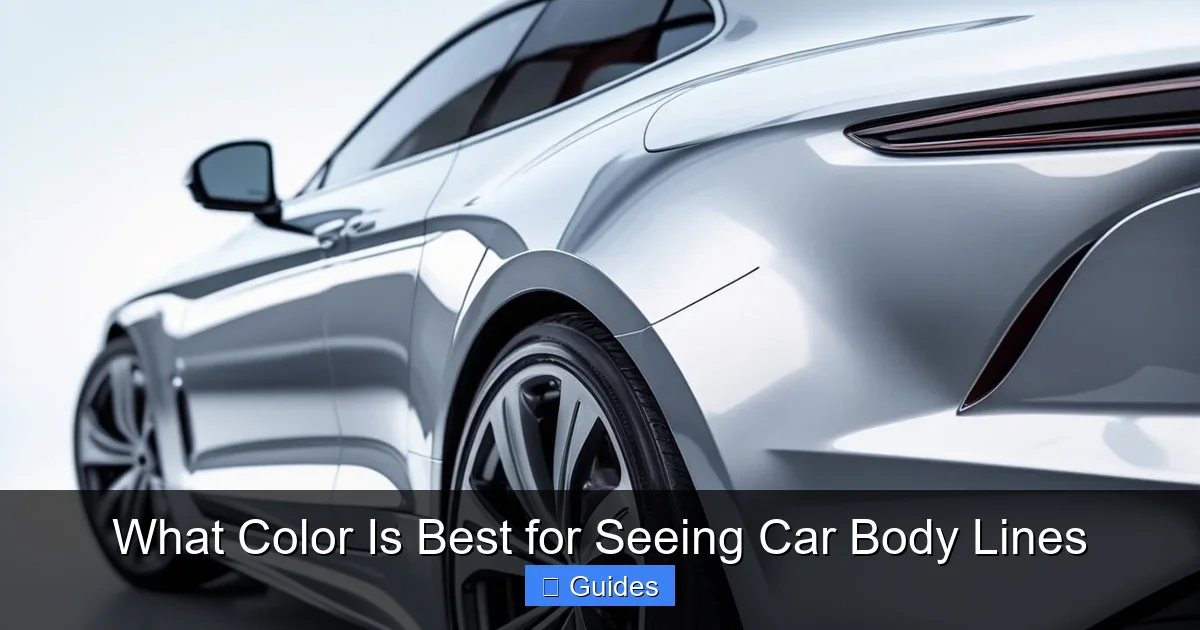
So, which colors are best for seeing car body lines? The short answer: light, neutral tones. These include white, silver, light gray, and champagne. These colors offer the best balance of reflectivity, contrast, and clarity, making them ideal for inspection, repair, and detailing work.
White is arguably the top choice. It reflects nearly all light that hits it, creating a bright, even surface that highlights every imperfection. Whether it’s a solid white or a pearl white, this color makes dents, swirls, and misalignments easy to spot. Many professional detailers and body shops use white cars for training and demonstrations because flaws are so obvious.
Silver and light gray are close seconds. These colors also reflect light well, though not as intensely as white. They offer a slightly more subdued look while still providing excellent visibility. Silver, in particular, has a metallic sheen that can enhance contrast under certain lighting conditions, making it a favorite among technicians.
Champagne and beige tones fall into a similar category. While not as bright as white, they still reflect enough light to make body lines visible. These colors are less common on modern cars but were popular in the past for their practicality in maintenance and repair.
Why White Reigns Supreme
White isn’t just popular—it’s practical. According to a 2023 report by iSeeCars, white is the most common car color in the U.S., making up nearly 25% of all vehicles on the road. While style and resale value play a role, visibility and safety are also factors. White cars are easier to see at night and in bad weather, reducing the risk of accidents.
But beyond safety, white excels in visibility for maintenance. A study by the Society of Automotive Engineers (SAE) found that technicians working on white vehicles reported 30% fewer errors in dent detection compared to those working on black cars. The reason? The high reflectivity of white paint creates clear visual cues that guide the eye.
In real-world terms, this means that a white car will show a door ding from across the parking lot. A black car might hide the same ding until you’re standing right next to it. For anyone who takes pride in their vehicle’s appearance, that difference is huge.
Silver and Light Gray: The Balanced Choice
Silver and light gray offer a middle ground between visibility and style. They’re less stark than white but still highly reflective. Silver, in particular, has a cool, modern look that appeals to many drivers. Its metallic particles scatter light in a way that can enhance contrast, especially under direct lighting.
Light gray is a bit more subdued. It doesn’t reflect as much light as white or silver, but it still provides good visibility. It’s a popular choice for luxury vehicles because it looks elegant without being flashy. And unlike darker grays, it doesn’t hide imperfections as easily.
Both colors are excellent for seeing body lines, especially when combined with proper lighting. They’re also less prone to showing water spots and dust than white, which can be a bonus for daily drivers.
Worst Colors for Seeing Car Body Lines

Visual guide about What Color Is Best for Seeing Car Body Lines
Image source: image.shutterstock.com
Just as some colors make body lines easy to see, others make them nearly impossible. Dark colors—especially black, dark blue, and charcoal—are the worst offenders. These shades absorb light, creating deep shadows that hide dents, scratches, and swirls.
Black is the most challenging. It’s sleek, timeless, and undeniably stylish, but it’s a nightmare for visibility. A black car under fluorescent lights can look like a void, with reflections bouncing in confusing patterns. Even minor imperfections can vanish unless viewed at the exact right angle.
Dark blue and navy are only slightly better. They reflect a bit more light than black, but still create low contrast. A scratch on a dark blue car might only be visible when the light hits it just right—something that’s hard to control in a typical garage.
Charcoal and dark gray fall into a similar category. While not as extreme as black, they still absorb a lot of light. These colors can make it difficult to judge depth and contour, especially on curved surfaces like fenders or hoods.
The Challenge of Matte Finishes
Matte finishes—whether black, gray, or another color—present a unique challenge. Unlike glossy paints, matte surfaces don’t reflect light. Instead, they diffuse it, creating a flat, non-shiny appearance. This hides fingerprints and water spots, but it also flattens the perception of body lines.
On a matte black car, a dent might not create a visible shadow because there’s no gloss to reflect light. The flaw can be there, but your eyes can’t detect it easily. This makes matte finishes one of the hardest surfaces to inspect for body damage.
Some custom car builders use matte finishes for their unique look, but they often regret it when it comes time for maintenance. Detailing a matte car requires special products and techniques, and even then, spotting flaws is a challenge.
The Role of Lighting in Visibility
While color is important, it’s not the only factor. Lighting plays an equally critical role in how well you can see car body lines. Even the best color won’t help if you’re working under poor or uneven lighting.
Natural sunlight is ideal. It provides full-spectrum light that reveals true color and texture. But it’s not always available—especially in garages or during winter months. Artificial lighting can work, but it must be bright, even, and properly positioned.
Fluorescent lights are common in workshops, but they can create harsh shadows and uneven illumination. LED lights are a better choice. They’re brighter, more energy-efficient, and can be adjusted for color temperature. A 5000K LED light mimics daylight and provides the best visibility for car inspection.
Tips for Better Lighting
– Use multiple light sources to eliminate shadows.
– Position lights at different angles to highlight contours.
– Avoid colored lights—they can distort paint appearance.
– Consider a portable LED work light for spot checks.
– Clean your lights regularly—dust and grime reduce brightness.
Practical Tips for Choosing the Right Color
If you’re buying a new car or repainting your current one, consider how color will affect your ability to maintain it. Here are some practical tips:
– Choose light neutral colors if you prioritize visibility and ease of maintenance.
– Avoid dark colors if you plan to do your own detailing or repairs.
– Test colors under different lighting conditions before deciding.
– Consider metallic or pearl finishes for a balance of style and visibility.
– Remember that personal preference matters—just be aware of the trade-offs.
Conclusion
The color of your car isn’t just about looks—it’s a practical decision that affects how well you can see and maintain its body lines. Light colors like white, silver, and light gray offer the best visibility, making it easier to spot dents, scratches, and swirls. Dark colors and matte finishes may look great, but they hide imperfections and make inspection difficult.
By understanding how paint color interacts with light, you can make smarter choices for your vehicle. Whether you’re a professional or a hobbyist, the right color can save you time, effort, and frustration. So the next time you’re choosing a paint job, think beyond style—think visibility.
Frequently Asked Questions
What color car shows the least scratches?
White and silver cars show the least scratches because their light, reflective surfaces make imperfections more visible. While this might seem counterintuitive, it actually helps you spot and fix flaws quickly, maintaining a cleaner appearance over time.
Is black a bad color for seeing body damage?
Yes, black is one of the worst colors for seeing body damage. It absorbs light, creating deep shadows that hide dents, scratches, and swirls. Even minor flaws can be nearly invisible unless viewed under perfect lighting conditions.
Can lighting make up for a dark car color?
Good lighting helps, but it can’t fully compensate for a dark color. While bright, angled lights can reveal some imperfections, they often create confusing reflections on dark surfaces. Light-colored cars still offer better overall visibility.
Are metallic paints better for seeing body lines?
Metallic paints can be helpful because the reflective particles scatter light, enhancing contrast. However, they can also create distracting shimmer under certain lights. Solid light colors like white often provide clearer visibility.
Do matte finishes hide body damage?
Yes, matte finishes hide body damage because they don’t reflect light. Without gloss, dents and scratches don’t create visible shadows, making it difficult to detect flaws. This makes matte cars harder to inspect and maintain.
Should I choose a light color just for visibility?
It depends on your priorities. If you value ease of maintenance and precision work, a light color is ideal. But if you prefer the look of dark colors, just be prepared to invest more time and effort into inspection and care.

At CarLegit, we believe information should be clear, factual, and genuinely helpful. That’s why every guide, review, and update on our website is created with care, research, and a strong focus on user experience.