
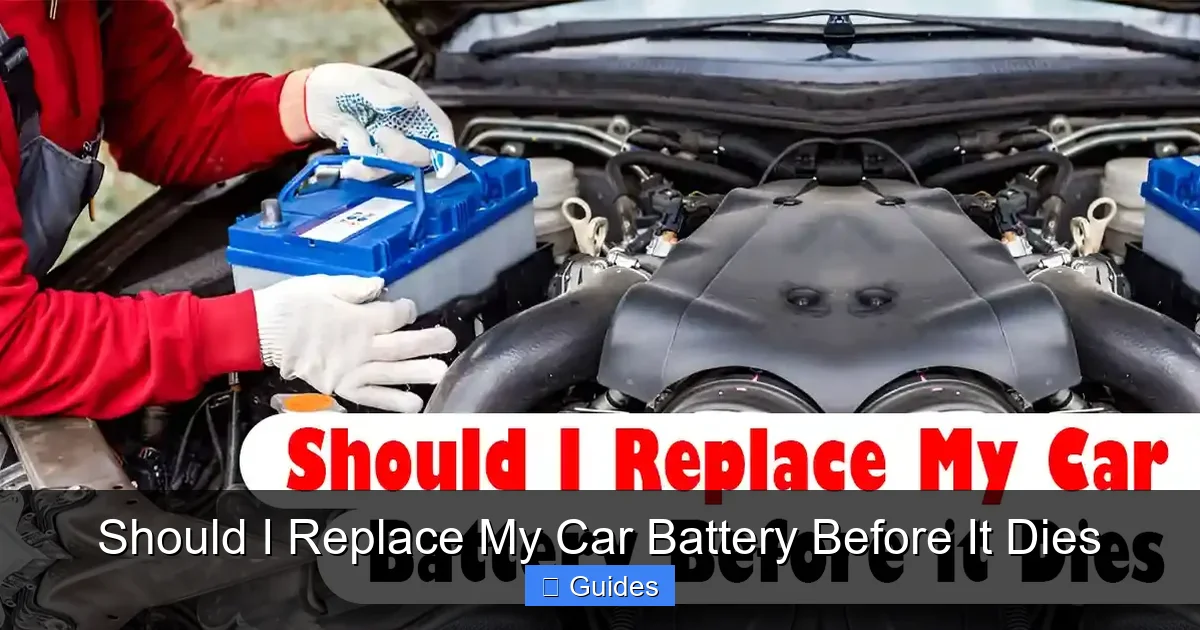
Replacing your car battery before it dies can save you from unexpected breakdowns, costly towing fees, and potential damage to your vehicle’s electrical system. While it may seem like an unnecessary expense, proactive replacement—especially after 3–5 years—ensures reliability, especially in extreme weather or during long commutes.
In This Article
- 1 Key Takeaways
- 2 📑 Table of Contents
- 3 Should I Replace My Car Battery Before It Dies?
- 4 How Long Do Car Batteries Really Last?
- 5 Signs Your Car Battery Is Failing
- 6 The Risks of Waiting Until Your Battery Dies
- 7 Benefits of Proactive Battery Replacement
- 8 When Should You Replace Your Car Battery?
- 9 How to Test Your Car Battery
- 10 Choosing the Right Replacement Battery
- 11 Conclusion
- 12 Frequently Asked Questions
Key Takeaways
- Car batteries typically last 3–5 years: Most lead-acid car batteries begin to lose efficiency after three years, with significant decline by year five.
- Preventive replacement avoids emergency situations: Replacing your battery before it fails reduces the risk of being stranded, especially in bad weather or remote areas.
- Warning signs include slow engine crank and dim lights: If your car takes longer to start or interior lights flicker, it’s time to test the battery.
- Extreme temperatures shorten battery life: Both hot summers and cold winters accelerate battery degradation, making timely replacement more important.
- Modern vehicles demand more from batteries: Features like start-stop technology, infotainment systems, and advanced electronics increase electrical load, stressing older batteries.
- Regular testing helps determine replacement timing: Free battery checks at auto shops or using a multimeter can help you decide when to replace before failure.
- Cost of replacement is far less than towing or repairs: A new battery costs $100–$300, while emergency towing and electrical damage can run into the thousands.
📑 Table of Contents
- Should I Replace My Car Battery Before It Dies?
- How Long Do Car Batteries Really Last?
- Signs Your Car Battery Is Failing
- The Risks of Waiting Until Your Battery Dies
- Benefits of Proactive Battery Replacement
- When Should You Replace Your Car Battery?
- How to Test Your Car Battery
- Choosing the Right Replacement Battery
- Conclusion
Should I Replace My Car Battery Before It Dies?
You’re driving home from work on a chilly Tuesday evening when your car suddenly won’t start. The dashboard lights flicker, the engine makes a weak clicking sound, and your phone is at 12%—no way to call for help. Sound familiar? This frustrating scenario happens to thousands of drivers every year, and in most cases, it could have been avoided with a simple, proactive step: replacing the car battery before it dies.
Car batteries are the unsung heroes of your vehicle’s electrical system. They power everything from the ignition to the radio, the headlights, and even the climate control. Yet, many drivers treat them like background noise—until they stop working. The truth is, waiting for your battery to die completely is a risky gamble. Not only can it leave you stranded, but it can also lead to more serious (and expensive) problems down the road.
So, should you replace your car battery before it dies? The short answer is yes—especially if your battery is over three years old or showing signs of weakness. In this guide, we’ll walk you through why proactive battery replacement makes sense, how to spot the warning signs, and when it’s the right time to swap out your old battery for a new one. Whether you’re a daily commuter, a weekend road-tripper, or someone who only drives occasionally, this information could save you time, money, and a whole lot of stress.
How Long Do Car Batteries Really Last?
Visual guide about Should I Replace My Car Battery Before It Dies
Image source: roadwayready.com
One of the most common questions drivers ask is, “How long should my car battery last?” The answer isn’t one-size-fits-all, but there are general guidelines that can help you plan ahead.
On average, a standard lead-acid car battery lasts between three and five years. However, this lifespan can vary significantly based on several factors, including climate, driving habits, and vehicle type. For example, batteries in hot climates—like Arizona or Texas—tend to degrade faster due to heat accelerating chemical reactions inside the battery. Conversely, cold climates—such as Minnesota or Maine—can reduce a battery’s cranking power, making it harder to start the engine in winter.
Let’s break it down further. A battery’s life is measured in charge cycles and internal wear. Every time you start your car, the battery discharges a small amount of energy. Over time, the plates inside the battery corrode, reducing its ability to hold a charge. By the time a battery reaches the three-year mark, it’s already lost a noticeable amount of its original capacity. By year five, many batteries are operating at 50% efficiency or less.
Here’s a real-world example: Sarah, a teacher from Denver, noticed her 2018 Honda Civic was taking a few extra seconds to start on cold mornings. She ignored it at first, thinking it was just the weather. But after her car failed to start one January morning, she took it to a mechanic. The battery was four years old and had dropped below 12 volts—well under the healthy range of 12.6 volts. She replaced it just in time to avoid a repeat incident.
So, while your battery might still “work” at four or five years, it’s likely on borrowed time. Think of it like an old phone battery—it might still turn on, but it won’t last through the day. Replacing your car battery before it dies isn’t about waiting for total failure; it’s about staying ahead of the curve.
Signs Your Car Battery Is Failing
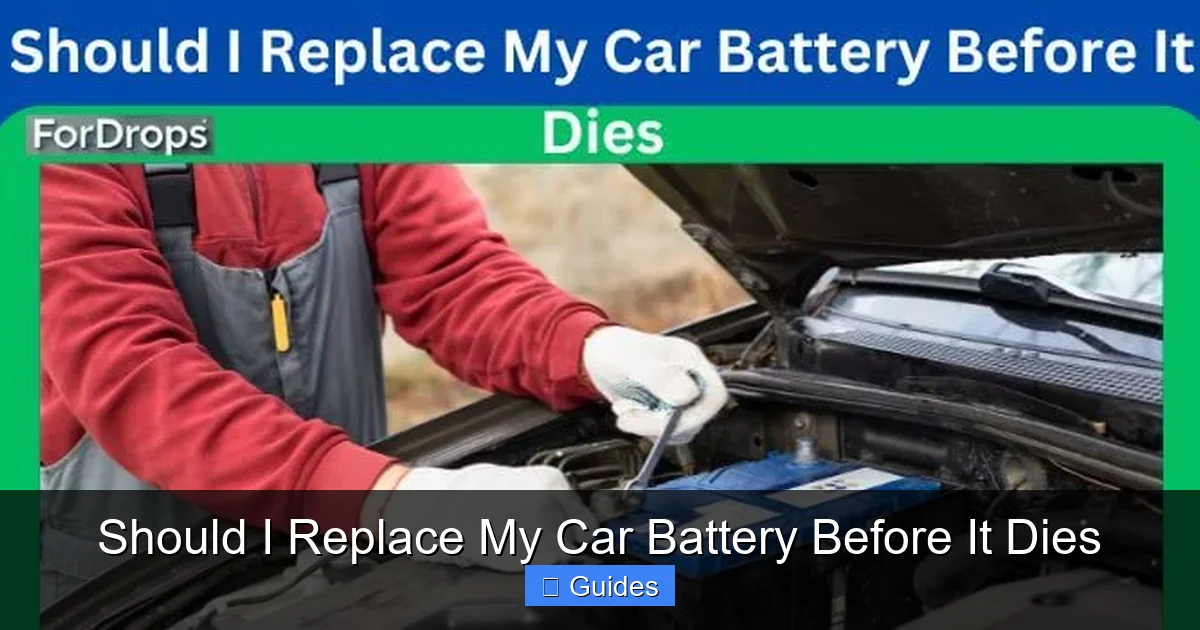
Visual guide about Should I Replace My Car Battery Before It Dies
Image source: fordrops.com
Knowing when to replace your car battery starts with recognizing the warning signs. Unlike a flat tire or a blown fuse, battery issues often creep up slowly. But if you know what to look for, you can catch problems early and avoid being left in the lurch.
One of the most obvious signs is a slow engine crank. When you turn the key or push the start button, the engine should fire up quickly. If it takes longer than usual—especially on cold mornings—it’s a red flag. The battery may not have enough power to turn the starter motor efficiently.
Another common symptom is dimming headlights or interior lights. If your lights seem noticeably dimmer than usual, especially when the engine is idling, the battery might not be supplying enough voltage. You might also notice flickering dashboard lights or erratic behavior from electronic components like the radio or power windows.
Electrical issues can also point to a weak battery. For instance, if your car’s infotainment system resets every time you start the engine, or if the power seats move slowly, the battery may be struggling to meet the electrical demand. Modern vehicles have dozens of electronic systems, and a failing battery can’t keep up.
A swollen or bloated battery case is another physical sign of trouble. This usually happens when the battery overheats, causing the casing to expand. If you pop the hood and notice a distorted battery, it’s time for a replacement—immediately.
Finally, a bad smell—like rotten eggs—coming from under the hood could indicate a leaking or overheating battery. This is a serious safety concern and requires immediate attention.
Don’t wait for your car to refuse to start. If you notice any of these signs, get your battery tested. Most auto parts stores offer free battery testing, and it only takes a few minutes. Catching a weak battery early gives you the chance to replace it on your terms, not in a panic.
The Risks of Waiting Until Your Battery Dies
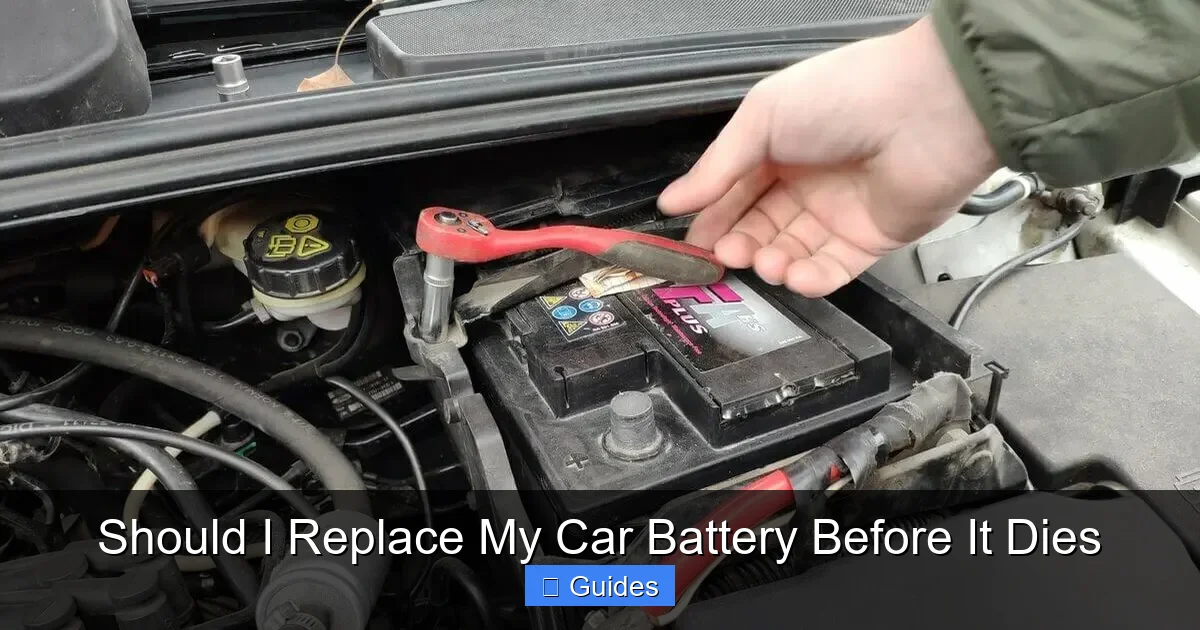
Visual guide about Should I Replace My Car Battery Before It Dies
Image source: driversadvice.com
It’s tempting to put off replacing your car battery, especially if it still starts the car. After all, why spend $150 now when the old one is “working fine”? But waiting until your battery dies completely can lead to a cascade of problems—some inconvenient, others costly.
The most immediate risk is being stranded. Imagine you’re running late for work, picking up your kids from school, or heading to a job interview. You get in the car, turn the key, and nothing happens. Now you’re stuck, possibly in a dangerous location, and you need a tow truck. Towing fees can range from $75 to $200 or more, depending on your location and the time of day. Add in the cost of a new battery, and you’ve suddenly spent far more than if you’d replaced it proactively.
But the financial hit doesn’t stop there. A dead battery can also damage other parts of your vehicle. Modern cars rely heavily on complex electronics, and a weak or dying battery can cause voltage spikes or drops that harm sensitive components. For example, the alternator—which charges the battery while the engine runs—can be overworked trying to compensate for a failing battery. This can lead to alternator failure, which costs $400–$800 to replace.
In some cases, a dead battery can even trigger error codes in your car’s computer system. These false alerts can lead to unnecessary diagnostics at the repair shop, adding to your bill. And if your car has a start-stop system (which turns the engine off at red lights to save fuel), a weak battery can cause the system to malfunction, reducing fuel efficiency and increasing wear on the starter.
There’s also the safety factor. If your battery dies while you’re driving—especially at highway speeds—it can cause the engine to stall, disabling power steering and brakes. While rare, this scenario is extremely dangerous and could lead to an accident.
Finally, consider the inconvenience. A dead battery means missed appointments, delayed trips, and stress. Replacing your battery before it dies gives you peace of mind and keeps your routine on track.
Benefits of Proactive Battery Replacement
Replacing your car battery before it dies isn’t just about avoiding breakdowns—it’s a smart investment in your vehicle’s reliability and performance. Here’s why proactive replacement makes sense.
First, it saves you money in the long run. A new battery typically costs between $100 and $300, depending on the type and brand. Compare that to the cost of emergency towing ($100+), alternator repair ($500+), or even a new starter ($300+), and the math is clear: prevention is cheaper than repair.
Second, it improves your car’s performance. A fresh battery delivers consistent voltage, ensuring your engine starts quickly and smoothly. It also supports all your vehicle’s electrical systems—from the air conditioning to the navigation system—without strain. You’ll notice better responsiveness and fewer glitches.
Third, it extends the life of other components. A healthy battery reduces the load on the alternator and starter, helping them last longer. It also prevents voltage fluctuations that can damage onboard computers and sensors.
Fourth, it’s convenient. Replacing a battery on your schedule means you can choose a time that works for you—maybe during a weekend trip to the auto shop or when you’re already getting an oil change. No rush, no stress.
Fifth, it’s safer. You won’t have to worry about your car dying at a busy intersection, on a highway, or in extreme weather. Whether you’re driving through a snowstorm or a heatwave, a reliable battery gives you confidence.
And finally, it’s environmentally responsible. Old batteries contain lead and acid, which are hazardous if not disposed of properly. Most auto shops recycle old batteries for free, so replacing yours ensures it’s handled safely and sustainably.
When Should You Replace Your Car Battery?
So, how do you know when it’s time to replace your car battery? While there’s no magic number, there are several guidelines to help you decide.
The most straightforward rule is age. If your battery is three years old or older, start paying close attention. By year four, consider testing it regularly. By year five, replacement is strongly recommended—even if it still works.
But age isn’t the only factor. Your driving habits matter too. If you take short trips frequently—less than 20 minutes—your battery may not fully recharge, leading to gradual depletion. Similarly, if you leave your car parked for long periods (like during a vacation), the battery can lose charge over time.
Climate also plays a role. If you live in a hot or cold region, your battery may degrade faster. In these areas, consider replacing your battery every 3–4 years instead of waiting for the five-year mark.
Another tip: keep an eye on your battery’s warranty. Most batteries come with a 3- to 5-year warranty, often prorated. If your battery fails within the warranty period, you may get a discount on a replacement. But once the warranty expires, you’re on your own—so use it as a timeline.
Finally, listen to your car. If you notice any of the warning signs we discussed—slow cranking, dim lights, electrical issues—don’t wait. Get it tested and replaced if needed.
How to Test Your Car Battery
Testing your car battery is easier than you might think—and it’s the best way to determine if it’s time for a replacement.
The simplest method is a visual inspection. Pop the hood and look for signs of corrosion (white or greenish powder around the terminals), swelling, or leaks. Clean any corrosion with a mixture of baking soda and water, using a wire brush to scrub the terminals.
Next, check the voltage. You can do this with a multimeter, which costs about $20 and is available at most hardware stores. Turn off the engine and all electrical components. Set the multimeter to DC voltage (usually marked “V” with a straight line). Touch the red probe to the positive terminal and the black probe to the negative terminal.
A healthy battery should read around 12.6 volts when the car is off. If it’s below 12.4 volts, the battery is weak. Below 12 volts, it’s likely failing. When the engine is running, the voltage should be between 13.7 and 14.7 volts—this indicates the alternator is charging the battery properly.
Many auto parts stores—like AutoZone, O’Reilly, or Advance Auto Parts—offer free battery testing. They’ll check the voltage, load test the battery, and inspect the charging system. This is a great option if you don’t have a multimeter or want a professional opinion.
If the test shows your battery is weak or failing, don’t delay. Replace it before it leaves you stranded.
Choosing the Right Replacement Battery
When it’s time to replace your car battery, you’ll have several options. Choosing the right one ensures optimal performance and longevity.
Start by checking your owner’s manual. It will specify the correct battery group size, cold cranking amps (CCA), and reserve capacity (RC) for your vehicle. These specs ensure the battery fits properly and delivers enough power.
Cold cranking amps (CCA) measure how well the battery can start the engine in cold weather. If you live in a cold climate, choose a battery with a higher CCA rating—typically 600 or more.
Reserve capacity (RC) indicates how long the battery can power essential systems if the alternator fails. A higher RC (70+ minutes) is better for vehicles with high electrical demands.
You’ll also see different battery types: flooded lead-acid, AGM (absorbent glass mat), and EFB (enhanced flooded battery). AGM batteries are more durable and better for start-stop vehicles, but they’re also more expensive. For most standard cars, a quality flooded battery is sufficient.
Brands like Interstate, DieHard, Optima, and Bosch are reliable choices. Look for a battery with a good warranty—36 months or more is ideal.
Finally, have the battery installed by a professional. Most auto shops include installation in the price, and they’ll also recycle your old battery for free.
Conclusion
Replacing your car battery before it dies isn’t just a good idea—it’s a smart, cost-effective way to protect your vehicle and your peace of mind. While it may seem like an unnecessary expense now, the risks of waiting far outweigh the benefits. From unexpected breakdowns to costly repairs, a failing battery can disrupt your life in ways you didn’t expect.
By paying attention to the signs, testing your battery regularly, and replacing it proactively—especially after three to five years—you can avoid the stress and expense of a dead battery. Whether you’re driving a compact sedan or a heavy-duty truck, a reliable battery is essential for safe, smooth operation.
So, the next time you start your car with ease, take a moment to appreciate your battery. And if it’s been a few years, consider giving it the upgrade it deserves. Your future self will thank you.
Frequently Asked Questions
How often should I replace my car battery?
Most car batteries last 3–5 years, but you should start testing them after three years and consider replacement by year five. Climate, driving habits, and vehicle type can affect lifespan.
Can I replace my car battery myself?
Yes, if you have basic tools and follow safety precautions. However, professional installation is recommended to ensure proper fit, recycling of the old battery, and system checks.
What happens if I ignore a failing battery?
Ignoring a weak battery can lead to being stranded, damage to the alternator or starter, and costly repairs. It can also cause electrical issues and reduce your car’s performance.
How much does it cost to replace a car battery?
A new car battery typically costs $100–$300, depending on the type, brand, and vehicle. Installation is often included at auto shops, and many offer free recycling.
Can a bad battery affect my car’s fuel efficiency?
Indirectly, yes. A weak battery can cause the alternator to work harder, increasing engine load and reducing fuel efficiency. It can also disable fuel-saving features like start-stop systems.
Is it safe to jump-start a car with a dead battery?
Yes, but only if done correctly. Use jumper cables and follow the proper sequence to avoid sparks or damage. If the battery is old or damaged, replacement is safer than repeated jump-starts.

At CarLegit, we believe information should be clear, factual, and genuinely helpful. That’s why every guide, review, and update on our website is created with care, research, and a strong focus on user experience.