

Figuring out how much wrap you need for your car doesn’t have to be confusing. With the right measurements, vehicle type, and a few smart tips, you can avoid wasting material or running short. This guide walks you through every step to ensure you get the perfect fit—no guesswork needed.
In This Article
- 1 Key Takeaways
- 2 📑 Table of Contents
- 3 How Much Wrap Do I Need for My Car? A Complete Guide
- 4 Why Getting the Right Amount of Wrap Matters
- 5 How to Measure Your Car for a Vinyl Wrap
- 6 Wrap Types and How They Affect Material Needs
- 7 Factors That Increase Wrap Material Usage
- 8 How to Buy the Right Amount of Wrap
- 9 Tips to Minimize Waste and Save Money
- 10 Conclusion
- 11 Frequently Asked Questions
Key Takeaways
- Measure your car’s surface area: Use length, width, and height to estimate total square footage, adding 10–15% for overlap and errors.
- Vehicle size matters: Compact cars need 40–50 sq ft, sedans 50–60 sq ft, SUVs 70–90 sq ft, and trucks up to 100+ sq ft.
- Wrap type affects usage: Full wraps require more material than partial wraps like hoods, roofs, or accents.
- Complex designs increase waste: Curves, mirrors, door handles, and intricate panels demand extra vinyl for seamless coverage.
- Buy from reputable suppliers: High-quality vinyl stretches better and reduces tearing, meaning less waste and better results.
- Professional vs. DIY: Professionals often use 10–20% less material due to experience, but DIYers should budget extra for mistakes.
- Roll width is key: Most car wraps use 60-inch-wide rolls—plan your layout to minimize seams and maximize efficiency.
📑 Table of Contents
- How Much Wrap Do I Need for My Car? A Complete Guide
- Why Getting the Right Amount of Wrap Matters
- How to Measure Your Car for a Vinyl Wrap
- Wrap Types and How They Affect Material Needs
- Factors That Increase Wrap Material Usage
- How to Buy the Right Amount of Wrap
- Tips to Minimize Waste and Save Money
- Conclusion
How Much Wrap Do I Need for My Car? A Complete Guide
So, you’ve decided to give your car a fresh new look with a vinyl wrap. Maybe you’re going for a sleek matte black, a bold racing stripe, or a full-color custom design. Whatever your vision, one of the first questions you’ll ask is: How much wrap do I need for my car?
It’s a great question—and an important one. Order too little, and you’ll be stuck mid-project, scrambling for more material. Order too much, and you’re wasting money on unused vinyl. The good news? With a little planning and the right approach, you can calculate your wrap needs accurately and confidently.
This guide will walk you through everything you need to know—from measuring your vehicle to understanding wrap types, material waste, and even tips for saving money. Whether you’re a DIY enthusiast or working with a professional, knowing how much wrap to buy ensures a smoother, more successful project.
Why Getting the Right Amount of Wrap Matters
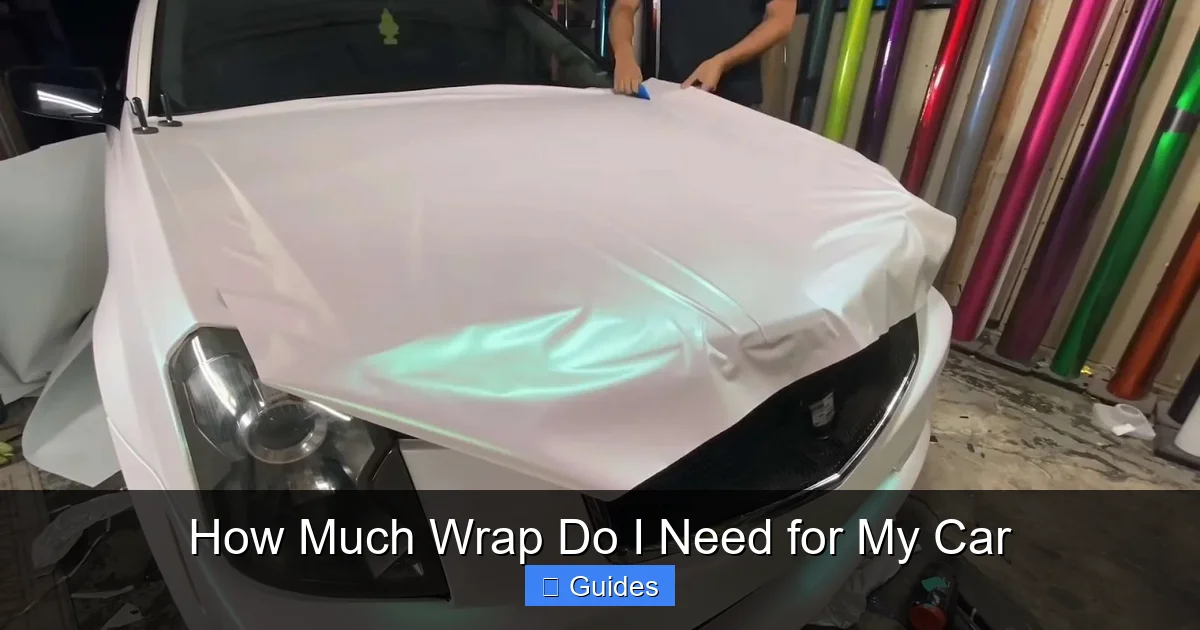
Visual guide about How Much Wrap Do I Need for My Car
Image source: naceexpo.com
Let’s be honest—vinyl wrapping isn’t cheap. Quality wrap film can cost anywhere from $2 to $8 per square foot, depending on the brand, finish, and type. For a full car wrap, that can add up to $500–$2,000 or more. So, it’s not something you want to get wrong.
Using too little wrap means you might not finish the job. You could end up with mismatched panels, visible seams, or worse—having to stop and reorder, which delays your project and adds shipping costs. On the flip side, buying too much means you’re spending extra money on material you’ll never use. And unlike paint, vinyl doesn’t store well long-term—it can degrade, lose adhesion, or get damaged if not used quickly.
Getting the right amount also affects the quality of your wrap. Vinyl needs to be stretched and molded to fit curves, edges, and complex shapes. If you’re short on material, you might be tempted to stretch it too thin, which can lead to tearing, bubbling, or premature failure. Proper coverage ensures a smooth, professional-looking finish that lasts.
The Cost Factor
Let’s break it down with a real example. Say you’re wrapping a midsize sedan like a Honda Accord. A full wrap typically requires about 55 square feet of vinyl. If you’re using a mid-range cast vinyl at $4 per square foot, your material cost is around $220. But if you underestimate and only buy 45 square feet, you’re $40 short—and that’s before shipping and taxes. If you overbuy by 20%, you’re spending an extra $44 on unused material.
Now imagine you’re wrapping a large SUV like a Ford Explorer. That could need 85 square feet. At $4/sq ft, that’s $340. A 10% error either way is $34—money that could’ve gone toward better tools, a heat gun, or even a professional installer.
Quality and Longevity
Using the right amount of wrap isn’t just about cost—it’s about performance. Vinyl that’s properly applied with enough material will conform better to your car’s contours. It’ll resist peeling, fading, and cracking over time. But if you’re stretching it to cover gaps, you risk weak spots that fail early.
Also, high-quality vinyl is designed to be applied with specific tension and overlap. Skimping on material forces compromises that can shorten the lifespan of your wrap. A well-done wrap can last 5–7 years. A rushed one might start peeling in 2.
How to Measure Your Car for a Vinyl Wrap
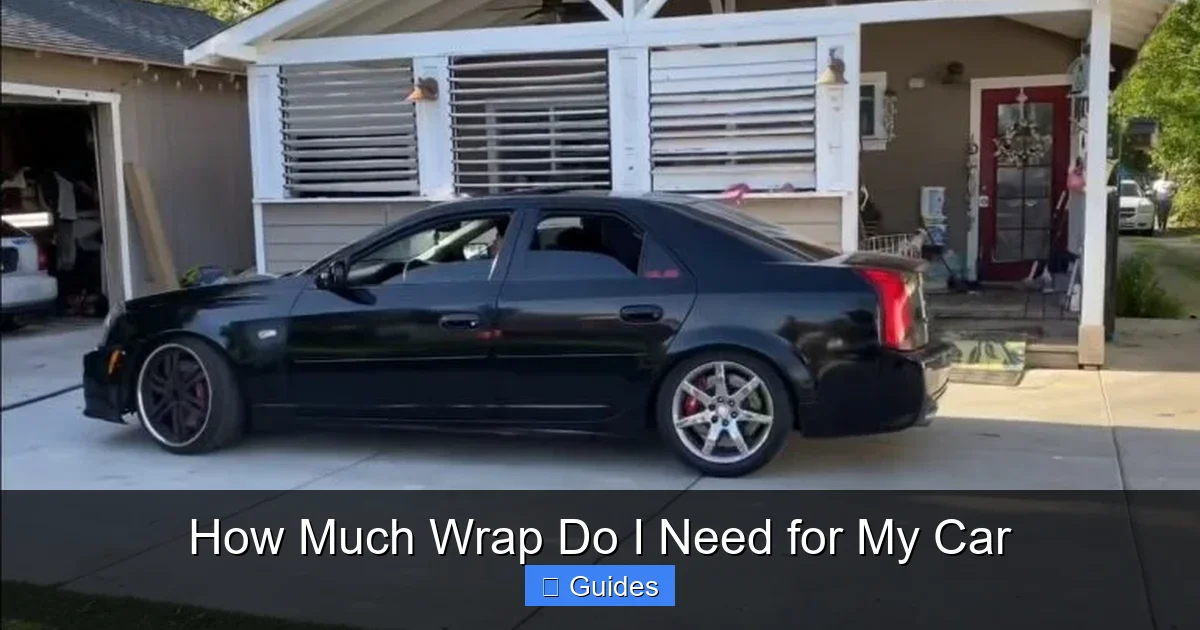
Visual guide about How Much Wrap Do I Need for My Car
Image source: richsautobodyshop.com
Now that you know why accuracy matters, let’s talk about how to measure your car. You don’t need to be a mathematician—just grab a tape measure, a notepad, and maybe a friend to help.
The goal is to estimate the total surface area you plan to wrap. For a full wrap, that includes the hood, roof, trunk, doors, fenders, and sometimes bumpers. For partial wraps, you’ll focus on specific areas like the hood, roof, or side mirrors.
Step-by-Step Measurement Guide
Start by measuring the length, width, and height of your vehicle. These three dimensions will help you calculate the approximate surface area.
– Length: Measure from the front bumper to the rear bumper.
– Width: Measure from the widest point on one side to the other (usually mirror to mirror).
– Height: Measure from the ground to the highest point (usually the roof).
Once you have these, you can use a simple formula to estimate surface area:
Surface Area ≈ (Length × Height × 2) + (Width × Height × 2) + (Length × Width)
This accounts for the sides, front/rear, and top. It’s not 100% precise—cars aren’t perfect boxes—but it’s a solid starting point.
For example, let’s say your car is 15 feet long, 6 feet wide, and 4.5 feet tall.
– Sides: 15 × 4.5 × 2 = 135 sq ft
– Front/Back: 6 × 4.5 × 2 = 54 sq ft
– Roof: 15 × 6 = 90 sq ft
– Total: 135 + 54 + 90 = 279 sq ft
Wait—that seems high, right? That’s because this method includes areas like the undercarriage and interior, which you’re not wrapping. So we need to adjust.
In reality, you’re only wrapping the exterior visible surfaces. A better approach is to break the car into sections.
Break It Down by Panels
Instead of one big calculation, measure each panel separately. Here’s a practical way:
– Hood: Measure length × width. Add 6–12 inches for overlap around the edges.
– Roof: Same as hood—length × width, plus extra for wrapping over the edges.
– Trunk/Decklid: Length × width, plus overlap.
– Doors: Measure each door (height × width). Most cars have 4 doors.
– Fenders: These are curved, so estimate as rectangles. Add extra for complex shapes.
– Bumpers: Front and rear. Measure length × height, plus depth if wrapping the sides.
– Side Mirrors: Small but add up. Measure each mirror housing.
– Pillars and Trim: A-pillars, B-pillars, etc. These are narrow but require precise cuts.
Add up all these areas, then add 10–15% for overlap, trimming, and mistakes. This buffer is crucial—especially for DIYers.
Use Online Calculators (But Double-Check)
Some wrap suppliers and forums offer online calculators where you input your car’s make, model, and year, and they estimate wrap needs. These can be helpful, but they’re not always accurate. Car designs vary, and modifications (like spoilers or body kits) can change surface area.
Treat these tools as a starting point, not a final answer. Always verify with your own measurements.
Wrap Types and How They Affect Material Needs

Visual guide about How Much Wrap Do I Need for My Car
Image source: carpursuits.com
Not all wraps are created equal. The type of wrap you choose—full, partial, or accent—directly impacts how much vinyl you’ll need.
Full Vehicle Wrap
A full wrap covers nearly the entire exterior of your car. This includes the hood, roof, trunk, doors, fenders, bumpers, and sometimes even the mirrors and pillars. It’s the most dramatic transformation and the most material-intensive.
On average:
– Compact cars (e.g., Honda Civic): 40–50 sq ft
– Sedans (e.g., Toyota Camry): 50–60 sq ft
– SUVs (e.g., Jeep Grand Cherokee): 70–90 sq ft
– Trucks (e.g., Ford F-150): 90–110+ sq ft
These numbers include the 10–15% buffer. Trucks often need more due to larger surfaces and complex bed designs.
Partial Wraps
Partial wraps focus on specific areas. They’re cheaper and easier to install, but still make a big visual impact.
Common partial wraps include:
– Hood wrap: 8–12 sq ft
– Roof wrap: 10–15 sq ft
– Trunk wrap: 6–10 sq ft
– Side mirror caps: 1–2 sq ft (for both)
– Rocker panels (side skirts): 4–6 sq ft
You can combine these—for example, a hood and roof wrap might use 20–25 sq ft total. These are great for adding contrast or a racing stripe look without the full cost.
Accent Wraps
Accent wraps are small, decorative touches. Think door handles, trim pieces, or custom graphics. These use very little material—often under 5 sq ft—but require precision.
Because they’re small, waste is less of an issue. But you still want to buy a little extra in case you mess up a cut.
Custom Designs and Graphics
If you’re adding logos, patterns, or intricate designs, you’ll need more material. Complex graphics often require multiple layers or precise alignment, which increases waste.
For example, a full-wrap design with a gradient or custom artwork might need 10–20% more vinyl than a solid color. This is because you can’t always use scraps for small pieces—color matching is critical.
Factors That Increase Wrap Material Usage
Even with perfect measurements, some factors can increase how much wrap you need. Being aware of these helps you plan better.
Vehicle Shape and Complexity
Cars with lots of curves, vents, door handles, and trim pieces are harder to wrap. Each of these features requires extra vinyl to wrap around, tuck into, or cut precisely.
For example:
– SUVs with roof racks: The racks create gaps and edges that need extra material to seal.
– Sports cars with wide fenders: Deep curves stretch the vinyl, requiring more overlap.
– Trucks with bed caps or tonneau covers: These add surfaces and edges that increase total area.
The more complex the shape, the more waste you’ll have. Plan for 15–20% extra if your car has many details.
Wrap Technique and Skill Level
A professional installer can often use less material because they’re experienced with stretching, tucking, and minimizing seams. They know how to work with the vinyl to cover more area efficiently.
DIYers, on the other hand, should budget extra. Mistakes happen—tears, misalignments, or over-stretching can ruin sections of vinyl. Having spare material lets you redo panels without starting over.
If you’re new to wrapping, add 20% to your estimate. As you gain experience, you can reduce that buffer.
Vinyl Type and Stretchability
Not all vinyl is created equal. Cast vinyl is more expensive but stretches better and conforms to curves. It’s ideal for complex shapes and lasts longer.
Calendered vinyl is cheaper but less flexible. It’s fine for flat surfaces but can crack or tear on curves. Because it doesn’t stretch as well, you might need more of it to cover the same area.
Always choose high-quality cast vinyl for full wraps. It reduces waste and improves results.
Climate and Application Conditions
Temperature affects vinyl performance. In cold weather, vinyl becomes stiff and harder to stretch. This can lead to tears or poor adhesion, increasing waste.
Ideally, wrap in a climate-controlled environment—60–80°F (15–27°C). If you’re working in a garage, use a space heater or wait for a warm day.
Humidity also matters. Too much moisture can cause bubbling. Too little can make the vinyl brittle. Aim for 40–60% humidity.
How to Buy the Right Amount of Wrap
Now that you know how much you need, it’s time to buy. Here’s how to do it smartly.
Choose the Right Roll Width
Most car wraps use 60-inch-wide rolls. This width is ideal because it covers large panels like doors and hoods with minimal seams.
When planning your layout, think about how you’ll cut the vinyl. For example, a door might be 30 inches wide and 40 inches tall. A 60-inch roll lets you cut two doors side by side with room to spare.
Avoid narrow rolls (like 30-inch) unless you’re doing small accents. They create more seams and waste.
Calculate Total Square Footage
Add up all your panel measurements, including the 10–15% buffer. Then, divide by the roll width to estimate how many linear feet you need.
For example:
– Total needed: 60 sq ft
– Roll width: 60 inches (5 feet)
– Linear feet needed: 60 ÷ 5 = 12 feet
So, you’d need a 12-foot-long roll of 60-inch vinyl.
Most suppliers sell rolls in standard lengths: 10 ft, 20 ft, 25 ft, 50 ft, etc. Round up to the nearest available size.
Buy from Reputable Suppliers
Don’t skimp on quality. Cheap vinyl may seem like a bargain, but it’s more likely to tear, fade, or fail early. Stick with trusted brands like 3M, Avery Dennison, or ORACAL.
These brands offer better stretch, adhesion, and durability. They also provide detailed specs and sometimes even wrap calculators on their websites.
Consider Pre-Cut Kits
Some companies offer pre-cut wrap kits for specific car models. These include pieces sized for your hood, roof, doors, etc. They’re more expensive but reduce waste and simplify installation.
If you’re a beginner, a pre-cut kit can be worth the extra cost. It takes the guesswork out of measuring and cutting.
Tips to Minimize Waste and Save Money
Even with careful planning, waste happens. But you can reduce it with a few smart strategies.
Plan Your Layout
Before cutting, sketch out how you’ll use the vinyl. Place large panels first, then fill in with smaller pieces. Use scraps for accents or trim.
Some DIYers use cardboard templates to test fit before cutting the vinyl.
Use a Heat Gun Wisely
Heat helps vinyl conform to curves. But overheating can weaken the material. Use a heat gun on low to medium settings, and move it constantly to avoid hot spots.
Practice on Small Areas First
If you’re new to wrapping, practice on a door handle or mirror cap before tackling the hood. This builds confidence and reduces mistakes on large panels.
Keep Records
After your project, note how much vinyl you used. This helps next time—whether you’re wrapping another car or redoing this one.
Conclusion
So, how much wrap do you need for your car? The answer depends on your vehicle size, wrap type, and skill level—but with the right measurements and a little planning, you can get it right.
Start by measuring your car’s key panels. Add 10–15% for overlap and errors. Choose high-quality vinyl and a 60-inch roll for best results. And don’t forget to account for curves, trim, and your own experience level.
Whether you’re going for a full transformation or a subtle accent, having the right amount of wrap ensures a smoother process, better results, and less wasted money. So grab your tape measure, plan your layout, and get ready to give your car the upgrade it deserves.
Frequently Asked Questions
How much wrap do I need for a full car wrap?
A full car wrap typically requires 40–60 square feet for sedans, 70–90 for SUVs, and up to 100+ for trucks. Always add 10–15% extra for overlap and mistakes.
Can I wrap my car myself?
Yes, many people wrap their cars DIY. However, it requires patience, the right tools, and practice. Beginners should budget extra material and consider starting with partial wraps.
What’s the difference between cast and calendered vinyl?
Cast vinyl is more flexible, durable, and better for complex curves. Calendered vinyl is cheaper but less stretchy and prone to cracking. Cast is recommended for full wraps.
How long does a vinyl wrap last?
A high-quality wrap can last 5–7 years with proper care. Factors like sun exposure, washing frequency, and installation quality affect longevity.
Do I need to prep my car before wrapping?
Yes. Clean the surface thoroughly, remove dirt, wax, and grease. Any imperfections will show through the wrap, so proper prep is essential for a smooth finish.
Can I remove a vinyl wrap?
Yes, vinyl wraps are removable. Use a heat gun to loosen the adhesive, then peel slowly. Residue can be cleaned with adhesive remover. It won’t damage the original paint if done correctly.

At CarLegit, we believe information should be clear, factual, and genuinely helpful. That’s why every guide, review, and update on our website is created with care, research, and a strong focus on user experience.