
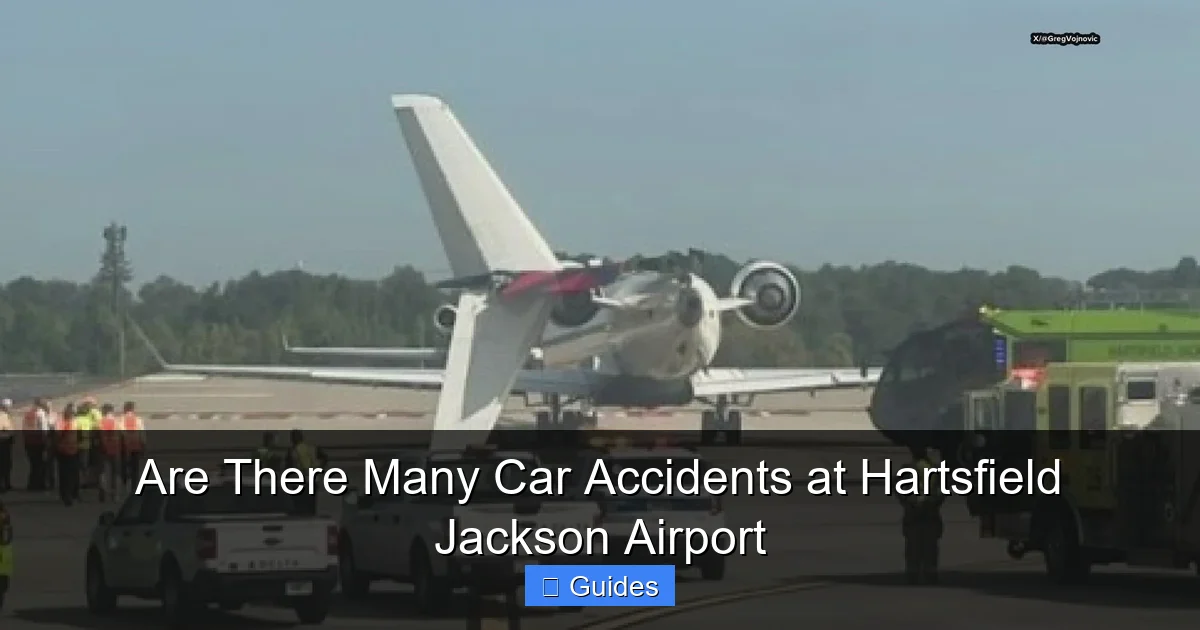
Hartsfield-Jackson Atlanta International Airport is one of the busiest airports in the world, handling over 100 million passengers annually. While the sheer volume of vehicles increases the potential for car accidents, actual crash rates are relatively low thanks to strict traffic management and infrastructure design.
If you’ve ever driven to or from Hartsfield-Jackson Atlanta International Airport, you know it’s not your average trip to the local mall. With over 107 million passengers passing through each year, it’s the busiest airport in the world by passenger traffic. That kind of volume means a lot of cars—rental cars, ride-shares, taxis, private vehicles, and shuttles—all converging on a relatively compact area. Naturally, this raises a common question: Are there many car accidents at Hartsfield Jackson Airport?
The short answer is: not as many as you might expect. While the airport’s roadways are constantly buzzing with activity, the actual number of reported car accidents remains relatively low compared to the sheer number of vehicles on the road. This isn’t luck—it’s the result of careful planning, strict traffic enforcement, and continuous improvements to airport infrastructure. But that doesn’t mean driving there is risk-free. Understanding where, when, and why accidents happen can help you navigate the airport safely and avoid becoming a statistic.
In this guide, we’ll break down the facts about car accidents at Hartsfield-Jackson, explore the most common causes and locations, and offer practical tips to keep you safe whether you’re dropping off a loved one, picking up a rental car, or driving through during a layover.
In This Article
- 1 Key Takeaways
- 2 📑 Table of Contents
- 3 Understanding the Scale of Traffic at Hartsfield-Jackson
- 4 Where Do Most Car Accidents Happen at Hartsfield-Jackson?
- 5 When Are Accidents Most Likely to Occur?
- 6 Who Is Most at Risk of an Accident?
- 7 Safety Measures and How They Reduce Accidents
- 8 Tips for Driving Safely at Hartsfield-Jackson
- 9 Conclusion
- 10 Frequently Asked Questions
- 10.1 Are car accidents common at Hartsfield-Jackson Airport?
- 10.2 Where do most car accidents happen at the airport?
- 10.3 What time of day has the most accidents?
- 10.4 Are rental car drivers more likely to get in accidents?
- 10.5 Does weather affect accident rates at the airport?
- 10.6 What can I do to avoid an accident at Hartsfield-Jackson?
Key Takeaways
- High Traffic Volume, Low Accident Rate: Despite massive daily vehicle traffic, Hartsfield-Jackson maintains a surprisingly low accident rate due to advanced traffic control systems and well-planned roadways.
- Common Accident Locations: Most incidents occur in high-congestion zones like the domestic terminal loop, rental car facilities, and merge points on I-85 and I-285.
- Peak Times Increase Risk: Rush hours, holiday travel periods, and flight delays significantly raise the likelihood of fender benders and minor collisions.
- Rental Car Drivers Are More Vulnerable: Visitors unfamiliar with the airport layout are more prone to wrong turns, sudden stops, and navigation errors.
- Weather Plays a Role: Rain, fog, and occasional ice in winter can reduce visibility and road traction, contributing to weather-related accidents.
- Safety Measures Are Effective: The airport employs signage, speed limits, traffic cameras, and law enforcement to minimize risks and respond quickly to incidents.
- Driving Tips Can Help: Planning your route, using GPS wisely, and staying alert can greatly reduce your chances of being involved in an accident.
📑 Table of Contents
Understanding the Scale of Traffic at Hartsfield-Jackson
To truly grasp whether car accidents are common at Hartsfield-Jackson, it helps to understand just how much traffic the airport handles. On an average day, more than 250,000 vehicles pass through the airport’s roadways. That includes everything from Uber and Lyft drivers making quick pickups to families navigating the rental car return lanes with luggage in tow.
The airport spans over 4,700 acres and features a complex network of roads, including the famous “domestic terminal loop,” which circles the main passenger terminals. This loop is designed for efficiency—cars can drop off and pick up passengers without stopping—but it’s also a hotspot for confusion, especially for first-time visitors. Add in the constant flow of shuttle buses, airport employees commuting to work, and delivery trucks, and you’ve got a dynamic, high-pressure driving environment.
Despite this intensity, the airport’s traffic management systems are among the most advanced in the world. Real-time monitoring, electronic signage, and coordinated traffic signals help keep vehicles moving smoothly. The Georgia Department of Transportation (GDOT) and the airport’s own transportation team work together to minimize bottlenecks and respond quickly to incidents.
How Accident Rates Are Measured
When we talk about “accident rates,” it’s important to understand how they’re calculated. Most official statistics come from the Atlanta Police Department, the Georgia State Patrol, and the airport’s own security and transportation divisions. These agencies track everything from minor fender benders to serious collisions requiring emergency response.
According to recent data, the airport averages fewer than 200 reported vehicle accidents per year. That might sound like a lot, but when you consider that over 90 million vehicle trips occur annually, the accident rate is less than 0.0002%—extremely low. For comparison, the national average for urban highways is significantly higher.
Most of these incidents are minor—scrapes, bumper taps, or sideswipes—often occurring at low speeds. Serious injuries are rare, and fatal accidents are almost unheard of. This is largely due to the controlled nature of airport roadways: speed limits are low (typically 25–35 mph), roads are well-marked, and there are few intersections or traffic lights to cause confusion.
Where Do Most Car Accidents Happen at Hartsfield-Jackson?
Visual guide about Are There Many Car Accidents at Hartsfield Jackson Airport
Image source: rksapplawfirm.com
While the overall accident rate is low, certain areas around the airport are more prone to incidents. Knowing these hotspots can help you stay alert and avoid common pitfalls.
The Domestic Terminal Loop
This is the most heavily traveled road at the airport, and it’s also where the majority of accidents occur. The loop allows drivers to drop off or pick up passengers without leaving their cars, but it’s also a maze of lanes, merge points, and sudden stops.
One of the biggest issues is lane confusion. The loop has multiple lanes, and drivers often switch lanes abruptly to reach the correct terminal or exit. This can lead to sideswipes or rear-end collisions, especially when someone realizes they’re in the wrong lane at the last second.
Another common problem is double-parking. While it’s technically illegal, some drivers stop in active traffic lanes to wait for passengers, blocking the flow and creating hazards for other vehicles.
Rental Car Facilities and Return Lanes
The rental car area is another high-risk zone. With over a dozen major rental companies operating on-site, the return lanes can get extremely crowded, especially during peak travel times.
Drivers unfamiliar with the layout often make sudden turns or stop unexpectedly while looking for the correct return lane. This can cause chain-reaction collisions, particularly when multiple cars are trying to merge into the same lane.
Additionally, the rental car shuttle buses frequently enter and exit the area, adding another layer of complexity. Drivers need to watch for buses pulling out and pedestrians crossing between vehicles.
Interstate Access Points (I-85 and I-285)
While not technically on airport property, the highways leading to and from Hartsfield-Jackson are often included in accident discussions because they’re so closely tied to airport traffic.
The interchanges where I-85 and I-285 meet the airport access roads are particularly dangerous. These areas experience heavy congestion, especially during rush hour or holiday travel. Sudden braking, aggressive lane changes, and distracted driving are common causes of accidents here.
In fact, GDOT has identified several “high-crash corridors” near the airport, including the I-85 southbound ramp to the airport and the I-285 interchange near Camp Creek Parkway. These spots see a higher-than-average number of collisions, many of which involve airport-bound traffic.
Employee Parking and Service Roads
Less visible but still important are the service roads and employee parking areas. These roads are used by airport staff, delivery trucks, and maintenance vehicles. While traffic is lighter here, the mix of large vehicles and pedestrian workers can create hazards.
Accidents in these areas are often due to poor visibility, blind spots on large trucks, or drivers taking shortcuts through restricted zones. While these incidents rarely make the news, they do contribute to the overall accident tally.
When Are Accidents Most Likely to Occur?
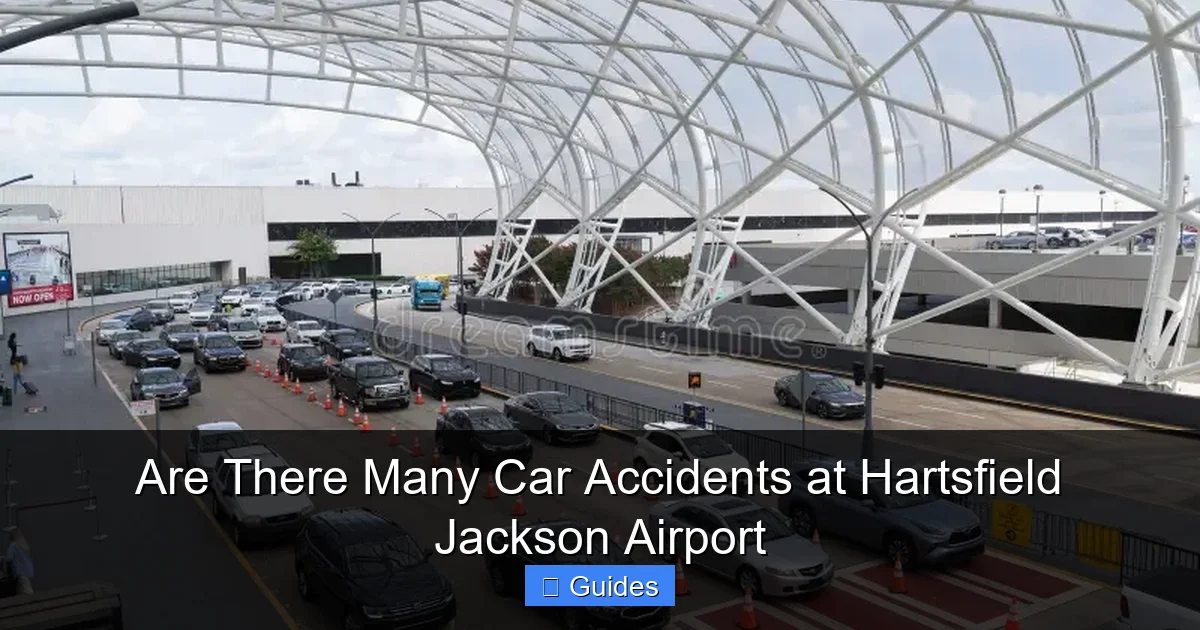
Visual guide about Are There Many Car Accidents at Hartsfield Jackson Airport
Image source: thumbs.dreamstime.com
Timing plays a big role in accident risk at Hartsfield-Jackson. Certain times of day and days of the week are far more dangerous than others.
Peak Travel Times
The busiest times at the airport are weekday mornings (6–9 a.m.) and evenings (5–8 p.m.), coinciding with rush hour and flight departures. During these windows, traffic slows to a crawl, and frustration levels rise.
Holiday periods—especially Thanksgiving, Christmas, and spring break—are even worse. The airport sees a massive surge in passengers, and the roadways become packed with out-of-town drivers who may not know the layout.
Flight delays also contribute to congestion. When flights are delayed, more people arrive early or stay longer, increasing the number of vehicles circling the terminals or waiting in pickup zones.
Weather Conditions
Atlanta’s weather can be unpredictable, and that affects driving conditions at the airport. Rain is the most common weather-related hazard. Wet roads reduce traction and increase stopping distances, making it easier to skid or lose control.
Fog is another concern, especially in the early morning hours. The airport’s low-lying areas can become shrouded in thick fog, reducing visibility to near zero. This is particularly dangerous on the terminal loop, where drivers may not see stopped vehicles ahead until it’s too late.
In winter, occasional ice or snow can make roads slick. While Atlanta doesn’t get much snow, even a light dusting can cause chaos on the roads, especially for drivers unfamiliar with winter driving.
Nighttime Driving
Driving at night presents its own challenges. While traffic is lighter, visibility is reduced, and fatigue can set in—especially for travelers arriving on red-eye flights.
The airport’s lighting is generally good, but some areas, like the rental car return lanes and employee parking, can be dimly lit. This makes it harder to see pedestrians, curbs, or other vehicles.
Additionally, alcohol-related incidents are more common at night. While DUIs are rare on airport property due to strict enforcement, drivers leaving nearby bars or hotels may be impaired when they reach the airport access roads.
Who Is Most at Risk of an Accident?
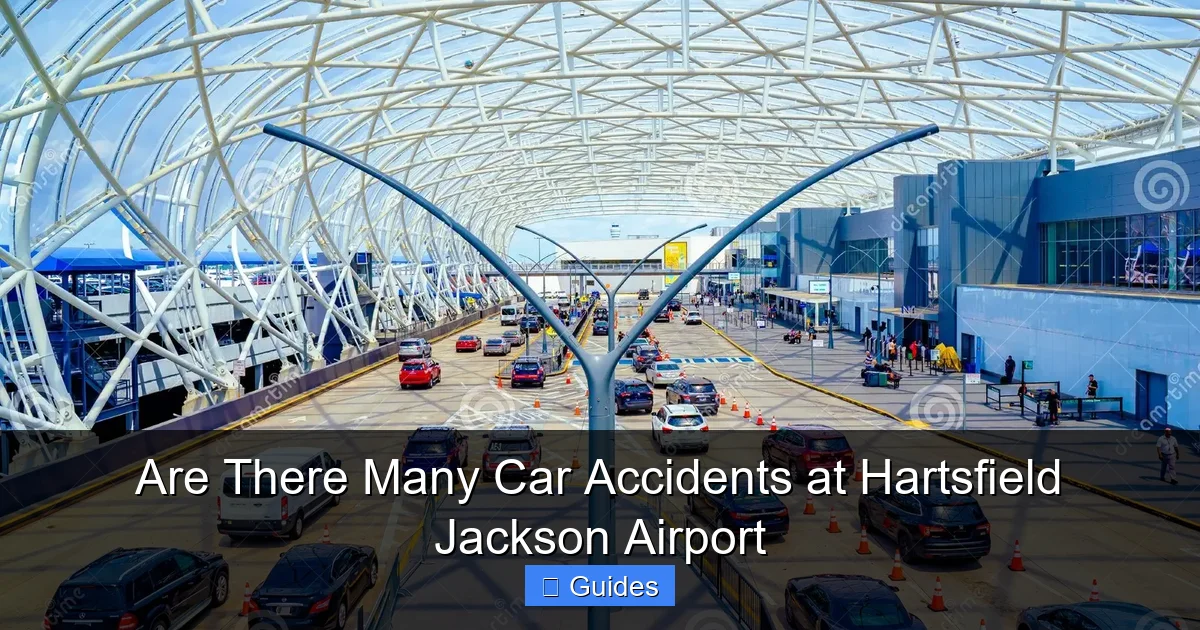
Visual guide about Are There Many Car Accidents at Hartsfield Jackson Airport
Image source: thumbs.dreamstime.com
Not all drivers face the same level of risk. Certain groups are more likely to be involved in accidents at Hartsfield-Jackson.
Out-of-Town and First-Time Visitors
The majority of accidents involve drivers who are unfamiliar with the airport’s layout. These visitors may not know where to go, how to navigate the loop, or where rental car returns are located.
Common mistakes include:
– Taking the wrong exit and having to circle back
– Stopping in the middle of the road to check a map or GPS
– Making sudden lane changes to correct a wrong turn
– Confusing pickup and drop-off zones
These errors often lead to fender benders or sideswipes, especially when other drivers aren’t expecting sudden stops or turns.
Rental Car Drivers
Rental car users are particularly vulnerable. They’re often stressed, tired from travel, and trying to navigate a new city. Plus, they may be driving a vehicle they’re not used to, which can affect handling and braking.
Many rental car accidents happen during the return process. Drivers may rush to meet flight deadlines, leading to careless driving or parking errors.
While professional drivers are generally more experienced, the constant pressure to pick up and drop off passengers quickly can lead to risky behavior. Some may double-park, block traffic, or make unsafe turns to save time.
Additionally, ride-share drivers often use apps that provide turn-by-turn directions, but these may not always account for airport-specific rules or temporary closures.
Safety Measures and How They Reduce Accidents
So why are accident rates so low despite the high traffic volume? It’s because Hartsfield-Jackson has implemented a range of safety measures designed to prevent crashes and respond quickly when they do occur.
Traffic Monitoring and Enforcement
The airport uses a network of traffic cameras and sensors to monitor road conditions in real time. These systems detect congestion, accidents, and traffic violations, allowing officials to respond quickly.
Law enforcement officers—including airport police and state troopers—patrol the roadways regularly. They enforce speed limits, ticket illegal parking, and assist with accident investigations.
Clear Signage and Road Design
One of the airport’s biggest strengths is its clear, consistent signage. Arrows, lane markings, and electronic message boards guide drivers through the complex road network.
The terminal loop is designed to minimize stops and reduce confusion. There are no traffic lights or stop signs—just yield signs and merge points—which keeps traffic flowing smoothly.
Speed Limits and Traffic Calming
Speed limits are strictly enforced and kept low—usually 25 to 35 mph. This reduces the severity of accidents and gives drivers more time to react.
Speed bumps, rumble strips, and narrowed lanes are used in certain areas to slow traffic and discourage reckless driving.
Emergency Response Teams
The airport has dedicated emergency response teams that can reach accident scenes within minutes. This quick response helps clear roads faster, reducing the risk of secondary collisions.
Medical personnel are also on standby, ensuring that anyone injured in an accident receives prompt care.
Tips for Driving Safely at Hartsfield-Jackson
Even with all these safety measures, it’s up to individual drivers to stay alert and make smart choices. Here are some practical tips to help you avoid accidents:
Plan Your Route in Advance
Before you leave, check the airport’s official website or use a reliable GPS app to find the best route. Know which terminal you’re going to and where to enter the loop.
If you’re picking someone up, confirm their flight status and arrival time. Don’t arrive too early—circling the loop repeatedly increases your risk of an accident.
Use GPS Wisely
While GPS is helpful, don’t rely on it blindly. Some apps may not account for airport-specific rules or temporary closures.
Keep your eyes on the road, not your phone. If you need to check directions, pull over safely or ask a passenger to help.
Stay in Your Lane
One of the biggest causes of accidents is sudden lane changes. Once you’re in the correct lane, stay there. If you miss your exit, circle back—it’s safer than trying to cut across traffic.
Obey Speed Limits and Yield Signs
Speeding is dangerous, especially in congested areas. Always follow posted speed limits and yield to other vehicles when merging.
Watch for Pedestrians and Buses
Pedestrians often cross between cars in pickup and drop-off zones. Be extra cautious, especially at night or in bad weather.
Also, watch for shuttle buses and airport vehicles. They have the right of way in many areas.
Don’t Double-Park
Even if you’re just waiting a minute, don’t stop in active traffic lanes. Use designated waiting areas or park in short-term parking if you need to wait longer.
Stay Calm and Patient
Traffic at Hartsfield-Jackson can be frustrating, but getting angry or aggressive won’t help. Stay calm, follow the rules, and give yourself plenty of time.
Conclusion
So, are there many car accidents at Hartsfield-Jackson Airport? The answer is no—not when you consider the enormous volume of traffic. While accidents do happen, they’re relatively rare thanks to smart design, strict enforcement, and continuous safety improvements.
Most incidents are minor and occur in high-traffic zones like the terminal loop or rental car areas. They’re often caused by driver error—especially among visitors unfamiliar with the layout.
By understanding the risks and following basic safety tips, you can navigate the airport safely and avoid becoming part of the accident statistics. Whether you’re a frequent flyer or a first-time visitor, staying alert, planning ahead, and driving defensively will go a long way in keeping you and others safe.
Hartsfield-Jackson may be busy, but with the right mindset and preparation, your trip through the airport can be smooth, stress-free, and accident-free.
Frequently Asked Questions
Are car accidents common at Hartsfield-Jackson Airport?
No, car accidents are not common relative to the high volume of traffic. The airport averages fewer than 200 reported incidents per year, making the accident rate extremely low. Most are minor fender benders.
Where do most car accidents happen at the airport?
Most accidents occur on the domestic terminal loop, in rental car return lanes, and at highway interchanges like I-85 and I-285. These areas have high congestion and frequent lane changes.
What time of day has the most accidents?
Accidents are most likely during peak travel times—weekday mornings and evenings, holiday periods, and flight delays. Rush hour and nighttime driving also increase risk.
Are rental car drivers more likely to get in accidents?
Yes, rental car drivers are at higher risk because they’re often unfamiliar with the airport layout, stressed, and driving an unfamiliar vehicle.
Does weather affect accident rates at the airport?
Yes, rain, fog, and winter weather can reduce visibility and road traction, increasing the likelihood of accidents, especially on the terminal loop and access roads.
What can I do to avoid an accident at Hartsfield-Jackson?
Plan your route ahead of time, use GPS wisely, stay in your lane, obey speed limits, and avoid double-parking. Staying calm and patient also helps reduce risk.

At CarLegit, we believe information should be clear, factual, and genuinely helpful. That’s why every guide, review, and update on our website is created with care, research, and a strong focus on user experience.