

Smart Cars are engineered for city agility, not high-speed cornering—and that includes their suspension setup. Most Smart Car models, including the Fortwo and Forfour, come equipped with one front stabiliser bar (also called a sway bar or anti-roll bar), designed to reduce body roll during moderate turns while maintaining ride comfort in tight urban spaces.
If you’ve ever driven a Smart Car—or even just watched one zip through traffic like a urban ninja—you might have wondered how such a tiny vehicle stays stable around corners. After all, it’s barely longer than a motorcycle and weighs less than some SUVs. Yet, it doesn’t tip over like a toy. So, what’s the secret? A big part of the answer lies in its suspension system, particularly the front stabiliser bar.
You might be asking: “How many front stabiliser bars does a Smart Car have?” The short answer is: one. But the longer, more interesting answer involves understanding why that single bar is so important—and why Smart Cars don’t need more. In this guide, we’ll dive deep into the role of the front stabiliser bar, how it works in the unique context of a Smart Car, and what it means for your everyday driving experience. Whether you’re a current owner, considering a purchase, or just curious about automotive engineering, this article will give you a clear, practical understanding of this often-overlooked component.
Smart Cars were born out of a vision: to create a vehicle that could thrive in the chaos of modern city life. With parking spaces shrinking and traffic congestion growing, the idea was simple—build a car small enough to fit anywhere, efficient enough to cost almost nothing to run, and smart enough to handle urban challenges with ease. That philosophy extends to every part of the car, including its suspension. Unlike performance cars that prioritize sharp handling and high-speed stability, Smart Cars are built for agility, comfort, and practicality. And that’s exactly why their stabiliser bar setup is different from what you’d find in a typical sedan or SUV.
In This Article
- 1 Key Takeaways
- 2 📑 Table of Contents
- 3 What Is a Front Stabiliser Bar?
- 4 Smart Car Suspension Design Overview
- 5 How Many Front Stabiliser Bars Does a Smart Car Have?
- 6 Role of the Front Stabiliser Bar in Smart Car Handling
- 7 Maintenance and Common Issues
- 8 Aftermarket Upgrades: Should You Add More?
- 9 Conclusion
- 10 Frequently Asked Questions
- 10.1 Do all Smart Car models have a front stabiliser bar?
- 10.2 Can I drive my Smart Car if the front stabiliser bar is damaged?
- 10.3 Does the Smart Car have a rear stabiliser bar?
- 10.4 How often should I check my Smart Car’s stabiliser bar?
- 10.5 Can I upgrade my Smart Car’s stabiliser bar for better performance?
- 10.6 Is the front stabiliser bar the same on gasoline and electric Smart Cars?
Key Takeaways
- One Front Stabiliser Bar: The vast majority of Smart Car models feature a single front stabiliser bar as part of their suspension system.
- Designed for Urban Driving: The stabiliser bar is optimized for city conditions—lightweight, compact, and focused on stability during low-speed maneuvers.
- No Rear Stabiliser Bar on Most Models: Unlike many traditional cars, most Smart Cars do not include a rear stabiliser bar, relying instead on their short wheelbase and rear-engine layout for balance.
- Affects Handling Characteristics: The single front bar helps minimize body roll but doesn’t deliver sporty handling—perfect for parking and navigating narrow streets.
- Maintenance Is Minimal: Stabiliser bars on Smart Cars are durable and rarely need replacement unless damaged by impact or corrosion.
- Aftermarket Upgrades Available: Enthusiasts can install performance sway bars, but this may compromise the car’s original ride comfort and city-friendly dynamics.
- Model-Specific Variations: Always check your specific model and year, as limited editions or newer variants (like the Smart EQ) may have slight differences.
📑 Table of Contents
What Is a Front Stabiliser Bar?
Before we get into how many front stabiliser bars a Smart Car has, let’s make sure we’re on the same page about what this part actually does. The front stabiliser bar—also known as a sway bar, anti-roll bar, or stabilizer link—is a metal rod that connects the left and right sides of the front suspension. Its main job is to reduce body roll when the car turns a corner.
Imagine you’re driving around a roundabout. As you turn, the outside wheels compress while the inside wheels lift slightly. Without a stabiliser bar, the car would lean heavily to one side, making the ride feel unstable and potentially affecting tire grip. The stabiliser bar resists this motion by transferring some of the force from the compressed side to the lifted side, keeping the car more level.
How It Works in Practice
Here’s a simple way to think about it: the stabiliser bar acts like a torsion spring. When one wheel moves up or down, the bar twists, creating resistance. This resistance helps keep both wheels in better contact with the road, improving traction and control. It doesn’t eliminate body roll entirely—especially in a lightweight car like a Smart—but it significantly reduces it during normal driving.
In most conventional cars, you’ll find both front and rear stabiliser bars. This dual setup allows engineers to fine-tune handling characteristics—making a car feel sporty, comfortable, or balanced. But Smart Cars take a different approach. Due to their compact size, rear-mounted engine, and unique weight distribution, they don’t always need a rear bar. Instead, they rely on a single front stabiliser bar to do the heavy lifting.
Why Only One Bar?
You might wonder: if stabiliser bars improve stability, why not add more? The answer lies in engineering trade-offs. Adding a rear stabiliser bar would increase weight, cost, and complexity—three things Smart Cars are designed to minimize. Plus, the rear suspension on most Smart models is a simple twist-beam setup, which doesn’t lend itself well to a rear sway bar.
Moreover, the rear-engine layout means most of the car’s weight is over the back wheels. This naturally improves rear traction and reduces the need for a rear anti-roll bar. The front bar is sufficient to manage body roll during city driving, where speeds are low and turns are gentle.
Smart Car Suspension Design Overview

Visual guide about How Many Front Stabiliser Bars Does Smart Car Have
Image source: m.media-amazon.com
To truly understand how many front stabiliser bars a Smart Car has—and why—it helps to look at the bigger picture of its suspension system. Smart Cars are built on a platform that prioritizes space efficiency, fuel economy, and ease of use. That means every component is carefully chosen to serve multiple purposes without adding unnecessary bulk.
Front Suspension: McPherson Struts with a Twist
The front suspension on most Smart Cars uses a McPherson strut design, which is common in small cars because it’s simple, lightweight, and takes up minimal space. Each front wheel is connected to a strut that combines a shock absorber and a coil spring into one unit. This setup allows for a compact layout, which is essential in a car that’s only about 8.8 feet long.
Attached to this strut assembly is the front stabiliser bar. It’s usually mounted to the subframe or chassis with rubber bushings and connected to the lower control arms via stabiliser links (also called drop links). When the car turns, the bar twists, resisting the inward lean and helping keep the tires planted.
Rear Suspension: Simplicity Is Key
The rear suspension is even simpler. Most Smart Fortwo models use a twist-beam rear axle—a single beam that connects both rear wheels. This design is cost-effective, durable, and perfect for a car that spends most of its time on smooth city streets. Because the rear wheels move together, there’s less need for a rear stabiliser bar. The weight of the rear-mounted engine also helps keep the rear end stable.
The Forfour model, which is slightly larger and based on the Renault Twingo platform, may have a more advanced rear suspension, but even then, it typically doesn’t include a rear stabiliser bar. The focus remains on comfort and practicality, not high-performance handling.
Weight Distribution and Its Impact
One of the most unique aspects of the Smart Car is its weight distribution. In the Fortwo, the engine sits behind the rear axle—similar to a Porsche 911. This gives the car a rear-heavy balance, which affects how it behaves in corners. While this layout can make the car feel a bit twitchy at high speeds, it actually improves traction during acceleration and helps reduce understeer in low-speed turns.
The front stabiliser bar plays a crucial role in managing this dynamic. By reducing front-end roll, it helps the car respond predictably to steering inputs, making it feel more planted and confident—even in tight parking maneuvers.
How Many Front Stabiliser Bars Does a Smart Car Have?

Visual guide about How Many Front Stabiliser Bars Does Smart Car Have
Image source: m.media-amazon.com
Now, let’s answer the question directly: Most Smart Cars have one front stabiliser bar. This is true for the vast majority of models, including the Smart Fortwo (first, second, and third generations), the Smart Forfour, and the electric Smart EQ variants.
There are no known production Smart Cars that come with two front stabiliser bars. The design simply doesn’t call for it. The single bar is sufficient for the car’s intended use—city driving, short commutes, and occasional highway trips. Adding a second bar would add weight and cost without providing meaningful benefits in real-world conditions.
Exceptions and Special Cases
While one front stabiliser bar is the standard, there are a few things to keep in mind:
– **Model Year and Trim:** Some high-performance or limited-edition models (like the Smart Brabus) may have upgraded suspension components, but even these typically retain a single front bar—just with stiffer bushings or links.
– **Aftermarket Modifications:** Enthusiasts sometimes install dual sway bars or performance kits, but this is not factory-standard and can alter the car’s handling in unintended ways.
– **Electric Variants:** The Smart EQ Fortwo and Forfour use the same suspension layout as their gasoline counterparts, so they also feature one front stabiliser bar.
In short, unless you’ve modified your Smart Car, you can safely assume it has one front stabiliser bar.
Visual Identification
If you’re curious about your own Smart Car, you can usually spot the front stabiliser bar by looking underneath the front end. It’s a thick metal rod that runs horizontally across the chassis, connecting the left and right suspension arms. It’s often painted black or silver and may have rubber bushings where it mounts to the frame.
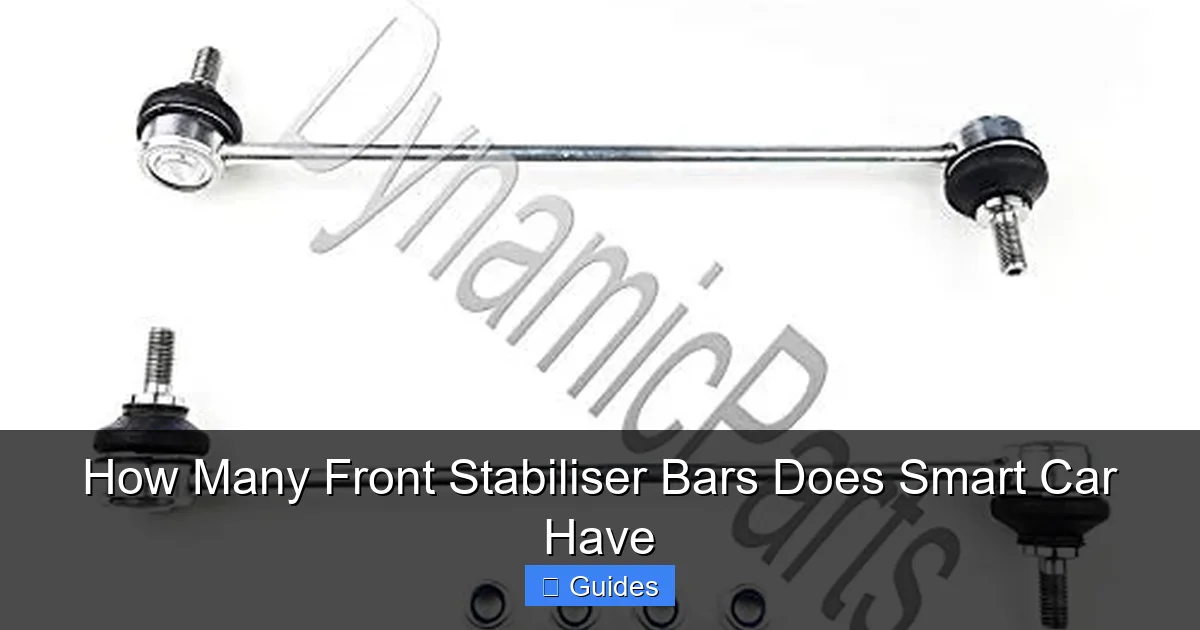
You’ll also see smaller rods (the stabiliser links) connecting the main bar to the suspension arms. These links can wear out over time and may need replacement, but the main bar itself is built to last the life of the vehicle.
Role of the Front Stabiliser Bar in Smart Car Handling
Visual guide about How Many Front Stabiliser Bars Does Smart Car Have
Image source: m.media-amazon.com
So, what does that single front stabiliser bar actually do for your Smart Car? A lot more than you might think. While it’s not designed for track-day performance, it plays a vital role in making the car feel stable, predictable, and safe in everyday driving.
Reducing Body Roll in City Driving
In urban environments, you’re constantly making turns—into parking spots, around roundabouts, or through tight intersections. Even at low speeds, these maneuvers can cause the car to lean. The front stabiliser bar minimizes this lean, helping the car stay level and improving tire contact with the road.
This is especially important in a car as light and short as a Smart. Without the bar, the car would feel more tippy and less confident, particularly when loaded with passengers or cargo.
Improving Steering Response
A well-tuned stabiliser bar also enhances steering feel. When you turn the wheel, the bar helps transfer weight more evenly across both front tires, allowing the car to respond more quickly and accurately. This makes the Smart Car feel nimble and responsive—perfect for darting through traffic or squeezing into a tight parking space.
Balancing Comfort and Control
One of the challenges in suspension design is balancing comfort and control. Too stiff, and the ride becomes harsh. Too soft, and the car feels sloppy. The front stabiliser bar in a Smart Car strikes a middle ground. It’s stiff enough to reduce roll but flexible enough to absorb bumps and potholes without transferring too much shock to the cabin.
This balance is key to the Smart Car’s appeal. It’s not a sports car, but it’s not a boat either. It’s a practical, comfortable, and fun-to-drive city car—and the stabiliser bar is a big part of that equation.
Maintenance and Common Issues
Now that you know how many front stabiliser bars a Smart Car has, you might be wondering: do they need maintenance? The good news is, the stabiliser bar itself is a durable component that rarely fails. However, the parts that connect it to the suspension—especially the stabiliser links and bushings—can wear out over time.
Signs of Wear
Here are a few symptoms that might indicate a problem with your stabiliser bar system:
– **Clunking or knocking noises** when going over bumps or turning corners.
– **Excessive body roll** during turns, making the car feel less stable.
– **Uneven tire wear**, especially on the front tires.
– **Steering feels loose or unresponsive.**
These issues are often caused by worn stabiliser links or cracked rubber bushings. The links are small metal rods with ball joints at each end, and they can degrade due to age, dirt, or impact.
DIY Inspection Tips
You don’t need to be a mechanic to check your stabiliser bar system. Here’s a simple way to inspect it:
1. Park your car on a level surface and turn off the engine.
2. Look underneath the front end for the stabiliser bar and links.
3. Check for cracks in the rubber bushings or loose connections.
4. Gently shake the links—if they move excessively, they may need replacement.
If you’re unsure, a quick visit to a trusted mechanic can confirm whether any parts need attention.
Replacement and Costs
Replacing stabiliser links or bushings is relatively inexpensive and can usually be done in under an hour. Parts typically cost between $20 and $50 per side, and labor might add another $50 to $100. It’s a small price to pay for improved safety and handling.
The stabiliser bar itself rarely needs replacement unless it’s been damaged in an accident or severely corroded (more common in areas with harsh winters and road salt).
Aftermarket Upgrades: Should You Add More?
Given that most Smart Cars have only one front stabiliser bar, some owners wonder if adding a second bar—or upgrading to a performance sway bar—could improve handling. While it’s technically possible, it’s not always recommended.
Performance Sway Bars
Aftermarket companies offer stiffer sway bars designed to reduce body roll even further. These can make the car feel more planted during aggressive driving or on winding roads. However, they also make the ride harsher and can increase stress on other suspension components.
For a city car like the Smart, this trade-off often isn’t worth it. The original bar is tuned for comfort and practicality—not track performance.
Dual Sway Bar Kits
Some enthusiasts install dual front sway bars or add a rear bar to create a more balanced setup. While this can improve high-speed stability, it also adds weight and complexity. Plus, the Smart’s rear suspension isn’t designed to handle a rear bar, so modifications may require custom fabrication.
In most cases, the factory setup is the best choice for daily driving. If you’re looking for better handling, consider upgrading your tires or shocks first—these often provide more noticeable improvements with fewer downsides.
Conclusion
So, how many front stabiliser bars does a Smart Car have? The answer is clear: one. And that single bar is perfectly suited to the car’s design, purpose, and driving environment. It helps reduce body roll, improves steering response, and contributes to the overall stability of this compact urban vehicle.
While it might seem like a small detail, the front stabiliser bar is a key part of what makes the Smart Car so enjoyable to drive in the city. It’s a testament to smart engineering—using just the right amount of technology to deliver a safe, comfortable, and efficient driving experience.
Whether you’re navigating narrow streets, parallel parking in tight spots, or just cruising through downtown, that one front stabiliser bar is working quietly in the background, keeping your Smart Car balanced and confident. And that’s exactly what it was designed to do.
Frequently Asked Questions
Do all Smart Car models have a front stabiliser bar?
Yes, virtually all Smart Car models, including the Fortwo, Forfour, and electric EQ variants, come equipped with one front stabiliser bar as standard. This component is integral to the car’s suspension design and handling characteristics.
Can I drive my Smart Car if the front stabiliser bar is damaged?
You can drive short distances with a damaged stabiliser bar, but it’s not recommended. A broken or disconnected bar can cause excessive body roll, poor handling, and increased tire wear. Have it inspected and repaired as soon as possible.
Does the Smart Car have a rear stabiliser bar?
Most Smart Cars do not have a rear stabiliser bar. The Fortwo uses a twist-beam rear suspension that doesn’t support a sway bar, and the Forfour typically omits one as well. The rear-engine layout reduces the need for rear roll control.
How often should I check my Smart Car’s stabiliser bar?
There’s no set schedule, but it’s a good idea to inspect the stabiliser bar and links during routine maintenance or if you notice unusual noises or handling issues. Most owners check it annually or every 12,000 miles.
Can I upgrade my Smart Car’s stabiliser bar for better performance?
Yes, aftermarket performance sway bars are available, but they may make the ride harsher and aren’t necessary for city driving. Consider upgrading tires or shocks first for a better balance of comfort and handling.
Is the front stabiliser bar the same on gasoline and electric Smart Cars?
Yes, the Smart EQ Fortwo and Forfour use the same suspension layout and components as their gasoline counterparts, including the single front stabiliser bar. The electric motor doesn’t affect the suspension design.

At CarLegit, we believe information should be clear, factual, and genuinely helpful. That’s why every guide, review, and update on our website is created with care, research, and a strong focus on user experience.