
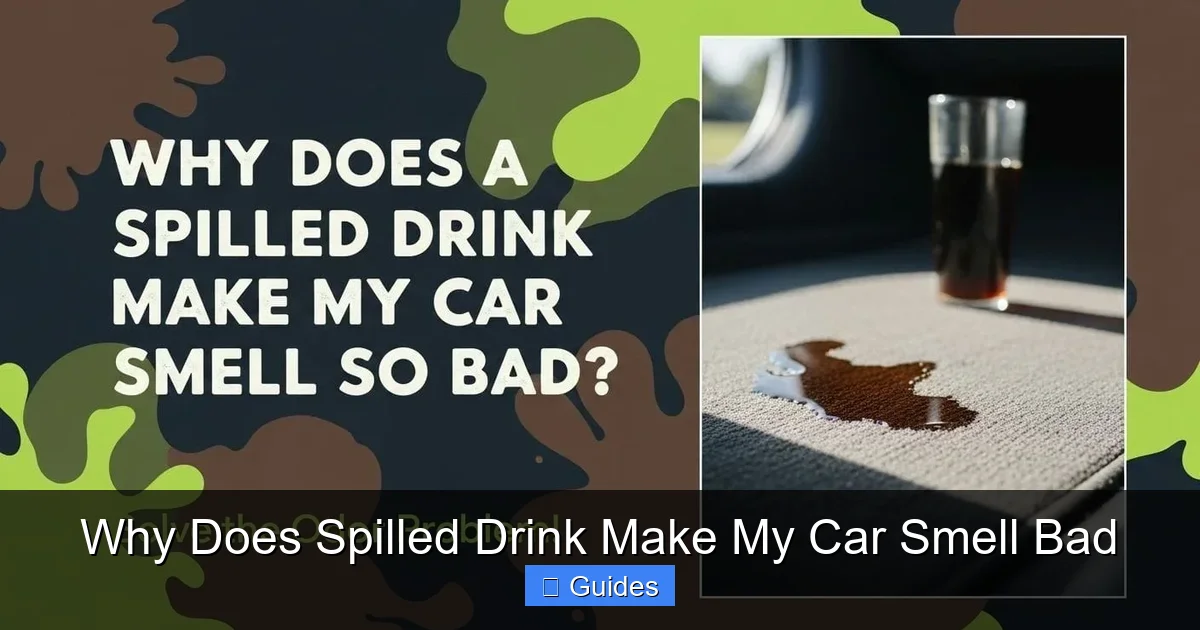
Spilled drinks make your car smell bad because sugary, acidic, or dairy-based liquids seep into upholstery and carpets, creating a breeding ground for bacteria and mold. Even small spills can lead to persistent odors if not cleaned properly, especially in warm, enclosed spaces like a vehicle interior.
In This Article
- 1 Key Takeaways
- 2 📑 Table of Contents
- 3 Why Does Spilled Drink Make My Car Smell Bad?
- 4 What Happens When a Drink Spills in Your Car?
- 5 The Science Behind Car Odors from Spills
- 6 Common Culprits: Which Drinks Cause the Worst Odors?
- 7 How to Prevent and Remove Odors from Spills
- 8 Long-Term Tips to Keep Your Car Smelling Fresh
- 9 Conclusion
- 10 Frequently Asked Questions
- 10.1 Why does my car still smell after cleaning a spill?
- 10.2 Can I use vinegar to clean a spilled drink?
- 10.3 How long does it take for a spill to cause mold in a car?
- 10.4 Will an air freshener get rid of the smell from a spill?
- 10.5 Can spilled drinks damage my car’s interior?
- 10.6 Is it safe to use a steam cleaner on car upholstery?
Key Takeaways
- Spills feed bacteria and mold: Sugary and organic liquids promote microbial growth, which produces foul-smelling gases.
- Liquid soaks deep into materials: Upholstery, carpet padding, and floor mats absorb spills, making them hard to reach and clean.
- Heat and humidity accelerate odor: Cars trap heat and moisture, creating ideal conditions for odor-causing organisms to thrive.
- Residue attracts more dirt: Sticky residues from drinks draw in dust and grime, worsening the smell over time.
- Improper cleaning spreads the problem: Using only water or surface sprays often pushes spills deeper instead of removing them.
- Prevention and quick action are key: Blotting spills immediately and using the right cleaning products can prevent long-term odors.
- Professional cleaning may be needed: For deep-set odors, steam cleaning or professional detailing is often the most effective solution.
📑 Table of Contents
Why Does Spilled Drink Make My Car Smell Bad?
We’ve all been there—grabbing a coffee on the go, sipping a soda during a long drive, or letting the kids enjoy a juice box in the backseat. It’s convenient, until that moment the cup tips over, and suddenly your car smells like a forgotten lunchbox. You might think, “It’s just a little spill,” but that small accident can quickly turn into a persistent, unpleasant odor that lingers for weeks—or even months.
The truth is, spilled drinks don’t just leave a sticky patch; they trigger a chain reaction of biological and chemical processes that turn your car’s interior into a smelly science experiment. Whether it’s coffee, soda, milk, or sports drinks, these liquids contain ingredients that interact with your car’s materials and the environment inside the vehicle. Once they seep into seats, carpets, or floor mats, they become nearly impossible to remove completely without the right approach.
Understanding why spilled drinks make your car smell bad is the first step to preventing and eliminating these odors for good. It’s not just about wiping the surface—it’s about knowing what’s happening beneath and how to stop it at the source.
What Happens When a Drink Spills in Your Car?
Visual guide about Why Does Spilled Drink Make My Car Smell Bad
Image source: lastingcar.com
When a drink spills in your car, the immediate reaction is usually panic—followed by a quick wipe with whatever’s handy, like a napkin or old T-shirt. But that’s often not enough. The real problem begins when the liquid doesn’t just sit on the surface. Instead, it starts to penetrate.
Most car interiors are made of porous materials like fabric upholstery, carpet fibers, and foam padding. These materials act like sponges, absorbing liquids quickly. A spilled soda, for example, doesn’t just stay on the seat—it soaks through the fabric, into the cushion beneath, and even down to the floor pan. The same goes for spills on the carpet: the liquid seeps past the top layer and into the underlay, where it’s trapped.
Once the liquid is absorbed, it begins to evaporate slowly. But because cars are enclosed spaces with limited airflow, especially when parked, the evaporation process is slow. This leaves behind moisture, which creates a damp environment. And where there’s moisture, there’s potential for microbial growth.
But it’s not just the moisture that causes trouble. The composition of the drink plays a huge role. Sugary drinks like cola, lemonade, or energy drinks leave behind a sticky residue. This residue doesn’t just attract dust and dirt—it also serves as food for bacteria and mold. Over time, these microorganisms multiply, breaking down the sugars and other organic compounds in the drink. As they digest this material, they release volatile organic compounds (VOCs)—gases that we perceive as bad smells.
For example, a spilled milk-based drink like a latte or smoothie is especially problematic. Milk contains proteins and fats that spoil quickly, especially in warm conditions. When milk soaks into fabric, it can sour within hours, producing a sour, cheesy odor. If left untreated, it can even lead to mold growth, which emits a musty, earthy smell.
Even water-based spills can cause issues if they’re not dried properly. Water alone doesn’t smell, but when it sits in a dark, warm place like under a car seat, it can encourage the growth of mildew. This is especially true in humid climates or during rainy seasons when moisture levels are already high.
So, while the initial spill might seem minor, the consequences can be long-lasting. The combination of absorbed liquid, trapped moisture, and organic residue creates the perfect storm for odor development. And because these materials are hidden beneath surfaces, the smell can linger even after the visible stain is gone.
The Science Behind Car Odors from Spills
Visual guide about Why Does Spilled Drink Make My Car Smell Bad
Image source: blogmedia.dealerfire.com
To truly understand why spilled drinks make your car smell bad, it helps to look at the science behind it. It’s not just about bad luck or poor cleaning habits—there’s a biological and chemical process at work.
At the heart of the problem are microorganisms: bacteria and mold. These tiny organisms are everywhere—on our skin, in the air, and on surfaces. Normally, they’re harmless. But when they find the right conditions—moisture, warmth, and food—they multiply rapidly.
Spilled drinks provide all three. The liquid offers moisture, the car’s interior traps heat (especially when parked in the sun), and the sugars, proteins, and other organic compounds in the drink serve as food. Bacteria, in particular, thrive on sugars. They break down these compounds through fermentation, a process that produces byproducts like acetic acid, butyric acid, and various alcohols. These chemicals have strong, unpleasant odors—think sour, sour milk, or vinegar-like smells.
Mold, on the other hand, prefers slightly different conditions. It grows best in dark, damp environments with little airflow. When a spill soaks into carpet padding or under seats, it creates a hidden pocket of moisture. Mold spores, which are always floating in the air, can settle in these areas and begin to grow. As mold digests organic material, it releases musty, earthy odors that are notoriously hard to eliminate.
Another factor is the pH of the spilled drink. Acidic beverages like soda, citrus juices, or sports drinks can alter the chemical balance of the materials they touch. Over time, this acidity can break down fibers in upholstery and carpet, weakening them and making them more prone to trapping odors. It can also react with cleaning products, reducing their effectiveness or even creating new, unpleasant smells.
Temperature plays a big role too. Cars can get extremely hot inside—on a sunny day, the interior temperature can exceed 140°F (60°C). While this heat might seem like it would dry things out, it actually accelerates microbial activity. Bacteria and mold grow faster in warm conditions, meaning odors can develop more quickly than you’d expect.
Humidity is another key player. In humid climates, moisture from the air can combine with residual liquid from spills, keeping the environment damp for longer. This prolongs the time during which bacteria and mold can grow, making odors more persistent.
Even the type of drink matters. Here’s a quick breakdown:
– Sugary drinks (soda, juice, energy drinks): High in sugar, which feeds bacteria and leads to fermentation odors.
– Dairy-based drinks (milk, lattes, smoothies): Contain proteins and fats that spoil quickly, producing sour or rancid smells.
– Acidic drinks (lemonade, iced tea, sports drinks): Can degrade materials and react with residues, creating sharp or chemical-like odors.
– Alcoholic beverages (wine, beer, cocktails): Contain sugars and organic compounds that can ferment and produce vinegary or yeasty smells.
All of these factors combine to create a complex odor profile that’s difficult to mask or remove. And because the source is often hidden deep within the car’s interior, simply spraying air freshener won’t solve the problem—it will just cover it up temporarily.
Common Culprits: Which Drinks Cause the Worst Odors?

Visual guide about Why Does Spilled Drink Make My Car Smell Bad
Image source: aamcominnesota.com
Not all spilled drinks are created equal when it comes to odor potential. Some are far more likely to leave a lasting stench than others. Knowing which drinks are the biggest offenders can help you take extra precautions—or act faster when a spill occurs.
Sugary Beverages: The Sugar Bomb
Drinks high in sugar—like soda, fruit juices, energy drinks, and sweetened iced teas—are among the worst culprits. The sugar doesn’t just make the spill sticky; it acts as a food source for bacteria. When bacteria feed on sugar, they produce acids and gases as waste products. These byproducts are what create the sour, fermented, or even rotten fruit smells that can linger in your car.
For example, a spilled can of cola might leave a dark stain and a sweet smell at first. But within a day or two, that sweet scent can turn sour as bacteria break down the sugars. If the spill soaks into the carpet, the odor can become trapped and intensify over time. Even after cleaning, residual sugar can remain, continuing to feed microbes and cause recurring smells.
Dairy-Based Drinks: The Spoilage Risk
Milk, lattes, smoothies, and other dairy-based drinks are particularly problematic because they contain proteins and fats that spoil quickly. When these liquids spill and aren’t cleaned immediately, they can begin to sour within hours—especially in a warm car. The result is a strong, sour, or cheesy odor that’s hard to ignore.
What makes dairy spills worse is that they often contain added sugars (like in flavored lattes or fruit smoothies), combining the risks of both sugar and spoilage. Once the liquid soaks into upholstery, it can be nearly impossible to remove completely without professional help. And if mold begins to grow, the smell can become musty and persistent.
Acidic Drinks: The Chemical Reaction
Beverages like lemonade, iced tea, sports drinks, and citrus juices are acidic. While they may not spoil as quickly as dairy, their low pH can cause chemical reactions with car materials. Over time, acidity can break down fabric fibers, weaken adhesives, and even corrode metal parts under the carpet.
Acidic spills can also react with cleaning products. For instance, using a basic cleaner on an acidic spill can create a neutralization reaction that produces salt and water—but also releases gases that may have unpleasant odors. In some cases, this reaction can leave behind a chalky residue that traps smells.
Alcoholic Beverages: The Fermentation Factor
Wine, beer, and mixed drinks contain sugars and organic compounds that can ferment when exposed to heat and moisture. A spilled glass of red wine, for example, can leave a dark stain and a sweet, fruity smell at first. But as bacteria and yeast act on the sugars, the odor can shift to a vinegary or yeasty scent—similar to spoiled wine or beer.
Beer spills are especially tricky because they contain hops and barley, which can break down into strong-smelling compounds. And because beer is often consumed in larger quantities (like from a bottle or can), the spill volume can be significant, increasing the risk of deep absorption.
Energy Drinks and Sports Drinks: The Double Threat
These beverages are a double whammy. They’re high in sugar, which feeds bacteria, and they often contain electrolytes, caffeine, and other additives that can leave behind residues. Sports drinks like Gatorade or Powerade are designed to be absorbed quickly by the body, but when spilled, they can be absorbed just as quickly by car interiors.
The bright colors of these drinks can also stain fabrics, and the combination of sugar and electrolytes creates an ideal environment for microbial growth. The result is often a sweet, chemical-like odor that’s hard to eliminate.
Water and Other “Innocent” Spills
Even plain water can cause odors if it’s not dried properly. While water itself doesn’t smell, it can create a damp environment that encourages mold and mildew growth—especially in hidden areas like under seats or in door panels. This is more common in humid climates or during rainy seasons when moisture levels are already high.
Spills from bottled water, rainwater tracked in on shoes, or even condensation from cold drinks can contribute to this problem. Over time, the musty smell of mildew can become noticeable, particularly when you first get into the car on a cool morning.
How to Prevent and Remove Odors from Spills
The good news is that most car odors from spilled drinks can be prevented—or at least minimized—with quick action and the right techniques. Here’s how to tackle the problem effectively.
Act Fast: The First 10 Minutes Matter
The sooner you address a spill, the better your chances of preventing odor. As soon as a drink spills, grab a clean, absorbent cloth or paper towels and blot—don’t rub—the area. Rubbing can push the liquid deeper into the fabric and spread the stain.
Blotting helps lift the liquid from the surface. Press firmly and repeatedly, replacing the cloth or paper towels as they become saturated. Continue until no more liquid transfers to the cloth.
If the spill is on a seat, try to lift the seat cushion if possible to access the area beneath. For carpet spills, use a wet/dry vacuum if you have one—this can pull out more liquid than blotting alone.
Use the Right Cleaning Solution
Not all cleaners are created equal. For most spills, a mixture of mild dish soap and warm water works well. Mix a few drops of dish soap with a cup of warm water, dip a clean cloth in the solution, and gently blot the area. Avoid soaking the fabric—just dampen it slightly.
For sugary spills, you may need to rinse the area with clean water after cleaning to remove any soap residue, which can attract dirt. For dairy or protein-based spills, consider using an enzyme-based cleaner. These cleaners contain bacteria that break down organic matter like proteins and fats, helping to eliminate both stains and odors.
Avoid using bleach or harsh chemicals unless absolutely necessary. Bleach can damage fabrics and may react with residues to create new odors. It’s also ineffective against many types of bacteria and mold.
Rinse and Dry Thoroughly
After cleaning, rinse the area with a cloth dampened with clean water to remove any cleaning solution. Then, blot with a dry towel to absorb as much moisture as possible.
Drying is crucial. Use a fan or open the windows to increase airflow. If possible, park in the sun with the windows cracked to help speed up evaporation. For deep spills, you may need to use a wet/dry vacuum to extract moisture from carpet padding.
Never leave a damp area to air dry slowly—this encourages mold and mildew growth.
Deodorize Naturally
Once the area is clean and dry, you can use natural deodorizers to neutralize any lingering smells. Baking soda is a great option—it absorbs odors without adding chemicals. Sprinkle a generous amount over the affected area, let it sit for several hours (or overnight), then vacuum it up.
Activated charcoal is another effective odor absorber. Place a small bowl of activated charcoal in the car for a few days to help pull odors out of the air and materials.
Avoid using strong air fresheners to mask the smell. These only cover up the odor temporarily and don’t address the source.
When to Call a Professional
If the spill was large, deeply absorbed, or has been left untreated for more than 24 hours, professional cleaning may be necessary. Detailers use specialized equipment like steam cleaners and extraction machines that can reach deep into upholstery and carpet padding.
Steam cleaning uses high-temperature steam to kill bacteria and mold while lifting out dirt and residues. It’s one of the most effective ways to eliminate odors at the source.
For severe cases—especially those involving mold or mildew—professional treatment is often the only solution. Ignoring the problem can lead to health issues, particularly for people with allergies or respiratory conditions.
Long-Term Tips to Keep Your Car Smelling Fresh
Prevention is always better than cure. Here are some habits to adopt to keep your car smelling fresh and reduce the risk of odor-causing spills.
Use Spill-Proof Containers
Invest in travel mugs with secure lids, spill-resistant cups, or bottles with flip-top caps. Look for containers that are designed for car use—many have non-slip bases and leak-proof seals.
For kids, use spill-proof sippy cups or bottles with valves that prevent leaks even when tipped over.
Designate a Drink Zone
Create a specific area for drinks—like a cup holder or a small tray—and avoid drinking while driving. This reduces the chance of accidental spills.
If you’re on a long trip, consider using a cooler with sealed containers to keep drinks secure.
Clean Regularly
Even without spills, regular cleaning helps prevent odor buildup. Vacuum the interior weekly, wipe down surfaces, and use a fabric cleaner on seats and carpets every few months.
Pay special attention to hidden areas like under seats, in door pockets, and around the floor mats—these are common spots for spills to go unnoticed.
Use Odor Absorbers
Keep a small container of baking soda or activated charcoal in your car to absorb odors over time. Replace it every few months.
You can also use natural air fresheners like essential oil diffusers (if safe for your car’s interior) or sachets of dried lavender or citrus peels.
Check for Hidden Moisture
After rainy days or car washes, check for water accumulation in floor mats, door panels, or under seats. Dry any wet areas immediately to prevent mold growth.
Consider using all-weather floor mats, which are easier to clean and less likely to trap moisture.
Be Mindful of Food and Drinks
Avoid eating messy foods or drinking high-risk beverages in the car. If you must, keep cleaning supplies handy—like a small kit with paper towels, a spray bottle of cleaner, and a sealable bag for wet items.
Conclusion
Spilled drinks make your car smell bad because they create the perfect environment for bacteria, mold, and chemical reactions to thrive. The combination of moisture, organic material, heat, and poor airflow turns even a small spill into a long-term odor problem. But with quick action, the right cleaning methods, and preventive habits, you can keep your car smelling fresh and avoid the frustration of lingering smells.
Remember: it’s not just about wiping the surface. It’s about addressing the spill at its source, drying thoroughly, and using the right products to eliminate both stains and odors. And when in doubt, don’t hesitate to call in the professionals.
Your car is more than just a mode of transportation—it’s a space you spend time in every day. Keeping it clean and odor-free makes every drive more enjoyable.
Frequently Asked Questions
Why does my car still smell after cleaning a spill?
The odor may persist because the liquid soaked deep into upholstery or carpet padding, where cleaning didn’t reach. Bacteria or mold may have already started growing, producing gases that cause the smell.
Can I use vinegar to clean a spilled drink?
Yes, diluted white vinegar can help neutralize odors and break down residues. Mix one part vinegar with two parts water, blot the area, then rinse with water and dry thoroughly.
How long does it take for a spill to cause mold in a car?
Mold can begin to grow within 24 to 48 hours if the spill remains damp and untreated, especially in warm, humid conditions.
Will an air freshener get rid of the smell from a spill?
Air fresheners only mask odors temporarily. To eliminate the smell, you must clean the source of the odor and ensure the area is completely dry.
Can spilled drinks damage my car’s interior?
Yes, especially acidic or sugary drinks. They can stain fabrics, weaken materials over time, and promote mold growth, which can lead to permanent damage if ignored.
Is it safe to use a steam cleaner on car upholstery?
Yes, steam cleaning is safe and effective for most fabric and vinyl surfaces. It kills bacteria and mold while lifting out dirt and odors—just ensure the area dries completely afterward.

At CarLegit, we believe information should be clear, factual, and genuinely helpful. That’s why every guide, review, and update on our website is created with care, research, and a strong focus on user experience.