
A crew car wash mystery shopper secretly evaluates the customer experience, staff performance, cleanliness, and service quality at car wash locations. They provide detailed feedback that helps businesses improve operations, train employees, and maintain high standards across all touchpoints.
Have you ever pulled into a car wash, handed over your keys, and wondered, “Is this place really doing everything right?” Maybe you noticed a spot on your windshield after the wash, or the attendant seemed distracted. Now imagine if someone was watching every detail—not to judge you, but to help the business improve. That’s exactly what a crew car wash mystery shopper does.
Mystery shopping isn’t just for retail stores or restaurants. In the car wash industry, it plays a crucial role in maintaining quality, consistency, and customer satisfaction. These undercover evaluators act as everyday customers, going through the full service experience while secretly documenting every step. Their mission? To gather honest, unfiltered feedback that helps car wash operators identify strengths and fix weaknesses.
But it’s not as simple as just getting your car washed and writing a quick note. A crew car wash mystery shopper follows a detailed checklist, observes staff behavior, evaluates cleanliness, and assesses the entire customer journey. They’re trained to notice the small things—like whether an employee greets you with a smile, if the payment process is smooth, or if the final rinse leaves streaks. Their reports go far beyond “good” or “bad”—they provide actionable insights that can transform how a car wash operates.
In this guide, we’ll dive deep into what a crew car wash mystery shopper actually does, why their role matters, and how their feedback drives real change in the industry. Whether you’re a car wash owner, manager, or just curious about behind-the-scenes operations, you’ll learn how mystery shopping keeps customers happy and businesses thriving.
In This Article
- 1 Key Takeaways
- 2 📑 Table of Contents
- 3 What Is a Crew Car Wash Mystery Shopper?
- 4 The Importance of Mystery Shopping in the Car Wash Industry
- 5 Key Responsibilities of a Crew Car Wash Mystery Shopper
- 6 How Mystery Shoppers Evaluate Service Quality
- 7 The Tools and Techniques Used by Mystery Shoppers
- 8 Challenges Faced by Crew Car Wash Mystery Shoppers
- 9 How Businesses Use Mystery Shopper Feedback
- 10 Conclusion
- 11 Frequently Asked Questions
- 11.1 What qualifications do you need to become a crew car wash mystery shopper?
- 11.2 Do mystery shoppers get paid for their work?
- 11.3 Can mystery shoppers choose which car washes to evaluate?
- 11.4 How often do mystery shoppers visit the same location?
- 11.5 Are mystery shoppers allowed to take photos or record audio?
- 11.6 What happens if a mystery shopper finds a serious issue, like unsafe conditions?
Key Takeaways
- Objective Evaluation: Mystery shoppers provide unbiased, real-world assessments of the customer journey from arrival to departure.
- Staff Performance Monitoring: They observe employee behavior, professionalism, and adherence to company protocols during service delivery.
- Service Quality Assessment: Every aspect—from wash effectiveness to drying quality—is scrutinized to ensure consistency.
- Cleanliness and Safety Checks: The condition of equipment, facilities, and overall site safety are documented for compliance and improvement.
- Customer Experience Insights: Mystery shoppers capture emotional and practical aspects of the visit, including wait times, communication, and problem resolution.
- Actionable Feedback: Reports include specific recommendations that help car wash operators refine training, processes, and customer service strategies.
- Brand Consistency: Regular mystery shopping ensures all locations deliver a uniform experience that aligns with brand promises.
📑 Table of Contents
- What Is a Crew Car Wash Mystery Shopper?
- The Importance of Mystery Shopping in the Car Wash Industry
- Key Responsibilities of a Crew Car Wash Mystery Shopper
- How Mystery Shoppers Evaluate Service Quality
- The Tools and Techniques Used by Mystery Shoppers
- Challenges Faced by Crew Car Wash Mystery Shoppers
- How Businesses Use Mystery Shopper Feedback
- Conclusion
What Is a Crew Car Wash Mystery Shopper?
A crew car wash mystery shopper is a trained evaluator who poses as a regular customer to assess the quality of service, cleanliness, staff performance, and overall customer experience at a car wash facility. Unlike traditional customer feedback—which often comes after a problem has occurred—mystery shopping provides real-time, objective insights into how a business operates on a typical day.
These shoppers are typically hired by third-party evaluation companies or directly by car wash chains that want to maintain high standards across multiple locations. They follow a structured assignment brief that outlines specific tasks, such as purchasing a full-service wash, using a self-serve bay, or interacting with staff during peak hours. Their goal is to experience the service exactly as a real customer would—no special treatment, no warnings, no exceptions.
The role requires a keen eye for detail, strong observational skills, and the ability to remain discreet. Mystery shoppers don’t announce their presence or reveal their purpose. Instead, they blend in, take mental or written notes (often using hidden devices), and later submit comprehensive reports. These reports cover everything from the moment they arrive at the location to the final inspection of their vehicle.
One of the key differences between a mystery shopper and a regular customer is intent. While most people visit a car wash to get their car cleaned, a mystery shopper visits to evaluate the entire process. They’re not just looking for a shiny car—they’re assessing whether the business meets its own standards and delivers on its brand promise.
For example, if a car wash advertises “friendly, fast service with a smile,” the mystery shopper will note whether employees greet customers, how long the wait time is, and whether the final product matches expectations. This level of scrutiny helps businesses identify gaps between their marketing claims and actual performance.
The Importance of Mystery Shopping in the Car Wash Industry
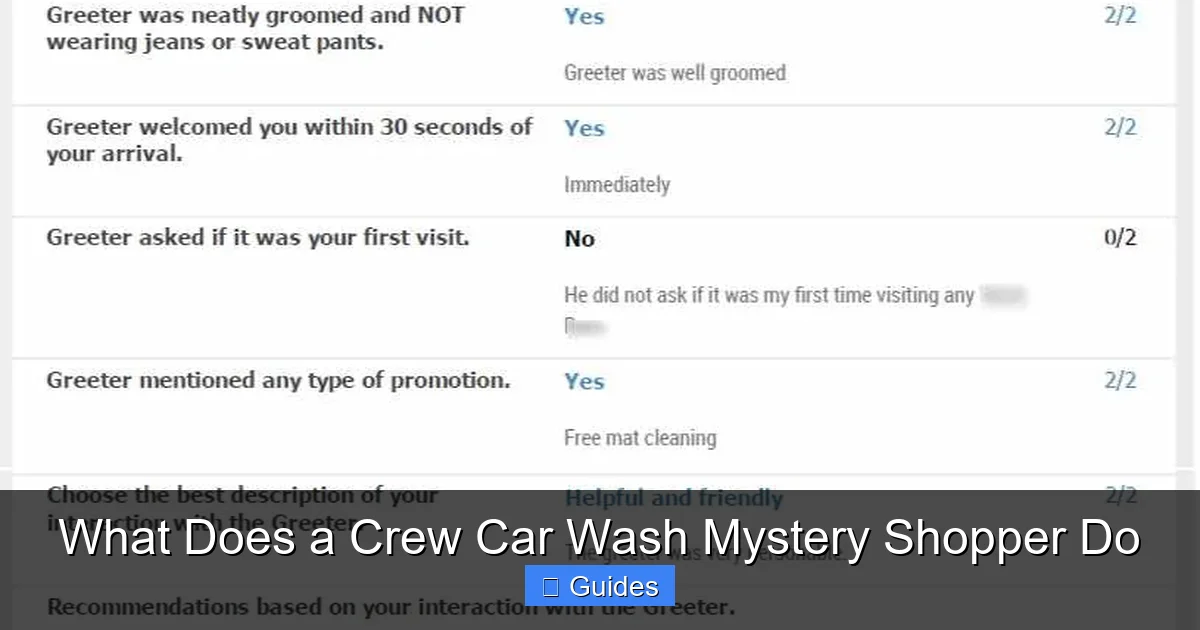
Visual guide about What Does a Crew Car Wash Mystery Shopper Do
Image source: advancedfeedback.com
You might be wondering: why go through all this trouble? Can’t car wash owners just ask their employees to do a good job? The truth is, even the most well-intentioned staff can develop habits or overlook details—especially during busy shifts. And without regular feedback, small issues can grow into bigger problems that affect customer loyalty.
Mystery shopping fills this gap by providing consistent, unbiased evaluations. It’s like having a quality control team that visits your location unannounced, observes everything, and reports back with honest feedback. This helps managers spot trends, such as declining service quality at certain times of day or inconsistencies between locations.
One major benefit is improved customer retention. In a competitive market, customers have many options. If one car wash leaves water spots or treats them poorly, they’ll simply go elsewhere next time. Mystery shoppers help prevent these issues by catching them early. For instance, if multiple reports show that employees aren’t drying vehicles properly, management can retrain staff or adjust equipment settings.
Another advantage is employee accountability. When staff know that mystery shoppers may visit at any time, they’re more likely to follow protocols and maintain professionalism. This doesn’t mean they’re being watched constantly—it just creates a culture of excellence where everyone strives to do their best.
Mystery shopping also supports brand consistency. Large car wash chains with multiple locations need to ensure that a customer in Miami gets the same high-quality experience as someone in Denver. Mystery shoppers act as brand ambassadors in disguise, verifying that each location upholds the company’s standards.
Finally, the data collected from mystery shopping can inform strategic decisions. For example, if reports consistently show long wait times during weekend mornings, a manager might decide to add more staff or extend operating hours. These insights lead to smarter operations, better resource allocation, and ultimately, higher customer satisfaction.
Key Responsibilities of a Crew Car Wash Mystery Shopper
Visual guide about What Does a Crew Car Wash Mystery Shopper Do
Image source: locationsnearme.net
So, what exactly does a crew car wash mystery shopper do on a typical assignment? Their responsibilities go far beyond just getting a car wash. They’re tasked with evaluating every touchpoint of the customer journey, from the first moment they arrive to the final inspection of their vehicle.
One of their primary duties is to observe and document staff behavior. This includes how employees greet customers, whether they explain services clearly, and if they handle requests professionally. For example, if a customer asks for extra attention to the wheels, the mystery shopper will note whether the staff complies without hesitation.
They also assess the efficiency and effectiveness of the wash process. This means timing how long each step takes, checking if the equipment is functioning properly, and evaluating the final result. Did the soap suds cover the entire vehicle? Were the brushes gentle on the paint? Is the rinse thorough enough to prevent water spots?
Cleanliness and safety are also critical areas of focus. Mystery shoppers inspect the facility for hazards like slippery floors, broken equipment, or poor lighting. They also check restrooms, waiting areas, and payment kiosks to ensure they’re clean and well-maintained. A dirty waiting area or malfunctioning credit card reader can leave a negative impression, even if the wash itself is perfect.
Another key responsibility is evaluating the customer experience from an emotional standpoint. How did the staff make the shopper feel? Were they rushed, ignored, or treated with respect? Did the process feel smooth and hassle-free? These subjective elements are just as important as the technical aspects of the wash.
Mystery shoppers also test problem-solving scenarios. For instance, they might pretend to have a complaint about a missed spot or a billing error to see how staff respond. Do they apologize sincerely? Do they offer a solution quickly? This helps assess the company’s commitment to customer service recovery.
Finally, they compile all their observations into a detailed report. This report includes ratings, written comments, photos (if allowed), and recommendations for improvement. The goal is to provide a clear, actionable snapshot of the visit that managers can use to coach staff and refine processes.
How Mystery Shoppers Evaluate Service Quality
Visual guide about What Does a Crew Car Wash Mystery Shopper Do
Image source: spohnassociates.com
Evaluating service quality is at the heart of what a crew car wash mystery shopper does. But how do they measure something as subjective as “quality”? The answer lies in a structured evaluation framework that breaks down the experience into measurable components.
One common method is using a scoring system. Each aspect of the visit—such as greeting, wash effectiveness, drying, and payment—is rated on a scale (e.g., 1 to 5). This allows for easy comparison across visits and locations. For example, a shopper might give a 4 for staff friendliness but a 2 for drying quality, indicating an area that needs attention.
They also use checklists to ensure consistency. These checklists are tailored to the specific services offered by the car wash. For a full-service wash, the checklist might include items like “Employee pre-inspected vehicle for damage,” “Interior vacuumed thoroughly,” and “Windows cleaned inside and out.” For a self-serve bay, it might focus on equipment functionality, water pressure, and availability of cleaning supplies.
Another important tool is the “mystery shopper script.” This is a set of predetermined actions the shopper follows during the visit. For example, they might arrive at a specific time, request a particular package, or ask a specific question. This ensures that each evaluation is conducted under similar conditions, making the data more reliable.
Mystery shoppers also pay attention to timing. They note how long they waited in line, how long the wash took, and whether the total time matched the advertised duration. Long wait times or rushed service can indicate staffing or operational issues.
In addition to quantitative measures, they provide qualitative feedback. This includes descriptive comments about the atmosphere, staff attitude, and overall impression. For instance, a shopper might write, “The attendant was polite but seemed distracted, checking his phone between tasks.” This kind of detail helps managers understand not just what happened, but why.
They also evaluate the final product. After the wash, the mystery shopper inspects the vehicle under good lighting to check for streaks, missed spots, or damage. They might use a flashlight to examine hard-to-see areas like door jambs or under the bumper. This ensures that the wash meets the promised standard.
Finally, they assess the entire customer journey, not just the wash itself. This includes the ease of finding the location, the clarity of signage, the convenience of payment options, and the availability of amenities like air fresheners or towels. Every interaction contributes to the overall perception of quality.
The Tools and Techniques Used by Mystery Shoppers
To do their job effectively, crew car wash mystery shoppers rely on a variety of tools and techniques. These help them gather accurate, detailed information without drawing attention to themselves.
One of the most common tools is a mobile app designed for mystery shopping. These apps allow shoppers to record observations in real time, take photos, and submit reports instantly. Many apps include built-in checklists, scoring systems, and GPS tracking to verify the shopper’s location and time of visit.
Some shoppers use hidden recording devices, such as small cameras or audio recorders, to capture interactions. However, this is only done where legally permitted and with proper disclosure to the evaluation company. The goal is to gather evidence, not to invade privacy.
Note-taking is another essential technique. Even with apps, many shoppers prefer to jot down quick notes during the visit and expand on them later. This helps them remember subtle details, like a staff member’s tone of voice or a specific comment made during the service.
Timing devices, like stopwatches or smartphone timers, are used to measure wait times and service duration. This data is crucial for identifying bottlenecks or inefficiencies in the process.
Mystery shoppers also use disguises or vary their appearance between visits to avoid recognition. This is especially important for repeat evaluations at the same location. They might change their vehicle, clothing, or even the time of day they visit to blend in.
Another technique is role-playing. Shoppers may adopt different personas—such as a first-time customer, a busy parent, or someone with a special request—to test how staff handle various scenarios. This reveals whether employees are trained to adapt to different customer needs.
Finally, they rely on training and preparation. Before each assignment, shoppers review the brief, study the company’s service standards, and practice their evaluation techniques. This ensures they know exactly what to look for and how to remain discreet.
Challenges Faced by Crew Car Wash Mystery Shoppers
While the role of a mystery shopper may sound straightforward, it comes with its own set of challenges. One of the biggest is maintaining anonymity. If staff recognize a repeat shopper, they may alter their behavior, which skews the results. To avoid this, shoppers must be creative in changing their appearance and approach.
Another challenge is dealing with unpredictable conditions. Weather, traffic, and equipment malfunctions can affect the service experience. A shopper must decide whether to proceed with the evaluation or reschedule, balancing the need for accurate data with practical constraints.
Time management is also tricky. Mystery shoppers often have multiple assignments in a single day, requiring them to travel between locations and complete reports promptly. Missing a deadline or submitting incomplete data can affect their credibility and future opportunities.
There’s also the emotional aspect. Shoppers may witness poor treatment of customers or unsafe working conditions. While their role is to observe, not intervene, this can be difficult, especially if someone is being mistreated. They must remain professional and report concerns through the proper channels.
Finally, there’s the issue of compensation. Many mystery shopping jobs pay modest fees, and the work can be inconsistent. Shoppers must be self-motivated and disciplined to succeed in this freelance role.
How Businesses Use Mystery Shopper Feedback
The real value of mystery shopping lies in how businesses use the feedback. Once reports are submitted, managers analyze the data to identify patterns and prioritize improvements.
For example, if multiple shoppers report that employees aren’t wearing uniforms or name tags, management might reinforce dress code policies. If wait times are consistently long, they might adjust staffing schedules or streamline the wash process.
Feedback is also used for employee training. Managers can use specific examples from mystery shopper reports to coach staff on areas like communication, attention to detail, or problem-solving. This makes training more relevant and impactful.
In some cases, positive feedback is shared to recognize and reward high-performing employees. This boosts morale and encourages others to strive for excellence.
Ultimately, mystery shopper data helps businesses make informed decisions that enhance the customer experience, increase efficiency, and strengthen brand reputation.
Conclusion
A crew car wash mystery shopper plays a vital role in ensuring that car wash businesses deliver consistent, high-quality service. By posing as regular customers, they provide unbiased, real-world insights that help operators improve staff performance, maintain cleanliness, and enhance the overall customer experience. Their detailed evaluations cover everything from the first greeting to the final inspection, offering actionable feedback that drives real change. In an industry where customer loyalty depends on every detail, mystery shoppers are the silent guardians of quality, helping businesses stay competitive and customers stay satisfied.
Frequently Asked Questions
What qualifications do you need to become a crew car wash mystery shopper?
Most companies require a valid driver’s license, reliable transportation, and strong observational skills. No formal education is needed, but attention to detail and the ability to follow instructions are essential.
Do mystery shoppers get paid for their work?
Yes, mystery shoppers are typically paid a fee per assignment, which may include reimbursement for the cost of the car wash. Pay varies by company and complexity of the evaluation.
Can mystery shoppers choose which car washes to evaluate?
Some companies allow shoppers to select assignments based on location and availability, while others assign visits based on scheduling needs. Flexibility is often required.
How often do mystery shoppers visit the same location?
It depends on the client’s needs, but most locations are evaluated every few months to ensure ongoing quality and consistency.
Are mystery shoppers allowed to take photos or record audio?
Only if permitted by law and the evaluation company. Many use mobile apps to document observations without recording, to protect privacy and comply with regulations.
What happens if a mystery shopper finds a serious issue, like unsafe conditions?
They report it immediately through their company’s protocol. Serious concerns are escalated to management for prompt investigation and action.

At CarLegit, we believe information should be clear, factual, and genuinely helpful. That’s why every guide, review, and update on our website is created with care, research, and a strong focus on user experience.