
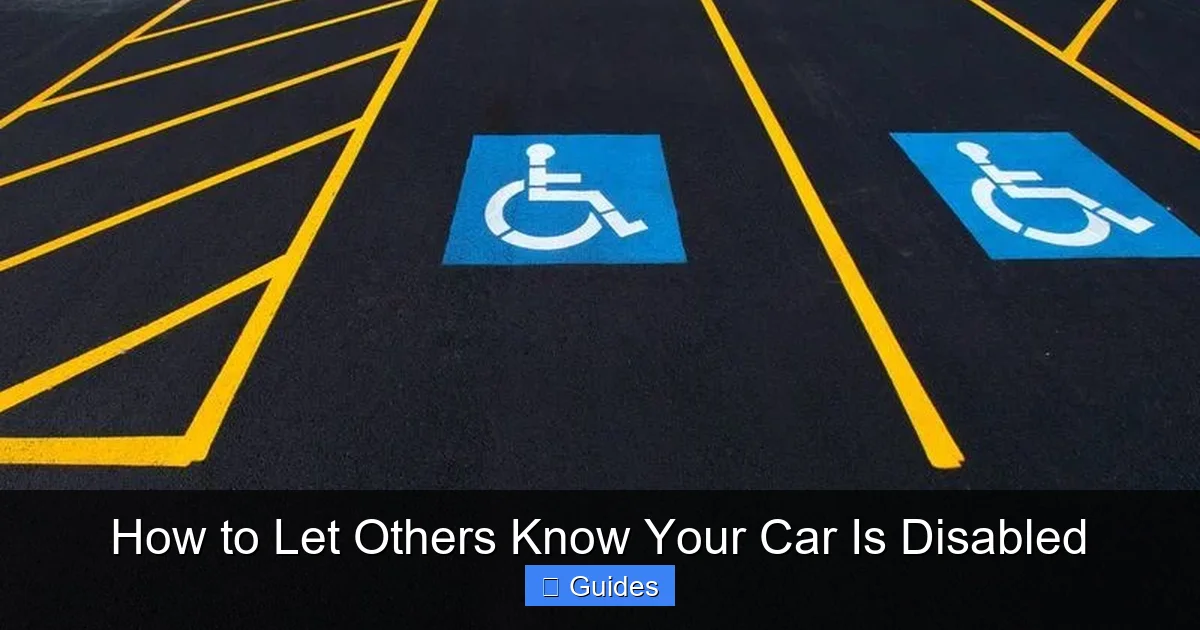
Knowing how to let others know your car is disabled ensures safer parking, reduces misunderstandings, and helps you access essential services. From official permits to visible signage, clear communication protects your rights and promotes awareness.
In This Article
- 1 Key Takeaways
- 2 📑 Table of Contents
- 3 Why It Matters to Let Others Know Your Car Is Disabled
- 4 Understanding Disabled Parking Permits and Placards
- 5 Additional Ways to Signal Your Vehicle’s Disabled Status
- 6 Navigating Public Perception and Misunderstandings
- 7 Legal Rights and Responsibilities
- 8 Traveling with a Disabled Vehicle: Tips and Considerations
- 9 Conclusion
- 10 Frequently Asked Questions
- 10.1 Do I need a doctor’s note to get a disabled parking permit?
- 10.2 Can I use my disabled parking permit in other states?
- 10.3 What should I do if someone accuses me of misusing a disabled spot?
- 10.4 Can family members use my disabled parking permit?
- 10.5 Are there free disabled parking permits?
- 10.6 What if my disability isn’t visible?
Key Takeaways
- Use a valid disabled parking permit: This is the most recognized and legally protected way to signal your vehicle’s status.
- Display the permit correctly: Hang it from the rearview mirror or place it on the dashboard so it’s visible to enforcement officers.
- Consider additional visibility aids: Reflective decals, bumper stickers, or dashboard signs can reinforce your status in low-light or crowded areas.
- Understand local laws and regulations: Rules for disabled parking vary by state, city, and country—always check local requirements.
- Educate passengers and caregivers: Ensure anyone driving your vehicle knows how to properly display and use the permit.
- Report misuse and advocate for yourself: If someone questions your right to park in a disabled spot, stay calm and provide documentation if needed.
- Plan ahead for travel: Research disabled parking availability and rules when visiting new areas to avoid fines or towing.
📑 Table of Contents
- Why It Matters to Let Others Know Your Car Is Disabled
- Understanding Disabled Parking Permits and Placards
- Additional Ways to Signal Your Vehicle’s Disabled Status
- Navigating Public Perception and Misunderstandings
- Legal Rights and Responsibilities
- Traveling with a Disabled Vehicle: Tips and Considerations
- Conclusion
Why It Matters to Let Others Know Your Car Is Disabled
Imagine pulling into a busy shopping center, finding the last available disabled parking spot, and stepping out of your car—only to be met with stares, comments, or even accusations of misuse. Unfortunately, this scenario is all too common for drivers with disabilities. Whether your condition is visible or not, letting others know your car is disabled isn’t just about convenience—it’s about safety, dignity, and legal protection.
Disabilities come in many forms. Some are obvious, like the use of a wheelchair or mobility scooter. Others, such as chronic pain, fatigue, neurological conditions, or mental health challenges, are invisible but equally limiting. When you park in a designated disabled spot, you’re not taking advantage of the system—you’re using a resource designed to level the playing field. But without clear communication, misunderstandings can escalate quickly.
That’s why it’s essential to make your vehicle’s status unmistakable. Proper identification helps prevent confrontations, reduces the risk of fines or towing, and ensures you can access the services and spaces you’re entitled to. It also raises public awareness, fostering a more inclusive and understanding community.
Understanding Disabled Parking Permits and Placards
Visual guide about How to Let Others Know Your Car Is Disabled
Image source: quoteslyfe.com
The cornerstone of letting others know your car is disabled is obtaining and using a legitimate disabled parking permit. These permits, often called placards or handicap tags, are issued by your state’s Department of Motor Vehicles (DMV) or equivalent agency. They serve as official proof that you or a passenger in your vehicle qualifies for disabled parking privileges.
There are typically two types of permits: temporary and permanent. Temporary permits are issued for short-term conditions, such as recovery from surgery or injury, and usually last from a few weeks to several months. Permanent permits are for individuals with long-term or lifelong disabilities and may need to be renewed every few years, depending on your state.
To qualify, you’ll need a certification from a licensed healthcare provider—such as a doctor, nurse practitioner, or physical therapist—confirming that your condition limits your mobility. Common qualifying conditions include difficulty walking 200 feet, reliance on a wheelchair or walker, respiratory issues, or severe cardiac conditions.
Once approved, you’ll receive a placard that must be displayed whenever your vehicle is parked in a disabled spot. The placard usually features the International Symbol of Access (the blue wheelchair logo) and includes your name, permit number, and expiration date. Some states also issue license plates with the disabled symbol, which provide the same parking privileges.
How to Apply for a Disabled Parking Permit
The application process varies slightly by state, but generally follows these steps:
1. **Consult your healthcare provider:** Schedule an appointment to discuss your mobility limitations. Be honest and specific about how your condition affects your daily life.
2. **Complete the application form:** Most DMVs offer forms online or in person. You’ll need to provide personal information, vehicle details, and medical certification.
3. **Submit required documents:** This usually includes the completed form, proof of identity, and vehicle registration.
4. **Pay any applicable fees:** Some states charge a small fee, while others issue permits free of charge.
5. **Receive your permit:** Once approved, your placard will be mailed to you or available for pickup.
Tip: If you’re traveling to another state, check whether your permit is recognized. Most U.S. states honor out-of-state disabled parking permits, but it’s wise to confirm before you go.
Proper Display of Your Disabled Parking Permit
Simply having a permit isn’t enough—you must display it correctly to avoid confusion or penalties. The standard method is to hang the placard from the rearview mirror when parked, with the expiration date and identifying information facing outward. When driving, the placard should be removed to avoid obstructing your view.
If your vehicle doesn’t have a rearview mirror (e.g., some trucks or older models), place the placard on the dashboard, clearly visible through the windshield. Make sure it’s flat and unobstructed by sun visors, stickers, or other items.
Never lend your permit to someone else, even family members, unless they are transporting you. Misuse of a disabled parking permit is a serious offense and can result in fines, permit revocation, or legal action.
Additional Ways to Signal Your Vehicle’s Disabled Status
Visual guide about How to Let Others Know Your Car Is Disabled
Image source: rontar.com
While a valid permit is the most important tool, adding extra visual cues can further reduce misunderstandings and increase safety. These supplementary methods are especially helpful in low-light conditions, crowded lots, or when your disability isn’t immediately apparent.
Reflective Decals and Bumper Stickers
Reflective decals featuring the International Symbol of Access can be placed on your windshield, rear window, or bumper. These are particularly useful at night or in bad weather, as they catch the light from headlights and streetlamps. Some drivers choose to add text like “Disabled Driver” or “Accessible Vehicle” to increase clarity.
Bumper stickers are another popular option. They’re affordable, easy to apply, and come in various designs. Look for high-quality, weather-resistant stickers that won’t fade or peel over time. Avoid overly decorative or distracting designs—simplicity and visibility are key.
Dashboard Signs and Window Clings
Dashboard signs are small placards that sit on your dashboard and display your disabled status. Unlike hanging placards, these don’t obstruct your view while driving and can be easily seen when parked. Some models include additional information, such as “Driver with Disability” or “Medical Condition – Please Respect.”
Window clings are another option. These reusable stickers adhere to the inside of your window using static cling, not adhesive, so they won’t damage the glass. They’re easy to remove and reposition, making them ideal for rental cars or shared vehicles.
Custom License Plate Frames
License plate frames with the disabled symbol or supportive messaging can subtly reinforce your vehicle’s status. Choose frames made from durable materials like aluminum or stainless steel, and ensure they don’t obscure any part of your license plate, as this could lead to a citation.
Some drivers opt for frames that include phrases like “Accessible Vehicle” or “Proud to Be Disabled,” which can also help spark conversations and reduce stigma.
Vehicle Modifications and Adaptive Equipment
If your vehicle has been modified for accessibility—such as hand controls, a wheelchair lift, or a lowered floor—these features naturally signal that the car is used by someone with a disability. However, not all modifications are immediately obvious to passersby.
Consider adding a small sign near the modification, such as “Hand Controls Installed” or “Wheelchair Access,” to provide context. This can be especially helpful in parking lots where enforcement officers or other drivers may not be familiar with adaptive equipment.
Visual guide about How to Let Others Know Your Car Is Disabled
Image source: alvarotrigo.com
Despite your best efforts to communicate your vehicle’s status, you may still encounter skepticism or hostility. Unfortunately, disabled parking spots are sometimes viewed as “privileges” rather than necessities, leading to judgment from those who don’t understand invisible disabilities.
When faced with confrontation, it’s important to stay calm and assertive. You have every right to park in a disabled spot if you have a valid permit. Avoid engaging in arguments, but don’t hesitate to show your placard or explain your situation if you feel safe doing so.
How to Respond to Accusations or Challenges
If someone questions your right to park in a disabled spot, follow these steps:
1. **Stay calm:** Take a deep breath and avoid reacting emotionally.
2. **Show your permit:** Politely display your placard or explain that you have a valid disabled parking permit.
3. **Provide documentation if needed:** If the person is an enforcement officer, they may ask to see your permit and ID. Have them ready.
4. **Avoid escalation:** If the person becomes aggressive or refuses to accept your explanation, disengage and contact security or law enforcement if necessary.
Remember, you are not obligated to justify your disability to anyone. Your permit is your proof.
Educating Others and Raising Awareness
One of the most powerful ways to reduce misunderstandings is through education. Consider sharing your story—whether through social media, community groups, or casual conversations—to help others understand the realities of living with a disability.
You might also support local initiatives that promote accessibility, such as better signage in parking lots or public awareness campaigns about invisible disabilities. The more people know, the less likely they are to make assumptions.
Legal Rights and Responsibilities
Using a disabled parking permit comes with both rights and responsibilities. Understanding these can help you protect yourself and ensure fair access for all.
Your Rights as a Disabled Driver
As a permit holder, you have the legal right to:
– Park in designated disabled parking spaces
– Use curb cuts and accessible entrances
– Be free from discrimination based on your disability
– Have your permit honored in most public and private parking areas
These rights are protected under laws like the Americans with Disabilities Act (ADA) in the U.S., which mandates equal access to public spaces and services.
Responsibilities and Etiquette
With great privilege comes great responsibility. To maintain the integrity of the system, always:
– Use your permit only when you or a passenger with a disability is in the vehicle
– Display the permit correctly and remove it when driving
– Park only in designated disabled spots—don’t block access aisles or ramps
– Renew your permit on time and report any changes in your condition
Misuse of a disabled parking permit harms everyone. It takes spots away from those who truly need them and undermines public trust in the system.
What to Do If Your Permit Is Stolen or Lost
If your disabled parking permit is lost or stolen, report it to your local DMV immediately. They can issue a replacement and, in some cases, flag the original permit to prevent misuse. Keep a copy of your permit number and expiration date in a secure place, such as your phone or wallet, for quick reference.
Traveling with a Disabled Vehicle: Tips and Considerations
Traveling with a disability presents unique challenges, especially when it comes to parking. Whether you’re taking a road trip or flying to a new destination, planning ahead can make all the difference.
Research Parking Options in Advance
Before you travel, research the parking situation at your destination. Many hotels, airports, and attractions offer disabled parking, but availability may be limited. Call ahead to confirm:
– The number of disabled spaces
– Whether reservations are required
– The location of accessible entrances and restrooms
Apps like Google Maps now include accessibility information for many locations, making it easier to find suitable parking.
Check State and International Permit Recognition
If you’re traveling within the U.S., your state-issued permit is generally honored in all 50 states. However, rules for international travel vary. Some countries recognize U.S. permits, while others require a local permit or additional documentation.
For example, in the European Union, the Blue Badge system is widely used. U.S. visitors may be able to use their permit in some countries, but it’s best to check with the local embassy or tourism board before you go.
Prepare for Emergencies
Always carry a copy of your permit, medical documentation, and contact information for your healthcare provider. In case of an emergency or dispute, this information can help verify your status quickly.
Consider keeping a small card in your wallet that explains your condition and includes your permit number. This can be helpful if you’re unable to communicate due to your disability.
Conclusion
Letting others know your car is disabled is about more than just parking—it’s about dignity, safety, and inclusion. By using a valid disabled parking permit, displaying it correctly, and supplementing it with clear signage, you can navigate public spaces with confidence and respect.
Remember, your disability doesn’t define you, but it does shape your experience. Taking proactive steps to communicate your needs helps protect your rights and fosters a more understanding society. Whether you’re running errands, visiting family, or exploring new places, these tools and tips ensure you can do so with peace of mind.
Don’t let fear of judgment or confrontation stop you from accessing the support you’re entitled to. You belong in that parking spot. You deserve to be seen, respected, and supported. And with the right preparation, you can make that happen—every single day.
Frequently Asked Questions
Do I need a doctor’s note to get a disabled parking permit?
Yes, most states require a certification from a licensed healthcare provider confirming that your condition limits your mobility. This ensures that permits are issued fairly and responsibly.
Can I use my disabled parking permit in other states?
In the U.S., most states honor out-of-state disabled parking permits. However, it’s always a good idea to check local regulations before traveling to avoid fines or towing.
What should I do if someone accuses me of misusing a disabled spot?
Stay calm, show your valid permit, and avoid arguing. If the person is an enforcement officer, provide your documentation. If they’re aggressive, disengage and contact security if needed.
Can family members use my disabled parking permit?
Only if they are transporting you. The permit is tied to the person with the disability, not the vehicle. Misuse by others can result in penalties.
Are there free disabled parking permits?
Some states issue permits at no cost, while others charge a small fee. Check with your local DMV for specific pricing and eligibility.
What if my disability isn’t visible?
Invisible disabilities are just as valid. As long as you have a medical certification and a valid permit, you’re entitled to use disabled parking spaces. Clear signage can help reduce misunderstandings.

At CarLegit, we believe information should be clear, factual, and genuinely helpful. That’s why every guide, review, and update on our website is created with care, research, and a strong focus on user experience.