
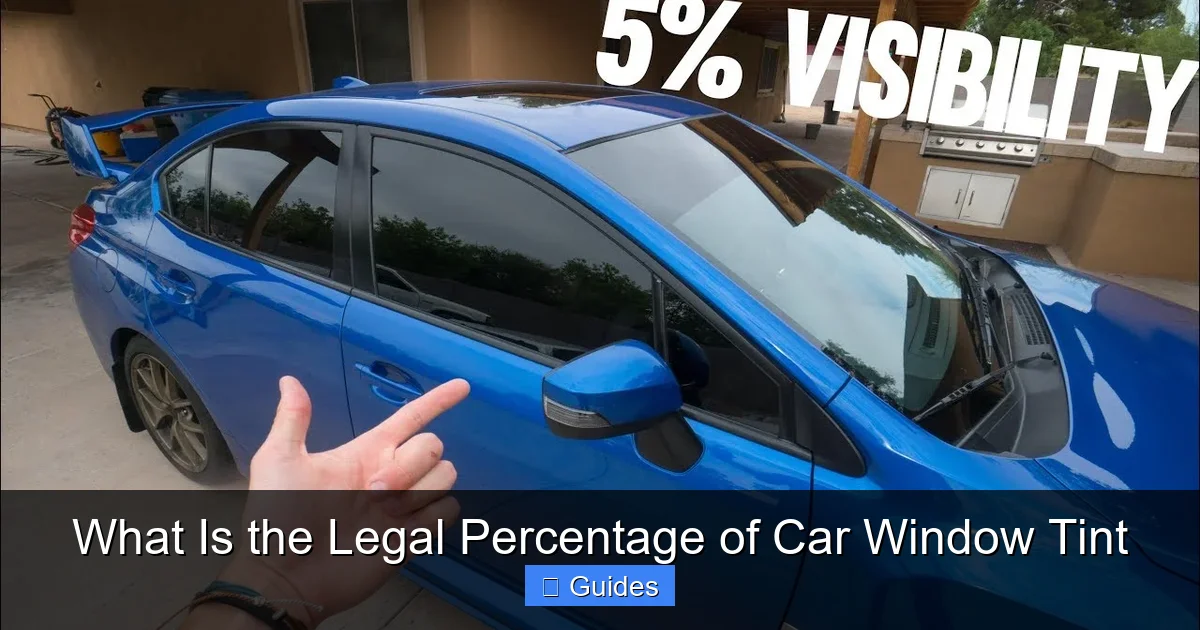
Understanding the legal percentage of car window tint is essential to avoid costly fines and ensure road safety. Laws vary by state and vehicle type, so knowing your local regulations helps you make informed decisions when tinting your windows.
In This Article
- 1 Key Takeaways
- 2 📑 Table of Contents
- 3 What Is the Legal Percentage of Car Window Tint?
- 4 Understanding Window Tint and VLT
- 5 State-by-State Legal Tint Percentages
- 6 Medical Exemptions for Darker Tint
- 7 Penalties for Illegal Window Tint
- 8 Tips for Choosing Legal and Safe Window Tint
- 9 Conclusion
- 10 Frequently Asked Questions
Key Takeaways
- Legal tint percentages vary by state: Each U.S. state sets its own rules for how dark car windows can be, especially for front, side, and rear windows.
- Visible Light Transmission (VLT) matters: Tint darkness is measured by VLT—the lower the percentage, the darker the tint. Most states allow 20% to 70% VLT on front side windows.
- Front windshield rules are strict: Many states only permit a non-reflective tint strip along the top of the windshield, usually no more than 3–6 inches.
- Rear and back windows have more flexibility: Some states allow darker tints on rear windows, especially for SUVs and vans with factory tint.
- Medical exemptions exist: Drivers with certain health conditions may qualify for darker tints with proper documentation from a licensed physician.
- Penalties for illegal tint can be steep: Fines, failed inspections, or even being pulled over repeatedly are common consequences of non-compliant tinting.
- Always check local laws before tinting: Regulations can change, so consult your state’s Department of Motor Vehicles (DMV) or official website for the most current rules.
📑 Table of Contents
What Is the Legal Percentage of Car Window Tint?
If you’ve ever considered tinting your car windows, you’ve probably asked yourself: “How dark is too dark?” The answer isn’t one-size-fits-all. The legal percentage of car window tint depends on where you live, what kind of vehicle you drive, and which windows you’re tinting. While tinting offers benefits like privacy, UV protection, and reduced heat, it also comes with legal responsibilities.
Window tinting isn’t just about style—it’s a regulated safety feature. Law enforcement needs to see inside vehicles for public safety, especially during traffic stops or emergencies. That’s why every state in the U.S. has specific laws governing how much light must pass through your car windows. These laws are based on a measurement called Visible Light Transmission (VLT), which tells you what percentage of visible light can get through the tint film.
In this guide, we’ll break down everything you need to know about the legal percentage of car window tint. Whether you’re a first-time car owner or thinking about re-tinting your ride, this article will help you stay on the right side of the law while enjoying the benefits of window film.
Understanding Window Tint and VLT
Visual guide about What Is the Legal Percentage of Car Window Tint
Image source: tintworks.com.au
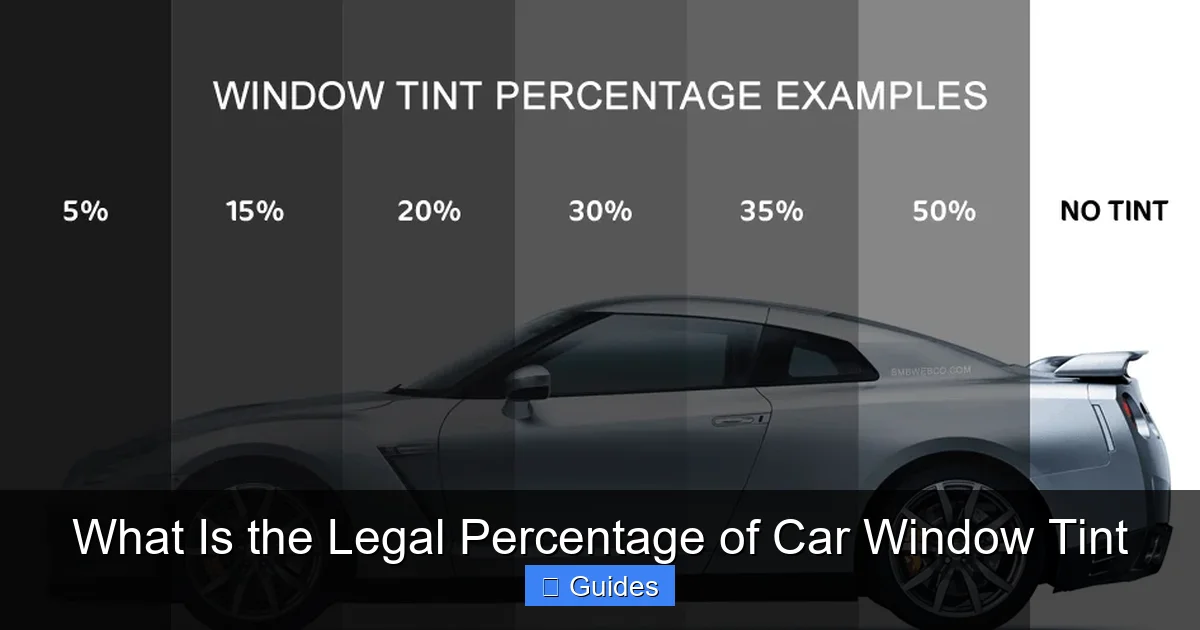
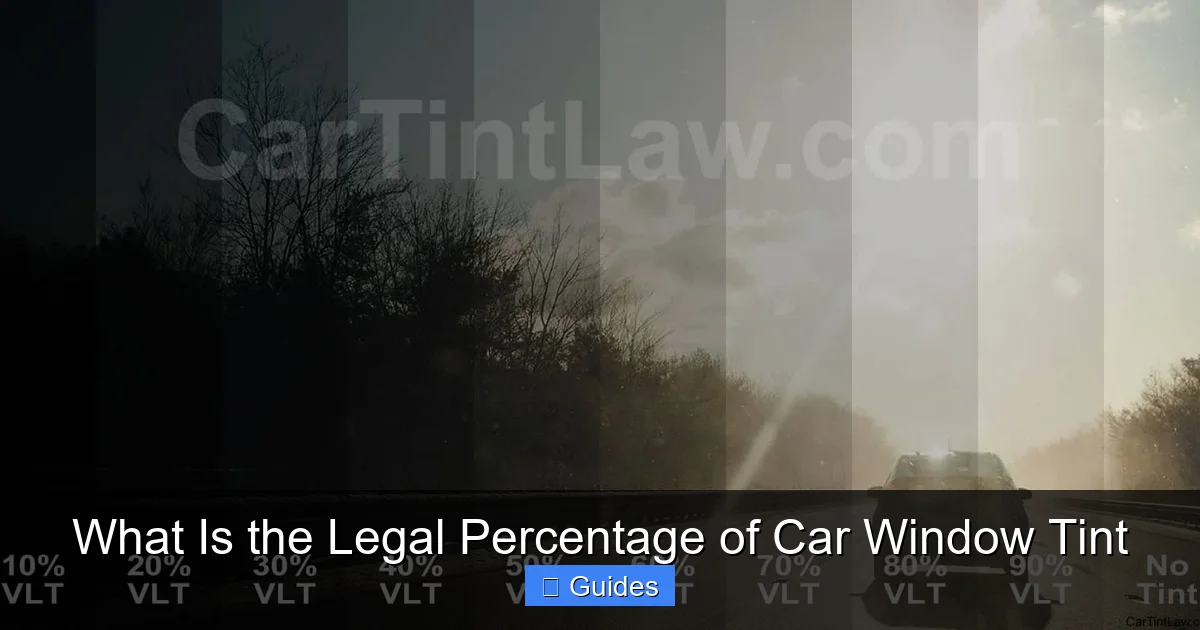
Before diving into state-specific laws, it’s important to understand how window tint is measured. The key term here is Visible Light Transmission (VLT). This is the percentage of visible light that passes through your car window, including both the glass and the tint film.
For example, a 5% VLT tint allows only 5% of light to pass through—making it extremely dark. A 70% VLT tint, on the other hand, is nearly clear and lets most light through. Most states set minimum VLT requirements, meaning your tint must allow at least a certain percentage of light to pass through.
How VLT Affects Visibility and Safety
Darker tints reduce glare and heat, which can improve comfort on sunny days. But they also reduce visibility, especially at night or in low-light conditions. This is why many states limit how dark front side windows can be—drivers need to see clearly to check mirrors, read street signs, and spot pedestrians or cyclists.
Law enforcement officers also rely on being able to see into vehicles. If your tint is too dark, an officer may not be able to determine if you’re carrying passengers, weapons, or other items during a traffic stop. This can raise safety concerns and lead to further inspection or even citations.
Types of Window Tint Films
Not all tint films are created equal. Here are the most common types:
- Dyed window film: Affordable and effective at reducing glare, but can fade over time and may not block as much heat.
- Metallic film: Contains tiny metal particles that reflect heat and UV rays. More durable but can interfere with GPS or cell signals.
- Ceramic film: High-end option that blocks heat and UV without signal interference. Offers excellent clarity and longevity.
- Carbon film: Provides a matte finish and good heat rejection. Doesn’t interfere with electronics and resists fading.
The type of film you choose can affect how much light passes through, even if the VLT percentage is the same. Always check the product specifications and ensure it meets your state’s legal requirements.
State-by-State Legal Tint Percentages
Visual guide about What Is the Legal Percentage of Car Window Tint
Image source: windowtintinginlv.com
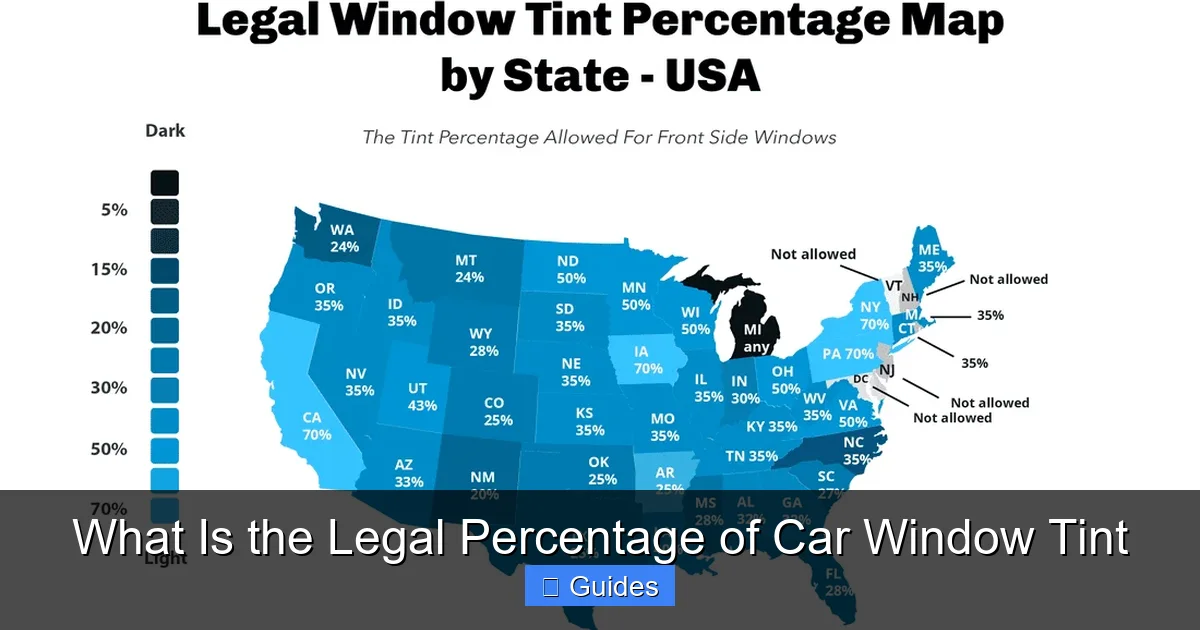
Now that you understand VLT, let’s look at how the legal percentage of car window tint varies across the U.S. Each state sets its own rules, and these can differ significantly—even between neighboring states.
Below is a general overview of common regulations. However, always verify with your local DMV or official state website, as laws can change.
Front Side Windows
Most states require that front side windows (the ones next to the driver and front passenger) allow at least 70% of light to pass through. This means a 70% VLT or higher is typically the minimum allowed.
For example:
– California: 70% VLT minimum for front side windows.
– Texas: 25% VLT minimum (darker than California).
– New York: 70% VLT minimum.
– Florida: 28% VLT minimum.
Some states, like Arizona and Nevada, allow darker tints—down to 20% or even 15%—on front side windows. This is often due to extreme heat and sun exposure, where drivers benefit from more sun protection.
Rear Side and Back Windows
Rear windows often have more lenient rules. Many states allow darker tints on rear side windows and the back windshield, especially for vehicles with factory-installed tint.
For example:
– California: No restriction on rear windows if the vehicle has dual side mirrors.
– Texas: 25% VLT minimum for rear windows.
– Illinois: 50% VLT minimum for rear windows.
– Georgia: 32% VLT minimum for rear windows.
SUVs and vans with factory tint may be exempt from some rear window restrictions, as long as the original tint meets safety standards.
Windshield Tinting Rules
The front windshield is usually the most restricted. Most states only allow a non-reflective tint strip along the top of the windshield, typically no more than 3 to 6 inches wide. This strip helps reduce glare from the sun without blocking the driver’s view.
Some states, like Florida and Arizona, allow a slightly wider tint band or even full windshield tinting if it meets certain VLT requirements (usually 70% or higher). However, reflective or mirrored finishes are almost always prohibited.
Medical Exemptions for Darker Tint
Visual guide about What Is the Legal Percentage of Car Window Tint
Image source: cartintlaw.com
In some cases, drivers with medical conditions may be allowed to use darker window tint than normally permitted. These exemptions are designed to protect individuals who are sensitive to light due to health issues.
Qualifying Medical Conditions
Common conditions that may qualify for a medical exemption include:
– Lupus
– Xeroderma pigmentosum (a rare genetic disorder)
– Severe photosensitivity
– Certain skin conditions or autoimmune diseases
To apply for an exemption, you’ll typically need a written statement from a licensed physician. This document must specify the condition, the recommended level of tint, and the duration of the exemption.
How to Apply for a Medical Exemption
The process varies by state, but generally includes:
1. Obtaining a doctor’s note or medical certificate.
2. Submitting the form to your state’s DMV or transportation department.
3. Receiving an official exemption sticker or decal to display on your vehicle.
Keep in mind that even with a medical exemption, there are usually limits. For example, you may be allowed 5% VLT on rear windows but still required to meet standard rules for front windows.
Always carry your exemption documentation while driving, as law enforcement may request it during a traffic stop.
Penalties for Illegal Window Tint
Driving with window tint that doesn’t meet legal standards can lead to serious consequences. While a first offense might result in a warning, repeated violations can lead to fines, failed inspections, or even points on your license.
Common Penalties by State
Here are some examples of penalties for illegal tint:
– California: Up to $250 fine for a first offense.
– Texas: Fine of $100 to $500, depending on the violation.
– New York: Fine up to $150, plus possible inspection failure.
– Florida: Fine of $60 to $200.
In some states, you may be required to remove the illegal tint before your vehicle can pass inspection. This can be costly, especially if you need to replace the film entirely.
How Police Check Tint Legality
Law enforcement officers use tint meters (also called window tint meters) to measure the actual VLT of your windows. These handheld devices shine a light through the glass and calculate how much light passes through.
If your tint is too dark, you may be pulled over—even if you weren’t speeding or committing another traffic violation. This is known as a “pretextual stop,” and it’s legal in most states.
To avoid surprises, consider getting your tint professionally measured after installation. Many tint shops offer this service for free or a small fee.
Tips for Choosing Legal and Safe Window Tint
Now that you know the rules, here are some practical tips to help you choose the right tint for your car—without breaking the law.
1. Research Your State’s Laws First
Before you even visit a tint shop, look up your state’s specific regulations. The DMV website is usually the most reliable source. Some states also have online tint calculators to help you determine legal percentages.
2. Choose a Reputable Tint Shop
Not all tint installers are created equal. Look for shops with good reviews, certified technicians, and experience with your vehicle type. Ask if they guarantee compliance with local laws.
A professional installer will also help you select the right film for your needs—whether you prioritize heat rejection, UV protection, or clarity.
3. Consider the Climate
If you live in a hot, sunny state like Arizona or Texas, you may benefit from a darker tint—within legal limits. Ceramic or carbon films are great for heat reduction without sacrificing visibility.
In cooler or cloudier regions, a lighter tint (50–70% VLT) may be more practical and still offer UV protection.
4. Don’t Forget About Reflectivity
Some states also regulate how reflective your tint can be. High-reflectivity films can create glare for other drivers, especially at night. Most states limit reflectivity to 20–35% for side windows.
Always check both VLT and reflectivity requirements when choosing a film.
5. Keep Documentation Handy
If you have a medical exemption or installed tint from a certified shop, keep the paperwork in your glove compartment. This can help resolve misunderstandings during traffic stops.
Conclusion
The legal percentage of car window tint isn’t just a detail—it’s a crucial part of safe and lawful driving. While tinting your windows can improve comfort, privacy, and protection from UV rays, it’s essential to follow your state’s regulations to avoid fines, failed inspections, or safety risks.
Remember, laws vary widely. What’s legal in one state might get you a ticket in the next. Always check your local DMV guidelines, choose high-quality tint films, and consider professional installation to ensure compliance.
By understanding VLT, knowing your state’s rules, and making informed choices, you can enjoy the benefits of window tint without the legal headaches. Stay safe, stay legal, and drive with confidence.
Frequently Asked Questions
What does VLT mean in window tint?
VLT stands for Visible Light Transmission. It measures the percentage of visible light that passes through your car window and tint film. A 50% VLT allows half the light through, while a 5% VLT is very dark.
Can I tint my front windshield?
Most states only allow a non-reflective tint strip along the top of the windshield, usually 3–6 inches wide. Full windshield tinting is rarely permitted unless you have a medical exemption.
What happens if my tint is too dark?
You may be pulled over, fined, or required to remove the tint. Repeated violations can lead to higher fines or failed vehicle inspections.
Are there exceptions for medical conditions?
Yes, some states allow darker tints with a doctor’s note for conditions like lupus or severe photosensitivity. You’ll need official documentation and may need to display an exemption sticker.
Do SUVs and vans have different tint rules?
Some states allow darker rear window tints for SUVs and vans, especially if they have factory tint or dual side mirrors. Check your state’s specific regulations.
How can I check if my tint is legal?
Visit your state’s DMV website or use a professional tint meter. Many tint shops offer free VLT testing to ensure compliance before you drive away.

At CarLegit, we believe information should be clear, factual, and genuinely helpful. That’s why every guide, review, and update on our website is created with care, research, and a strong focus on user experience.