

Reaching 100,000 miles is a major milestone for any vehicle—but it’s not the finish line. It’s time to shift from routine maintenance to proactive upgrades and repairs. This guide walks you through the most important parts, fluids, and systems to check, replace, or enhance so your car stays reliable, safe, and efficient for the next 100k miles.
In This Article
- 1 Key Takeaways
- 2 📑 Table of Contents
- 3 Congratulations—You’ve Hit 100,000 Miles! Now What?
- 4 Engine and Drivetrain: Keep the Heart Pumping
- 5 Suspension and Steering: Smooth the Ride
- 6 Brake System: Safety First
- 7 Transmission: Keep It Shifting Smoothly
- 8 Tires and Wheels: Grip the Road
- 9 Electrical and Interior: Comfort and Convenience
- 10 Final Thoughts: Drive Into the Next 100k Miles
- 11 Frequently Asked Questions
Key Takeaways
- Replace worn suspension components: Shocks, struts, and bushings degrade over time and affect ride quality and handling.
- Upgrade to high-mileage engine oil: Special additives protect older engines from sludge and wear.
- Inspect and replace timing belts: A snapped timing belt can destroy your engine—don’t skip this critical service.
- Check the cooling system: Radiator, hoses, and water pump failures increase with age and mileage.
- Refresh brake components: Pads, rotors, and fluid degrade over time—safety starts with strong brakes.
- Consider a transmission service: Slipping gears or rough shifts may signal the need for a fluid change or rebuild.
- Evaluate tires and alignment: Worn tires and misalignment reduce fuel economy and increase accident risk.
📑 Table of Contents
- Congratulations—You’ve Hit 100,000 Miles! Now What?
- Engine and Drivetrain: Keep the Heart Pumping
- Suspension and Steering: Smooth the Ride
- Brake System: Safety First
- Transmission: Keep It Shifting Smoothly
- Tires and Wheels: Grip the Road
- Electrical and Interior: Comfort and Convenience
- Final Thoughts: Drive Into the Next 100k Miles
Congratulations—You’ve Hit 100,000 Miles! Now What?
Hitting 100,000 miles in your car is like running a marathon. You’ve made it through the grueling miles, and now you’re standing at the finish line—panting, proud, and maybe a little sore. But here’s the thing: the race isn’t over. In fact, this milestone is more of a checkpoint than a conclusion. Your car has proven its durability, but it’s also showing signs of wear and tear that can’t be ignored.
At this stage, your vehicle has likely endured thousands of starts and stops, extreme weather, potholes, long commutes, and maybe even a few road trips. While modern cars are built to last, no machine is immune to aging. The good news? With the right care, your car can easily surpass 200,000 miles—or even 300,000. But to get there, you need to be proactive. This isn’t just about fixing what’s broken. It’s about preventing future problems, improving performance, and ensuring your car remains safe and reliable.
Think of it like maintaining your health after turning 40. You can’t just keep doing what you did at 25. You need better habits, smarter choices, and regular check-ups. The same goes for your car. After 100k miles, it’s time to upgrade your maintenance routine, replace worn parts, and invest in components that support long-term performance. This guide will walk you through exactly what to get for your car after 100k miles—so you can keep driving with confidence.
Engine and Drivetrain: Keep the Heart Pumping
Visual guide about What to Get to Your Car After 100k Miles
Image source: ohopen.com
Your engine is the heart of your car, and after 100,000 miles, it’s been working hard. Even if it’s running smoothly, internal components are wearing down. Now’s the time to give it some TLC.
Switch to High-Mileage Engine Oil
Standard motor oil is fine for newer engines, but once you hit six figures on the odometer, it’s time to upgrade. High-mileage engine oil is specifically formulated for vehicles with over 75,000 miles. It contains conditioners that help rejuvenate seals and gaskets, reducing oil leaks and burning. It also has extra anti-wear additives to protect older engine parts.
For example, if your car has been burning a quart of oil every 1,000 miles, high-mileage oil can help slow that down. Brands like Mobil 1 High Mileage, Valvoline MaxLife, and Pennzoil Platinum High Mileage are excellent choices. Always check your owner’s manual for the correct viscosity (like 5W-30 or 10W-40), but most high-mileage oils are designed to work with older engines without issues.
Replace the Timing Belt (If Applicable)
If your car uses a timing belt instead of a timing chain, this is non-negotiable. Timing belts typically need replacement every 60,000 to 100,000 miles—check your manufacturer’s recommendation. A broken timing belt can cause the pistons to collide with the valves, resulting in catastrophic engine damage. Repair costs can exceed $3,000.
For instance, Honda and Toyota models often have timing belts that should be replaced around 90,000–100,000 miles. If you’re unsure, look up your vehicle’s maintenance schedule online or ask your mechanic. While you’re at it, replace the water pump and tensioner—they’re usually accessed during the same job and failing later would mean tearing everything apart again.
Check the Serpentine Belt and Pulleys
The serpentine belt powers your alternator, power steering pump, air conditioning compressor, and sometimes the water pump. After 100k miles, it can crack, fray, or lose tension. A snapped belt means your car won’t charge the battery, steer properly, or cool the engine.
Inspect the belt for cracks, glazing, or missing ribs. If it looks worn, replace it. Also, check the tensioner and idler pulleys for smooth rotation and no wobbling. A bad pulley can wear out a new belt quickly. Most serpentine belts cost $20–$50 and take about 30 minutes to replace—cheap insurance against a breakdown.
Flush the Cooling System
Your radiator, hoses, and coolant have been working hard to keep the engine cool. Over time, coolant breaks down, loses its corrosion inhibitors, and can become acidic. This leads to rust inside the engine and radiator, which can clog passages and cause overheating.
A coolant flush removes old fluid and replaces it with fresh, properly mixed coolant. Most experts recommend a flush every 50,000 to 100,000 miles. While you’re at it, inspect the radiator for leaks or damage, and check the upper and lower radiator hoses for soft spots, cracks, or bulges. Replace them if needed—hoses typically last 5–7 years.
Also, don’t forget the thermostat. If your engine takes too long to warm up or overheats randomly, a stuck thermostat could be the culprit. Replacing it during a coolant service is smart preventative maintenance.
Suspension and Steering: Smooth the Ride

Visual guide about What to Get to Your Car After 100k Miles
Image source: flawlesscarguide.com
After 100,000 miles, your suspension system has absorbed countless bumps, potholes, and turns. Worn components can make your car feel loose, bouncy, or unstable—especially at highway speeds.
Inspect and Replace Shocks and Struts
Shocks and struts control the movement of your springs and keep your tires in contact with the road. When they wear out, your car may nose-dive when braking, sway in corners, or bounce excessively after hitting a bump.
You can test them yourself: push down firmly on each corner of the car. If it bounces more than once or twice, the shocks or struts are likely worn. Replacing them improves ride comfort, handling, and braking performance. Expect to pay $300–$800 for a full set, depending on your vehicle.
Check Control Arms, Bushings, and Ball Joints
These components connect your suspension to the chassis and allow wheels to move up and down. Over time, rubber bushings crack and metal parts wear. Symptoms include clunking noises over bumps, uneven tire wear, or a loose steering feel.
For example, if your front tires are wearing more on the inside edge, worn ball joints or control arm bushings could be to blame. Replacing these parts restores precise steering and extends tire life. Labor can be intensive, so budget $400–$1,000 depending on the vehicle.
Align the Wheels
Even if your suspension is in good shape, your alignment may be off after years of driving. Misaligned wheels cause uneven tire wear, pull the car to one side, and reduce fuel efficiency.
A professional wheel alignment adjusts the camber, caster, and toe angles to factory specs. It’s a quick service (30–60 minutes) and costs $75–$150. Do it after replacing suspension parts or if you notice handling issues.
Brake System: Safety First
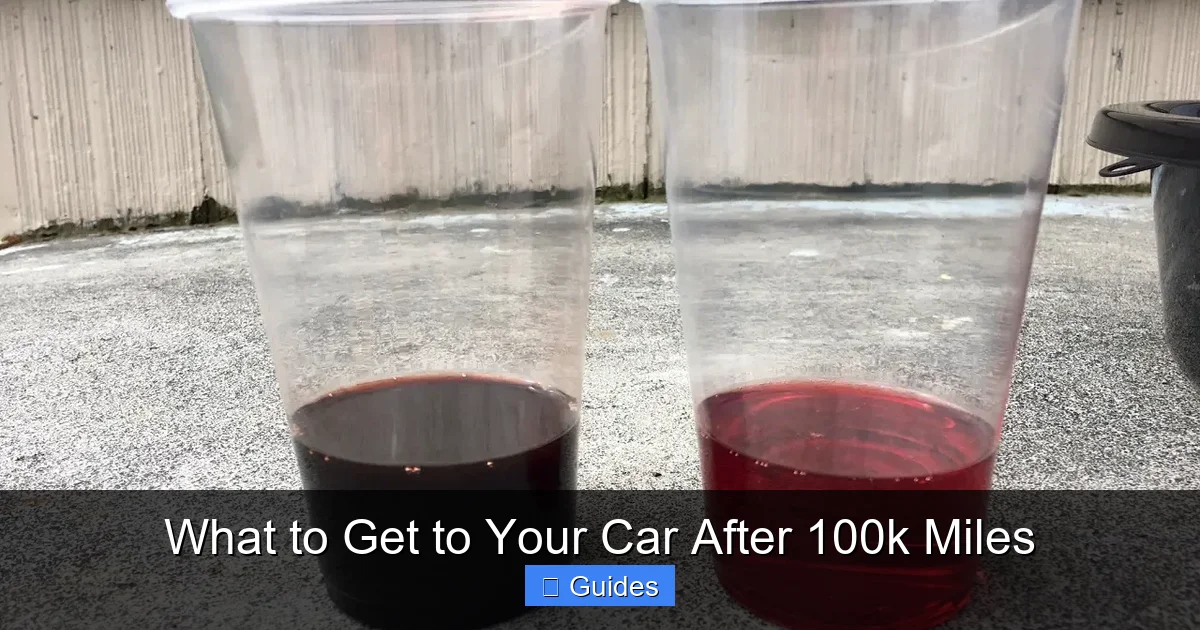
Visual guide about What to Get to Your Car After 100k Miles
Image source: transmissioncar.com
Your brakes are your most critical safety system. After 100k miles, they’ve slowed you down thousands of times—don’t take them for granted.
Replace Brake Pads and Rotors
Brake pads wear down with use. Most last 30,000–70,000 miles, but driving habits matter. If you brake hard or drive in traffic, they may wear faster. Squealing, grinding, or a longer stopping distance are signs they need replacement.
Rotors also wear and can warp over time, causing a pulsating brake pedal. If your rotors are deeply grooved or warped, resurface or replace them. A full brake job (pads and rotors on all four wheels) typically costs $300–$700.
Flush Brake Fluid
Brake fluid absorbs moisture over time, which lowers its boiling point and can cause spongy brakes or corrosion in the system. Most manufacturers recommend a brake fluid flush every 2–3 years or 30,000–60,000 miles.
After 100k miles, it’s likely overdue. A flush removes old fluid and replaces it with fresh DOT 3, DOT 4, or DOT 5.1 (check your owner’s manual). This simple service improves brake feel and protects critical components like the master cylinder and ABS module.
Inspect Brake Lines and Hoses
Rubber brake hoses can crack, swell, or leak with age. Metal brake lines can corrode, especially in salty climates. Have them inspected during your next service. Replacing a damaged hose prevents sudden brake failure.
Transmission: Keep It Shifting Smoothly
Your transmission transfers power from the engine to the wheels. After 100k miles, it’s under stress—especially if it’s an automatic.
Service the Transmission
Many drivers ignore transmission maintenance, but it’s vital for longevity. Over time, transmission fluid breaks down, loses lubricity, and becomes contaminated with metal particles.
A transmission service includes draining the old fluid, replacing the filter (if applicable), and refilling with fresh fluid. Some vehicles have sealed transmissions, so a flush may be recommended instead. This service costs $150–$400 and can prevent costly rebuilds.
Watch for Warning Signs
Slipping gears, delayed engagement, rough shifts, or a burning smell are red flags. Don’t ignore them. A failing transmission can leave you stranded and cost $2,000–$5,000 to repair.
If your car has a manual transmission, check the clutch. A slipping clutch (engine revs but car doesn’t accelerate) means it’s time for a replacement. Clutch jobs are labor-intensive and cost $800–$1,500.
Tires and Wheels: Grip the Road
Tires are your only contact with the road. After 100k miles, they’ve likely been replaced once or twice—but it’s time to evaluate their condition.
Inspect Tread Depth and Wear Patterns
Use a tread depth gauge or the penny test: insert a penny into the tread with Lincoln’s head upside down. If you can see the top of his head, it’s time for new tires. Uneven wear (like cupping or feathering) indicates alignment or suspension issues.
Rotate and Balance Tires
Regular rotation (every 5,000–7,000 miles) extends tire life. Balancing ensures smooth ride and prevents vibration. Do this with every oil change.
Consider Upgrading Tire Type
If you’ve been using standard all-season tires, consider upgrading to high-performance, all-weather, or touring tires for better grip, comfort, and longevity. Brands like Michelin, Bridgestone, and Continental offer excellent options.
Electrical and Interior: Comfort and Convenience
Don’t forget the smaller things that make driving enjoyable.
Replace the Battery
Car batteries last 3–5 years. If yours is original, it’s overdue. A dead battery can leave you stranded. Test it annually and replace if weak.
Check Lights and Wipers
Replace burnt-out bulbs and worn wiper blades. Good visibility is crucial for safety.
Clean and Condition Interior
Use leather conditioner, fabric cleaner, and dashboard protectant to keep your interior looking fresh.
Final Thoughts: Drive Into the Next 100k Miles
Reaching 100,000 miles is a testament to your car’s quality and your care. But the journey doesn’t end here. By investing in the right parts and services, you can keep your vehicle running strong for years to come. Focus on the engine, suspension, brakes, transmission, and tires—these are the systems that matter most. Stay proactive, follow your maintenance schedule, and don’t ignore warning signs. With the right care, your car will reward you with reliability, safety, and countless more miles of adventure.
Frequently Asked Questions
What should I replace first after 100k miles?
Start with the timing belt (if your car has one), high-mileage oil, and a brake inspection. These are critical for engine safety and stopping power. Address suspension and transmission next if needed.
Can a car last 300,000 miles?
Yes, many cars can reach 300,000 miles with proper maintenance. Brands like Toyota, Honda, and Subaru are known for longevity, but any well-cared-for vehicle can achieve this milestone.
Is it worth fixing a car with 100k miles?
Absolutely—if it’s a reliable model and repairs are reasonable. A $1,000 repair on a $5,000 car is often smarter than buying a new one. Focus on preventative maintenance to avoid major issues.
How often should I change oil after 100k miles?
Stick to the manufacturer’s recommendation, usually every 5,000–7,500 miles. Use high-mileage synthetic oil to protect older engines and reduce wear.
What causes a car to fail after 100k miles?
Neglect is the biggest cause. Skipping oil changes, ignoring warning lights, and failing to replace worn parts lead to breakdowns. Regular maintenance prevents most failures.
Should I upgrade to synthetic oil at 100k miles?
Yes—high-mileage synthetic oil offers better protection, cleaner engines, and improved performance. It’s ideal for older vehicles with higher mileage.

At CarLegit, we believe information should be clear, factual, and genuinely helpful. That’s why every guide, review, and update on our website is created with care, research, and a strong focus on user experience.