
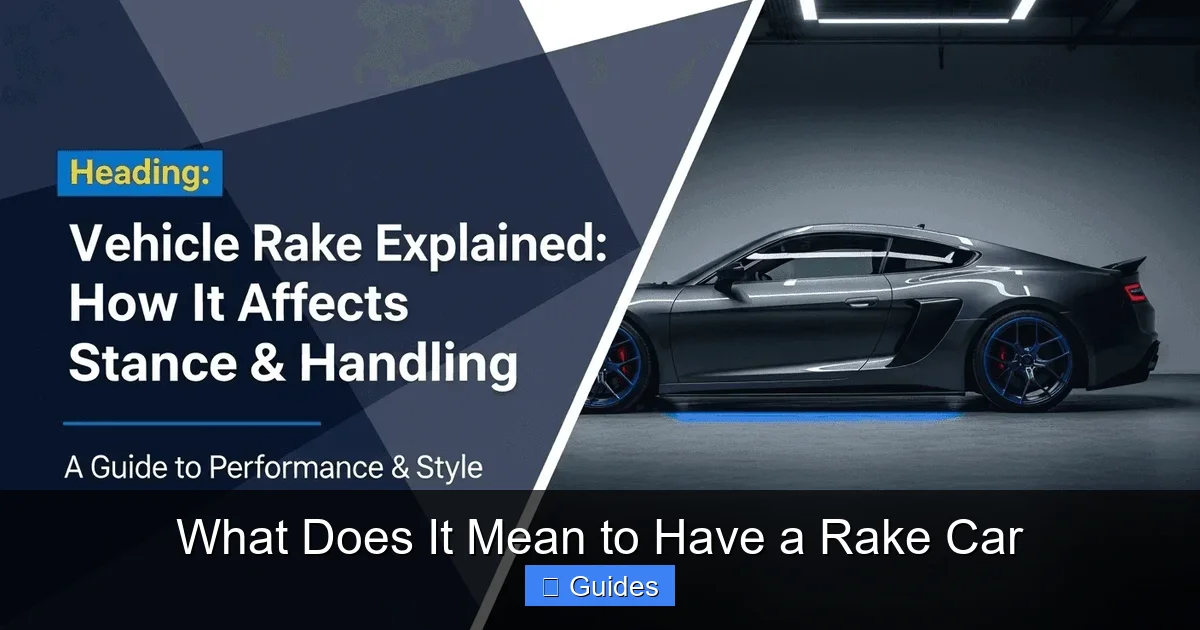
Having a rake car means your vehicle sits with the rear end lower than the front, creating a sloped stance. This setup is common in performance, racing, and custom builds, affecting handling, aerodynamics, and aesthetics. While it can enhance traction and look aggressive, improper rake can hurt ride quality and safety.
In This Article
Key Takeaways
- Rake refers to the angle of a car’s stance – specifically when the rear is lower than the front, creating a forward-leaning slope.
- It’s popular in racing and performance builds – rake improves rear-wheel traction and aerodynamics at high speeds.
- Street cars with extreme rake may face handling issues – too much rake can cause understeer, poor weight distribution, and reduced front-end grip.
- Rake affects suspension geometry and tire wear – improper alignment from rake can lead to uneven tire wear and premature component failure.
- It’s often used for style in car culture – lowered rears and lifted fronts are common in stance, drift, and show car communities.
- Adjusting rake requires suspension modifications – coilovers, lowering springs, or air suspension are typical tools to set the desired rake angle.
- Safety and legality matter – extreme rake may violate local vehicle height laws or compromise braking and cornering performance.
📑 Table of Contents
Understanding What a Rake Car Is
When you hear someone say, “That car has serious rake,” they’re not talking about gardening tools. In the automotive world, “rake” refers to the angle at which a vehicle sits relative to the ground. More specifically, a rake car is one where the rear end is lower than the front, creating a forward-leaning slope from bumper to bumper. This stance is measured by comparing the height of the front and rear bumpers or wheel arches from the ground.
Rake is different from camber or caster—those relate to wheel angles. Rake is purely about the vehicle’s overall pitch. Think of it like a seesaw: if the back end is down and the front is up, that’s positive rake. If the front is down and the back is up, that’s negative rake (also called “reverse rake”). Most factory cars have a slight negative rake for balanced handling, but performance and custom builds often go the other way.
This setup isn’t just about looks. Rake plays a real role in how a car behaves on the road or track. It influences weight transfer, aerodynamics, and tire contact with the pavement. Whether you’re building a drag racer, a drift machine, or just want your ride to stand out at a car show, understanding rake is essential.
Why Do People Modify Rake?
There are several reasons car enthusiasts choose to adjust their vehicle’s rake. Some do it for performance, others for style, and a few for a mix of both. Let’s break down the most common motivations.
First, performance. In racing—especially drag racing and drifting—rake helps shift weight toward the rear wheels during acceleration. When you hit the gas hard, the car naturally squats in the back. By starting with a raked stance, you’re already partway there. This improves traction, reduces wheel spin, and helps put power down more effectively.
Second, aerodynamics. At high speeds, air flows differently over a sloped car. A properly raked vehicle can reduce drag and improve downforce on the rear axle. This is why many race cars, including Formula Drift and time attack builds, use rake to fine-tune their aerodynamic balance.
Third, aesthetics. In car culture, stance is everything. A car with a dramatic rake looks aggressive, purposeful, and custom. It’s a visual cue that says, “This isn’t a stock commuter.” Stance culture, in particular, celebrates extreme modifications, and rake is a cornerstone of that look.
Finally, some people modify rake to fit larger wheels or tires in the rear. A lower rear suspension allows for bigger rims or wider tires without rubbing against the fenders. This is common in muscle cars, tuners, and restomods where tire width is part of the performance and style equation.
The Science Behind Rake: How It Affects Performance

Visual guide about What Does It Mean to Have a Rake Car
Image source: carxplorer.com
Rake isn’t just a visual trick—it has real mechanical and dynamic consequences. To understand why, we need to look at how weight, suspension, and aerodynamics interact when a car is in motion.
When a car accelerates, weight shifts from the front to the rear. This is called weight transfer. In a raked car, this effect is amplified because the rear suspension is already compressed. The result? More load on the rear tires, which means better grip during hard launches. That’s why drag racers often run significant rake—it helps them launch harder and faster.
But there’s a trade-off. While rake improves rear traction, it can hurt front-end grip. With less weight on the front tires, the car may understeer—meaning it doesn’t turn as sharply as you’d like. This is especially noticeable in corners or during emergency maneuvers.
Aerodynamics also play a role. Air moves faster over the top of a sloped car, creating lower pressure above the vehicle. This can generate downforce, pressing the car into the road. However, if the rake is too extreme, it can disrupt airflow, causing turbulence or increased drag. That’s why race teams use wind tunnels and CFD (computational fluid dynamics) to find the optimal rake angle for their specific car and track conditions.
Suspension geometry is another factor. Changing the rake alters the angles of control arms, tie rods, and other components. This can lead to bump steer (unwanted toe changes when suspension moves) or reduced suspension travel. Over time, this stresses bushings, ball joints, and other parts, leading to premature wear.
Real-World Examples of Rake in Action
Let’s look at some real cars that use rake to their advantage.
The Nissan 240SX (S13/S14) is a drift icon. Many drift builds run a noticeable rake—sometimes 2 to 4 inches lower in the rear. This helps during high-angle drifts by keeping the rear tires loaded and the front light for quick direction changes. Drivers like Vaughn Gittin Jr. and Chris Forsberg have used rake to dominate in Formula Drift.
In drag racing, the Dodge Challenger SRT Demon is a factory example of rake done right. It comes with a slightly raked stance and a rear-biased weight distribution to maximize launch grip. The Demon can lift its front wheels off the ground during hard launches—something only possible with careful rake and suspension tuning.
Even some modern supercars use subtle rake. The McLaren P1, for instance, has a slightly lower rear to improve high-speed stability and rear downforce. It’s not extreme, but it’s there for a reason.
On the flip side, some street cars go too far. We’ve all seen those “slammed” imports with the rear sitting on the bump stops and the front jacked up like a speed bump. While they look cool at a show, they often handle like shopping carts on ice. That’s why balance is key.
Rake vs. Stance: What’s the Difference?

Visual guide about What Does It Mean to Have a Rake Car
Image source: metroleague.org
This is a common point of confusion. Rake and stance are related but not the same thing.
Stance refers to the overall appearance of a car’s ride height and wheel fitment. It includes how low the car sits, how wide the wheels are, and how they fill the fenders. A “good stance” usually means the car looks aggressive, balanced, and purposeful.
Rake, on the other hand, is just one component of stance. It’s the front-to-rear height difference. You can have a great stance without extreme rake—many show cars sit level or even slightly lower in the front.
Think of it this way: stance is the full outfit, and rake is just the shoes. You can wear cool shoes, but if the rest of the outfit is off, the look won’t work.
That said, rake is a powerful tool in the stance builder’s toolkit. It adds drama and motion to a static car. A well-executed rake can make a car look like it’s leaning into a turn, even when it’s parked.
But again, moderation is important. Too much rake can make a car look unbalanced or unsafe. It can also attract unwanted attention from law enforcement, especially if the front bumper is too high or the headlights are misaligned.
How to Achieve Rake: Suspension Modifications
If you’re thinking about adding rake to your car, you’ll need to modify the suspension. Here are the most common methods:
Coilovers: These are the go-to for serious enthusiasts. Coilovers allow you to adjust ride height independently at each corner. You can lower the rear more than the front to create rake. High-quality coilovers also let you fine-tune damping and spring rates for better handling.
Lowering Springs: A more budget-friendly option. You can install shorter springs in the rear to lower that end. However, you can’t adjust them later, so you’ll need to get the height right the first time.
Air Suspension: Air ride systems let you adjust ride height on the fly. You can set a raked stance for shows or track days, then level the car for daily driving. This is popular in stance and lowrider communities.
Spring Perches or Spacers: Some people use adjustable spring perches or add spacers to the rear suspension to lower the rear. This is a quick fix but not ideal for performance driving.
Leaf Spring Shackles (for trucks and older cars): If you’re working on a truck or classic car with leaf springs, you can use longer or shorter shackles to adjust rake.
No matter which method you choose, always get a professional alignment afterward. Rake changes your camber, toe, and caster angles, which affects tire wear and handling.
The Pros and Cons of a Rake Car

Visual guide about What Does It Mean to Have a Rake Car
Image source: metroleague.org
Like any modification, rake has its upsides and downsides. Let’s break them down.
Advantages of Rake
Improved Rear Traction: Especially during acceleration, rake helps put more weight on the rear tires. This is a big plus for rear-wheel-drive cars, muscle cars, and drag racers.
Better Aerodynamics at High Speed: A properly raked car can reduce drag and increase rear downforce, improving stability on the highway or track.
Enhanced Visual Appeal: Rake gives a car a aggressive, performance-oriented look. It’s a favorite in car shows, photoshoots, and social media.
Room for Larger Rear Tires: Lowering the rear allows for wider tires or bigger wheels without rubbing. This is useful for performance builds that need extra grip.
Weight Transfer Optimization: In racing, controlled weight transfer is key. Rake helps manage this during launch, braking, and cornering.
Disadvantages of Rake
Reduced Front-End Grip: With less weight on the front tires, the car may understeer or feel “light” in the steering. This can be dangerous in wet or slippery conditions.
Uneven Tire Wear: Improper alignment from rake can cause the front tires to wear on the inside edge and the rear on the outside. This leads to frequent replacements.
Harsh Ride Quality: Lowering the rear too much can bottom out the suspension, especially on bumps or driveways. This leads to a rough, uncomfortable ride.
Suspension Stress: Altered geometry puts extra strain on control arms, bushings, and ball joints. Over time, this can lead to costly repairs.
Legal and Safety Concerns: Extreme rake may violate local vehicle height laws. It can also affect headlight aim, making it harder to see at night and increasing glare for oncoming drivers.
Is a Rake Car Right for You?
So, should you modify your car to have rake? The answer depends on your goals.
If you’re building a dedicated track car, drag racer, or drift machine, rake can be a valuable tuning tool. It helps with traction, aerodynamics, and weight transfer. Just make sure you’re prepared to fine-tune the suspension and accept the trade-offs in daily drivability.
If you’re into car shows or stance culture, rake can elevate your car’s look. But remember: style shouldn’t come at the cost of safety. Keep the rake moderate, maintain proper alignment, and avoid going so low that you’re scraping or bottoming out.
For daily drivers, extreme rake is usually not worth it. The handling compromises, ride harshness, and legal risks outweigh the visual benefits. A slight rake—say, half an inch to an inch—can add style without sacrificing too much function.
Ultimately, rake is a personal choice. It’s part art, part science. Do your research, talk to experienced builders, and consider how the modification fits into your overall vision for the car.
Tips for Getting Rake Right
– Start small: Begin with a mild rake (1 inch or less) and test how the car handles. You can always go lower later.
– Use quality parts: Cheap suspension components can fail under stress. Invest in reputable brands.
– Get a professional alignment: This is non-negotiable. Even a small change in rake affects alignment angles.
– Check local laws: Some states have strict rules about bumper height and headlight aim.
– Test drive in different conditions: See how the car behaves in rain, on highways, and in tight corners.
– Listen to your car: If it feels unstable, pulls to one side, or wears tires unevenly, something’s off.
Conclusion: Rake Is More Than Just a Look
Having a rake car means more than just lowering the rear and calling it a day. It’s a deliberate choice that affects how your car looks, handles, and performs. Whether you’re chasing quarter-mile times, perfecting your drift angle, or just want to turn heads at a car meet, rake can be a powerful tool—when used wisely.
But like any modification, it comes with trade-offs. Improved traction and style are great, but they shouldn’t come at the cost of safety, comfort, or legality. The best rake setups are balanced, purposeful, and well-executed.
So, if you’re thinking about adding rake to your ride, take the time to understand what it really means. Talk to experts, study real-world examples, and plan your modifications carefully. When done right, a rake car isn’t just a statement—it’s a performance statement.
And who knows? With the right setup, your raked ride might just be the one everyone’s talking about.
Frequently Asked Questions
What does it mean to have a rake car?
A rake car is one where the rear end sits lower than the front, creating a forward-leaning slope. This stance affects handling, aerodynamics, and appearance, and is common in performance and custom builds.
Is rake good for daily driving?
Mild rake (under 1 inch) can work for daily driving, but extreme rake may cause poor handling, harsh rides, and legal issues. It’s best suited for track or show use.
Can rake improve performance?
Yes, in racing and drifting, rake improves rear traction and aerodynamics. It helps with weight transfer during acceleration, especially in rear-wheel-drive cars.
How do I add rake to my car?
You can add rake by lowering the rear suspension using coilovers, lowering springs, air suspension, or other modifications. Always follow up with a professional alignment.
Does rake cause tire wear?
Yes, improper rake can lead to uneven tire wear due to altered alignment angles. Front tires may wear on the inside, and rear tires on the outside.
Is extreme rake legal?
It depends on local laws. Some areas regulate bumper height and headlight aim. Extreme rake may violate these rules and result in fines or failed inspections.

At CarLegit, we believe information should be clear, factual, and genuinely helpful. That’s why every guide, review, and update on our website is created with care, research, and a strong focus on user experience.