
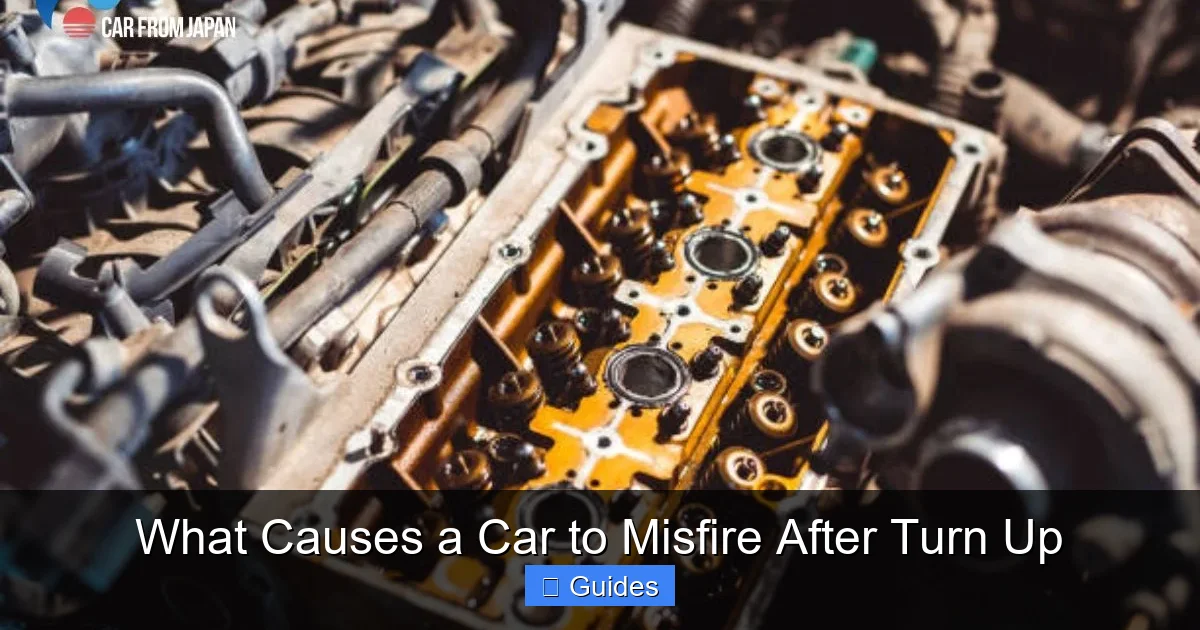
A car misfiring after a tune-up often points to installation errors, faulty parts, or overlooked components. This guide breaks down the most common causes, from spark plug issues to fuel system problems, so you can diagnose and fix the issue quickly and safely.
In This Article
- 1 Key Takeaways
- 2 📑 Table of Contents
- 3 What Causes a Car to Misfire After Turn Up
- 4 Understanding Engine Misfires
- 5 Common Causes of Misfires After a Tune-Up
- 6 Less Common but Serious Causes
- 7 How to Diagnose and Fix a Post-Tune-Up Misfire
- 8 Preventing Misfires After a Tune-Up
- 9 Conclusion
- 10 Frequently Asked Questions
- 10.1 Why is my car misfiring right after a tune-up?
- 10.2 Can bad spark plugs cause a misfire after a tune-up?
- 10.3 How do I know if a vacuum leak is causing my misfire?
- 10.4 Will a misfire damage my engine?
- 10.5 Can I drive with a misfire after a tune-up?
- 10.6 How long does it take for the ECU to adapt after a tune-up?
Key Takeaways
- Incorrect spark plug installation: Cross-threading or improper gap settings can cause immediate misfires after a tune-up.
- Faulty ignition components: Worn coils, bad wires, or defective spark plugs may fail under increased engine demand post-tune-up.
- Fuel delivery issues: Clogged injectors or low fuel pressure can starve cylinders, especially after performance adjustments.
- Vacuum leaks: Dislodged hoses during maintenance can introduce unmetered air, disrupting the air-fuel ratio.
- ECU adaptation problems: The engine control unit may need time to relearn settings after sensor replacements or software updates.
- Timing misalignment: Incorrect camshaft or crankshaft timing during reassembly can lead to severe misfiring.
- Low-quality replacement parts: Using cheap or incompatible components increases the risk of post-tune-up failures.
📑 Table of Contents
What Causes a Car to Misfire After Turn Up
You’ve just finished a tune-up on your car—new spark plugs, fresh air filter, maybe even a new set of ignition coils. Everything looks great under the hood. You start the engine, and for a moment, it purrs like a kitten. But then, as you drive or rev the engine, you notice a hesitation, a jerking sensation, or a rough idle. Your car is misfiring after the turn-up.
Sound familiar? You’re not alone. Misfires after a tune-up are surprisingly common, and they can be frustrating—especially when you expected smoother performance, not worse. The good news? Most of these issues are preventable and fixable with the right knowledge.
A misfire happens when one or more cylinders in your engine fail to ignite the air-fuel mixture properly. This can cause a loss of power, poor fuel economy, increased emissions, and even damage to your catalytic converter over time. While misfires can occur for many reasons, when they happen right after a tune-up, the cause is almost always related to something that was touched, replaced, or disturbed during the maintenance process.
In this guide, we’ll walk you through the most common reasons why your car might be misfiring after a tune-up. We’ll cover everything from simple mistakes like loose wires to more complex issues like timing problems. Whether you did the tune-up yourself or had it done at a shop, this article will help you diagnose the problem and get your car running smoothly again.
Understanding Engine Misfires

Visual guide about What Causes a Car to Misfire After Turn Up
Image source: carxplorer.com
Before diving into the causes, it’s important to understand what a misfire actually is. In a properly functioning engine, each cylinder goes through a four-stroke cycle: intake, compression, power, and exhaust. During the power stroke, the spark plug ignites the compressed air-fuel mixture, creating a small explosion that pushes the piston down and turns the crankshaft.
A misfire occurs when this ignition doesn’t happen correctly. The fuel doesn’t burn, or it burns incompletely, leading to a loss of power in that cylinder. Modern vehicles are equipped with onboard diagnostics (OBD-II) systems that can detect misfires by monitoring crankshaft speed fluctuations. When a misfire is detected, the check engine light may come on, and the vehicle may store a diagnostic trouble code (DTC) such as P0300 (random misfire) or P0301–P0308 (misfire in a specific cylinder).
Misfires can be intermittent or constant, and they can happen at idle, under acceleration, or at highway speeds. The symptoms often include:
– Rough or shaky idle
– Hesitation or jerking during acceleration
– Reduced fuel efficiency
– Engine stalling
– A noticeable drop in power
– A sulfur or rotten egg smell from the exhaust (due to unburned fuel)
Now, when a misfire occurs immediately after a tune-up, it’s usually because something was changed or disturbed during the service. The tune-up process involves removing and replacing several key components, and if any of them aren’t installed correctly, a misfire can result.
Common Causes of Misfires After a Tune-Up

Visual guide about What Causes a Car to Misfire After Turn Up
Image source: m.media-amazon.com
There are several reasons why your car might start misfiring after a tune-up. Let’s break down the most common culprits, starting with the most frequent offenders.
1. Incorrect Spark Plug Installation
Spark plugs are the heart of your ignition system. During a tune-up, they’re often replaced to ensure reliable combustion. However, if they’re not installed correctly, they can cause immediate misfires.
One common mistake is cross-threading the spark plugs. This happens when the plug isn’t aligned properly with the cylinder head threads. Forcing it in can damage the threads, leading to poor contact and potential leaks. Even if the engine starts, a cross-threaded plug can cause a misfire due to inconsistent spark delivery.
Another issue is incorrect spark plug gap. The gap is the space between the center and ground electrodes, and it must match the manufacturer’s specifications. If the gap is too wide, the spark may not jump across, especially under high load. If it’s too narrow, the spark may be weak and fail to ignite the mixture efficiently.
For example, a 2015 Honda Civic with a 1.8L engine requires a spark plug gap of 0.044 inches. If you install plugs with a 0.060-inch gap, the ignition coil may not be able to generate enough voltage to fire them consistently, leading to misfires—especially after a tune-up when the engine is under more stress.
Also, using the wrong type of spark plug can cause problems. Some engines require iridium or platinum plugs for longevity and performance. Installing copper plugs in a high-performance engine may lead to premature wear and misfires.
2. Faulty or Damaged Ignition Coils
Ignition coils transform the battery’s low voltage into the high voltage needed to create a spark. Many modern cars use coil-on-plug (COP) systems, where each cylinder has its own coil mounted directly on the spark plug.
During a tune-up, ignition coils are sometimes replaced, especially if they’re old or showing signs of wear. However, if a new coil is defective or incompatible, it can cause a misfire right away.
Even if the coil is good, improper installation can be an issue. For instance, if the coil isn’t seated properly or the electrical connector isn’t fully plugged in, it may not deliver consistent power. A loose connection can cause intermittent spark, leading to random misfires.
Another problem is damaging the coil during removal. COP coils are often fragile, and prying them out with a screwdriver can crack the housing or damage internal components. A cracked coil can leak voltage, causing weak or no spark.
For example, a 2012 Ford F-150 with a 5.0L V8 may develop a misfire in cylinder 3 after a tune-up if the new coil was dropped or mishandled. The driver might notice a rough idle and a P0303 code. Replacing the coil with a properly handled one usually fixes the issue.
3. Damaged or Disconnected Spark Plug Wires
In older vehicles with distributor-based ignition systems, spark plug wires carry high voltage from the coil to the plugs. During a tune-up, these wires are often inspected and replaced.
However, if the wires are damaged, cracked, or not connected securely, they can cause misfires. A common mistake is pulling on the wire itself instead of the boot when removing it. This can tear the internal conductor or damage the boot, leading to arcing or poor conductivity.
Also, if the wires are crossed—meaning wire 1 is connected to cylinder 2 and vice versa—the spark will fire at the wrong time, causing a severe misfire. This is especially dangerous in engines with sequential ignition systems.
For example, a 1998 Toyota Camry with a 2.2L engine might misfire after a tune-up if the spark plug wires were reconnected in the wrong order. The engine may run, but it will be rough and lack power. Reinstalling the wires in the correct firing order resolves the problem.
4. Vacuum Leaks Introduced During Maintenance
Vacuum leaks occur when unmetered air enters the engine through a cracked hose, loose connection, or damaged gasket. This extra air dilutes the air-fuel mixture, making it too lean to ignite properly.
During a tune-up, technicians often remove and reinstall vacuum hoses, intake manifolds, or PCV valves. If a hose is left loose, cracked, or disconnected, it can create a vacuum leak.
For example, the PCV (positive crankcase ventilation) hose on a 2007 Chevrolet Silverado might become brittle with age. During a tune-up, it could crack when removed. If not replaced, it will leak vacuum, causing a lean condition and misfire—especially at idle.
Another common source is the intake manifold gasket. If it’s disturbed during the tune-up and not reinstalled properly, it can leak air. This is more common in older vehicles with plastic intake manifolds that warp over time.
Vacuum leaks often cause a high idle, hesitation, and a P0171 (system too lean) code in addition to misfires. Using a smoke machine or carburetor cleaner spray can help locate the leak.
5. Fuel System Issues
A tune-up can sometimes uncover or exacerbate fuel system problems. For example, if the fuel filter was replaced, but the fuel pressure regulator is failing, it can cause inconsistent fuel delivery.
Clogged fuel injectors are another common issue. Over time, injectors can become fouled with carbon deposits or varnish from old fuel. During a tune-up, if the injectors are cleaned or replaced, but the fuel system isn’t properly flushed, debris can clog the new injectors.
Low fuel pressure can also cause misfires. If the fuel pump is weak or the pressure regulator is faulty, the engine may not get enough fuel, especially under load. This can happen after a tune-up if the fuel system was disturbed and not properly bled.
For instance, a 2010 Nissan Altima might develop a misfire in cylinder 4 after a tune-up if the fuel injector was replaced but the fuel rail wasn’t properly pressurized. The engine may start, but it will stumble under acceleration.
Less Common but Serious Causes
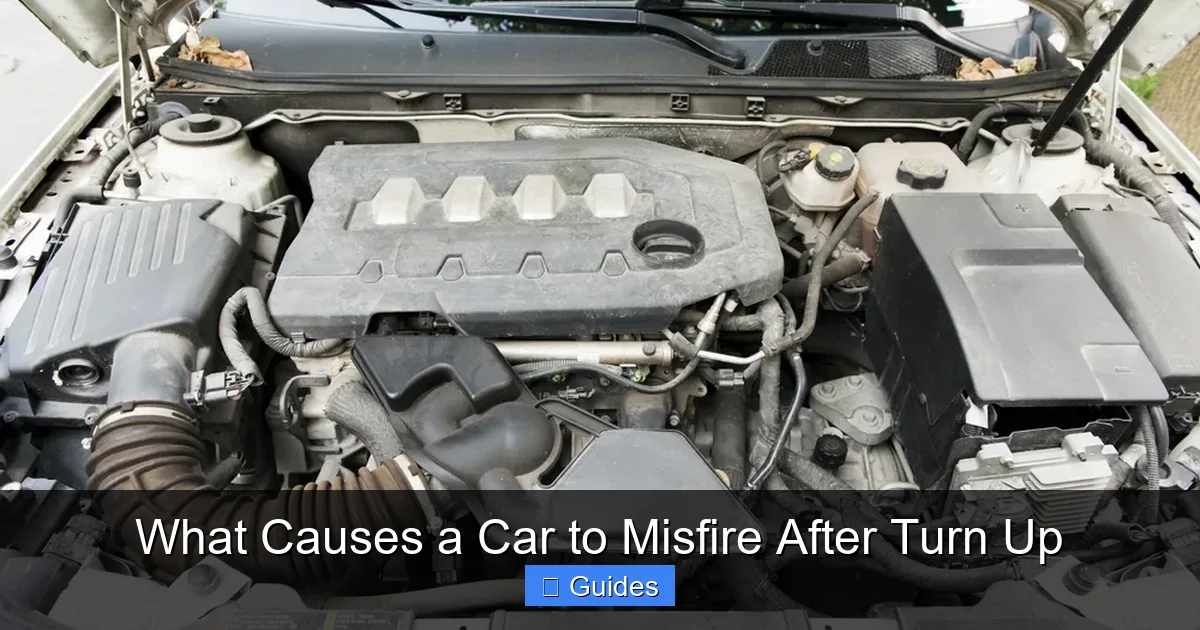
Visual guide about What Causes a Car to Misfire After Turn Up
Image source: res.cloudinary.com
While the above causes are the most frequent, there are a few less common but equally serious reasons for post-tune-up misfires.
Incorrect Timing
If the timing belt or chain was replaced during the tune-up, incorrect timing can cause severe misfires or even engine damage. The camshaft and crankshaft must be synchronized precisely for the valves to open and close at the right time.
If the timing is off by even a few degrees, the spark may fire when the intake valve is open, or the piston may be in the wrong position. This can lead to backfiring, loss of power, and internal damage.
For example, a 2003 Subaru Outback with a 2.5L engine requires precise timing alignment. If the timing belt is installed one tooth off, the engine may misfire badly or not start at all. A timing light or scan tool is needed to verify correct timing.
ECU Adaptation Issues
Modern engines rely on the engine control unit (ECU) to manage fuel, ignition, and emissions. After a tune-up, especially if sensors like the MAF (mass airflow) or O2 (oxygen) sensors were replaced, the ECU may need time to relearn the correct parameters.
During this adaptation period, the engine may run rough or misfire until the ECU adjusts. This is normal and usually resolves within a few drive cycles.
However, if the misfire persists, it could indicate a faulty sensor or incorrect installation. For example, a loose MAF sensor connector can cause erratic readings, leading to lean or rich conditions and misfires.
Low-Quality or Incompatible Parts
Using aftermarket or low-quality replacement parts can increase the risk of misfires. Cheap spark plugs may have inconsistent gaps or poor materials that degrade quickly. Similarly, off-brand ignition coils may not meet OEM specifications.
Always use high-quality, OEM-equivalent parts for critical components. While they may cost more upfront, they reduce the risk of post-tune-up issues and extend the life of your engine.
How to Diagnose and Fix a Post-Tune-Up Misfire
If your car is misfiring after a tune-up, don’t panic. Here’s a step-by-step approach to diagnosing and fixing the problem.
Step 1: Check for Diagnostic Trouble Codes (DTCs)
Use an OBD-II scanner to read any stored codes. A P0300 code indicates a random misfire, while P0301–P0308 point to a specific cylinder. This helps narrow down the issue.
Step 2: Inspect Spark Plugs and Wires
Remove the spark plugs and inspect them for damage, fouling, or incorrect gap. Check the wires or coils for cracks, burns, or loose connections.
Step 3: Look for Vacuum Leaks
Listen for hissing sounds or use a smoke machine to find leaks. Check all hoses, gaskets, and connections that were disturbed during the tune-up.
Step 4: Test Fuel Pressure
Use a fuel pressure gauge to ensure the system is delivering the correct pressure. Low pressure may indicate a failing pump or regulator.
Step 5: Verify Timing
If the timing belt or chain was replaced, use a timing light or scan tool to confirm proper alignment.
Step 6: Reset the ECU
Disconnect the battery for 10–15 minutes to reset the ECU. This can help clear adaptation issues and allow the system to relearn.
Preventing Misfires After a Tune-Up
The best way to avoid post-tune-up misfires is to follow proper procedures and use quality parts.
– Always torque spark plugs to the manufacturer’s specification.
– Use a gap tool to set the correct spark plug gap.
– Handle ignition coils carefully and ensure connectors are fully seated.
– Replace vacuum hoses if they’re brittle or cracked.
– Use OEM or high-quality aftermarket parts.
– Double-check all connections before starting the engine.
– Allow the ECU time to adapt after sensor replacements.
Conclusion
A car misfiring after a tune-up is usually a sign that something went wrong during the service—not that the tune-up itself was a mistake. Whether it’s a loose wire, a vacuum leak, or a faulty part, most causes are easy to identify and fix with the right approach.
By understanding the common culprits and following best practices, you can avoid these issues and enjoy the full benefits of a well-maintained engine. Remember: a successful tune-up isn’t just about replacing parts—it’s about doing it right the first time.
If you’re unsure or the problem persists, don’t hesitate to consult a professional mechanic. Your engine will thank you.
Frequently Asked Questions
Why is my car misfiring right after a tune-up?
A misfire after a tune-up is often caused by incorrect installation of spark plugs, faulty ignition coils, or vacuum leaks introduced during maintenance. These issues disrupt the air-fuel mixture or spark delivery, leading to incomplete combustion.
Can bad spark plugs cause a misfire after a tune-up?
Yes, if the new spark plugs have the wrong gap, are cross-threaded, or are low-quality, they can fail to ignite the fuel properly. Always use the correct type and ensure proper installation.
How do I know if a vacuum leak is causing my misfire?
Vacuum leaks often cause a rough idle, high RPM, and a P0171 code. You can detect them by spraying carb cleaner around hoses while the engine is running—if RPMs change, there’s a leak.
Will a misfire damage my engine?
Prolonged misfires can damage the catalytic converter and cause engine knocking. It’s best to diagnose and fix the issue as soon as possible to avoid costly repairs.
Can I drive with a misfire after a tune-up?
It’s not recommended. Driving with a misfire can reduce fuel efficiency, increase emissions, and potentially damage internal components. Have it checked immediately.
How long does it take for the ECU to adapt after a tune-up?
The ECU typically adapts within 50–100 miles of driving. If the misfire persists beyond that, there may be an underlying mechanical or electrical issue.

At CarLegit, we believe information should be clear, factual, and genuinely helpful. That’s why every guide, review, and update on our website is created with care, research, and a strong focus on user experience.