
Bird droppings on your car aren’t just unsightly—they can damage paint and cost you time and money to clean. The good news? You can stop birds from targeting your vehicle with simple, humane, and effective strategies. From parking smart to using visual deterrents, this guide covers everything you need to keep your car clean and bird-free.
In This Article
- 1 Key Takeaways
- 2 📑 Table of Contents
- 3 Why Birds Target Your Car (And Why It’s a Problem)
- 4 Park Smart: Location Matters More Than You Think
- 5 Use Visual Deterrents to Scare Birds Away
- 6 Physical Barriers: The Most Reliable Protection
- 7 Chemical and Coating Solutions
- 8 High-Tech Solutions for Modern Problems
- 9 Cleaning and Maintenance: Minimizing Damage
- 10 Conclusion
- 11 Frequently Asked Questions
- 11.1 Why do birds poop on cars so often?
- 11.2 Can bird droppings really damage car paint?
- 11.3 Do fake owls actually work to scare birds away?
- 11.4 Are there any natural ways to keep birds away from my car?
- 11.5 How often should I clean bird droppings off my car?
- 11.6 Is it safe to use chemical repellents on my car?
Key Takeaways
- Park away from trees and power lines: Birds love to perch on branches and wires, so avoid parking underneath them to reduce the risk of droppings.
- Use visual deterrents like reflective tape or predator decoys: Shiny objects and fake owls or hawks can scare birds away from your car.
- Cover your car with a protective cover or tarp: A physical barrier is one of the most reliable ways to prevent bird poop from landing on your vehicle.
- Apply a hydrophobic or ceramic coating: These coatings make it easier to clean bird droppings and reduce the chance of paint damage.
- Clean droppings immediately: Bird poop is acidic and can etch into paint if left too long—prompt cleaning protects your car’s finish.
- Use motion-activated repellents: Devices that emit sound or spray water when birds approach can effectively keep them at bay.
- Be consistent with prevention methods: Birds adapt quickly, so rotating deterrents and maintaining habits is key to long-term success.
📑 Table of Contents
- Why Birds Target Your Car (And Why It’s a Problem)
- Park Smart: Location Matters More Than You Think
- Use Visual Deterrents to Scare Birds Away
- Physical Barriers: The Most Reliable Protection
- Chemical and Coating Solutions
- High-Tech Solutions for Modern Problems
- Cleaning and Maintenance: Minimizing Damage
- Conclusion
Why Birds Target Your Car (And Why It’s a Problem)
You’ve just washed your car, and within hours, a white splatter ruins the shine. Sound familiar? If you’ve ever wondered why birds seem to have a personal vendetta against your vehicle, you’re not alone. Birds don’t actually target cars out of spite—but they do see them as convenient perches, landmarks, or even threats. And when they decide to relieve themselves, your car becomes an unfortunate canvas.
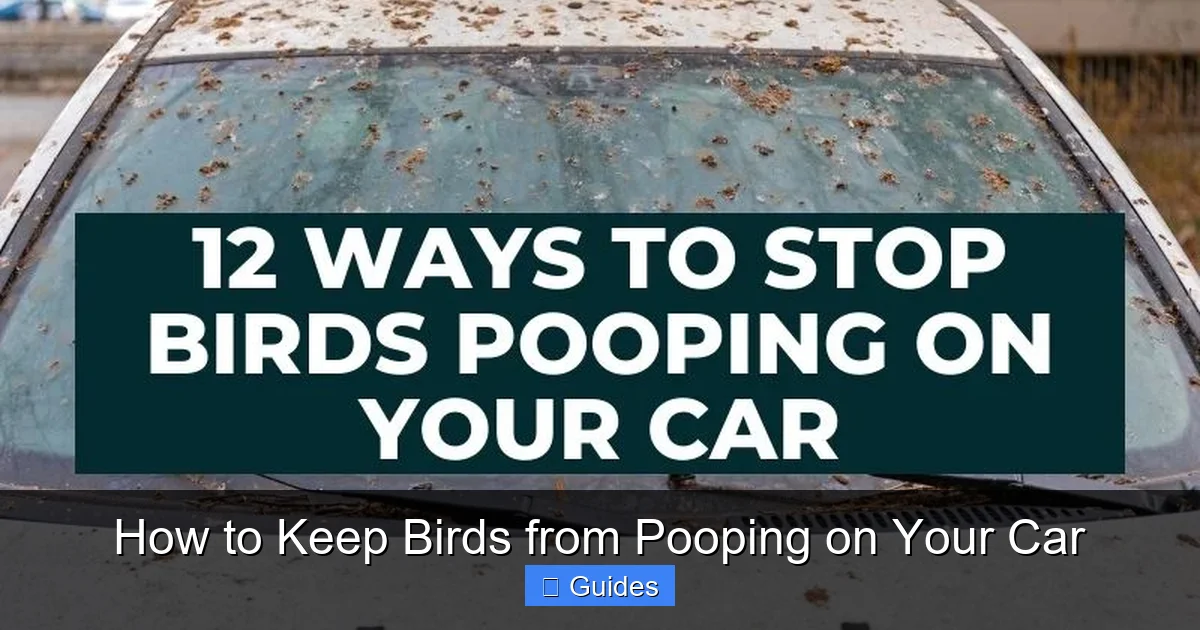
Bird droppings might seem harmless at first glance, but they’re far from it. The main issue is acidity. Bird poop contains uric acid, which can eat through wax, clear coat, and even paint if left untreated. On sunny days, the heat can bake the droppings onto the surface, making them harder to remove and increasing the risk of permanent damage. Over time, repeated exposure can lead to dull spots, discoloration, and costly repairs.
But it’s not just about aesthetics. Cleaning bird droppings frequently uses water, soap, and time—resources many of us would rather conserve. Plus, if you’re parking in public areas like shopping centers, parks, or near restaurants, the chances of becoming a bird bathroom increase dramatically. Seagulls, pigeons, starlings, and crows are especially notorious for their messy habits.
Understanding why birds are drawn to certain areas—and how your car fits into their environment—is the first step in solving the problem. Birds are creatures of habit. They return to the same perches day after day, whether it’s a tree branch, a power line, or the roof of a building. If your car is parked directly beneath one of these perches, it’s essentially in the splash zone.
The good news? You don’t have to live with it. With the right strategies, you can drastically reduce—or even eliminate—bird droppings on your car. The key is to make your vehicle unappealing as a landing spot or target. In the following sections, we’ll explore practical, humane, and effective methods to keep birds away from your car for good.
Park Smart: Location Matters More Than You Think
Visual guide about How to Keep Birds from Pooping on Your Car
Image source: birdsadvice.com
One of the simplest and most effective ways to keep birds from pooping on your car is to choose your parking spot wisely. It might sound obvious, but where you park can make a huge difference. Birds are creatures of habit, and they love high perches that give them a good view of their surroundings. Trees, power lines, lampposts, and building ledges are prime real estate for birds—and if your car is parked directly beneath them, you’re asking for trouble.
Avoid Trees and Overhanging Branches
Trees are natural bird magnets. Whether it’s a tall oak, a cluster of pines, or a flowering cherry tree, birds use branches for resting, nesting, and scanning for food. If you park under a tree, especially one with dense foliage, you’re essentially parking under a bird highway. Even if you don’t see birds right away, they may be roosting above, waiting for the right moment to fly down—or let go.
Try to park at least 10 to 15 feet away from any tree. If that’s not possible, look for spots under trees with sparse branches or those that aren’t commonly used by birds. For example, a lone palm tree might be less of a risk than a thick maple filled with sparrows.
Steer Clear of Power Lines and Utility Poles
Power lines are another favorite perch for birds, especially pigeons and crows. These elevated wires offer a clear view and easy access to food sources like trash bins or outdoor dining areas. If you park directly under a power line, you’re in the direct line of fire.
Utility poles with transformers or crossarms are even worse—they often attract large flocks. If you’re parking near a busy street or commercial area, take a moment to scan the skyline. Are there wires running above your intended spot? If so, move over a few spaces. It only takes a minute, but it could save you from a messy cleanup later.
Choose Open, Well-Lit Areas
Birds prefer shaded, sheltered spots where they feel safe from predators. Open parking lots, especially those with good lighting, are less attractive to birds. The lack of cover makes them feel exposed, so they’re less likely to linger.
Whenever possible, park in the middle of a row rather than at the end near trees or buildings. This reduces the chance of birds swooping in from the sides. Also, avoid parking near dumpsters, outdoor cafes, or bird feeders—these attract birds looking for food, and your car could become an unintended target.
Use Garage Parking When Available
If you have access to a garage, use it. Even if it’s just a carport or covered parking, it provides a physical barrier between your car and the sky. Birds can’t reach your vehicle if it’s shielded from above.
For apartment dwellers or those without a garage, consider investing in a portable carport or canopy. These structures are affordable, easy to set up, and can be placed in driveways or yards. They not only protect against bird droppings but also shield your car from rain, snow, and UV damage.
Be Mindful of Seasonal Patterns
Bird behavior changes with the seasons. During spring and summer, nesting season brings more birds into urban areas. In fall and winter, migratory birds may stop over in your neighborhood, increasing the chances of encounters.
Pay attention to local bird activity. If you notice a sudden increase in pigeons or starlings in your area, adjust your parking habits accordingly. You might need to be extra cautious during these times or use additional deterrents.
Use Visual Deterrents to Scare Birds Away
Visual guide about How to Keep Birds from Pooping on Your Car
Image source: littlehouselovelyhome.com
If you can’t always control where you park, visual deterrents can help make your car less appealing to birds. These tools work by creating the illusion of danger or confusion, tricking birds into thinking your car is unsafe or occupied.
Reflective Tape and Holographic Strips
Shiny, moving objects are highly effective at deterring birds. Reflective tape, holographic strips, or even old CDs can be attached to your car’s roof, hood, or side mirrors. When sunlight hits them, they flash and move in the wind, creating a disorienting effect.
Birds interpret these flashes as threats—possibly from predators or rival birds. The unpredictable movement makes them hesitant to land nearby. You can find bird deterrent tape at hardware stores or online. Look for products labeled “bird scare tape” or “visual repellent strips.”
For best results, apply the tape in diagonal or crisscross patterns across the roof. This increases visibility from multiple angles. Replace the tape every few months, as dirt and weather can reduce its reflectivity.
Predator Decoys: Fake Owls, Hawks, and Snakes
Birds have natural predators, and they’re wired to avoid them. Fake owls, hawks, or snakes placed near your car can create the illusion of danger. These decoys are widely available and come in various sizes and designs.
Place a plastic owl on your dashboard (visible through the windshield) or on the roof of your car. Make sure it’s positioned so it’s visible from above. Some models even have moving heads or glow-in-the-dark eyes for added realism.
However, birds are smart—they’ll catch on if the decoy never moves. To keep them effective, relocate the decoy every few days. You can also pair it with reflective tape or a small fan to create movement.
Wind-Activated Spinners and Mobiles
Wind spinners, pinwheels, and hanging mobiles add motion and sound, which birds find unsettling. These items spin and clink in the breeze, creating a dynamic environment that discourages perching.
You can make your own deterrent by hanging old CDs, aluminum pie plates, or small mirrors from a string above your car. Attach them to a tree branch, fence, or even a portable stand. The key is movement—static objects lose their effectiveness over time.
For a more permanent solution, consider installing a small wind-activated mobile near your driveway or parking spot. These can be found at garden centers or online and are designed specifically for bird control.
UV-Reflective Sprays and Stickers
Some deterrents use ultraviolet (UV) light, which is invisible to humans but highly visible to birds. UV-reflective sprays or stickers can be applied to your car’s surface, creating a pattern that birds see as a warning.
These products are safe for paint and easy to apply. They’re especially useful for cars parked in areas with high bird traffic. While they won’t stop all birds, they can reduce the frequency of droppings.
Physical Barriers: The Most Reliable Protection
Visual guide about How to Keep Birds from Pooping on Your Car
Image source: koala.sh
When it comes to guaranteed protection, nothing beats a physical barrier. If you’re serious about keeping birds away from your car, covering it is the most effective method.
Car Covers: Full Protection from Above
A high-quality car cover is like a suit of armor against bird droppings, rain, dust, and UV rays. Look for a breathable, waterproof cover that fits your vehicle snugly. Avoid cheap plastic covers, as they can trap moisture and damage paint.
There are two main types: universal and custom-fit. Custom covers are more expensive but offer better protection and a cleaner look. Universal covers are more affordable and work well for occasional use.
When using a car cover, make sure your car is clean and dry before putting it on. This prevents dirt from scratching the paint. Store the cover in a breathable bag when not in use to avoid mildew.
Portable Canopies and Carports
If you park outside regularly, a portable canopy or carport is a smart investment. These structures provide overhead protection and can be set up in driveways, yards, or parking spaces.
Look for models with UV-resistant fabric and sturdy frames. Some even come with side panels for added protection from wind and rain. While they require more space and setup time, they offer long-term peace of mind.
DIY Solutions: Tarps and Umbrellas
On a budget? A heavy-duty tarp secured with bungee cords can work in a pinch. Just make sure it’s taut and won’t flap in the wind, which could scare you more than the birds.
Another creative option is a large patio umbrella. Place it over your car’s roof when parked. It’s not as secure as a cover, but it can deter birds from landing directly above.
Chemical and Coating Solutions
Sometimes, the best defense is a good offense. By treating your car’s surface, you can make it less appealing to birds and easier to clean when droppings do occur.
Hydrophobic and Ceramic Coatings
These coatings create a slick, non-stick surface that repels water, dirt, and bird droppings. Ceramic coatings, in particular, form a hard, protective layer over your paint.
While they don’t prevent birds from pooping on your car, they make cleanup much easier. Droplets slide off, and dried droppings can often be wiped away with a quick rinse.
Professional ceramic coatings can last up to five years, but DIY kits are available for a fraction of the cost. Apply them in a shaded, dust-free area for best results.
Bird Repellent Sprays
Some sprays are designed to make surfaces unappealing to birds. These products often use natural ingredients like methyl anthranilate (a grape extract) that birds find unpleasant.
Spray the product on your car’s roof, hood, and trunk. Reapply after rain or every few weeks. Note that these sprays are not a standalone solution—they work best when combined with other deterrents.
High-Tech Solutions for Modern Problems
Technology offers some innovative ways to keep birds away from your car. These solutions are ideal for tech-savvy drivers or those dealing with persistent bird problems.
Motion-Activated Sprinklers
These devices detect movement and spray a burst of water when birds approach. They’re commonly used in gardens but can be adapted for car protection.
Place a small sprinkler near your parking spot and aim it at the area above your car. When a bird flies over, the motion sensor triggers a quick spray, scaring it away.
Ultrasonic Bird Repellents
Ultrasonic devices emit high-frequency sounds that birds find irritating but are inaudible to humans. Some models are portable and can be placed on your dashboard or near your car.
While results vary, many users report fewer bird encounters after using these devices. Look for models with adjustable frequencies and coverage areas.
Smart Cameras with Alerts
For the ultimate in bird monitoring, consider a smart security camera with motion detection. Some models can send alerts to your phone when activity is detected.
While this won’t stop birds directly, it allows you to respond quickly—perhaps by using a deterrent or covering your car.
Cleaning and Maintenance: Minimizing Damage
Even with the best prevention, accidents happen. When bird droppings do land on your car, quick action is essential.
Clean Immediately
The longer you wait, the more damage can occur. Use a soft microfiber cloth and a pH-neutral car wash soap. Soak the area with water first to soften the droppings.
Avoid scrubbing, as this can scratch the paint. Gently wipe away the residue, then rinse and dry the area.
Use a Clay Bar for Stubborn Spots
For dried or baked-on droppings, a detailing clay bar can help remove contaminants without damaging the paint. Follow the product instructions carefully.
Wax Regularly
Regular waxing adds a protective layer that makes cleanup easier and reduces the risk of etching. Aim to wax your car every three to six months.
Conclusion
Keeping birds from pooping on your car doesn’t have to be a losing battle. By combining smart parking habits, visual deterrents, physical barriers, and modern technology, you can significantly reduce the chances of becoming a bird bathroom. Remember, consistency is key—birds adapt quickly, so rotate your methods and stay proactive.
Protecting your car from bird droppings not only preserves its appearance but also saves you time, money, and frustration. With the tips in this guide, you can enjoy a cleaner, shinier vehicle—no matter where you park.
Frequently Asked Questions
Why do birds poop on cars so often?
Birds don’t target cars specifically, but they often perch above them on trees, wires, or buildings. Your car becomes an unintended landing zone or target when parked beneath these perches.
Can bird droppings really damage car paint?
Yes. Bird droppings contain uric acid, which can etch into paint and clear coat if left untreated. Prompt cleaning is essential to prevent permanent damage.
Do fake owls actually work to scare birds away?
They can be effective initially, but birds may become accustomed to stationary decoys. For best results, move the decoy regularly and combine it with other deterrents.
Are there any natural ways to keep birds away from my car?
Yes. Reflective objects, wind spinners, and UV-reflective sprays use natural stimuli to deter birds without harming them.
How often should I clean bird droppings off my car?
Clean them as soon as possible—ideally within 24 hours. The longer they sit, the greater the risk of paint damage.
Is it safe to use chemical repellents on my car?
Most bird repellent sprays are safe for paint when used as directed. Always test on a small area first and avoid products with harsh solvents.

At CarLegit, we believe information should be clear, factual, and genuinely helpful. That’s why every guide, review, and update on our website is created with care, research, and a strong focus on user experience.