
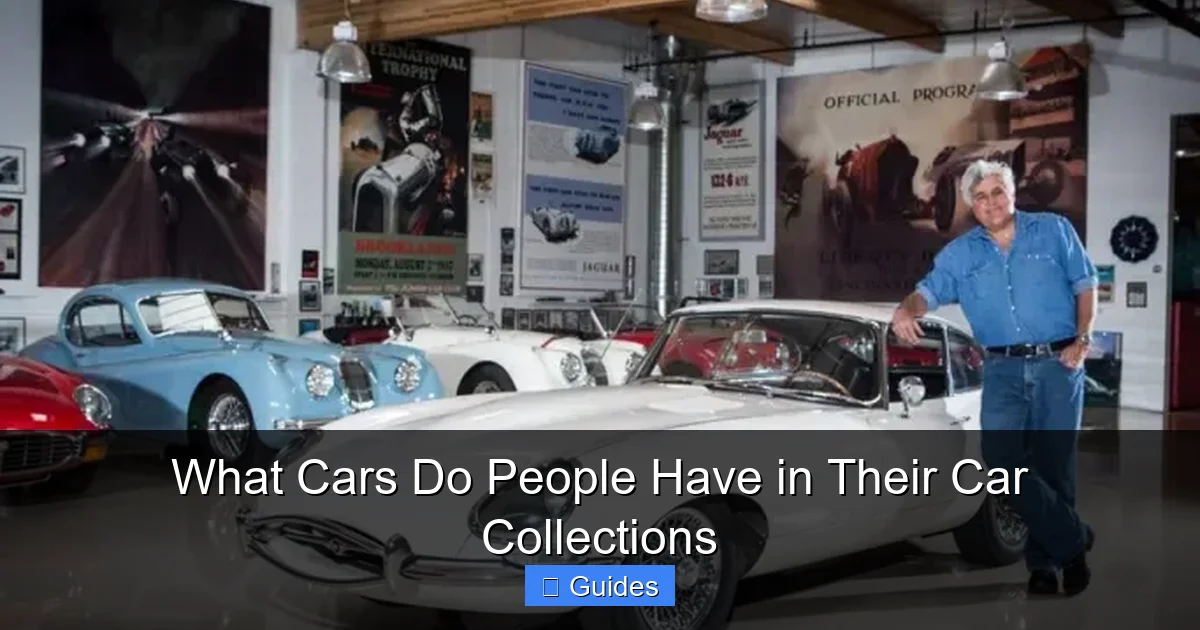
Car collections reflect passion, history, and personal taste. From vintage classics to modern supercars, enthusiasts curate vehicles that tell stories and showcase engineering marvels. Whether you’re a beginner or a seasoned collector, understanding what cars people have in their car collections can inspire your own journey.
In This Article
- 1 Key Takeaways
- 2 📑 Table of Contents
- 3 Introduction: The World of Car Collections
- 4 Classic American Muscle: The Heartbeat of Many Collections
- 5 European Sports Cars: Precision and Prestige
- 6 Vintage and Antique Cars: A Journey Through Time
- 7 Modern Hypercars and Limited Editions: The Pinnacle of Performance
- 8 Off-Road and Utility Vehicles: Beyond the Pavement
- 9 The Personal Touch: Why People Collect What They Do
- 10 Building Your Own Car Collection: Tips and Advice
- 11 Conclusion: A Collection Is More Than Cars
- 12 Frequently Asked Questions
- 12.1 What are the most common cars in private collections?
- 12.2 Are car collections a good investment?
- 12.3 How much does it cost to start a car collection?
- 12.4 Do I need a special garage for a car collection?
- 12.5 Can I drive my collection cars regularly?
- 12.6 How do I find rare cars for my collection?
Key Takeaways
- Classic American muscle cars dominate many collections: Icons like the Ford Mustang, Chevrolet Camaro, and Dodge Charger remain top picks for their power, style, and nostalgic appeal.
- European sports cars are highly prized: Brands like Ferrari, Lamborghini, and Porsche attract collectors with their precision engineering and sleek designs.
- Vintage and antique cars offer historical value: Pre-1960s models such as the Ford Model T or Jaguar E-Type are cherished for their craftsmanship and rarity.
- Modern hypercars are status symbols: Vehicles like the Bugatti Chiron or McLaren P1 represent the pinnacle of performance and exclusivity.
- Off-road and utility vehicles are gaining popularity: Jeeps, Land Rovers, and vintage trucks appeal to adventure seekers and off-grid enthusiasts.
- Personal connection drives collecting choices: Many collectors choose cars tied to memories, family history, or cultural significance.
- Restoration and customization add unique value: Modified or restored vehicles often become one-of-a-kind centerpieces in private collections.
📑 Table of Contents
- Introduction: The World of Car Collections
- Classic American Muscle: The Heartbeat of Many Collections
- European Sports Cars: Precision and Prestige
- Vintage and Antique Cars: A Journey Through Time
- Modern Hypercars and Limited Editions: The Pinnacle of Performance
- Off-Road and Utility Vehicles: Beyond the Pavement
- The Personal Touch: Why People Collect What They Do
- Building Your Own Car Collection: Tips and Advice
- Conclusion: A Collection Is More Than Cars
Introduction: The World of Car Collections
Imagine walking into a private garage and seeing rows of gleaming vehicles—each one a masterpiece of design, engineering, or history. That’s the reality for car collectors around the world. Whether they’re celebrities, entrepreneurs, or everyday enthusiasts, people who build car collections do so out of deep passion. These aren’t just cars; they’re rolling pieces of art, time capsules, and symbols of achievement.
But what cars do people actually have in their car collections? The answer is as diverse as the collectors themselves. Some focus on speed and performance, filling their garages with Ferraris and Lamborghinis. Others chase nostalgia, restoring classic Mustangs or vintage Beetles. Then there are those who appreciate rarity, hunting down limited-edition models or prototypes that few have ever seen. No matter the focus, every collection tells a story—one of taste, ambition, and love for the automobile.
Classic American Muscle: The Heartbeat of Many Collections
When you think of car collections, classic American muscle cars often come to mind—and for good reason. These vehicles, born in the 1960s and 1970s, represent a golden era of raw power and bold styling. They’re not just fast; they’re loud, proud, and deeply rooted in American culture.

Visual guide about What Cars Do People Have in Their Car Collections
Image source: carsguide-res.cloudinary.com
Why Muscle Cars Are So Popular
Muscle cars appeal to collectors for several reasons. First, they’re powerful. Models like the 1969 Dodge Charger R/T or the 1970 Chevrolet Chevelle SS came with massive V8 engines that delivered thrilling performance. Second, they’re iconic. These cars starred in movies, dominated drag strips, and became symbols of freedom and rebellion. For many, owning one is like holding a piece of American history.
Top Muscle Cars in Collections
- Ford Mustang (1964–1973): The original pony car, the Mustang started a revolution. Early models, especially the Shelby GT350 and GT500, are highly sought after.
- Chevrolet Camaro (1967–1981): The Camaro’s aggressive styling and Z/28 performance package made it a favorite among collectors.
- Dodge Challenger (1970–1974): Known for its wide stance and powerful Hemi engine, the Challenger is a showstopper in any garage.
- Plymouth Barracuda (1964–1974): Often overshadowed by the Mustang, the ‘Cuda—especially the 1970–1971 models—is a hidden gem.
Tips for Collecting Muscle Cars
If you’re thinking about adding a muscle car to your collection, start by researching originality. Numbers-matching engines and factory specs increase value. Also, consider condition—rust and wear can be costly to fix. Finally, join a muscle car club. These communities offer advice, parts, and events that make collecting more enjoyable.
European Sports Cars: Precision and Prestige
While American muscle cars roar with power, European sports cars whisper with precision. Brands like Ferrari, Lamborghini, and Porsche have built reputations for blending performance, luxury, and design. These cars aren’t just fast—they’re engineered to perfection.

Visual guide about What Cars Do People Have in Their Car Collections
Image source: teoalida.com
The Allure of Italian Supercars
Italy is home to some of the most desirable cars in the world. Ferrari, founded by Enzo Ferrari in 1947, has produced legends like the 250 GTO, F40, and LaFerrari. These cars are more than vehicles; they’re works of art. The 250 GTO, for example, sold for over $70 million at auction—making it one of the most expensive cars ever.
Lamborghini, known for its bold designs and roaring V12 engines, offers models like the Countach, Diablo, and Aventador. The Countach, with its wedge shape and scissor doors, defined 1980s supercar aesthetics. Today, it’s a centerpiece in many high-end collections.
Porsche: The Balance of Performance and Practicality
Porsche stands out for its blend of performance and usability. The 911, first introduced in 1963, remains the brand’s flagship. Its rear-engine layout and timeless design have made it a favorite among collectors. Special editions like the 911 Turbo, GT3, and RS models are especially prized.
Other notable Porsches include the 356, the company’s first production car, and the Carrera GT, a mid-engine V10 masterpiece from the early 2000s. These models appeal to collectors who value driving dynamics and engineering innovation.
British Icons: Jaguar, Aston Martin, and McLaren
Britain has its own share of automotive legends. Jaguar’s E-Type, launched in 1961, was hailed by Enzo Ferrari as “the most beautiful car ever made.” Its long hood, sleek profile, and powerful inline-six engine make it a classic.
Aston Martin, known for its association with James Bond, offers elegant grand tourers like the DB5 and modern models like the Vantage and DBS Superleggera. These cars combine luxury with performance, appealing to collectors who want both comfort and speed.
McLaren, a relative newcomer compared to Ferrari or Porsche, has made a big impact with models like the F1, P1, and 720S. The F1, with its central driving position and carbon fiber construction, is a technological marvel and a top-tier collectible.
Vintage and Antique Cars: A Journey Through Time
Not all car collections focus on speed. Some collectors are drawn to vintage and antique vehicles—cars that represent the early days of automotive innovation. These models may not go 200 mph, but they carry historical significance and charm.

Visual guide about What Cars Do People Have in Their Car Collections
Image source: content.api.news
The Golden Age of the Automobile
The early 20th century was a time of rapid change in the automotive world. Brands like Ford, Cadillac, and Packard were shaping the future. The Ford Model T, introduced in 1908, revolutionized transportation by making cars affordable for the average person. Today, restored Model Ts are cherished by collectors for their simplicity and historical impact.
Cadillac’s V16 engine, introduced in the 1930s, was a marvel of engineering. Cars like the 1930 Cadillac V16 Convertible Coupe are rare and highly valuable. Similarly, the 1937 Cord 812, with its front-wheel drive and hidden headlights, was ahead of its time.
Classic European Vintage Cars
Europe also has a rich vintage car heritage. The Mercedes-Benz 300SL “Gullwing,” launched in 1954, is one of the most iconic cars ever made. Its upward-opening doors and fuel-injected engine set new standards. Today, it’s a centerpiece in many collections.
The Volkswagen Beetle, though humble, has a massive fan base. Its simple design, reliability, and cultural impact—especially in the 1960s—make it a favorite among collectors. Restored Beetles, especially early models with split windows, are highly desirable.
Tips for Collecting Vintage Cars
Vintage cars require special care. Parts can be hard to find, and original components are often expensive. Start with a well-documented vehicle and consider joining a marque-specific club. Also, be prepared for ongoing maintenance—these cars weren’t built for daily driving.
Modern Hypercars and Limited Editions: The Pinnacle of Performance
In recent years, hypercars have taken car collections to new heights. These vehicles push the limits of speed, technology, and exclusivity. They’re not just cars—they’re statements.
Bugatti: Speed and Luxury Combined
Bugatti is synonymous with extreme performance. The Veyron, launched in 2005, was the first production car to break 250 mph. Its successor, the Chiron, goes even faster, with a top speed of over 300 mph. Only a few hundred Chirons will ever be made, making each one a rare treasure.
McLaren and Ferrari’s Modern Masterpieces
McLaren’s P1, a hybrid hypercar from 2013, combines a twin-turbo V8 with an electric motor for over 900 horsepower. It’s one of the “Holy Trinity” of hypercars, alongside the Porsche 918 Spyder and Ferrari LaFerrari.
Ferrari’s LaFerrari, also a hybrid, uses a V12 engine and electric motor to deliver breathtaking performance. Only 499 were made, and they’re already highly collectible.
Limited Editions and Special Models
Many collectors seek out limited-edition models. For example, the Lamborghini Sian, with only 63 units produced, features a supercapacitor hybrid system. The Ford GT, a modern tribute to the Le Mans-winning GT40, is another limited-run favorite.
These cars aren’t just fast—they’re investments. As supply remains low and demand grows, their value often increases over time.
Off-Road and Utility Vehicles: Beyond the Pavement
Not all car collections are about speed. Some collectors are drawn to off-road vehicles and classic trucks. These machines represent adventure, ruggedness, and practicality.
Jeeps and Land Rovers: Icons of Exploration
The Jeep Willys MB, used in World War II, is a symbol of durability. Modern Jeeps like the Wrangler and CJ series are popular among collectors who love off-roading.
Land Rover’s Series I, launched in 1948, started the brand’s legacy. The Defender, though discontinued, remains a favorite. Its boxy design and go-anywhere capability make it a standout in any collection.
Vintage Trucks and Pickups
Classic trucks like the Ford F-Series, Chevrolet C/K, and Dodge Power Wagon are gaining popularity. These vehicles were built for work, but today they’re appreciated for their simplicity and charm. Restored models with original engines and patina are especially valued.
Tips for Collecting Off-Road Vehicles
When collecting off-road vehicles, focus on originality and condition. Rust is a major issue, especially in older models. Also, consider usability—many collectors enjoy taking their vehicles on trails or to shows.
The Personal Touch: Why People Collect What They Do
Behind every car collection is a story. For some, it’s about nostalgia—a car they drove in high school or one their father owned. For others, it’s about achievement—a reward for hard work or a symbol of success.
Emotional Connections
Many collectors choose cars tied to personal memories. A 1965 Mustang might remind someone of their first car. A 1972 VW Bus could evoke road trips with family. These emotional connections make collections meaningful beyond monetary value.
Cultural and Historical Significance
Some collectors are drawn to cars that shaped culture. The DeLorean DMC-12, famous from Back to the Future, is a pop culture icon. The Mini Cooper, known for its role in The Italian Job, is another favorite.
Customization and Restoration
Restoring or customizing a car adds a personal touch. Some collectors build hot rods from scratch, combining vintage bodies with modern engines. Others restore classics to factory condition, preserving history.
Building Your Own Car Collection: Tips and Advice
If you’re inspired to start your own collection, here are some practical tips:
Start Small and Focus
You don’t need a million dollars to begin. Start with one car that excites you. Focus on a theme—like American muscle, European classics, or off-road vehicles—to keep your collection cohesive.
Do Your Research
Learn about the cars you’re interested in. Understand their history, common issues, and market value. Knowledge helps you make smart purchases.
Join a Community
Car clubs, forums, and events are great resources. They offer advice, parts, and camaraderie. You’ll also get to see other collections and learn from experienced collectors.
Consider Storage and Maintenance
Cars need care. Invest in a good garage, climate control, and regular maintenance. If you can’t do the work yourself, find a trusted mechanic.
Think Long-Term
Some cars appreciate in value, but not all. Focus on what you love, not just what might be profitable. A collection should bring joy, not stress.
Conclusion: A Collection Is More Than Cars
So, what cars do people have in their car collections? The answer is as varied as the people who own them. From roaring muscle cars to silent electric hypercars, from vintage roadsters to rugged off-roaders, each vehicle tells a story. These collections aren’t just about ownership—they’re about passion, memory, and the love of driving.
Whether you dream of a garage full of Ferraris or a single restored Mustang, the journey of collecting is what matters most. Start small, follow your heart, and enjoy every mile. After all, the best car collection is the one that makes you smile every time you open the garage door.
Frequently Asked Questions
What are the most common cars in private collections?
The most common cars in private collections include classic American muscle cars like the Ford Mustang and Chevrolet Camaro, European sports cars such as the Porsche 911 and Ferrari F40, and vintage models like the Volkswagen Beetle and Jaguar E-Type. These vehicles are popular due to their performance, design, and cultural significance.
Are car collections a good investment?
Some cars can appreciate in value, especially rare or limited-edition models. However, not all collectibles increase in worth. Factors like condition, originality, and market demand play a role. It’s best to collect what you love, not just what might be profitable.
How much does it cost to start a car collection?
You can start a car collection with as little as a few thousand dollars by purchasing a used classic or project car. High-end collections with Ferraris or Lamborghinis can cost millions. Focus on your budget and interests to build a collection that fits your lifestyle.
Do I need a special garage for a car collection?
A dedicated garage with climate control, security, and proper ventilation is ideal. It protects cars from weather, theft, and deterioration. If space is limited, consider climate-controlled storage units designed for vehicles.
Can I drive my collection cars regularly?
Yes, but it depends on the car and its condition. Some collectors enjoy driving their vehicles on weekends or to car shows. However, rare or fragile classics may be better kept for display to preserve their value and condition.
How do I find rare cars for my collection?
Rare cars can be found through auctions, specialty dealers, online marketplaces, and car shows. Networking with other collectors and joining clubs can also lead to private sales and insider opportunities.

At CarLegit, we believe information should be clear, factual, and genuinely helpful. That’s why every guide, review, and update on our website is created with care, research, and a strong focus on user experience.