
Knowing the correct tire size for your 2017 Nissan Maxima is essential for safety, performance, and fuel efficiency. This guide breaks down the factory tire sizes by trim, explains how to read tire markings, and offers expert advice on choosing the right replacements.
So, you’ve got a 2017 Nissan Maxima—a sleek, powerful sedan that blends luxury with performance. It’s smooth on the highway, handles corners with confidence, and turns heads with its bold design. But like any high-performing vehicle, it relies heavily on one critical component: the tires. Whether you’re due for a replacement, thinking about upgrading, or just curious about what’s rolling under your ride, knowing the right tire size is essential.
Tires aren’t just rubber circles—they’re your car’s only point of contact with the road. The right size ensures optimal handling, braking, fuel economy, and safety. Put the wrong ones on, and you could compromise performance, trigger warning lights, or even damage your suspension. That’s why understanding what size tires are on a 2017 Nissan Maxima isn’t just helpful—it’s necessary.
In this guide, we’ll walk you through everything you need to know. From the factory-standard sizes for each trim level to how to read tire markings like a pro, we’ve got you covered. We’ll also share practical tips on choosing the best replacement tires, maintaining them properly, and even exploring safe upgrade options. Whether you’re a DIY enthusiast or just want to be an informed buyer, this article will give you the knowledge to keep your Maxima rolling smoothly for miles to come.
In This Article
- 1 Key Takeaways
- 2 📑 Table of Contents
- 3 Factory Tire Sizes by Trim Level
- 4 How to Read Tire Size Markings
- 5 Why Tire Size Matters for Your Maxima
- 6 Choosing the Right Replacement Tires
- 7 Tire Maintenance Tips for Longevity
- 8 Can You Upgrade Your Tire Size?
- 9 Conclusion
- 10 Frequently Asked Questions
- 10.1 What is the standard tire size for a 2017 Nissan Maxima?
- 10.2 Can I put 19-inch tires on a Maxima S trim?
- 10.3 How often should I rotate my Maxima’s tires?
- 10.4 What PSI should my 2017 Maxima tires be inflated to?
- 10.5 Are all-season tires good for a 2017 Maxima?
- 10.6 Can I use winter tires on my Maxima?
Key Takeaways
- Standard tire size: Most 2017 Nissan Maxima trims come with 245/45R18 tires, but higher trims like the Platinum use 255/40R19.
- Trim-specific variations: Tire size depends on your Maxima’s trim level—S, SV, SL, SR, or Platinum—so always check your door jamb or owner’s manual.
- Tire markings decoded: Understanding sidewall codes like “245/45R18” helps you identify width, aspect ratio, construction, and wheel diameter.
- All-season tires recommended: The Maxima is designed for comfort and performance on paved roads, making all-season tires the ideal choice for most drivers.
- Proper inflation matters: Keeping tires at the recommended PSI (usually 35 psi) improves handling, extends tread life, and saves fuel.
- Rotation and alignment: Regular tire maintenance prevents uneven wear and ensures a smooth, safe ride.
- Upgrading options: You can safely switch to slightly different sizes (like 255/40R18) if they maintain the same overall diameter.
📑 Table of Contents
Factory Tire Sizes by Trim Level
One of the first things you’ll notice when researching tire sizes for the 2017 Nissan Maxima is that not all models are created equal. Nissan offers five main trim levels for this model year: S, SV, SL, SR, and Platinum. Each comes with different wheel and tire configurations, tailored to match the vehicle’s performance and luxury features.
The base model, the Maxima S, rolls out with 18-inch alloy wheels and 245/45R18 tires. This size strikes a great balance between comfort and responsiveness, making it ideal for daily commuting and highway cruising. The “245” refers to the tire width in millimeters, “45” is the aspect ratio (the height of the sidewall as a percentage of the width), “R” means radial construction, and “18” is the wheel diameter in inches.
Moving up to the SV and SL trims, you’ll find the same 245/45R18 setup. These models focus on comfort and refinement, so Nissan keeps the tire size consistent to maintain a smooth, quiet ride. The SL adds more premium features like leather seats and advanced safety tech, but the tire size remains unchanged.
Now, things get interesting with the SR and Platinum trims. The SR, designed for sportier driving, comes standard with 19-inch wheels and 255/40R19 tires. The wider tread and lower profile give it better grip and sharper handling—perfect for drivers who enjoy a more dynamic driving experience. The Platinum trim, the top-of-the-line model, also uses 255/40R19 tires, matching the SR’s performance-oriented setup while adding luxury touches like premium audio and heated seats.
So, if you’re asking, “What size tires are on a 2017 Nissan Maxima?” the answer depends on your trim. Always check your specific model before buying new tires. You can find this info on the driver’s side door jamb sticker, in your owner’s manual, or by looking at the sidewall of your current tires.
How to Read Tire Size Markings

Visual guide about What Size Tires Are on a 2017 Nissan Maxima
Image source: ferradawheels.com
If you’ve ever looked at a tire’s sidewall, you’ve probably seen a string of numbers and letters that look like a secret code. But don’t worry—it’s not as complicated as it seems. Once you know how to read tire size markings, you’ll be able to understand exactly what your tires are capable of.
Let’s break down a common Maxima tire size: 245/45R18.
The first number, 245, is the tire’s width in millimeters. This is the measurement from one sidewall to the other. A wider tire generally provides better grip and stability, which is why sportier trims like the SR use 255mm tires instead of 245mm.
Next is the aspect ratio: 45. This number represents the height of the tire’s sidewall as a percentage of its width. So, a 245/45 tire has a sidewall that’s 45% of 245mm, which is about 110mm tall. A lower aspect ratio (like 40) means a shorter sidewall, which improves handling but can reduce ride comfort.
The letter “R” stands for radial construction. Almost all modern tires are radials, meaning the internal layers (plies) run radially across the tire, providing strength and flexibility. This design offers better fuel efficiency, longer tread life, and improved traction.
Finally, the last number, 18, is the wheel diameter in inches. This tells you what size rim the tire fits. You can’t put an 18-inch tire on a 19-inch wheel—it just won’t work.
There’s more info on the sidewall too, like load index and speed rating. For example, a tire might say “96W.” The “96” is the load index, indicating the maximum weight the tire can support (in this case, 1,565 pounds). The “W” is the speed rating, meaning the tire is safe up to 168 mph. The 2017 Maxima’s tires typically have a W or V rating, which is more than enough for everyday driving.
Understanding these markings helps you make informed decisions when replacing or upgrading tires. It also ensures you don’t accidentally buy the wrong size, which could lead to poor performance or safety issues.
Why Tire Size Matters for Your Maxima
Visual guide about What Size Tires Are on a 2017 Nissan Maxima
Image source: motortrend.com
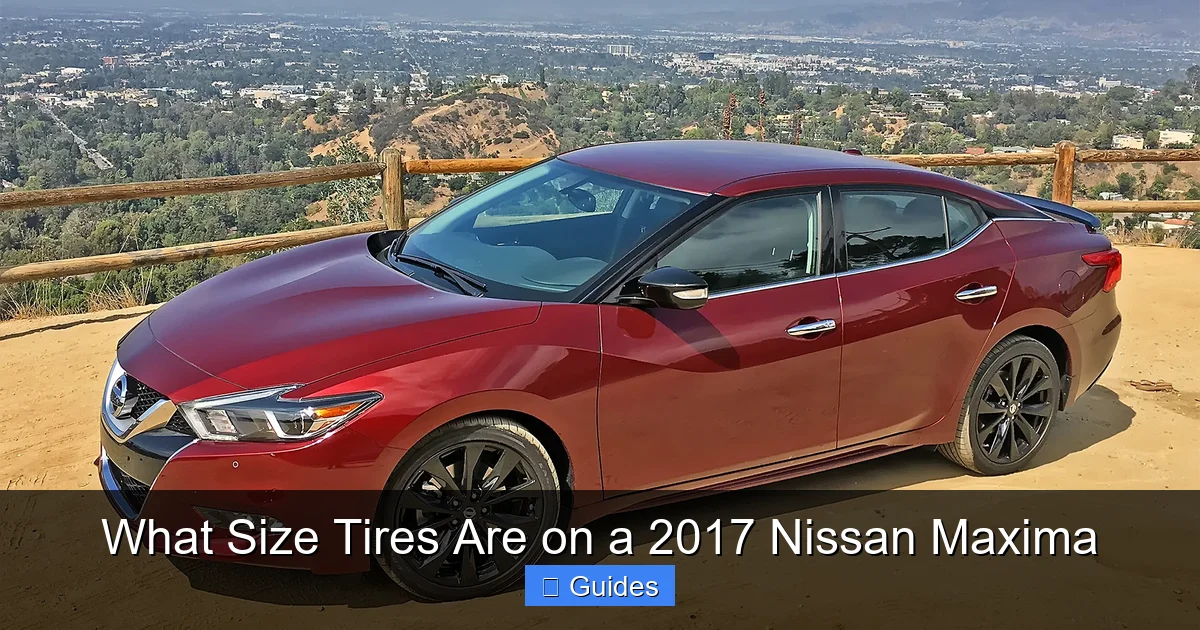
You might be thinking, “As long as it fits, does the tire size really matter?” The short answer: yes—absolutely. The tire size on your 2017 Nissan Maxima isn’t arbitrary. It’s carefully chosen by engineers to match the car’s weight, suspension, braking system, and performance goals.
Using the wrong tire size can throw off your speedometer readings. For example, if you install tires with a larger overall diameter, your car will think it’s going slower than it actually is. This can lead to speeding tickets or unsafe driving conditions. Conversely, smaller tires can make your speedometer read too high, giving you a false sense of security.
Tire size also affects handling and ride quality. The Maxima is tuned for a balance of comfort and responsiveness. Wider tires (like the 255mm on the SR) offer better cornering grip but may transmit more road noise and bumps. Narrower tires (like the 245mm on the S) provide a smoother ride but less aggressive handling.
Fuel economy is another factor. Larger, wider tires create more rolling resistance, which can reduce gas mileage. That’s why the base model uses slightly narrower tires—to help maximize efficiency without sacrificing performance.
Safety is perhaps the most important reason to get the tire size right. Your Maxima’s anti-lock braking system (ABS), traction control, and electronic stability control all rely on accurate wheel speed data from the tires. If the tire size is off, these systems may not work correctly, increasing the risk of skidding or loss of control.
Finally, incorrect tire sizes can cause premature wear on suspension components. The Maxima’s suspension is designed to work with specific tire dimensions. Putting on tires that are too tall or too wide can stress the shocks, struts, and steering parts, leading to costly repairs down the road.
In short, sticking to the recommended tire size isn’t just about following the manual—it’s about protecting your investment, your safety, and your driving experience.
Choosing the Right Replacement Tires
Visual guide about What Size Tires Are on a 2017 Nissan Maxima
Image source: cevpu.com
So, your Maxima’s tires are worn out, and it’s time for new ones. Now what? With so many tire brands and types on the market, it’s easy to feel overwhelmed. But don’t worry—we’ll help you make the right choice.
First, consider your driving habits. If you mostly drive on paved roads in moderate climates, all-season tires are your best bet. They offer a great mix of grip, comfort, and longevity. Look for models with good wet and dry traction ratings, like the Michelin Premier A/S, Continental PureContact, or Bridgestone Turanza QuietTrack.
If you live in an area with harsh winters, you might want to consider winter tires or all-weather tires. Winter tires are made with softer rubber compounds that stay flexible in cold temperatures, giving you better traction on snow and ice. All-weather tires are a compromise—they handle winter conditions better than all-seasons but aren’t as aggressive as dedicated winter tires.
Performance-oriented drivers, especially those with an SR or Platinum trim, might prefer high-performance all-season tires. These offer sharper handling and better grip at higher speeds. Examples include the Pirelli P Zero All Season Plus or the Yokohama Advan Sport A/S.
When shopping, always match the load index and speed rating of your original tires. For most Maximas, that means a load index of 96 or higher and a speed rating of V (149 mph) or W (168 mph). Going lower could compromise safety and performance.
Price is another factor. While it’s tempting to go for the cheapest option, remember that tires are a long-term investment. Higher-quality tires often last longer, perform better, and improve fuel economy. Look for rebates, promotions, or buy-three-get-one-free deals to save money without sacrificing quality.
Finally, buy from a reputable dealer who offers installation, balancing, and alignment services. Proper installation ensures your tires wear evenly and perform as intended. Many shops also offer free rotations and flat repairs, which can save you money over time.
Tire Maintenance Tips for Longevity
Buying the right tires is only half the battle—keeping them in good shape is just as important. With proper maintenance, your Maxima’s tires can last 50,000 miles or more. Here’s how to get the most out of them.
First, check your tire pressure monthly. Underinflated tires wear out faster, reduce fuel economy, and increase the risk of blowouts. Overinflated tires can cause a harsh ride and wear unevenly in the center. The recommended pressure for most 2017 Maximas is 35 psi, but always check the door jamb sticker for the exact number.
Rotate your tires every 5,000 to 7,500 miles. This ensures even wear across all four tires. Front tires tend to wear faster because they handle steering and most of the braking. Rotating them to the rear helps balance the wear and extends tire life.
Get a wheel alignment at least once a year or if you notice uneven wear, pulling to one side, or a crooked steering wheel. Misaligned wheels can cause rapid tire wear and affect handling.
Inspect your tires regularly for signs of damage, such as cuts, bulges, or embedded objects. Also, check the tread depth using a penny. Insert it into the tread with Lincoln’s head upside down. If you can see the top of his head, it’s time for new tires.
Finally, avoid aggressive driving. Hard braking, rapid acceleration, and sharp turns put extra stress on your tires and can shorten their lifespan. Drive smoothly, and your tires will thank you.
Can You Upgrade Your Tire Size?
Many Maxima owners wonder if they can upgrade to a different tire size for better performance or aesthetics. The answer is yes—but with caution.
You can safely change tire sizes as long as the overall diameter remains within 3% of the original. This ensures your speedometer stays accurate and your suspension isn’t stressed.
For example, if your Maxima has 245/45R18 tires, you could switch to 255/40R18 tires. The width increases slightly, and the aspect ratio decreases, but the overall diameter is nearly identical. This gives you a sportier look and better grip without major drawbacks.
However, avoid drastic changes. Going from 18-inch to 20-inch wheels might look cool, but it can reduce ride comfort, increase the risk of wheel damage, and throw off your car’s electronics.
Always consult a tire professional before making changes. They can help you find a compatible size and ensure proper fitment.
Conclusion
Knowing what size tires are on a 2017 Nissan Maxima is more than just a technical detail—it’s a key part of owning and maintaining a high-performance sedan. From the standard 245/45R18 on base models to the sporty 255/40R19 on the SR and Platinum trims, each size is chosen for a reason.
By understanding tire markings, choosing the right replacements, and maintaining them properly, you can keep your Maxima safe, efficient, and enjoyable to drive. Whether you’re replacing worn tires or considering an upgrade, use this guide to make informed decisions.
Remember, your tires are the only thing connecting your car to the road. Treat them well, and they’ll take you wherever you need to go.
Frequently Asked Questions
What is the standard tire size for a 2017 Nissan Maxima?
The standard tire size for most 2017 Nissan Maxima trims (S, SV, SL) is 245/45R18. Higher trims like the SR and Platinum use 255/40R19 tires for improved performance and handling.
Can I put 19-inch tires on a Maxima S trim?
Technically, yes, but it’s not recommended without modifications. The S trim isn’t designed for 19-inch wheels, and doing so could affect ride quality, speedometer accuracy, and suspension performance.
How often should I rotate my Maxima’s tires?
Rotate your tires every 5,000 to 7,500 miles to ensure even wear. Regular rotation helps extend tire life and maintains balanced handling.
What PSI should my 2017 Maxima tires be inflated to?
Most 2017 Nissan Maximas recommend a tire pressure of 35 psi. Check the driver’s side door jamb sticker for the exact specification for your vehicle.
Are all-season tires good for a 2017 Maxima?
Yes, all-season tires are ideal for the Maxima, especially if you drive in moderate climates. They offer a great balance of comfort, traction, and longevity.
Can I use winter tires on my Maxima?
Yes, you can use winter tires on a 2017 Maxima if you live in an area with snow and ice. Just make sure they match the correct size and load rating for your trim.

At CarLegit, we believe information should be clear, factual, and genuinely helpful. That’s why every guide, review, and update on our website is created with care, research, and a strong focus on user experience.