
The 2025 Nissan Altima typically requires 4.8 to 5.1 quarts of oil, depending on engine size and configuration. Using the correct oil type and following the manufacturer’s maintenance schedule ensures long-term engine health and performance.
If you’re the proud owner of a 2025 Nissan Altima—or considering one—you’ve probably wondered, “How much oil does a 2025 Nissan Altima take?” It’s a simple question, but the answer plays a big role in keeping your car running smoothly for years to come. Whether you’re a hands-on DIYer who loves popping the hood or someone who prefers to leave it to the pros, understanding your car’s oil needs is essential. Oil is the lifeblood of your engine. It lubricates moving parts, reduces friction, prevents overheating, and helps keep everything clean. Without the right amount and type of oil, even the most reliable engine can suffer from wear, reduced performance, and costly repairs down the road.
The 2025 Nissan Altima comes in several trims and engine options, which means oil capacity can vary slightly. But don’t worry—we’ll break it all down so you know exactly what your car needs. From the standard 2.5L inline-4 engine to the innovative 1.8L e-POWER hybrid system, each version has specific requirements. In this guide, we’ll cover everything you need to know: oil capacity, recommended oil types, how to check and change the oil, and tips for maintaining your Altima’s engine health. Whether you’re changing oil at home or visiting a service center, this information will help you make smart decisions and keep your Altima in top shape.
In This Article
- 1 Key Takeaways
- 2 📑 Table of Contents
- 3 Understanding Your 2025 Nissan Altima’s Engine Options
- 4 How Much Oil Does a 2025 Nissan Altima Take?
- 5 Recommended Oil Type for the 2025 Nissan Altima
- 6 How Often Should You Change the Oil?
- 7 How to Check Your Oil Level
- 8 Maintaining Your Altima’s Engine Health
- 9 Conclusion
- 10 Frequently Asked Questions
- 10.1 How much oil does a 2025 Nissan Altima 2.5L engine take?
- 10.2 Can I use 5W-30 oil in my 2025 Altima?
- 10.3 How often should I change the oil in my 2025 Altima?
- 10.4 Do I need to replace the oil filter every time?
- 10.5 What happens if I overfill the oil in my Altima?
- 10.6 Can I check my oil level while the engine is hot?
Key Takeaways
- Oil Capacity: The 2025 Nissan Altima holds between 4.8 and 5.1 quarts of oil, with the 2.5L engine using 4.8 quarts and the 1.8L e-POWER hybrid using 4.3 quarts (including filter).
- Recommended Oil Type: Use full synthetic 0W-20 oil for all 2025 Altima models to meet Nissan’s specifications and improve fuel efficiency.
- Oil Filter Matters: Always replace the oil filter during an oil change to prevent contamination and maintain proper oil flow.
- Check Oil Level Regularly: Inspect oil levels monthly using the dipstick to catch leaks or consumption issues early.
- Follow Maintenance Schedule: Change oil every 5,000 to 7,500 miles under normal driving conditions, or sooner for severe use like towing or short trips.
- Use Genuine or OEM Parts: Opt for Nissan-approved oil filters and fluids to ensure compatibility and warranty compliance.
- Professional vs. DIY: While DIY oil changes save money, professional service includes inspections and proper disposal of used oil.
📑 Table of Contents
Understanding Your 2025 Nissan Altima’s Engine Options
Before diving into oil capacity, it’s important to know which engine your 2025 Nissan Altima has. The model year offers two primary powertrains: the traditional 2.5L four-cylinder gasoline engine and the newer 1.8L e-POWER hybrid system. Each has different oil requirements, so identifying your engine is the first step.
The 2.5L inline-4 engine is the most common option across most Altima trims, including the S, SV, SR, and SL. It delivers a balanced mix of power and efficiency, producing around 188 horsepower. This engine is known for its reliability and smooth operation, making it a favorite among daily commuters and families. On the other hand, the 1.8L e-POWER hybrid is available in select markets and uses an electric motor assisted by a small gasoline engine that primarily acts as a generator. This setup prioritizes fuel efficiency and reduced emissions, ideal for city driving and eco-conscious drivers.
Because these engines operate differently, their oil systems are tuned accordingly. The 2.5L engine, being larger and more conventional, requires a bit more oil and benefits from full synthetic formulations to handle higher operating temperatures and loads. The 1.8L e-POWER, while smaller, still demands high-quality oil due to its unique hybrid operation, where the gasoline engine starts and stops frequently. This cycling can put extra stress on the oil, making the right viscosity and additives crucial.
Why Engine Type Affects Oil Needs
You might be wondering why engine type matters when it comes to oil. After all, oil is oil, right? Not quite. Different engines have different designs, tolerances, and operating conditions. For example, the 2.5L engine runs at higher RPMs and generates more heat, especially during highway driving or acceleration. This means the oil must maintain its viscosity and protective properties under stress. Synthetic oils are better at this than conventional oils because they’re engineered to resist breakdown.
The 1.8L e-POWER hybrid, while more efficient, has an engine that turns on and off frequently. This stop-start behavior can lead to moisture buildup and fuel dilution in the oil, which is why Nissan recommends specific oil formulations that resist contamination and maintain performance over time. Using the wrong oil—or the wrong amount—can lead to sludge formation, reduced lubrication, and even engine damage.
So, knowing your engine isn’t just about specs—it’s about protecting your investment. Whether you’re cruising down the freeway or navigating stop-and-go traffic, the right oil keeps your Altima running like new.
How Much Oil Does a 2025 Nissan Altima Take?
Visual guide about How Much Oil Does a 25 Nissan Altima Take
Image source: i.ytimg.com
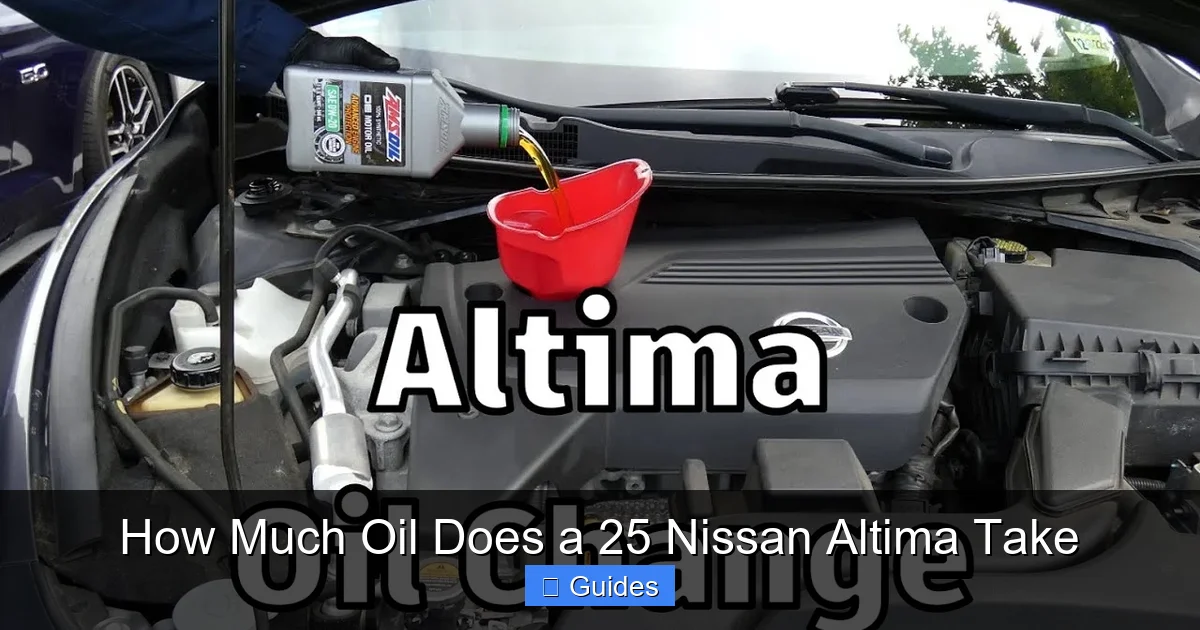
Now, let’s get to the heart of the question: how much oil does a 2025 Nissan Altima take? The answer depends on your engine, but here’s a clear breakdown.
For the 2.5L four-cylinder engine, the total oil capacity is **4.8 quarts** when including the oil filter. This means that during a full oil change, you’ll need approximately 4.8 quarts of fresh oil to fill the system properly. If you’re only topping off, you’ll likely add less—usually between 0.5 and 1 quart, depending on how low the level is.
For the 1.8L e-POWER hybrid engine, the oil capacity is slightly lower at **4.3 quarts** with the filter. This smaller capacity reflects the engine’s compact design and reduced displacement. However, don’t let the smaller size fool you—this engine still demands high-quality oil and regular maintenance.
It’s important to note that these numbers include the oil filter. If you’re changing the oil yourself, always replace the filter as well. A new filter can hold about 0.2 to 0.3 quarts of oil, which is why the total capacity is slightly higher than the oil pan alone. Skipping the filter change means you’re not getting a truly fresh system, and old filter debris can contaminate the new oil.
Why Precision Matters
Adding too little oil can lead to inadequate lubrication, increased engine wear, and overheating. On the flip side, overfilling can cause foaming, reduced oil pressure, and even damage to seals and gaskets. The 2025 Altima’s engine is designed to operate within a specific oil level range, and straying from it can trigger warning lights or performance issues.
For example, if you add 6 quarts instead of 4.8, the excess oil can get whipped into a froth by the crankshaft, reducing its ability to lubricate. This condition, known as aeration, can lead to metal-on-metal contact and premature engine failure. Similarly, if the oil level drops below the minimum mark on the dipstick, critical components like the camshaft and pistons may not receive enough protection.
That’s why it’s crucial to follow the manufacturer’s specifications. Always refer to your owner’s manual or a trusted service guide when performing an oil change. And when in doubt, use a measuring container to ensure you’re adding the correct amount.
Practical Example: DIY Oil Change
Let’s say you’re changing the oil on your 2025 Altima with the 2.5L engine at home. Here’s how it might go:
1. Warm up the engine for a few minutes to help the oil flow out easily.
2. Turn off the engine and let it sit for 5–10 minutes to allow oil to drain back into the pan.
3. Locate the oil drain plug underneath the car and place a drain pan beneath it.
4. Remove the plug and let the old oil drain completely—this usually takes 10–15 minutes.
5. Replace the drain plug and install a new oil filter (apply a thin layer of oil to the filter gasket first).
6. Pour in 4.5 quarts of 0W-20 synthetic oil through the engine’s oil filler cap.
7. Start the engine and let it run for 30 seconds to circulate the oil.
8. Turn off the engine and wait a minute, then check the dipstick.
9. Add more oil in small increments (e.g., 0.25 quarts at a time) until the level reaches the “Full” mark.
10. Recheck after driving for a few miles to ensure the level is stable.
By following these steps, you’ll ensure your Altima gets the right amount of clean oil—no more, no less.
Recommended Oil Type for the 2025 Nissan Altima
Visual guide about How Much Oil Does a 25 Nissan Altima Take
Image source: s3.amazonaws.com
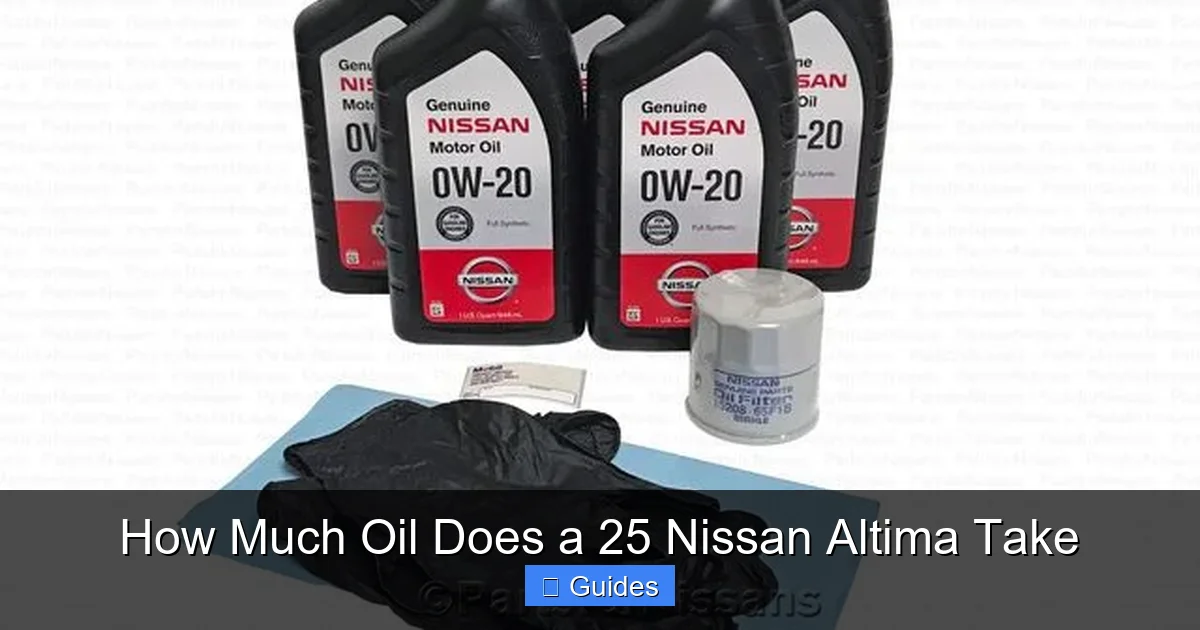
Now that you know how much oil your Altima needs, let’s talk about what kind. Nissan officially recommends **full synthetic 0W-20 motor oil** for all 2025 Altima models, regardless of engine type. This isn’t just a suggestion—it’s a requirement for maintaining your warranty and ensuring optimal performance.
So, why 0W-20? The “0W” refers to the oil’s viscosity in cold temperatures (the “W” stands for winter), meaning it flows easily when the engine is cold, reducing wear during startup. The “20” indicates its viscosity at operating temperature—thin enough to reduce friction and improve fuel economy, but thick enough to provide protection under load.
Full synthetic oil is chemically engineered to outperform conventional oils. It offers better thermal stability, resists oxidation, and maintains its properties longer. This is especially important in modern engines like the Altima’s, which operate at higher efficiencies and tighter tolerances.
Why Not Conventional Oil?
You might be tempted to save money by using conventional 5W-30 or 10W-30 oil, but this isn’t recommended. Conventional oils break down faster, especially under high heat and stress. They’re more prone to sludge formation and don’t offer the same level of protection as synthetics.
Nissan’s engineers designed the 2025 Altima to run on 0W-20 synthetic oil for a reason. Using a different viscosity can affect oil pressure, fuel economy, and even emissions. In some cases, it can trigger the check engine light or cause the variable valve timing (VVT) system to malfunction.
Top Oil Brands for Your Altima
Not all synthetic oils are created equal. Here are a few trusted brands that meet or exceed Nissan’s specifications:
– **Mobil 1 Advanced Fuel Economy 0W-20**: Known for excellent wear protection and fuel efficiency.
– **Pennzoil Platinum 0W-20**: Made from natural gas, it offers superior cleanliness and engine protection.
– **Castrol EDGE 0W-20**: Features titanium technology for enhanced strength under pressure.
– **Valvoline Advanced Full Synthetic 0W-20**: Affordable and reliable, with strong performance in extreme conditions.
Always look for oils that meet the **API SP** and **ILSAC GF-6A** standards. These certifications ensure the oil is compatible with modern engines and meets strict performance criteria.
Can You Use High-Mileage Oil?
If your 2025 Altima has over 75,000 miles, you might consider high-mileage oil. These formulations contain additives that condition seals, reduce oil burn-off, and prevent leaks. While not required, they can be beneficial for older engines.
However, since the 2025 model is brand new, high-mileage oil isn’t necessary—unless you plan to keep the car for many years. In that case, switching to high-mileage oil around 75,000–100,000 miles can help extend engine life.
How Often Should You Change the Oil?

Visual guide about How Much Oil Does a 25 Nissan Altima Take
Image source: vehiclefreak.com
Knowing how much oil your Altima takes is only half the battle. The other half is knowing when to change it. Nissan recommends changing the oil every **5,000 to 7,500 miles** under normal driving conditions. However, this can vary based on your driving habits and environment.
The 2025 Altima is equipped with an **Advanced Drive-Assist Display** that includes an oil life monitoring system. This system calculates oil life based on factors like engine temperature, RPM, driving duration, and mileage. When the oil life drops to 15%, a warning message will appear on the dashboard, reminding you to schedule a change.
What Counts as “Severe” Driving?
Nissan defines severe driving conditions as those that put extra stress on the engine and oil. These include:
– Frequent short trips (less than 10 miles) in cold weather
– Driving in stop-and-go traffic or heavy congestion
– Towing a trailer or carrying heavy loads
– Driving in dusty or sandy environments
– Extended idling or low-speed driving
If you frequently experience any of these conditions, Nissan recommends changing the oil every **3,000 to 5,000 miles**. This helps prevent sludge buildup and ensures the oil maintains its protective properties.
DIY vs. Professional Oil Changes
Changing your own oil can save you $30–$70 per visit, but it requires time, tools, and proper disposal of used oil. If you’re comfortable working under the car and have a safe place to drain the oil, DIY is a great option.
However, professional oil changes offer added benefits. Technicians inspect your vehicle for leaks, worn belts, low fluids, and other issues. They also use OEM filters and dispose of used oil responsibly. Many service centers offer free top-offs between changes and can reset your oil life monitor.
If you choose DIY, make sure to:
– Use a quality oil filter (Nissan OEM or equivalent)
– Torque the drain plug to spec (usually 22–25 ft-lbs)
– Recycle used oil at an auto parts store or recycling center
How to Check Your Oil Level
Regularly checking your oil level is one of the simplest ways to protect your engine. Nissan recommends checking the oil at least once a month and before long trips.
Here’s how to do it safely and accurately:
1. Park your Altima on level ground and turn off the engine.
2. Wait 5–10 minutes to allow oil to settle in the pan.
3. Open the hood and locate the yellow dipstick handle.
4. Pull out the dipstick, wipe it clean with a rag, and reinsert it fully.
5. Pull it out again and check the oil level. It should be between the “Low” and “Full” marks.
6. Also check the oil’s color and consistency. Fresh oil is amber and translucent. Dark, gritty, or milky oil indicates a problem.
What If the Oil Level Is Low?
If the oil level is below the “Low” mark, add oil in small increments (0.25–0.5 quarts at a time). Overfilling is just as dangerous as underfilling. After adding oil, wait a few minutes, then recheck the level.
If you find yourself adding oil frequently (more than once a month), it could indicate a leak or internal engine issue. Common causes include worn piston rings, valve seals, or a damaged oil pan. Have your car inspected by a professional if you notice consistent oil loss.
Signs You Need an Oil Change
Even with a monitoring system, watch for these warning signs:
– Dark, sludgy oil on the dipstick
– Engine noise or knocking
– Reduced fuel economy
– Oil smell inside the cabin
– Check engine or oil pressure warning light
Ignoring these signs can lead to serious engine damage. When in doubt, change the oil.
Maintaining Your Altima’s Engine Health
Oil changes are just one part of engine maintenance. To keep your 2025 Altima running smoothly, follow these best practices:
– **Use OEM parts**: Nissan-approved filters and fluids ensure compatibility and performance.
– **Replace the air filter regularly**: A dirty air filter reduces efficiency and increases engine strain.
– **Check coolant and transmission fluid**: These systems work with the engine and should be inspected during oil changes.
– **Drive gently during warm-up**: Modern engines don’t need long idling. Drive moderately for the first few minutes to circulate oil.
– **Keep records**: Track oil changes, mileage, and any issues. This helps with resale value and warranty claims.
By taking a proactive approach, you’ll extend the life of your Altima and enjoy reliable performance for years to come.
Conclusion
So, how much oil does a 2025 Nissan Altima take? For the 2.5L engine, it’s 4.8 quarts with the filter; for the 1.8L e-POWER hybrid, it’s 4.3 quarts. But more importantly, using the right oil—full synthetic 0W-20—and changing it on schedule is what keeps your engine healthy.
Whether you’re a DIY enthusiast or prefer professional service, understanding your car’s oil needs empowers you to make informed decisions. Regular checks, timely changes, and quality products go a long way in protecting your investment.
The 2025 Nissan Altima is a smart, efficient, and reliable sedan. With proper care, it will deliver thousands of miles of smooth driving. So grab your owner’s manual, check that dipstick, and give your Altima the attention it deserves.
Frequently Asked Questions
How much oil does a 2025 Nissan Altima 2.5L engine take?
The 2025 Nissan Altima with the 2.5L engine requires 4.8 quarts of oil when including a new oil filter. Always use full synthetic 0W-20 oil for optimal performance.
Can I use 5W-30 oil in my 2025 Altima?
No, Nissan specifically recommends 0W-20 full synthetic oil for the 2025 Altima. Using 5W-30 can affect fuel economy, emissions, and engine performance.
How often should I change the oil in my 2025 Altima?
Change the oil every 5,000 to 7,500 miles under normal driving conditions. For severe use, such as towing or short trips, change it every 3,000 to 5,000 miles.
Do I need to replace the oil filter every time?
Yes, always replace the oil filter during an oil change. A new filter ensures clean oil circulation and prevents contamination from old debris.
What happens if I overfill the oil in my Altima?
Overfilling can cause oil foaming, reduced lubrication, and damage to engine seals. Always add oil gradually and check the dipstick to avoid overfilling.
Can I check my oil level while the engine is hot?
It’s best to check oil after the engine has been off for 5–10 minutes. This allows oil to drain back into the pan for an accurate reading.

At CarLegit, we believe information should be clear, factual, and genuinely helpful. That’s why every guide, review, and update on our website is created with care, research, and a strong focus on user experience.