
The number of catalytic converters in a Nissan Versa depends on the model year and engine type, with most models featuring one or two units. Understanding their location, function, and maintenance needs can help you keep your Versa running clean and compliant with emissions standards.
In This Article
- 1 Key Takeaways
- 2 📑 Table of Contents
- 3 Understanding the Role of Catalytic Converters in Your Nissan Versa
- 4 How Many Catalytic Converters Does a Standard Nissan Versa Have?
- 5 Where Are the Catalytic Converters Located on a Nissan Versa?
- 6 Why Does the Number of Catalytic Converters Vary by Model?
- 7 Signs Your Nissan Versa’s Catalytic Converter May Be Failing
- 8 How to Maintain and Prolong the Life of Your Catalytic Converter
- 9 Replacement Costs and Options for Nissan Versa Catalytic Converters
- 10 Environmental and Legal Considerations
- 11 Conclusion: Know Your Nissan Versa’s Emissions System
- 12 Frequently Asked Questions
- 12.1 How many catalytic converters does a 2015 Nissan Versa have?
- 12.2 Can a Nissan Versa have two catalytic converters?
- 12.3 What happens if my catalytic converter fails?
- 12.4 How much does it cost to replace a catalytic converter on a Nissan Versa?
- 12.5 Can I drive my Nissan Versa with a bad catalytic converter?
- 12.6 Is it legal to remove the catalytic converter on a Nissan Versa?
Key Takeaways
- Most Nissan Versa models have one catalytic converter: The majority of gasoline-powered Versas, especially from 2007–2020, are equipped with a single catalytic converter located under the vehicle.
- Some newer or high-performance variants may have two: Certain models with turbocharged engines or updated emissions systems may include a second catalytic converter, often a pre-cat or close-coupled unit near the engine.
- Catalytic converters reduce harmful emissions: These components convert toxic gases like carbon monoxide, nitrogen oxides, and hydrocarbons into less harmful substances such as carbon dioxide and water vapor.
- Location matters for maintenance and replacement: The main catalytic converter is typically found under the car, between the engine and the muffler, making it accessible but vulnerable to damage.
- Failure signs include reduced performance and check engine lights: Symptoms like poor fuel economy, sulfur smell, or rattling noises may indicate a failing catalytic converter.
- Replacement can be costly but is sometimes avoidable: While new OEM converters can cost $1,000–$2,500, aftermarket options or repairs may offer more budget-friendly solutions.
- Regular maintenance helps prolong converter life: Keeping your engine tuned, using quality fuel, and addressing check engine lights promptly can prevent premature failure.
📑 Table of Contents
- Understanding the Role of Catalytic Converters in Your Nissan Versa
- How Many Catalytic Converters Does a Standard Nissan Versa Have?
- Where Are the Catalytic Converters Located on a Nissan Versa?
- Why Does the Number of Catalytic Converters Vary by Model?
- Signs Your Nissan Versa’s Catalytic Converter May Be Failing
- How to Maintain and Prolong the Life of Your Catalytic Converter
- Replacement Costs and Options for Nissan Versa Catalytic Converters
- Environmental and Legal Considerations
- Conclusion: Know Your Nissan Versa’s Emissions System
Understanding the Role of Catalytic Converters in Your Nissan Versa
When you think about car emissions, the catalytic converter might not be the first thing that comes to mind—but it should be. This small, often overlooked component plays a massive role in keeping your Nissan Versa environmentally friendly and road-legal. Whether you’re driving a 2007 model or a newer 2023 Versa, understanding how many catalytic converters your car has—and what they do—can save you time, money, and stress down the road.
Catalytic converters are part of your vehicle’s exhaust system. Their job is to reduce harmful pollutants before they exit the tailpipe. They work by using precious metals like platinum, palladium, and rhodium as catalysts to trigger chemical reactions that transform toxic gases into safer ones. For example, carbon monoxide becomes carbon dioxide, and unburned hydrocarbons turn into water and CO₂. Without this technology, our air would be far more polluted, and vehicles like the Nissan Versa wouldn’t meet modern emissions standards.
Now, you might be wondering: how many of these essential devices does a Nissan Versa actually have? The answer isn’t one-size-fits-all. It depends on several factors, including the model year, engine size, and even the country where the vehicle was sold. But don’t worry—we’ll break it all down so you can know exactly what’s under your car.
How Many Catalytic Converters Does a Standard Nissan Versa Have?
Visual guide about How Many Catalytic Converters Does a Nissan Versa Have
Image source: rxmechanic.com
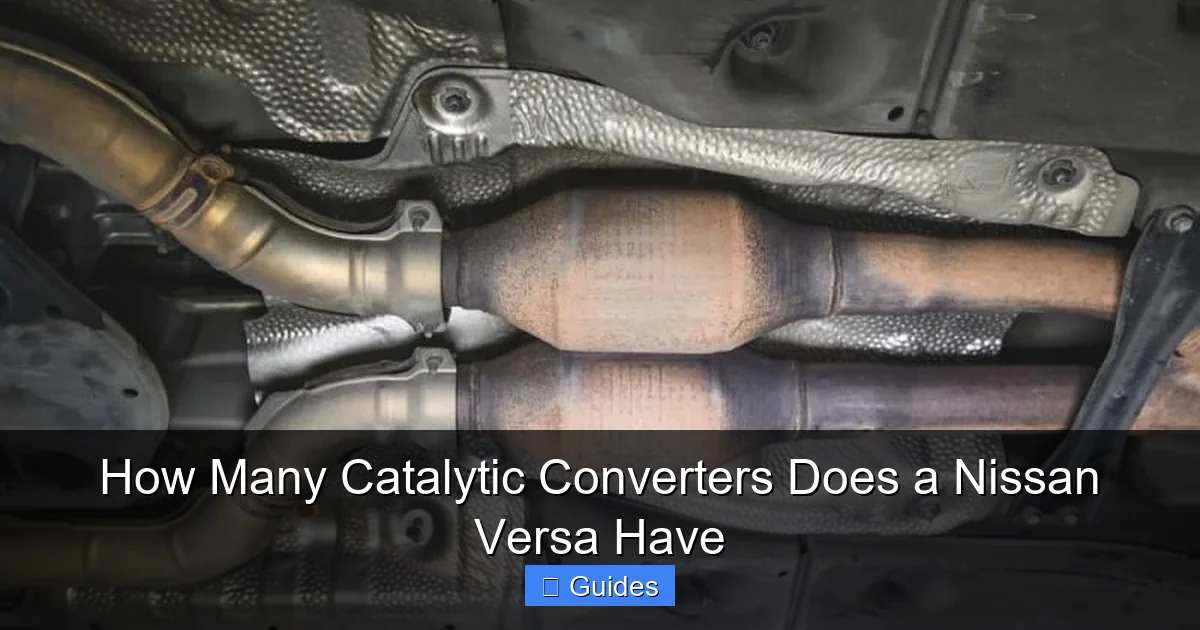
Let’s get straight to the point: most Nissan Versa models are equipped with a single catalytic converter. This is true for the majority of gasoline-powered Versas produced from 2007 through 2020. These models typically feature a 1.6L or 1.8L inline-4 engine, and their exhaust systems are designed with one main catalytic converter located underneath the vehicle, usually between the engine and the muffler.
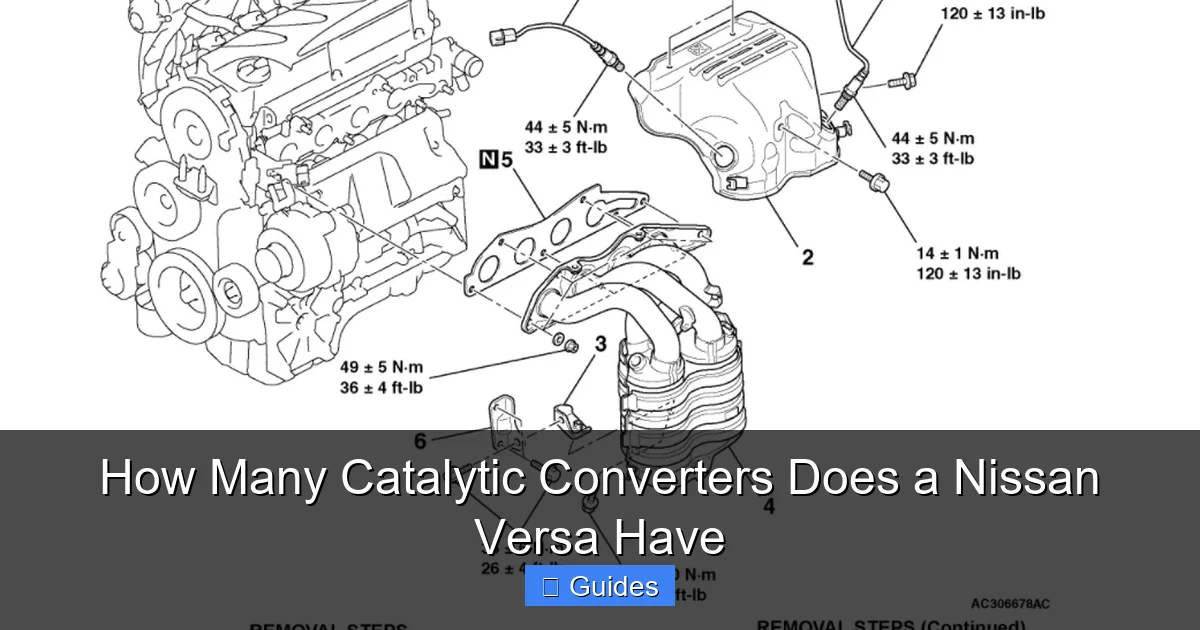
For example, a 2015 Nissan Versa 1.6L S model has one catalytic converter mounted close to the exhaust manifold. This placement allows it to heat up quickly after startup, which improves its efficiency in reducing emissions during the critical warm-up phase. The converter is often integrated into the exhaust pipe and may be referred to as a “manifold converter” or “close-coupled converter” due to its proximity to the engine.
However, it’s important to note that not all Versas are created equal. Some newer models, especially those with updated emissions controls or turbocharged engines, may feature a second catalytic converter. For instance, the 2020 Nissan Versa with the 1.6L naturally aspirated engine still uses one converter, but certain high-output or performance-oriented variants (though rare in the Versa lineup) could include a pre-catalytic converter near the engine and a main converter further downstream.
Additionally, vehicles sold in regions with stricter emissions standards—such as California or the European Union—might have more complex exhaust systems with multiple catalytic stages. These are often referred to as “dual-bed” or “twin-cat” systems, where one converter handles hydrocarbons and carbon monoxide, and another focuses on nitrogen oxides.
So, while the standard answer is “one catalytic converter,” it’s wise to verify based on your specific model and trim. Checking your owner’s manual or consulting a Nissan service center can provide definitive confirmation.
Where Are the Catalytic Converters Located on a Nissan Versa?
Visual guide about How Many Catalytic Converters Does a Nissan Versa Have
Image source: i2.wp.com
Knowing how many catalytic converters your Nissan Versa has is only half the battle—understanding where they’re located is equally important, especially if you’re dealing with a check engine light or planning a repair.
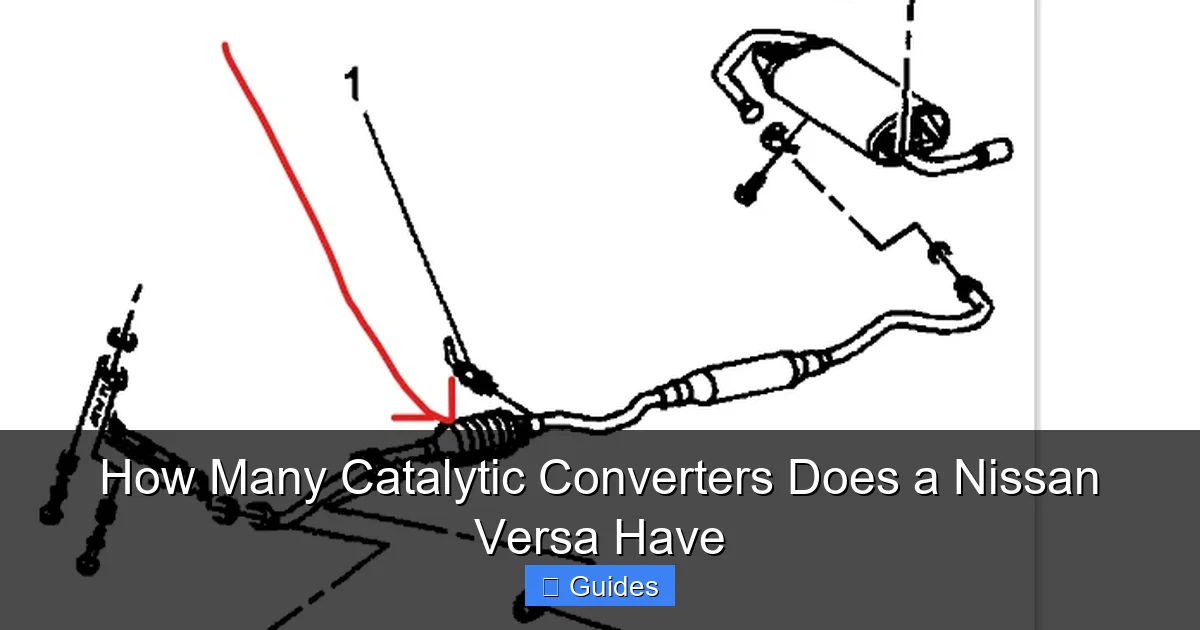
On most Versa models, the primary catalytic converter is positioned underneath the car, just behind the engine. It’s typically mounted close to the exhaust manifold, which allows it to reach optimal operating temperature quickly. This location helps the converter start working within seconds of the engine starting, which is crucial for reducing cold-start emissions.
To locate it, you’d need to safely raise the vehicle using a jack and jack stands or drive it onto ramps. Once underneath, look for a cylindrical or oval-shaped component made of stainless steel, usually about the size of a small loaf of bread. It will be connected to the exhaust pipe and may have oxygen sensors mounted before and after it. These sensors monitor the efficiency of the converter by measuring oxygen levels in the exhaust stream.
In some cases, especially on newer models or those with dual catalytic systems, you might find a second converter further back in the exhaust system, closer to the muffler. This secondary unit is often smaller and serves as a “cleanup” stage, further reducing any remaining pollutants. However, this setup is less common in the Versa and more typical in larger or high-performance vehicles.
One practical tip: if you’re inspecting your catalytic converter for damage or theft (yes, catalytic converter theft is on the rise due to the valuable metals inside), look for signs like rust, dents, or welding marks. A missing or tampered converter will often result in loud exhaust noise and a check engine light.
Why Does the Number of Catalytic Converters Vary by Model?
Visual guide about How Many Catalytic Converters Does a Nissan Versa Have
Image source: 2carpros.com
You might be wondering why some cars have one catalytic converter while others have two or more. The answer lies in evolving emissions regulations, engine technology, and vehicle design.
In the early 2000s, when the Nissan Versa first hit the market, emissions standards were less stringent than they are today. As a result, most compact cars like the Versa were designed with a single catalytic converter that could meet federal requirements. This kept manufacturing costs low and simplified the exhaust system.
However, as environmental regulations tightened—especially with the introduction of Tier 3 and Euro 6 standards—automakers had to improve their emissions control systems. This led to the adoption of more advanced exhaust setups, including dual catalytic converters.
For example, a 2023 Nissan Versa sold in California might have a more sophisticated emissions system than the same model sold in a state with looser regulations. The California version could include a second catalytic converter or a more efficient single unit with advanced catalyst materials.
Engine type also plays a role. Turbocharged engines, which are more efficient but can produce higher emissions under certain conditions, often require additional catalytic treatment. While the Versa hasn’t traditionally offered turbocharged engines, future models or special editions could adopt this technology, potentially increasing the number of catalytic converters.
Another factor is fuel type. Flex-fuel vehicles or those designed to run on alternative fuels may have different catalytic needs. Though the Versa is primarily gasoline-powered, hybrid or electric variants (if introduced) would have entirely different emissions systems—possibly with no catalytic converters at all.
Ultimately, the number of catalytic converters in your Nissan Versa reflects a balance between performance, cost, and compliance. As emissions standards continue to evolve, we may see more Versas with dual converters or even advanced systems like selective catalytic reduction (SCR), which uses urea injection to reduce nitrogen oxides.
Signs Your Nissan Versa’s Catalytic Converter May Be Failing
Even though catalytic converters are built to last, they aren’t immortal. Over time, they can become clogged, damaged, or contaminated, leading to a host of performance issues. Recognizing the early warning signs can help you address problems before they lead to costly repairs or emissions test failures.
One of the most common symptoms of a failing catalytic converter is a noticeable drop in engine performance. You might find that your Versa struggles to accelerate, feels sluggish, or has reduced fuel efficiency. This happens because a clogged converter restricts exhaust flow, creating backpressure that makes it harder for the engine to expel gases.
Another telltale sign is the dreaded check engine light. Modern vehicles, including the Nissan Versa, are equipped with onboard diagnostics (OBD-II) that monitor the efficiency of the catalytic converter. If the oxygen sensors detect that the converter isn’t reducing emissions effectively, the system will trigger a diagnostic trouble code (DTC), such as P0420 (“Catalyst System Efficiency Below Threshold”).
You might also notice a sulfur or “rotten egg” smell coming from the exhaust. This odor is caused by hydrogen sulfide, a byproduct of sulfur in the fuel that the converter normally converts into odorless sulfur dioxide. When the converter fails, this gas escapes untreated.
In severe cases, you could hear a rattling noise from underneath the car. This usually indicates that the ceramic honeycomb structure inside the converter has broken apart. Not only does this reduce efficiency, but it can also cause blockages that damage the engine.
Finally, if your Versa fails an emissions test or you notice excessive smoke from the tailpipe, it’s time to have the catalytic converter inspected. While some issues can be resolved with cleaning or sensor replacement, a severely damaged converter will likely need to be replaced.
How to Maintain and Prolong the Life of Your Catalytic Converter
The good news? You can take steps to keep your Nissan Versa’s catalytic converter in top shape for as long as possible. A little preventive maintenance goes a long way in avoiding expensive repairs.
First and foremost, keep your engine properly tuned. A misfiring spark plug or faulty oxygen sensor can cause unburned fuel to enter the exhaust system, overheating and damaging the catalytic converter. Regular tune-ups, including spark plug and wire replacement, can prevent this.
Use high-quality fuel and avoid leaded or contaminated gasoline. Impurities in low-grade fuel can coat the catalyst materials, reducing their effectiveness. Stick to reputable gas stations and consider using fuel additives designed to clean the fuel system and reduce carbon buildup.
Address check engine lights promptly. Ignoring a P0420 code or other emissions-related warning can lead to further damage. Modern OBD-II scanners are affordable and easy to use, allowing you to read codes at home and determine if a professional inspection is needed.
Avoid short trips whenever possible. Catalytic converters need to reach high temperatures (around 800°F) to function efficiently. Frequent short drives prevent the converter from heating up fully, leading to moisture buildup and reduced performance. If you mostly drive short distances, consider taking longer drives occasionally to “burn off” moisture and restore efficiency.
Finally, protect your converter from physical damage. Speeding over potholes, driving on rough terrain, or parking too close to curbs can dent or crack the converter. In areas with high theft rates, consider installing a catalytic converter shield or etching your VIN onto the unit to deter thieves.
Replacement Costs and Options for Nissan Versa Catalytic Converters
If your catalytic converter does fail, replacement is often the only solution. But how much will it cost, and what are your options?
The price of a new catalytic converter for a Nissan Versa can vary widely depending on the model year, engine size, and whether you choose an OEM (original equipment manufacturer) or aftermarket part. On average, expect to pay between $1,000 and $2,500 for a complete replacement, including parts and labor.
OEM converters are made by Nissan and are designed to meet exact factory specifications. They offer the best performance and longevity but come at a premium price. For example, a genuine Nissan catalytic converter for a 2018 Versa might cost around $1,800, not including installation.
Aftermarket converters are more affordable, typically ranging from $300 to $800. These are made by third-party manufacturers and must meet EPA standards to be legal for use in most states. While they may not last as long as OEM parts, many are reliable and can save you hundreds of dollars.
Another option is a universal-fit catalytic converter, which can be welded into place. These are the cheapest option (around $100–$300) but require professional installation and may not pass emissions inspections in states with strict regulations.
Labor costs also vary by location and shop. A typical replacement job takes 1–2 hours, with labor rates ranging from $100 to $200 per hour. Some mechanics may offer discounts if you supply the part yourself.
In some cases, especially if the converter is only partially clogged, cleaning or decarbonizing treatments may help restore function. However, these are temporary fixes and won’t work if the internal structure is damaged.
If you’re on a tight budget, consider checking with local junkyards or online salvage sites for used catalytic converters. While this carries some risk, a low-mileage used unit from a similar Versa model could be a cost-effective solution.
Environmental and Legal Considerations
Beyond performance and cost, it’s important to understand the environmental and legal implications of catalytic converter maintenance and replacement.
Catalytic converters are essential for reducing air pollution. Without them, vehicles would emit significantly higher levels of carbon monoxide, nitrogen oxides, and hydrocarbons—gases linked to smog, respiratory illness, and climate change. By keeping your Versa’s converter in good working order, you’re doing your part to protect public health and the environment.
Legally, tampering with or removing a catalytic converter is illegal in most countries, including the United States. The Clean Air Act prohibits the removal or modification of emissions control devices on vehicles manufactured after 1974. Violators can face fines, vehicle registration issues, or even criminal charges.
Some states, like California, have even stricter rules. Vehicles registered in California must use converters that meet California Air Resources Board (CARB) standards. Installing a non-CARB-compliant converter can result in failed inspections and registration denial.
If you’re replacing your converter, always ensure the new part is EPA-compliant or CARB-approved, depending on your location. Most reputable aftermarket manufacturers will clearly label their products with compliance information.
Additionally, recycling old catalytic converters is both environmentally responsible and potentially profitable. The precious metals inside can be extracted and reused, reducing the need for mining. Many auto shops and recycling centers offer cash for used converters, so don’t toss it in the trash.
Conclusion: Know Your Nissan Versa’s Emissions System
So, how many catalytic converters does a Nissan Versa have? For most drivers, the answer is one—located under the car, working silently to keep emissions in check. But depending on your model year, engine, and location, you might have two. Understanding this system is key to maintaining your vehicle’s performance, passing emissions tests, and protecting the environment.
From recognizing early signs of failure to choosing the right replacement option, being informed empowers you to make smart decisions. Whether you’re a DIY enthusiast or prefer professional help, knowing what’s under your Versa can save you time, money, and headaches.
Remember: a healthy catalytic converter means a cleaner-running engine, better fuel economy, and peace of mind. So the next time you start your Versa, give a silent thanks to that small but mighty component doing its part to keep our air cleaner—one mile at a time.
Frequently Asked Questions
How many catalytic converters does a 2015 Nissan Versa have?
Most 2015 Nissan Versa models are equipped with a single catalytic converter. It’s typically located under the vehicle, near the engine, and is part of the standard exhaust system for the 1.6L or 1.8L inline-4 engine.
Can a Nissan Versa have two catalytic converters?
Yes, though it’s uncommon. Some newer or high-spec Versa models, especially those sold in regions with strict emissions standards, may have a second catalytic converter for improved emissions control.
What happens if my catalytic converter fails?
A failed converter can cause reduced engine performance, poor fuel economy, a sulfur smell, and a check engine light. It may also cause your vehicle to fail an emissions test.
How much does it cost to replace a catalytic converter on a Nissan Versa?
Replacement costs range from $1,000 to $2,500 for OEM parts and labor. Aftermarket options can be cheaper, starting around $300–$800.
Can I drive my Nissan Versa with a bad catalytic converter?
You can drive short distances, but it’s not recommended. A failing converter can damage the engine, reduce performance, and lead to higher emissions. Have it inspected as soon as possible.
Is it legal to remove the catalytic converter on a Nissan Versa?
No, removing or tampering with the catalytic converter is illegal in most countries, including the U.S., under the Clean Air Act. Doing so can result in fines and registration issues.

At CarLegit, we believe information should be clear, factual, and genuinely helpful. That’s why every guide, review, and update on our website is created with care, research, and a strong focus on user experience.