
Wondering how to turn off the ABS light on your Nissan Altima? This guide walks you through common causes, DIY fixes, and when to seek professional help. Stay safe on the road with reliable, step-by-step solutions.
In This Article
- 1 Key Takeaways
- 2 📑 Table of Contents
- 3 Understanding the ABS Light on Your Nissan Altima
- 4 Step-by-Step Guide to Diagnosing the ABS Light
- 5 DIY Fixes to Turn Off the ABS Light
- 6 When to Seek Professional Help
- 7 Preventing Future ABS Light Issues
- 8 Conclusion
- 9 Frequently Asked Questions
- 9.1 Can I drive my Nissan Altima with the ABS light on?
- 9.2 Will the ABS light turn off on its own?
- 9.3 How much does it cost to fix the ABS light on a Nissan Altima?
- 9.4 Can a bad battery cause the ABS light to come on?
- 9.5 Do I need a special scanner to read ABS codes?
- 9.6 How often should I check my ABS system?
Key Takeaways
- ABS light indicates a problem with the anti-lock braking system: It’s a warning that your vehicle’s safety system may not function properly during hard braking.
- Common causes include faulty wheel speed sensors, low brake fluid, or blown fuses: These issues are often easy to spot and fix at home.
- Resetting the ABS light may require more than just clearing the code: Some problems need physical repairs before the light will stay off.
- Use an OBD2 scanner for accurate diagnosis: This tool reads error codes and helps pinpoint the exact issue.
- Regular maintenance prevents future ABS warnings: Check sensors, fluid levels, and wiring during routine service.
- Don’t ignore the ABS light: Driving with it on can reduce braking performance and increase accident risk.
- Professional help is recommended for complex electrical issues: If DIY steps fail, a certified mechanic can resolve deeper problems.
📑 Table of Contents
Understanding the ABS Light on Your Nissan Altima
If you’ve ever been driving your Nissan Altima and suddenly noticed a yellow or amber light flashing on your dashboard—specifically labeled “ABS”—you’re not alone. This warning light is part of your vehicle’s anti-lock braking system (ABS), a critical safety feature designed to prevent your wheels from locking up during sudden stops. When the ABS light comes on, it means the system has detected a fault and may not operate as intended.
The ABS works by monitoring the speed of each wheel through individual sensors. If one wheel begins to slow down too quickly—indicating it’s about to lock—the system pulses the brakes rapidly to maintain traction and steering control. This is especially important in wet, icy, or slippery conditions. However, when the ABS light illuminates, it signals that something in this complex network isn’t working correctly.
It’s important to note that the ABS light is different from the brake warning light. While the brake light typically indicates low brake fluid or a parking brake issue, the ABS light specifically points to problems within the anti-lock braking system. Ignoring it could compromise your ability to stop safely in emergencies.
Why the ABS Light Comes On
There are several reasons why the ABS light might appear on your Nissan Altima’s dashboard. Some are minor and easy to fix, while others may require professional attention. Understanding these causes is the first step toward resolving the issue.
One of the most common culprits is a faulty wheel speed sensor. These sensors are located near each wheel and send real-time data to the ABS control module. If one becomes dirty, damaged, or disconnected, the system can’t accurately monitor wheel speed, triggering the warning light. Dirt, mud, or rust buildup around the sensor can also interfere with its function.
Another frequent cause is low brake fluid. The ABS relies on proper hydraulic pressure to function. If the brake fluid level drops below the recommended threshold—often due to a leak or worn brake pads—the system may detect a pressure imbalance and activate the light.
Electrical issues, such as blown fuses or corroded wiring, can also disrupt communication between components. The ABS system depends on a network of wires and connectors. If any of these become loose, frayed, or corroded, the signal may be interrupted.
In some cases, the ABS control module itself may be malfunctioning. This is the “brain” of the system, and if it fails, the entire ABS may become inoperative. While less common, module failure usually requires replacement and professional calibration.
Lastly, a weak or dying battery can sometimes trigger the ABS light. Modern vehicles, including the Nissan Altima, use complex electronics that are sensitive to voltage fluctuations. If your battery is old or failing, it may not provide consistent power to the ABS system, causing intermittent warnings.
Step-by-Step Guide to Diagnosing the ABS Light
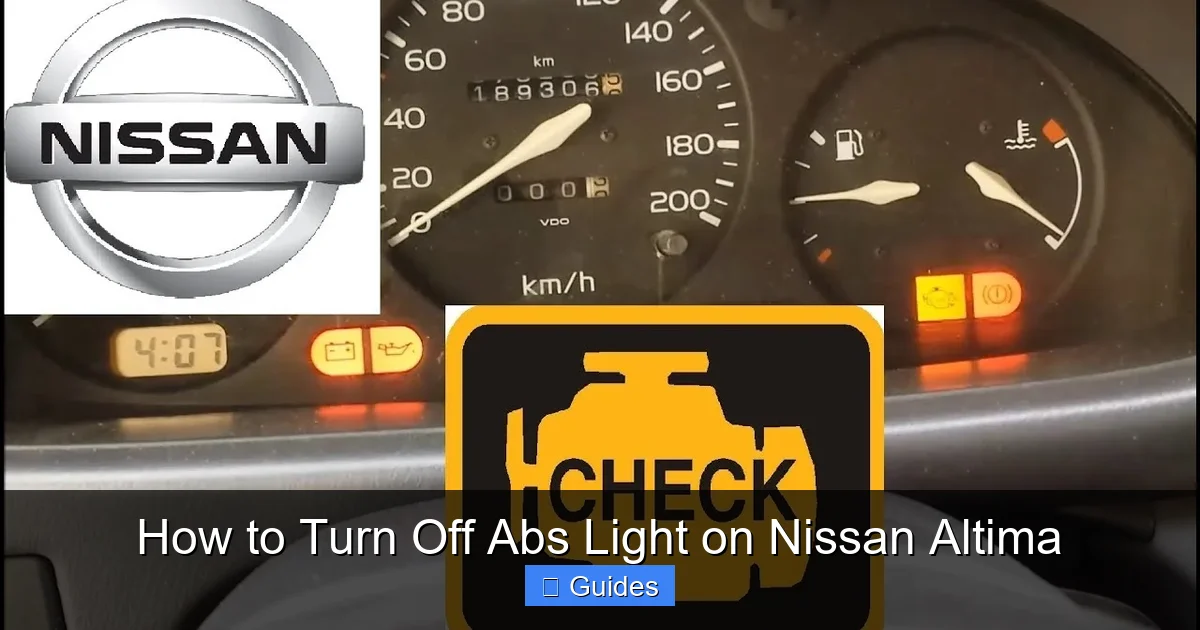
Visual guide about How to Turn Off Abs Light on Nissan Altima
Image source: i.ytimg.com
Before attempting to turn off the ABS light, it’s crucial to diagnose the underlying problem. Simply clearing the warning without fixing the root cause will likely result in the light returning—sometimes within minutes of driving.
The best way to diagnose ABS issues is by using an OBD2 (On-Board Diagnostics) scanner. Most modern Nissan Altimas, especially those made after 2008, are equipped with OBD2 ports that allow you to read diagnostic trouble codes (DTCs). These codes provide specific information about what part of the system is malfunctioning.
To use an OBD2 scanner, locate the port—usually found under the dashboard near the driver’s side footwell. Plug in the scanner, turn the ignition to the “ON” position (without starting the engine), and follow the device’s instructions to retrieve codes. Look for codes starting with “C” (chassis) or “U” (network), as these often relate to ABS or brake systems.
For example, a code like C1100 might indicate a problem with the left front wheel speed sensor, while C1145 could point to a faulty ABS pump motor. Once you have the code, you can research its meaning or consult your vehicle’s service manual.
If you don’t own an OBD2 scanner, many auto parts stores (like AutoZone or O’Reilly) offer free code reading services. This is a great option if you’re not ready to invest in your own tool.
Manual Inspection Tips
In addition to using a scanner, a visual inspection can reveal obvious problems. Start by checking the brake fluid level in the master cylinder reservoir under the hood. The fluid should be between the “MIN” and “MAX” marks. If it’s low, top it off with the recommended DOT 3 or DOT 4 brake fluid—never use other types.
Next, inspect the wheel speed sensors. These are typically mounted near the wheel hubs and connected by thin wires. Look for signs of damage, such as cracked housings, frayed wires, or heavy corrosion. Gently clean any dirt or debris around the sensor using a soft brush or compressed air.
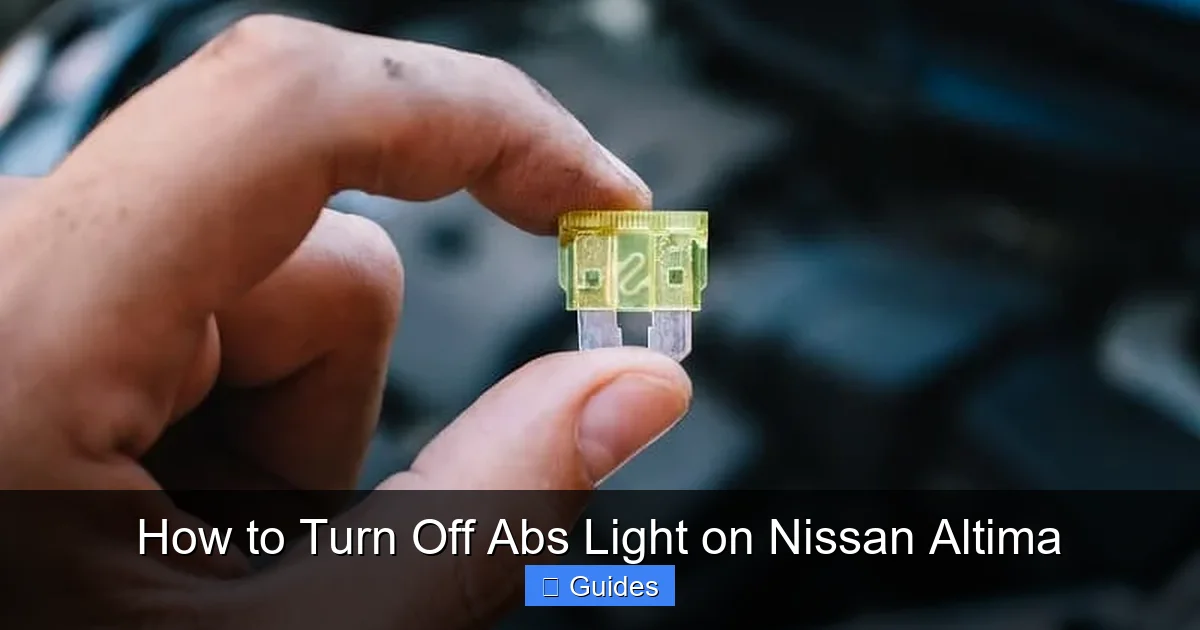
Also, check the fuses related to the ABS system. Your Nissan Altima’s owner’s manual or fuse box diagram (usually located on the inside of the fuse cover) will show which fuses control the ABS. Use a fuse puller or needle-nose pliers to remove and inspect them. A blown fuse will have a broken metal strip inside—replace it with one of the same amperage.
Finally, examine the ABS control module, usually located near the brake master cylinder or under the vehicle. Look for signs of water damage, corrosion, or loose connections. If the module appears damaged, it may need professional evaluation.
DIY Fixes to Turn Off the ABS Light
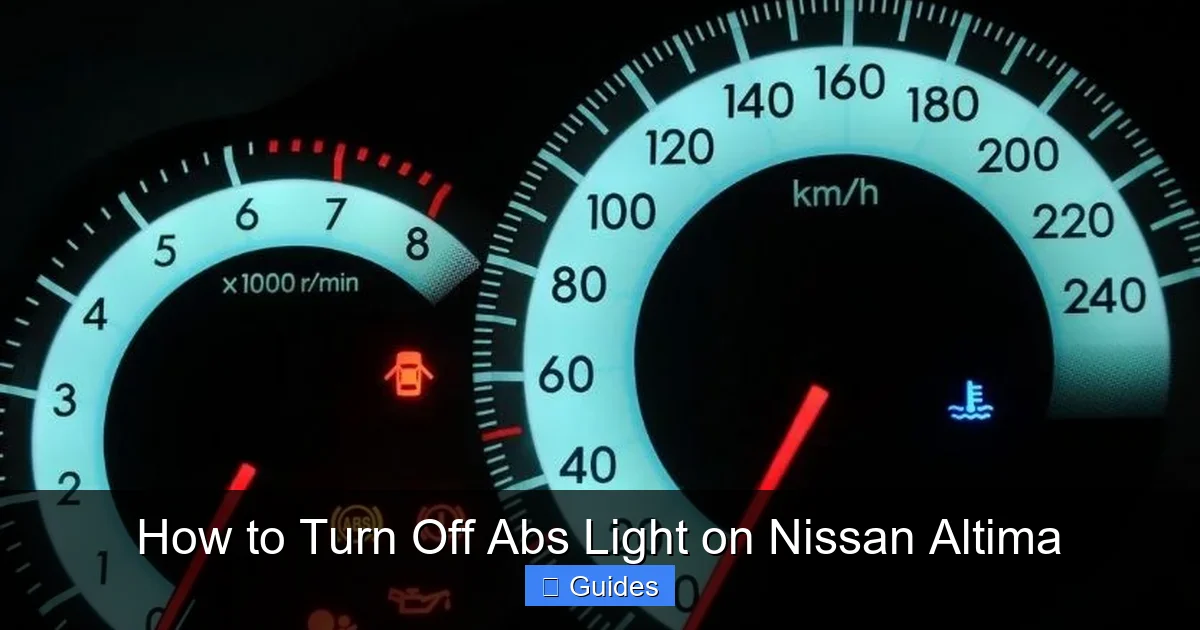
Visual guide about How to Turn Off Abs Light on Nissan Altima
Image source: roadsumo.com
Once you’ve identified the likely cause, you can attempt some DIY fixes to resolve the issue and turn off the ABS light. Many common problems can be addressed without visiting a mechanic, saving you time and money.
Fixing a Dirty or Faulty Wheel Speed Sensor
If your OBD2 scanner points to a wheel speed sensor issue, cleaning or replacing the sensor is often the solution. Start by lifting the vehicle with a jack and securing it with jack stands. Remove the wheel to access the sensor.
Locate the sensor near the brake rotor or hub. It’s usually held in place by a small bolt. Carefully disconnect the electrical connector and remove the sensor. Use a clean cloth and brake cleaner to wipe away dirt, grease, or rust. Avoid using harsh chemicals that could damage the sensor.
If cleaning doesn’t resolve the issue, the sensor may be faulty and need replacement. Replacement sensors are widely available online or at auto parts stores and typically cost between $30 and $80. Installation is straightforward—just reverse the removal process and reconnect the wiring.
After replacing the sensor, clear the ABS code using your OBD2 scanner. Turn the ignition on and off a few times to reset the system. Then, take the car for a short test drive. If the light stays off, the problem is likely resolved.
Topping Off Brake Fluid
Low brake fluid is another common trigger for the ABS light. If the fluid level is below the “MIN” mark, carefully add the correct type of brake fluid. Always use a clean funnel to avoid spills, and never overfill the reservoir.
After topping off, check for leaks around the brake lines, calipers, and master cylinder. Even a small leak can cause fluid loss over time. If you notice fluid on the ground or damp spots under the car, have it inspected by a professional.
Once the fluid is at the proper level, clear the ABS code and test drive the vehicle. The light should remain off if the low fluid was the only issue.
Replacing a Blown Fuse
If a blown fuse is the culprit, replacing it is a quick and inexpensive fix. Locate the fuse box—usually under the dashboard or in the engine compartment—and find the ABS-related fuse using the diagram.
Use a fuse puller to remove the old fuse and inspect it. If the metal strip is broken, replace it with a new fuse of the same amperage. Reinsert the fuse, close the cover, and turn on the ignition.
Clear any stored codes with your OBD2 scanner and test drive the car. The ABS light should turn off if the fuse was the only problem.
Resetting the ABS Light Without a Scanner
If you don’t have access to an OBD2 scanner, there are a few alternative methods to reset the ABS light—though these are less reliable and may not work for all issues.
One method involves disconnecting the car battery. Turn off the engine, remove the negative terminal, and wait 10 to 15 minutes. This allows the vehicle’s computer systems to reset. Reconnect the terminal and start the car. In some cases, the ABS light will turn off.
Another trick is to drive the car at a steady speed (around 20–30 mph) and make a series of hard stops. This can sometimes prompt the ABS system to recalibrate and clear the warning. However, this method is not guaranteed and should only be used if other options aren’t available.
Keep in mind that these reset methods only clear the light temporarily if the underlying problem persists. Always address the root cause to prevent the light from returning.
When to Seek Professional Help
Visual guide about How to Turn Off Abs Light on Nissan Altima
Image source: tireer.com
While many ABS issues can be resolved at home, some problems require the expertise of a certified mechanic. If you’ve tried the DIY steps above and the ABS light continues to come on, it’s time to seek professional assistance.
One such scenario is a failing ABS control module. This component is complex and often requires specialized tools to diagnose and replace. Attempting to repair it yourself could lead to further damage or safety risks.
Similarly, if your OBD2 scanner shows multiple or conflicting codes, it may indicate a deeper electrical issue. Wiring harnesses, connectors, and grounding points can degrade over time, especially in older vehicles. A mechanic can perform a thorough inspection and repair any damaged components.
Another red flag is if the ABS light comes on along with other warning lights, such as the brake or traction control lights. This could signal a systemic failure that affects multiple safety systems.
Additionally, if you notice changes in braking performance—such as longer stopping distances, pulsating pedals, or unusual noises—don’t delay getting your car checked. These symptoms suggest the ABS is not functioning properly, which can compromise your safety.
When visiting a mechanic, choose one with experience in Nissan vehicles or ABS systems. Ask for a detailed diagnosis and cost estimate before authorizing any repairs. Many shops offer free inspections, so don’t hesitate to shop around.
Cost of Professional Repairs
The cost of fixing ABS issues varies depending on the problem. Replacing a wheel speed sensor typically costs between $100 and $200, including parts and labor. A new ABS control module can range from $300 to $800, plus programming fees.
Blown fuses and low brake fluid are usually inexpensive fixes, often under $50. However, if the issue involves wiring or hydraulic components, costs can rise significantly.
To save money, consider getting quotes from multiple shops and ask about warranties on parts and labor. Some repairs may be covered under your vehicle’s extended warranty or service plan.
Preventing Future ABS Light Issues
Once you’ve turned off the ABS light and resolved the problem, it’s important to take steps to prevent it from happening again. Regular maintenance and careful driving habits can go a long way in keeping your ABS system in top condition.
Routine Maintenance Tips
Start by checking your brake fluid level every few months. Low fluid can indicate worn brake pads or a leak, both of which should be addressed promptly. Replace brake fluid every 30,000 to 50,000 miles, as it absorbs moisture over time and can degrade performance.
Inspect your wheel speed sensors during tire rotations or brake service. Clean them gently and ensure the wiring is secure. If you live in an area with harsh winters, wash your car regularly to remove salt and grime that can corrode sensors.
Also, have your ABS system scanned during routine oil changes or inspections. Many mechanics include a quick diagnostic scan as part of their service, which can catch early signs of trouble.
Driving Habits That Protect Your ABS
Avoid aggressive driving, especially hard braking, which can put extra stress on the ABS components. While the system is designed to handle emergency stops, frequent harsh braking can accelerate wear.
Keep your tires properly inflated and aligned. Uneven tire wear or poor alignment can affect wheel speed readings and trigger false ABS warnings.
Finally, be mindful of potholes and rough roads. Hitting a deep pothole can damage wheel sensors or suspension components, leading to ABS issues.
Battery and Electrical Care
Since a weak battery can trigger the ABS light, maintain your vehicle’s electrical system. Test your battery annually and replace it every 3–5 years. Clean battery terminals to prevent corrosion, and ensure all connections are tight.
If you frequently drive short distances, consider using a battery maintainer to keep the charge stable. This is especially helpful in cold climates where batteries lose efficiency.
Conclusion
The ABS light on your Nissan Altima is more than just a dashboard annoyance—it’s a vital warning that your anti-lock braking system may not be functioning properly. While it can be alarming to see it illuminate, many causes are simple to diagnose and fix with the right tools and knowledge.
From cleaning a dirty wheel speed sensor to topping off brake fluid or replacing a blown fuse, there are several DIY solutions that can turn off the ABS light and restore your peace of mind. Using an OBD2 scanner is the most effective way to pinpoint the issue, and regular maintenance can prevent future problems.
However, if the light persists or you notice changes in braking performance, don’t hesitate to consult a professional. Your safety is worth the investment.
By understanding how the ABS system works and taking proactive steps to maintain it, you can keep your Nissan Altima running smoothly and safely for years to come. Remember: a little attention today can prevent a big problem tomorrow.
Frequently Asked Questions
Can I drive my Nissan Altima with the ABS light on?
Yes, you can drive with the ABS light on, but your anti-lock braking system won’t function during hard stops. This increases the risk of skidding or losing control, especially in wet or icy conditions. It’s best to address the issue promptly.
Will the ABS light turn off on its own?
In rare cases, the light may turn off if the issue was temporary, such as a loose connection or low battery voltage. However, if the problem persists, the light will likely return. Don’t rely on it going away without diagnosis.
How much does it cost to fix the ABS light on a Nissan Altima?
Costs vary from under $50 for a fuse or brake fluid top-off to $800 or more for an ABS module replacement. Most common fixes, like sensor replacement, cost between $100 and $200.
Can a bad battery cause the ABS light to come on?
Yes, a weak or failing battery can cause voltage fluctuations that trigger the ABS light. Replacing the battery often resolves the issue, especially if other electrical systems are also acting up.
Do I need a special scanner to read ABS codes?
While basic OBD2 scanners can read some ABS codes, a more advanced scanner or one with ABS-specific capabilities may be needed for full diagnosis. Many auto parts stores offer free scans.
How often should I check my ABS system?
There’s no set schedule, but include ABS checks during routine brake service or tire rotations. Also, inspect sensors and fluid levels every 6 months or if you notice any warning lights.

At CarLegit, we believe information should be clear, factual, and genuinely helpful. That’s why every guide, review, and update on our website is created with care, research, and a strong focus on user experience.