
When comparing the Nissan Rogue and Hyundai Santa Fe, size matters—especially if you’re looking for maximum passenger comfort, cargo space, or a more commanding road presence. While both are popular compact SUVs, the Hyundai Santa Fe edges out the Nissan Rogue in overall dimensions, interior room, and third-row availability, making it the larger and more spacious option for families and frequent travelers.
[FEATURED_IMAGE_PLACEHOGER]
In This Article
- 1 Key Takeaways
- 2 📑 Table of Contents
- 3 Introduction: Why Size Matters in Compact SUVs
- 4 Exterior Dimensions: Length, Width, and Height
- 5 Interior Space: Passenger Comfort and Roominess
- 6 Cargo Space: Trunk Capacity and Flexibility
- 7 Fuel Efficiency and Performance: Does Size Impact MPG?
- 8 Safety and Technology: Features That Enhance the Experience
- 9 Which Should You Choose?
- 10 Frequently Asked Questions
- 10.1 Is the Hyundai Santa Fe significantly bigger than the Nissan Rogue?
- 10.2 Does the Nissan Rogue have a third row like the Santa Fe?
- 10.3 Which SUV has more cargo space?
- 10.4 Is the Nissan Rogue more fuel-efficient than the Santa Fe?
- 10.5 Can the Santa Fe’s third row fit adults comfortably?
- 10.6 Which SUV is easier to park in tight spaces?
Key Takeaways
- Hyundai Santa Fe is larger overall: It offers greater length, width, and height compared to the Nissan Rogue, giving it a more substantial footprint.
- More passenger room in the Santa Fe: The Santa Fe provides more legroom and headroom in both front and rear seats, especially in the second row.
- Cargo space favors the Santa Fe: With up to 80 cubic feet of cargo space with seats folded, the Santa Fe outperforms the Rogue’s 74.1 cubic feet.
- Third-row seating available in Santa Fe: The Santa Fe offers an optional third row, while the Rogue does not, making it better for larger families.
- Nissan Rogue is more compact and agile: Its smaller size makes it easier to park and maneuver in tight city spaces.
- Both offer strong fuel efficiency: Despite size differences, both SUVs deliver competitive MPG ratings, with the Rogue slightly edging out in city driving.
- Choose based on your lifestyle: If space and passenger capacity are top priorities, go with the Santa Fe. If you prefer a nimble, fuel-efficient SUV for daily commutes, the Rogue may be the better fit.
📑 Table of Contents
- Introduction: Why Size Matters in Compact SUVs
- Exterior Dimensions: Length, Width, and Height
- Interior Space: Passenger Comfort and Roominess
- Cargo Space: Trunk Capacity and Flexibility
- Fuel Efficiency and Performance: Does Size Impact MPG?
- Safety and Technology: Features That Enhance the Experience
- Which Should You Choose?
Introduction: Why Size Matters in Compact SUVs
When shopping for a compact SUV, size isn’t just about how a vehicle looks on the road—it’s about how it fits into your daily life. Whether you’re hauling kids to school, loading up for a weekend camping trip, or squeezing into a tight parking spot downtown, the dimensions of your SUV can make a big difference. Two of the most popular contenders in this segment are the Nissan Rogue and the Hyundai Santa Fe. Both offer modern tech, strong safety ratings, and reliable performance, but when it comes to sheer size, one clearly stands out.
Many buyers assume that “compact SUV” means all models are roughly the same size. But the truth is, there’s a noticeable range within this category. The Nissan Rogue and Hyundai Santa Fe, while often compared, serve slightly different needs. The Rogue leans toward efficiency and urban agility, while the Santa Fe embraces a more spacious, family-friendly design. If you’re trying to decide between the two, understanding their physical dimensions—length, width, height, wheelbase, interior volume, and cargo capacity—is essential. This guide will break down every aspect of size to help you determine which is bigger: the Nissan Rogue or the Hyundai Santa Fe.
Exterior Dimensions: Length, Width, and Height
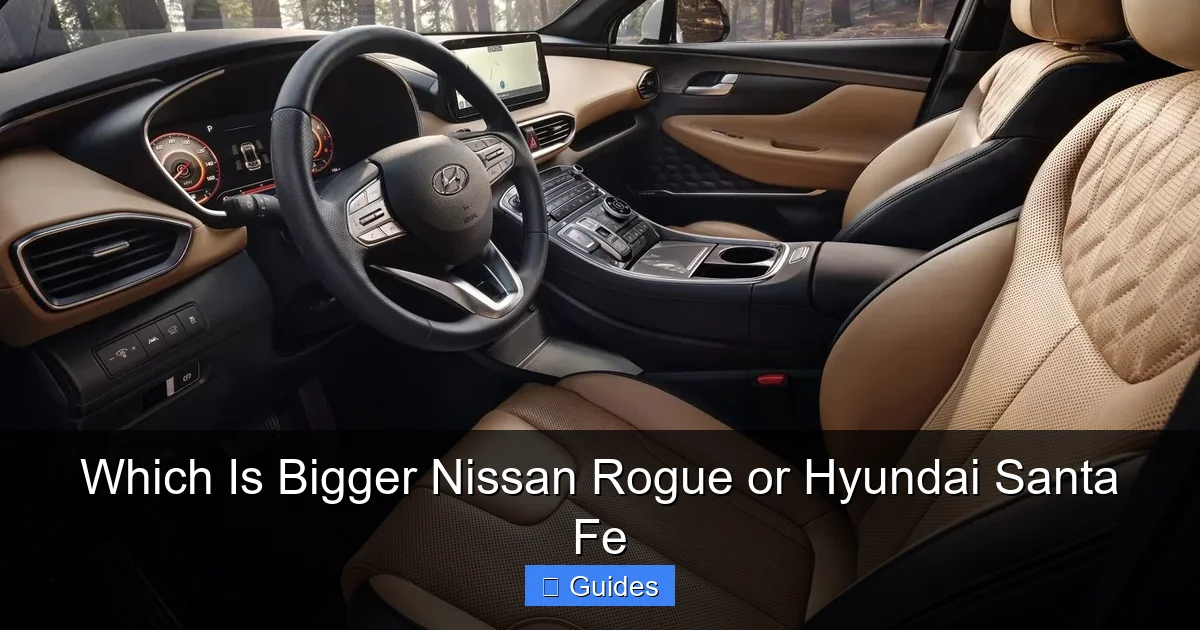
Let’s start with the basics: how long, wide, and tall are these two SUVs? When comparing the Nissan Rogue vs Hyundai Santa Fe, the Santa Fe comes out ahead in nearly every exterior measurement. The 2024 Hyundai Santa Fe measures approximately 188.4 inches in length, 74.8 inches in width (excluding mirrors), and 66.3 inches in height. In contrast, the 2024 Nissan Rogue is slightly more compact at 183.0 inches long, 72.4 inches wide, and 65.4 inches tall.
Visual guide about Which Is Bigger Nissan Rogue or Hyundai Santa Fe
Image source: othyundai.sfo3.digitaloceanspaces.com
These numbers might seem small on paper, but they translate to real-world differences. The Santa Fe’s extra 5.4 inches in length gives it a longer wheelbase—108.3 inches compared to the Rogue’s 106.5 inches. A longer wheelbase typically means a smoother ride and more stable handling, especially on highways. The Santa Fe also sits slightly taller, which can improve visibility for the driver and make entry and exit easier for passengers.
Wheelbase and Ground Clearance
The wheelbase—the distance between the front and rear wheels—plays a key role in ride comfort and interior space. The Hyundai Santa Fe’s longer wheelbase contributes to a more planted feel on the road, reducing body roll during turns. It also allows for more legroom in the second row, which we’ll dive into later. The Nissan Rogue, while slightly shorter, still offers a respectable wheelbase that supports a comfortable ride, especially for city driving.
Ground clearance is another factor to consider, especially if you live in an area with rough roads or enjoy light off-roading. The Santa Fe offers 8.2 inches of ground clearance, while the Rogue provides 8.0 inches. While the difference is minimal, the Santa Fe’s slightly higher stance can be an advantage when navigating potholes or snow-covered driveways.
Turning Radius and Maneuverability
Despite being larger, the Hyundai Santa Fe doesn’t sacrifice too much in terms of maneuverability. Its turning diameter is about 38.7 feet, compared to the Rogue’s 37.4 feet. That means the Rogue can make tighter turns, which is helpful in crowded parking lots or narrow streets. If you frequently drive in urban environments, the Rogue’s smaller footprint might feel more confident and easier to handle.
However, the Santa Fe’s larger size doesn’t make it unwieldy. Thanks to available features like rearview cameras, parking sensors, and even a 360-degree camera system, navigating tight spaces is still manageable. For most drivers, the extra space and comfort outweigh the slight reduction in agility.
Interior Space: Passenger Comfort and Roominess
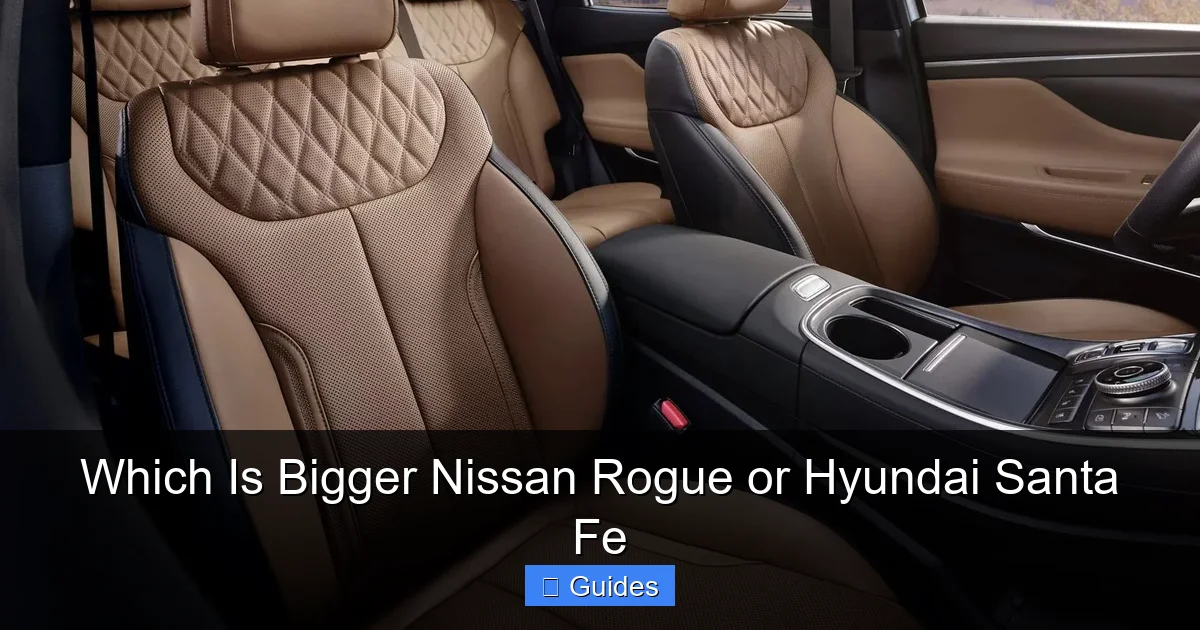
When it comes to interior space, the Hyundai Santa Fe clearly wins in the battle of Nissan Rogue vs Hyundai Santa Fe. The Santa Fe offers more headroom, legroom, and shoulder room across both rows of seating. Let’s break it down by seating position.
Visual guide about Which Is Bigger Nissan Rogue or Hyundai Santa Fe
Image source: othyundai.sfo3.digitaloceanspaces.com
Front Seat Comfort
In the front, both SUVs offer comfortable, supportive seats with plenty of adjustability. The Santa Fe provides 41.3 inches of headroom and 44.1 inches of legroom in the front row. The Rogue offers slightly less: 40.8 inches of headroom and 43.5 inches of legroom. While the difference is small, taller drivers may notice the extra space in the Santa Fe, especially on long drives.
Both vehicles come with standard cloth upholstery, but higher trims offer leather or synthetic leather options. The Santa Fe’s cabin feels more open and airy, thanks in part to its larger glass area and optional panoramic sunroof. The Rogue’s interior is well-designed but feels a bit more compact, which some drivers may prefer for a cozier, more controlled feel.
Second-Row Seating
The second row is where the Santa Fe really shines. With 39.5 inches of legroom and 39.4 inches of headroom, rear passengers have plenty of space to stretch out. The Rogue, by comparison, offers 38.5 inches of legroom and 38.7 inches of headroom. That extra inch in the Santa Fe might not sound like much, but for adults or teens, it can mean the difference between comfort and cramped seating.
The Santa Fe also features a flatter floor in the second row, making it easier for three passengers to sit comfortably across the bench. The Rogue has a slight center hump, which can make the middle seat less ideal for longer trips. Additionally, the Santa Fe’s rear doors open wider, making it easier for passengers to get in and out—especially helpful when installing child seats.
Third-Row Option: A Game-Changer
One of the biggest advantages the Hyundai Santa Fe has over the Nissan Rogue is the availability of a third row. The Santa Fe offers an optional third-row seat, increasing total passenger capacity from five to seven. This makes it a true midsize SUV contender, ideal for larger families or those who frequently carpool.
The Nissan Rogue, on the other hand, is strictly a five-seater. There is no third-row option, even on higher trims. While the Rogue’s second row is spacious, it simply can’t match the Santa Fe’s ability to carry more passengers. If you need to transport six or seven people regularly, the Santa Fe is the clear winner.
It’s worth noting that the Santa Fe’s third row is best suited for children or shorter adults. Legroom in the third row is limited—around 29.1 inches—so it’s not ideal for long road trips with adults in the back. But for occasional use, school pickups, or weekend outings, it’s a valuable feature that the Rogue can’t match.
Cargo Space: Trunk Capacity and Flexibility
Cargo space is a critical factor for many SUV buyers, and here again, the Hyundai Santa Fe pulls ahead. When comparing the Nissan Rogue vs Hyundai Santa Fe in terms of storage, the Santa Fe offers more volume and greater flexibility.
Visual guide about Which Is Bigger Nissan Rogue or Hyundai Santa Fe
Image source: othyundai.sfo3.digitaloceanspaces.com
Behind the Second Row
With the second row in place, the Santa Fe provides 35.9 cubic feet of cargo space. The Rogue offers slightly less at 36.5 cubic feet—wait, that’s actually more? Yes, but only by a small margin. However, this number changes when you consider the third row.
The Santa Fe’s third row takes up some of that space, so when all three rows are in use, cargo capacity drops to just 11.0 cubic feet. That’s enough for a few small bags or a stroller, but not much else. The Rogue, with its fixed five-seat layout, maintains its 36.5 cubic feet regardless of passenger load.
Maximum Cargo Volume
When you fold down the rear seats, the differences become more pronounced. The Hyundai Santa Fe can expand to a maximum of 80.0 cubic feet of cargo space with both the second and third rows folded flat. The Nissan Rogue, with its 60/40 split-folding second row, offers up to 74.1 cubic feet.
That’s a difference of nearly 6 cubic feet—enough to fit an extra suitcase, a large cooler, or a piece of furniture. For families who frequently haul gear, camp, or move items, the Santa Fe’s larger cargo area is a significant advantage.
Practical Storage Features
Both SUVs offer thoughtful storage solutions throughout the cabin. The Santa Fe includes a large center console, door pockets, and under-seat storage in some trims. It also features a hands-free smart liftgate on higher models, which opens the trunk when you walk up with the key fob—perfect for when your hands are full.
The Rogue also includes a hands-free liftgate option and a dual-level cargo floor, which lets you hide valuables or create a flat loading surface. However, the Santa Fe’s overall storage layout feels more generous, with larger compartments and better organization.
Fuel Efficiency and Performance: Does Size Impact MPG?
One common concern with larger vehicles is fuel economy. You might assume that the bigger Hyundai Santa Fe would guzzle more gas than the Nissan Rogue. But in reality, both SUVs deliver impressive fuel efficiency, thanks to modern engine technology and lightweight materials.
Engine Options and Fuel Economy
The 2024 Nissan Rogue comes standard with a 1.5-liter turbocharged three-cylinder engine that produces 201 horsepower. It’s paired with a continuously variable transmission (CVT) and front-wheel drive (FWD), with all-wheel drive (AWD) available. The Rogue achieves an EPA-estimated 30 mpg in the city and 37 mpg on the highway with FWD.
The 2024 Hyundai Santa Fe offers two engine choices: a 2.5-liter four-cylinder with 191 horsepower and a 2.5-liter turbocharged four-cylinder with 277 horsepower. The base engine delivers 25 mpg city and 28 mpg highway with FWD, while the turbo model gets 22 mpg city and 25 mpg highway. AWD is available on all trims and reduces efficiency slightly.
So, while the Rogue is more fuel-efficient, especially in city driving, the gap isn’t as wide as you might expect. The Santa Fe’s larger size doesn’t come with a massive fuel penalty, especially if you choose the base engine and drive mostly on highways.
Real-World Driving Experience
In everyday driving, the Rogue feels peppier thanks to its turbocharged engine and lighter weight. It accelerates quickly from a stop and handles well in traffic. The Santa Fe, especially with the turbo engine, offers strong passing power and a smoother ride at highway speeds.
If you prioritize fuel savings and live in a city with stop-and-go traffic, the Rogue is the better choice. But if you want more power and don’t mind a slight drop in MPG, the Santa Fe’s performance is more than adequate—and often more enjoyable on long trips.
Safety and Technology: Features That Enhance the Experience
Both the Nissan Rogue and Hyundai Santa Fe come loaded with advanced safety and tech features, but their size differences influence how these features perform.
Safety Ratings and Driver Assistance
The 2024 Nissan Rogue earned a Top Safety Pick+ award from the IIHS (Insurance Institute for Highway Safety), with “Good” ratings in all crash tests and superior front crash prevention. It comes standard with Nissan Safety Shield 360, including automatic emergency braking, blind-spot warning, rear cross-traffic alert, and lane departure warning.
The 2024 Hyundai Santa Fe also received a Top Safety Pick+ rating, with similar scores across the board. It includes Hyundai SmartSense, a suite of driver aids like forward collision avoidance, blind-spot collision avoidance, and safe exit assist. Both vehicles offer adaptive cruise control, lane-keeping assist, and driver attention monitoring on higher trims.
Thanks to its larger size, the Santa Fe may offer slightly better crash protection in certain scenarios, but both are among the safest in their class.
Infotainment and Connectivity
The Rogue features an 8-inch touchscreen standard, with a 9-inch display available. It supports Apple CarPlay, Android Auto, and offers wireless connectivity on select trims. The Santa Fe comes with an 8-inch screen standard, upgrading to a 10.25-inch display on higher models. It also includes wireless Apple CarPlay and Android Auto, plus a 12-speaker Bose premium audio system on top trims.
The Santa Fe’s larger screen and more premium audio options give it an edge in tech appeal, especially for families who spend a lot of time in the car.
Which Should You Choose?
So, which is bigger: the Nissan Rogue or the Hyundai Santa Fe? The answer is clear—the Hyundai Santa Fe is the larger, more spacious SUV in nearly every measurable way. It offers more exterior length, a longer wheelbase, greater interior room, and the option for a third row. It also provides more cargo space when seats are folded, making it ideal for families, road trippers, and anyone who values roominess.
That said, the Nissan Rogue isn’t small by any means. It’s a well-rounded compact SUV that excels in fuel efficiency, urban maneuverability, and value. If you don’t need a third row and prefer a vehicle that’s easier to park and more economical to drive, the Rogue is an excellent choice.
Ultimately, your decision should come down to your lifestyle. Are you shuttling kids to soccer practice and need extra seats? Go with the Santa Fe. Do you commute daily in a busy city and want something nimble and efficient? The Rogue might be your best bet.
Both SUVs are highly rated, reliable, and packed with features. But when it comes to size, the Hyundai Santa Fe stands tall—literally and figuratively—as the bigger, more capable option.
Frequently Asked Questions
Is the Hyundai Santa Fe significantly bigger than the Nissan Rogue?
Yes, the Hyundai Santa Fe is noticeably larger in length, width, height, and wheelbase. It also offers more interior space and an optional third row, making it the bigger SUV overall.
Does the Nissan Rogue have a third row like the Santa Fe?
No, the Nissan Rogue is only available as a five-seater. The Hyundai Santa Fe offers an optional third row, increasing seating to seven passengers.
Which SUV has more cargo space?
The Hyundai Santa Fe has more maximum cargo space—80.0 cubic feet with seats folded—compared to the Rogue’s 74.1 cubic feet. However, the Rogue offers slightly more space behind the second row when all seats are in use.
Is the Nissan Rogue more fuel-efficient than the Santa Fe?
Yes, the Nissan Rogue is more fuel-efficient, especially in city driving, with up to 30 mpg city compared to the Santa Fe’s 25 mpg. The difference is smaller on the highway.
Can the Santa Fe’s third row fit adults comfortably?
The Santa Fe’s third row is best suited for children or shorter adults. Legroom is limited to about 29 inches, so it’s not ideal for long trips with full-sized passengers.
Which SUV is easier to park in tight spaces?
The Nissan Rogue is easier to park due to its smaller size and tighter turning radius. The Santa Fe’s larger footprint can make parking more challenging, though available cameras and sensors help.

At CarLegit, we believe information should be clear, factual, and genuinely helpful. That’s why every guide, review, and update on our website is created with care, research, and a strong focus on user experience.