
Knowing where the TPMS button on a Kia Sportage is located can save you time, fuel, and even prevent tire damage. This guide walks you through the exact location, how to use it, and what to do if your TPMS light won’t turn off.
In This Article
- 1 Key Takeaways
- 2 📑 Table of Contents
- 3 Understanding the TPMS System in Your Kia Sportage
- 4 Where Is the TPMS Button on a Kia Sportage?
- 5 How to Use the TPMS Button: Step-by-Step Guide
- 6 Common TPMS Issues and Troubleshooting Tips
- 7 Why Proper TPMS Maintenance Matters
- 8 When to Seek Professional Help
- 9 Conclusion
- 10 Frequently Asked Questions
Key Takeaways
- TPMS Button Location: The TPMS reset button in most Kia Sportage models (2010–2023) is typically found under the steering wheel, near the driver’s knee panel.
- Function of the Button: It’s used to reset the Tire Pressure Monitoring System after inflating tires or replacing sensors, ensuring accurate pressure readings.
- When to Use It: Press the button after adjusting tire pressure to the recommended PSI, especially after seasonal changes or long trips.
- No Button? No Problem: Newer Sportage models (2020+) may use a digital menu in the infotainment system instead of a physical button.
- Common Issues: A persistent TPMS light may indicate low pressure, sensor failure, or a need for recalibration—not just a reset.
- DIY Reset Steps: Turn the ignition to “ON,” press and hold the TPMS button until the light blinks, then drive for 10–15 minutes to complete the reset.
- Professional Help: If the light stays on after reset, visit a Kia service center to check for faulty sensors or system errors.
📑 Table of Contents
Understanding the TPMS System in Your Kia Sportage
Your Kia Sportage is equipped with a Tire Pressure Monitoring System (TPMS), a critical safety feature designed to alert you when one or more tires are significantly underinflated. Proper tire pressure isn’t just about comfort—it affects fuel efficiency, handling, tire wear, and even braking performance. The TPMS continuously monitors the air pressure in each tire and triggers a warning light on your dashboard if pressure drops below the recommended level.
The system works using sensors mounted inside each tire (usually attached to the valve stem). These sensors transmit real-time pressure data to your vehicle’s computer. When the system detects a problem, the TPMS warning light—a yellow symbol that looks like a flat tire with an exclamation point—illuminates on your instrument cluster. While this light can be alarming, it’s often a simple fix: inflating your tires to the correct pressure and resetting the system.
But here’s the catch: after you’ve added air to your tires, the TPMS light may stay on until you manually reset it. That’s where the TPMS button comes in. It’s a small, often overlooked component that plays a big role in keeping your system accurate. Whether you’re a new Kia Sportage owner or just unfamiliar with the TPMS system, knowing where this button is and how to use it can save you a trip to the dealership.
Where Is the TPMS Button on a Kia Sportage?
The location of the TPMS button in a Kia Sportage varies slightly depending on the model year, but it’s generally found in one of two places. For most Sportage models from 2010 to 2019, the button is located under the steering wheel, near the driver’s left knee. It’s usually mounted on the lower dashboard panel, sometimes tucked behind a small cover or integrated into the trim.

Visual guide about Where Is the Tpms Button on a Kia Sportage
Image source: i.ytimg.com
To find it, sit in the driver’s seat and look down toward the floor on the left side of the steering column. You’re looking for a small, round or rectangular button labeled “TPMS” or “SET.” It may also have a tire icon next to it. In some models, the button is recessed to prevent accidental presses. If you can’t see it right away, try shining a flashlight into the area—it’s often hidden in shadow.
For example, in a 2016 Kia Sportage LX, the TPMS button is located just above the footwell, slightly to the left of the brake pedal. It’s a black button about the size of a pencil eraser. In the 2018 Sportage EX, it’s positioned a bit higher, near the edge of the dashboard panel. The key is to look low and to the left—don’t assume it’s near the center console or infotainment system.
If you’re having trouble locating it, consult your owner’s manual. Kia provides a detailed diagram of the dashboard and control locations, including the TPMS button. You can usually find the manual in the glove compartment or download a digital copy from the Kia website using your vehicle’s VIN.
Models Without a Physical TPMS Button
Starting with the 2020 model year, Kia began phasing out the physical TPMS button in favor of a digital reset process through the infotainment system. If you own a 2020, 2021, 2022, or 2023 Kia Sportage, you likely won’t find a standalone button. Instead, you’ll need to use the touchscreen display to reset the TPMS.
To do this, turn on the ignition (but don’t start the engine), then navigate to the “Settings” menu on your touchscreen. From there, select “Vehicle,” then “Tire Pressure,” and finally “Reset TPMS.” Follow the on-screen prompts to complete the reset. This method is more intuitive for tech-savvy drivers but can be confusing if you’re used to a physical button.
Even if your Sportage has a digital system, it’s still helpful to know where the old button used to be—especially if you’re driving a used model or renting a Sportage from an earlier year. Always check your owner’s manual or look for a label near the steering column to confirm your vehicle’s setup.
How to Use the TPMS Button: Step-by-Step Guide
Using the TPMS button is a straightforward process, but it requires precision. If done incorrectly, the system may not reset, and the warning light will remain on. Here’s a step-by-step guide to help you reset your TPMS like a pro.
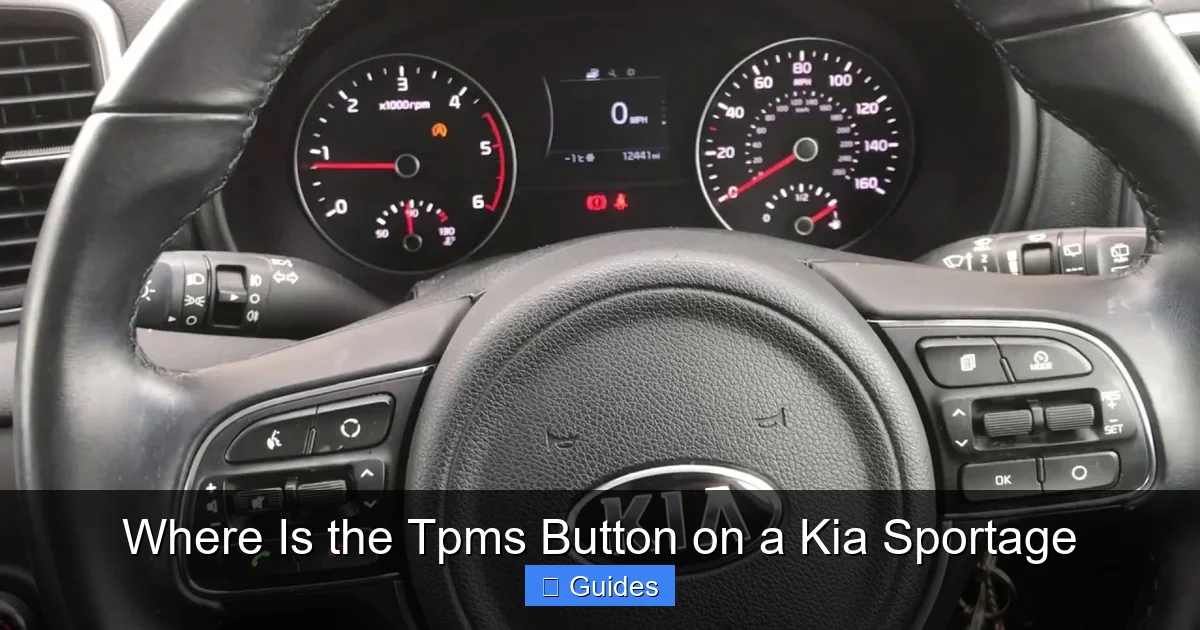
Visual guide about Where Is the Tpms Button on a Kia Sportage
Image source: i.ytimg.com
Step 1: Check and Adjust Tire Pressure
Before resetting the TPMS, make sure all four tires (and the spare, if equipped) are inflated to the recommended pressure. You can find the correct PSI on a sticker inside the driver’s door jamb or in your owner’s manual. For most Sportage models, the recommended pressure is between 32 and 35 PSI when the tires are cold (i.e., the car hasn’t been driven for at least three hours).
Use a reliable tire pressure gauge to check each tire. If any tire is low, add air using a gas station air pump or a portable compressor. Overinflating can be just as dangerous as underinflating, so aim for the exact PSI listed on the door sticker. Don’t rely solely on the gas station gauge—it’s often inaccurate.
Step 2: Turn the Ignition to the “ON” Position
With the tires properly inflated, get into the driver’s seat and turn the ignition key to the “ON” position. You don’t need to start the engine—just flip the key until the dashboard lights up. If your Sportage has a push-button start, press the button once without pressing the brake pedal.
This powers up the vehicle’s electrical systems, including the TPMS module. The warning light should still be on at this point, which is normal. The system is waiting for a reset signal.
Step 3: Locate and Press the TPMS Button
Now, find the TPMS button under the steering wheel. Once located, press and hold it for about 3 to 5 seconds. You should see the TPMS warning light on the dashboard blink once or twice, then stay on. This indicates that the system has entered reset mode.
Some drivers report that the button needs to be held longer—up to 10 seconds—especially in colder weather or if the battery was recently disconnected. If the light doesn’t blink, try releasing and pressing again. Make sure you’re pressing firmly; the button can be stiff.
Step 4: Drive to Complete the Reset
After the light blinks, release the button and start driving. The TPMS system needs to “learn” the new pressure readings by monitoring the tires in motion. Drive at a steady speed of 30–50 mph for 10 to 15 minutes. Avoid sudden stops or sharp turns during this time.
As you drive, the system will recalibrate. Once complete, the TPMS warning light should turn off. If it remains on, double-check your tire pressures and repeat the process. In some cases, the system may take up to 20 minutes to fully reset.
Step 5: Verify the Reset
After driving, park your vehicle and check the dashboard. The TPMS light should be off. If it’s still illuminated, there may be an underlying issue—such as a faulty sensor, a slow leak, or a system error. In that case, it’s best to visit a Kia service center for diagnosis.
Pro tip: Always reset the TPMS after seasonal tire changes (like switching to winter tires) or after replacing a tire sensor. This ensures your system stays accurate year-round.
Common TPMS Issues and Troubleshooting Tips
Even with a properly functioning TPMS button, you may encounter issues that prevent the system from resetting. Understanding these common problems can help you diagnose and resolve them quickly.

Visual guide about Where Is the Tpms Button on a Kia Sportage
Image source: vehiclefreak.com
TPMS Light Won’t Turn Off After Reset
If the warning light remains on after following the reset procedure, the issue may not be with the button—it could be with the sensors. TPMS sensors have batteries that last 5 to 10 years. When the battery dies, the sensor can’t transmit data, and the system defaults to a warning state.
Another possibility is a slow leak in one of the tires. Even a small puncture can cause gradual pressure loss, triggering the light. Check each tire for nails, cracks, or valve stem damage. If you can’t find a leak, a mechanic can perform a soap bubble test to locate it.
Also, ensure all tires are inflated to the correct pressure. Sometimes, one tire is slightly low, and the system won’t reset until all are within range. Use a high-quality gauge and check when the tires are cold.
No TPMS Button Found
If you can’t find the TPMS button, double-check your model year. As mentioned earlier, 2020 and newer Sportage models use a digital reset method. If you’re certain your vehicle should have a button (e.g., a 2017 model), it may be hidden behind a panel or covered by trim.
In rare cases, the button may be missing due to a manufacturing defect or previous repair. If you’ve recently had work done on your dashboard, the technician may have disconnected or misplaced it. Contact your Kia dealer for assistance.
Intermittent or Flashing TPMS Light
A flashing TPMS light (rather than a steady glow) usually indicates a system malfunction, such as a communication error between sensors and the control module. This could be due to interference from electronic devices, a weak sensor signal, or a software glitch.
Try turning the vehicle off and on again. If the light continues to flash, have the system scanned with a TPMS diagnostic tool. Many auto parts stores offer free scans, or you can visit a Kia service center.
Aftermarket Tires or Wheels
If you’ve installed aftermarket wheels or tires, they may not be compatible with your TPMS sensors. Some custom wheels don’t have enough clearance for the sensor, or the sensor may not fit properly. In such cases, you may need to purchase new sensors or have them relocated by a professional.
Always inform your tire installer that your vehicle has TPMS. They can ensure the sensors are handled correctly during mounting and balancing.
Why Proper TPMS Maintenance Matters
Maintaining your TPMS isn’t just about turning off a warning light—it’s about safety, efficiency, and longevity. Underinflated tires increase rolling resistance, which reduces fuel economy. According to the U.S. Department of Energy, properly inflated tires can improve gas mileage by up to 3%. Over time, that adds up to significant savings.
Safety is another major concern. Low tire pressure affects handling, especially in wet or icy conditions. It also increases the risk of blowouts, which can lead to loss of control. The TPMS acts as an early warning system, giving you time to address issues before they become dangerous.
Additionally, maintaining correct tire pressure extends the life of your tires. Uneven wear patterns—such as cupping or shoulder wear—are often caused by underinflation. Replacing tires prematurely is expensive, and proper TPMS use can help you get the most mileage out of each set.
Finally, a functioning TPMS ensures your vehicle meets safety standards. In many states, a lit TPMS light can cause your car to fail an emissions or safety inspection. Keeping the system in good working order helps you stay compliant and avoid fines.
When to Seek Professional Help
While most TPMS issues can be resolved at home, some problems require professional attention. If you’ve tried resetting the system multiple times and the light won’t turn off, it’s time to visit a Kia service center or a trusted mechanic.
A technician can use specialized tools to read error codes from the TPMS module and test each sensor. They can also check for physical damage, battery life, and signal strength. In some cases, a sensor may need to be reprogrammed or replaced.
If you’ve recently had a tire replaced and the TPMS light came on, the new tire may not have a sensor, or the existing sensor may have been damaged during installation. A professional can install a new sensor and sync it with your vehicle’s system.
Don’t ignore a persistent TPMS warning. Even if your tires feel fine, there could be a hidden issue affecting your safety. Regular maintenance and timely repairs keep your Sportage running smoothly and safely.
Conclusion
Finding and using the TPMS button on your Kia Sportage is a simple but essential skill for every owner. Whether you’re dealing with a physical button under the steering wheel or a digital menu on your touchscreen, knowing how to reset the system ensures accurate tire pressure monitoring and peace of mind on the road.
Remember: always check your tire pressure before resetting, follow the correct procedure for your model year, and seek professional help if the light won’t turn off. With proper care, your TPMS will keep you safe, save you money, and extend the life of your tires.
Your Kia Sportage is designed for reliability and performance—don’t let a small warning light disrupt your driving experience. Stay informed, stay safe, and enjoy every mile.
Frequently Asked Questions
The TPMS button on a 2015 Kia Sportage is located under the steering wheel, near the driver’s left knee. Look for a small black button on the lower dashboard panel, often labeled “TPMS” or with a tire icon.
Yes, if your Sportage has a digital system (2020+), you can reset the TPMS through the infotainment menu. Navigate to Settings > Vehicle > Tire Pressure > Reset TPMS and follow the prompts.
Why does my TPMS light keep coming back on?
A recurring TPMS light may indicate a faulty sensor, low tire pressure, or a slow leak. Check your tire pressures and inspect for damage. If the issue persists, have a technician diagnose the system.
How often should I reset the TPMS?
You only need to reset the TPMS after inflating your tires, replacing a sensor, or performing seasonal tire changes. There’s no need to reset it regularly unless the light comes on.
What happens if I ignore the TPMS warning light?
Ignoring the light can lead to reduced fuel efficiency, poor handling, uneven tire wear, and increased risk of blowouts. It’s best to address the issue promptly to ensure safety and performance.
No. Models from 2010 to 2019 typically have a physical TPMS button, while 2020 and newer models use a digital reset method through the touchscreen. Always check your owner’s manual to confirm.

At CarLegit, we believe information should be clear, factual, and genuinely helpful. That’s why every guide, review, and update on our website is created with care, research, and a strong focus on user experience.